-
-
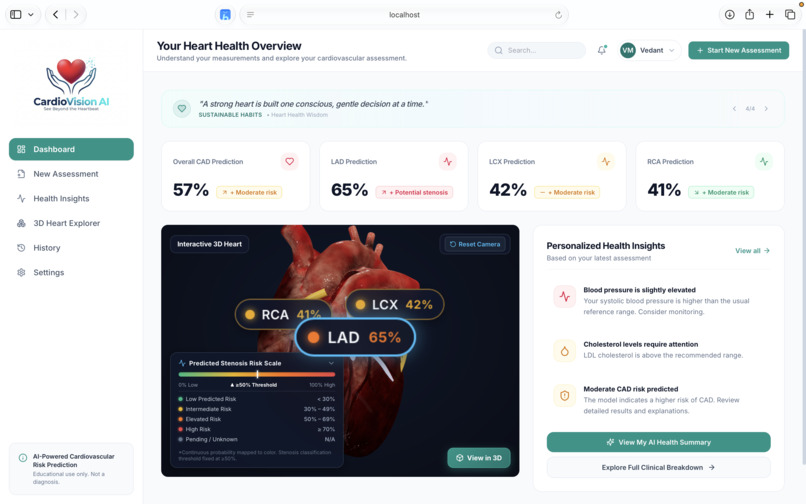
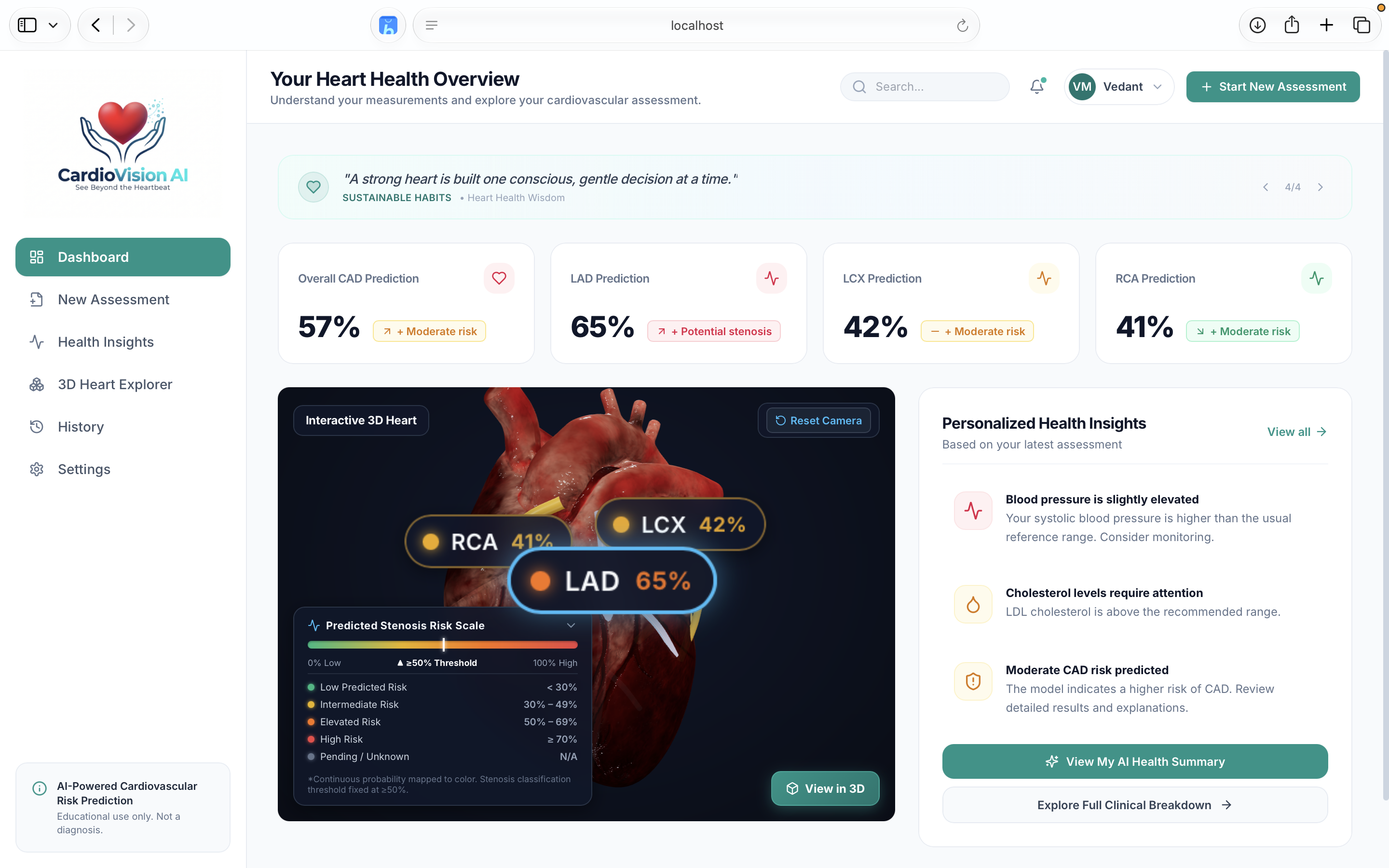
Dashboard
-
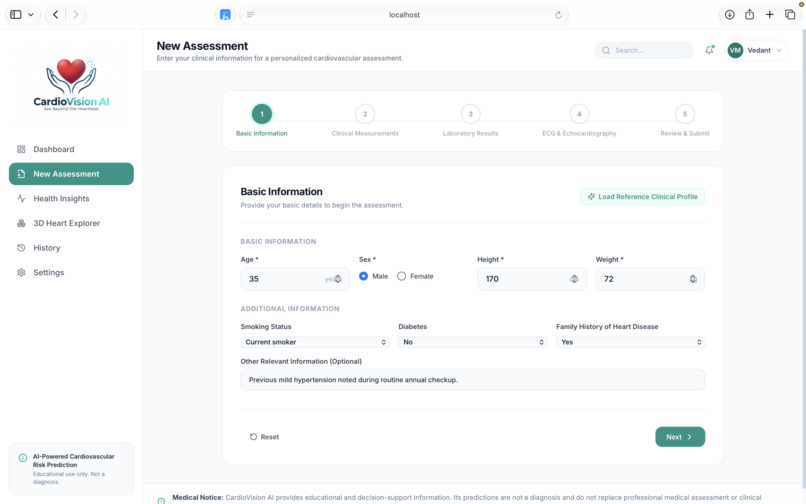
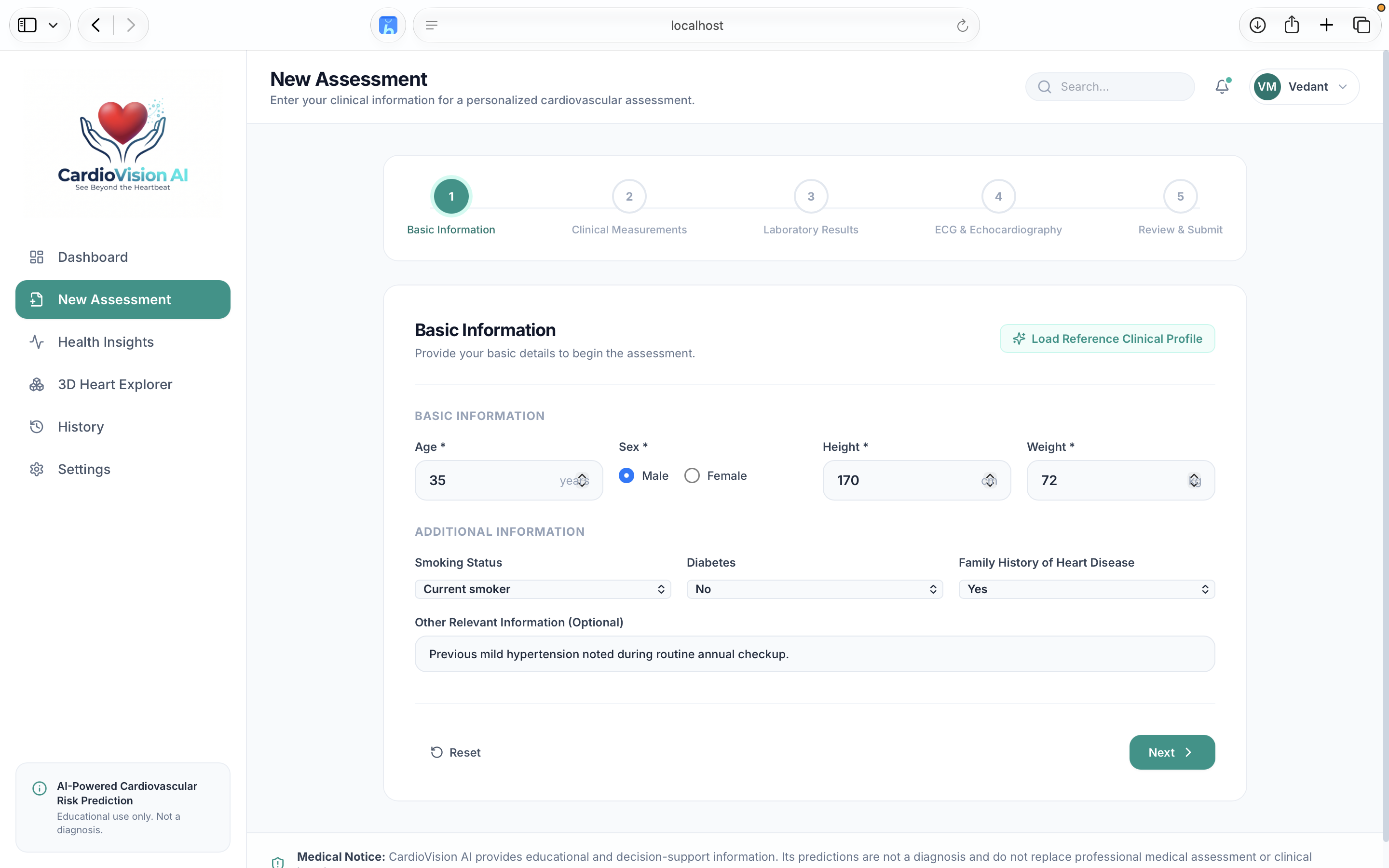
New Assessment
-
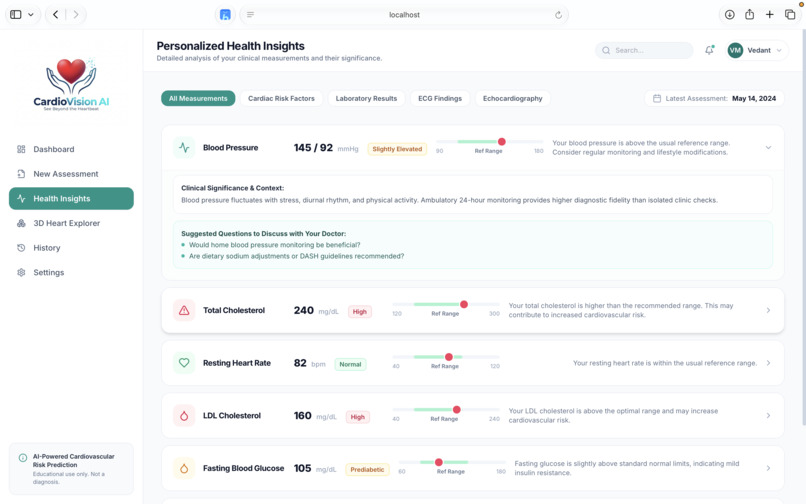
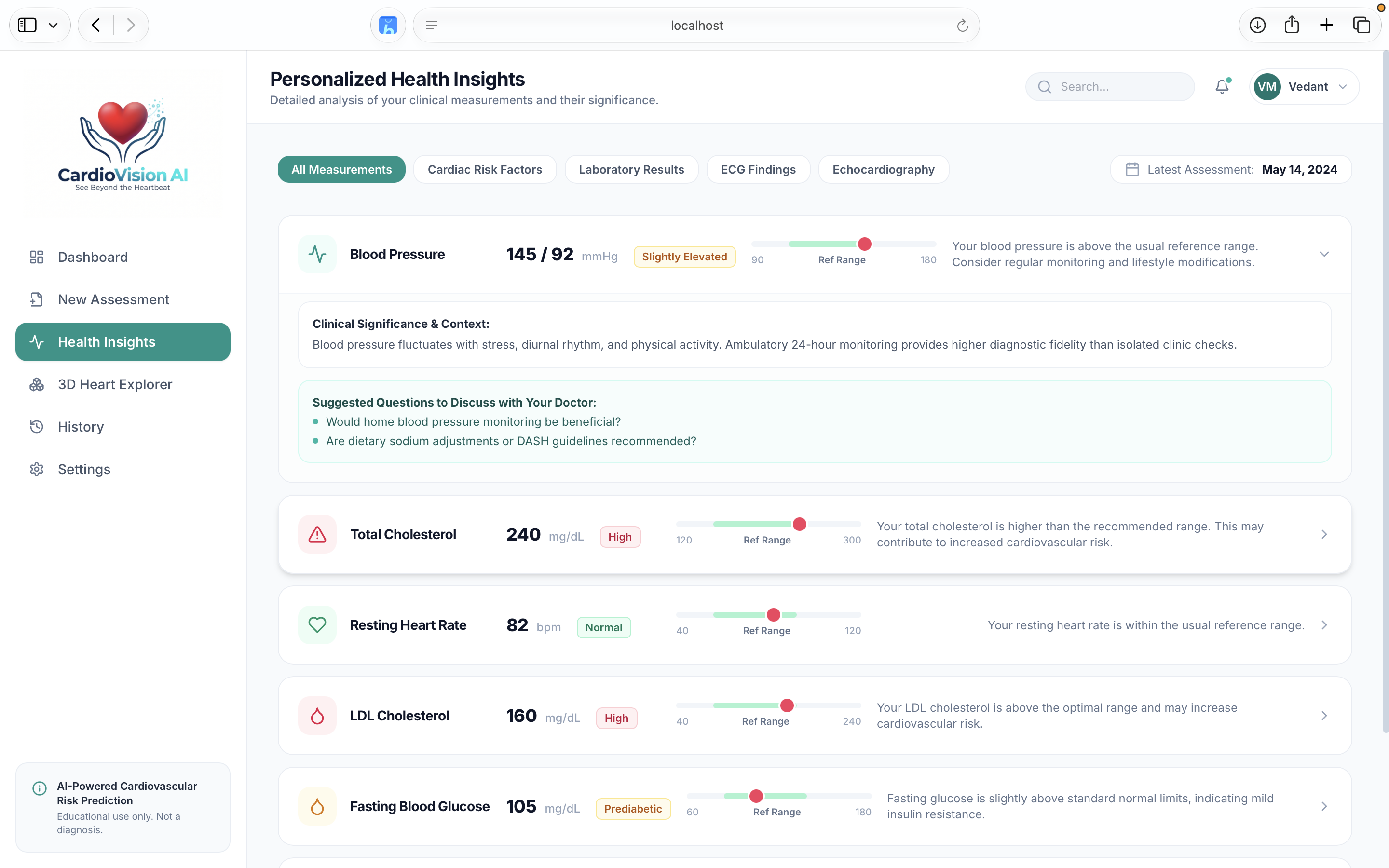
Health Insight
-
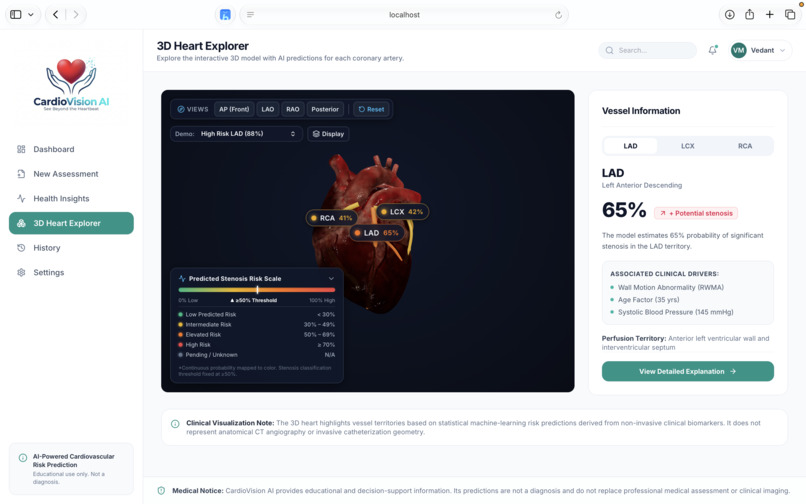
3D Heart Explorer
-
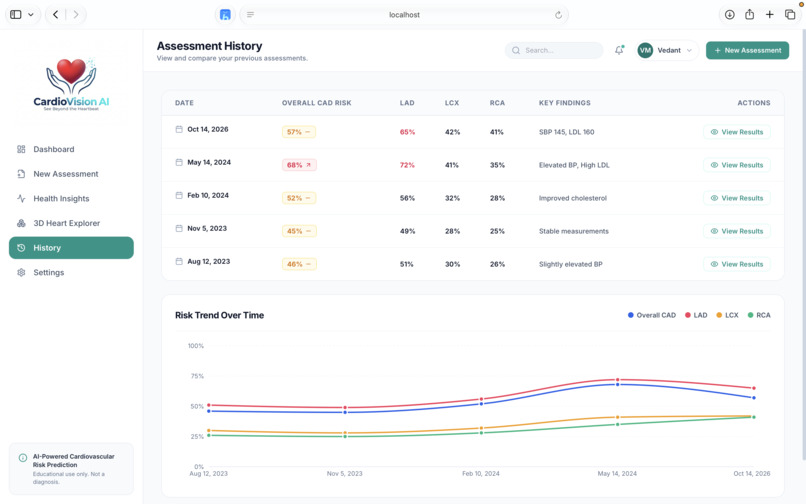
History
Inspiration
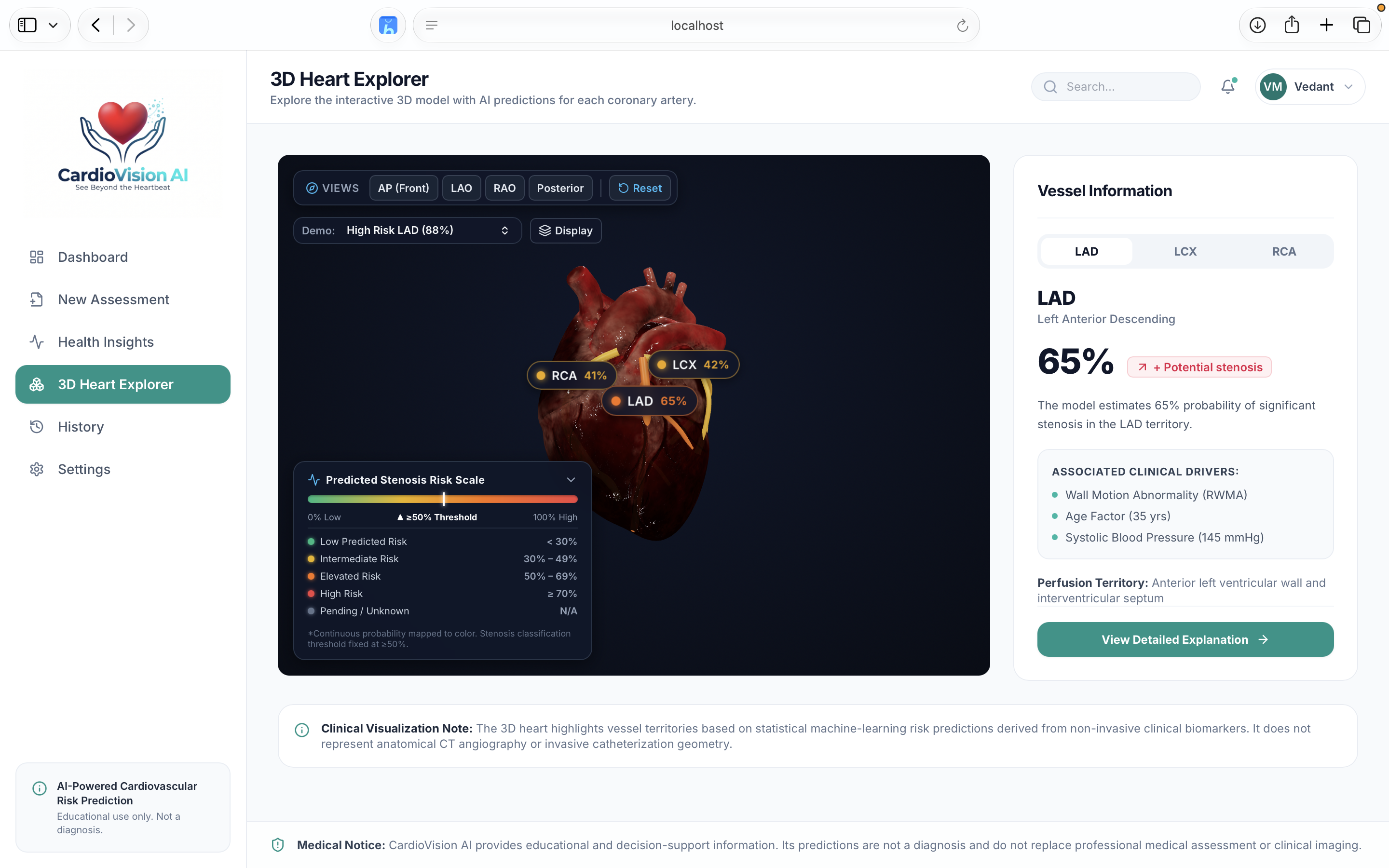
CardioVision AI was inspired by the need to bridge the gap between statistical machine learning predictions and intuitive spatial anatomical understanding in cardiovascular care. Traditional predictive models generate abstract risk percentages, but they often fail to give clinicians and patients a clear visual representation of where pathology is developing inside the heart.
What it does
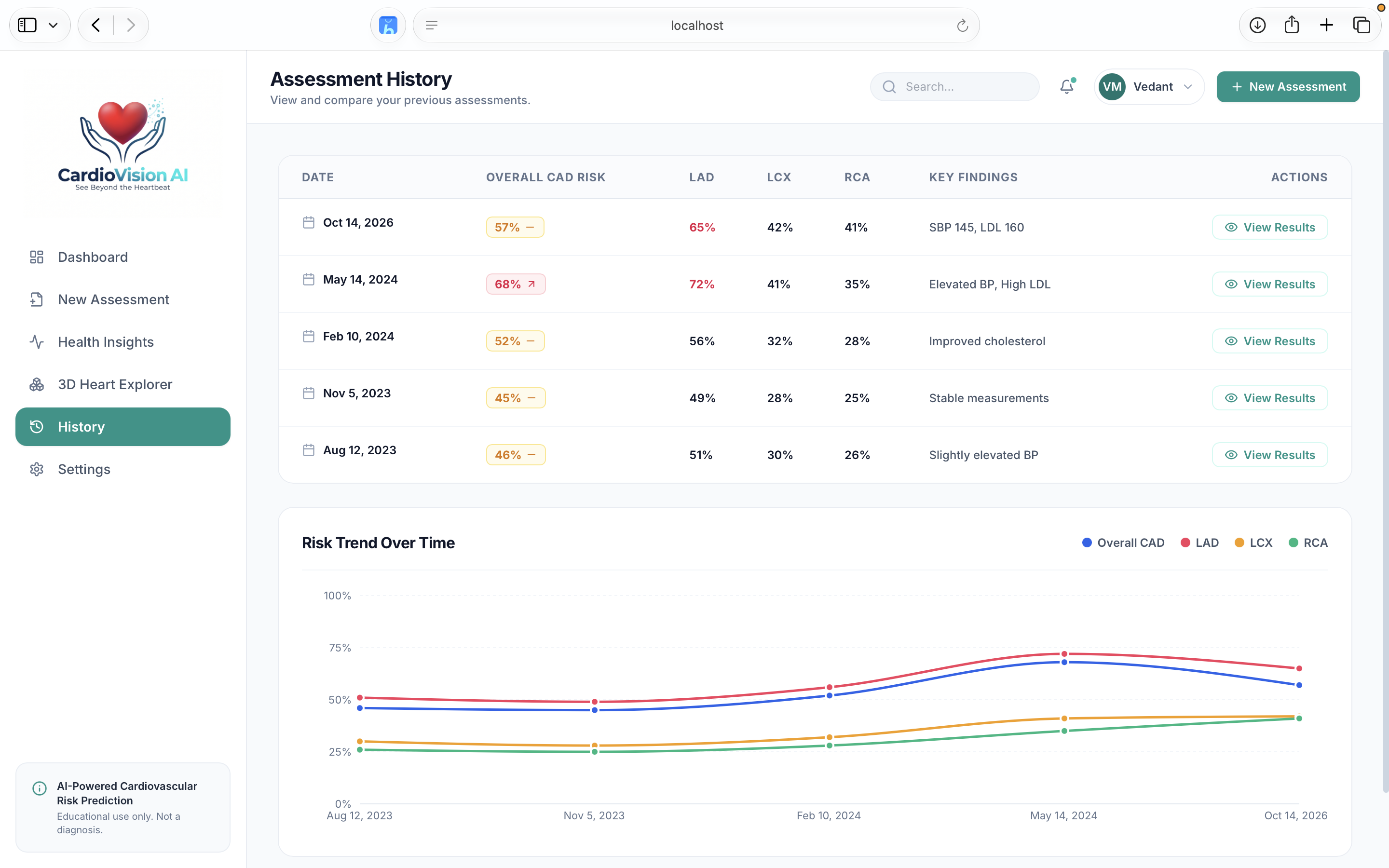
CardioVision AI is a web-based clinical decision support tool that predicts:
- Overall Coronary Artery Disease (CAD) risk
- Vessel-specific stenosis ($\ge 50\%$ narrowing) for the:
- Left Anterior Descending (LAD)
- Left Circumflex (LCX)
- Right Coronary Artery (RCA)
It takes clinical, demographic, ECG, lab, and echocardiographic inputs and instantly maps the predicted risk probabilities onto an interactive 3D heart model. Each artery is color-coded from low risk (green) to severe stenosis risk (red).
To ensure transparency, an Explainable AI (XAI) dashboard powered by SHAP and LIME breaks down feature importances, alongside mandatory clinical safety disclaimers.
How we built it
The project uses a decoupled architecture:
| Layer | Technologies |
|---|---|
| ML pipeline | Python 3.12, trained on the UCI Z-Alizadeh Sani dataset, with strict target exclusion protocols to prevent data leakage |
| Backend | FastAPI, serving real-time predictions and feature attributions |
| Frontend | React 19, Vite, Tailwind CSS v4, Recharts, Zustand |
| 3D visualization | React Three Fiber (Three.js) with custom shaders applied to isolated vessel nodes within open-source .gltf meshes |
Challenges we ran into
- Strictly segregating direct target features (
LAD,LCX,RCA,Cath) from the input parameters. - Isolating sub-meshes on the 3D heart without distorting the surrounding geometry.
- Optimizing Zustand state management and SHAP computations to deliver responsive, real-time 3D updates without requiring high-end GPUs.
Accomplishments that we're proud of
- Achieving a zero target leakage ML pipeline
- Fluid spatial risk rendering on 3D artery nodes
- Transparent, interpretable predictions in an accessible browser environment
What we learned
- The clinical correlation between regional wall motion abnormalities (RWMA) and localized ischemia
- Advanced 3D WebGL rendering techniques
- Rigor in preventing data leakage
What's next for CardioVision AI
- Automated pipelines to convert patient-specific CT/MRI angiograms into custom 3D meshes
- Extending vessel segmentation to branch arteries such as the Posterior Descending Artery (PDA)
- Integrating EHR and HL7 FHIR standards for automated data ingestion
- Adapting the 3D WebGL canvas into WebXR for immersive VR pre-procedural planning
Built With
- ai
- explainable-ai
- fastapi
- machine-learning
- numpy
- pandas
- python
- react
- react-three-fiber
- rest-api
- scikit-learn
- shap
- tailwind.css
- three.js
- typescript
- vite

Log in or sign up for Devpost to join the conversation.