-
-
acardiovision ai
-
acardiovision ai
-
acardiovision ai
-
acardiovision ai
-
acardiovision ai
-
acardiovision ai
-
acardiovision ai
-
acardiovision ai
-
a cardiovision ai
-
acardiovision ai
-
a cardiovision ai
Inspiration
Cardiovascular diseases are a major health concern, and understanding coronary artery disease (CAD) can be challenging when clinical information is complex. We were inspired to explore how artificial intelligence and interactive visualization could make cardiovascular assessment results easier to understand and interpret.
What it does
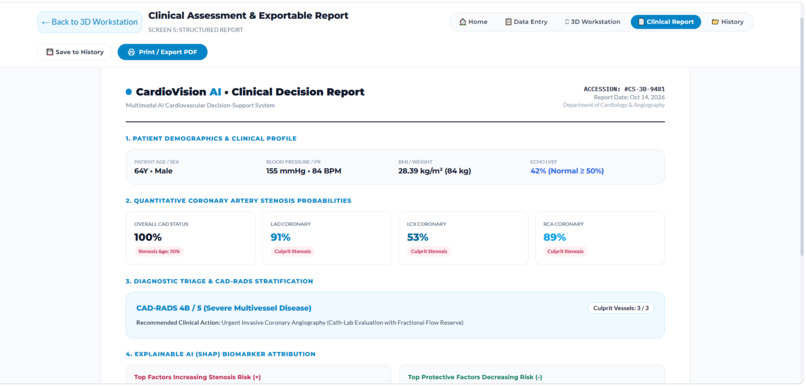
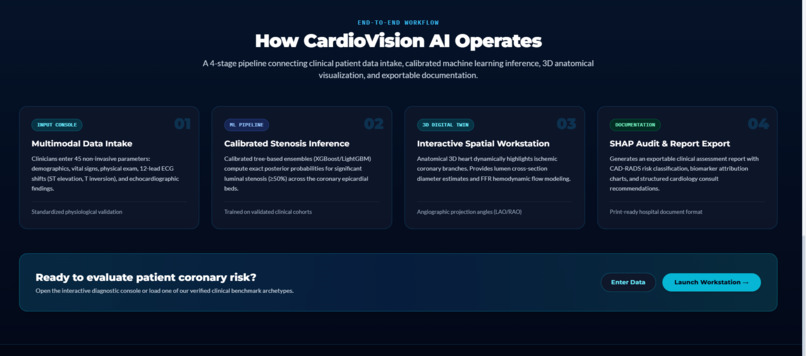
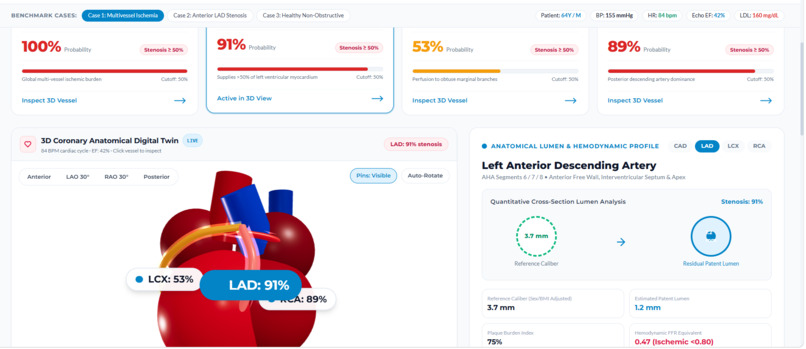
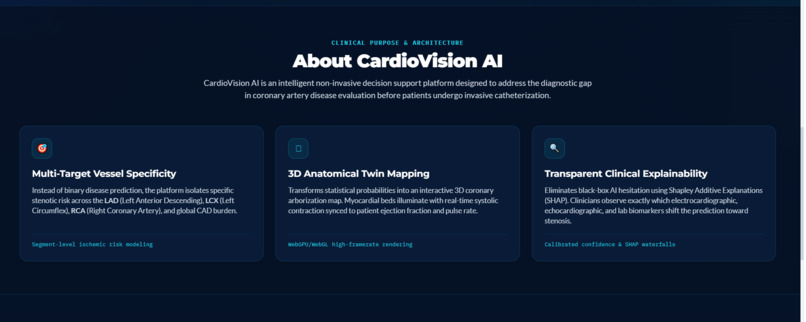
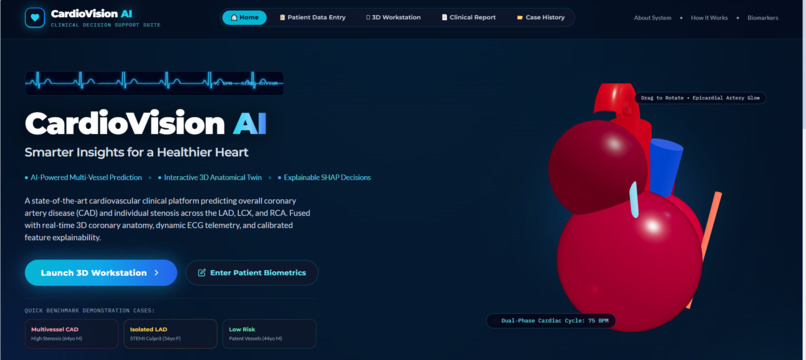
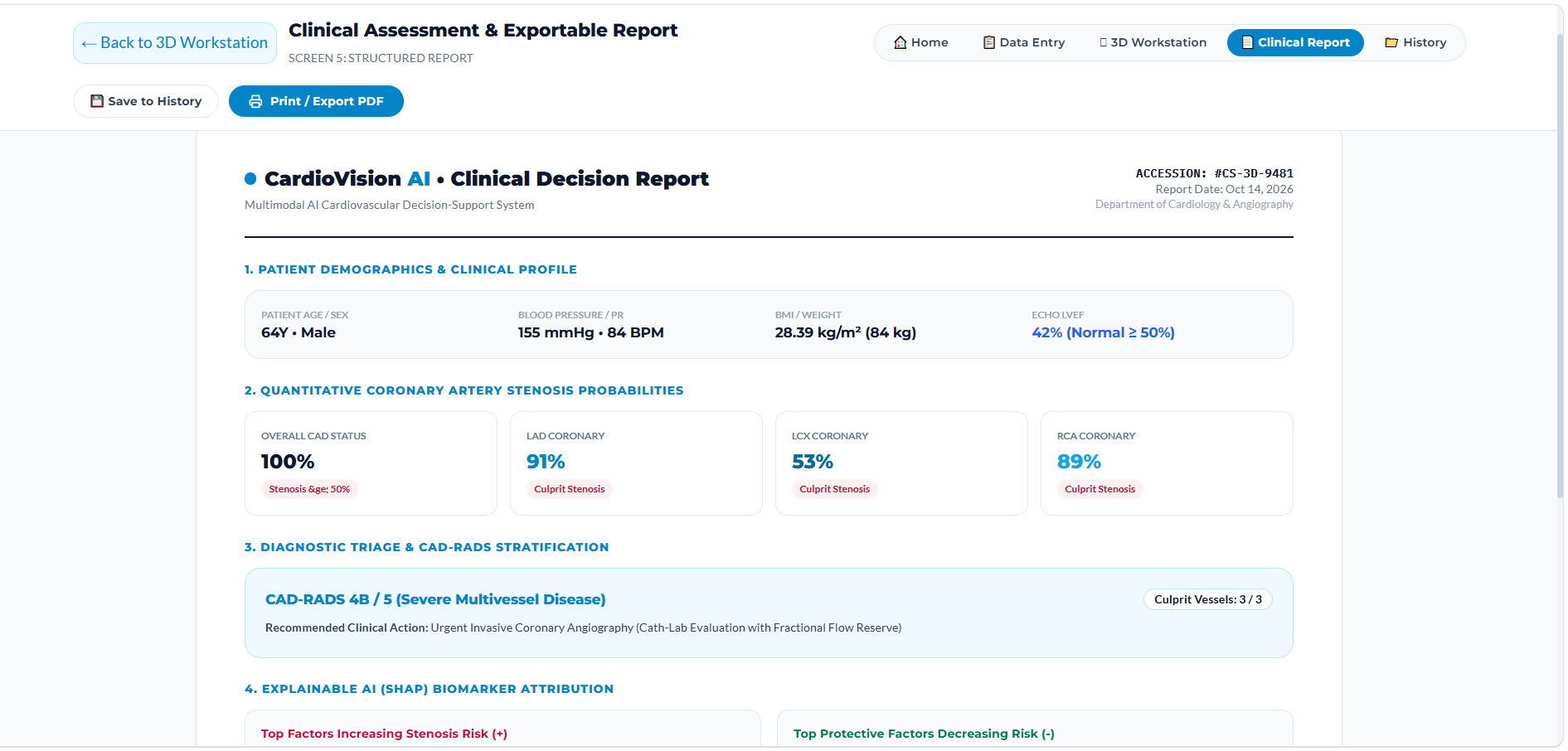
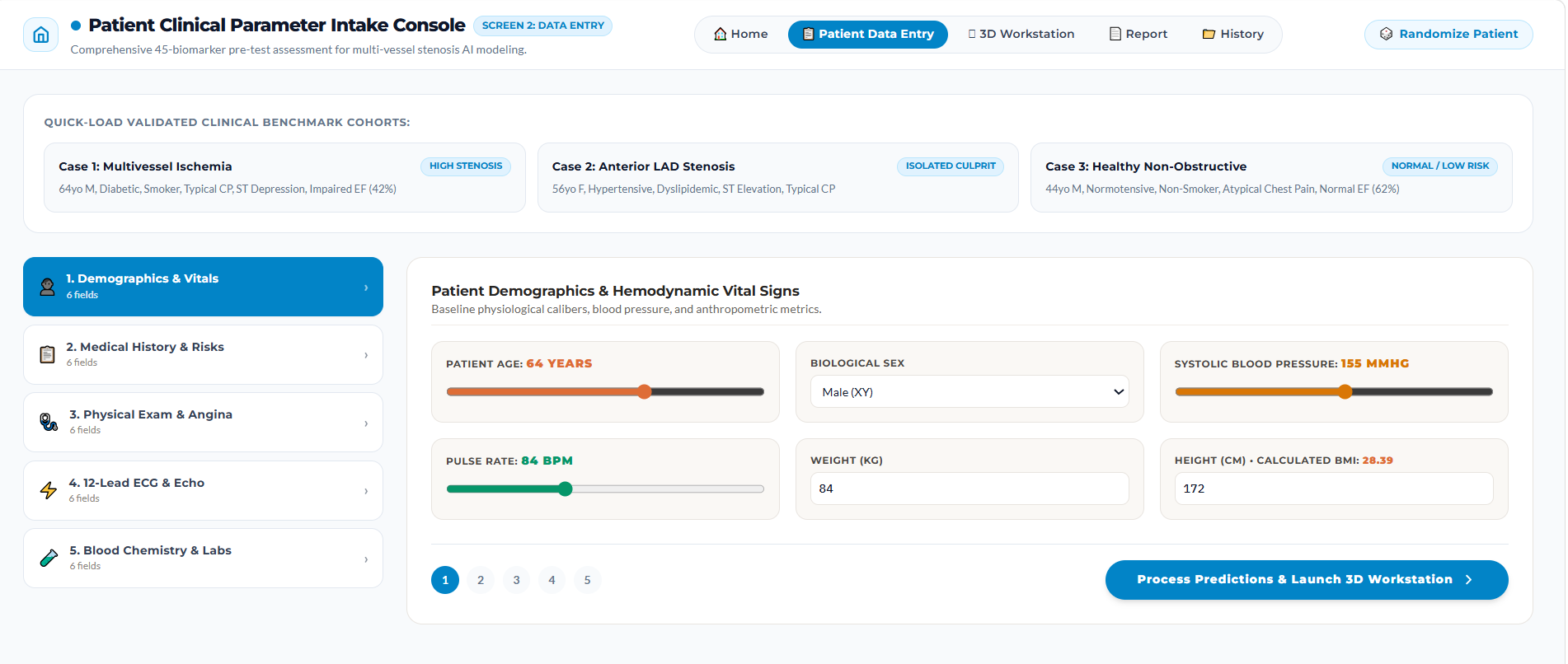
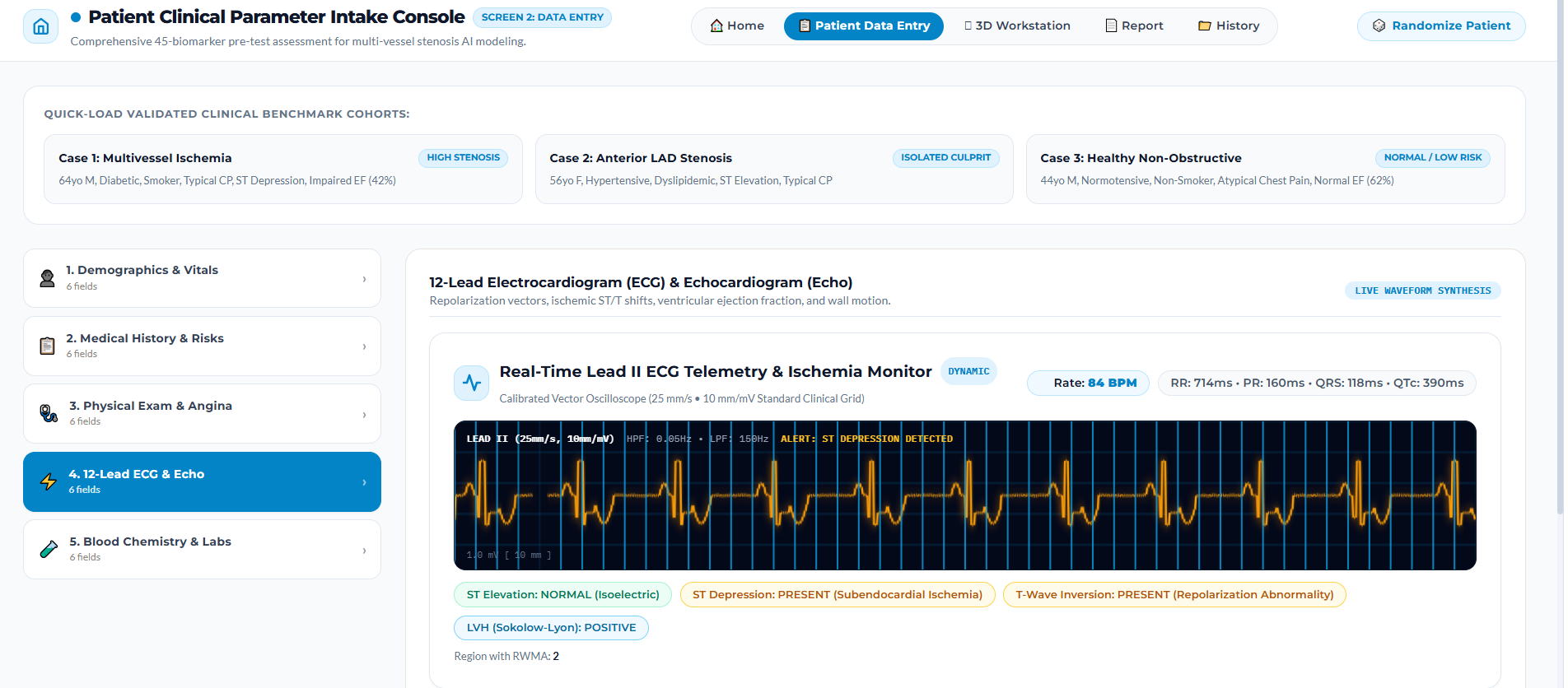
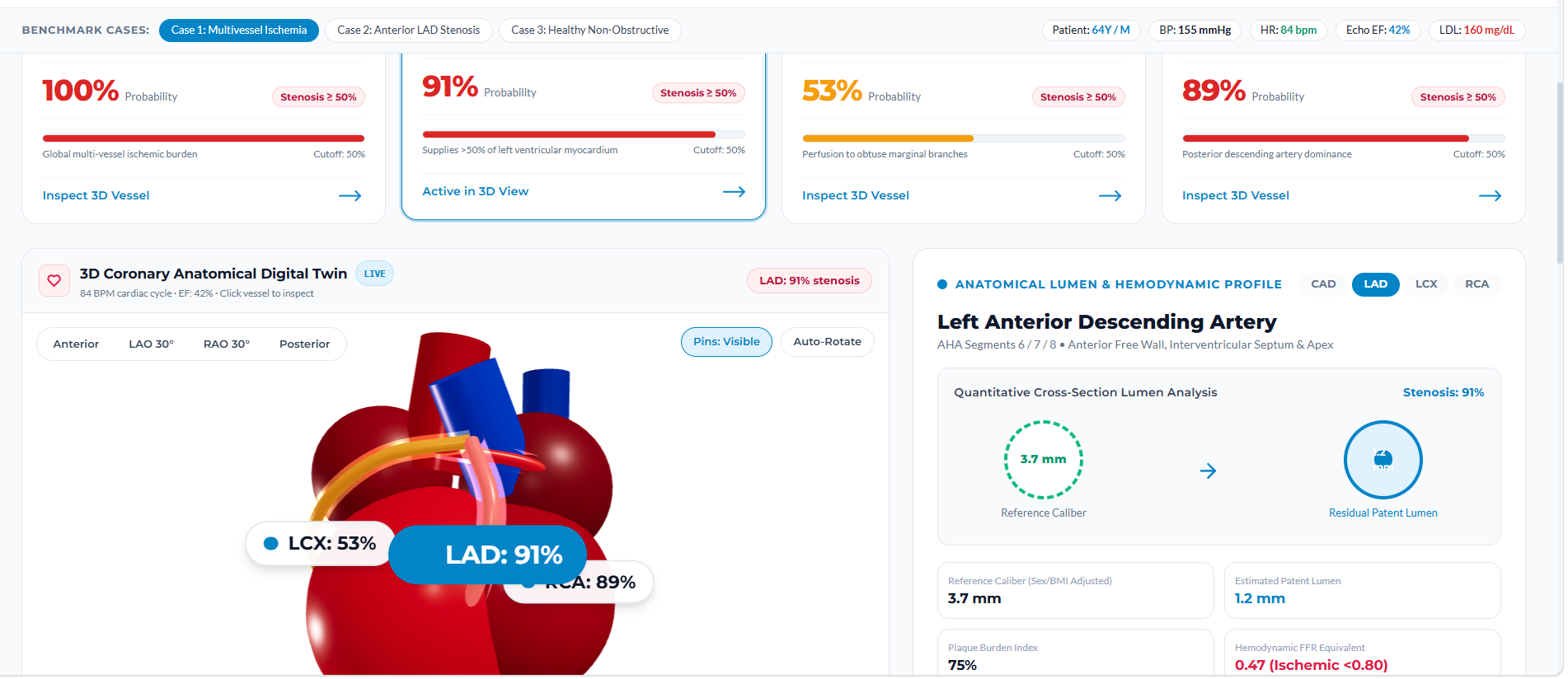
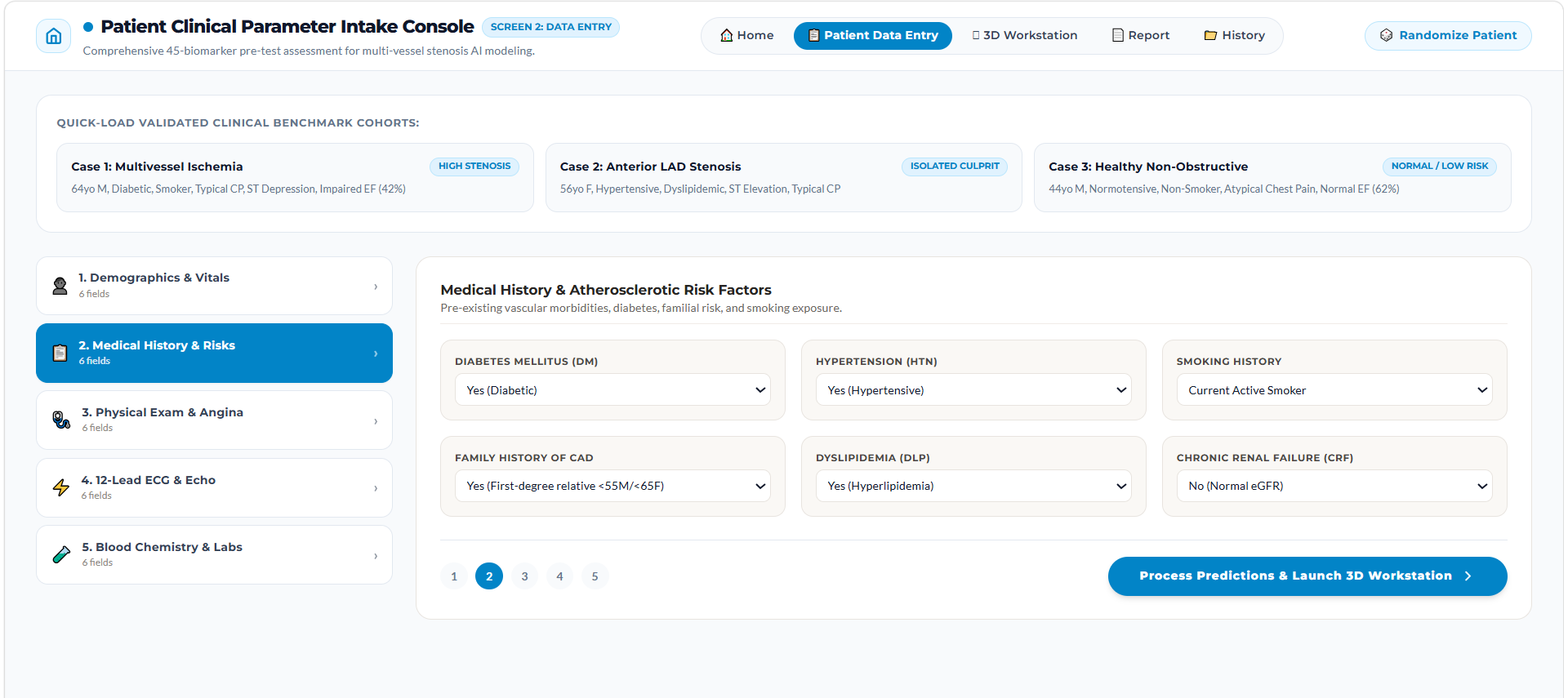
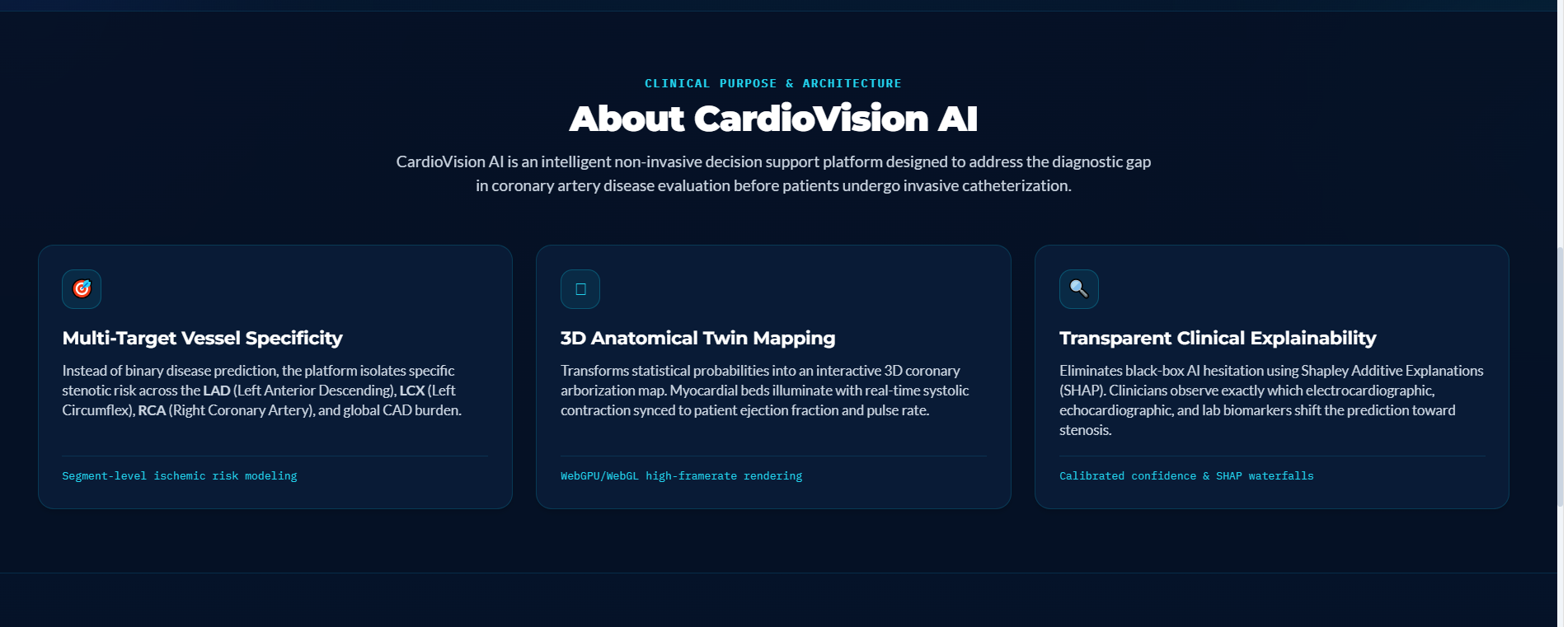
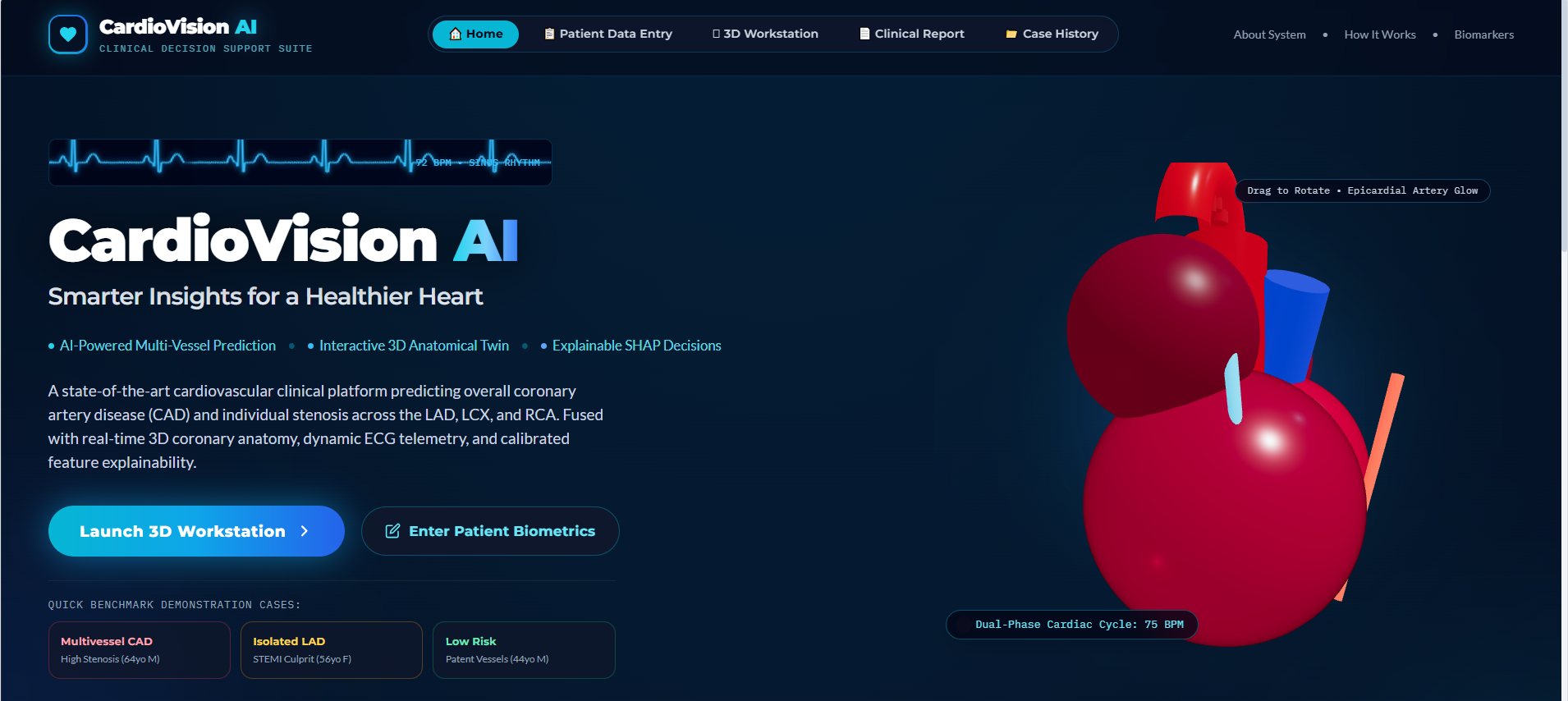
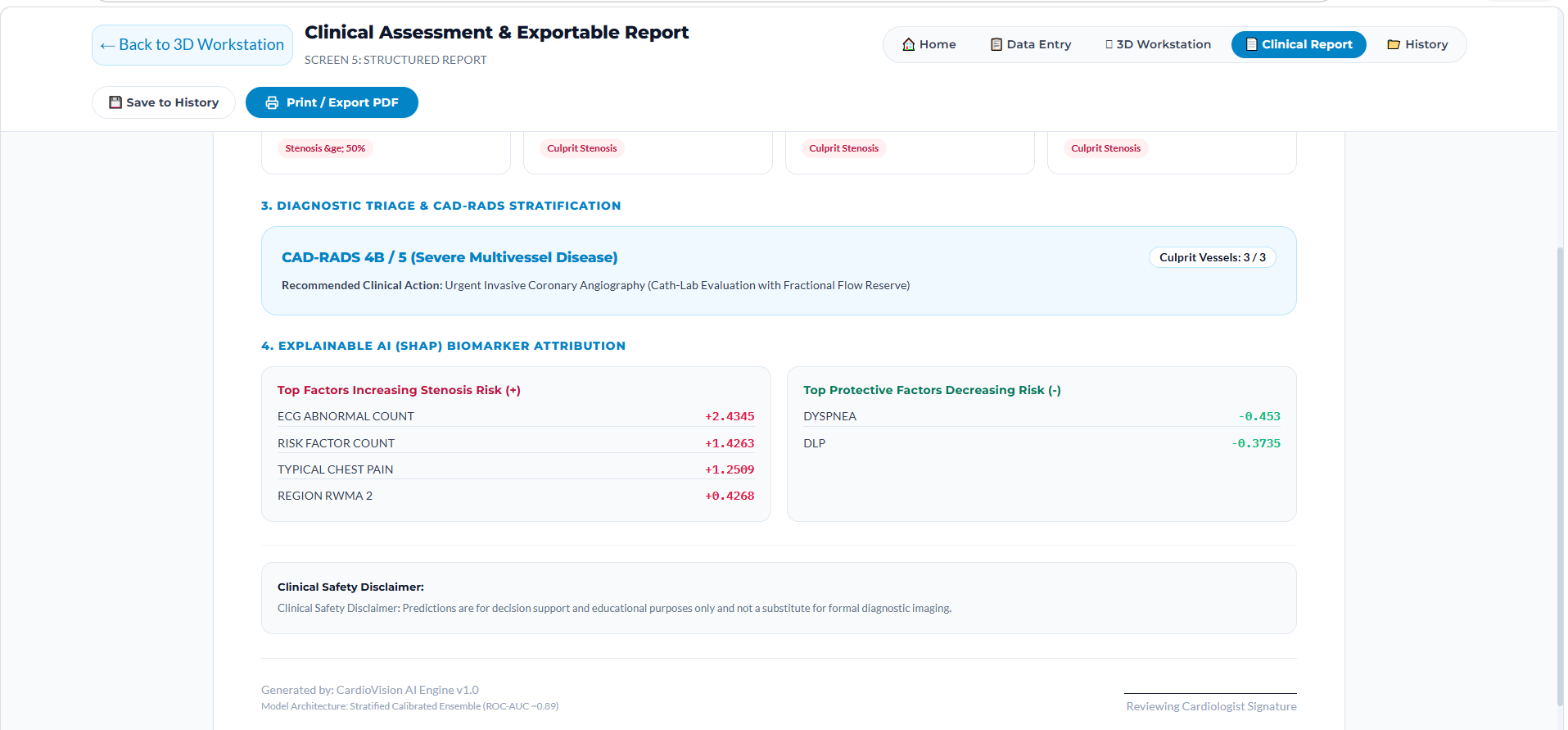
CardioVision AI is designed to predict coronary artery disease (CAD) from clinical and demographic data. It aims to estimate CAD status and stenosis probabilities for three coronary arteries: LAD, LCX, and RCA.
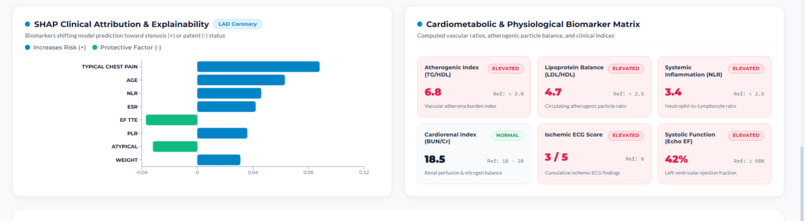
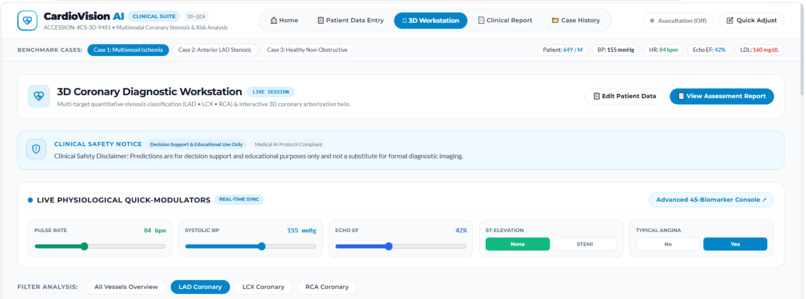
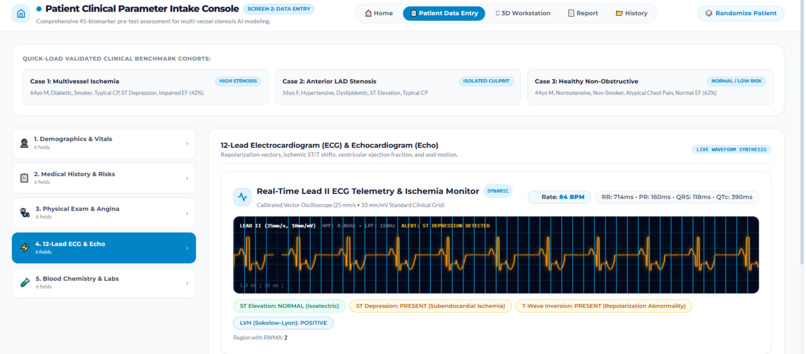
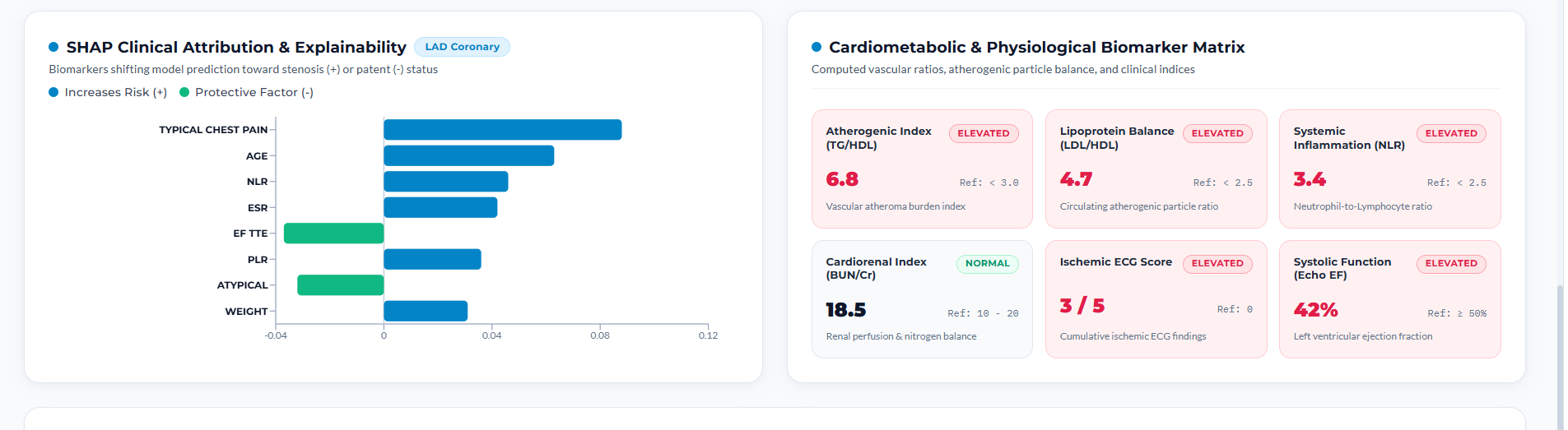
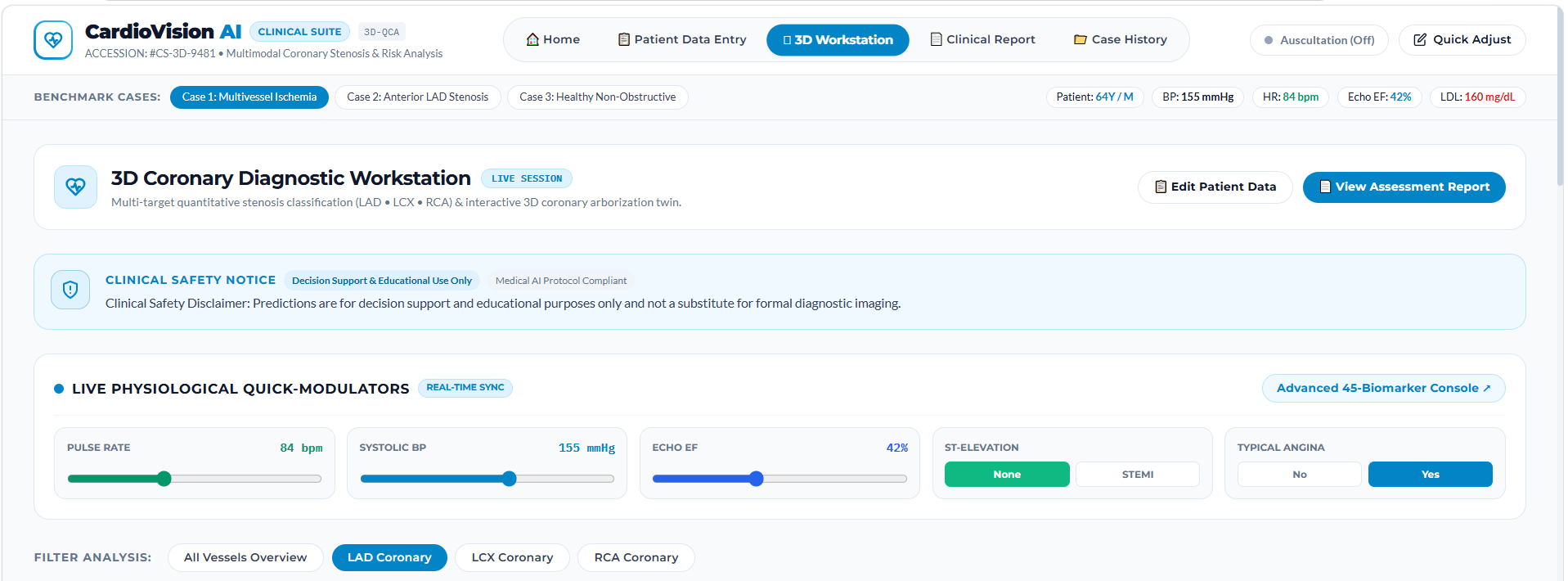
The platform combines machine learning predictions with an interactive 3D cardiovascular visualization and explainable AI insights. Its dashboard is intended to help users understand predictions and the clinical features that influence them.
How we built it
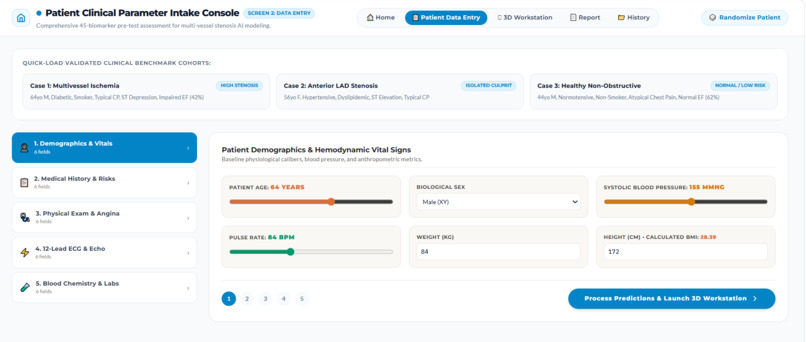
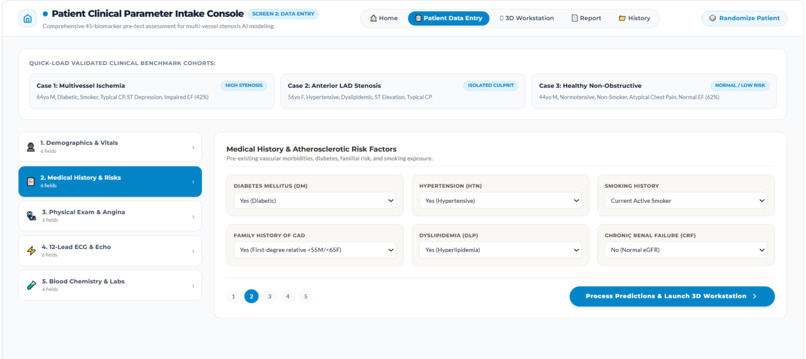
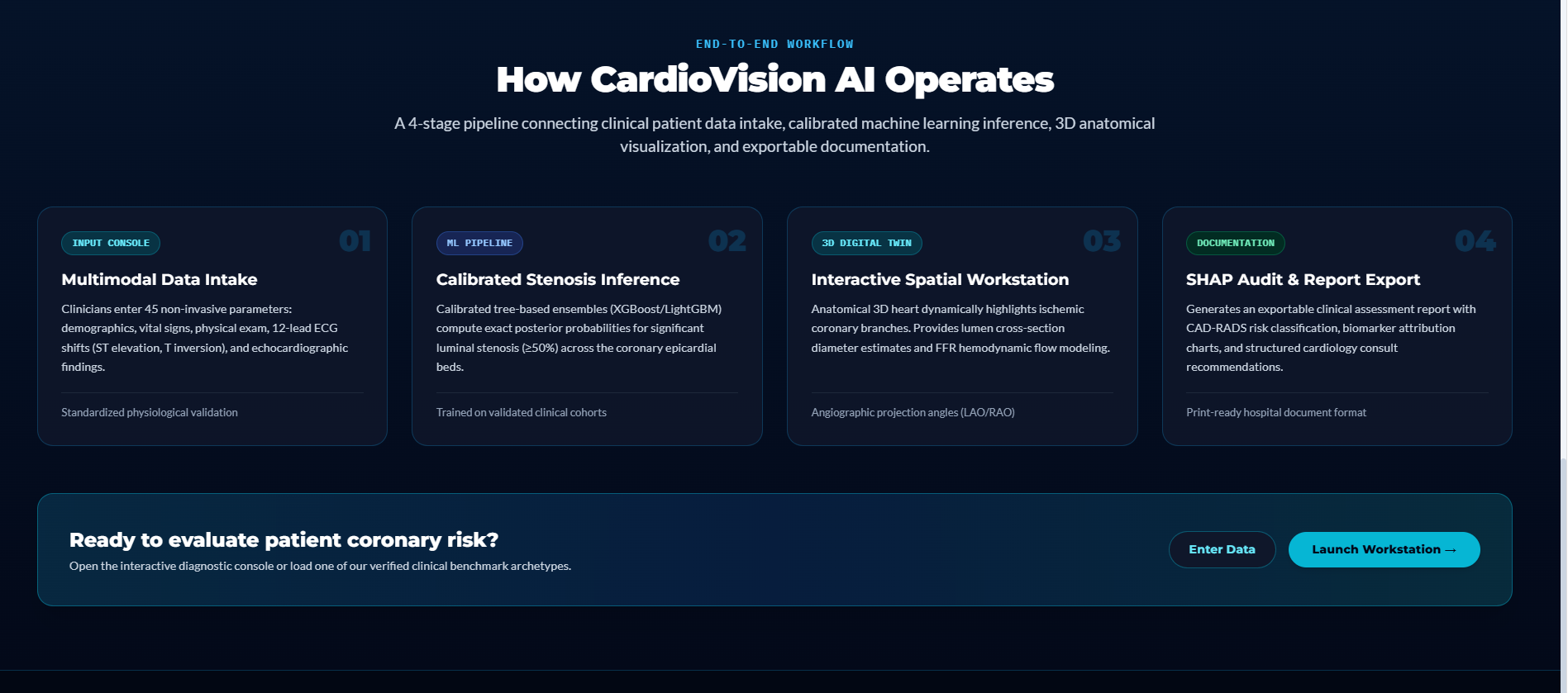
The planned system combines a machine learning backend with a web-based dashboard. Clinical data is preprocessed before being passed to classification models that predict CAD and vessel-specific outcomes. Model performance can be evaluated using accuracy, precision, recall, F1-score, and ROC-AUC.
The frontend is designed to present prediction results, relevant clinical measurements, feature explanations, and a 3D heart visualization. The architecture is intended to support integration between the prediction pipeline and the interactive interface.
Challenges we ran into
Key challenges include selecting relevant clinical features, preventing target leakage, handling a limited dataset, and evaluating model performance reliably. Another challenge is representing LAD, LCX, and RCA predictions accurately in a 3D anatomical model without implying that the model identifies the exact location or severity of a blockage.
Making model predictions understandable to non-experts while communicating the limitations of AI in healthcare is also an important consideration.
Accomplishments that we're proud of
We developed a clear concept that brings together cardiovascular disease prediction, interactive 3D visualization, and explainable AI in one platform. The project focuses not only on producing predictions but also on presenting them in a way that is easier to explore and understand.
What we learned
This project highlights the importance of data quality, appropriate evaluation metrics, explainability, and careful interpretation of machine learning results. We also learned that effective healthcare AI requires more than predictive performance: it must communicate uncertainty, respect clinical limitations, and be designed responsibly.
What's next for CardioVision AI
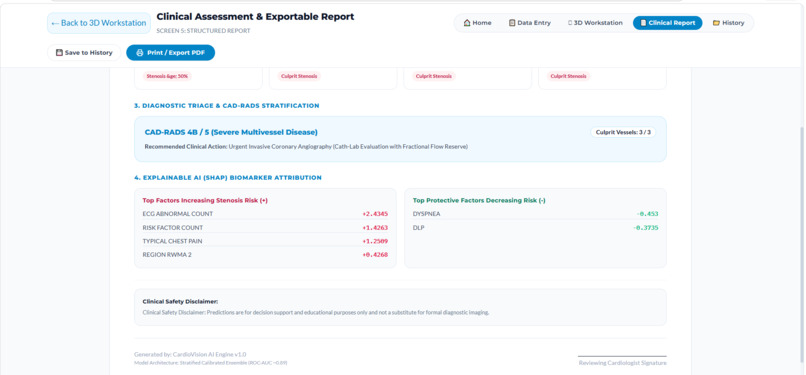
Future work includes training and validating the prediction models, improving the 3D cardiovascular viewer, integrating feature-attribution methods such as SHAP, and creating downloadable assessment reports. We also aim to improve accessibility, responsiveness, and model reliability through further testing.
Disclaimer: CardioVision AI is intended for educational and decision-support purposes only. It is not a substitute for professional medical advice, diagnostic imaging, or evaluation by a qualified healthcare professional.


Log in or sign up for Devpost to join the conversation.