-
-
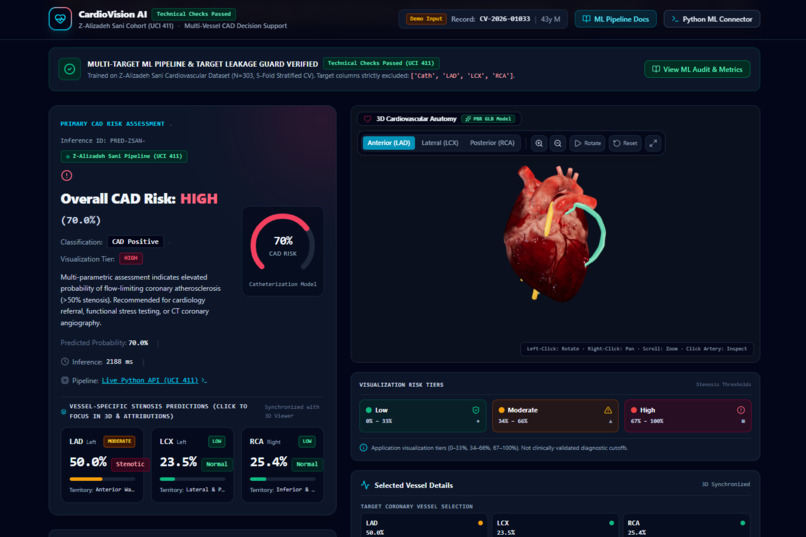
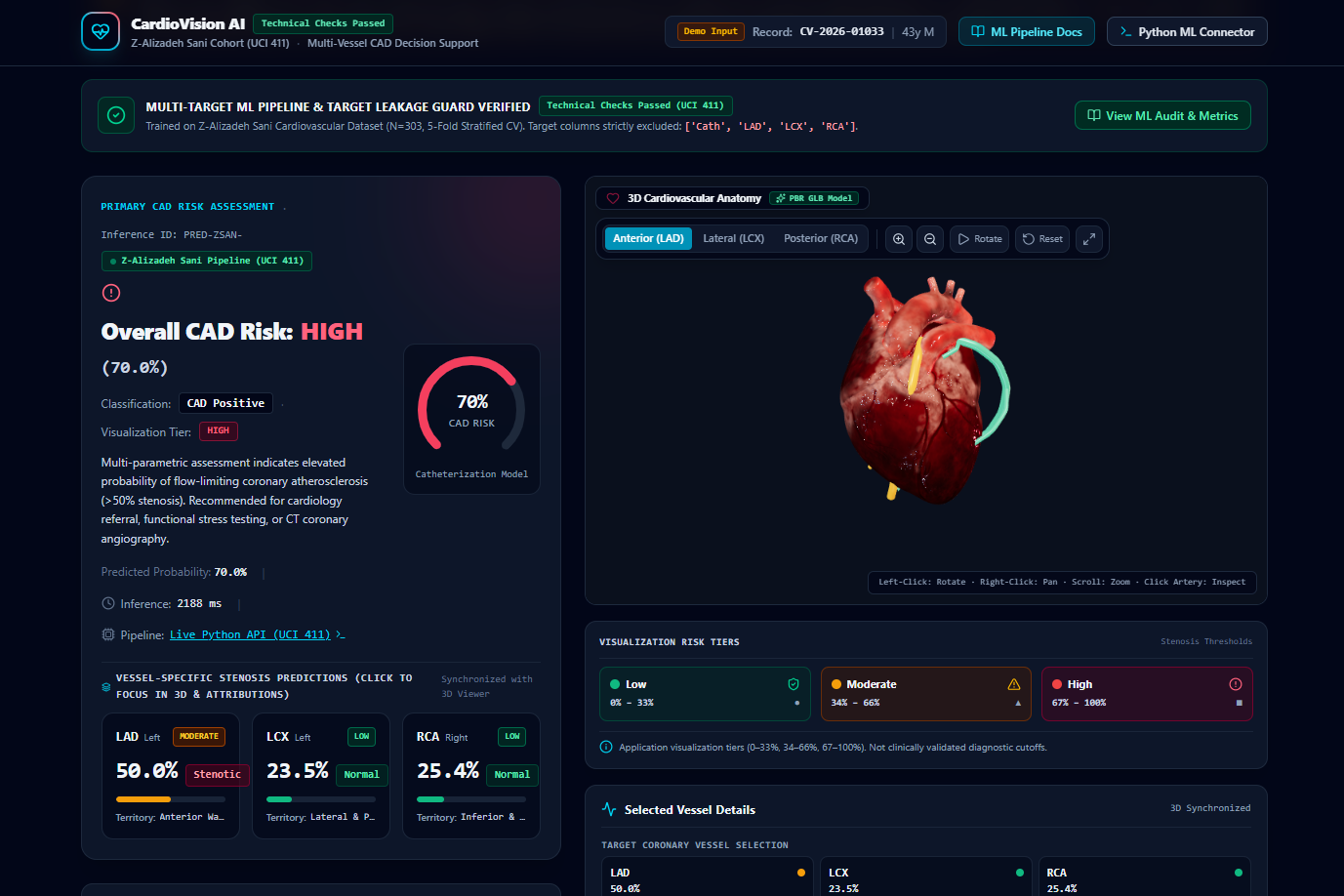
Main Dashboard & Overall CAD Risk
-
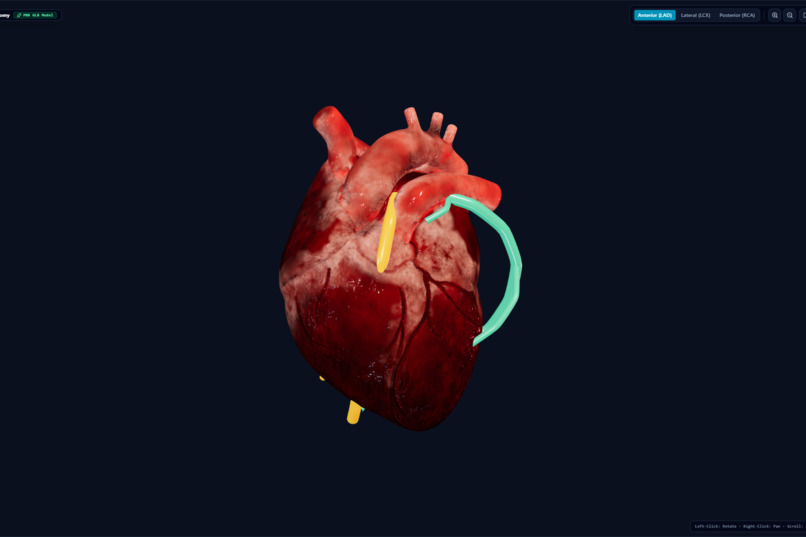
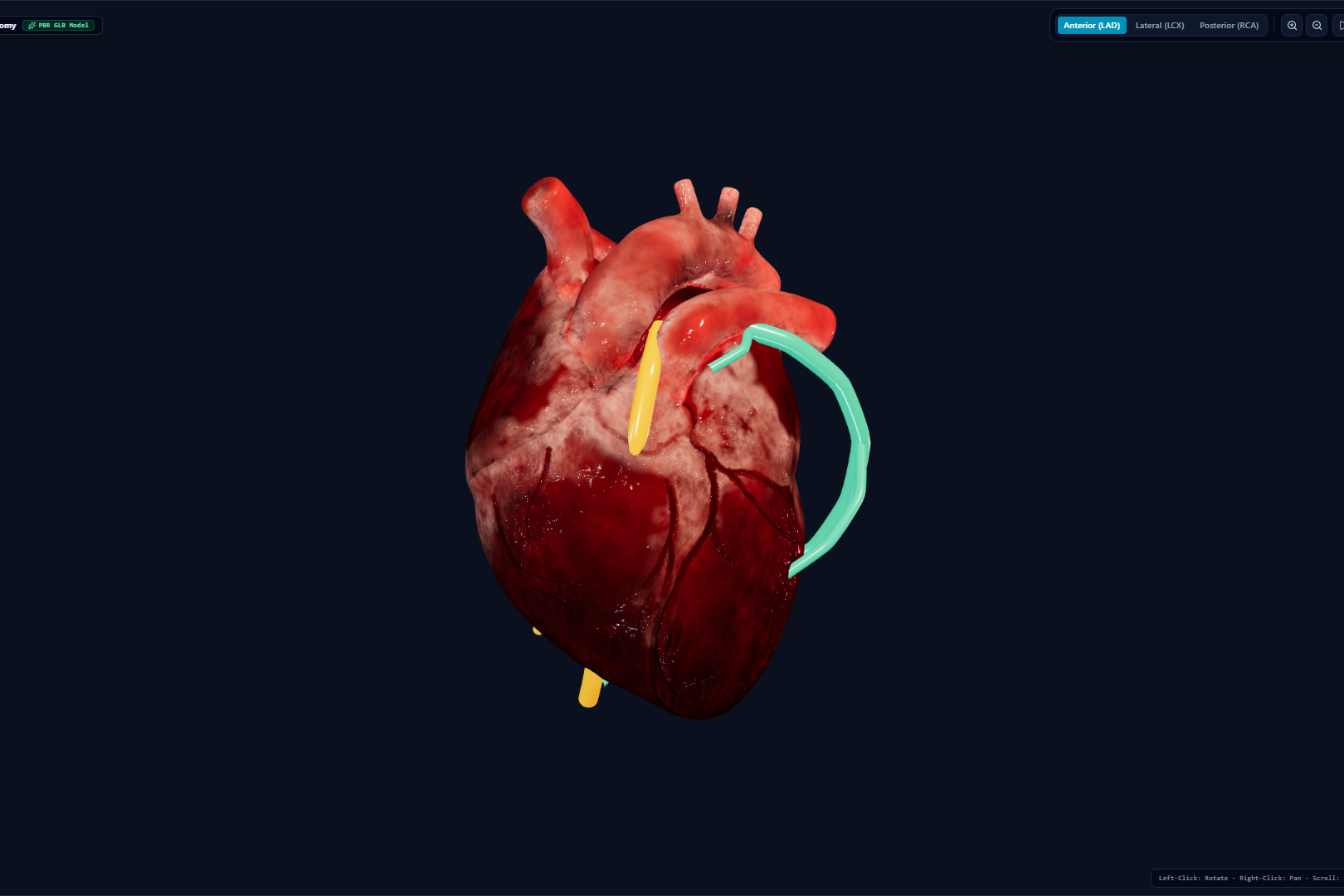
3D Heart Visualization
-
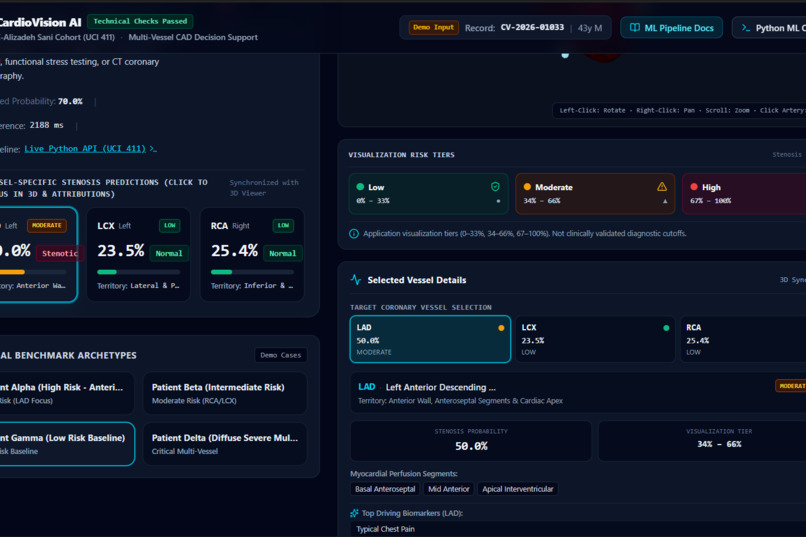
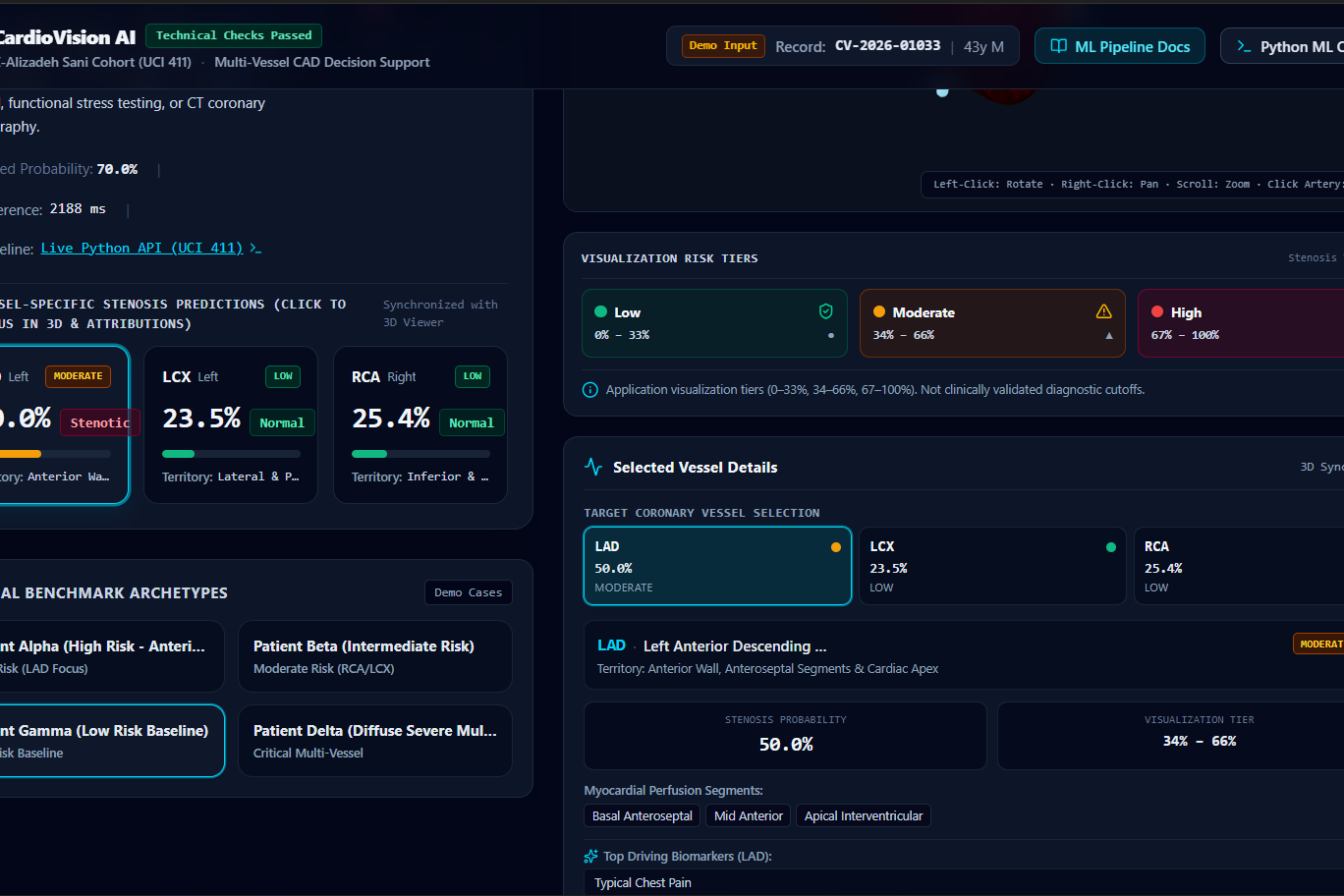
Coronary Vessel Predictions (LAD, LCX, RCA)
-
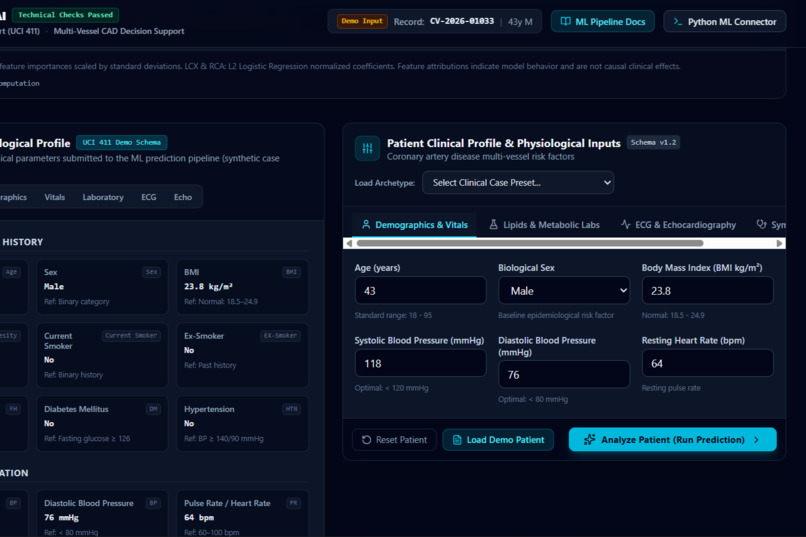
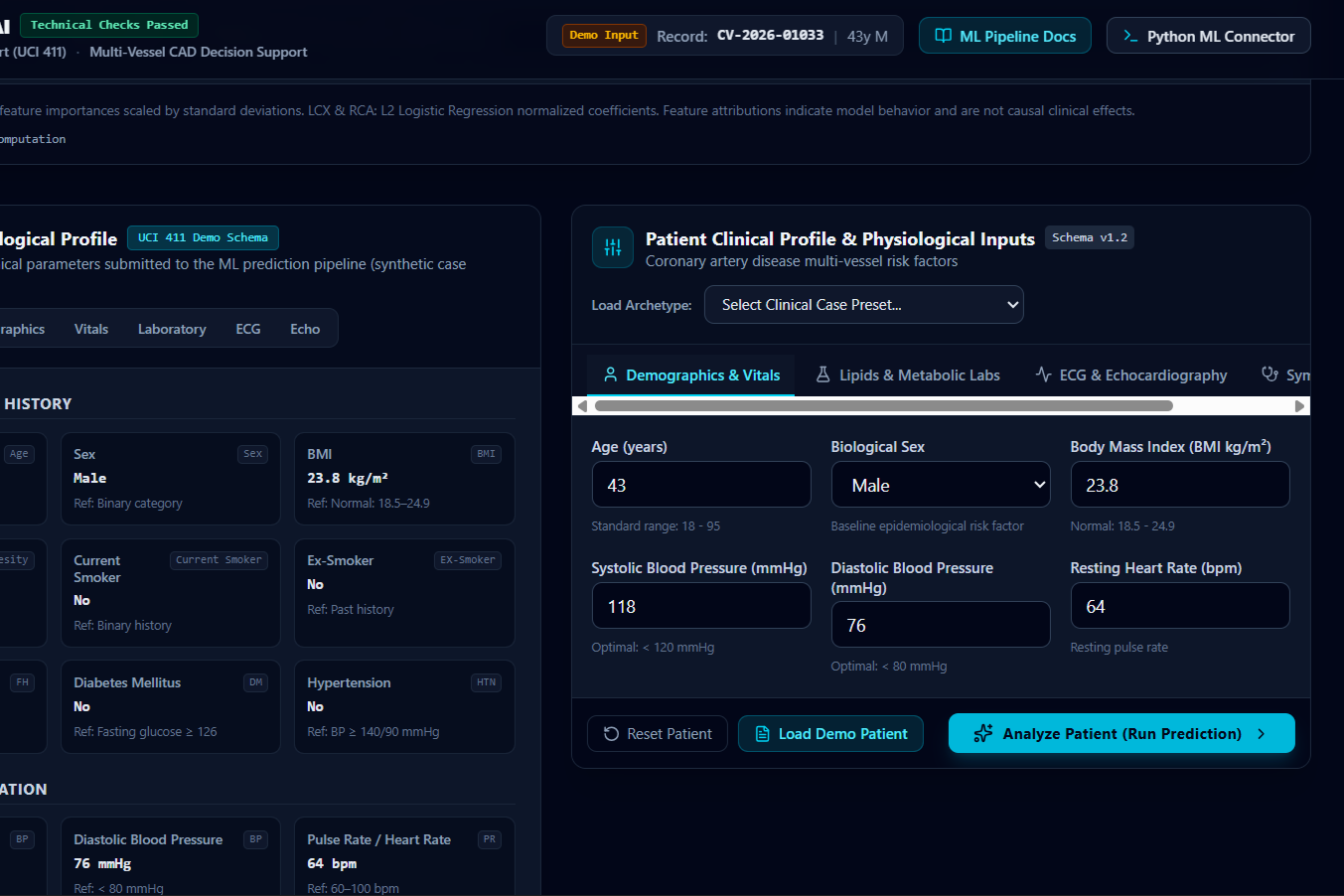
Patient Input Form
-
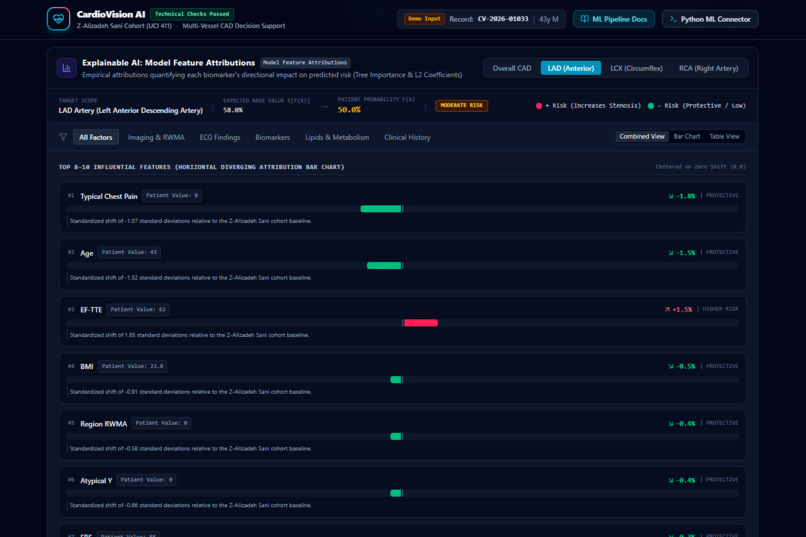
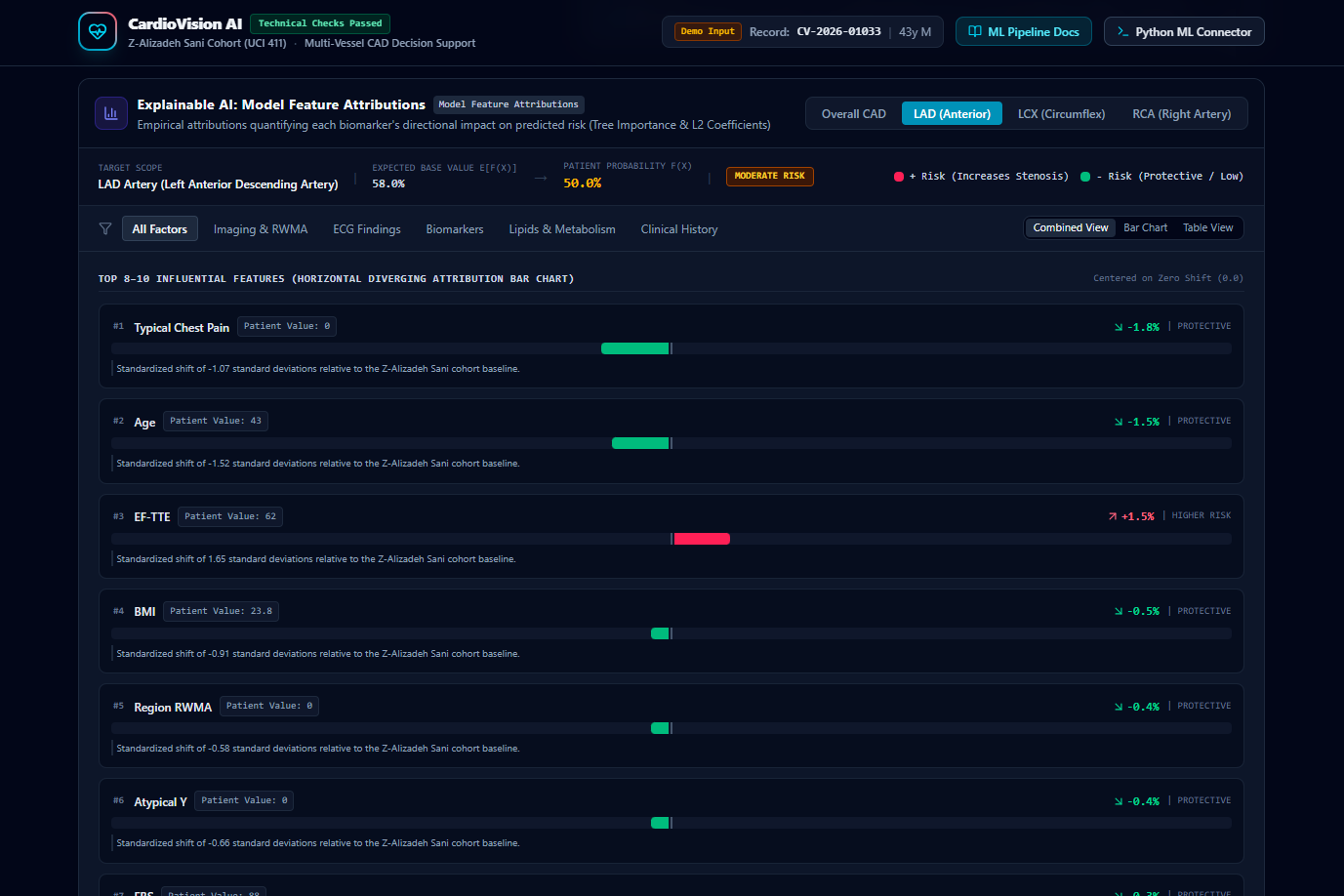
Model Feature Attributions — charts aur feature importance.
Inspiration
Cardiovascular diseases are a major health concern, and understanding potential risk factors can be challenging when information is presented only through numbers and medical terminology. We wanted to build a platform that makes machine learning-based cardiovascular risk estimates easier to explore and understand.
What It Does
CardioVision AI is an AI-powered cardiovascular risk assessment and visualization prototype. It predicts overall coronary artery disease (CAD) risk and estimates risk for three coronary arteries: LAD, LCX, and RCA.
The platform combines an interactive 3D heart visualization, vessel-specific risk estimates, model feature attributions, and model performance metrics in one dashboard.
How We Built It
- Frontend: React, TypeScript, and Tailwind CSS
- 3D Visualization: Three.js and React Three Fiber
- Machine Learning: Python and scikit-learn
- Dataset: Z-Alizadeh Sani Coronary Artery Disease Dataset
We trained separate models for overall CAD and individual coronary vessels. Random Forest was used for overall CAD and LAD prediction, while Logistic Regression was used for LCX and RCA prediction. We also excluded prediction target columns from model inputs to reduce target leakage.
Challenges We Ran Into
One of our main challenges was integrating machine learning predictions with an interactive 3D interface while keeping the results understandable. We also observed that model performance varies between prediction tasks, with LCX prediction remaining a significant limitation.
What We Learned
We learned how to connect a machine learning pipeline with a web-based dashboard, visualize vessel-level predictions in 3D, and communicate model performance and limitations transparently.
What's Next
Future improvements include improving vessel-level prediction performance, testing on larger and more diverse datasets, and conducting further validation before considering any clinical application.
Disclaimer
CardioVision AI is an educational prototype, not a medical diagnostic tool. Its predictions are estimates and must not replace professional medical evaluation.
Built With
- learning
- machine
- python
- react
- scikit-learn
- tailwind
- three.js
- typescript

Log in or sign up for Devpost to join the conversation.