-
-
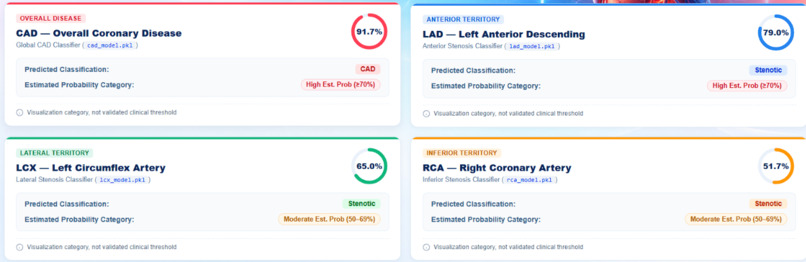
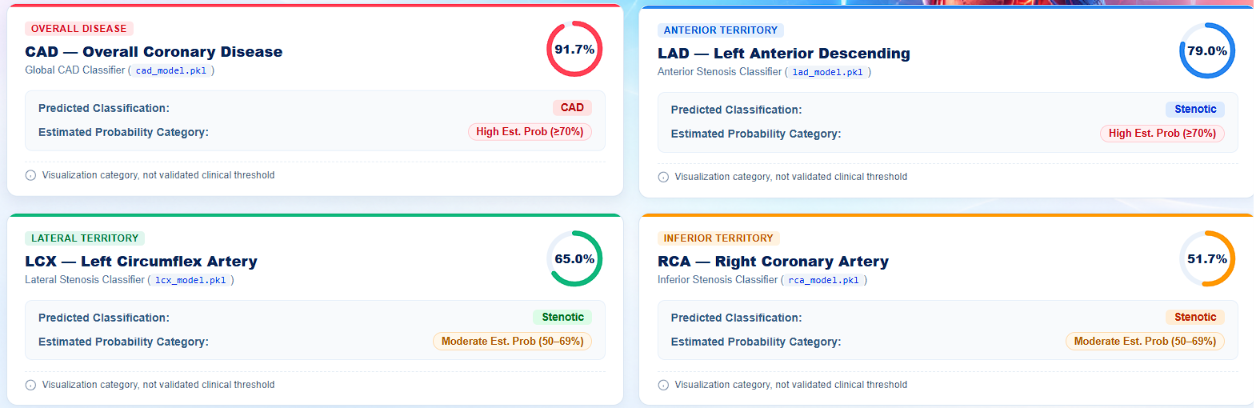
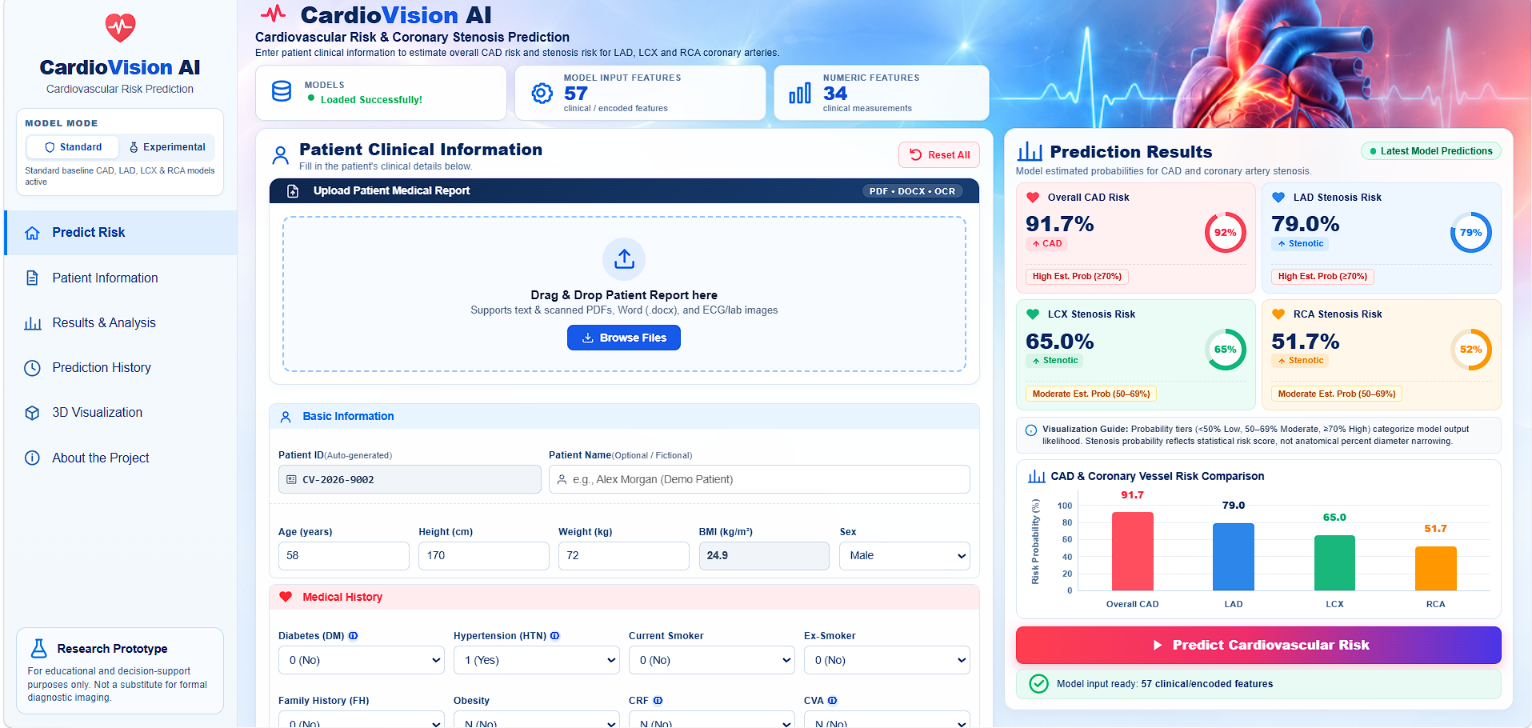
Four-Model Predictions: Four ML models estimate CAD, LAD, LCX, and RCA probabilities with visual risk categories.
-
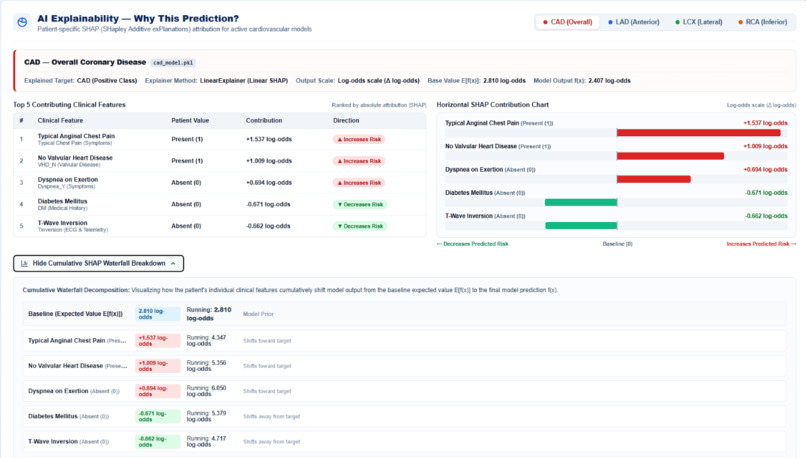
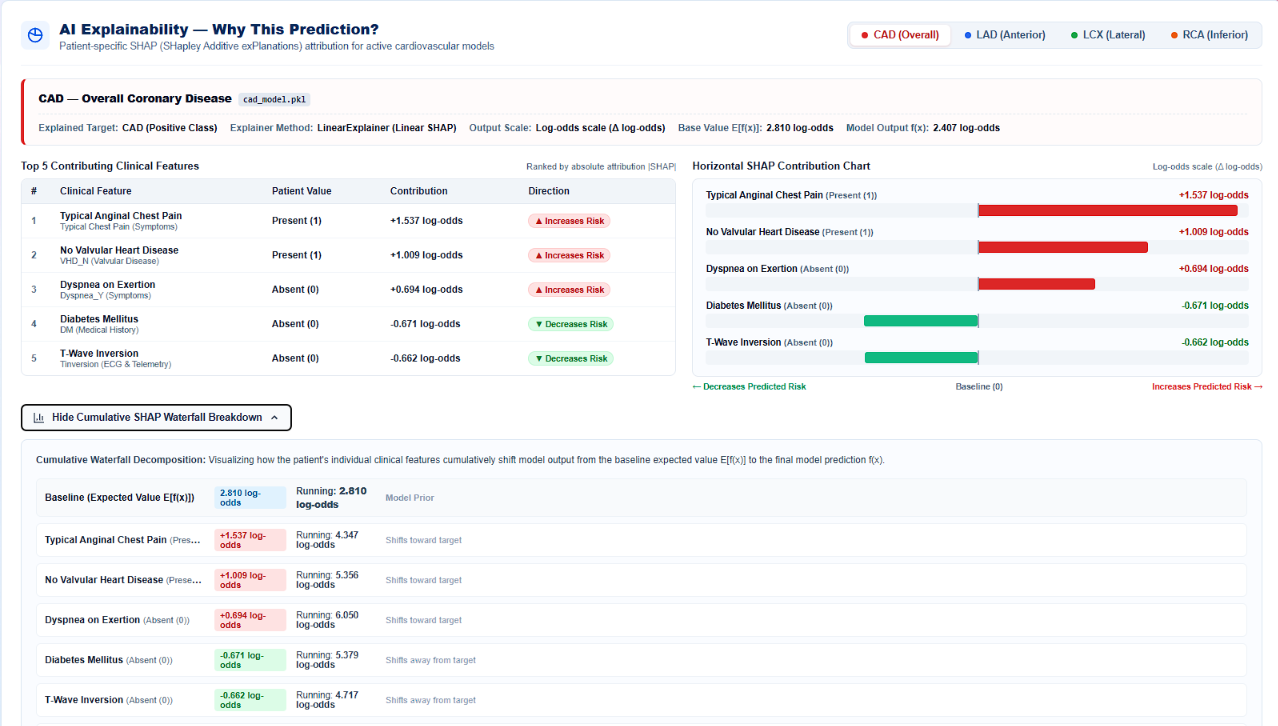
Explainable AI (SHAP): Patient-specific SHAP charts explain how clinical features influence model predictions.
-
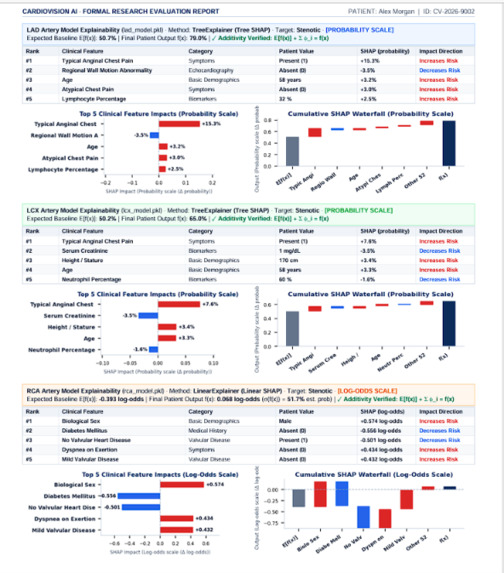
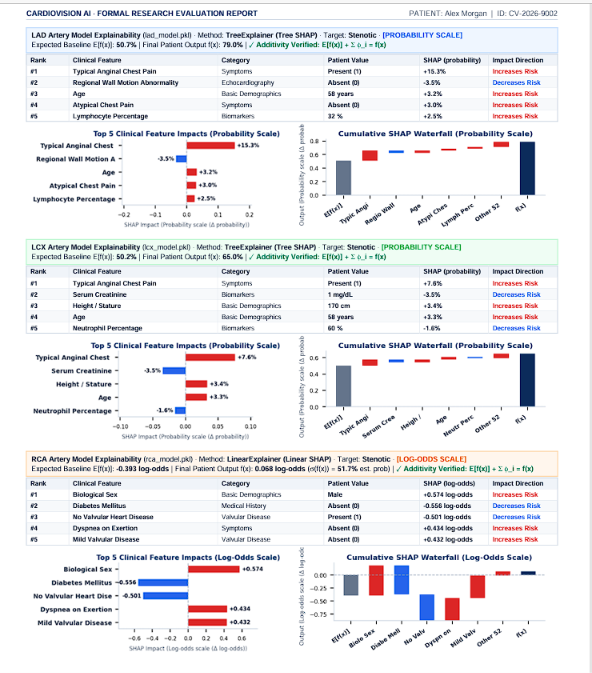
PDF Research Report: Automated PDF report containing cardiovascular predictions, SHAP explanations, and waterfall charts.
-
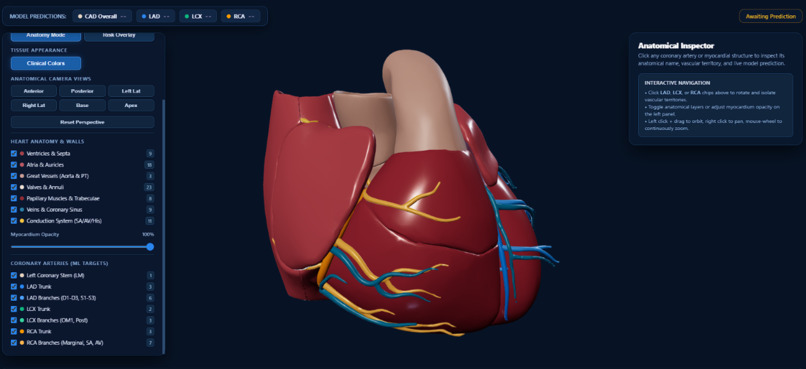
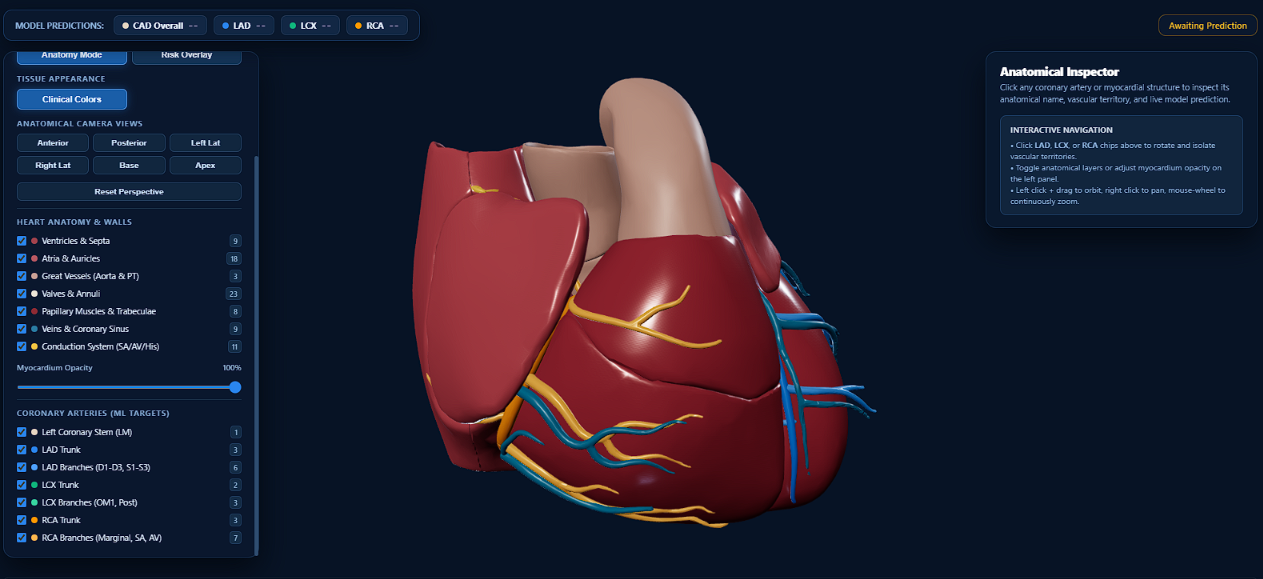
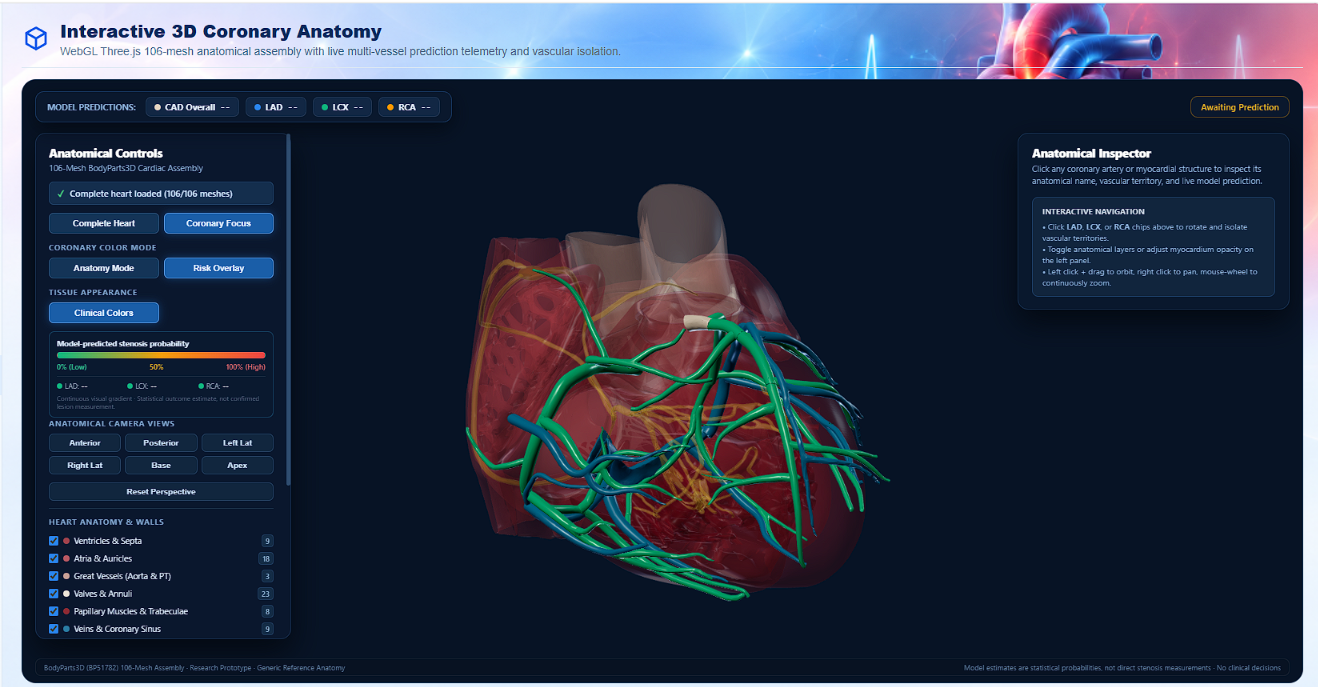
Interactive 3D Heart: Explore 106 anatomical heart meshes with rotation, zoom, vessel isolation, and camera controls.
-
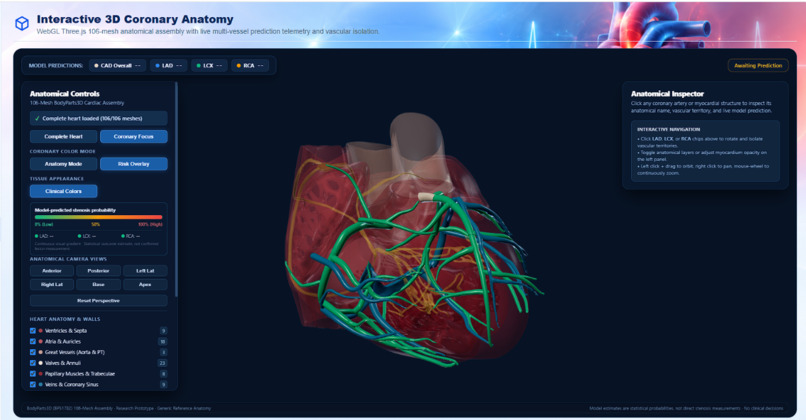
Coronary Risk Overlay: Interactive 3D coronary visualization with vessel highlighting, transparency, and risk overlay controls.
-
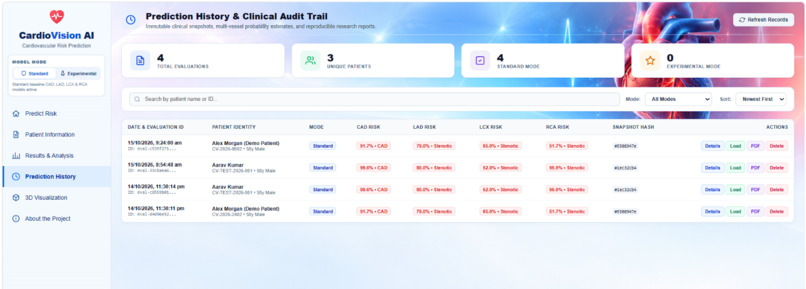
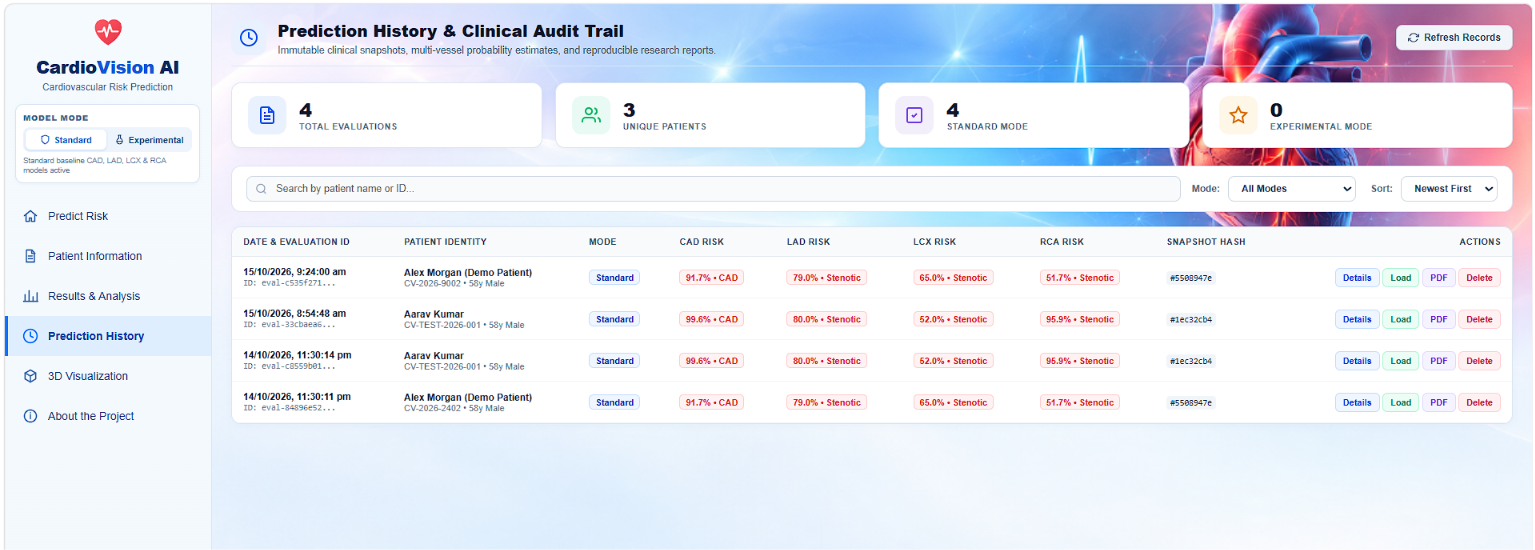
Prediction History: Tracks evaluation records, patient profiles, model predictions, feature snapshots, and downloadable reports.
-
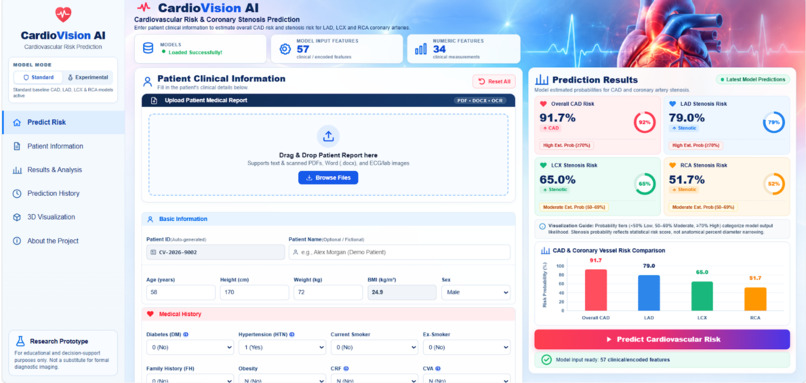
Main Dashboard: AI-powered dashboard for CAD, LAD, LCX, and RCA predictions with clinical inputs and risk visualization.
-
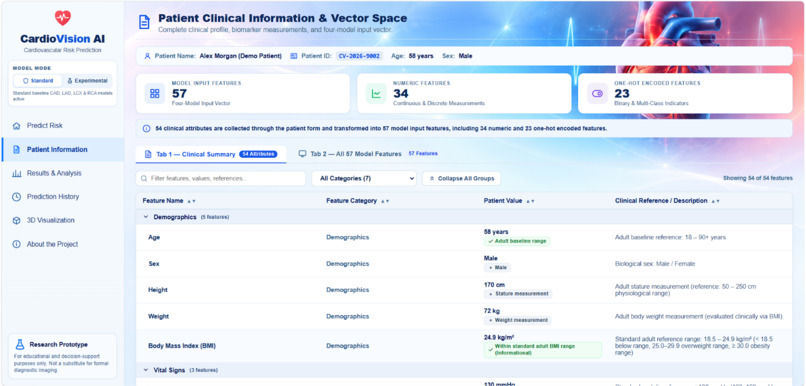
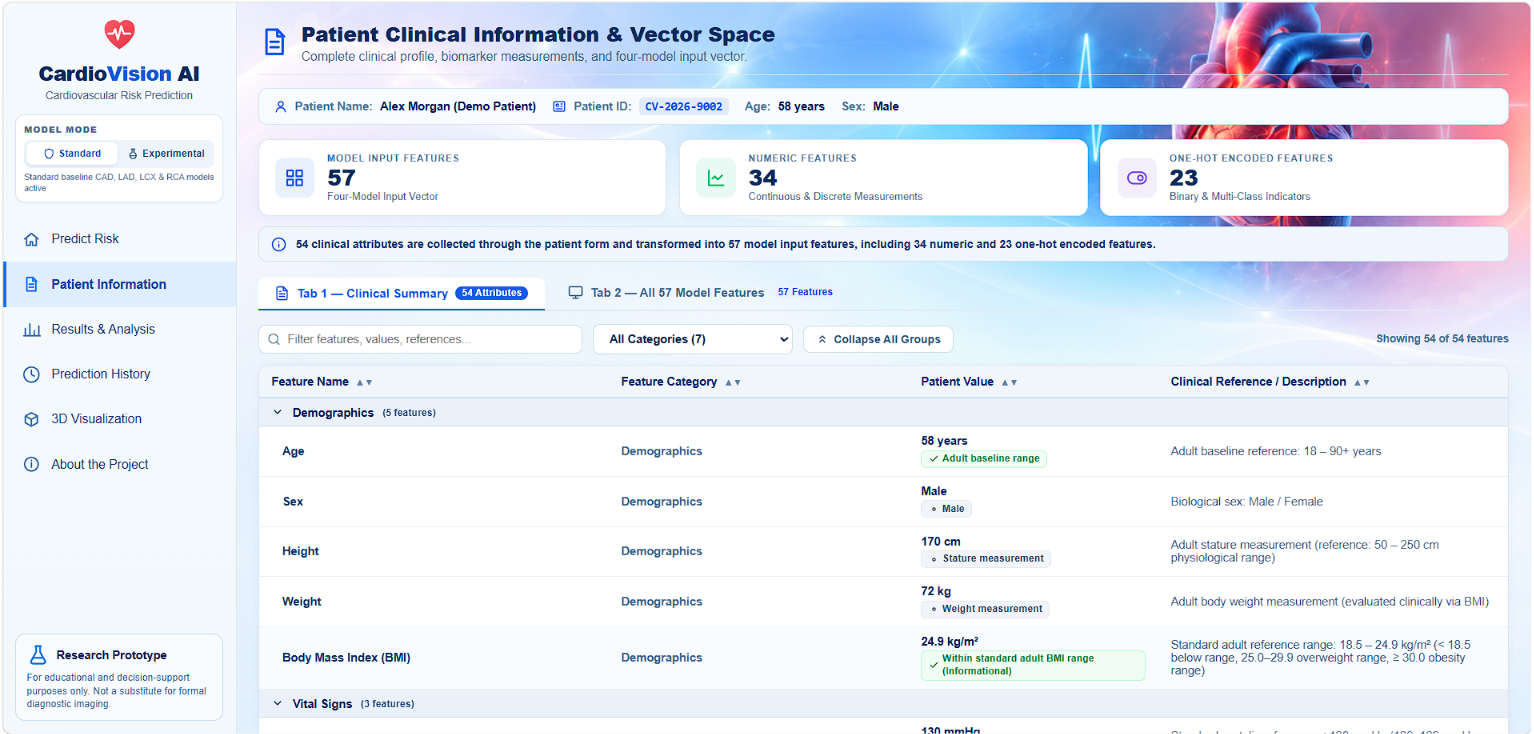
Patient Information: Displays 54 clinical attributes converted into 57 ML features: 34 numeric and 23 encoded.
CardioVision AI — Explainable Cardiovascular Intelligence with Interactive 3D Visualization
Inspiration
Cardiovascular diseases are among the leading causes of death worldwide. Understanding complex medical reports, interpreting machine learning predictions, and visualizing coronary artery conditions can be challenging.
We created CardioVision AI to explore how artificial intelligence, medical document processing, explainable machine learning, and interactive 3D anatomy can work together in one accessible research platform.
Our goal is to make cardiovascular AI predictions easier to explore, understand, and evaluate.
What It Does
CardioVision AI is a multimodal cardiovascular research prototype that combines clinical data analysis with explainable predictions and interactive anatomical visualization.
Its main features include:
- Four cardiovascular prediction models: Estimates model probabilities for Coronary Artery Disease (CAD), Left Anterior Descending (LAD), Left Circumflex (LCX), and Right Coronary Artery (RCA) targets.
- 57 clinical features: Processes demographic information, symptoms, medical history, laboratory values, and clinical observations.
- Medical document processing: Extracts supported clinical information from uploaded PDF and DOCX reports, with user review before prediction.
- Explainable AI using SHAP: Helps users understand which input features contribute to individual model predictions.
- Interactive 3D heart visualization: Displays anatomical heart structures using 106 OBJ meshes and Three.js.
- Standard and Experimental modes: Supports comparisons between baseline models and experimental LCX/RCA candidates.
- Prediction history: Maintains local prediction records for research and testing.
- Downloadable PDF reports: Generates structured research reports containing prediction results, explanations, and visualizations.
How We Built It
We developed CardioVision AI using a Python-based machine learning backend and an interactive web interface.
Machine Learning: We used scikit-learn models, including Random Forest and Logistic Regression, to generate predictions from a consistent 57-feature input vector.
Explainable AI: We integrated SHAP TreeExplainer and LinearExplainer to provide patient-specific model explanations.
Medical Document Processing: We built a clinical information extraction pipeline supporting PDF and DOCX files, including OCR where required.
Web Application: We used Streamlit for the application interface and a separate Python API server for backend endpoints and 3D assets.
3D Visualization: We integrated Three.js with anatomical OBJ meshes to create an interactive heart viewer.
Reporting and Testing: We added ReportLab PDF exports, SQLite-based local history, automated regression tests, and model evaluation scripts.
Challenges We Faced
One major challenge was maintaining consistency between the 57 clinical input features and the features expected by each trained model.
Another challenge was integrating the interactive Three.js heart viewer into the Streamlit application while handling browser iframe restrictions, asset loading, and separate application ports.
We also worked on synchronizing prediction results with SHAP explanations, extracting clinical values reliably from medical documents, and ensuring that experimental models were clearly distinguished from baseline models.
Model evaluation was especially important because performance varies across cardiovascular targets. We therefore included evaluation documentation and avoided presenting model outputs as clinically validated diagnoses.
Accomplishments
We are proud to have integrated several technologies into a single research application:
- Four cardiovascular prediction targets.
- Six baseline and experimental model artifacts.
- A consistent 57-feature prediction pipeline.
- Patient-specific SHAP explanations.
- An interactive 106-mesh anatomical heart viewer.
- PDF/DOCX clinical data extraction.
- Automated regression testing and research PDF exports.
What We Learned
This project strengthened our understanding of machine learning evaluation, explainable AI, multimodal data processing, Python backend development, interactive 3D visualization, and end-to-end software testing.
We also learned the importance of data consistency, responsible communication of medical AI results, and distinguishing experimental research predictions from clinical decision-making.
What's Next
Our future goals include improving LCX and RCA model performance, performing stronger external validation, enhancing model calibration, improving medical document extraction, and deploying the application through a secure public research demo.
We also aim to expand the 3D visualization experience and improve the connection between anatomical structures and model explanations.
Responsible AI Disclaimer
CardioVision AI is an educational and research prototype, not a clinically validated medical device. Its predictions are model outputs, not confirmed diagnoses, direct measurements of coronary artery blockage, or substitutes for professional medical assessment.
The interactive 3D heart is an anatomical visualization and does not reconstruct a patient's actual coronary anatomy.
Built With
- css3
- explainable-ai
- git
- html5
- javascript
- logistic-regression
- machine-learning
- numpy
- ocr
- pandas
- pdf-processing
- python
- random-forest
- reportlab
- scikit-learn
- shap
- sqlite
- streamlit
- three.js

Log in or sign up for Devpost to join the conversation.