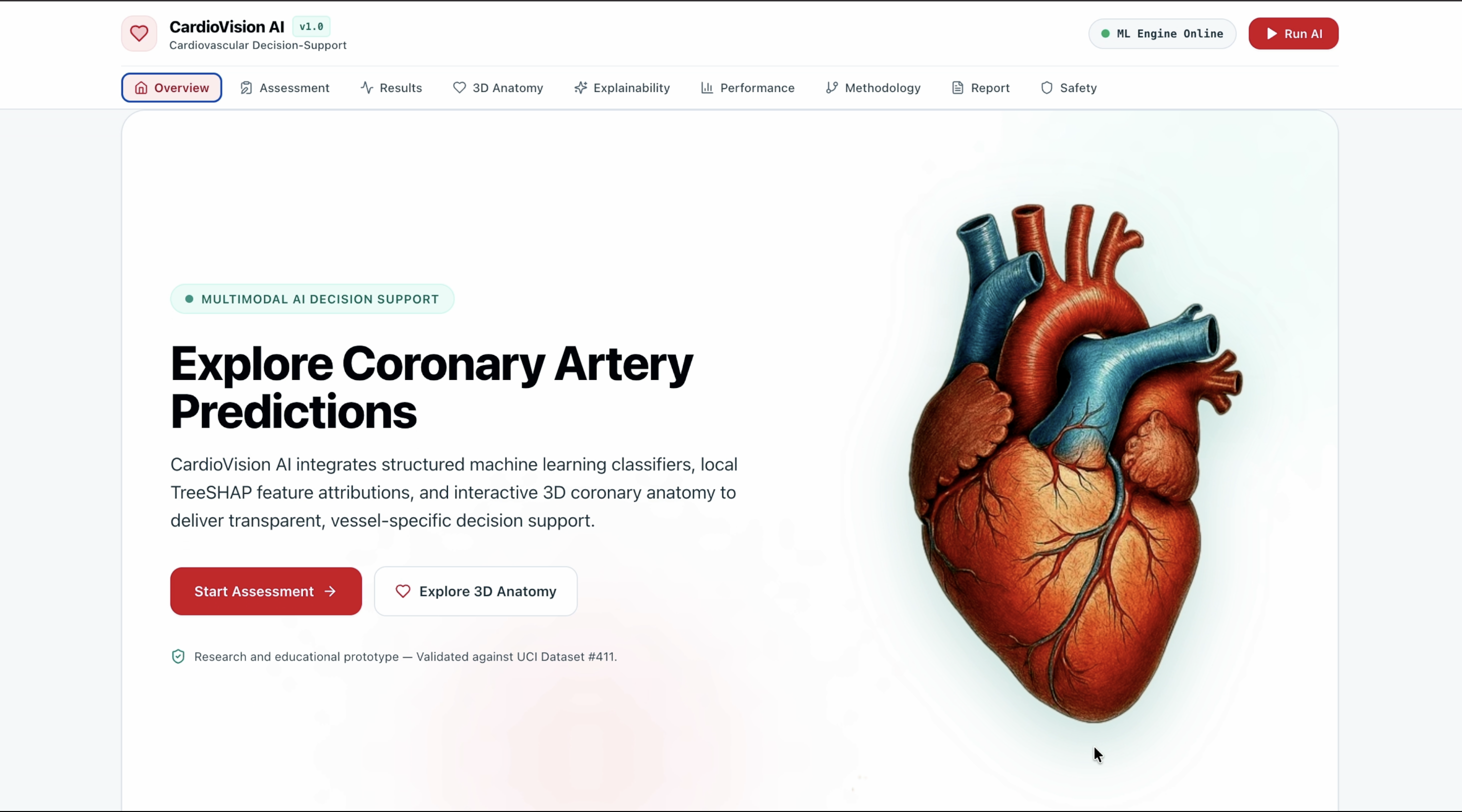
CardioVision AI — AI-Assisted Cardiovascular Decision Support
Inspiration
Cardiovascular diseases remain a major health challenge, and understanding coronary artery disease (CAD) can be difficult when clinical measurements, prediction models, and explanations are scattered across different tools. We wanted to explore how artificial intelligence, explainable machine learning, and interactive 3D visualization could come together in one educational and research-oriented platform.
This inspired us to build CardioVision AI, a prototype that brings cardiovascular risk estimation, model-performance analysis, feature-level explanations, and interactive heart anatomy into a single experience.
Our goal was not to replace medical professionals, but to demonstrate how AI models can make their predictions more interpretable and how complex machine-learning outputs can be presented in a more accessible way.
What it does
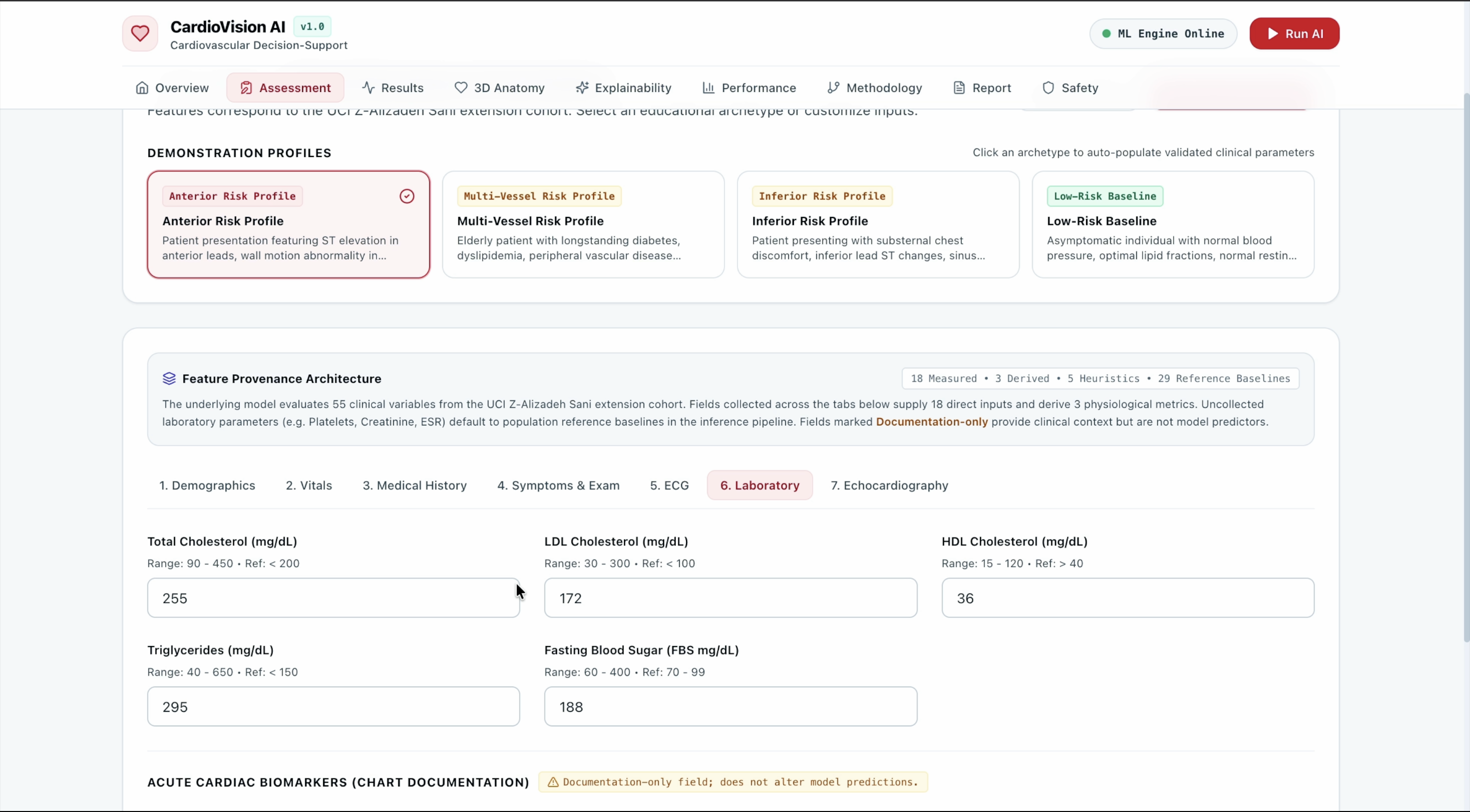
CardioVision AI provides an interactive environment for exploring machine-learning-based cardiovascular risk estimates.
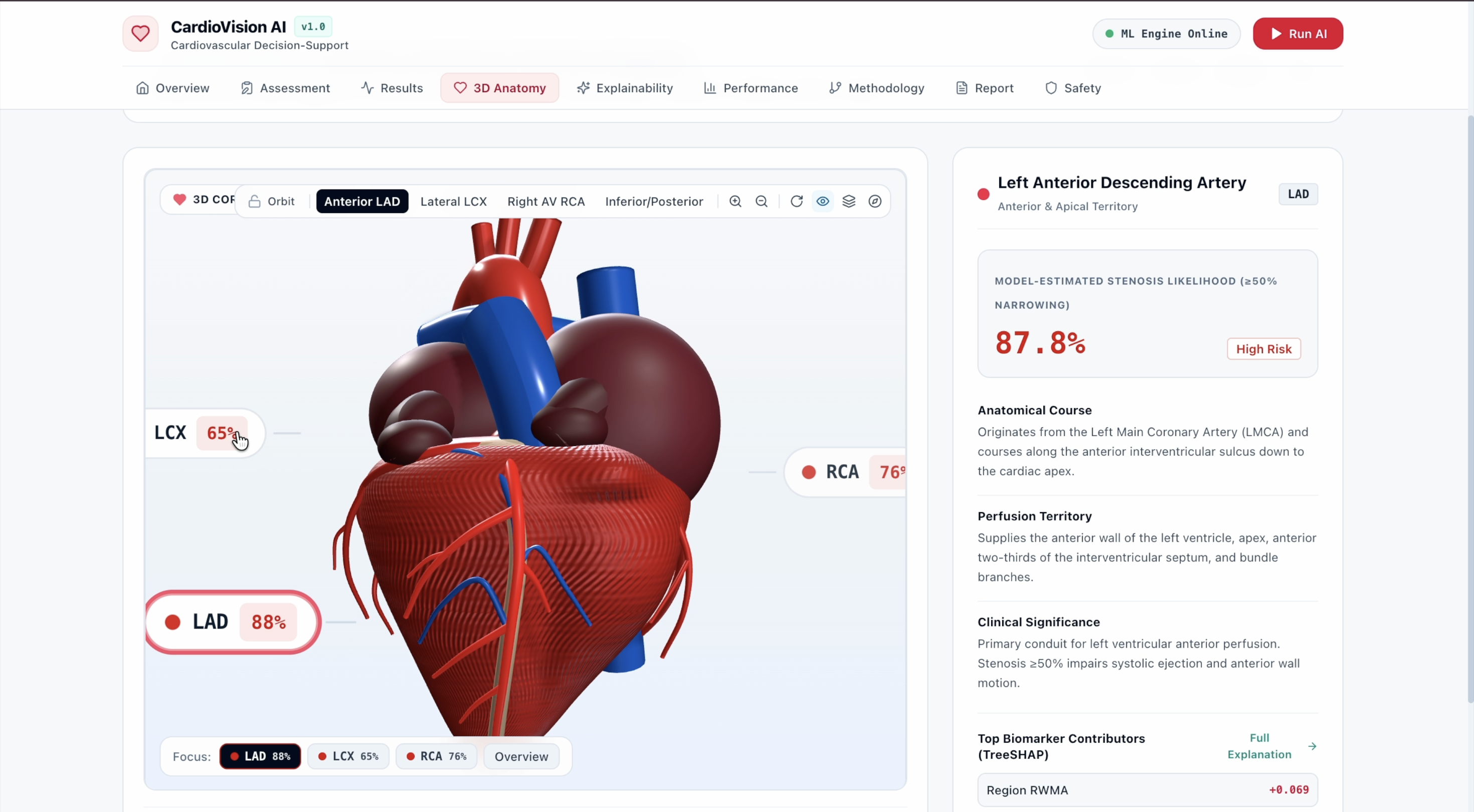
- Multi-target prediction: Estimates risk scores for coronary artery disease (CAD) and three coronary arteries: LAD, LCX, and RCA.
- Interactive 3D anatomy: Provides a procedural 3D heart visualization to help users explore cardiac anatomy.
- Explainable AI: Uses TreeSHAP-based explanations to illustrate how input features influence model outputs.
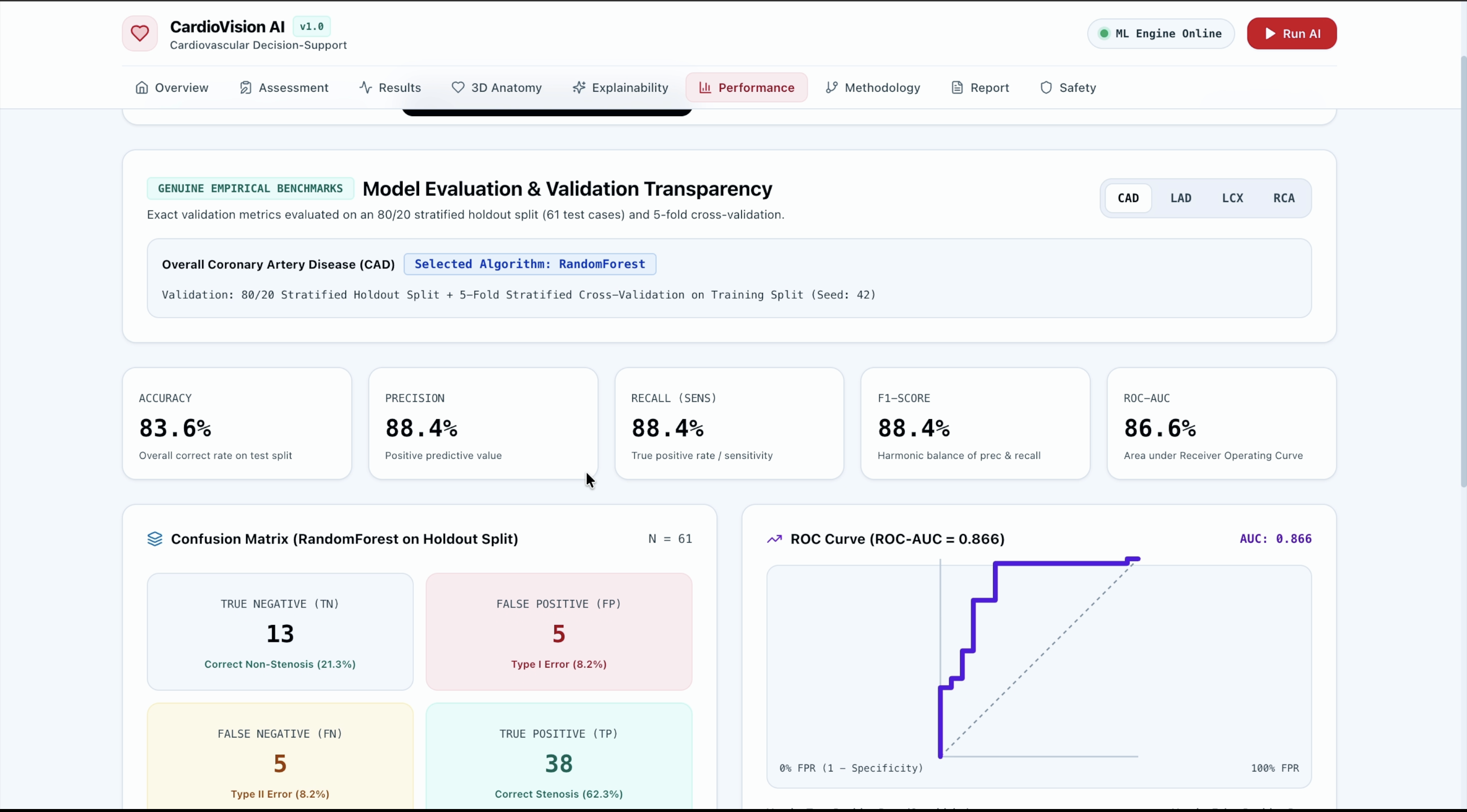
- Model performance dashboard: Presents evaluation results, including ROC-AUC scores and other performance visualizations.
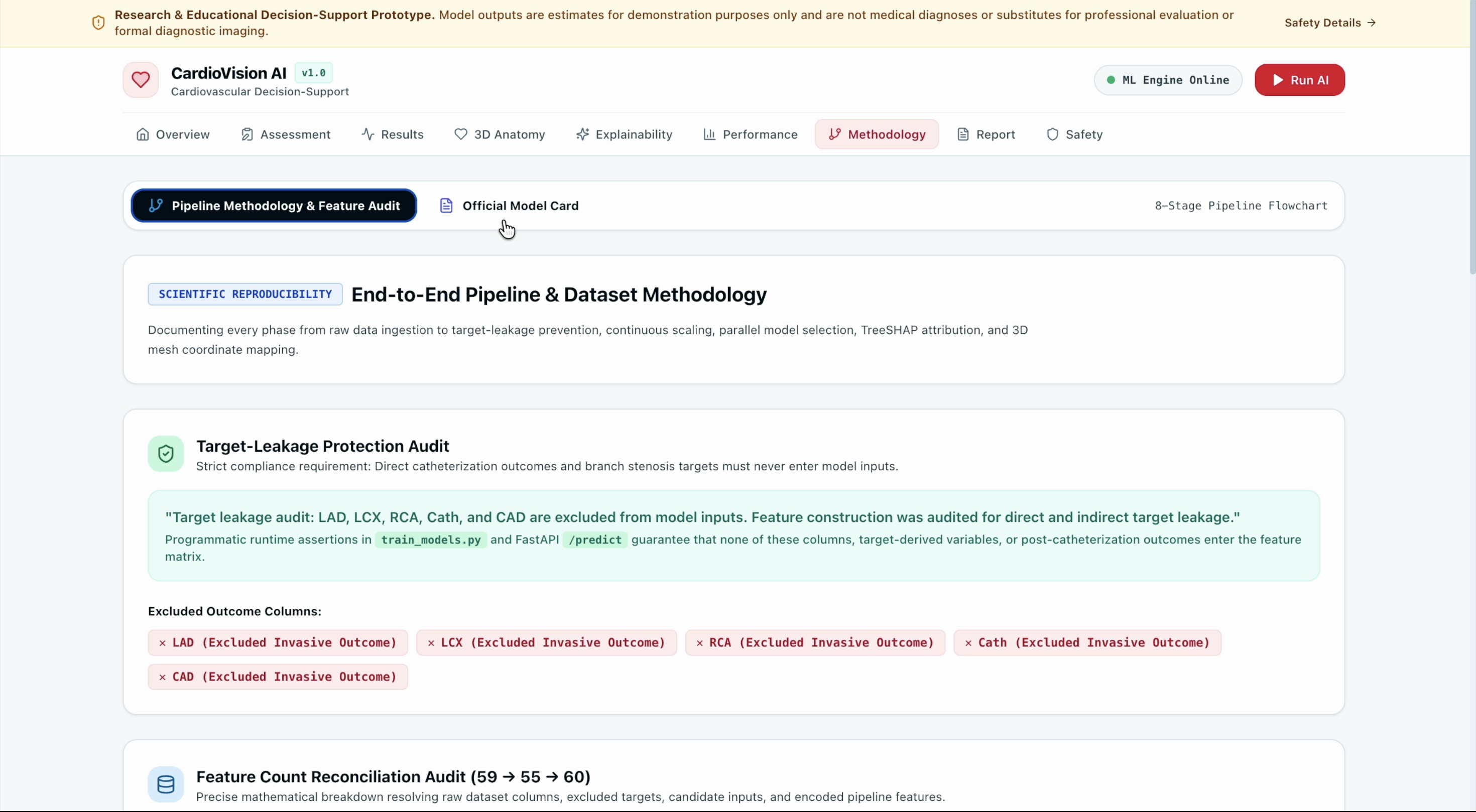
- Data and methodology transparency: Explains the dataset, preprocessing, feature selection, validation approach, and limitations.
- Safety-focused reporting: Communicates the model's estimates and limitations without presenting them as confirmed diagnoses.
How we built it
We developed CardioVision AI as a web-based prototype combining a frontend interface, a Python machine-learning backend, model evaluation, explainability, and 3D visualization.
The machine-learning workflow uses the Z-Alizadeh Sani dataset and its UCI extension. The dataset contains 303 patient records and 59 raw columns. We established separate prediction targets for CAD, LAD, LCX, and RCA, with CAD derived from the catheterization outcome field.
A key engineering decision was to exclude outcome-related information from the input features to reduce data leakage. We used a stratified train-test split and stratified cross-validation, with preprocessing performed within the training folds. We also distinguish model-derived predictions from baseline or heuristic outputs through feature provenance and prediction-source labeling.
For model interpretability, we integrated TreeSHAP explanations to show how features contribute to model outputs. We also built model-performance views and a procedural 3D heart visualization using Three.js and React Three Fiber.
Model evaluation
In our reported held-out test evaluation, the ROC-AUC results were:
- CAD: 0.866
- LAD: 0.767
- LCX: 0.686
- RCA: 0.702
These results show variation across prediction targets, with CAD achieving the strongest discrimination in this evaluation. They should not be interpreted as proof of clinical readiness or generalization to other populations.
Challenges we faced
One of our biggest challenges was maintaining a clear separation between predictive inputs and outcome information. Leakage can make a model appear more accurate than it really is, so we focused on excluding outcome-related fields and keeping preprocessing within the cross-validation workflow.
Another challenge was making model explanations meaningful without overstating what they prove. SHAP values describe model behavior; they do not establish medical causation. We also needed to communicate the difference between risk scores, operational display categories, and calibrated clinical probabilities.
Finally, combining machine learning, model evaluation, explainability, a web interface, and 3D anatomy into one application required careful integration and clear communication between the different components.
What we learned
Building CardioVision AI strengthened our understanding of the complete machine-learning workflow: dataset preparation, leakage prevention, stratified validation, model evaluation, explainability, backend integration, and user-facing visualization.
We learned that building a responsible AI application involves more than producing predictions. It also requires transparent methodology, clear limitations, understandable explanations, and careful communication of uncertainty.
Future scope
Potential future improvements include external validation on independent datasets, probability calibration, stronger frontend testing, broader performance analysis, and more clinically grounded anatomical visualization. These improvements would be necessary before considering any real-world clinical application.
Disclaimer
CardioVision AI is a research and educational prototype, not a medical diagnostic device. Its prediction scores are uncalibrated, have not been externally validated, and must not be used to diagnose disease or guide treatment. The 3D heart is a procedural anatomical visualization, not a patient-specific reconstruction or a representation of confirmed plaque locations. Medical decisions must be made by qualified healthcare professionals.
Built With
- ai
- artificial
- data
- explainable
- fastapi
- fiber
- html
- intelligence
- learning
- machine
- python
- react
- scikit-learn
- shap
- three
- three.js
- typescript
- visualization
- xgboost

Log in or sign up for Devpost to join the conversation.