-
-
-
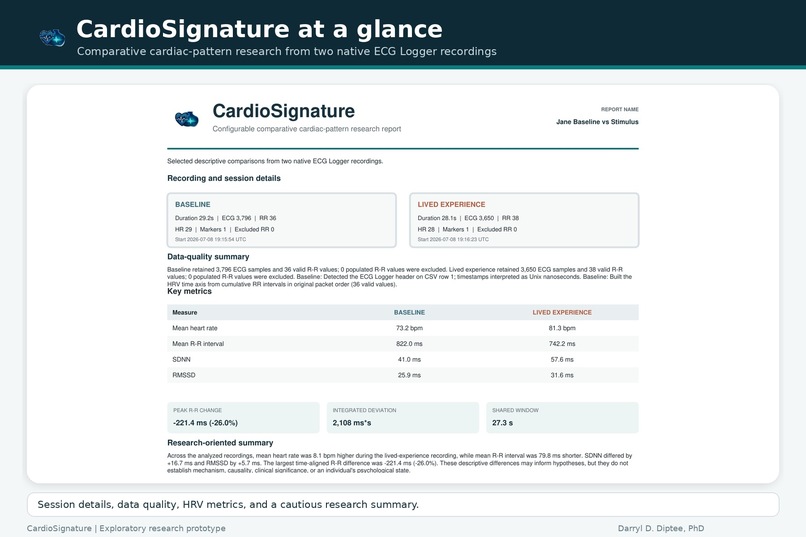
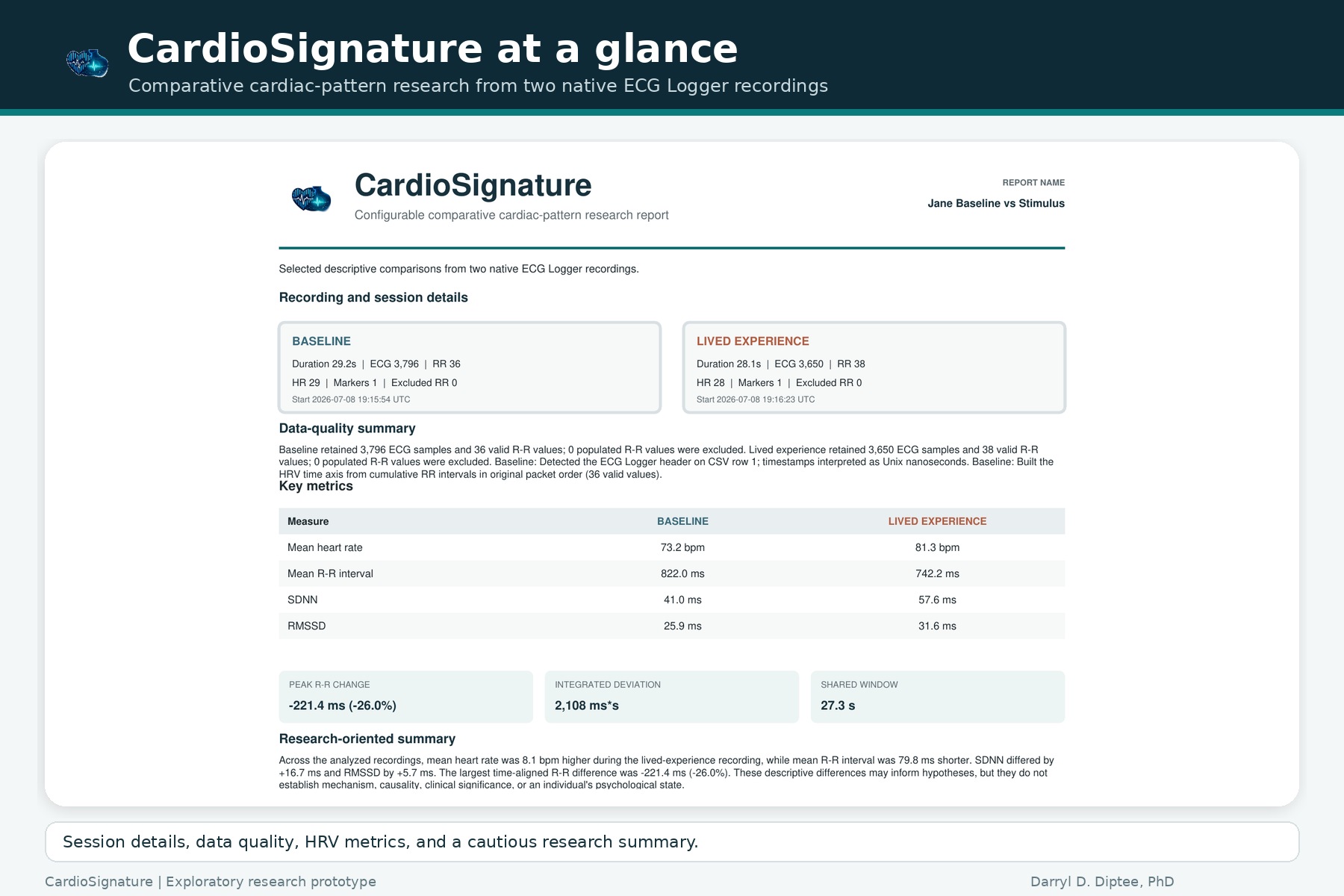
CardioSignature overview
-
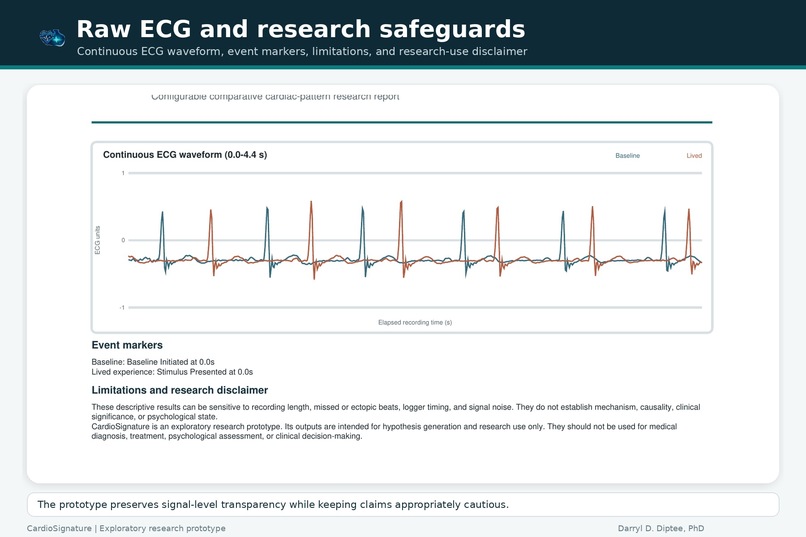
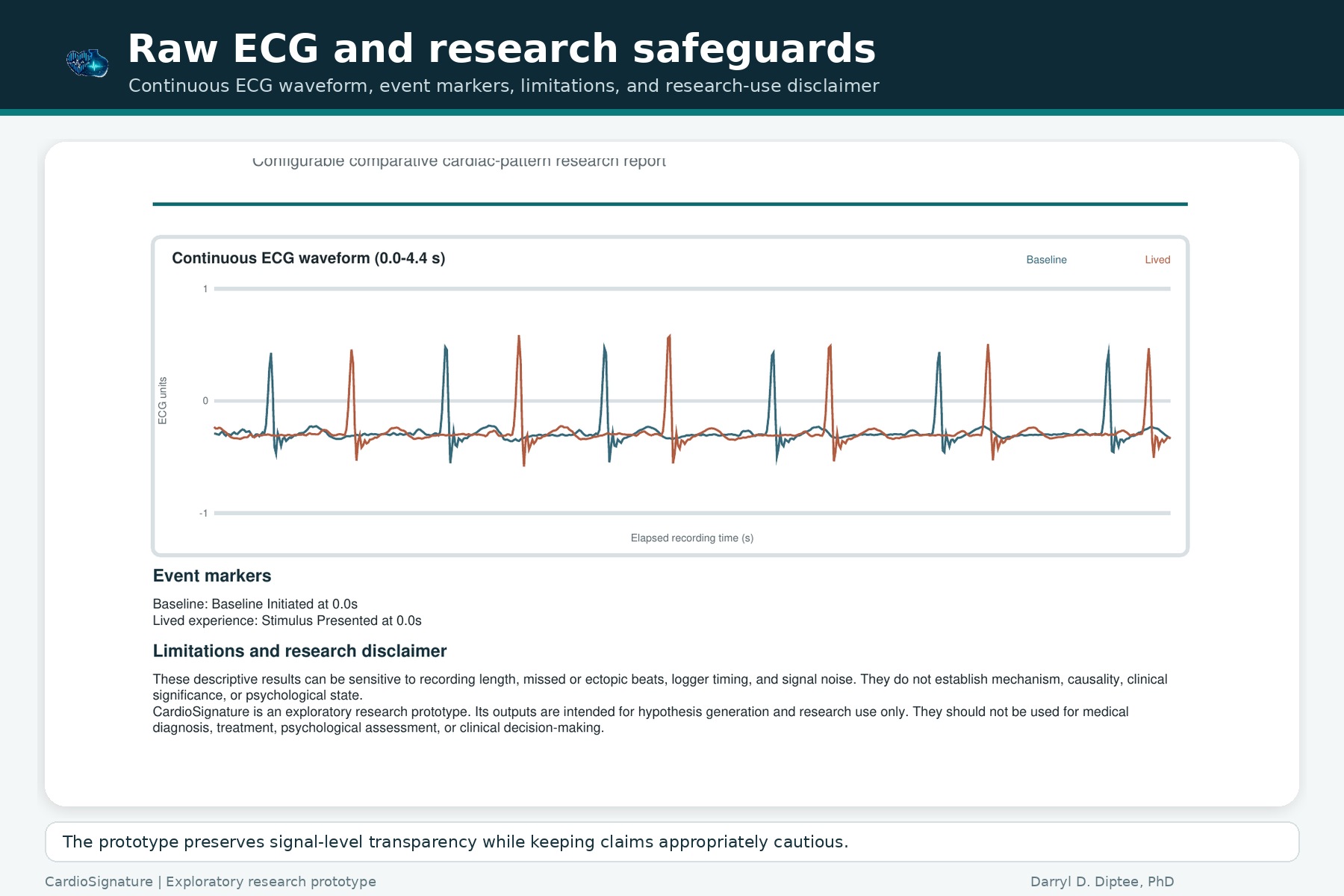
Raw ECG and disclaimer
-
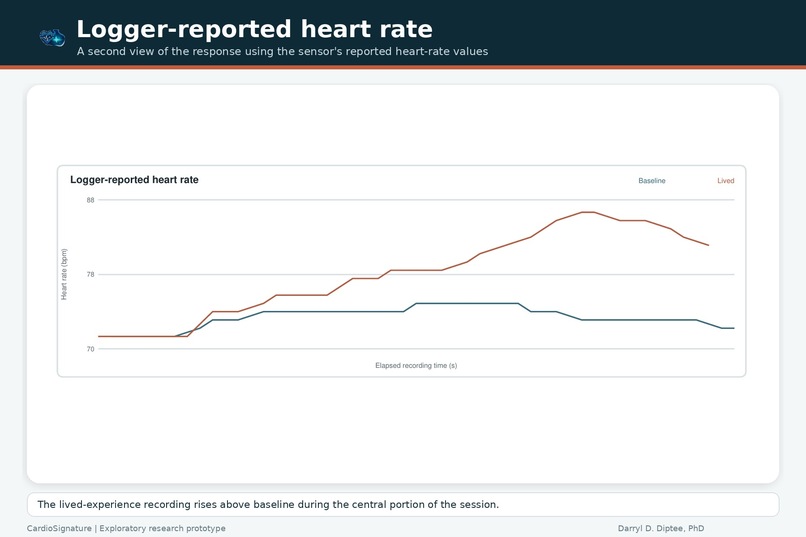
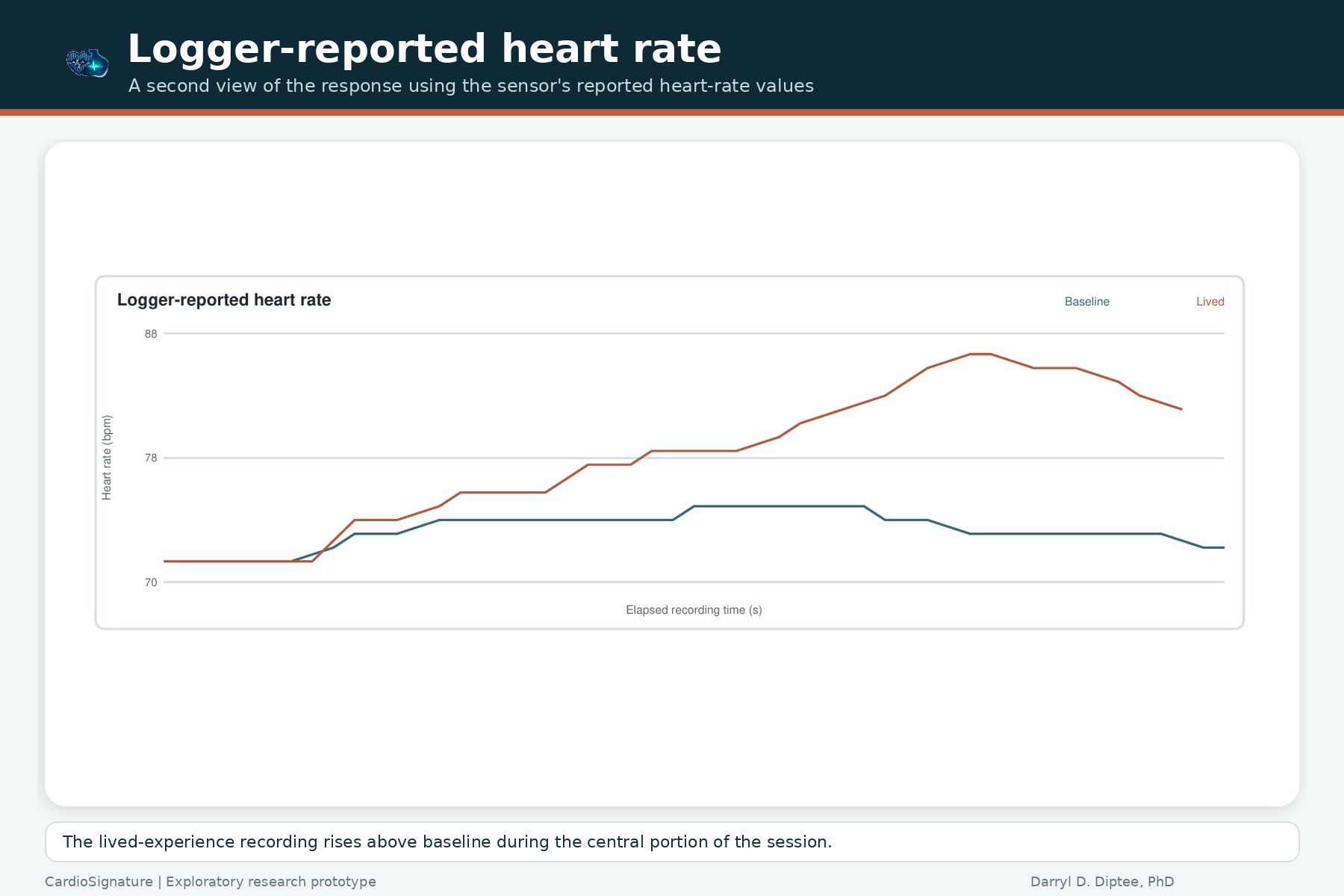
Logger-reported heart rate
-
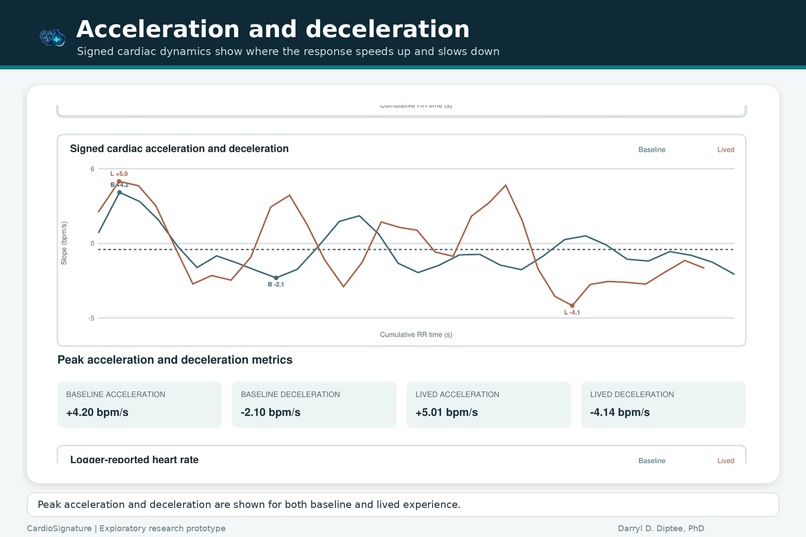
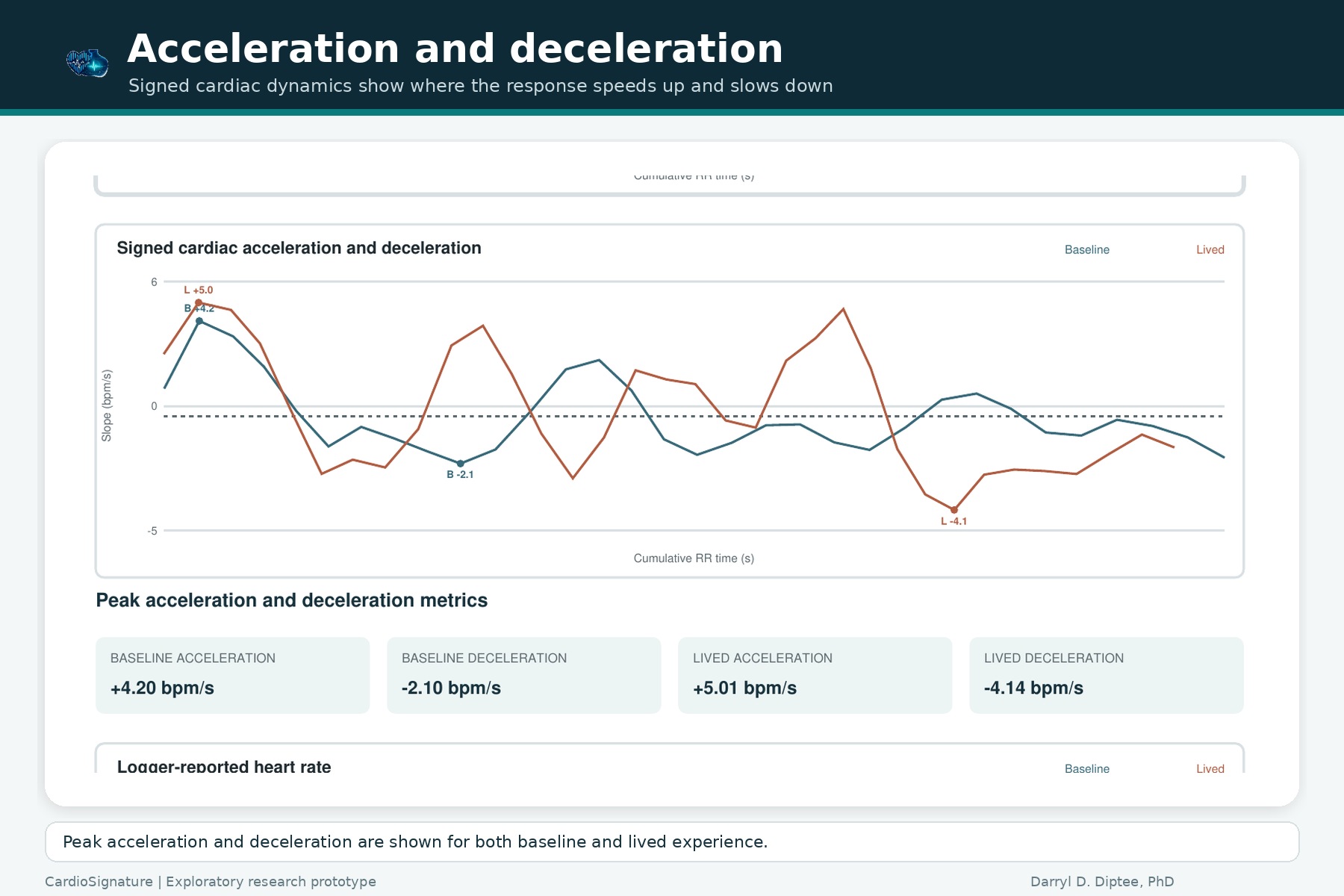
Acceleration and deceleration
-
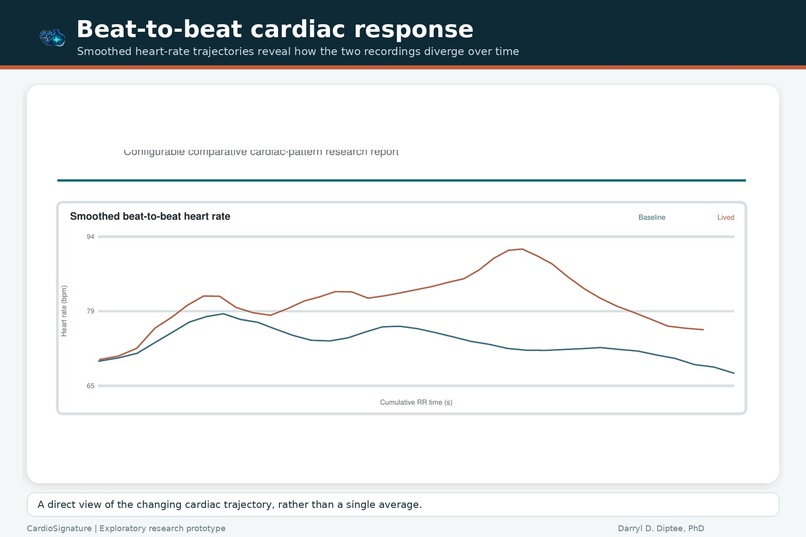
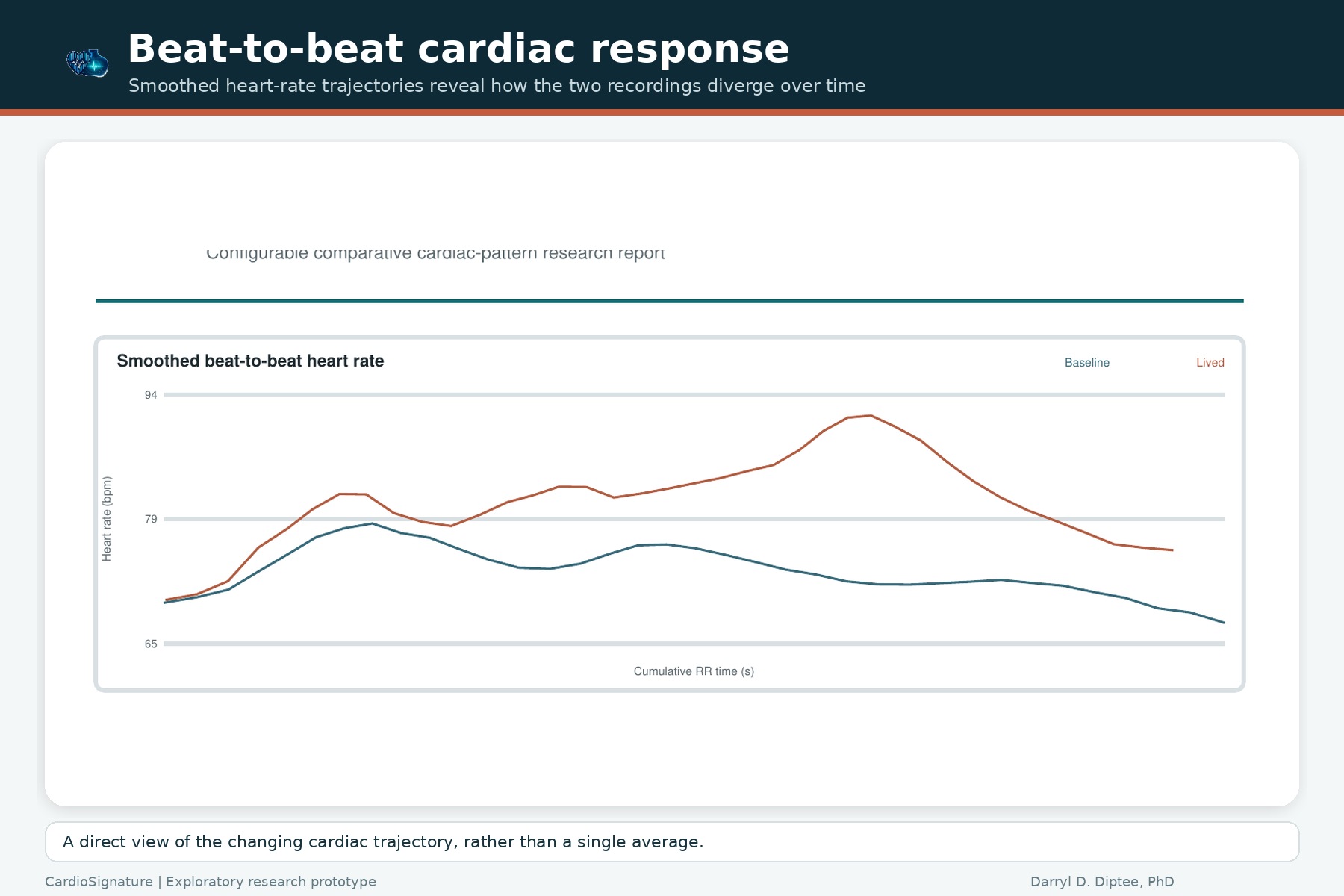
Smoothed heart-rate response
-
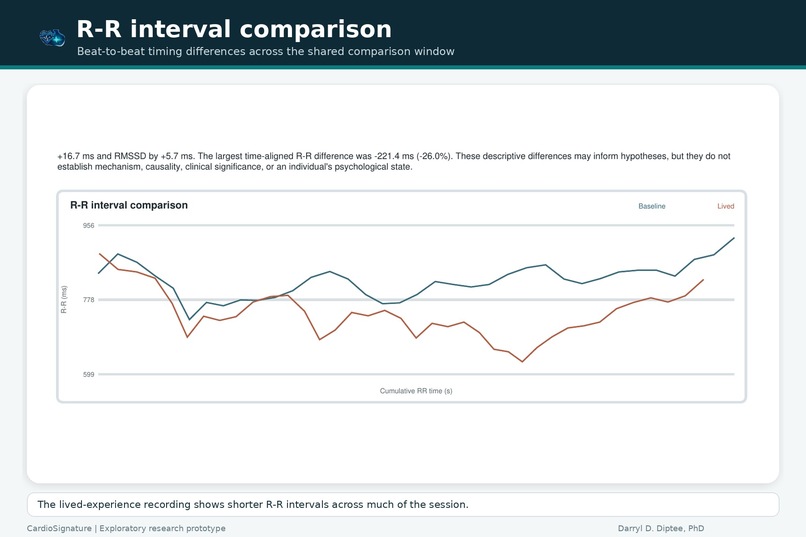
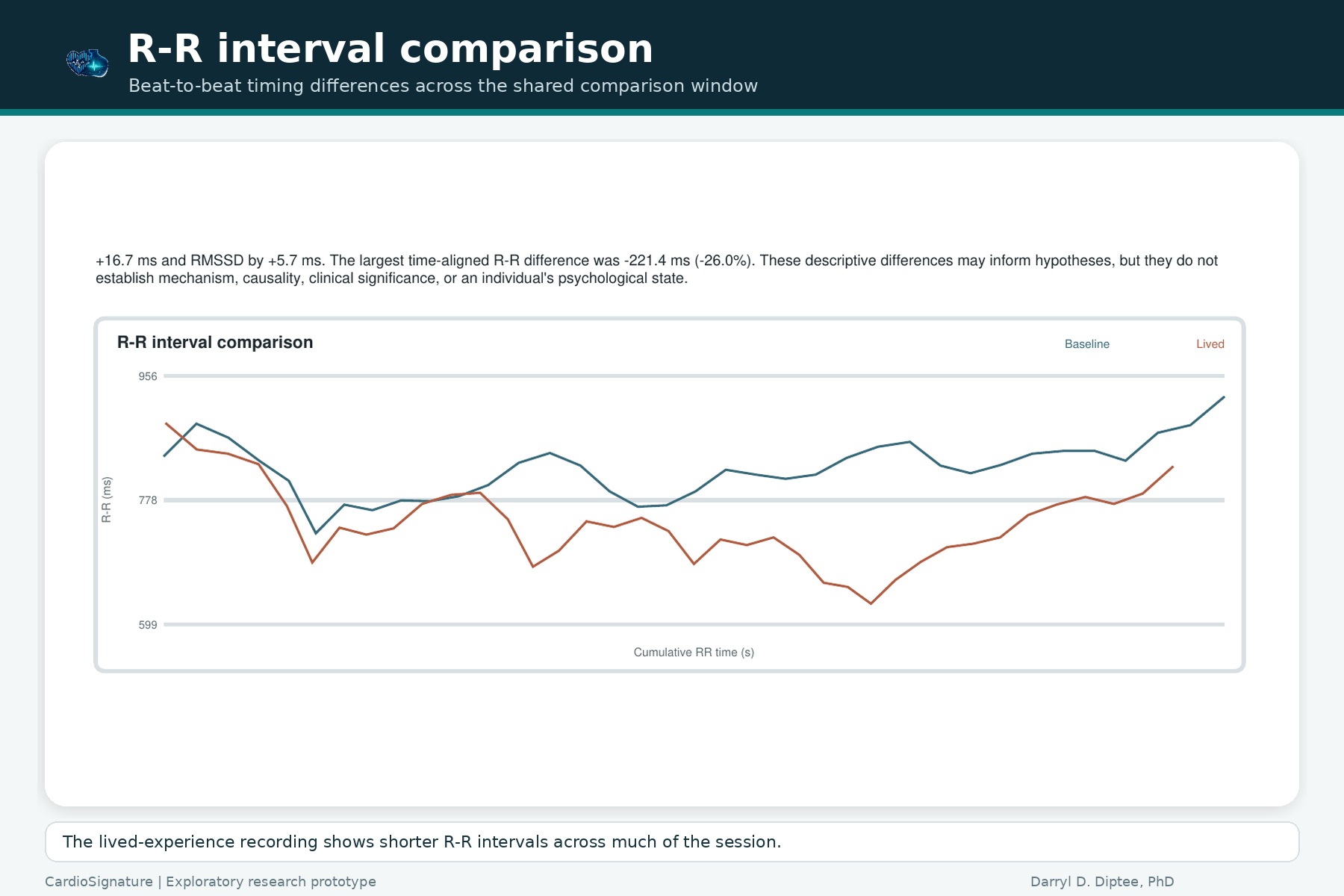
R-R interval comparison
-
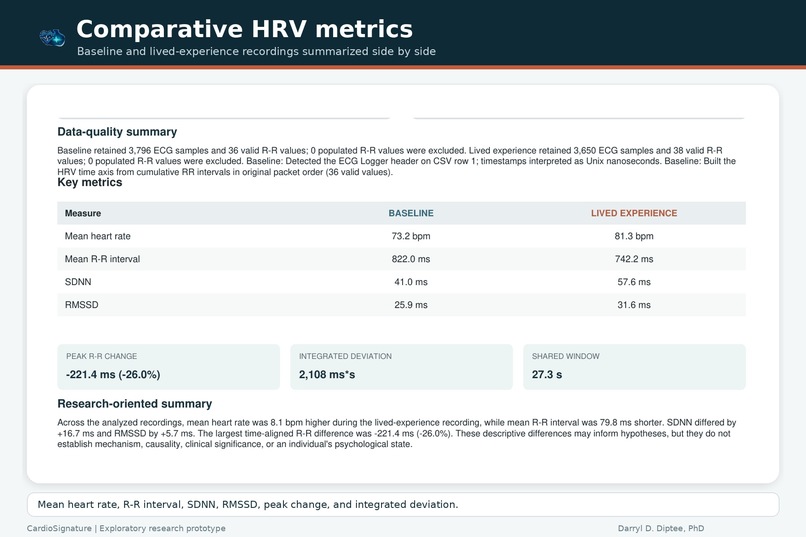
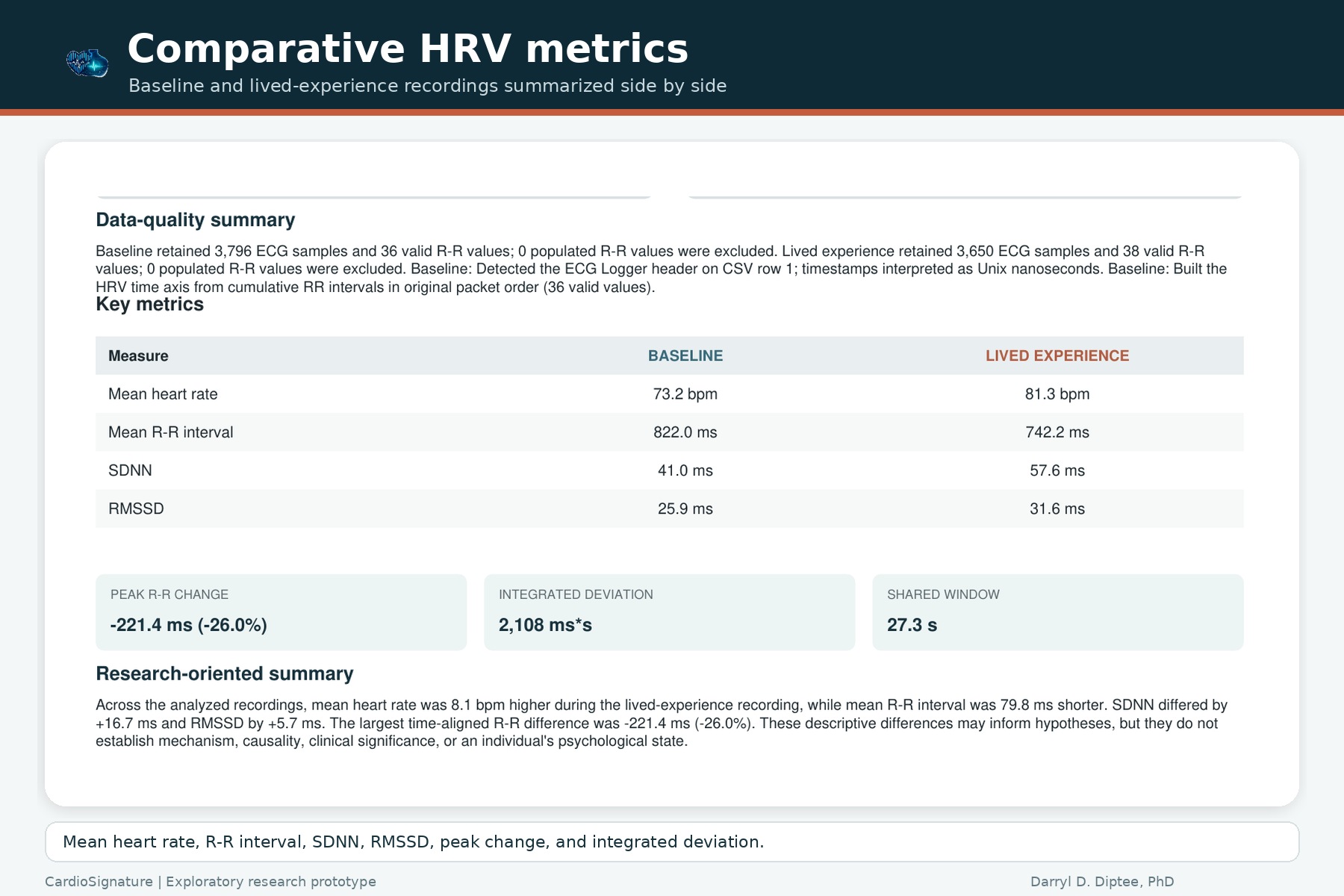
HRV metrics summary
Inspiration
CardioSignature grew from my doctoral research at UC Berkeley on emotional intelligence and interoceptive awareness. I have long been fascinated by the relationship between lived experience and bodily response, especially the signals that occur beneath conscious awareness and outward behavior.
Over the past several months, this became a personal research project. I conducted small pilot studies at my kitchen table, assembled the necessary tools, and used ChatGPT as a thought partner to refine the research questions, procedures, and early interpretations.
What it does
CardioSignature organizes high-resolution cardiac data around specific lived experiences (i.e., exposure to stimuli). It helps researchers visualize changes in R-R intervals and related cardiac measures, compare patterns across conditions, and identify possible physiological signatures for further study. The prototype supports research exploration and hypothesis generation.
How I built it
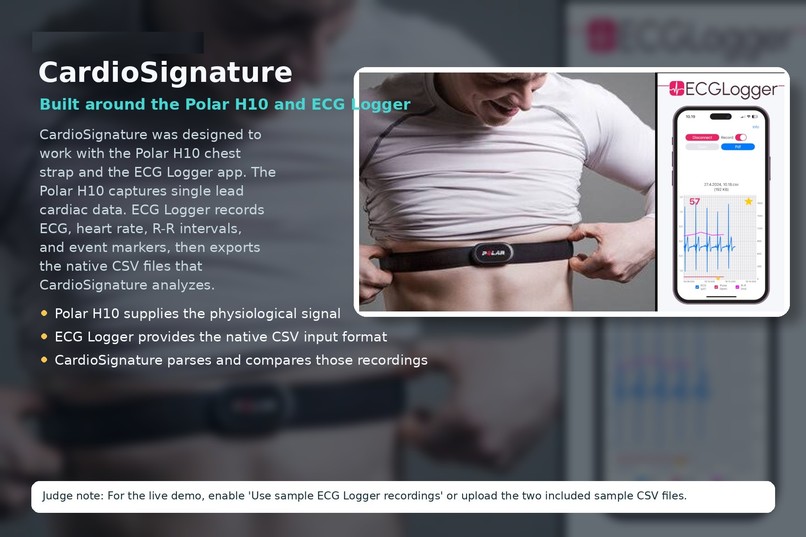
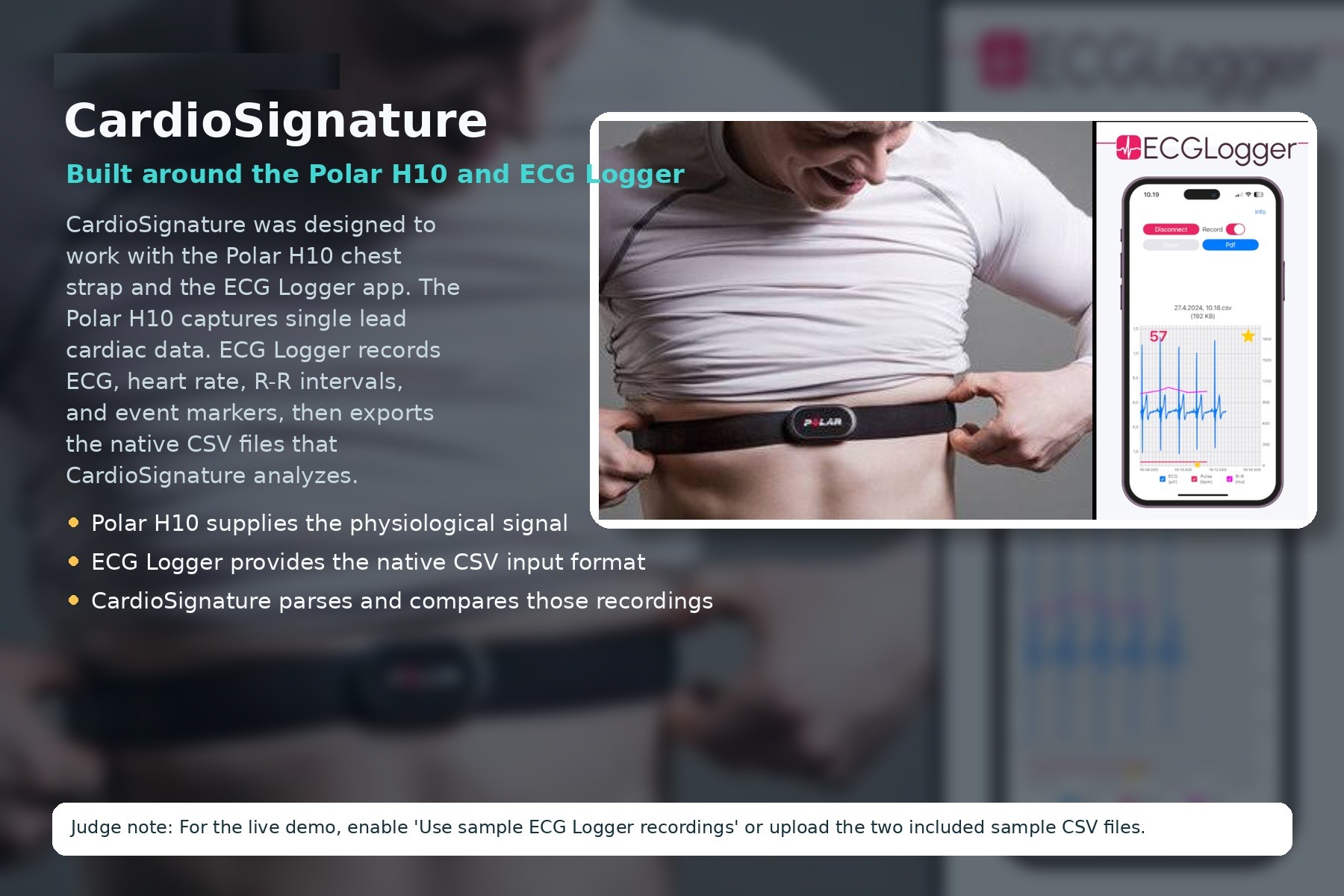
I chose the Polar H10 sensor because it provides accessible R-R interval data (via the ECG logger app) in a portable and relatively affordable format. I considered using several alternatives, including brain activity, skin conductance, and other physiological measures, before focusing on cardiac data.
I then developed a workflow for importing recordings, separating them into meaningful periods, calculating selected measures, and presenting the results through clear visualizations and plain-language summaries. ChatGPT and Codex supported the development process by helping me think through the research design, analysis workflow, application structure, and presentation.
Challenges I ran into
The first challenge was deciding what to measure. Physiological research offers many possible signals (skin conductivity, for example), and each requires different equipment, software, expertise, and expense. The next challenge was deciding which features within the cardiac data were most useful. R-R interval recordings contain many possible variables, each reflecting a different aspect of cardiac and unconscious autonomic activity. I had to determine which measures were relevant, how to operationalize them, and how to present them without oversimplifying the underlying physiology.
A further challenge was maintaining a clear boundary between exploratory findings and scientific conclusions. As I was creating an MVP research tool, it was important that the prototype communicated uncertainty directly.
Accomplishments that I'm proud of
I am proud that CardioSignature developed from a passion project on my kitchen-table into a working research prototype.
The project brings together affordable physiological sensing, structured data analysis, clear visualization, and AI-assisted data summaries. It also demonstrates a practical way to explore cardiac responses without requiring expensive laboratory equipment.
What I learned
I learned that collecting physiological data is often easier than interpreting it. The difficult work lies in selecting meaningful measures, establishing appropriate comparison periods, and separating genuine patterns from noise.
I also learned that AI can support scientific exploration by being powerful thought partners, helping researchers organize complex information, generate questions, and communicate findings, while leaving scientific judgment and validation with the researcher.
What's next for CardioSignature
Being that I have research ideas of my own that I would like to explore, the next step for CardioSignature is to refine the feature-selection process, improve the visualizations, and test whether recurring within-person patterns remain stable over time. The long-term goal is to weave in AI and machine learning to help researchers interpret the data more effectively. The aim is to give researchers a powerful but accessible tool for investigating how cardiac responses vary across lived experience and for developing hypotheses that can be tested through rigorous research.
Built With
- chatgpt
- codex
- github
- streamlit

Log in or sign up for Devpost to join the conversation.