-
-
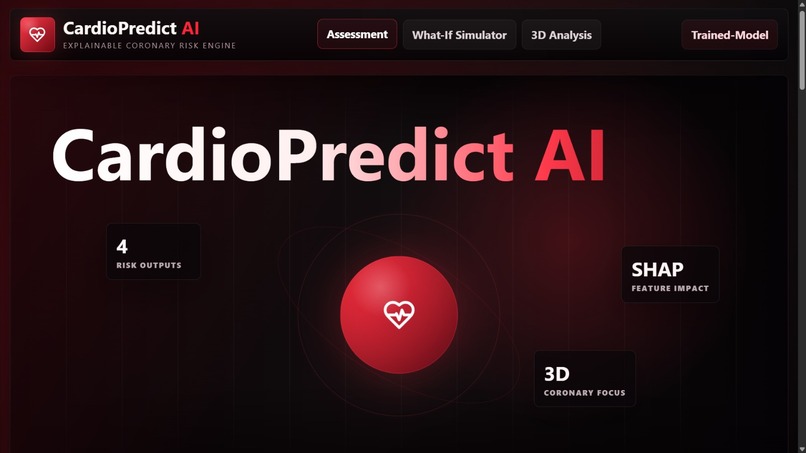
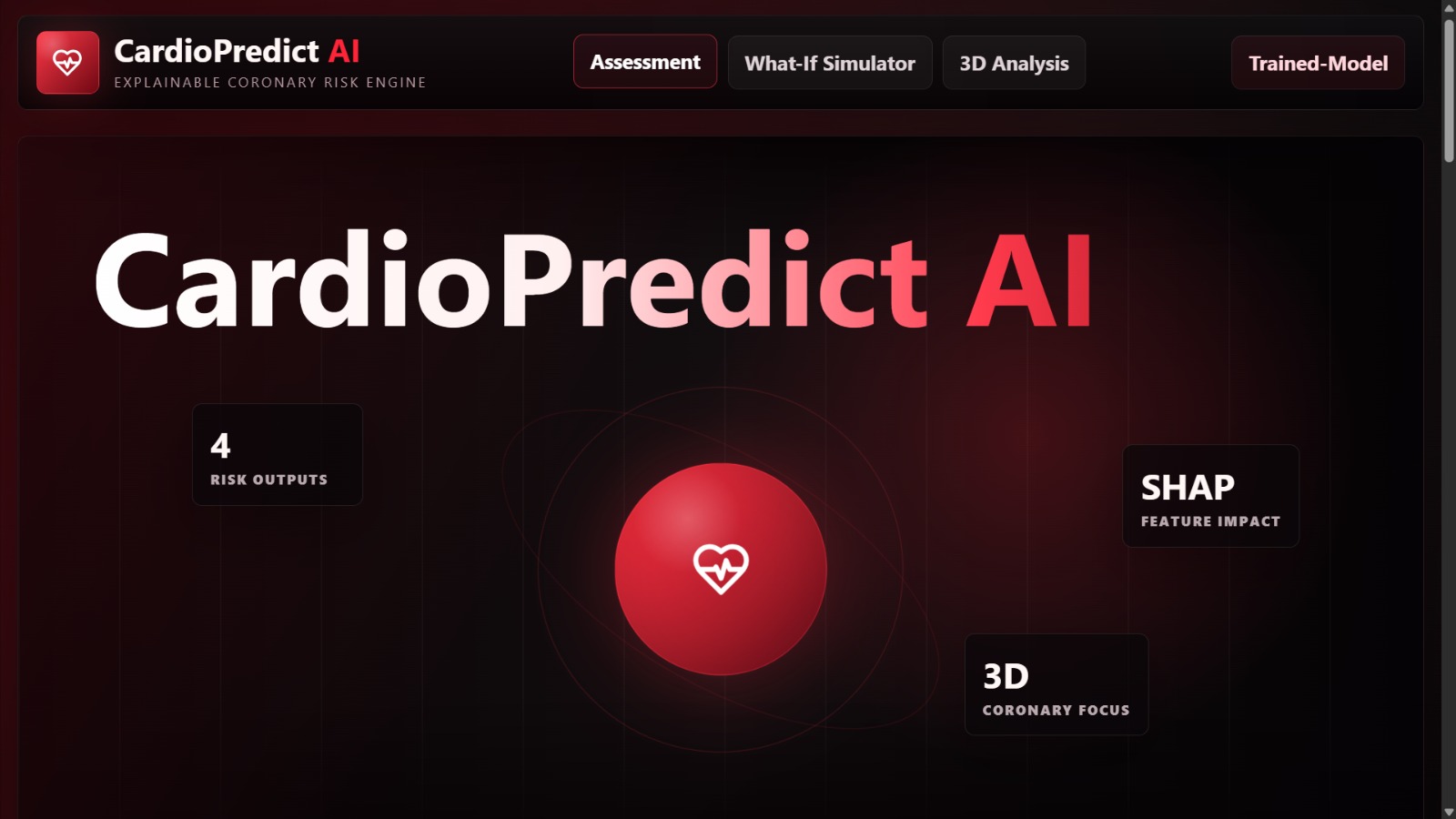
This is the Home page
-
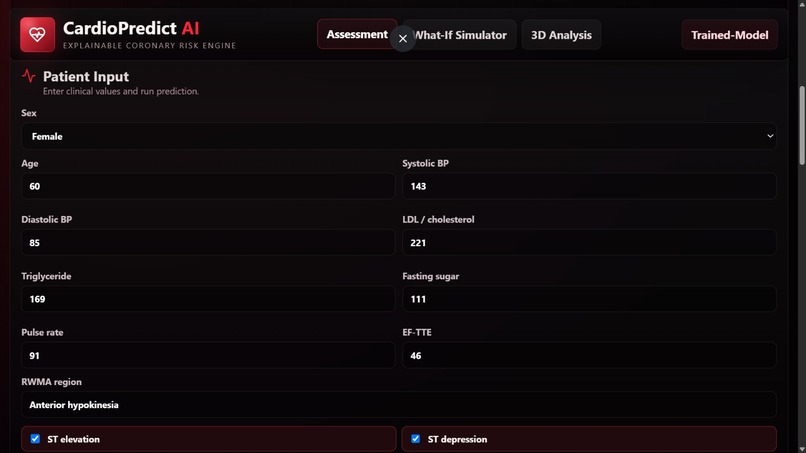
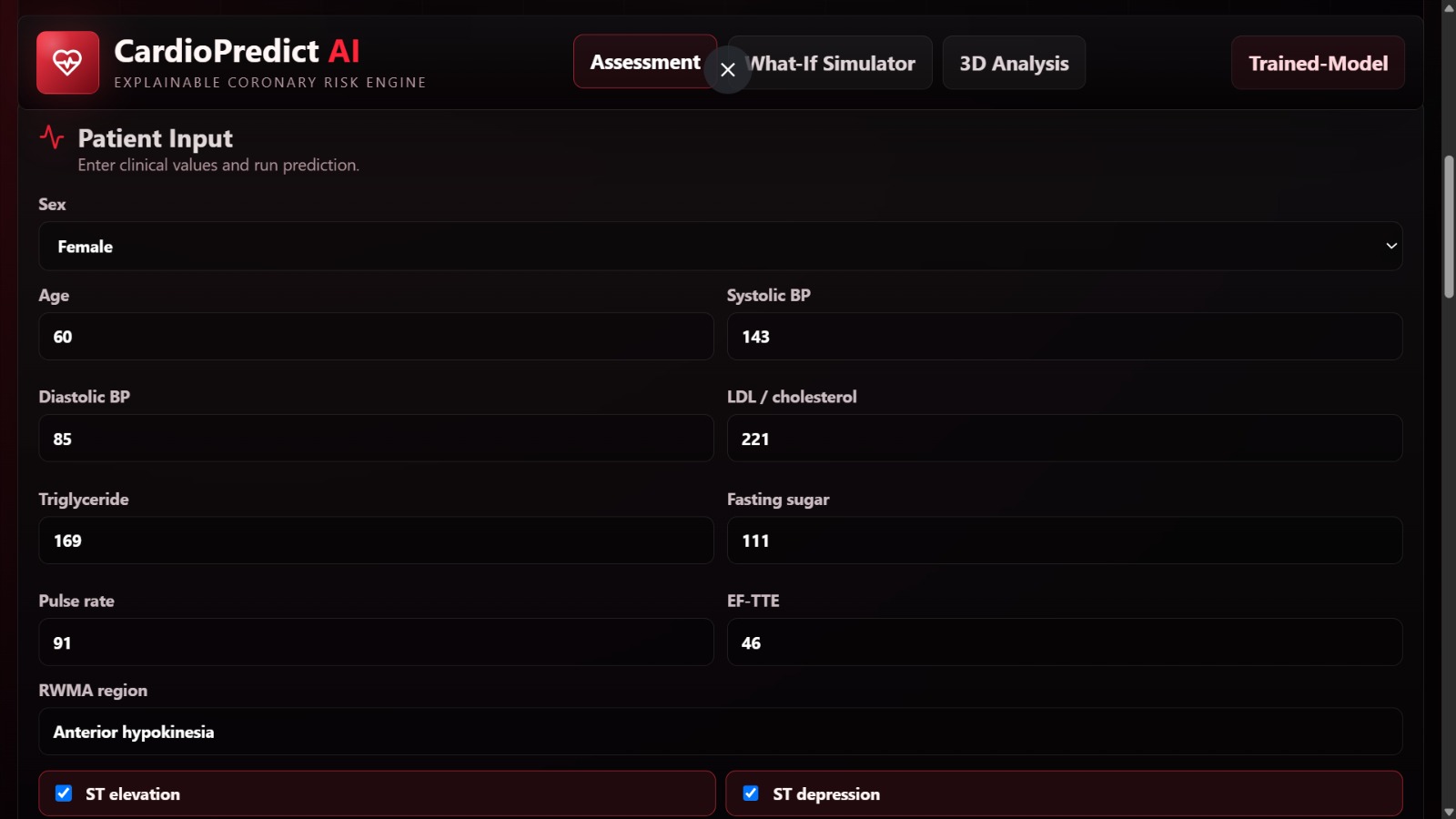
Patient's Input
-
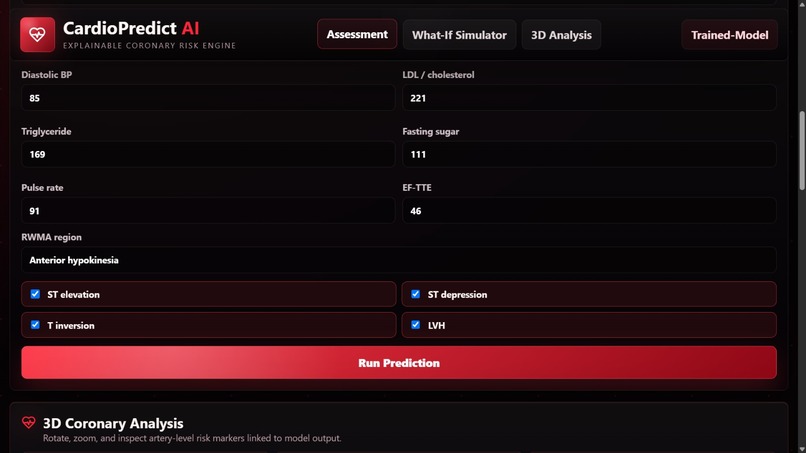
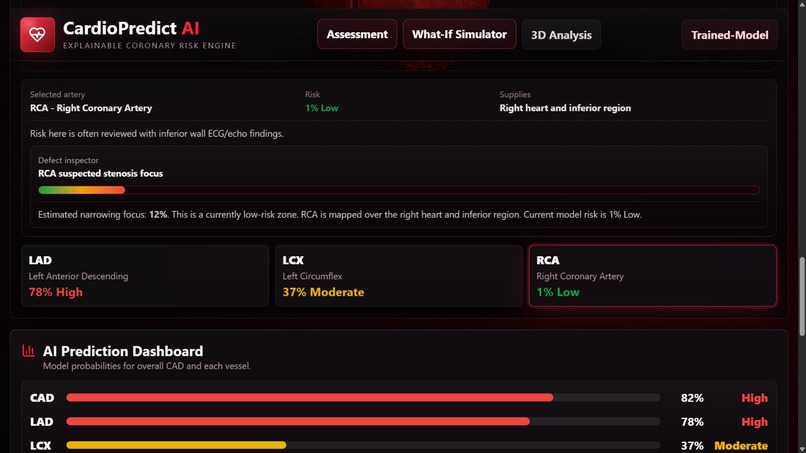
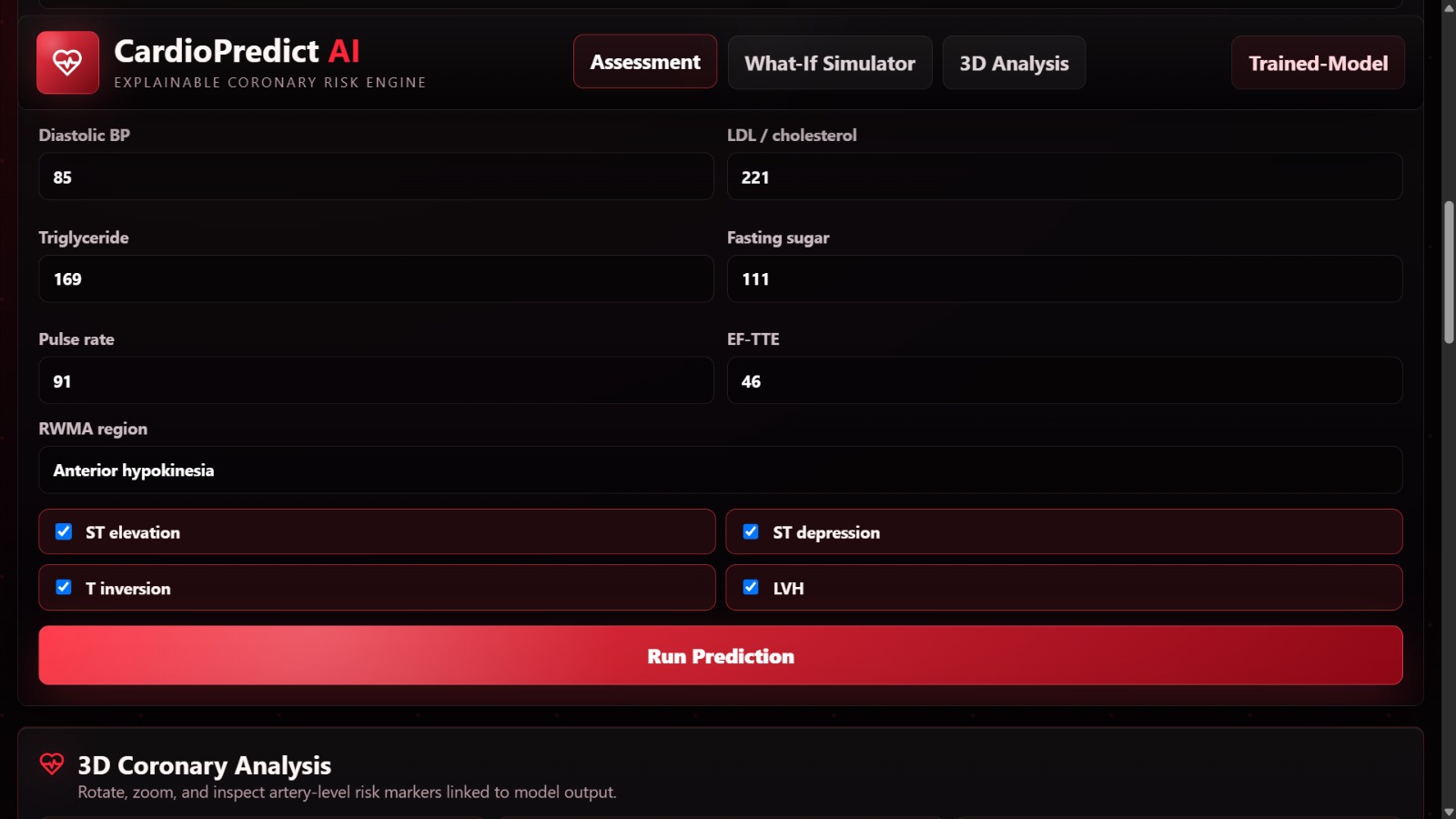
Run Predictions
-
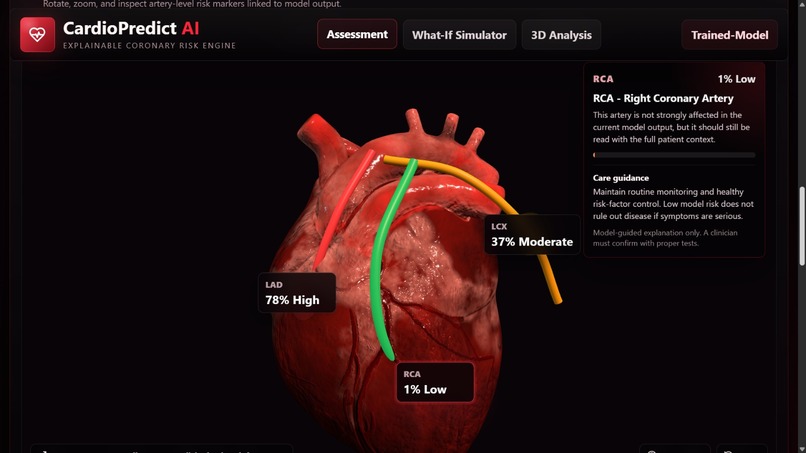
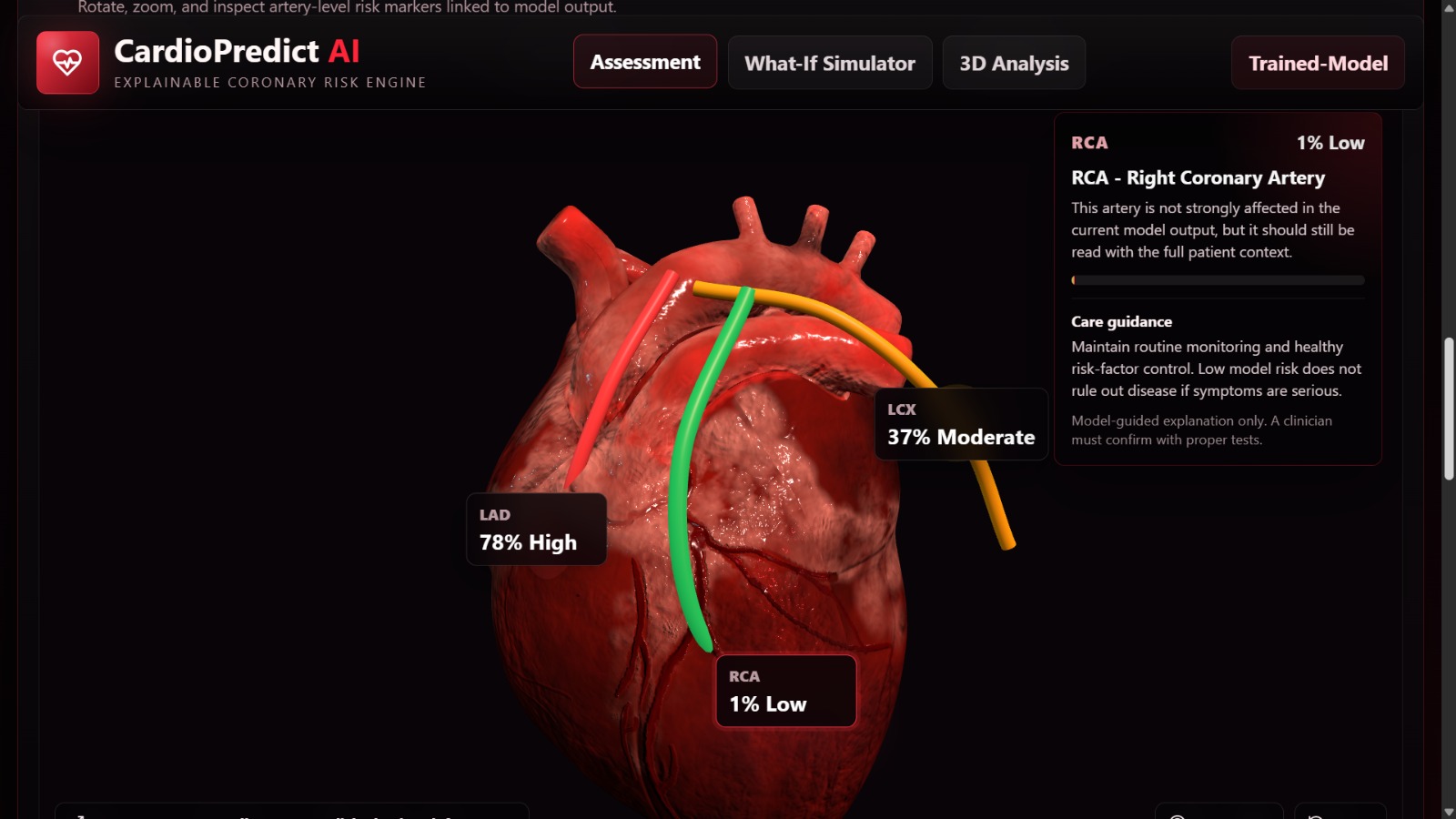
3D model Heart
-
-
-
-
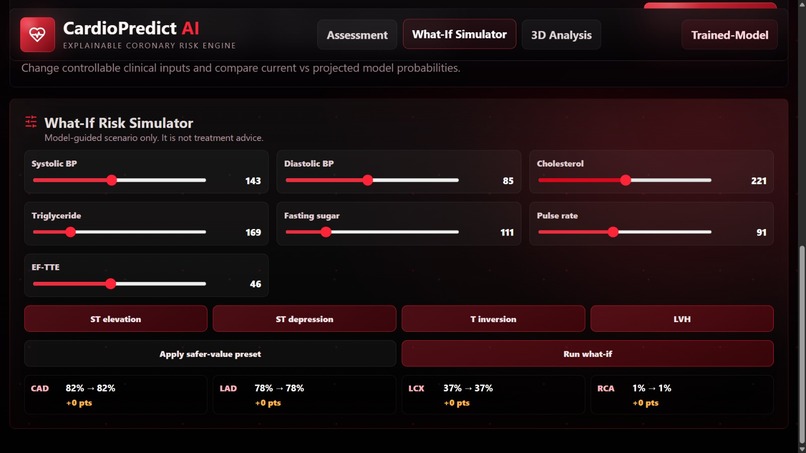
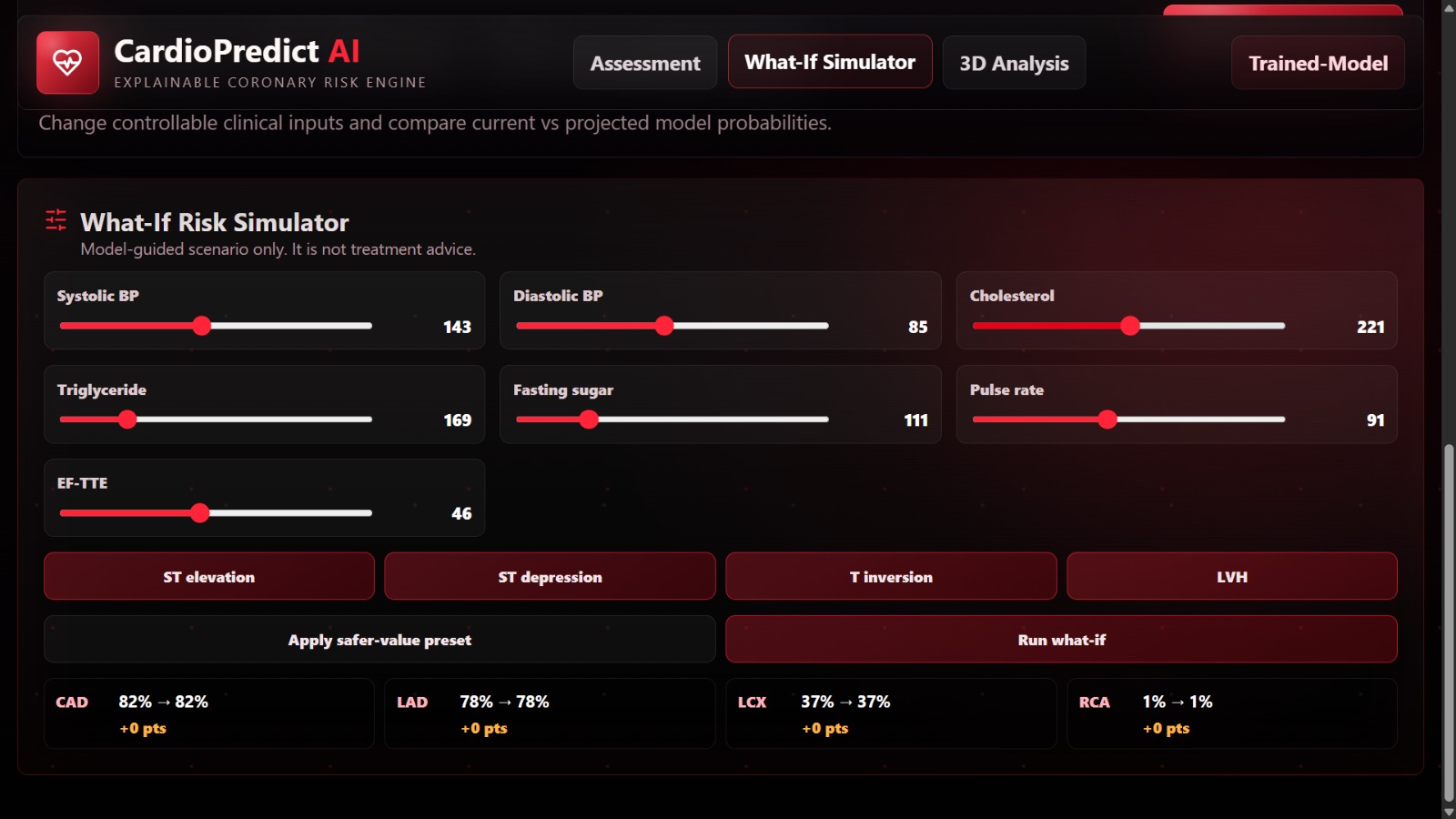
What if stimulation
Inspiration
Cardiovascular disease is one of the most serious health problems worldwide, but many AI-based prediction systems only give a risk score without explaining the reasoning behind it. We wanted to build a system that makes cardiac risk prediction more understandable, visual, and useful for clinical discussion.
What It Does
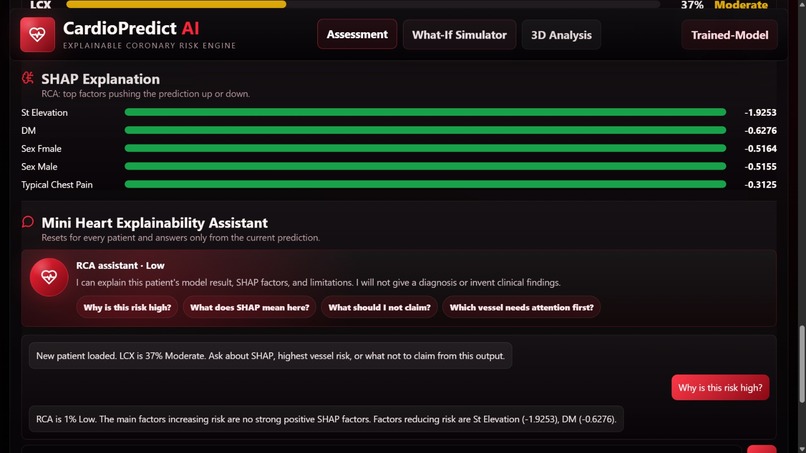
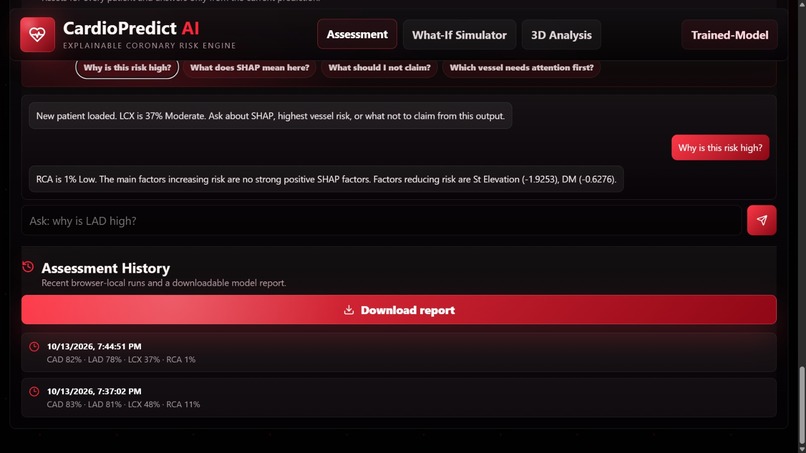
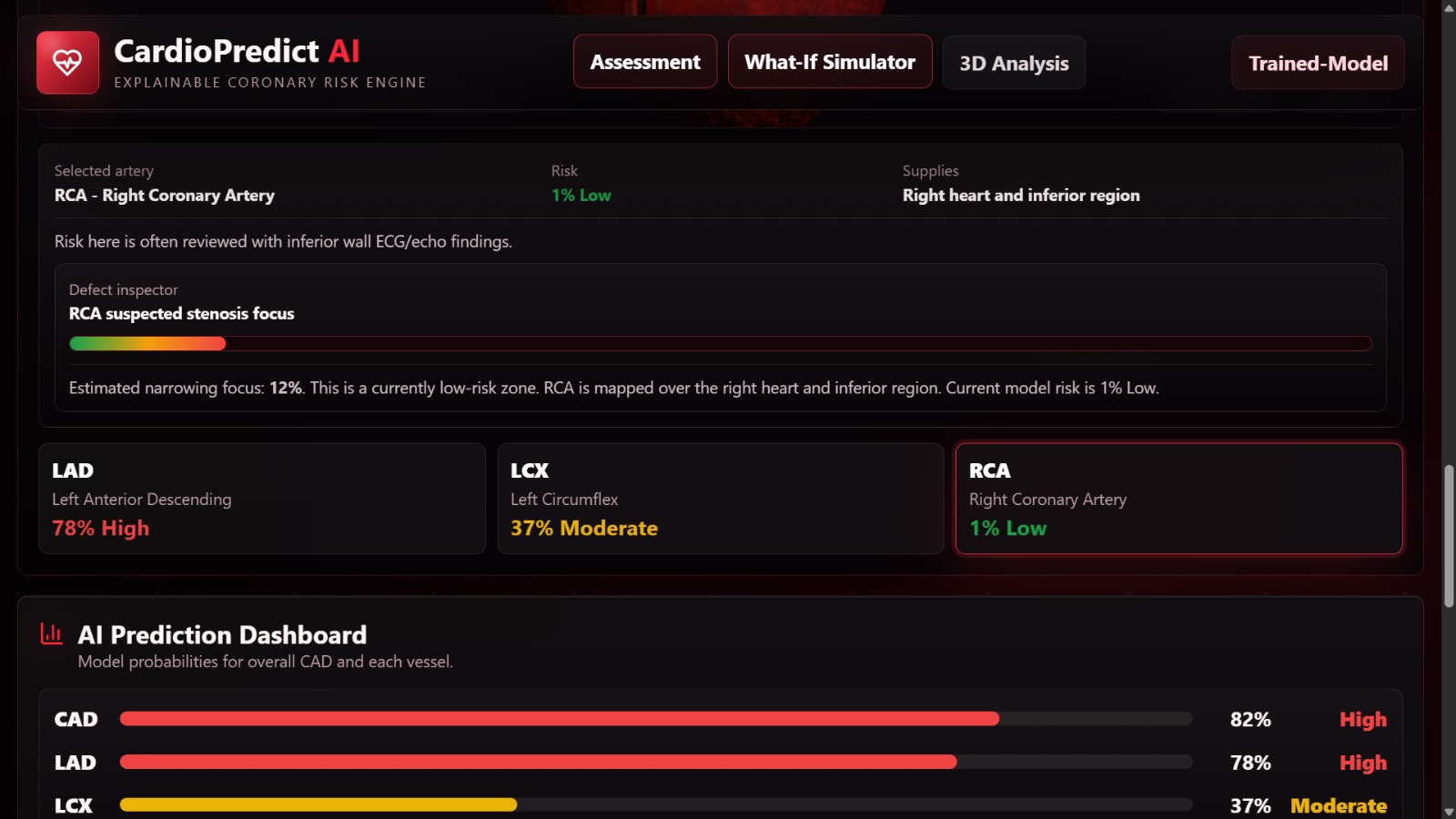
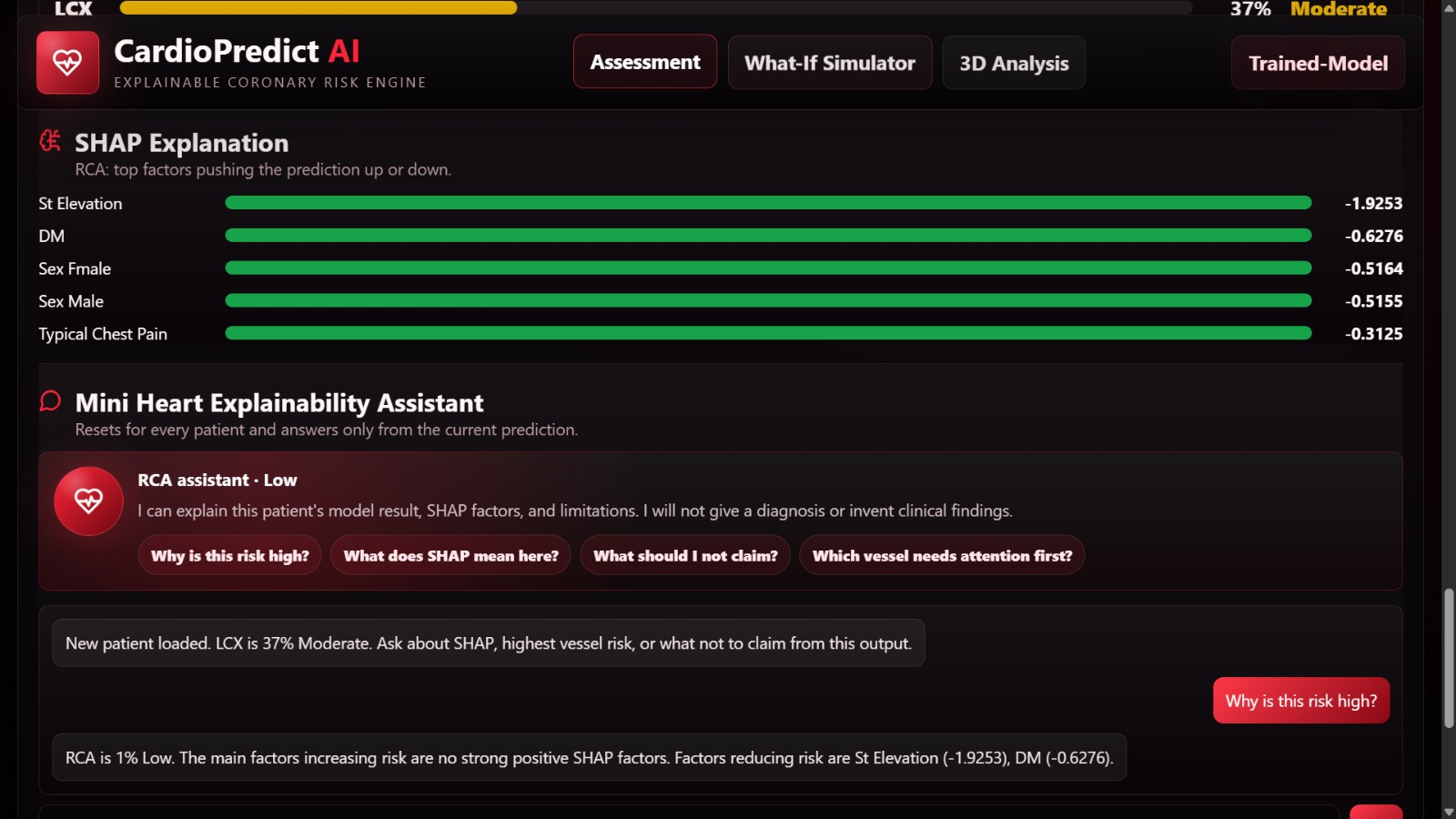
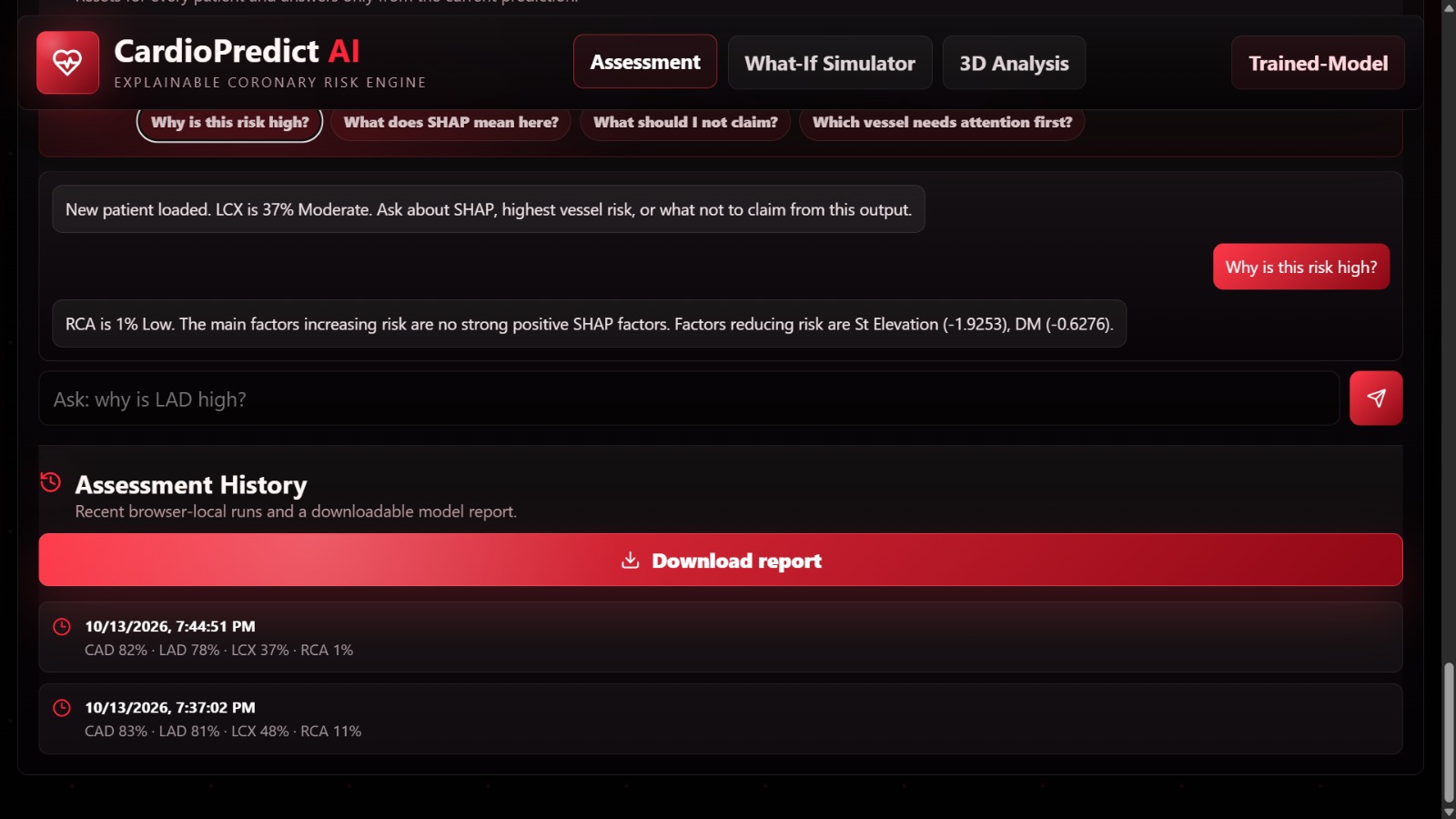
CardioPredict AI predicts overall coronary artery disease risk and artery-specific LAD, LCX, and RCA risk from structured clinical data. It provides SHAP-based explainability, an interactive 3D heart visualization, artery-specific risk popups, natural-language reports, and a model-guided what-if simulator.
How We Built It
We built the frontend using React, Vite, Three.js, and CSS. The backend uses FastAPI and Python. The machine learning pipeline uses scikit-learn models trained on structured cardiovascular clinical data. SHAP is used to explain which features influence each prediction.
Challenges
The biggest challenge was making the project more than just a prediction dashboard. We had to connect model outputs to explainability, 3D artery visualization, and safe medical interpretation. Another challenge was handling SHAP explanations reliably across different prediction scenarios.
What We Learned
We learned how important explainability is in healthcare AI. A model prediction alone is not enough; users need to understand why the prediction happened, which features contributed, and what the model output should not be used for.
What’s Next
Future improvements include integrating a more accurate anatomical heart model, improving dataset size and validation, adding clinician review workflows, and making the what-if simulator more clinically robust.
Built With
- 3d
- ai
- api
- cardiology
- css
- data
- explainable
- fastapi
- healthcare
- html
- javascript
- joblib
- learning
- machine
- numpy
- pandas
- python
- react
- rest
- scikit-learn
- shap
- three.js
- visualization
- vite

Log in or sign up for Devpost to join the conversation.