Inspiration
Cardiovascular diseases remain one of the leading causes of death globally, yet early risk assessment tools are often either too generic or lack transparency. Many AI-based solutions provide predictions without explaining the reasoning behind them, which limits trust and real-world adoption.
This motivated us to build a system that not only predicts risk but also clearly explains why the risk exists and how it can be reduced.
What it does
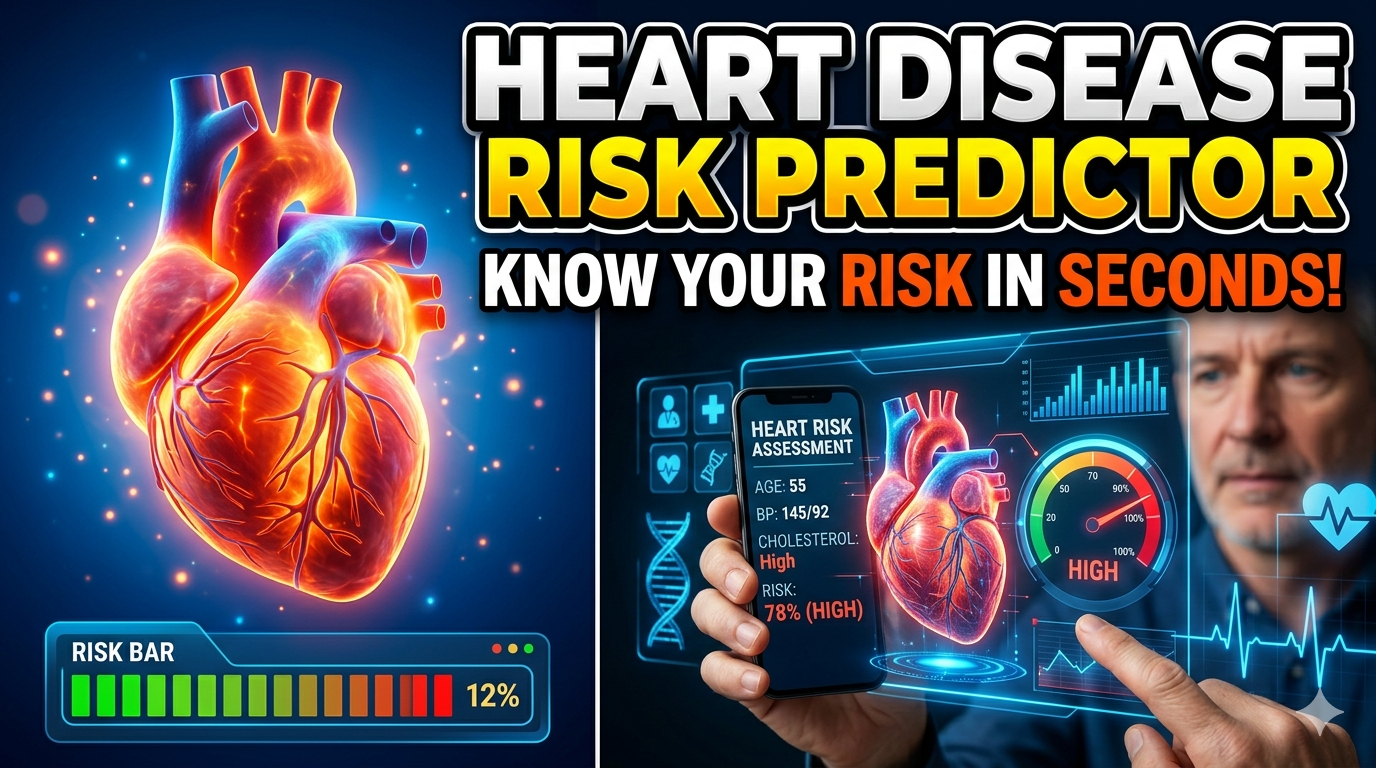
CardioInsight AI predicts the 10-year risk of cardiovascular disease using patient health parameters.
Unlike traditional black-box models, it provides interpretable insights by highlighting the contribution of each factor (such as age, cholesterol, and blood pressure) to the overall risk.
It also includes a what-if simulation feature that allows users to explore how improving specific health parameters can reduce their risk.
How we built it
The system is built using a machine learning pipeline trained on the Framingham Heart Study dataset.
We used XGBoost as the primary model and applied probability calibration to improve prediction reliability.
SHAP (SHapley Additive Explanations) was integrated to provide feature-level interpretability.
The frontend interface was developed using Streamlit to enable interactive input and real-time visualization of risk and contributing factors.
Challenges we ran into
The system is built using a machine learning pipeline trained on the Framingham Heart Study dataset.
We used XGBoost as the primary model and applied probability calibration to improve prediction reliability.
SHAP (SHapley Additive Explanations) was integrated to provide feature-level interpretability.
The frontend interface was developed using Streamlit to enable interactive input and real-time visualization of risk and contributing factors.
Accomplishments that we're proud of
We successfully built an end-to-end interpretable AI system rather than just a prediction model.
The integration of explainability with actionable insights makes the system more practical for real-world use.
We are particularly proud of the what-if simulation feature, which allows users to actively explore how lifestyle changes can impact their health risk.
What we learned
We learned that building accurate models is only part of the problem—making them interpretable and trustworthy is equally important.
This project deepened our understanding of model calibration, explainable AI techniques like SHAP, and the importance of user-centric design in healthcare applications.
What's next for CardioInsight AI – Interpretable Cardiovascular Risk
We plan to improve the clinical relevance of the system by incorporating additional datasets and validating the model against real-world scenarios.
Future work includes enhancing the explanation layer, integrating doctor-friendly reports, and expanding the platform into a more comprehensive preventive healthcare decision support system.

Log in or sign up for Devpost to join the conversation.