Inspiration
Heart disease is one of the leading causes of death worldwide, yet many cases can be prevented with early detection. We were inspired to create a system that makes risk prediction simple, fast, and accessible to both patients and doctors. Our goal was to bridge the gap between complex medical data and easy-to-understand insights.
What it does
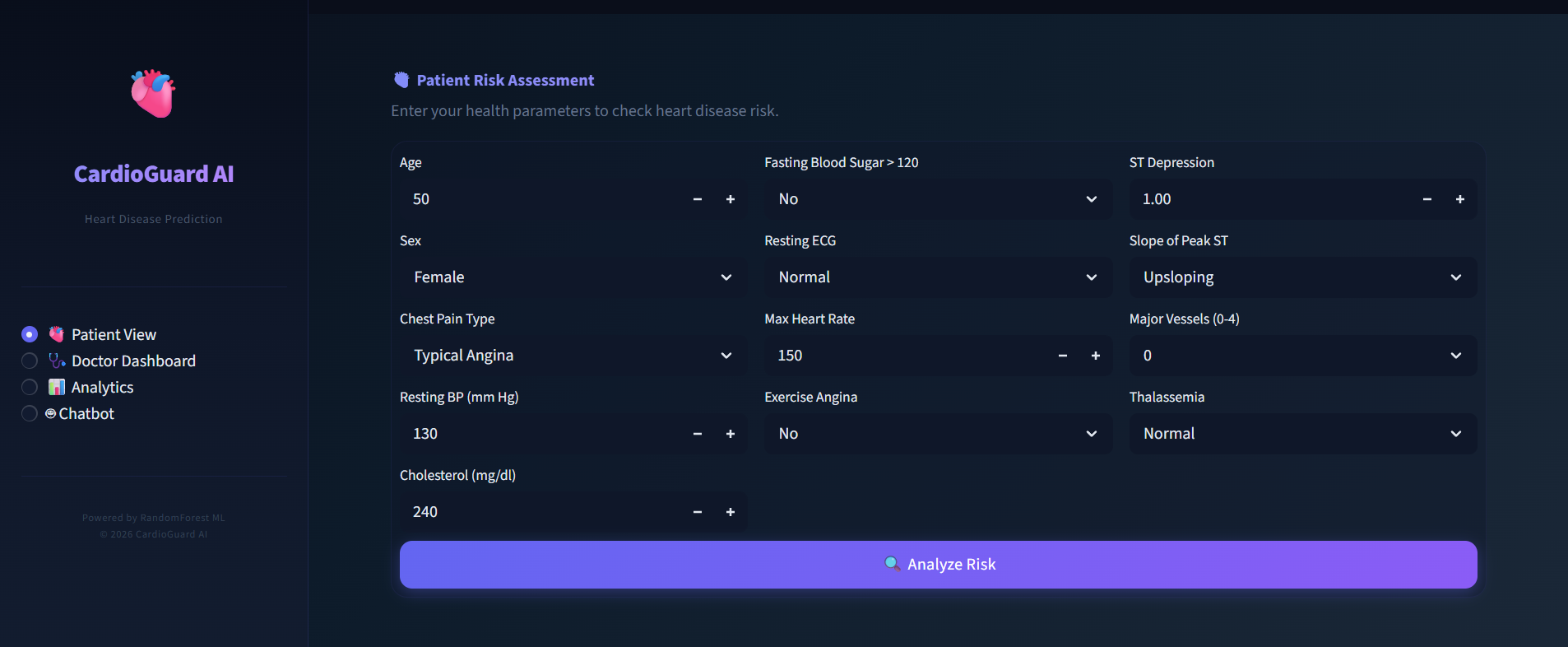
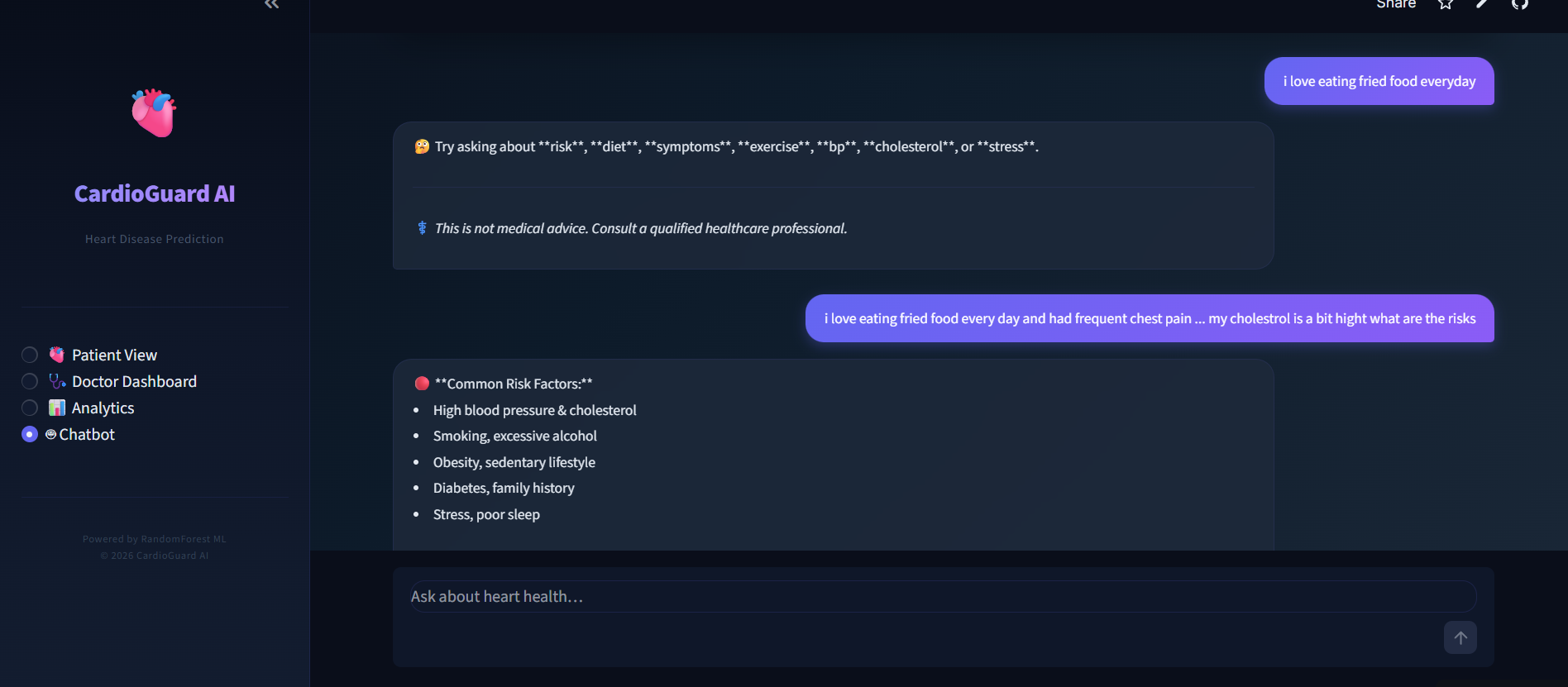
CardioGuard AI is a machine learning-powered platform that predicts the risk of heart disease based on patient health data. It:
- Analyzes inputs like age, cholesterol, blood pressure, etc.
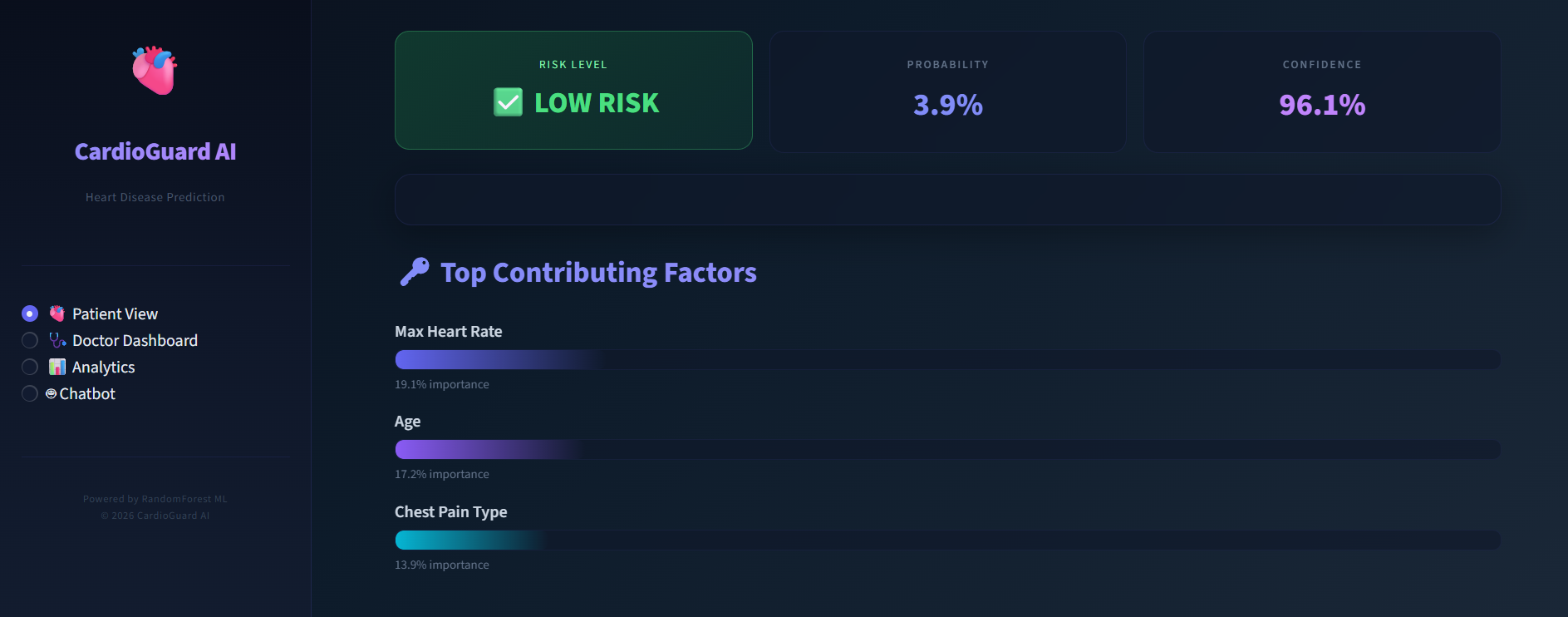
- Provides a real-time risk prediction
- Outputs a probability score
- Highlights key contributing factors
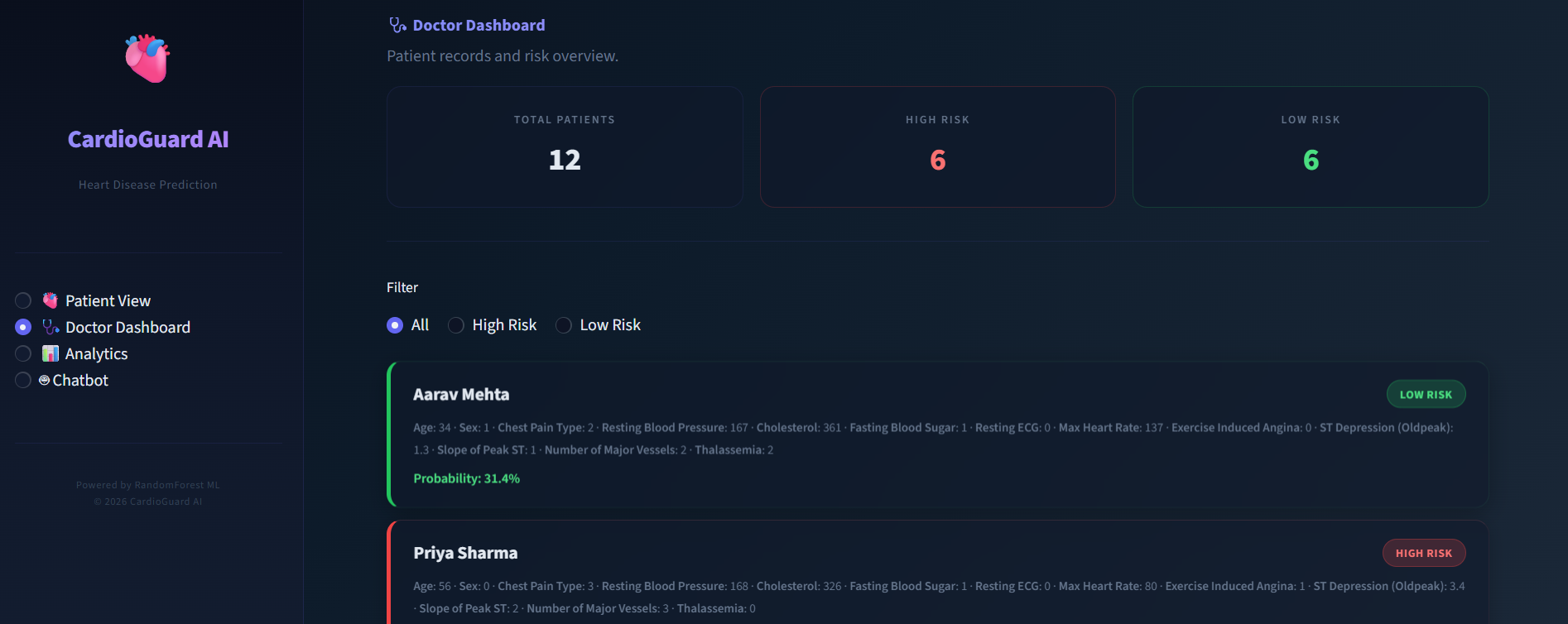
- Includes both patient-side interaction and a doctor dashboard for monitoring
How we built it
We built the system using:
- Machine Learning: Logistic Regression / Random Forest (scikit-learn)
- Frontend & Deployment: Streamlit
- Data Processing: Pandas and NumPy
- Visualization: Matplotlib
The architecture was designed to be modular:
- A thin ML layer for prediction
- A Streamlit-based UI for user interaction
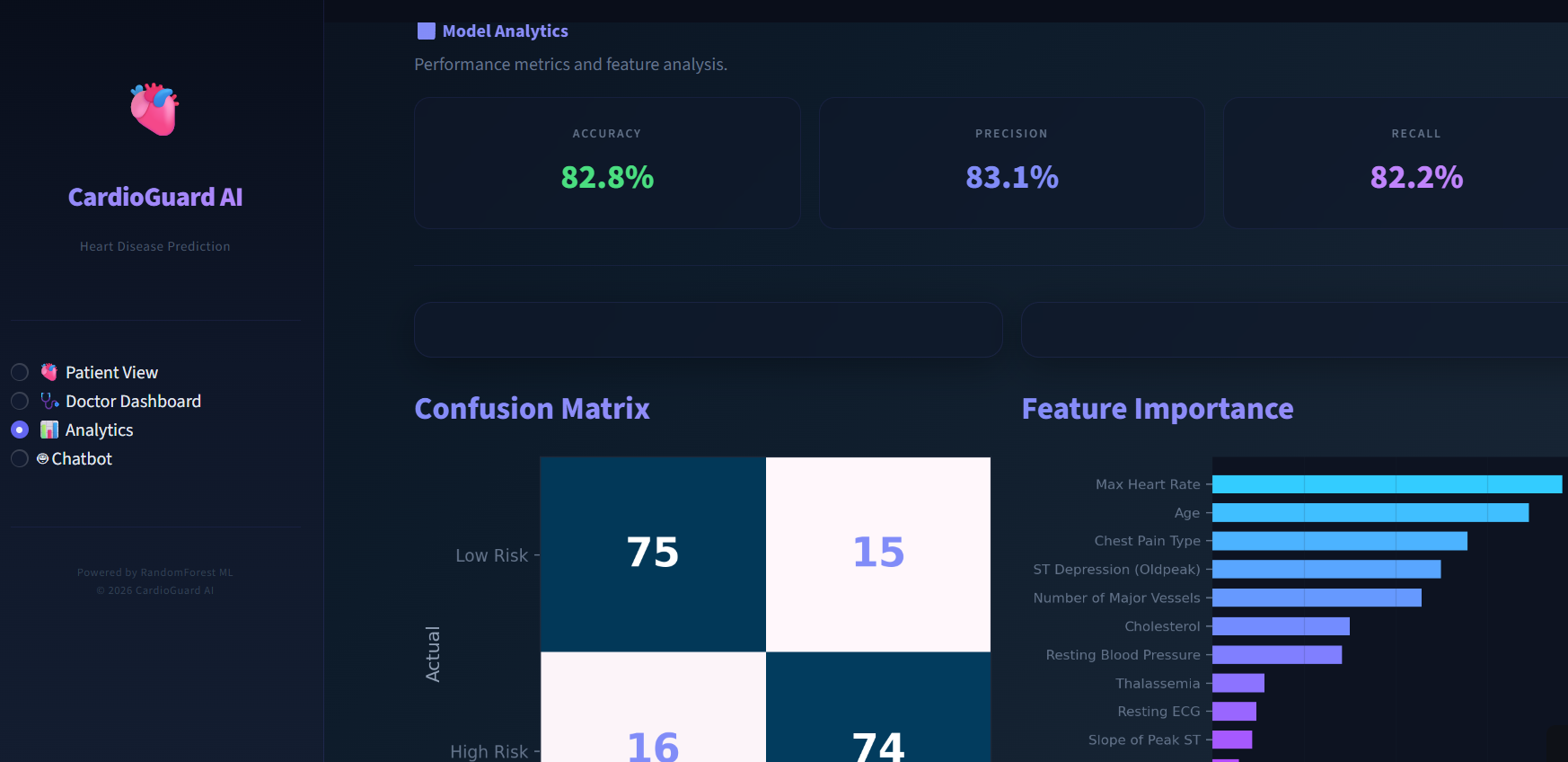
- Separate sections for prediction, analytics, and doctor view
Challenges we ran into
- Cleaning and restructuring messy, duplicated code into a working system
- Ensuring correct input formatting for the ML model
- Handling missing datasets and edge cases
- Balancing simplicity with functionality under time constraints
- Designing a UI that is both intuitive and informative
Accomplishments that we're proud of
- Successfully building a complete end-to-end ML application
- Creating a system usable by both patients and doctors
- Designing a clean and functional UI for real-time interaction
- Deploying a working model that provides instant predictions
- Maintaining a modular and scalable code structure
What we learned
- How to integrate machine learning into a real-world application
- The importance of clean architecture and modular design
- Debugging and handling real-world edge cases
- Building user-friendly interfaces for technical systems
- Rapid development and iteration during a hackathon
What's next for CardioGuard AI
- Integrating real clinical datasets for improved accuracy
- Adding advanced models and better evaluation metrics
- Enhancing explainability using techniques like SHAP
- Expanding to include other health risk predictions
- Deploying as a full-scale healthcare support platformardioGuard AI

Log in or sign up for Devpost to join the conversation.