Inspiration
Familial Hypercholesterolemia (FH) is a life-threatening genetic condition that is severely underdiagnosed. While Next-Generation Sequencing generates massive amounts of genomic data, the clinical interpretation of genetic variants (Pathogenic, Benign, VUS) remains a massive bottleneck, requiring hours of manual literature review by clinical geneticists. We wanted to bridge the gap between raw genomic data and clinical action by creating a tool that empowers doctors, rather than replacing them.
What it does
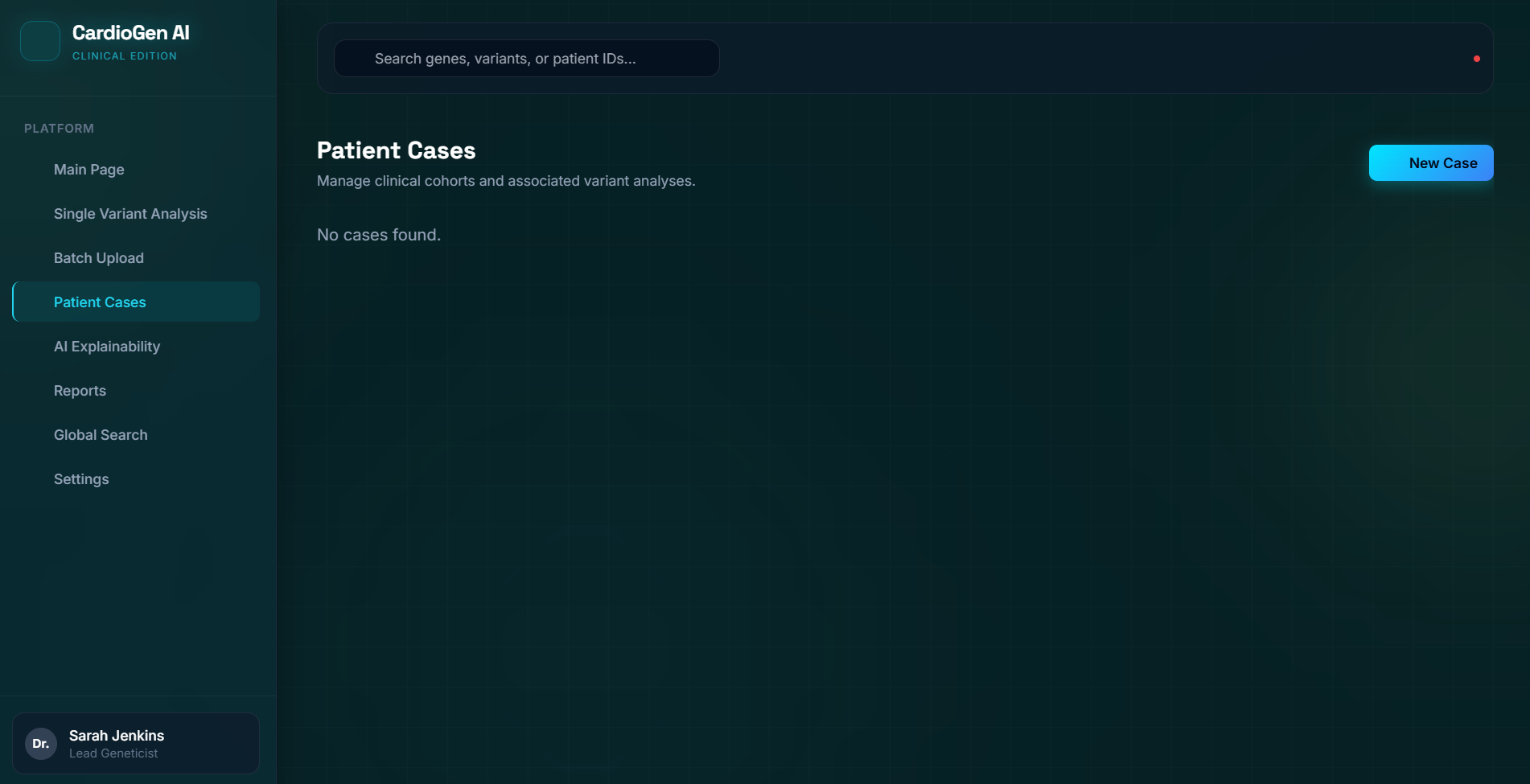
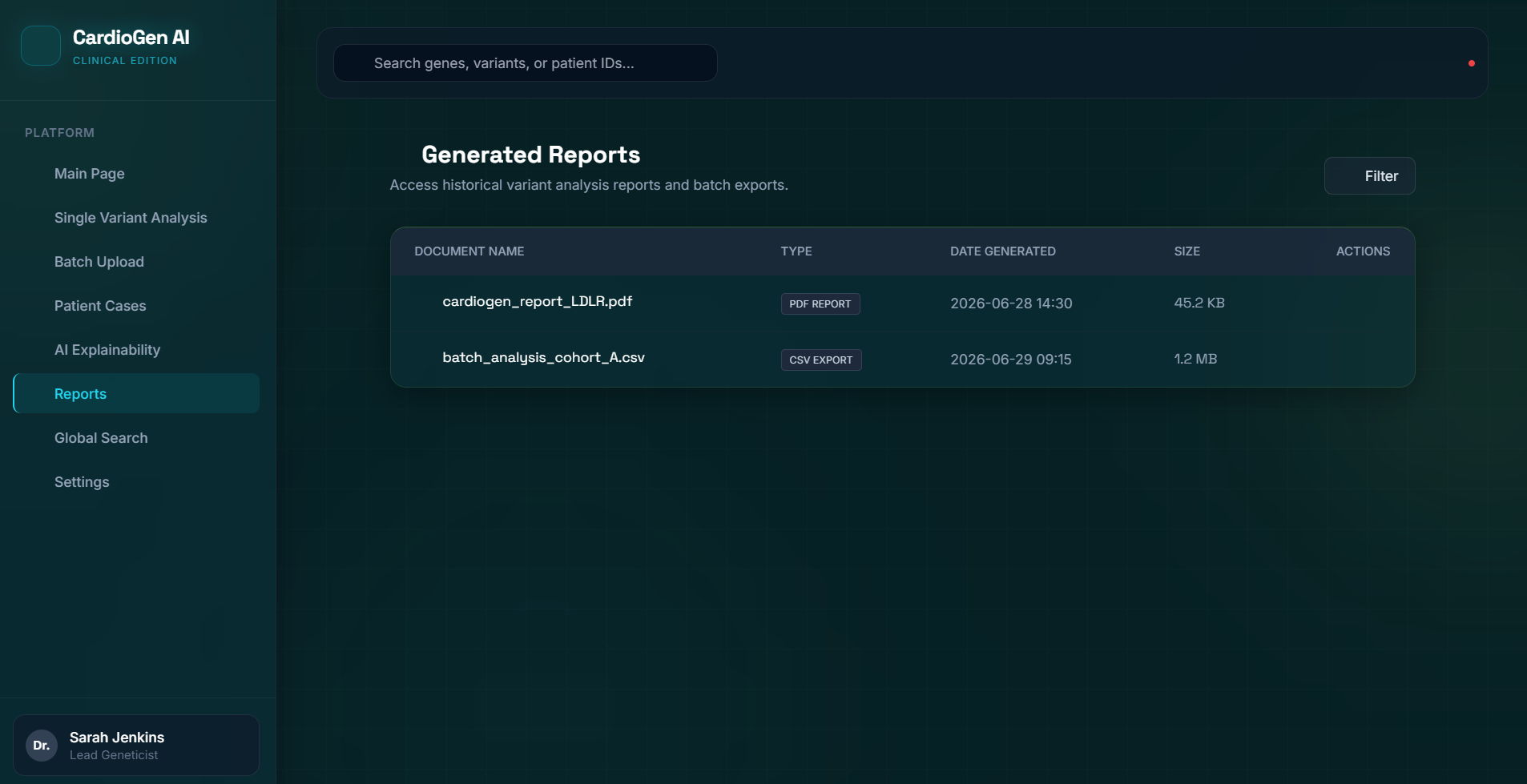
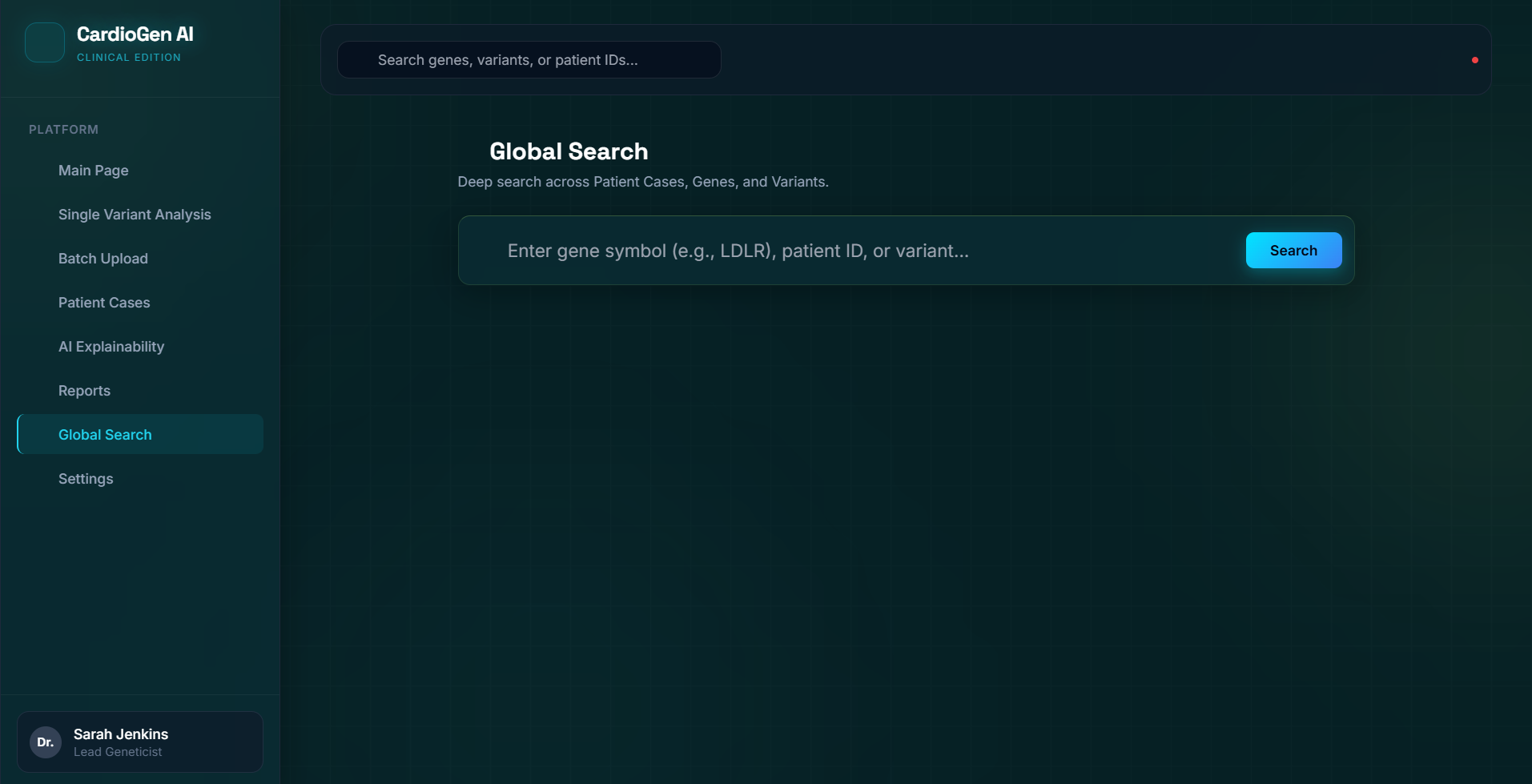
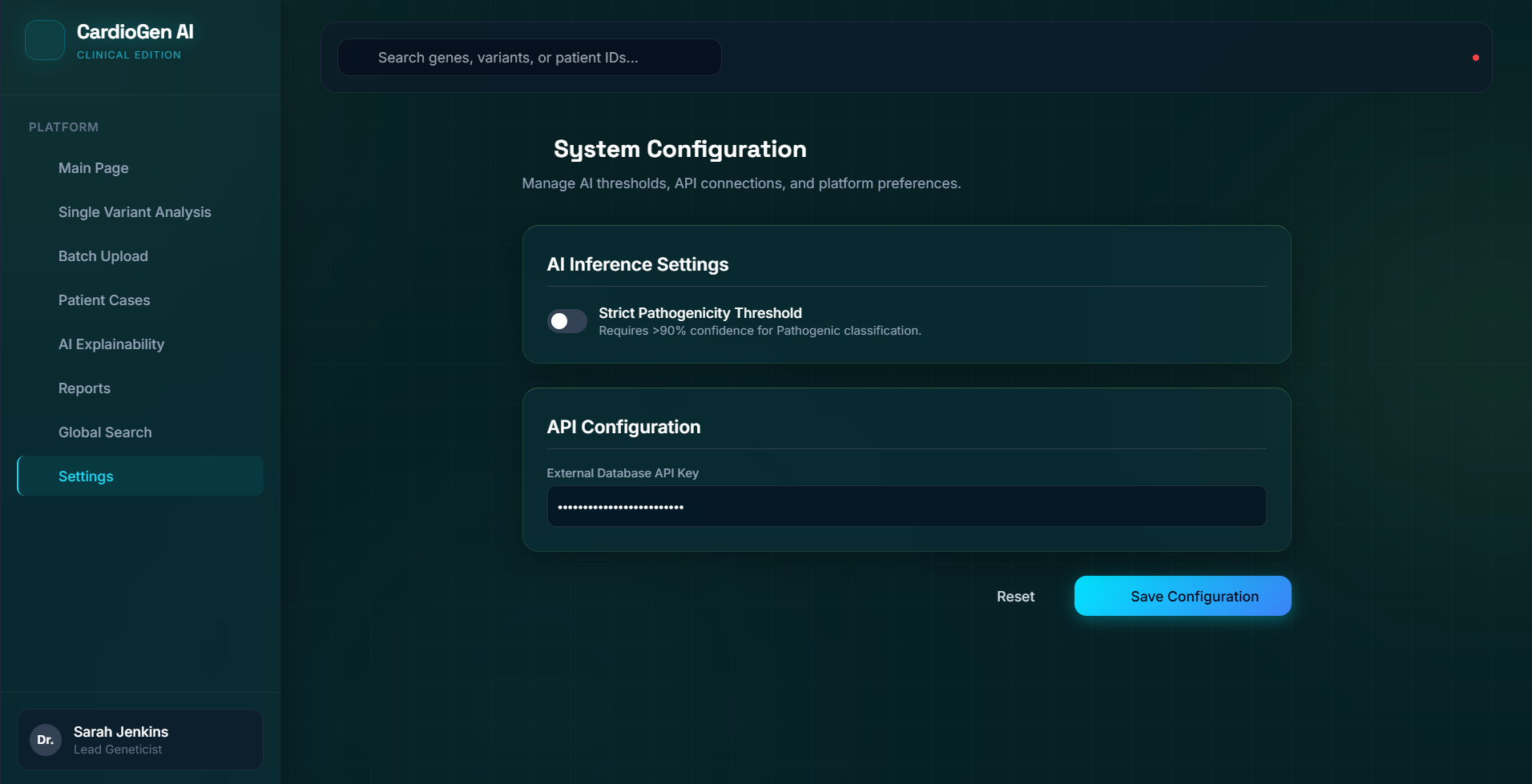
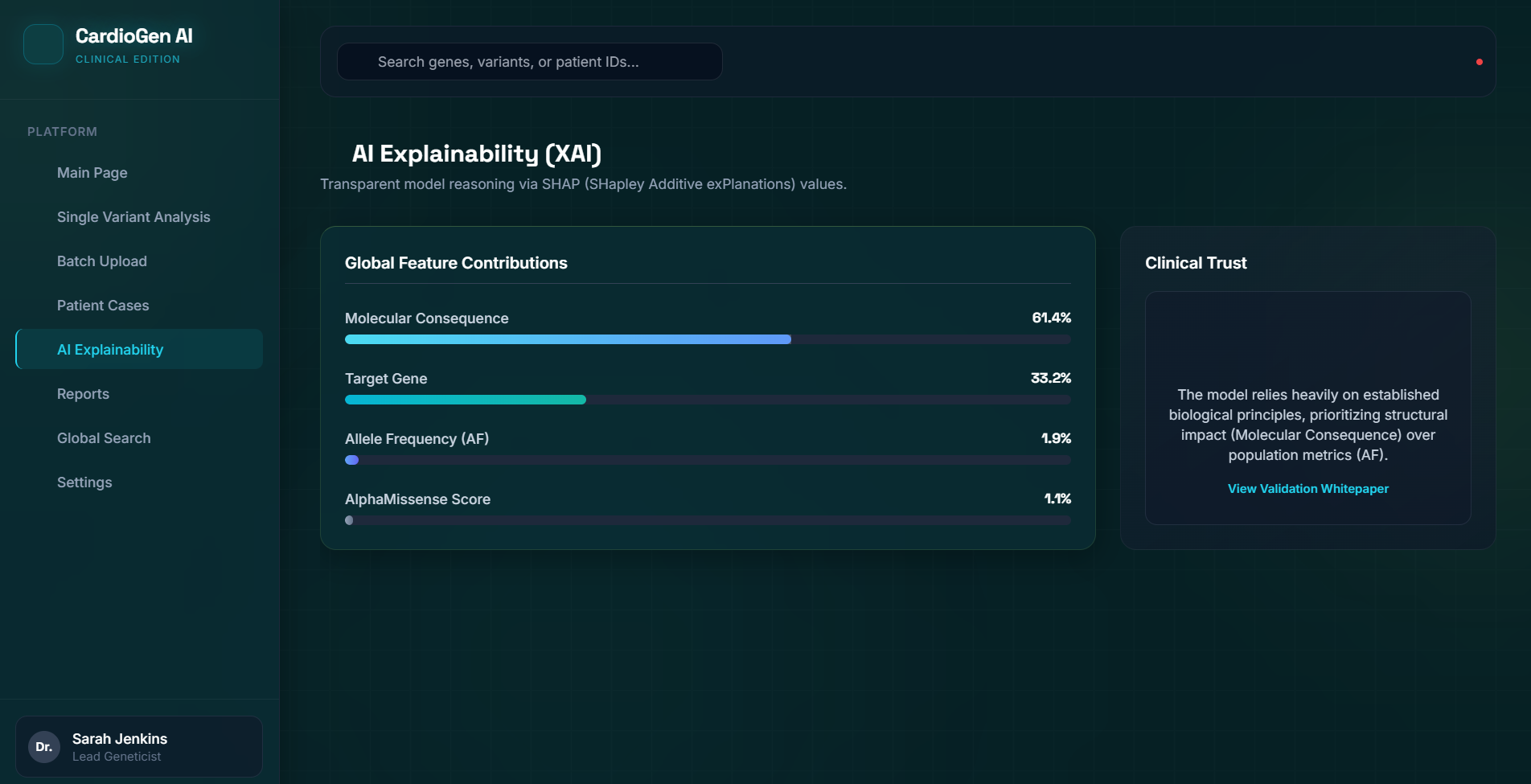
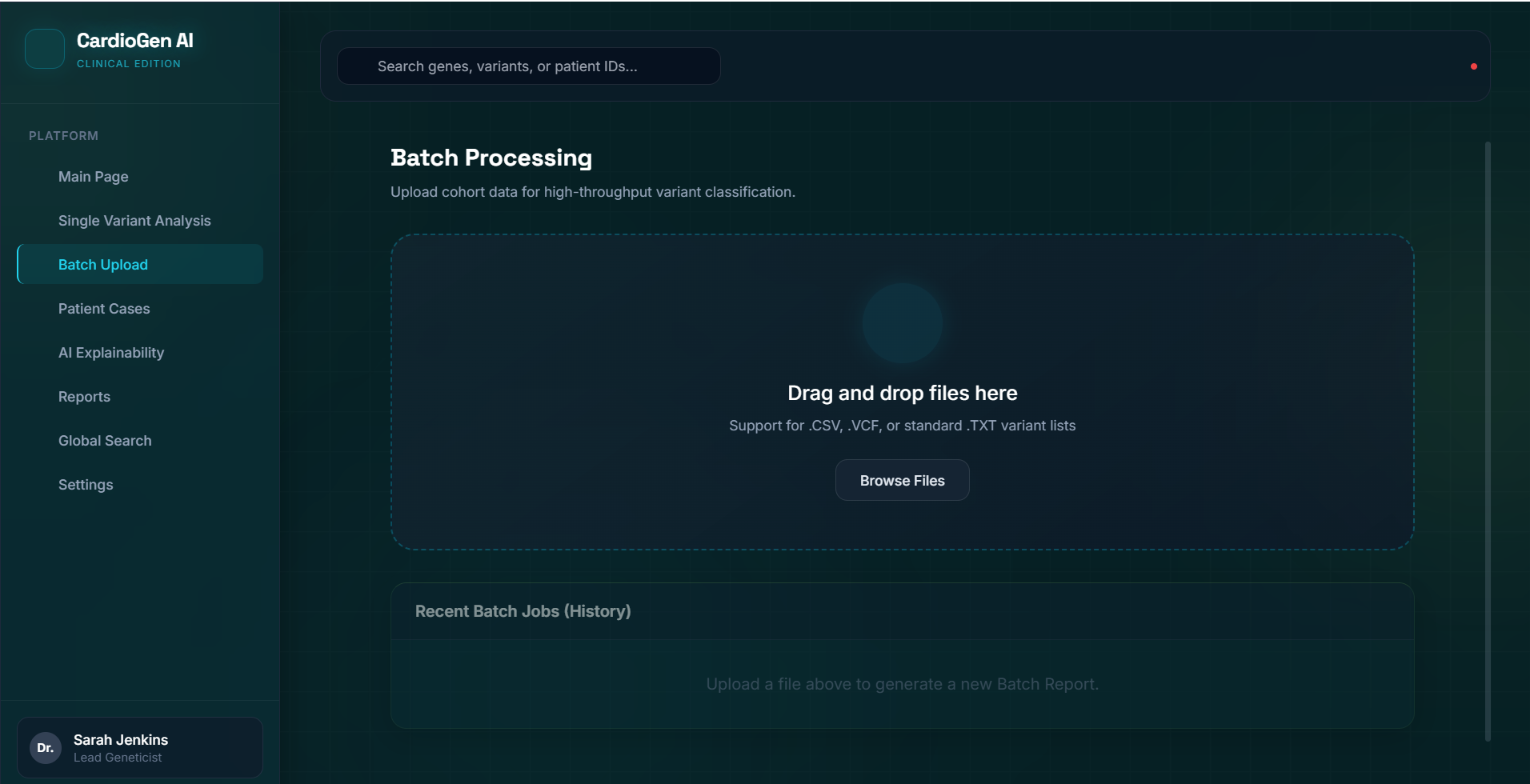
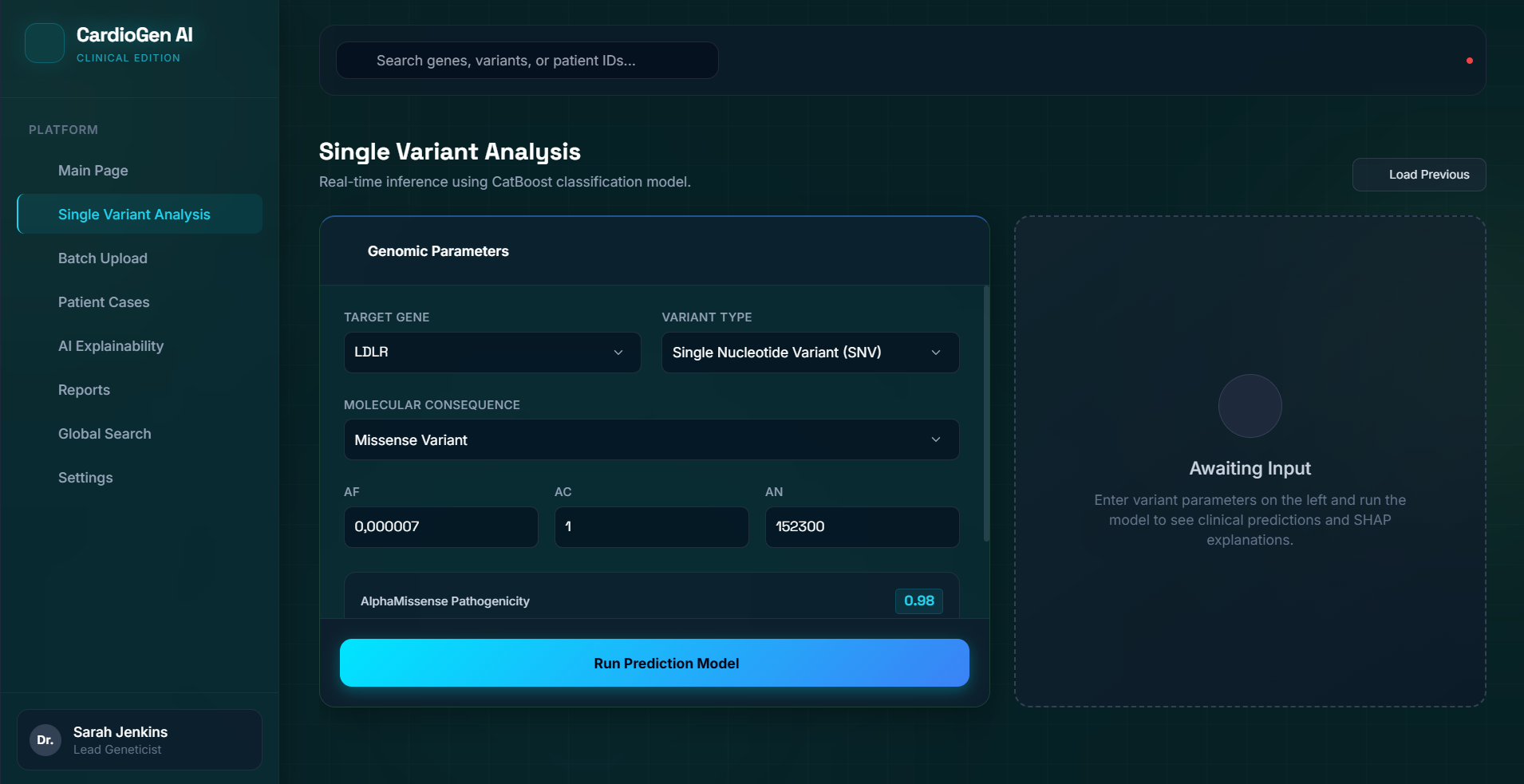
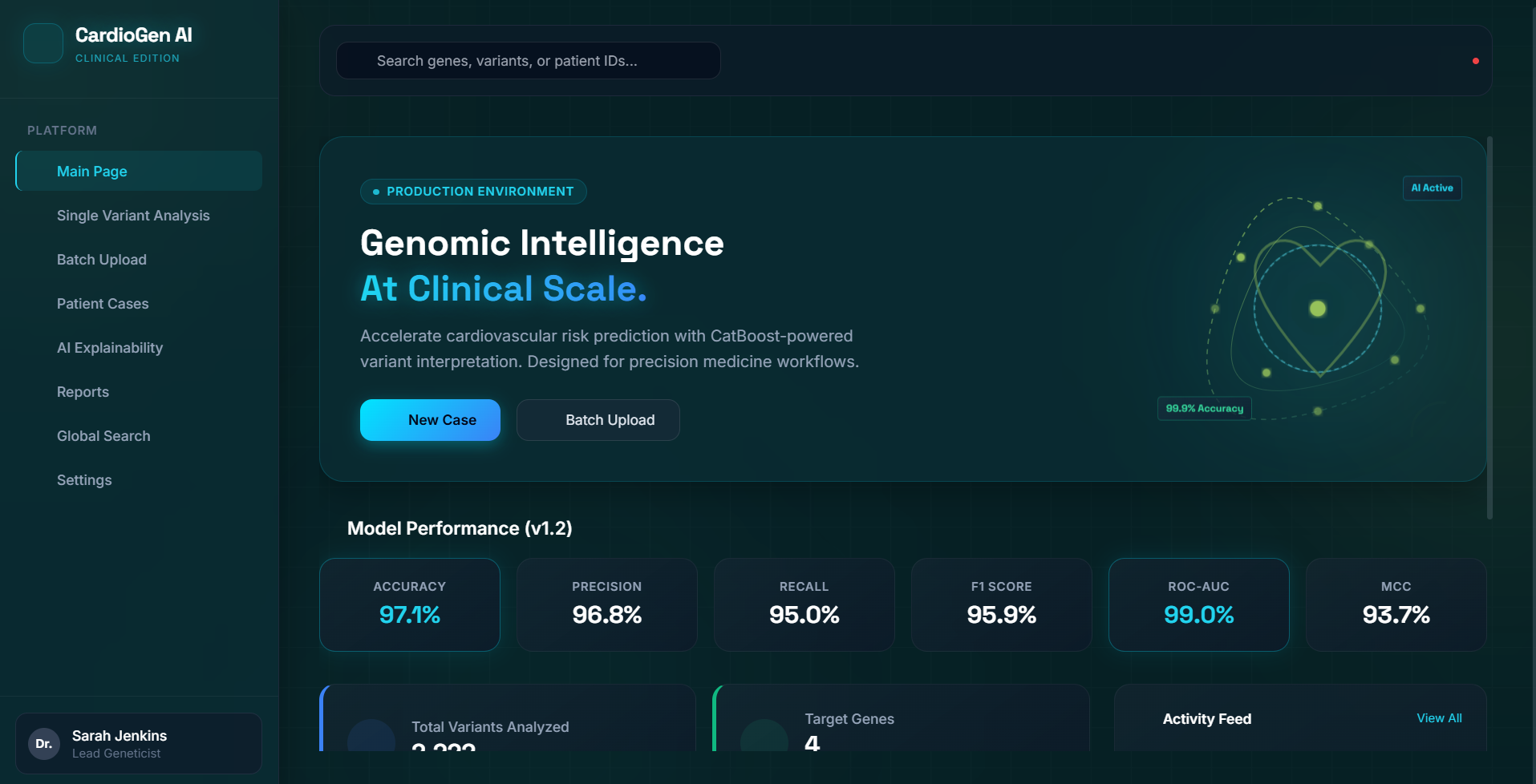
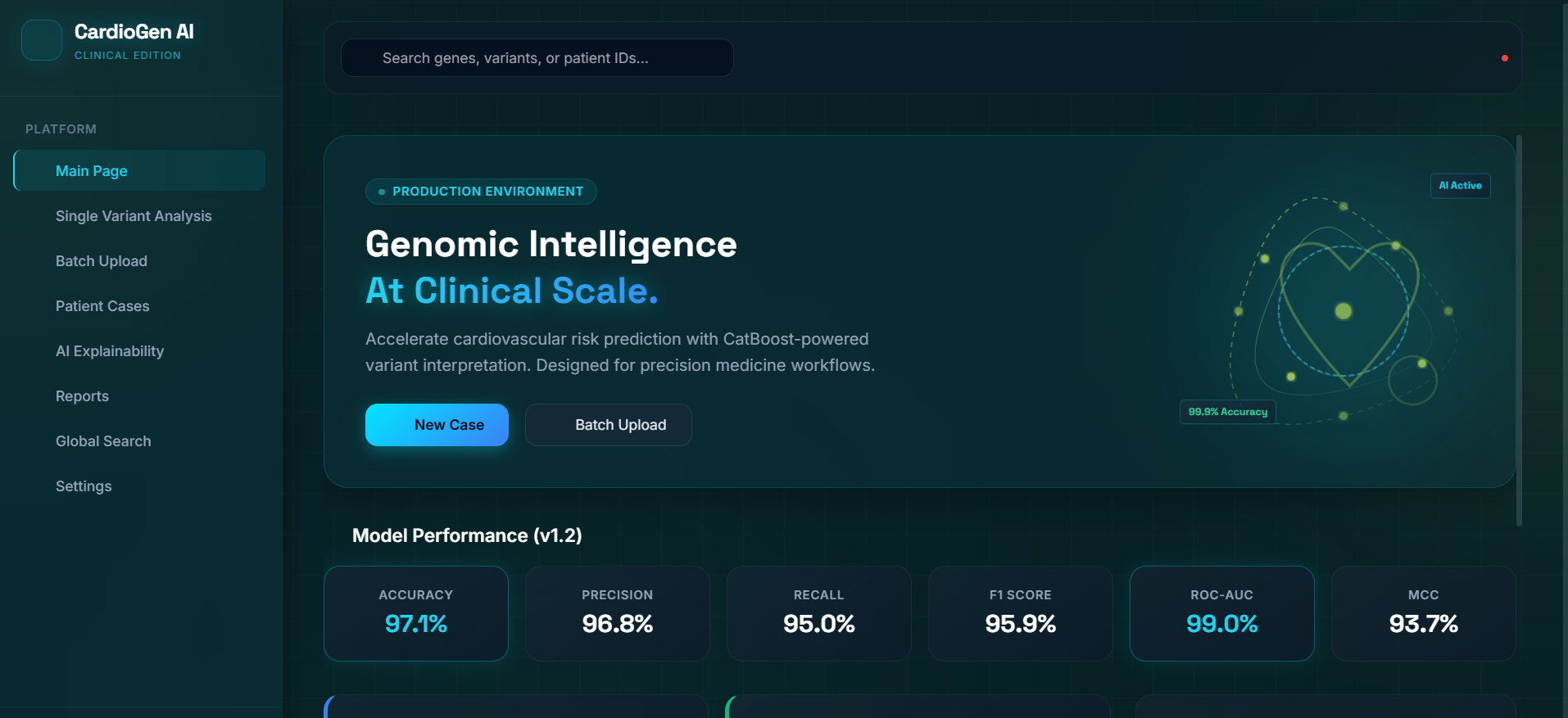
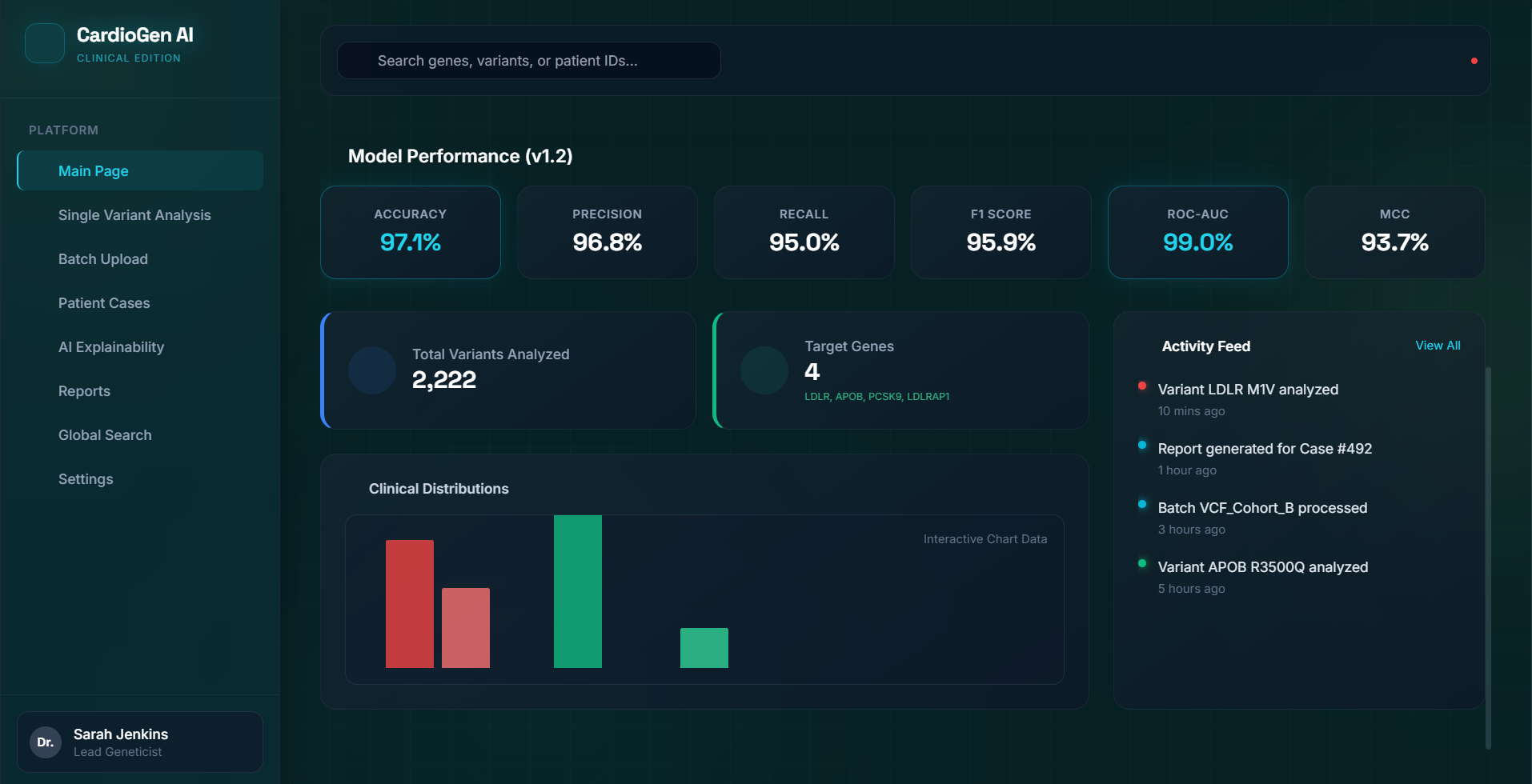
CardioGen AI is an offline-first, clinical-grade desktop application that accelerates genetic variant classification specifically for FH. It allows clinicians to manage patient cohorts, run single-variant or batch analyses, and instantly receive classification predictions. Crucially, it features an AI Explainability (SHAP) dashboard that visually explains why the AI made a certain prediction, building the necessary trust for clinical adoption.
How we built it
- Machine Learning: We trained a highly accurate predictive model using CatBoost, optimized specifically for FH variants. We integrated SHAP (SHapley Additive exPlanations) for model transparency.
- Backend: We developed a blazing-fast local API using FastAPI (Python) and managed patient/report states with SQLite3.
- Frontend UI: We built a premium, dynamic, and fully responsive user interface using React and Tailwind CSS. We avoided sterile medical UI tropes, opting for a modern, glassmorphism-inspired "Siber-Heart" aesthetic with rich micro-animations.
- Desktop Integration: We used Pywebview to seamlessly bridge the Python backend and React frontend into a native desktop window, and packaged the entire stack (including heavy ML libraries) into a single, portable Windows
.exeusing PyInstaller, complete with a native splash screen.
Challenges we ran into
Clinical genomic data is highly sensitive, so relying on Cloud APIs was out of the question. We had to ensure the app works 100% offline. Packaging heavy data science libraries (pandas, catboost, shap) into a single executable resulted in massive extraction delays on startup. We engineered a C-level native splash screen via PyInstaller to provide immediate visual feedback while the AI engine warms up in the background, ensuring a premium user experience.
Accomplishments that we're proud of
We are incredibly proud of the UI/UX. We successfully transformed a complex bioinformatics workflow into a sleek, intuitive, and beautiful desktop experience. Delivering a fully offline AI architecture that feels just as fast and responsive as a modern web app is a huge technical win.
What we learned
We mastered the art of bundling complex Python ML ecosystems with modern JavaScript frontend frameworks into standalone executables. We also learned how critical "Explainable AI" is in the medical field; accuracy alone isn't enough, doctors need to see the reasoning.
What's next for CardioGen AI
Expanding the model to support broader cardiovascular gene panels (beyond just FH). We also plan to integrate automated, clinically formatted PDF report generation, and add real-time variant cross-referencing with local ClinVar database dumps.
Built With
- catboost
- fastapi
- machine-learning
- pyinstaller
- python
- pywebview
- react
- sqlite
- tailwind-css

Log in or sign up for Devpost to join the conversation.