-
-
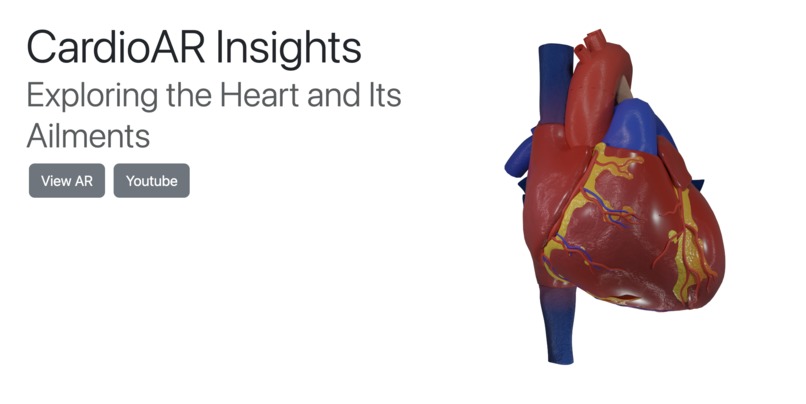
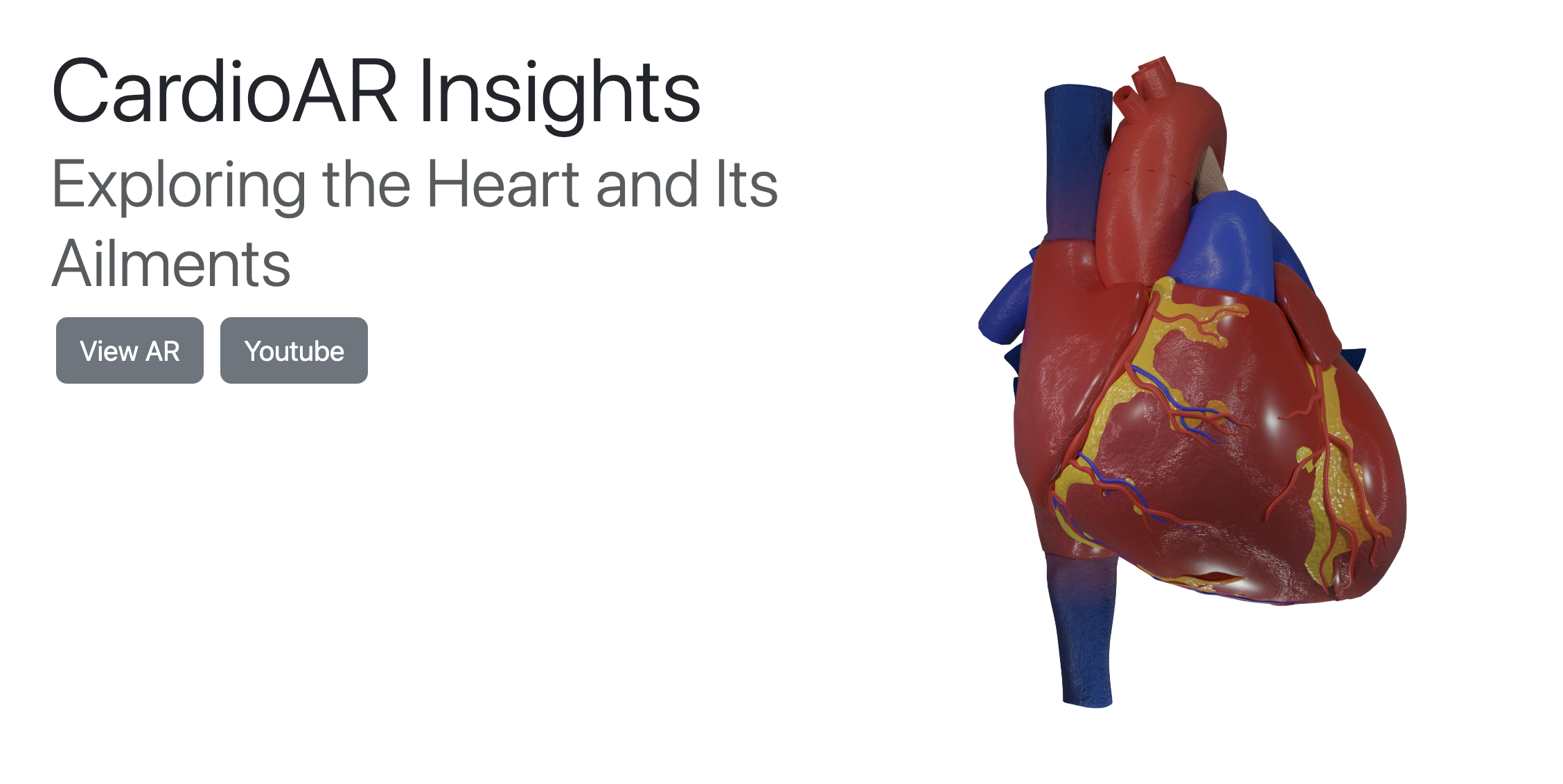
Mainpage
-
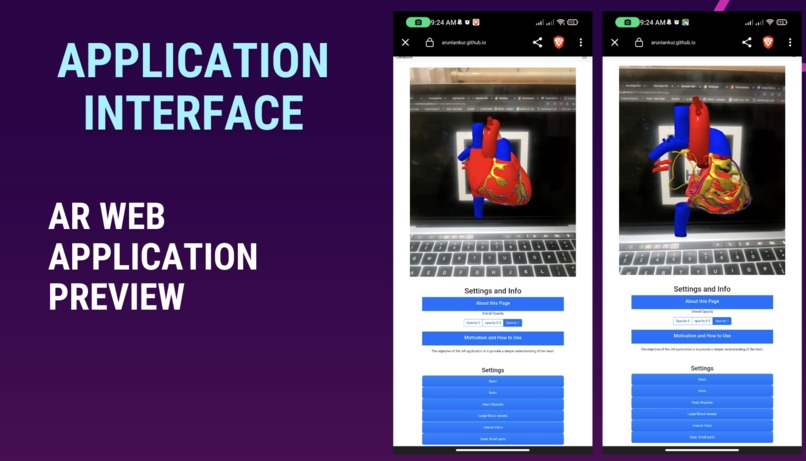
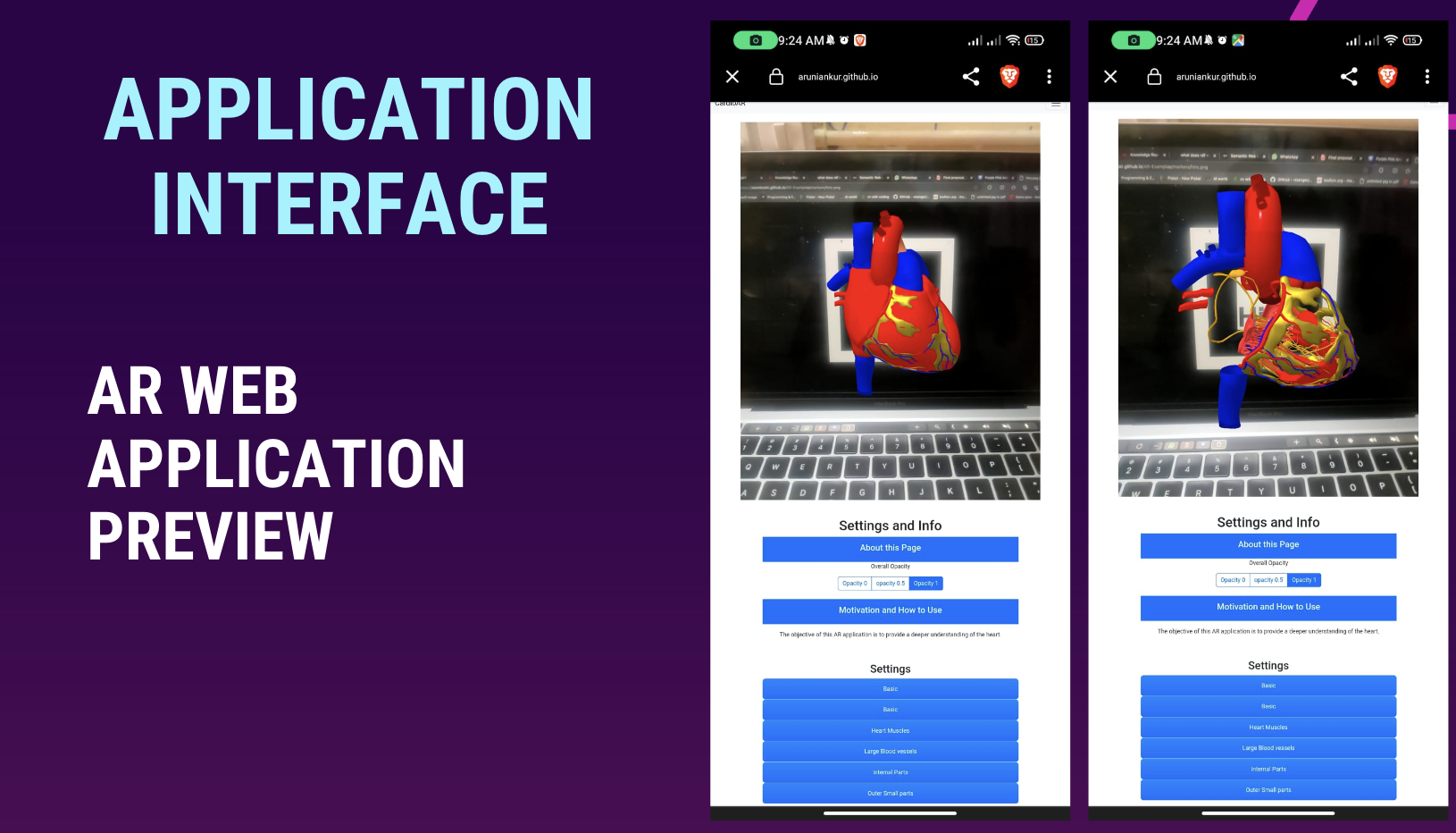
Application Interface 1 - viewing Normal Human Heart in AR
-
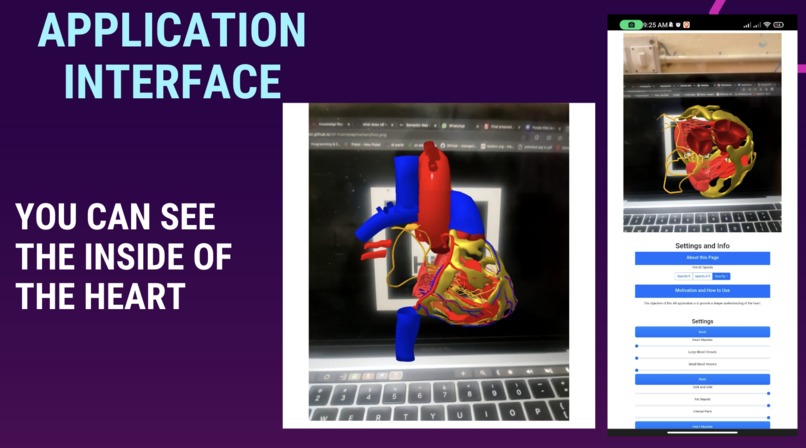
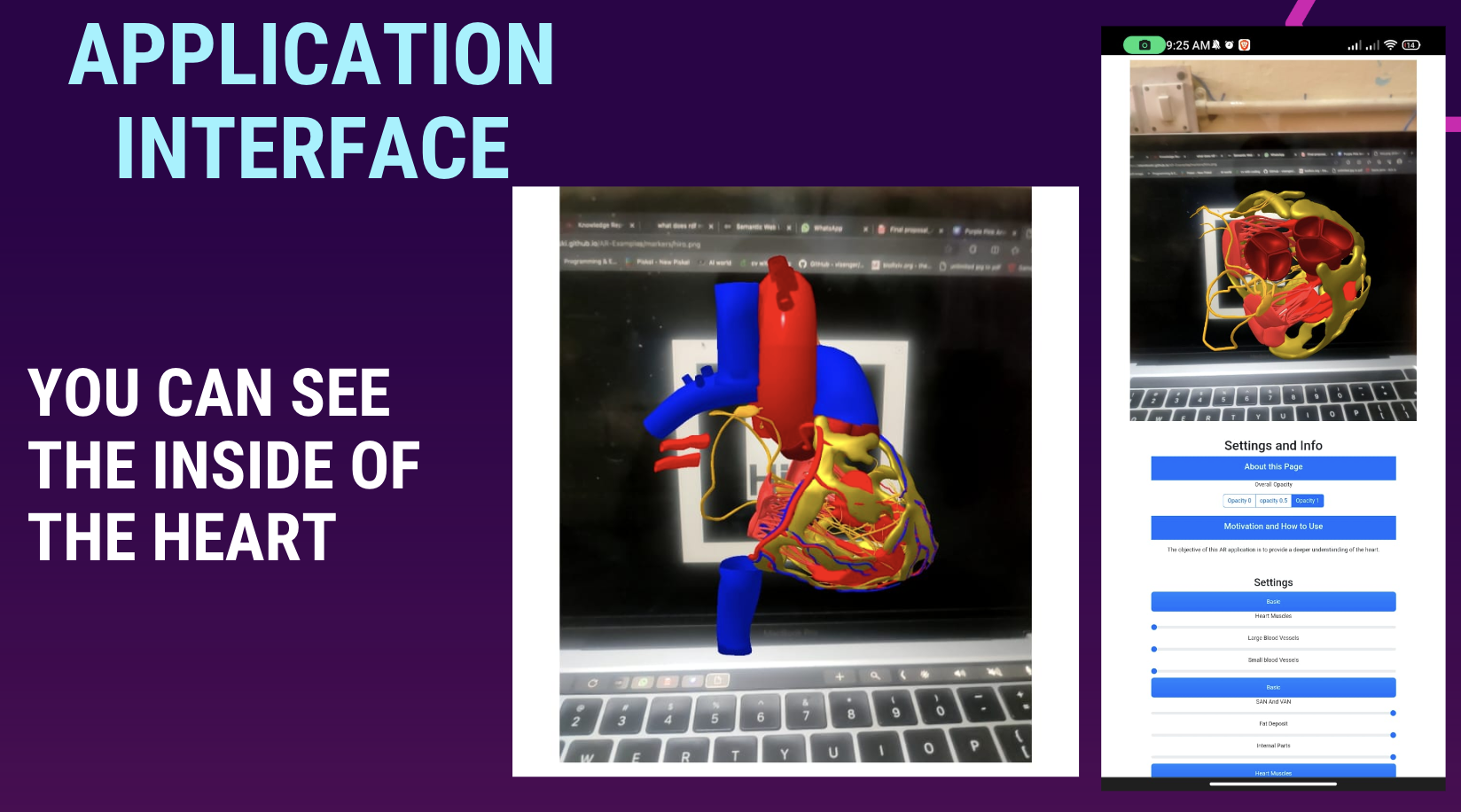
Application Interface 2 - Normal Human heart inside
-
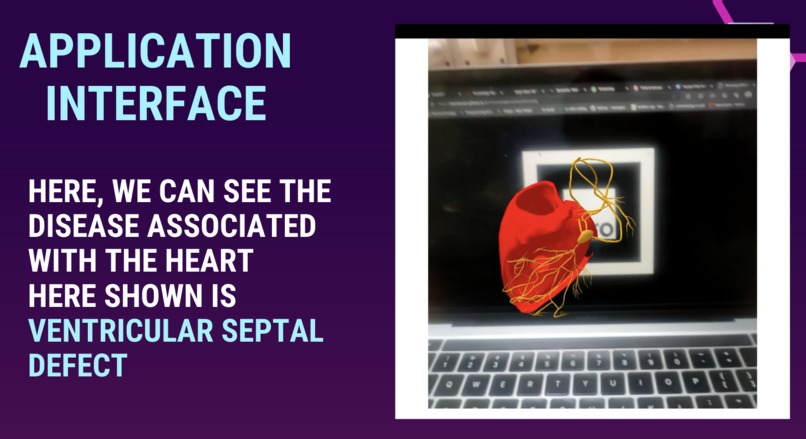
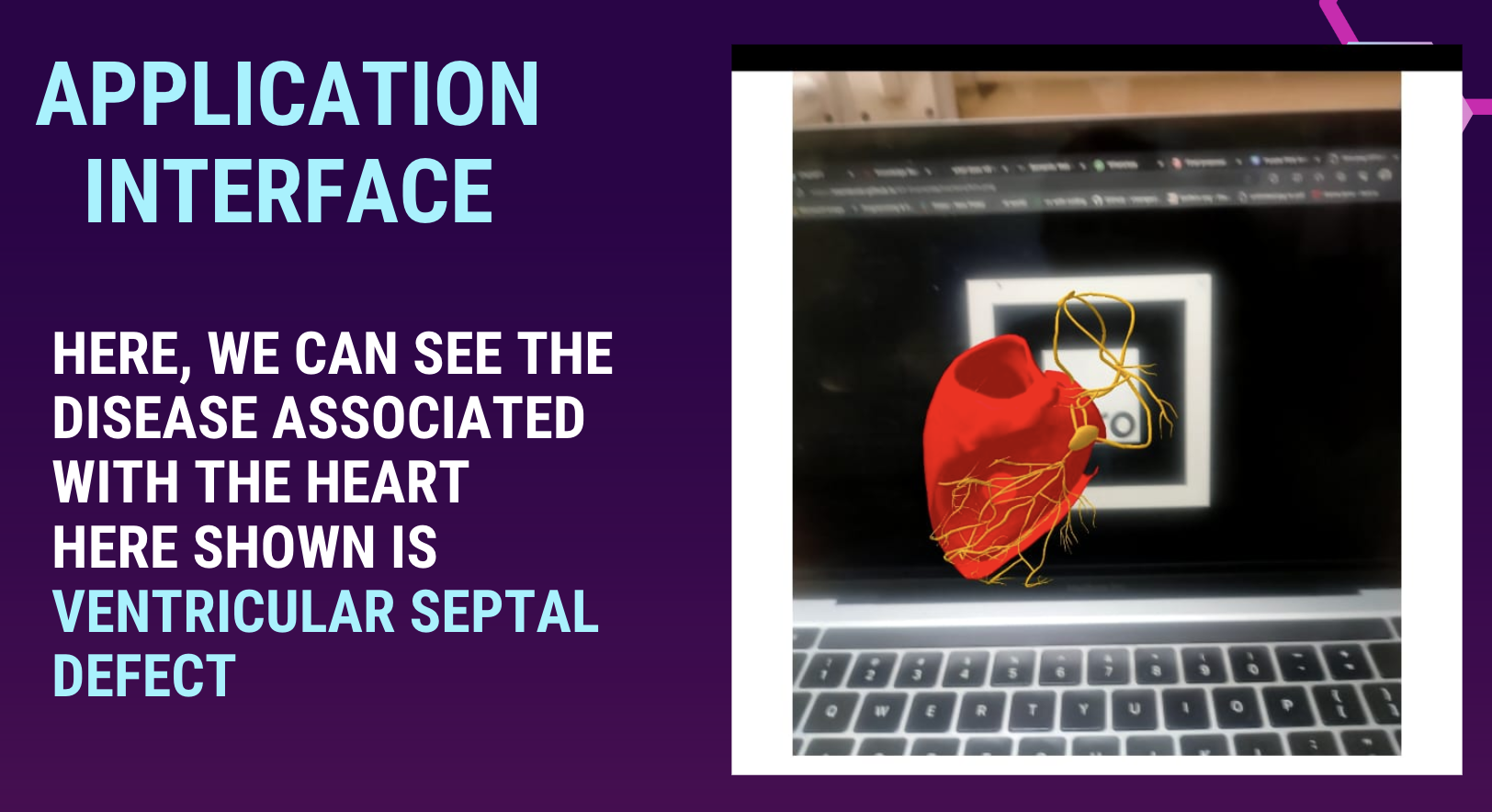
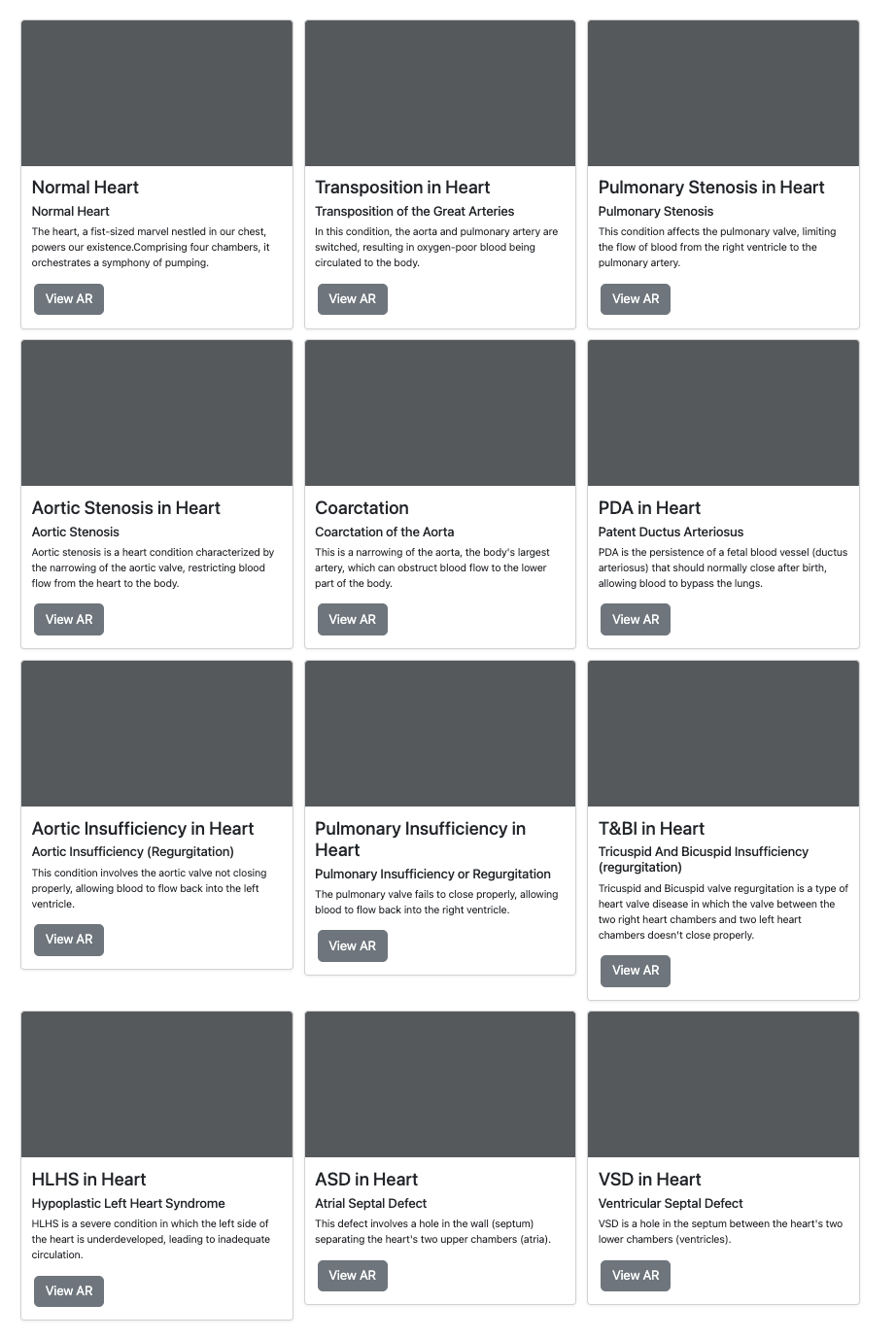
Application Interface 3 - viewing various diseases
-
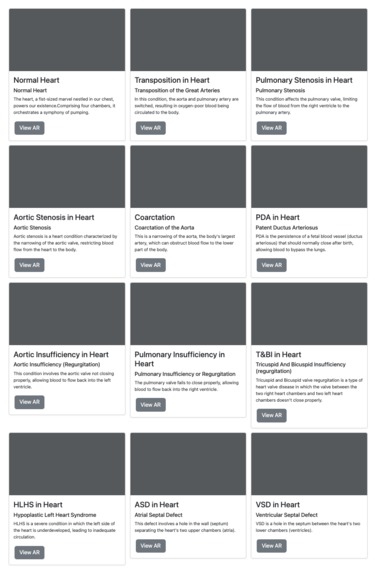
Mainpage : so many diseases to choose from
START
Hello everyone, our application CardioAR Insights is a demonstration of how we can merge technology to education in a creative way. We present you a website where you will be able to see a human heart in action using Augmented reality which is a technology that superimposes a computer-generated image on a user's view of the real world, thus providing a composite view.
Inspiration
The inspiration behind CardioAR Insights stems from the desire to revolutionize medical education and patient engagement through cutting-edge technology. We were inspired by the potential of augmented reality (AR) to provide a truly immersive and interactive experience, especially when combined with proper animations and aliments associated to heart. Our aim was to break traditional educational boundaries and offer a novel approach to understanding the complexities of the human heart and its associated conditions.
What it does
CardioAR Insights is a marker-based AR web application dedicated to exploring the anatomy of the human heart and its various diseases. It allows users to seamlessly interact with cardiac structures through intuitive controls such as zoom, rotation, and opacity adjustments. The app utilizes full-fledged animations to enhance engagement and facilitate deeper learning experiences. Whether for medical professionals, patients, or enthusiasts, CardioAR Insights provides a interactive platform to understand cardiac aliments and related conditions.
How we built it
The development of CardioAR Insights began with a thorough study of the human heart and an exploration of available technologies to bring our vision to life. We conducted extensive research into heart anatomy and functionality to ensure accuracy in our representations. The initial phase involved modelling the heart using Blender, a task that proved to be challenging due to the complexity of accurately depicting various heart diseases and optimizing the models in terms of vertices count for performance on website. During this process, we also evaluated different software options for AR development. We initially attempted to utilize Three.js but encountered limitations in achieving the level of interactivity and realism we desired. After further research, we discovered A-Frame and Ar.js, which offered the flexibility and capabilities necessary to realize our vision. Despite this, we persisted in refining our models and optimizing their performance within the AR environment. Through iterative design and testing, we gradually transformed our concepts into tangible, interactive experiences. The development process was exhaustive, requiring meticulous attention to detail and continuous iteration to achieve our desired outcomes.
Challenges we ran into
One of the most daunting tasks was modeling the intricate structures of the human heart and accurately depicting various cardiac diseases. This required extensive research and expertise in both medical anatomy and 3D modeling techniques. Additionally, optimizing the models for performance within the AR environment posed a considerable challenge, as we needed to ensure smooth interactivity and realistic rendering on a variety of devices. Furthermore, our initial choice of Three.js for AR development proved to be inadequate for our needs, necessitating a transition to A-Frame and Ar.js. This shift required us to adapt our development workflow and learn new tools and frameworks, adding complexity to the project.
Accomplishments that we're proud of
Despite the challenges, we're proud to have developed CardioAR Insights—a groundbreaking educational tool that uses AR technology. We've successfully created a platform that offers a comprehensive exploration of cardiac anatomy and diseases in an interactive manner. Our achievement lies in providing medical professionals, patients, and enthusiasts with a unique opportunity to deepen their understanding of cardiac health through cutting-edge technology. By this we get to learn AR, webgl, libraries associated to it like three.js , ar.js, a-frame.js, arcore.
What we learned
Through the development of CardioAR Insights, we've gained valuable insights into the intricacies of AR technology and medical education. We've learned the importance of interdisciplinary collaboration and the need for continuous innovation in the healthcare sector. Additionally, we've discovered the immense potential of AR to revolutionize medical training, patient engagement, and healthcare delivery.
What's next for CardioAR Insights
In the future, we aim to enhance CardioAR Insights further. We plan to incorporate a wider range of treatments for cardiac conditions and explore transitioning from marker-based to non-marker AR technology using Google ARCore. Despite these future developments, we are proud of what we have accomplished so far and are excited to share our creation with the world. We hope you enjoy using CardioAR Insights as much as we have enjoyed creating it.


Log in or sign up for Devpost to join the conversation.