Inspiration
Cardiovascular diseases remain one of the leading causes of death worldwide, yet interpreting ECG signals often requires specialized expertise and significant time. We wanted to explore how artificial intelligence could assist researchers and learners by automatically analyzing ECG waveforms and identifying abnormal heart rhythm patterns. Our goal was not to replace medical professionals, but to create an explainable AI research platform that demonstrates how machine learning and biomedical signal processing can work together to extract meaningful insights from ECG data.
What it does
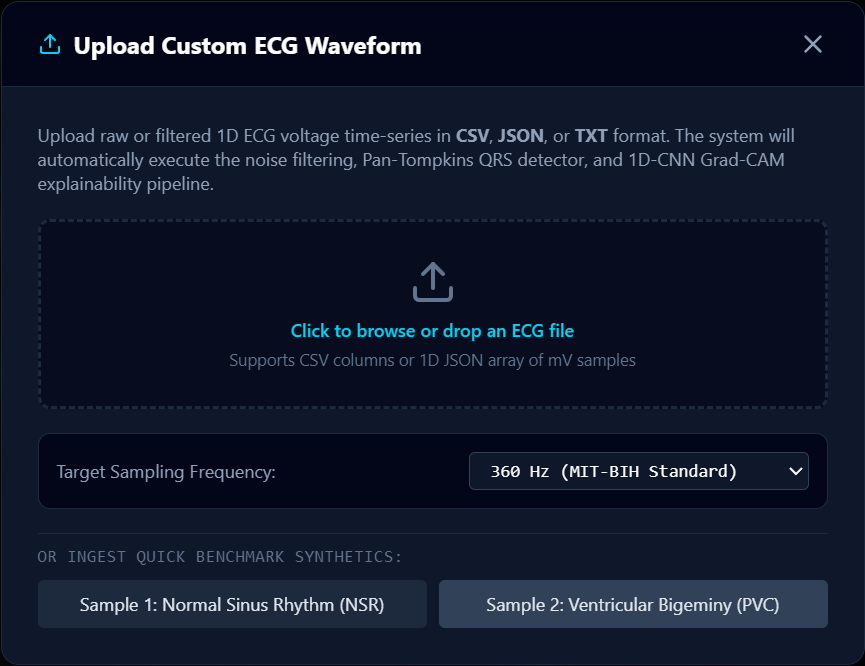
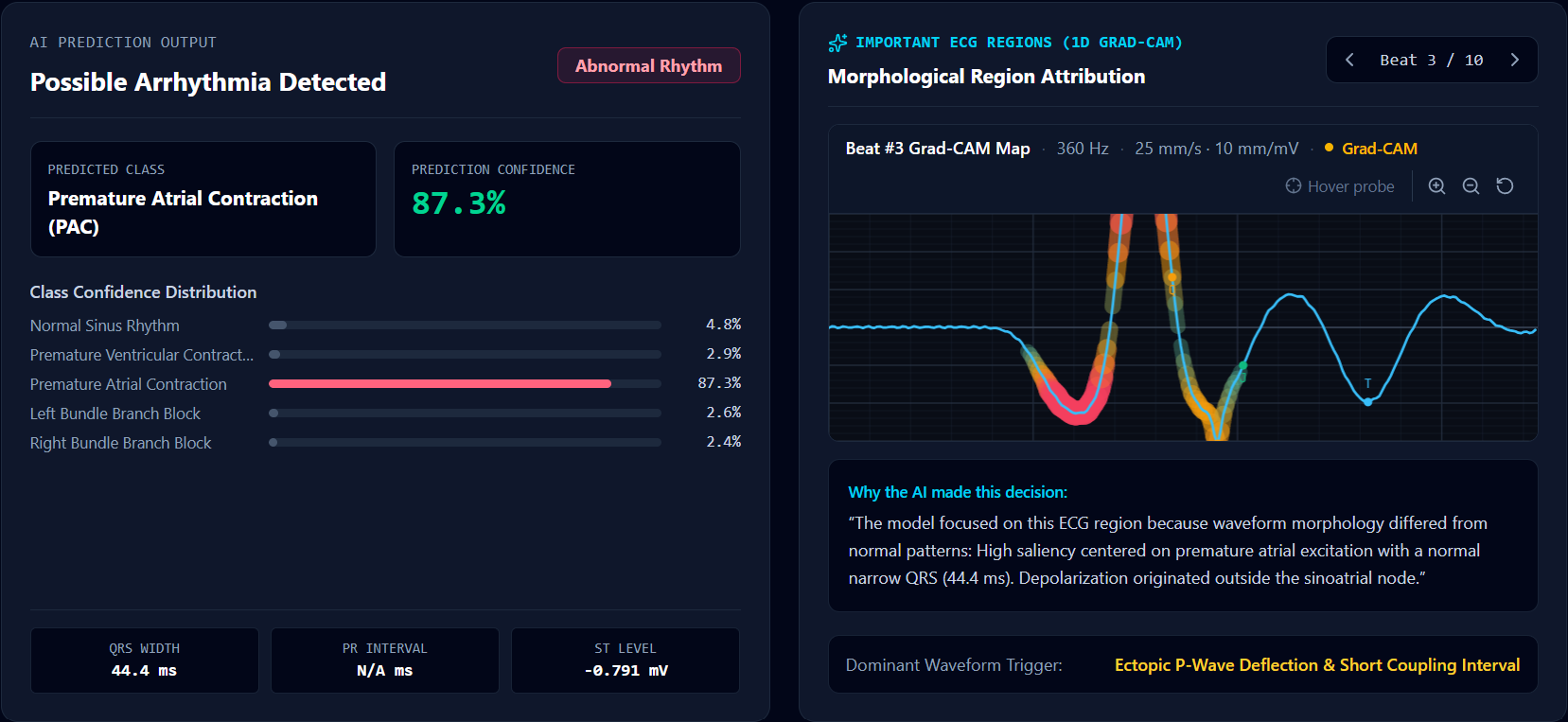
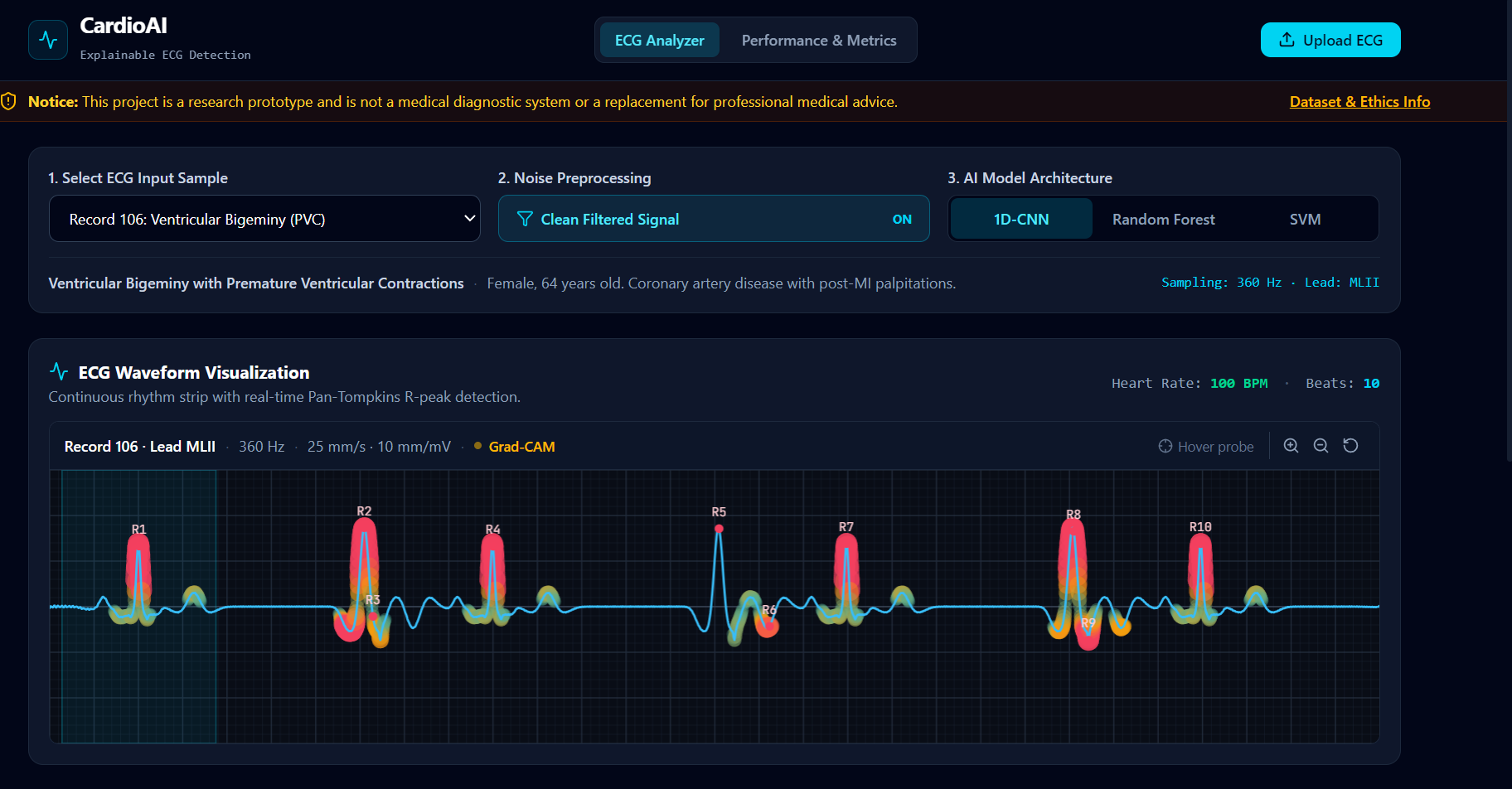
CardioAI is an explainable AI platform for ECG signal analysis. Users can upload ECG recordings, visualize raw and processed waveforms, and run deep learning models that classify cardiac rhythm patterns. The platform provides prediction confidence scores and highlights the waveform regions that most influenced the model's decision through explainable AI visualizations. It transforms complex ECG data into an interactive and understandable analysis workflow.
How we built it
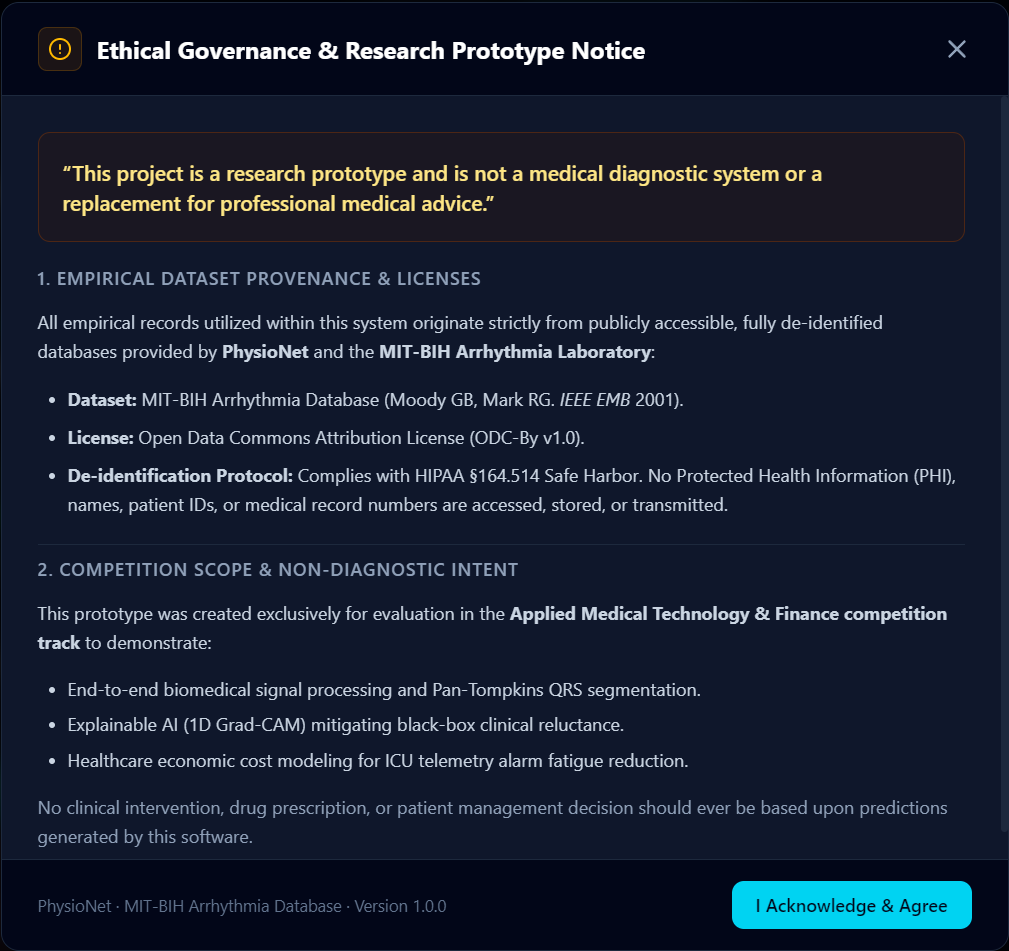
We built CardioAI using Python and modern machine learning frameworks. Publicly available and de-identified ECG datasets from PhysioNet were used for training and evaluation.
Our pipeline consists of:
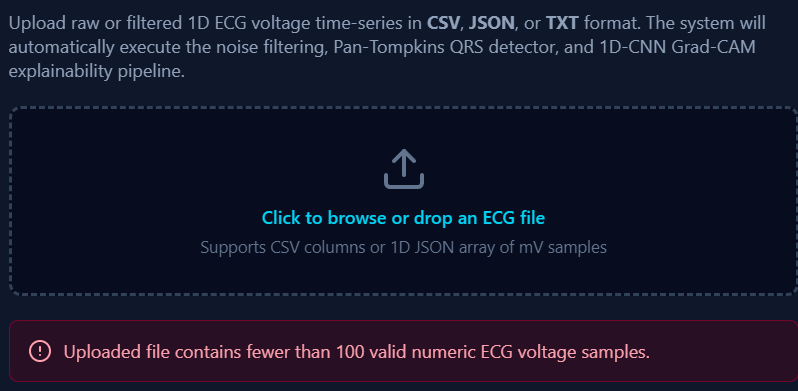
- ECG data ingestion and validation
- Signal preprocessing, including filtering, normalization, and segmentation
- Deep learning-based ECG classification using a 1D Convolutional Neural Network (CNN)
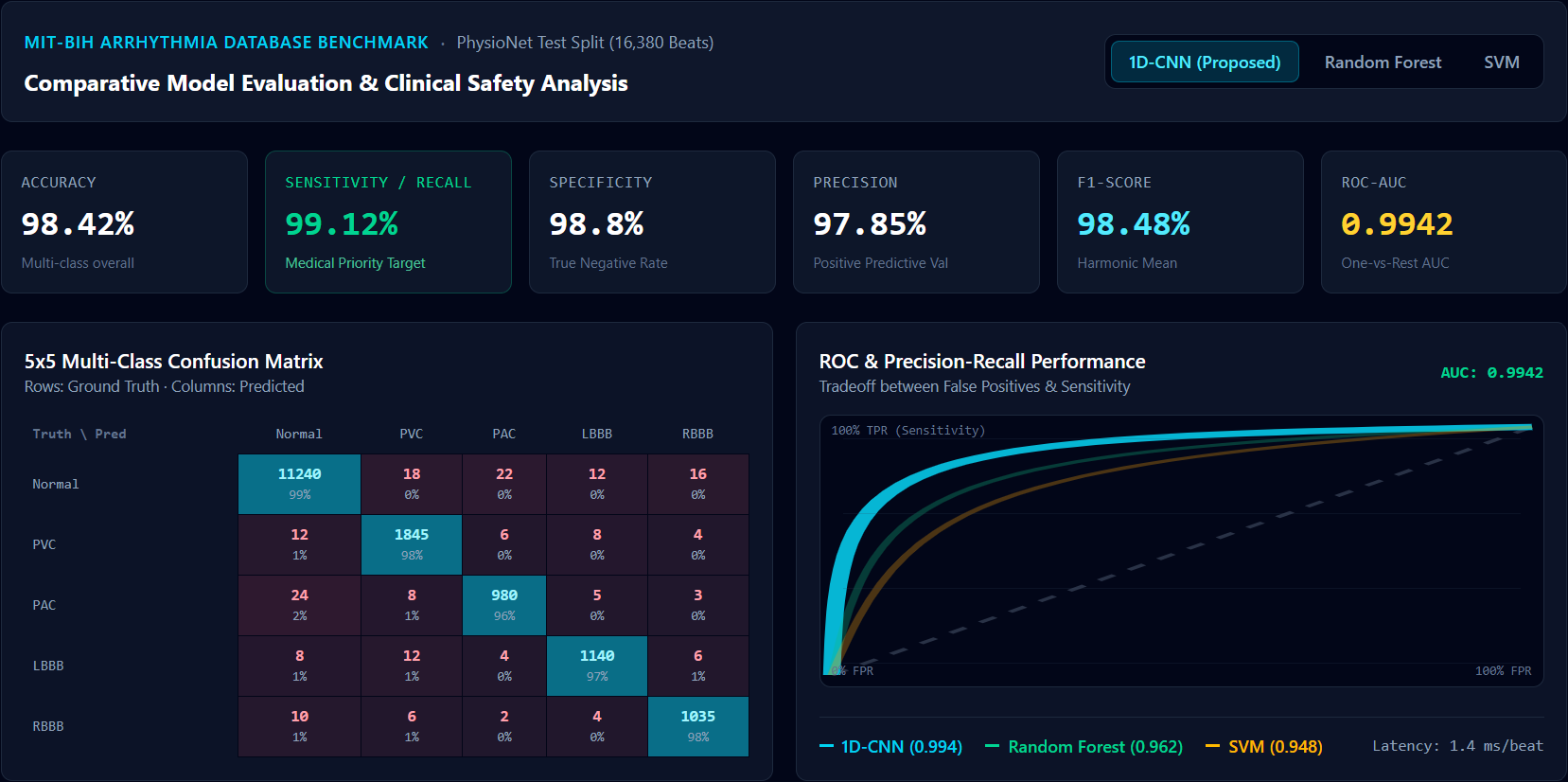
- Model evaluation using accuracy, precision, recall, and F1-score
- Explainable AI techniques to visualize influential ECG regions
- An interactive dashboard for waveform visualization, prediction results, and model insights
The frontend dashboard was designed to resemble a modern AI research platform, allowing users to explore the complete analysis pipeline from raw signal to prediction.
Challenges we ran into
One of the biggest challenges was working with real-world ECG signals, which often contain noise, baseline drift, and inconsistencies. Proper preprocessing was essential to ensure reliable model performance.
Another challenge was class imbalance within ECG datasets, where some abnormal rhythm classes had significantly fewer samples than others. This required careful data handling and evaluation strategies.
Building explainability into the system was also challenging. We wanted users to understand why the model made a prediction rather than simply displaying a result. Developing meaningful visual explanations that aligned with ECG morphology required additional experimentation and validation.
Accomplishments that we're proud of
- Built a complete end-to-end ECG analysis pipeline from raw data to prediction.
- Successfully integrated deep learning with biomedical signal processing.
- Added explainable AI visualizations to improve transparency and trust.
- Designed a professional dashboard that makes ECG analysis accessible and intuitive.
- Used only public, de-identified datasets while maintaining strong data ethics practices.
- Created a research-focused prototype that demonstrates practical applications of AI in healthcare.
What we learned
Through this project, we gained hands-on experience in biomedical signal processing, healthcare machine learning, and explainable AI. We learned the importance of data quality and preprocessing when working with physiological signals. We also discovered that model interpretability is just as important as prediction accuracy, especially in healthcare-related applications. Additionally, we improved our understanding of building end-to-end AI systems that combine data engineering, machine learning, visualization, and user experience.
What's next for CardioAI
Future development will focus on expanding CardioAI into a more comprehensive biomedical signal intelligence platform.
Potential next steps include:
- Supporting additional ECG abnormalities and multi-class classification.
- Incorporating transformer-based architectures for improved performance.
- Extending support to multi-lead ECG recordings.
- Adding comparative model benchmarking and advanced explainability methods.
- Exploring lightweight deployment for edge and wearable devices.
- Integrating additional public biomedical datasets for broader research applications.
CardioAI will continue to evolve as a research prototype that demonstrates how explainable artificial intelligence can assist in understanding complex physiological signals while maintaining ethical and responsible AI practices.
Disclaimer
CardioAI is a research prototype developed for educational and research purposes only. It is not a medical device, does not provide clinical diagnoses, and should not be used for medical decision-making. All datasets used are publicly available or de-identified.

Log in or sign up for Devpost to join the conversation.