Inspiration
Heart disease is one of the leading causes of death worldwide, yet early detection can significantly improve outcomes. We wanted to create a simple, accessible tool that leverages AI to help users understand their risk of heart disease in a clinical yet user-friendly way. Our inspiration came from real-world healthcare applications and the desire to make heart health awareness more interactive.
What it does
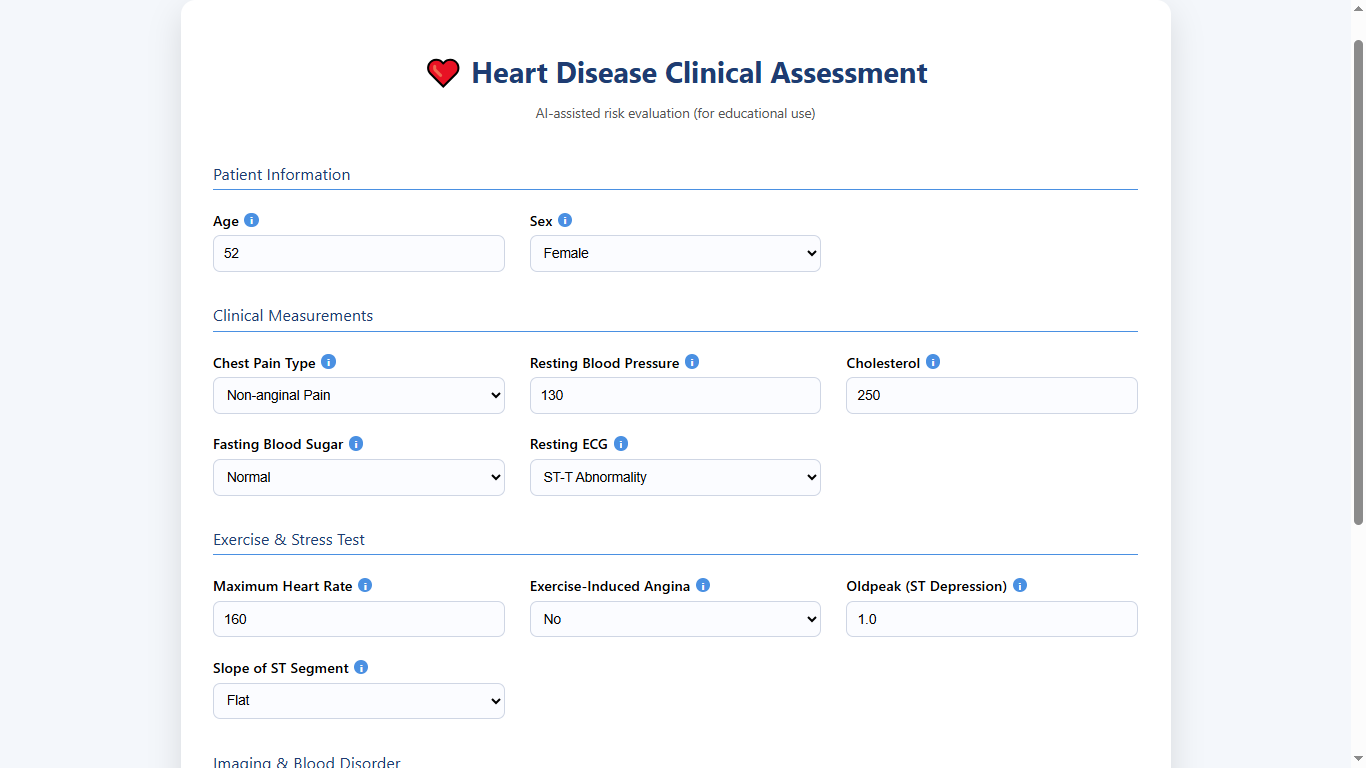
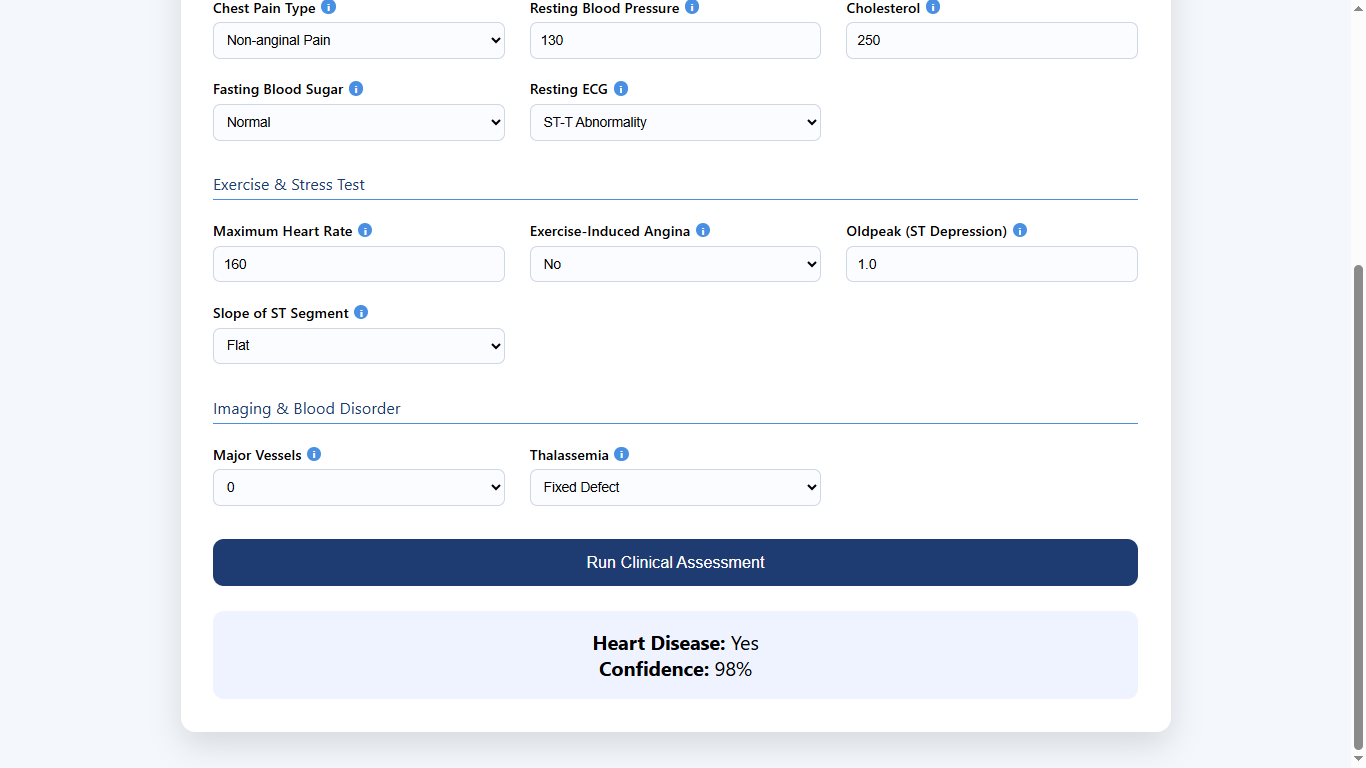
CardioAI predicts the likelihood of heart disease based on 13 clinical and demographic parameters, including age, sex, cholesterol levels, blood pressure, and exercise-induced factors. It provides:
- Yes / No diagnosis in a clear, understandable format
- Confidence score to indicate prediction reliability
- Hoverable explanations for all input parameters to educate users
How we built it
- Data: Used the Heart Disease UCI dataset with 13 input features.
- Model: Trained a
RandomForestClassifierusingscikit-learnto classify heart disease presence. - Backend: Built using
Flaskto serve the AI model and handle predictions. - Frontend: Created a single-page, responsive HTML with CSS and JavaScript, featuring tooltips, hover explanations, and a clean clinical UI.
The model is trained to output a binary classification (0 = No Disease, 1 = Disease) along with a confidence score (probability * 100).
Challenges we ran into
- Converting raw medical data into a format suitable for model training
- Balancing the UI between simplicity for non-experts and completeness for medical context
- Mapping numerical values (e.g.,
sex = 0/1,cp = 0–3) into human-readable selections - Ensuring tooltips and explanations didn’t clutter the interface
Accomplishments that we're proud of
- Fully functional AI-powered heart disease predictor in a single-page app
- User-friendly interface with hoverable educational tooltips for all 13 parameters
- Real-time confidence scoring to increase transparency of predictions
- Clear and intuitive layout that can be used on both desktop and mobile
What we learned
- How to preprocess medical datasets and train a robust ML model
- Deploy a model with Flask backend and JavaScript frontend integration
- Translate technical medical metrics into understandable UI components for users
- Importance of visual design in enhancing trust and usability in health tech
What's next for CardioAI: Heart Disease Risk Predictor
- Add risk severity indicators (low, medium, high) using color-coded visuals
- Integrate trend tracking for users to monitor their health over time
- Expand to more comprehensive datasets including lab results and lifestyle factors
- Implement mobile-responsive and theme variants for broader adoption
Built With
- css
- flask
- html
- joblib
- python
- random-forest-classifer
- scikit-learn
