Inspiration
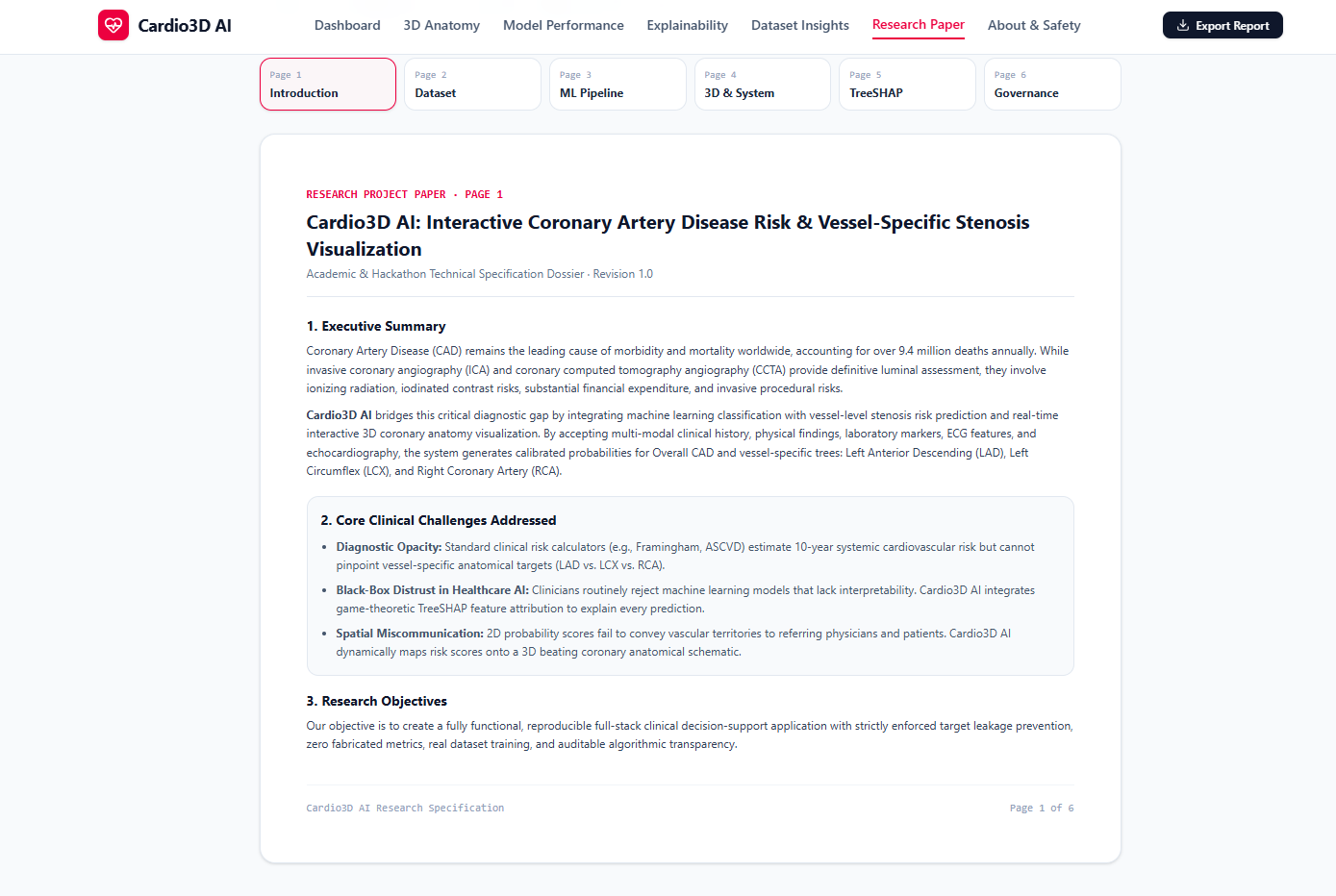
Cardiovascular disease remains a leading global cause of death, yet traditional risk scores are presented as raw numbers that fail to give clinicians or patients an intuitive understanding of where pathology develops inside the body
What it does
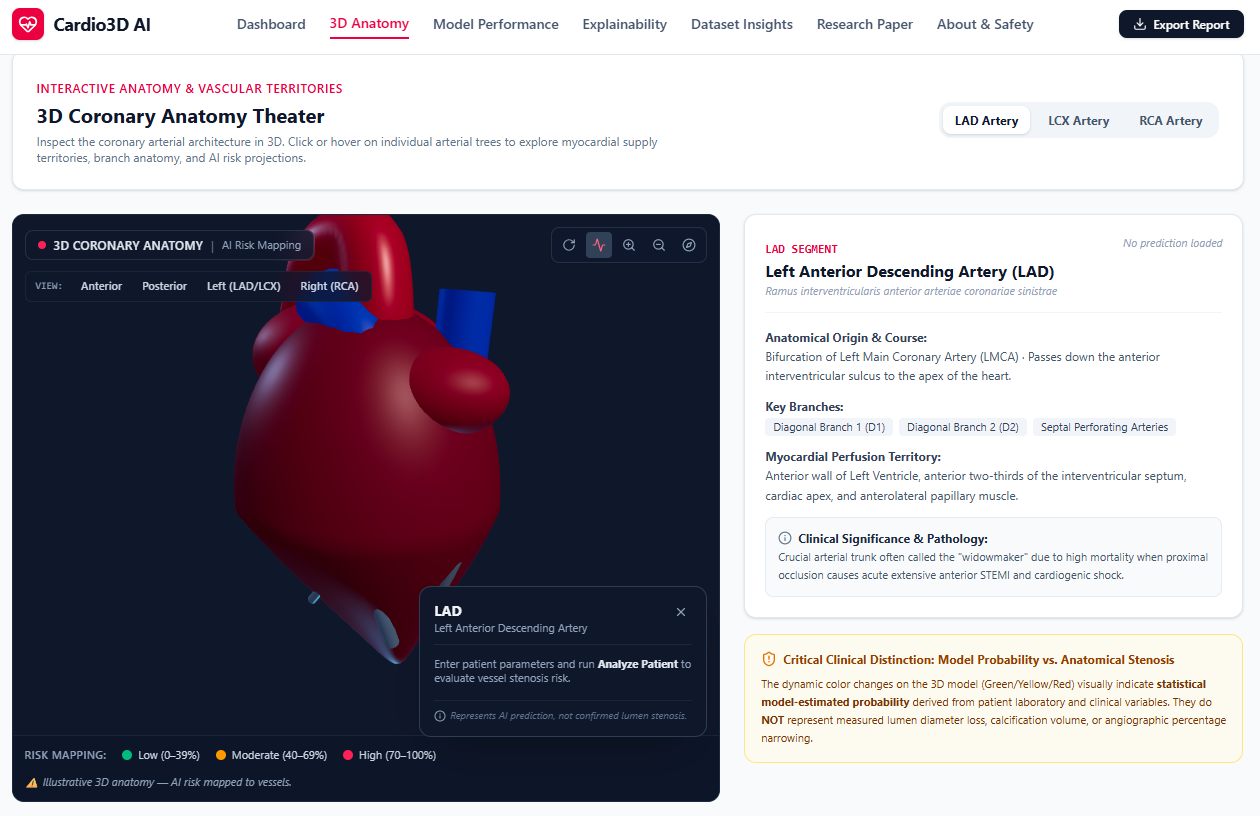
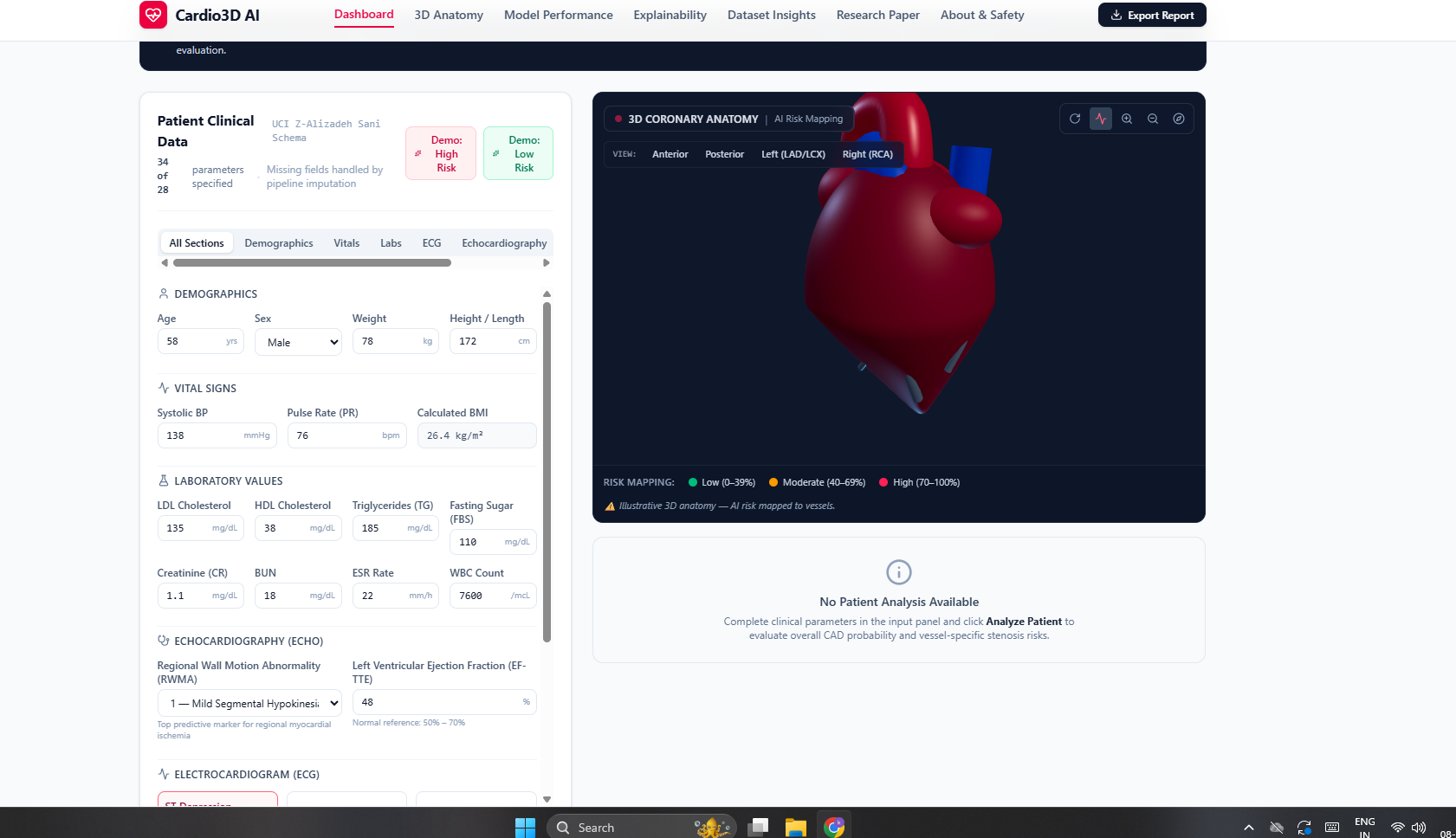
It is an interactive 3D web application that predicts overall Coronary Artery Disease and multi-vessel stenosis from patient clinical data, mapping those predictions in real-time onto an anatomical 3D heart model alongside explainable AI breakdowns and safety disclaimers
How we built it
We trained machine learning classifiers on the Z-Alizadeh Sani dataset (excluding target leakage variables like LAD, LCX, RCA, and Cath), built a FastAPI backend, and developed a responsive frontend using React and Three.js / React Three Fiber for interactive 3D vessel risk color-mapping.
Challenges we ran into
Ensuring smooth, real-time 3D rendering in browser environments without requiring dedicated GPUs, and properly structuring features to prevent target leakage while accurately mapping model probabilities to specific anatomical vessel nodes.
Accomplishments that we're proud of
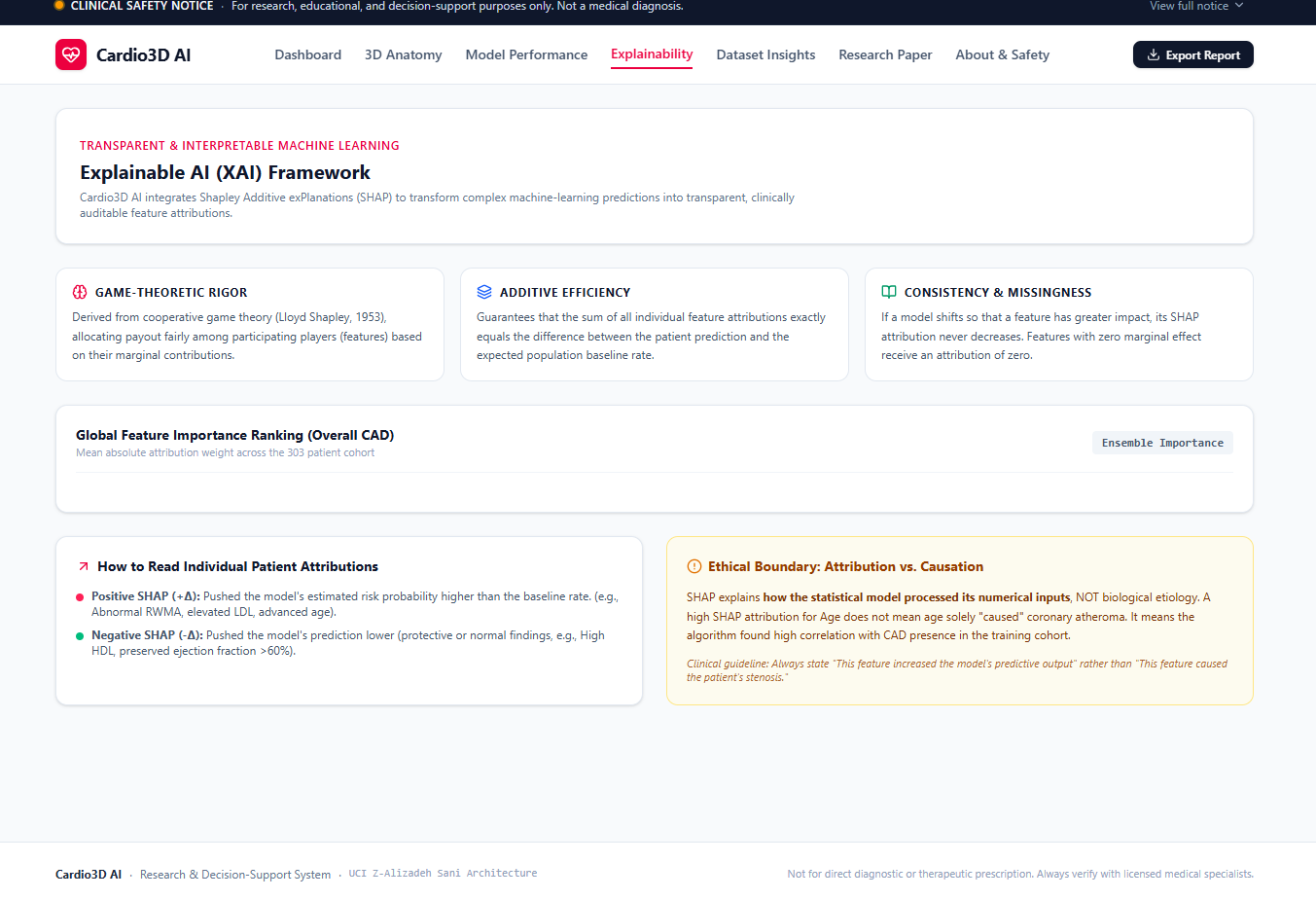
Successfully integrating real-time machine learning predictions with an interactive 3D anatomical heart visualization, complemented by transparent SHAP feature attributions and a clinical safety dashboard.
What we learned
Deepened our understanding of clinical data preprocessing, handling multi-vessel classification without target leakage, and optimizing Three.js meshes for responsive web-based medical visualization.
What's next for Cardio3D AI
Integrating larger clinical datasets, adding support for custom DICOM medical imaging file uploads, expanding the simulation intervention toolkit, and conducting formal clinical usability testing.
Built With
- 3d
- ai
- animation
- react
- tailwindcss
- webdev


Log in or sign up for Devpost to join the conversation.