Inspiration
Cardiovascular diseases are a major health concern, but understanding cardiovascular risk can be difficult for people without a medical background. We wanted to explore how AI and interactive 3D visualization could make cardiovascular risk information more engaging and easier to understand.
What it does
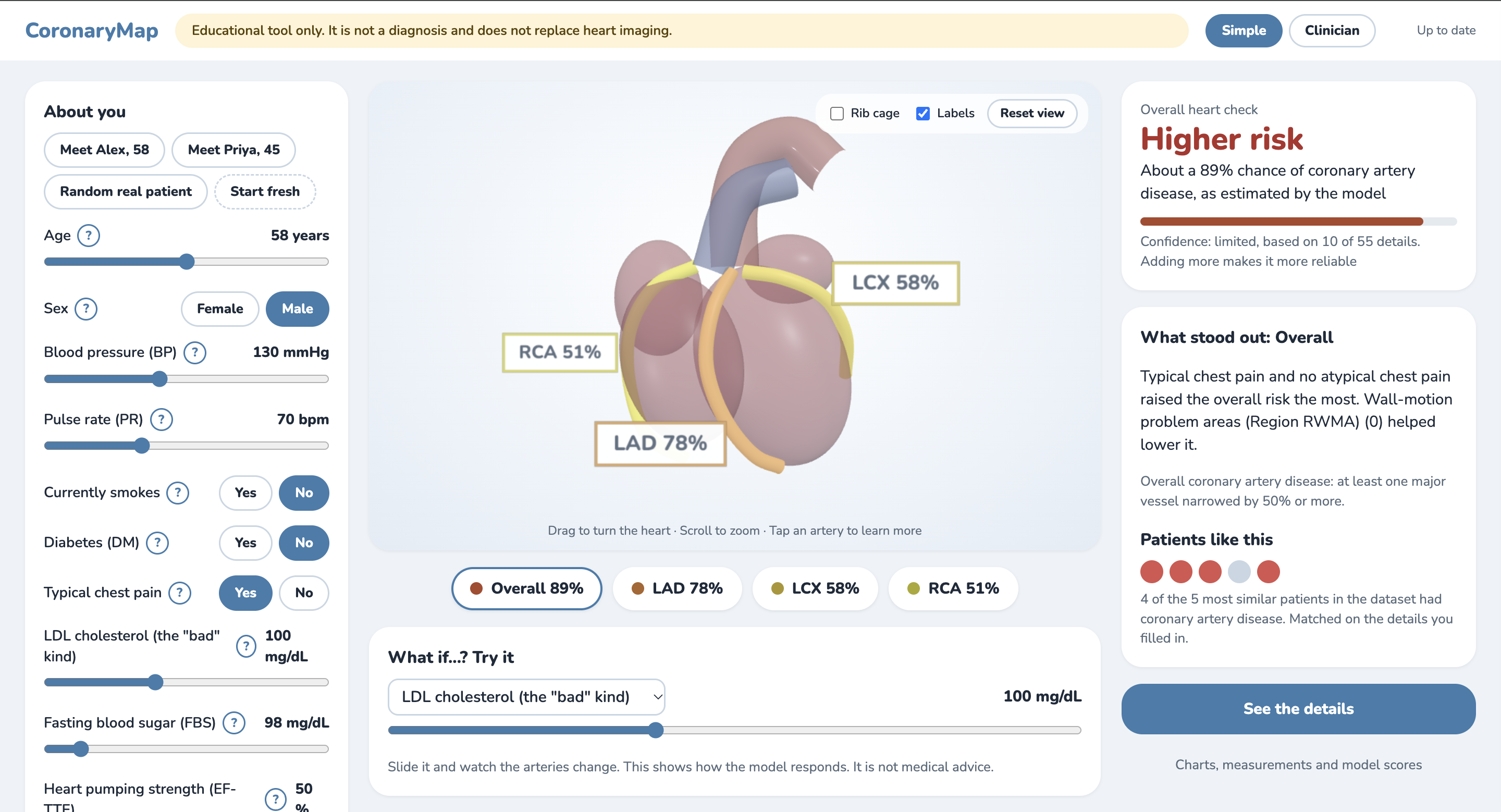
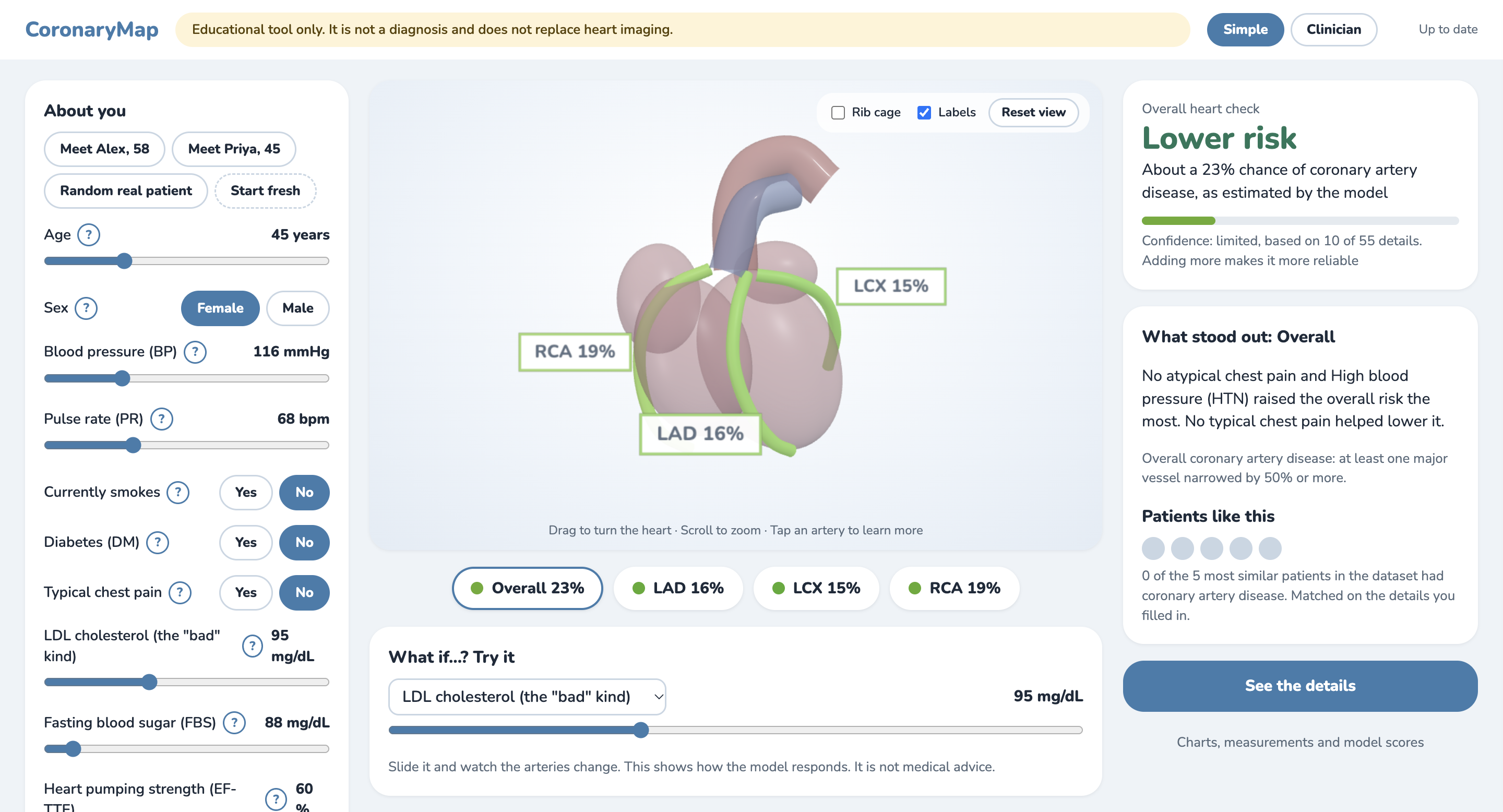
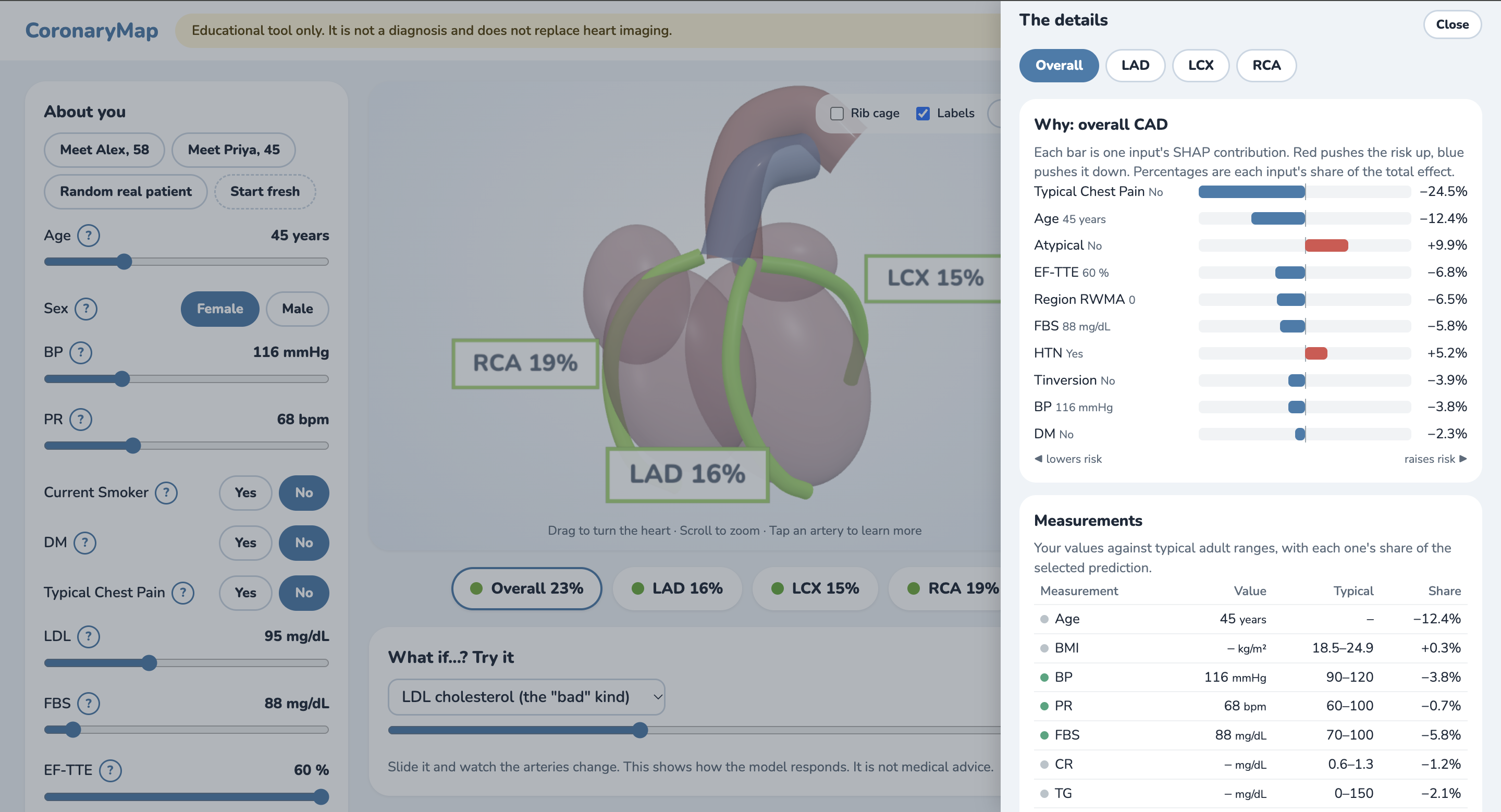
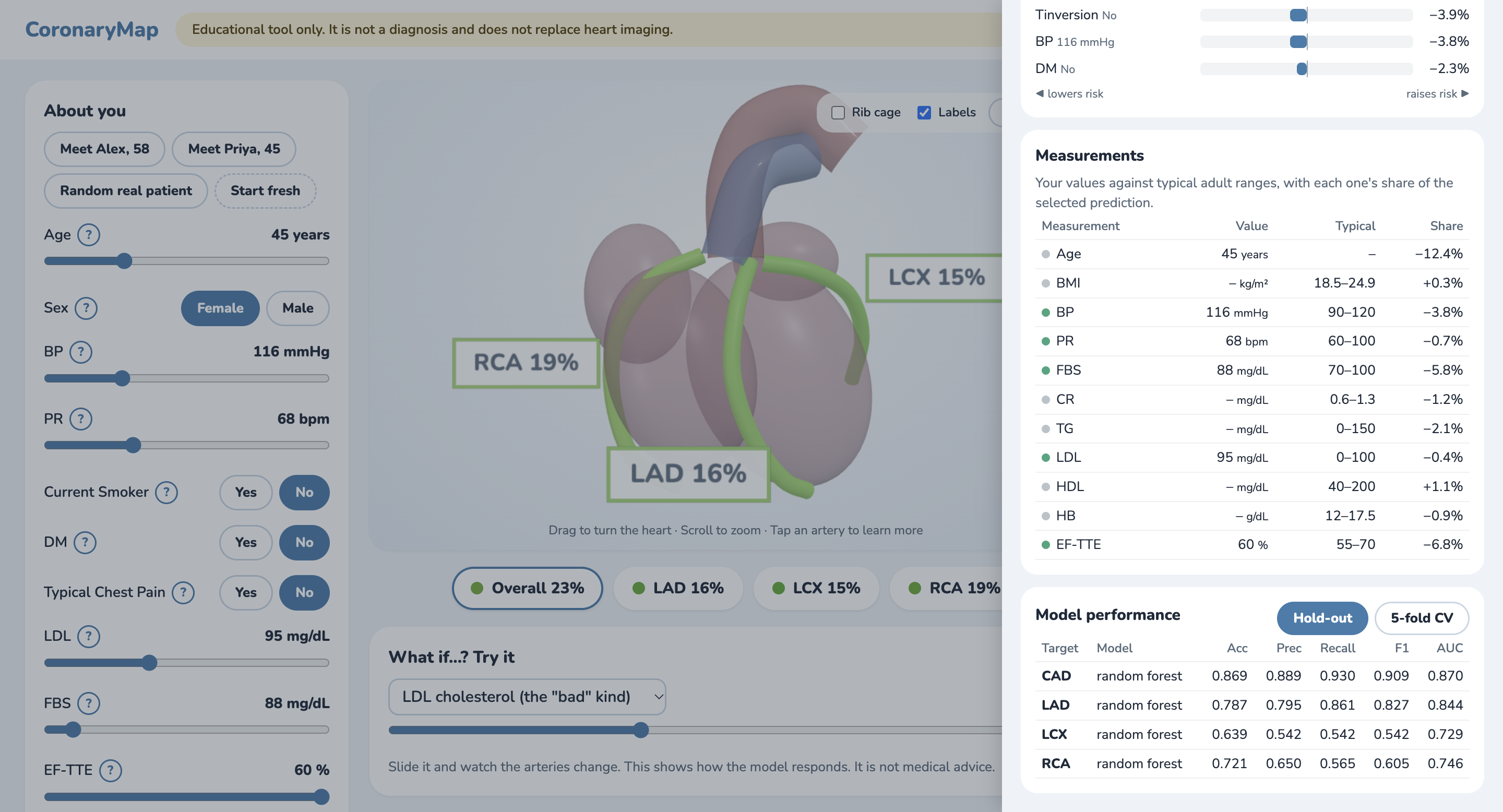
Cardio-Risk-3D combines machine learning with an interactive 3D heart interface. Users can explore the 3D heart and use the application's risk assessment features to better understand cardiovascular risk information.
How we built it
We combined a Python-based backend using FastAPI with a web frontend using Three.js for 3D visualization. Machine learning supports the cardiovascular risk assessment component, bringing prediction and interactive visualization together in one application.
Challenges we ran into
Bringing machine learning, backend functionality, and interactive 3D visualization together was an important challenge. We had to connect the different components and make them work as one web application.
Accomplishments that we're proud of
We're proud of bringing together machine learning, web development, and interactive 3D visualization in a single project. Deploying Cardio-Risk-3D as a live web application was an important milestone, allowing users to explore the interface without installing software locally.
What we learned
This project helped us explore how AI, backend development, and 3D visualization can work together. We also gained experience integrating different technologies and deploying a web application.
What's next for Cardio-Risk-3D
We hope to improve the user experience, refine the risk assessment functionality, and present cardiovascular health information more clearly. Cardio-Risk-3D is intended for awareness and educational purposes, not as a substitute for professional medical advice.
Built With
- 3d
- artificial-intelligence
- css
- data-visualization
- fastapi
- healthcare
- html
- javascript
- machine-learning
- numpy
- pandas
- python
- scikit-learn
- three.js
- webgl

Log in or sign up for Devpost to join the conversation.