-
-
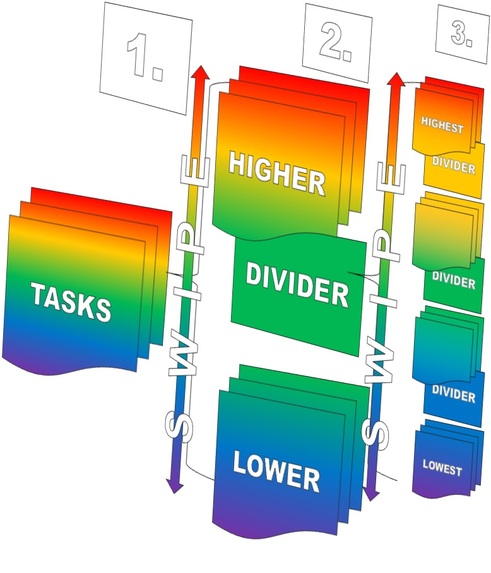
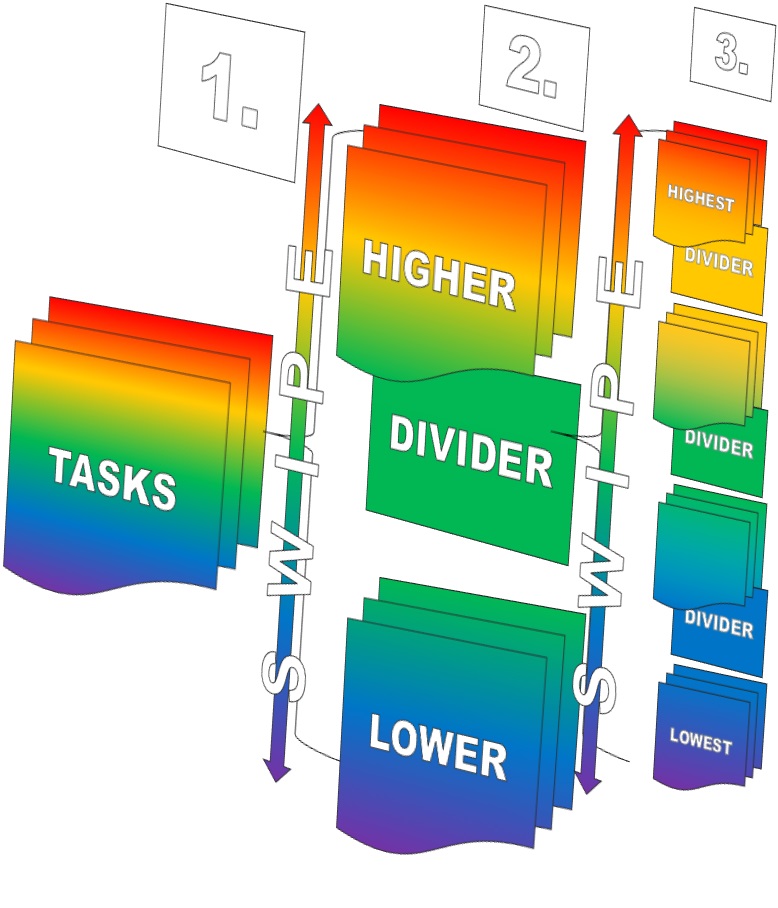
The sorting method of each task into an ordinal scale visualized.
-
Problem
How do you know what task deserves your attention next if you feel adrift during the pandemic? How do you know what to do first if you don't get the usual positive from your environment?
Solution
Imagine if you could be matched with your next task, the way Tinder matches you with a date? Then, the pressure to decide can be delegated to your app and give you the energy you need to make headway.
This can be simply done if the user could input a list of tasks and then spend 10 minutes to swipe tasks left and right to create rankings; rankings of Importance, Urgency and Time Cost. These rankings can then be used to calculate a recommendation for the user for what task should be done first.
This concept could be expanded in several direction, such as;
- Allowing the user to change the category of "Time cost" to "Distance traveled" instead or a list of other categories (Difficulty, Complexity, etc).
- Breaking up big tasks into multiple smaller tasks.
- Adding game elements to keep the user engaged, such a streak multiplier for swiping cards at a good pace.
- Collaborating on the same assessment of priorities with co-workers or a coach.
Impact
This app can demonstrate that people are not alone if they struggle to stay focused while working remotely. A lot of people are facing procrastination issues when they have to decide what to do for themselves, especially if private and professional life intermingle. This app will be a solution to avoid people from ruminating and procrastinating on their lack of a schedule. That in turn can help people steer away from mental health issues that may occur (depression, anxiety, panic).
This Weekend
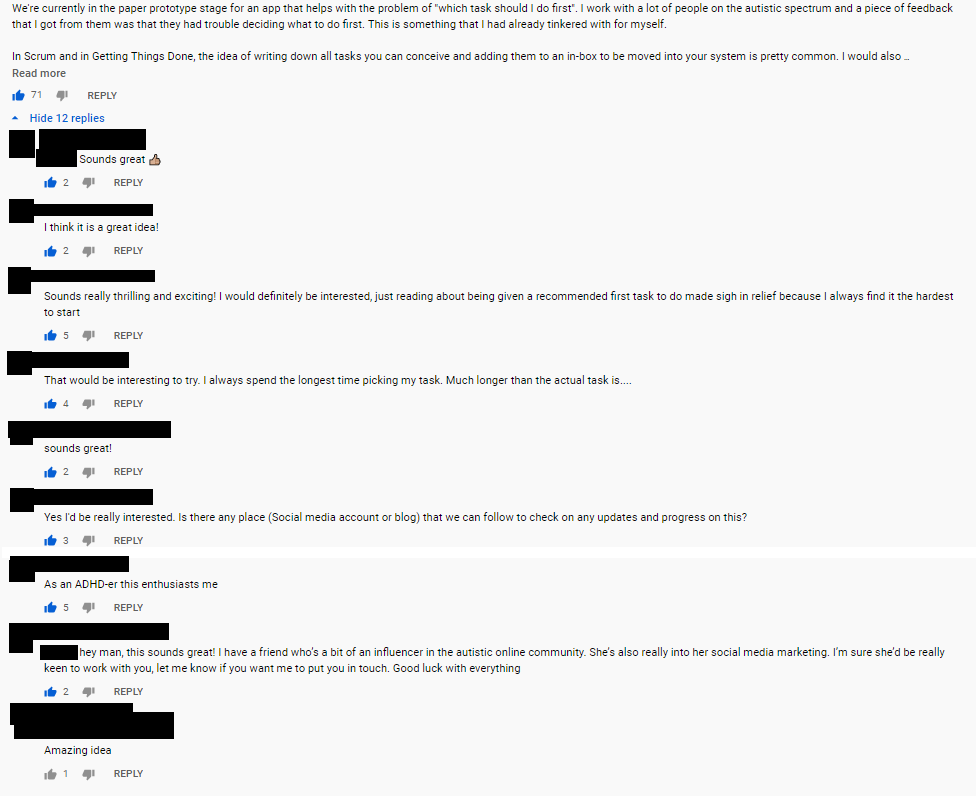
We've spent this weekend sparring, pairing experts and people with attention deficit disorder to work out this problem and making adjustments to our proposed solution based on recommendations. The concept was validated by asking people online if this was something they would want and with psychologists to test our core assumption this would make decisions easier. Both answers were an enthusiastic "Yes".
When we confirmed we were on the right track, we created a paper prototype of the application and filmed it as you can see above. This paper prototype explains to developers what the use case would be.
What is left to do?
I asked my development partners how long it would take to develop a first proof of concept. The answer is approximately 15 hours. For the app to be market ready, we will need 80 to 90 hours.
After the Crisis
Secondary apps can be developed for specific use cases. The app may be used in psychotherapy or coaching, in order to assist the persons who are distressed by how distracted they are or find a direction they were previously lacking.




Log in or sign up for Devpost to join the conversation.