-
-
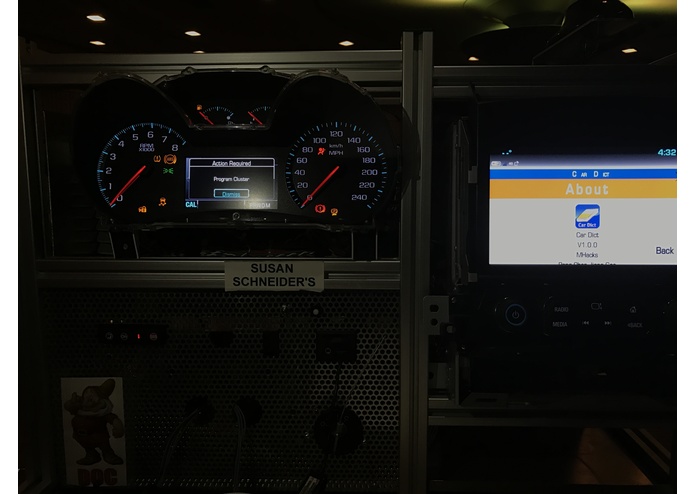
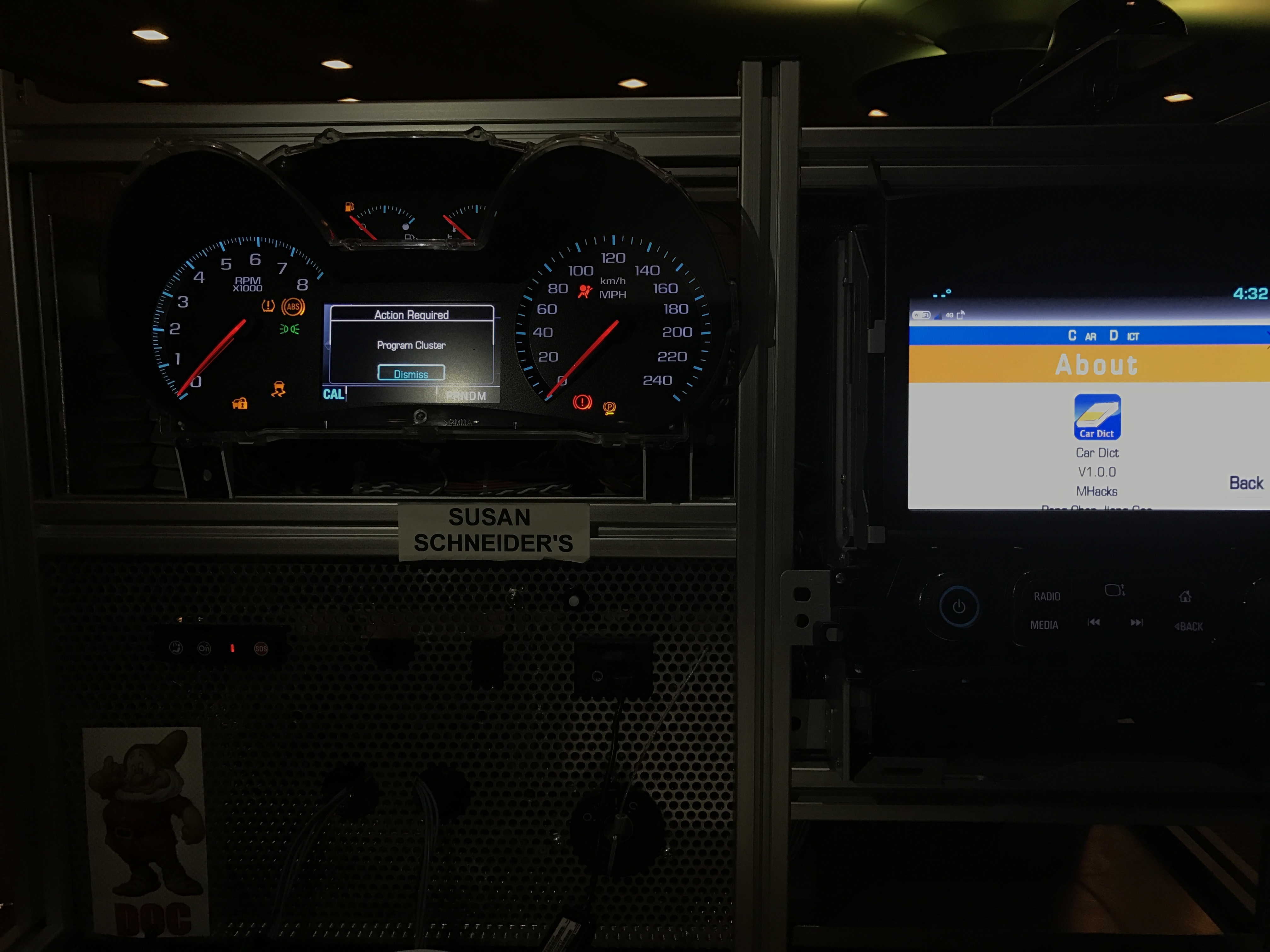
The bench
-
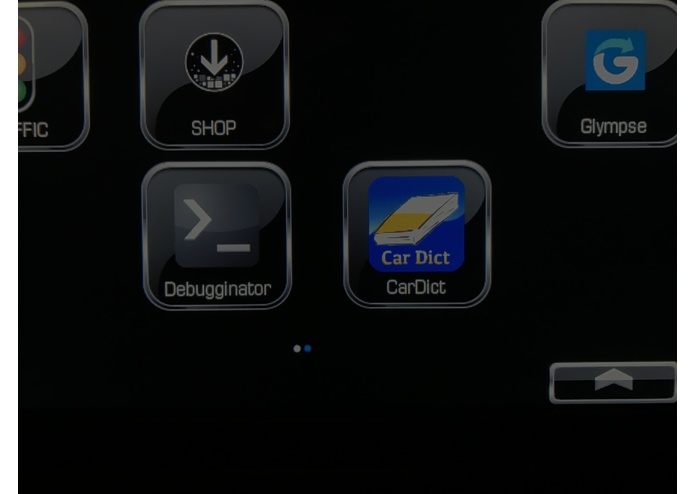
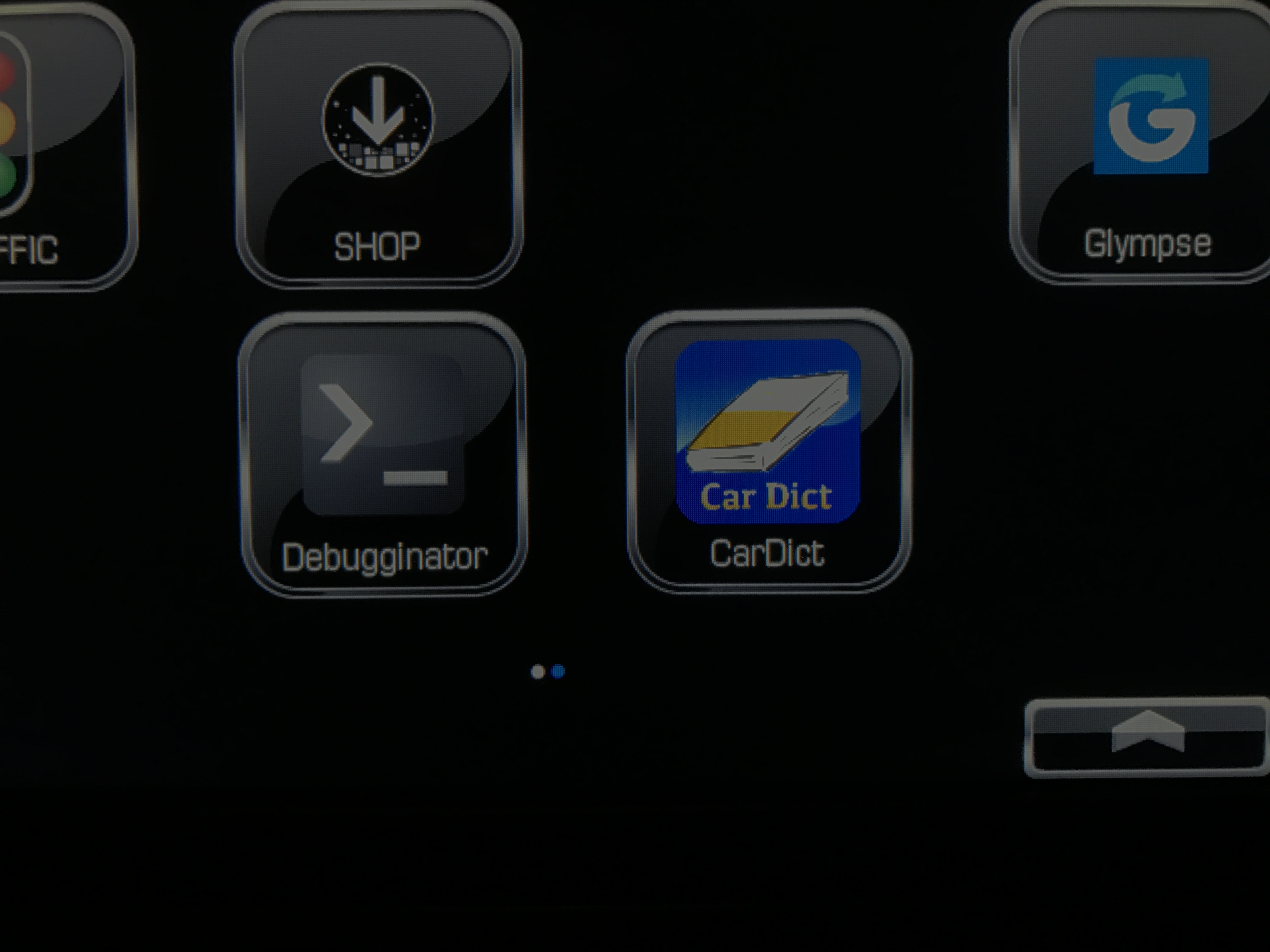
Icon
-
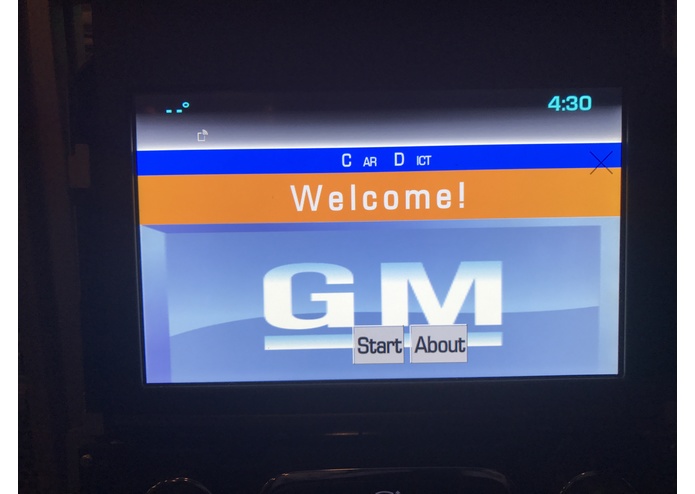
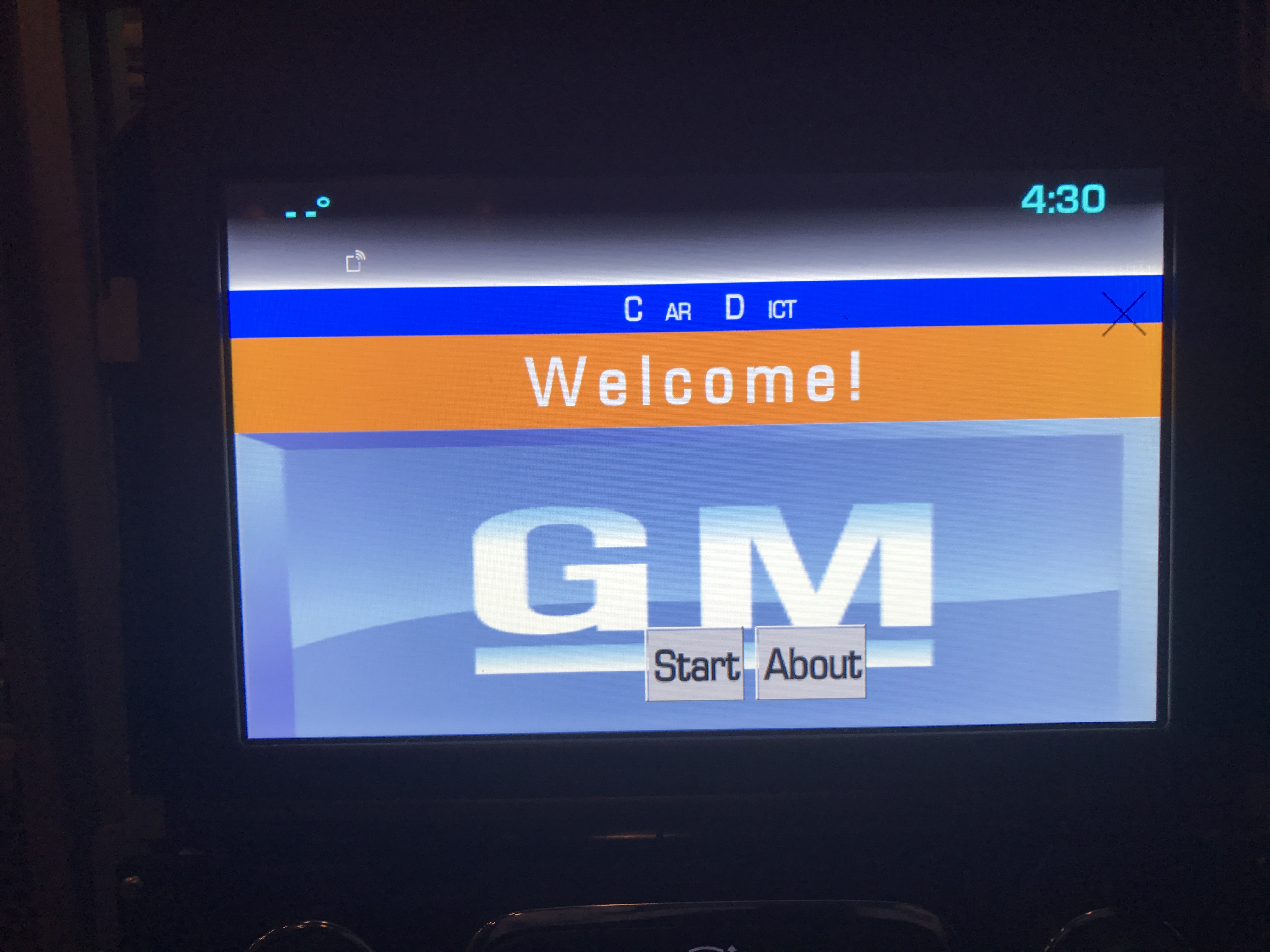
Home page
-
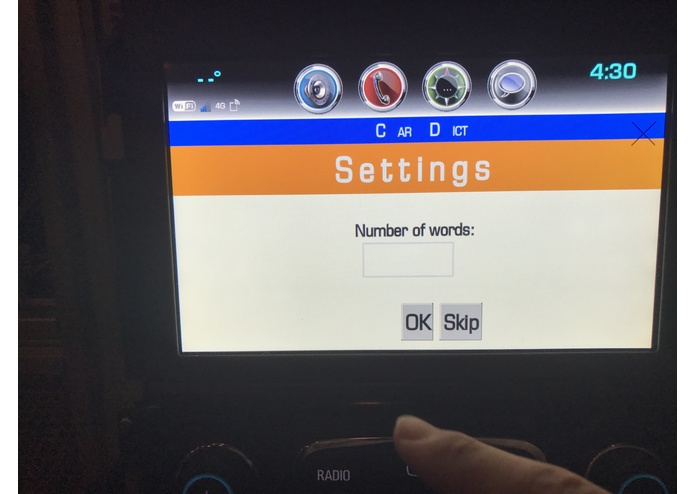
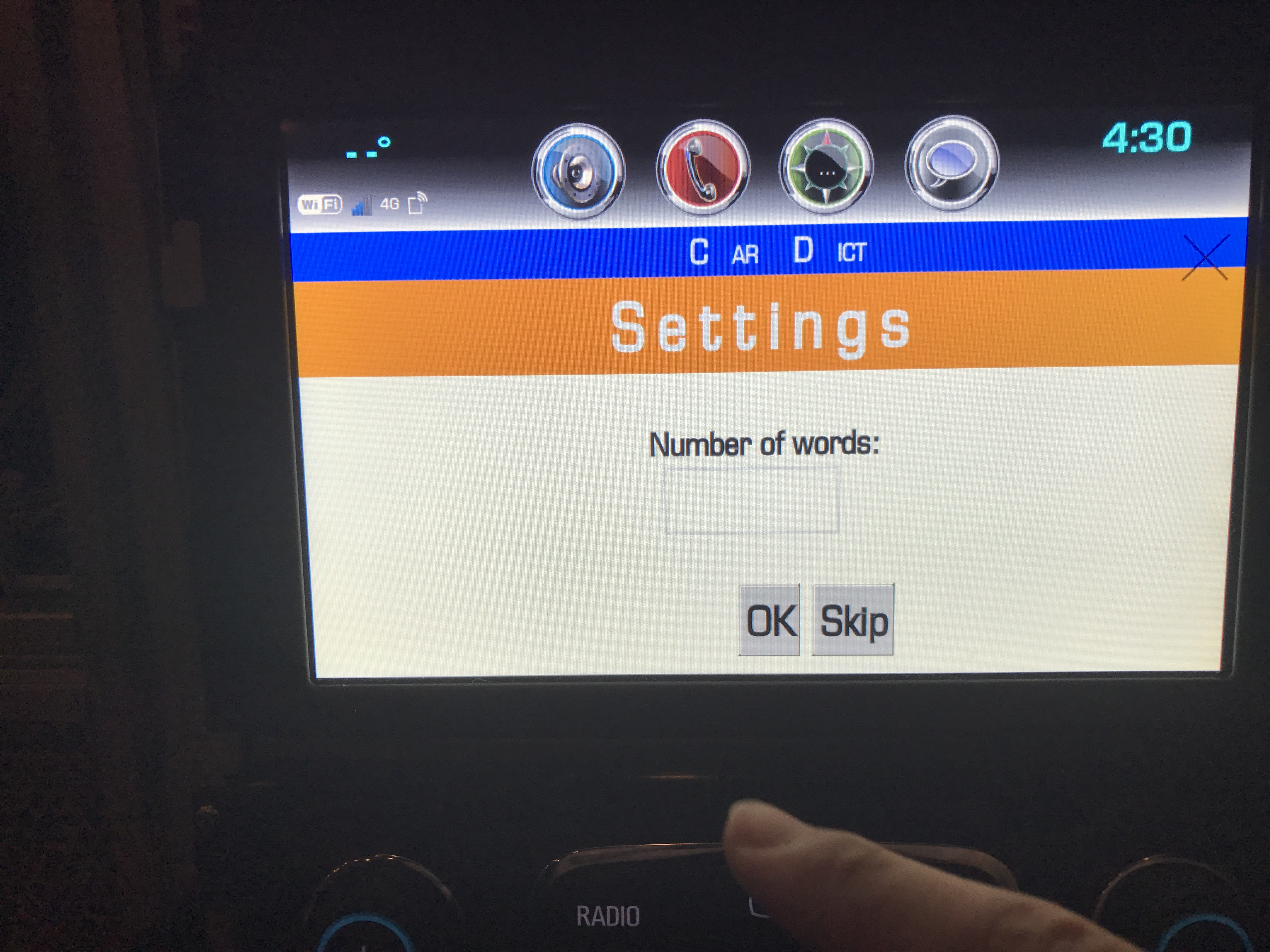
Setting page
-
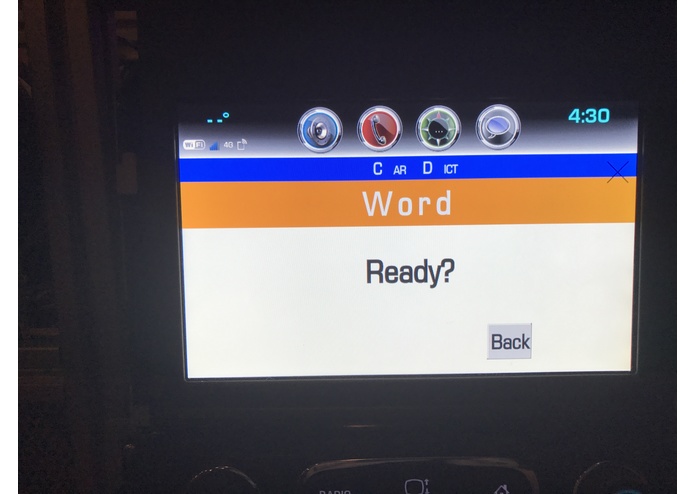
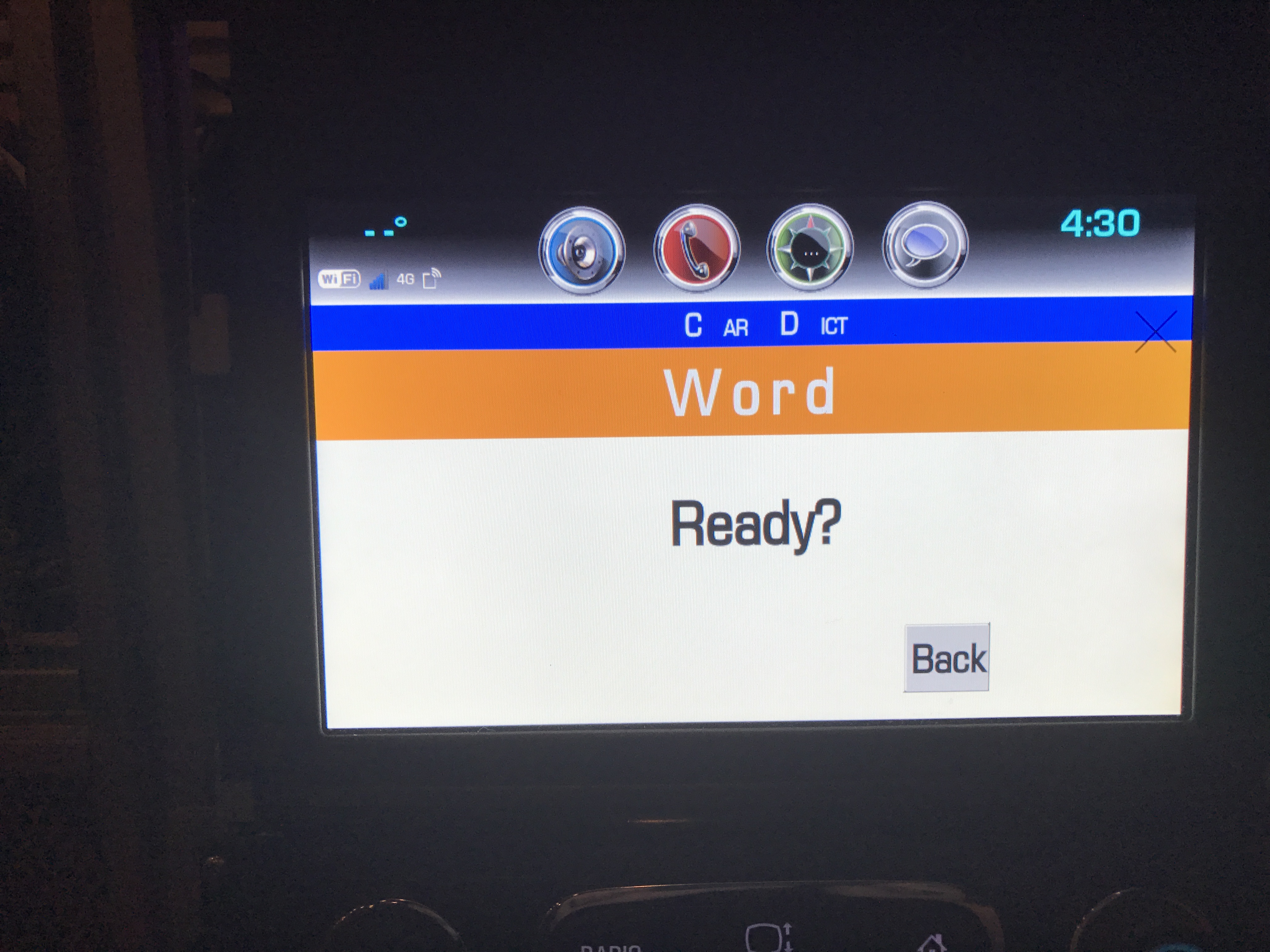
Word mode
-
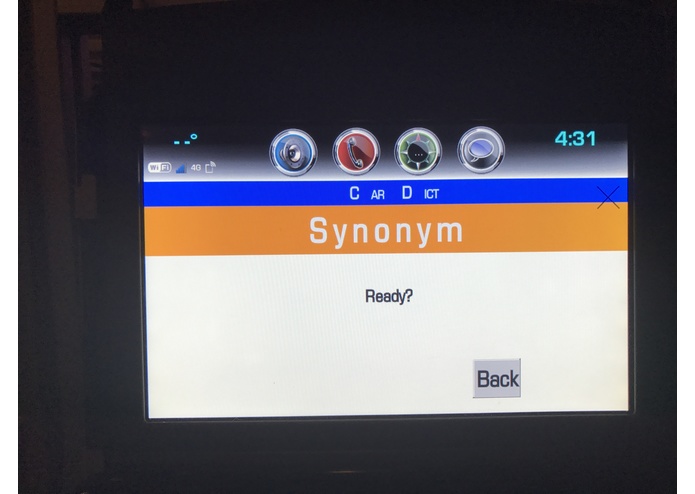
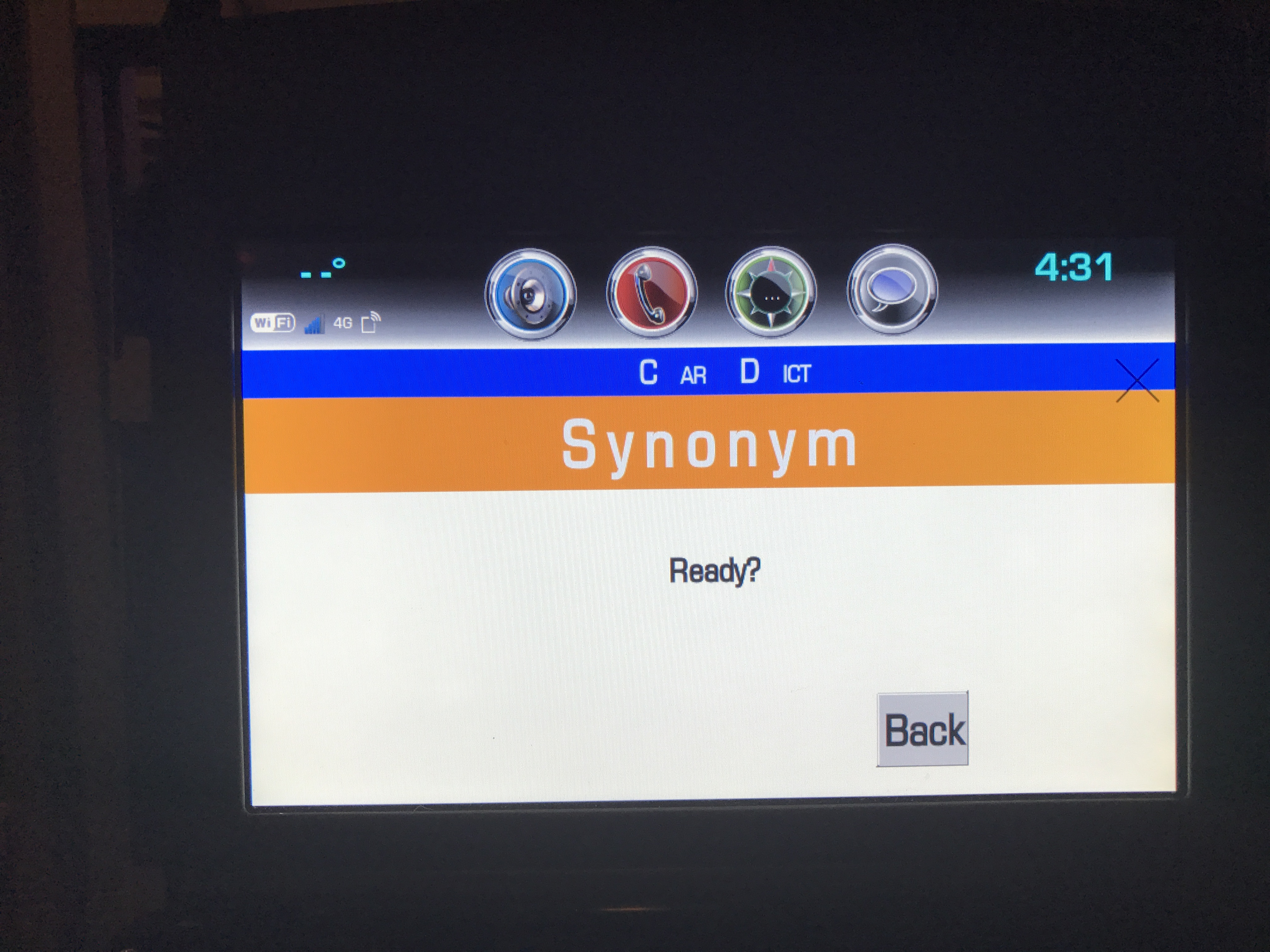
Synonym mode
-
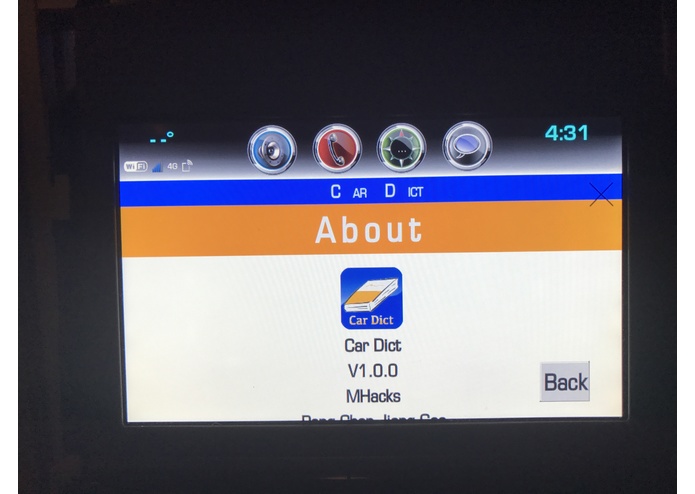
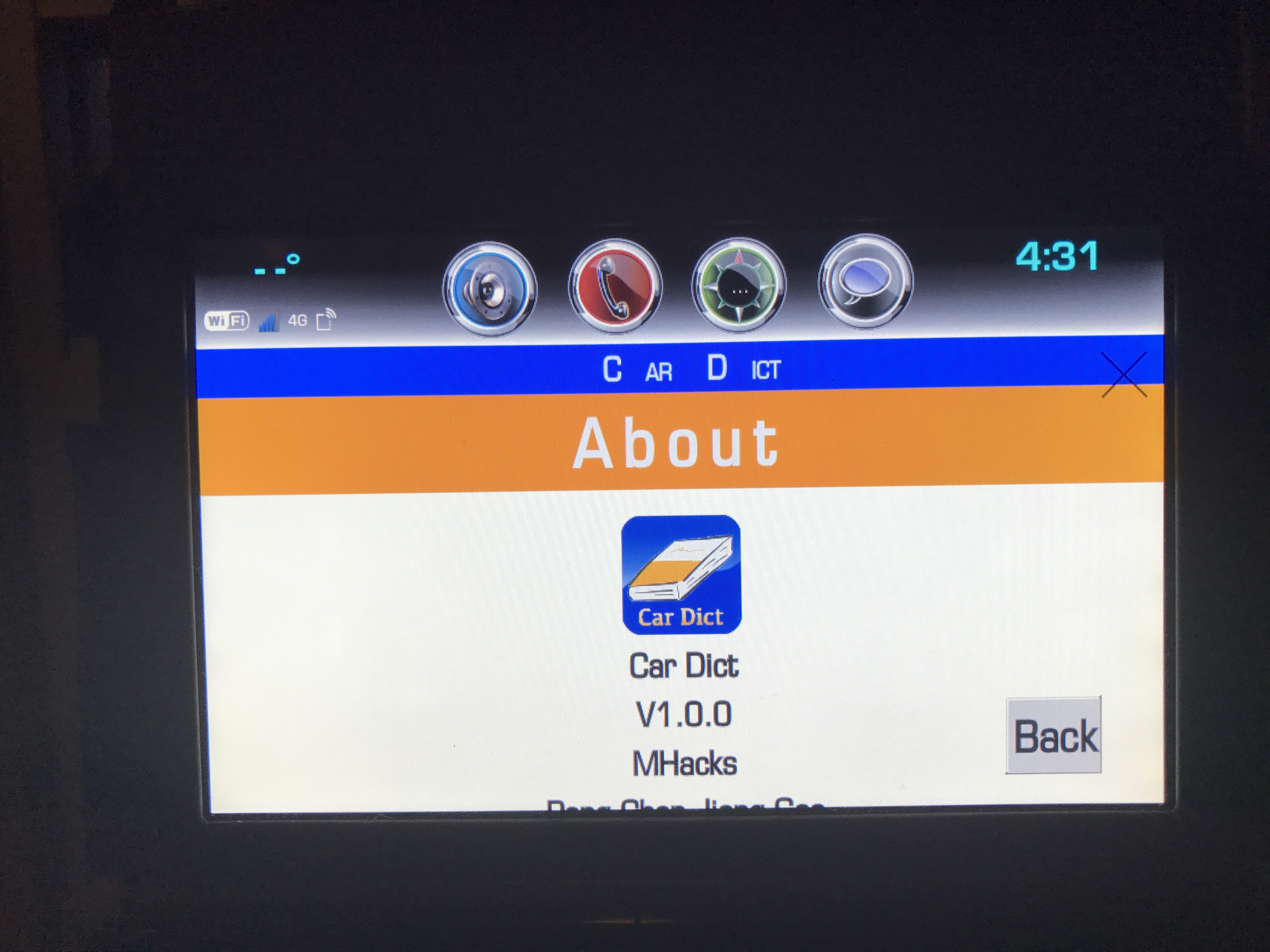
About us
Inspiration
With the powerful mobile computation power, a car can do more than providing mobility to people. The goal of our project is to leverage the versatility of the Infotainment System equipped in General Motors to provide a more pleasant journey to the driver by relieving the anxiety of traffic jams and the dullness of cruising along a highway. Since many college students have to build up their vocabularies before they can further their studies, building their vocabularies in the journey will greatly reduce the time demand in the rest of their life, thereby reducing their anxieties in traffic jams and dullness along an empty highway.
What it does
The Application, Cardict, provides two modes in helping building vocabularies. One is based on a classical flashcard method that asks the driver to decide whether a word is already mastered. The other is based on a synonym identification routine. By asking the driver to find the word that has a different meaning from the other two words, the driver is able to link synonyms quickly. The interactions are transferred into Cardict via button inputs on the steering wheel or through the central sack. The words are prebuilt into Cardict using JSON. By comparing the standard response and the driver's response, a feedback is given to the driver, making the process highly engaging. The Application is based on HTML and Javascript, so it has a strong portability across most vehicles. The interactions, together with the mind-engaging activities in the vocabulary-building process, makes the journey on the GM vehicle more pleasant.
How we built it
We employed the Software Development Kits provided by General Motors. The word lists are taken from common sources of open word lists. The user interface is based on the API provided by General Motors, where predefined functions return arrays of parameters that reflect the user's inputs. By testing the blocks of our program on the emulator and then validating the design on the bench, we have proven that our project works on General Motors' Infotainment System. Since we had no prior experience in HTML and Javascript, we spent quite a few hours on setting up the development environment and another quite a few hours on the syntaxes and flow controls of HTML and Javascript. Eventually, we made the project into a coherent part of the GM Infotainment System.
Challenges we ran into
To tell the truth, the industry-level SDK is not very user-friendly. The installation of the SDK is difficult because it is the first time for it to be exposed to the public. Also, many libraries are not available to us. The hardest part should be the Javascript language learning because none of the group members touched this language before. We need to learn it from scratch. Besides, the test benches are not stable and we always need to reconnect to them or even change the bench.
Accomplishments that we're proud of
We are proud that we become proficient in Javascript and the SDK provided by GM and we successfully develop an app which works well. Although we are lack of sleeping and the hardwares are bad, we keep going and solving problems. During the whole process, we four group members cooperate greatly and efficiently meet the aims we set.
What we learned
In the story, the gain in our experience is to develop with Javascript. It is hard for us since it can be called the first time that we touched and developed with Javascript, and we learnt its language and methods. Besides, we found that the creative ideas always came from the team of passions. We realized the potential of Car application since people spend almost sixths of their lives in a car. Finding a way to help improve and entertain people’s lives in cars is really awesome.
What's next for CarDict
More language, more fun!

Log in or sign up for Devpost to join the conversation.