-
-
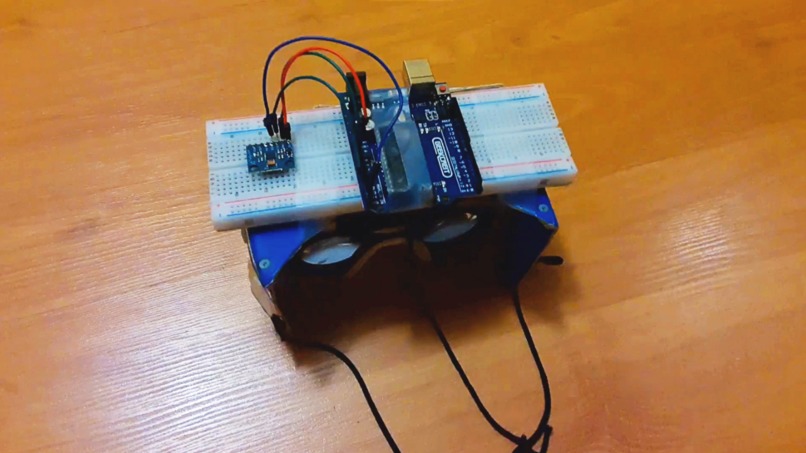
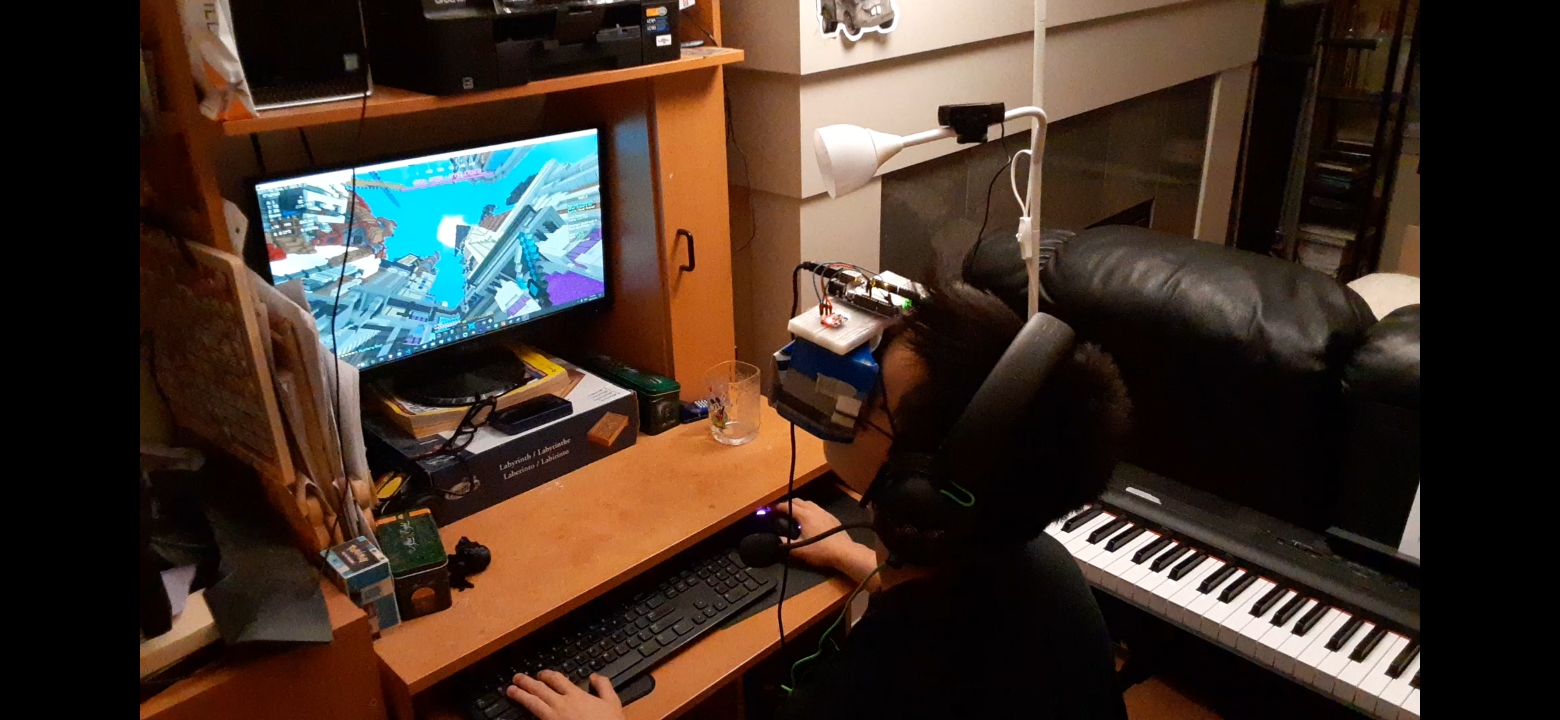
The working headset with the Google cardboard, breadboard, Arduino UNO, and GY-512
-
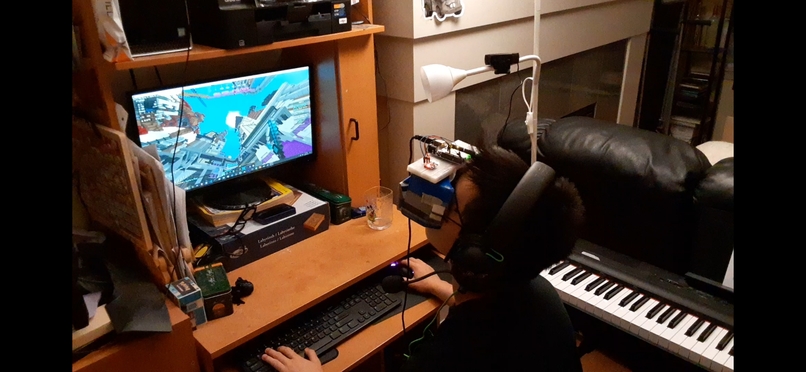
The user looks upwards curiously in Minecraft VR (Cardboard++ edition)
-
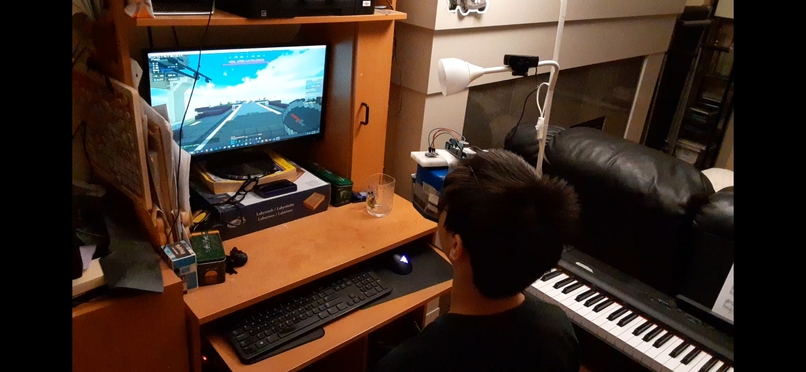
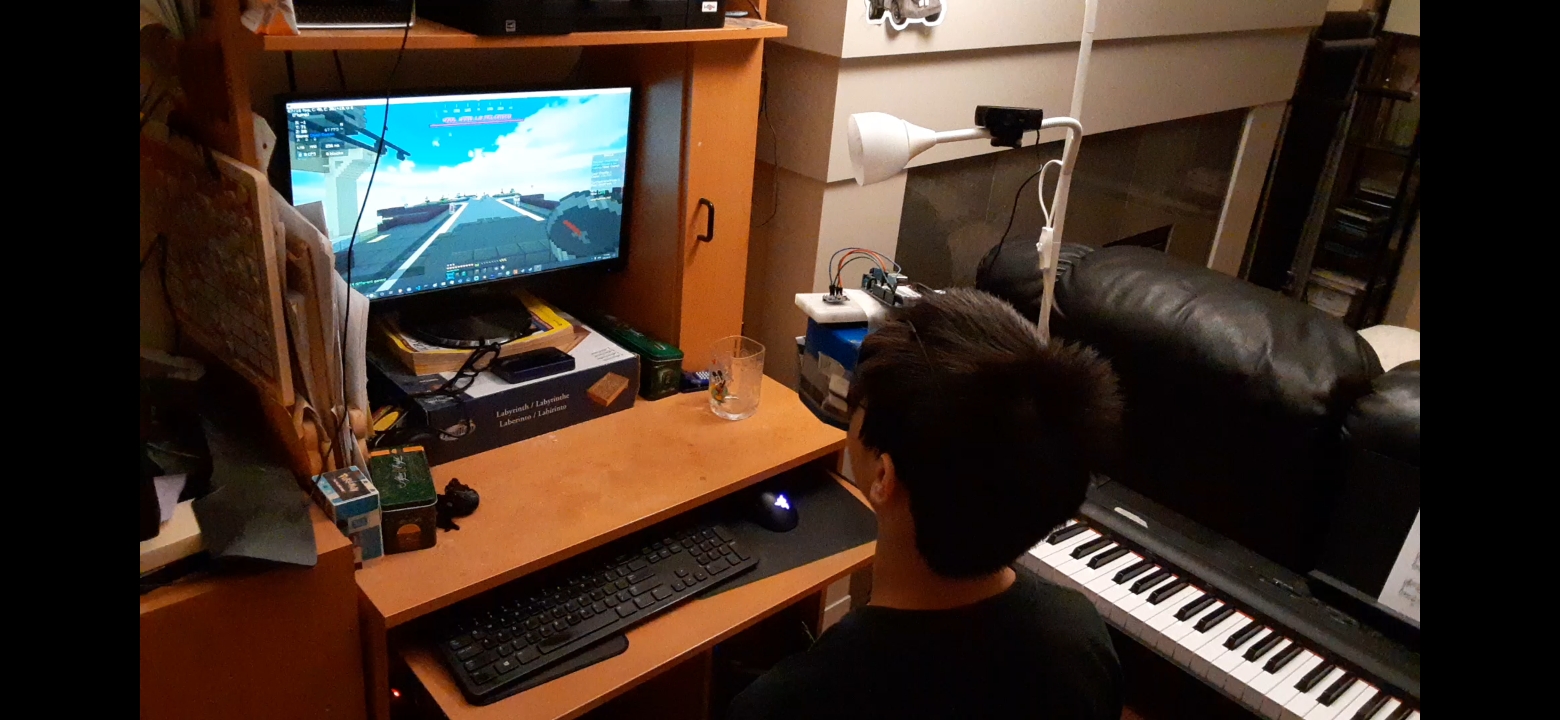
The user gazes forwards intently in Minecraft VR (Cardboard++ edition)
Inspiration
Members of our group were always very interested in virtual reality. However, we were offput by the steep price associated with VR games as well as the pricey equipment needed to operate these virtual reality applications. An average VR headset could easily cost up around $500 CAD, a price far outside of our price range, and so we decided to create something that would allow us to play VR games based on what we already have: Arduino components, a computer, a phone, and a google cardboard.
What it does
Cardboard++ creates an entry point for users to access virtual reality even in situations where virtual reality may not be traditionally supported. With Cardboard++, users can use the headset to control the mouse, thus allowing users to operate through VR in countless places without having to use expensive equipment (e.g. Oculus Rift, Valve Index, etc.). Cardboard++ will improve students’ lives by offering memorable experiences in VR at an approachable price and format.
How we built it
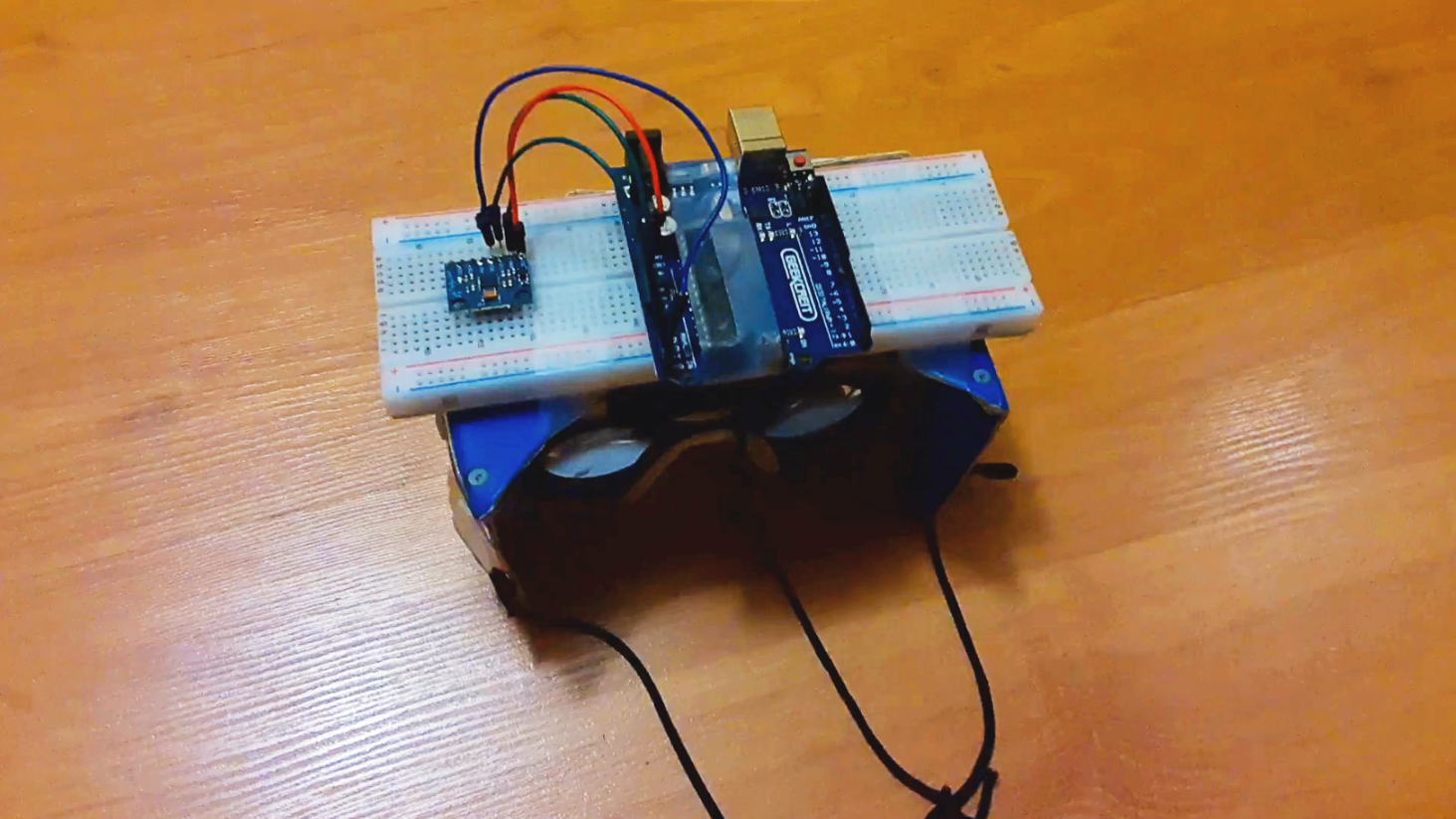
Cardboard++ starts with a GY-521 module. This module is attached to an Arduino UNO, where data about rotation is gathered, sent to the computer, and printed to the serial terminal. A python program is then executed that reads this output in the serial terminal and moves the mouse according to the output data and some formulas we used. Afterwards, the apparatus is mounted onto a Google cardboard so that the mouse can begin to be controlled using mouse movement.
Next, a port connection is made between the operating computer and the mobile device that is placed inside of the Google cardboard using socket.io. The video output of the operating computer is then edited to a format suitable for VR using openCV and passed to the google cardboard, where users can then use Cardboard++ as any other VR headset.
Challenges we ran into
None of us had much experience working with Arduino, C++ (the main language used within the Arduino IDE), and socket.io, all of which are technologies integral to the operation of Cardboard++. As a result, we spent the majority of our hackathon learning these technologies and had to cram the development and combining of the tech stack near the end.
Accomplishments that we're proud of
We are very proud that our hack works in general. While we were brainstorming, the concept of Cardboard++ was definitely the most ambitious of our ideas, and many times throughout our project we weren’t completely sure if our idea would come to fruition. The fact that our hack works (very well, might I add) is an accomplishment that everybody in this group is pleased with.
What we learned
We learned many things about our tech stack. For some of us, we gained a new understanding of Arduinos and hardware programming. For others, we gained incredible understandings of socket.io and the ins and outs of network programming.
What's next for Cardboard++
Though Cardboard++ was primarily centered around improving students’ lives by providing affordable VR options in gaming, Cardboard++ could easily be extended across many different avenues. For developing areas, Cardboard++ could easily be used for better education, since the shallow price point allows more people to access and enjoy interactive learning.


Log in or sign up for Devpost to join the conversation.