Inspiration
I really enjoyed creating this prototype, which surprised me. I've used AI heavily for coding, I was skeptical about the idea of using AI to create an entire game.
I'm also mainly into narrative, adventure, and shooter games, so the competition genres didn't immediately interest me. I almost didn't enter because of that.
Eventually, I decided to just try it with a few goals:
- Build something simple and quickly.
- Keep the core loop easy to understand.
- Make something fun, addictive, and rewarding.
- Make sure it could transition easily into Horizon Studio later.
Finding the Right Genre
I considered Survival & Resource Management, but my ideas quickly became too focused on crafting, resources, and long-term progression. That wasn't something I wanted to build in a short prototype.
Tower Defense & Strategy seemed like a better fit, even though I'm not a big tower defense player.
So instead of guessing what would be fun, I downloaded several mobile games and played them.
Eventually, I found Plants on Fire, and it hooked me. I played much longer than I planned, which made me start breaking down why I enjoyed it.
The main things that stood out were:
- Forces attacking your position.
- Units physically placed on a board.
- Deck building.
- Shops and upgrades between rounds.
- Progression between battles.
Turning Inspiration Into My Own Game
I didn't want to simply copy those mechanics, so I started brainstorming a different theme and structure.
That's when chess came to mind.
The King became what you're defending, while Pawns, Knights, Bishops, Rooks, and Queens became different unit classes with their own abilities.
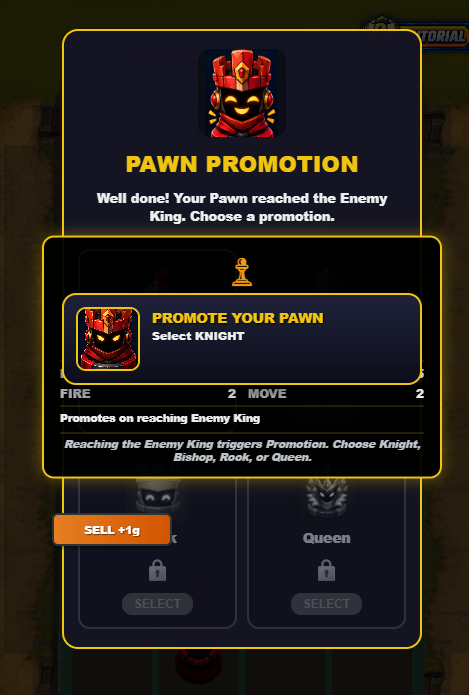
I actually don't know much about chess, so I started researching it. Learning about Pawn Promotion immediately gave me another mechanic: the weakest-looking unit could eventually become extremely valuable.
I also changed the battlefield from a single attacking lane to two lanes, left and right. Where you place pieces determines which lane they defend, giving the player more control over the battle.
From the chess concept, I continued developing original systems like:
- Royal Row bonuses
- Pawn Promotion
- Class-specific abilities
- Piece boosting
- King protection
- Deck building and upgrades
** Finding the Fun First**
The biggest moment came when I played the prototype before most of the deeper systems were finished.
It was already fun.
Choosing pieces, placing them, defending the King, watching the battle, and thinking about what I wanted to change next time worked on its own.
That became one of my biggest lessons from the project:
Find the fun first. Build the deeper systems around it second.
AI helped me get from an idea to something playable much faster, but the design process was still mine: researching, experimenting, making decisions, rejecting ideas, testing mechanics, and constantly asking whether the game was actually fun.
What started as a competition I almost didn't enter became a prototype I genuinely enjoyed building.
What It Does
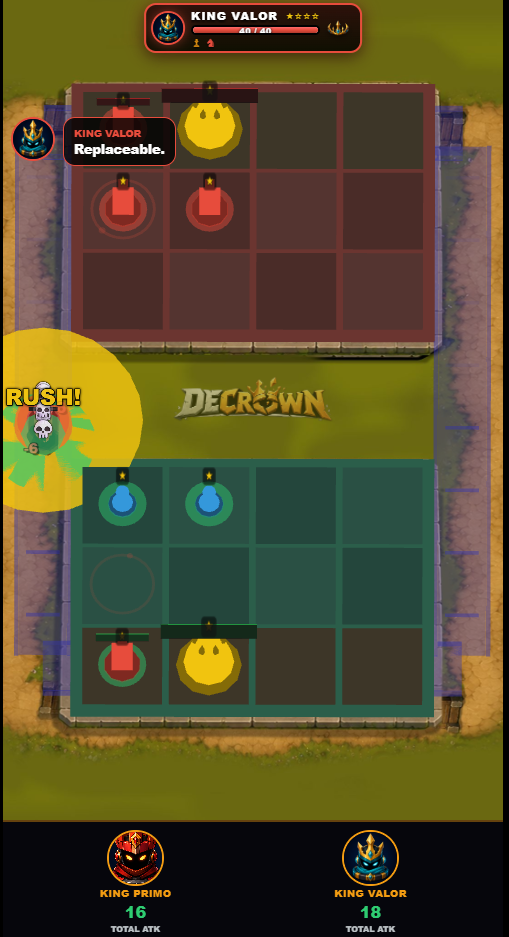
A simple, easy-to-play chess-inspired tower defense strategy game focused on placing, merging, defending, and upgrading your army.
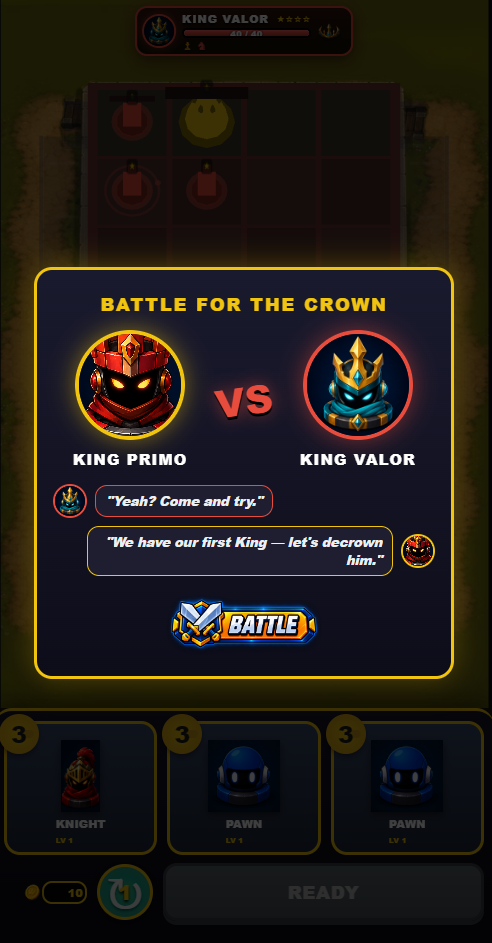
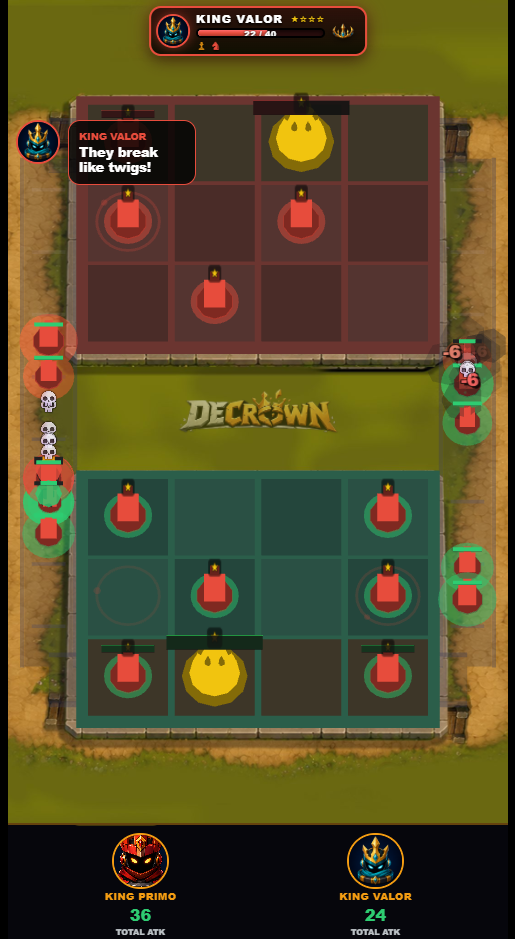
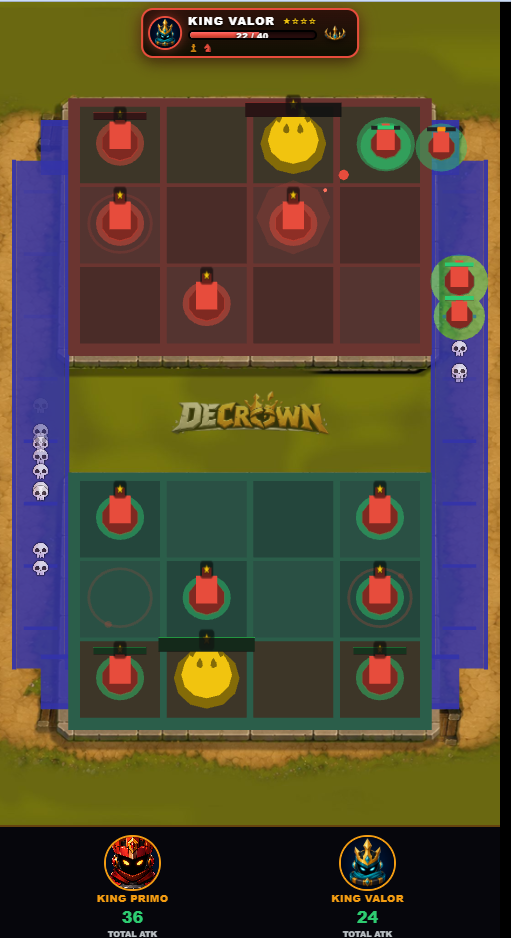
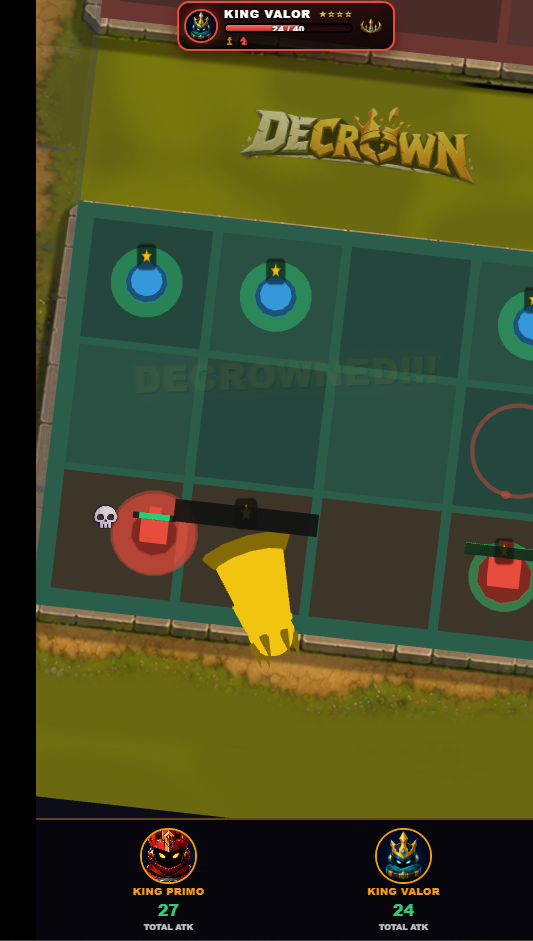
Board Defense + Two Battle Lanes — your placed pieces attack incoming enemy forces, while attacking forces battle through the left and right lanes on their way toward the opposing King.
Place & Defend — strategically position pieces to attack enemy forces and protect your King.
Merge Pieces — combine matching pieces to create stronger versions during battle.
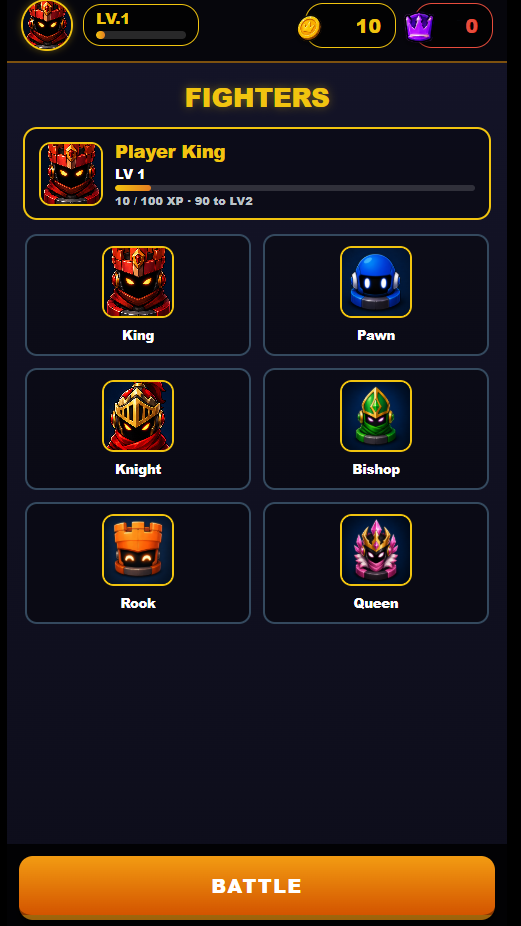
Chess Classes — Pawns, Knights, Bishops, Rooks, and Queens each bring different attacks, abilities, speeds, and support roles.
Strategic Positioning — where you place a piece determines its lane options, support coverage, boosts, and Royal Row abilities.
Royal Row — position key pieces around your King to provide special bonuses and an additional layer of defense.
Pawn Promotion — get a Pawn attacking force to the enemy King and land a hit to promote it into a Knight, Bishop, Rook, or Queen.
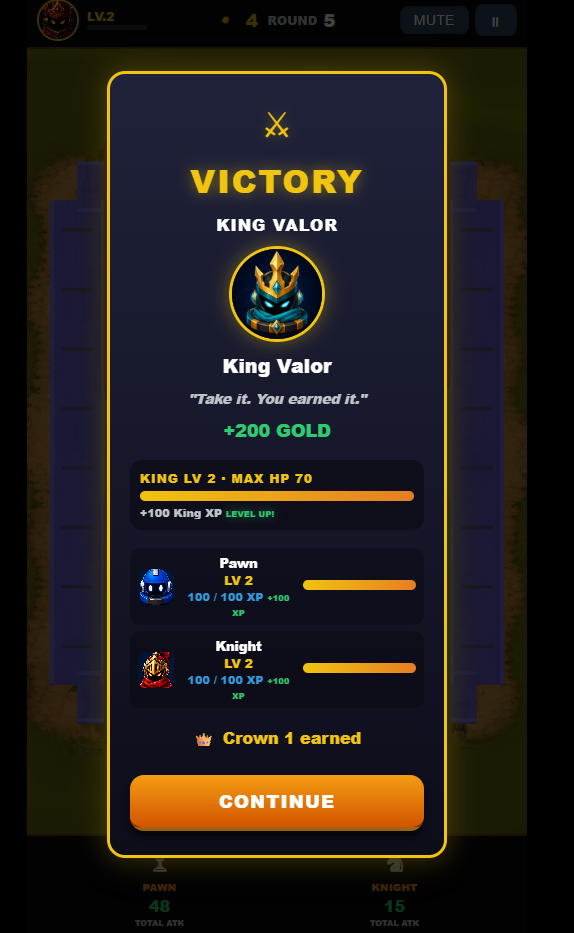
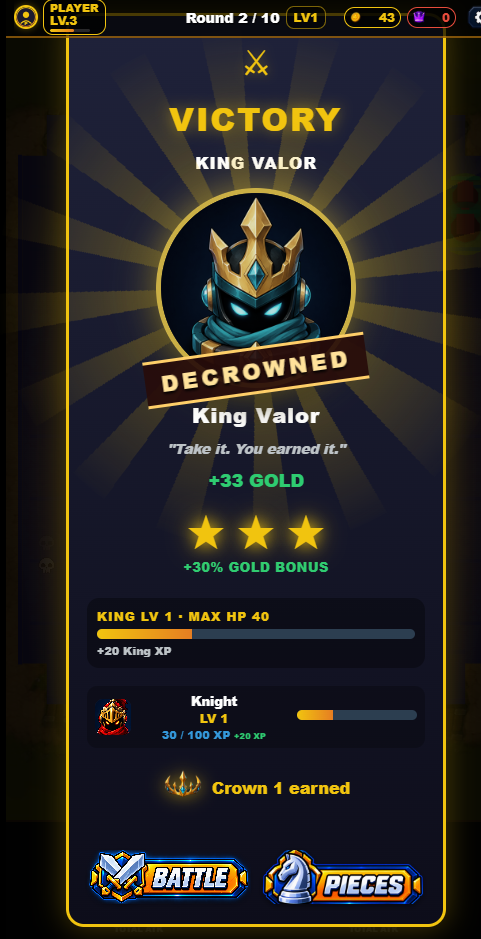
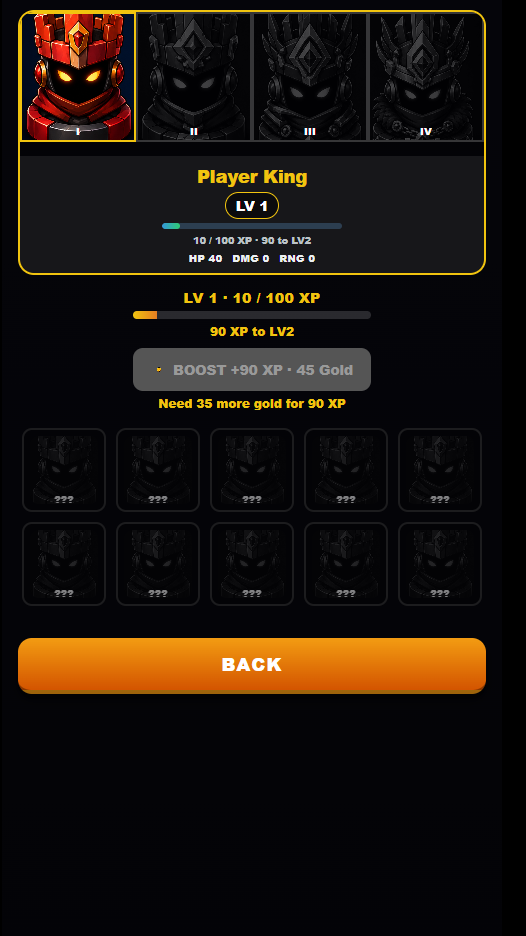
Build & Upgrade — earn Gold and XP to permanently strengthen your King and pieces between battles.
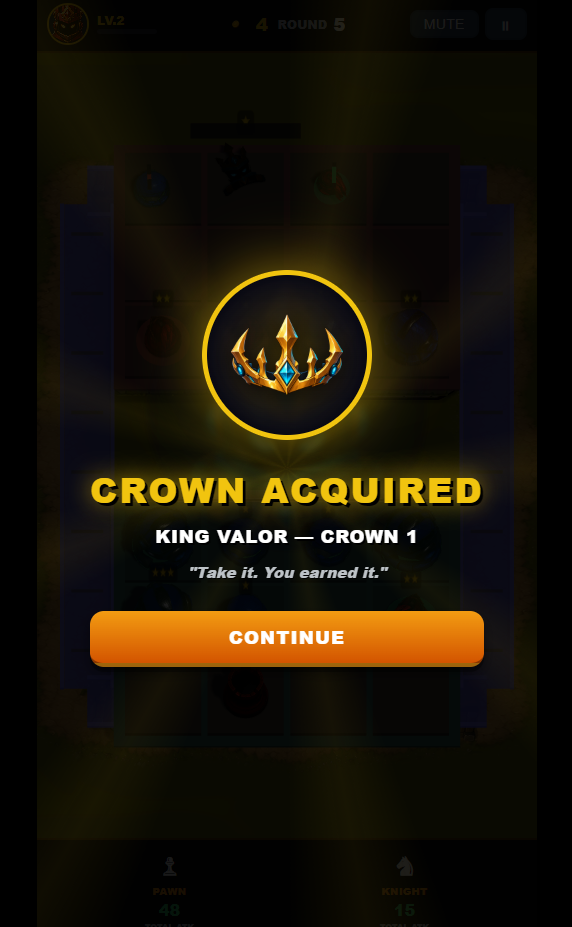
Protect Your Crown, Take Theirs — keep your King alive while sending forces toward the rival King to defeat them and claim their crown.
Quick & Replayable — merge, reposition, upgrade, and experiment with different army builds and strategies each battle.
Core Loop
Place → Merge → Defend → Earn → Upgrade → Replay
How we built it
The prototype was built as a mobile-first browser game using Three.js/WebGL for the battlefield and HTML/CSS for the interface.
The project was developed heavily through an AI-assisted workflow. Instead of attempting to generate the entire game at once, development was broken into smaller systems and individual problems: board placement, fighter purchasing, merging, combat, enemy behavior, Battle Gold, King HP, UI, progression, and game-state transitions.
I used ChatGPT for image generation, creating the visual concepts for the game’s pieces, characters, logos, UI elements, icons, and other supporting artwork.
I then took the character and piece concepts into Meshy, where I generated optimized low-poly 3D models that could be used directly in the prototype.
This workflow allowed me to move quickly from an idea, to a visual concept, to a usable 3D game asset without spending days manually modeling every piece.
I still used my design and game development background to direct the art style, choose the strongest generations, refine layouts, and make sure everything remained visually consistent with the game.
The only thing I did personally did was organize things into folders for the Ai to find. I used Illustrator to make quick block mockups and marked on screenshots to communicate changes to the AI. This was especially useful when text prompts alone were not accurately communicating positioning, scale, interaction, or visual problems.
Challenges we ran into
- Scope*
One of my biggest challenges was scope. Because AI can build and iterate so quickly, it became very easy to keep adding more.
At one point, I had a much larger game planned with 10 Kings, a world map, multiple progression systems, unlockable pieces, and systems outside of the battles.
I realized I was spending more time building the entire game instead of focusing on what mattered most for the prototype: making the core game loop fun.
I pulled the scope back and focused on:
- Placement and merging
- Combat and balancing
- Defending the King
- Piece abilities and interactions
- Making each battle satisfying and repayable
** Enemy AI & Balance**
The other major challenge was enemy AI.
I wanted the enemy to feel competitive without being too easy, unfair, or overpowered. This required a lot of back-and-forth testing and iteration with AI.
Small changes could completely shift the difficulty, so a large part of development became:
Build → Play → Identify Problems → Adjust → Play Again
This ended up being one of the areas where I spent the most time fine-tuning the prototype.
Accomplishments that we're proud of
Finishing Something I'm Proud Of — I'm a perfectionist, and that can sometimes make it difficult for me to call something finished. In past competitions, I found myself making last-minute changes, rushing, or submitting something just to have an entry. This time was different. I finished something I can genuinely be proud of and feel content knowing I gave it everything I could.
Finding the Fun — the core gameplay became fun before relying on extra content or progression systems.
Creating an Original Concept — turned inspiration from tower defense into a chess-based strategy game with a Dual War Board, two attack lanes, merging, Royal Rows, and Pawn Promotion.
Simple With Depth — created something easy to pick up and play while still offering strategy through placement, merging, upgrades, and piece combinations.
Learning to Control Scope — pulled back from a much larger 10-King concept and focused on making the core battle experience as strong as possible.
Using AI Without Losing the Creative Process — AI helped me prototype, troubleshoot, and iterate faster, while the design, art direction, decisions, testing, and overall vision remained mine.
Changing My Perspective — I started skeptical about AI game creation and came away understanding how it can help developers move from ideas to playable experiences much faster.
What we learned
Finish Over Perfect — one of my biggest lessons was learning when to stop adding and call something finished. A polished, complete core experience is more valuable than an unfinished bigger idea.
Scope Can Grow Extremely Fast With AI — because AI makes it easy to keep building, controlling scope becomes even more important. Just because I can add another system doesn't mean I should.
Find the Fun First — before building maps, progression, unlocks, or additional content, the basic loop needs to be enjoyable on its own.
Playtesting Is Everything — some ideas sounded great but didn't work until they were played, adjusted, and tested repeatedly.
AI Still Needs Direction — AI can build quickly, but it doesn't automatically know what feels good. Enemy balance, combat, pacing, UI, and progression required constant direction and decision-making.
Simple Doesn't Mean Shallow — placement, merging, two lanes, piece abilities, and upgrades showed me that a few understandable mechanics can create a surprising amount of strategy.
Constraints Help Creativity — working outside the genres I normally build forced me to explore new ideas and eventually create something I probably wouldn't have made otherwise.
AI Works Best as a Development Partner — the biggest benefit wasn't having AI make the game for me. It was being able to test ideas faster, see them working, identify problems, and iterate without losing control of the creative process.
What's Next for Decrown?
If Decrown moves forward, the biggest goal is to go deeper with the systems already working instead of changing the core game.
Smarter Enemy AI — expand the enemy AI so rival Kings feel more strategic and less predictable. Different Kings could favor aggressive, defensive, support-heavy, lane-focused, or merge-focused strategies and adapt more intelligently to the player's formation.
More Class Variations — create multiple versions of Pawns, Knights, Bishops, Rooks, and Queens with different abilities, stats, support effects, and strengths. This would give players far more long-term depth when building armies and experimenting with combinations.
Deeper Army Building — make choosing which pieces to unlock, upgrade, merge, and position a larger part of the strategy. Players could build completely different armies around speed, defense, support, damage, Royal Row control, or other specialized playstyles.
King Arena Boosts — expand Arena encounters so Kings can gain temporary bonuses or advantages while defending their own kingdom. This could make each kingdom feel different and create new decisions before major King battles.
More Personality in Kings and Pieces — give rival Kings, fighters, and kingdoms stronger identities through animations, expressions, dialogue, abilities, victory reactions, and visual design.
Better Maps and Environments — turn battles into more distinct locations with themed kingdoms, terrain, props, lighting, and battlefield layouts so progressing through the game feels like traveling through different places rather than repeating the same arena.
Expanded Art Direction — continue refining the overall visual style so the UI, characters, pieces, Crowns, environments, effects, and maps all feel like one consistent world.
Stronger VFX and Sound — improve attacks, merges, boosts, support effects, Pawn Promotion, Crown collection, King damage, victory moments, and other combat feedback with better visual effects, sound design, music, and character reactions.
More Arena and Threat Battles — expand Arena mode with creatures, bosses, special encounters, and other challenges that give players ways to gain XP and Gold while preparing for the next rival King.
Larger Campaigns — build campaign maps where players travel through threats and Arena encounters on the way toward rival kingdoms, strengthen their army, defeat the King, and take their Crown.
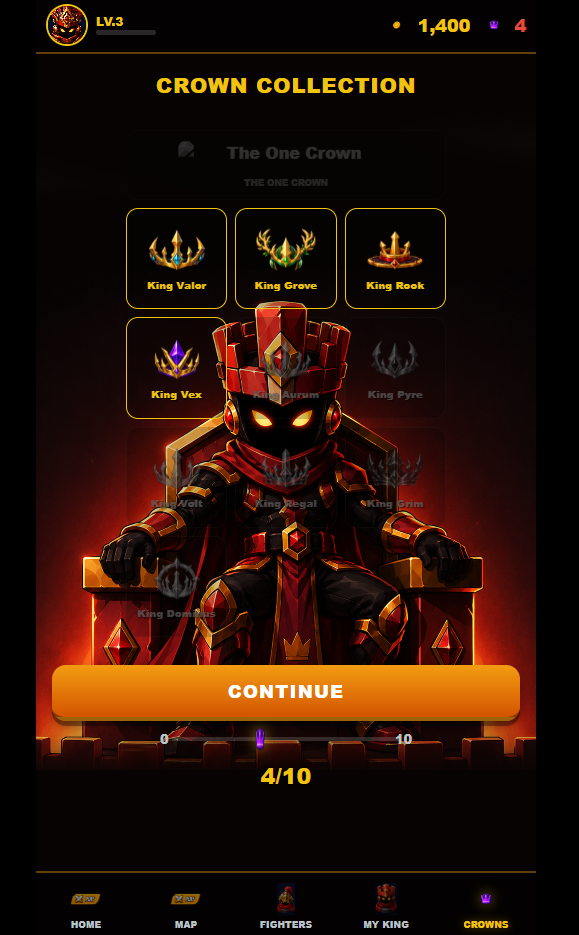
Crown-Based Progression — expand the Crown Collection so Crowns are both major trophies and useful progression currency for packs, new pieces, and future content.
PvP Potential — once the main game, progression, balance, AI, and army-building systems are fully developed, the same structure could also support player-vs-player battles where players test their formations and strategies against each other.
The long-term goal is to keep Decrown easy to understand but increasingly deep the longer you play. The core remains simple — build, position, merge, defend, attack, upgrade, and take Crowns — while smarter AI, more piece variations, stronger kingdoms, better presentation, and new modes create much deeper strategy over time.


Log in or sign up for Devpost to join the conversation.