-
-
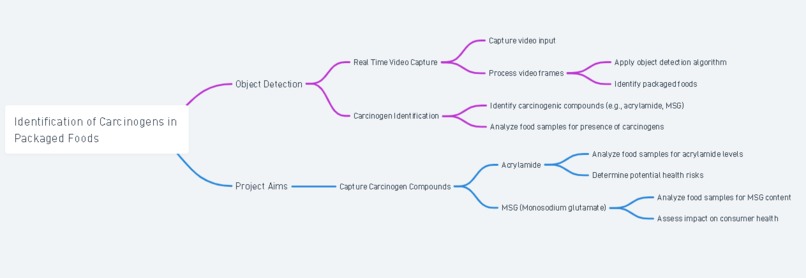
the flowchart
-
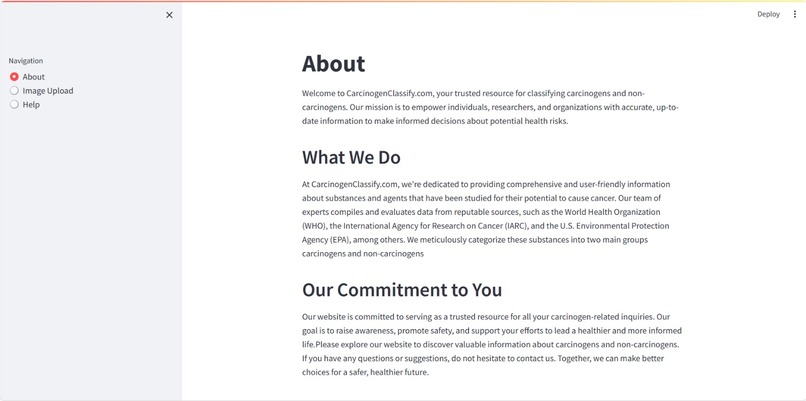
Our Front end
-
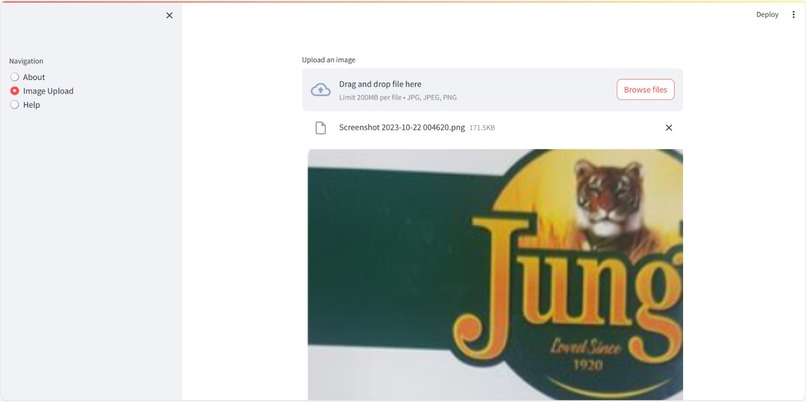
our classification
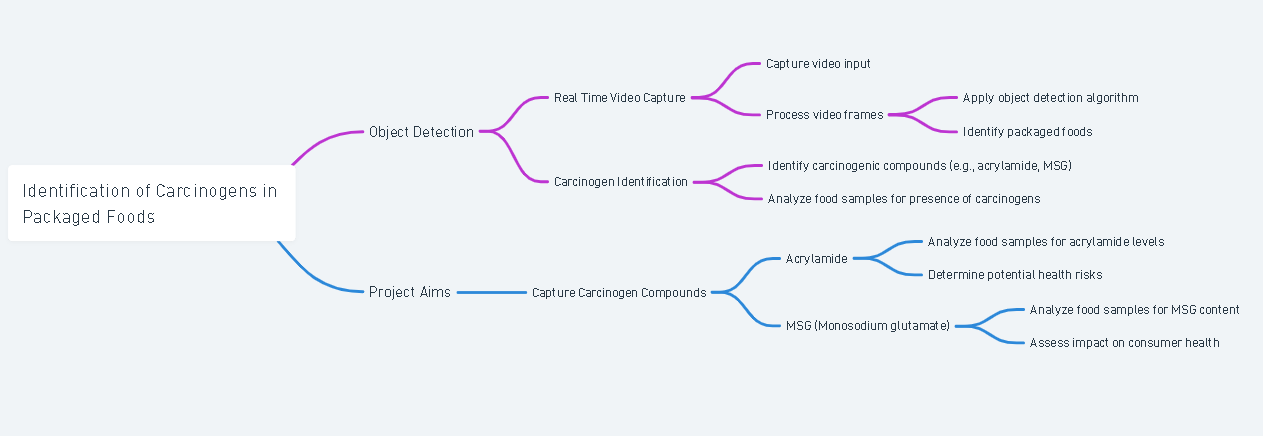

Inspiration
The inspiration for a project that classifies carcinogens and non-carcinogens often arises from a desire to improve public health, safety, and awareness. Here are some sources of inspiration for such a project:Health Impact,Scientific Discovery,Awareness and Education
What it does
At CarcinogenClassify.com, we're dedicated to providing comprehensive and user-friendly information about substances and agents that have been studied for their potential to cause cancer. Our team of experts compiles and evaluates data from reputable sources, such as the World Health Organization (WHO), the International Agency for Research on Cancer (IARC), and the U.S. Environmental Protection Agency (EPA), among others. We meticulously categorize these substances into two main groups carcinogens and non-carcinogens
How we built it
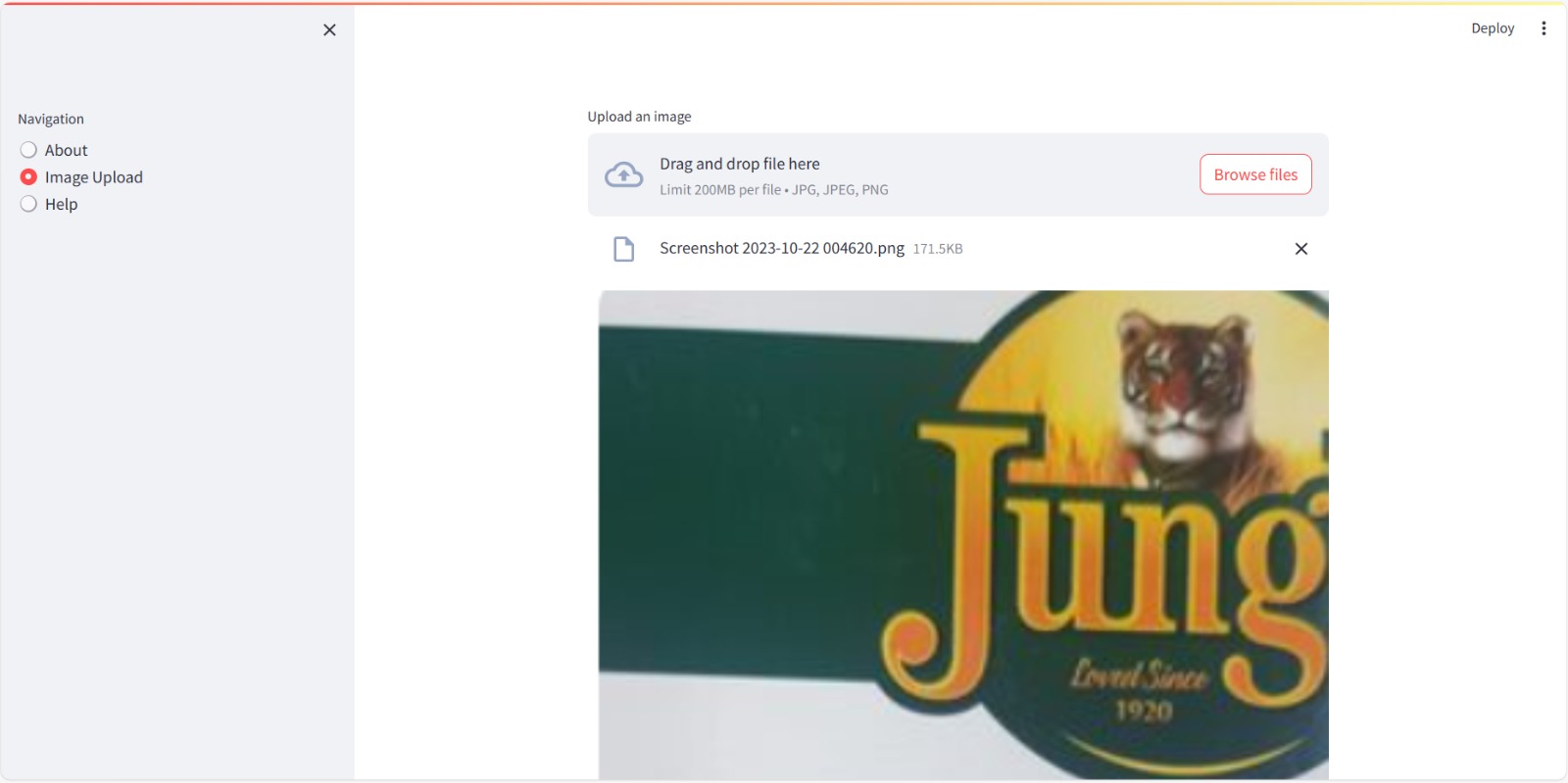
n this project, we built a user-friendly web application using Streamlit and integrated a Convolutional Neural Network (CNN) model to classify carcinogens and non-carcinogens in images. We collected and preprocessed a labeled dataset of these images, designed and trained the CNN model, and then deployed it within the Streamlit application. Users can upload images, receive real-time classification results, and access additional information. The project aims to provide a practical tool for individuals and organizations to assess potential health risks, offering a seamless blend of machine learning and web development for public health benefit
Challenges we ran into
we ran into number of challenges to build this as this is a unique idea which requires packaged foods image dataset that we couldnt find the data anywhere and gathering the data and creating the dataset was our main challenge
Accomplishments that we're proud of
Several accomplishments from this project stand out as sources of pride. First and foremost, the successful integration of a Convolutional Neural Network (CNN) within a user-friendly Streamlit application allowed us to provide a practical tool for classifying carcinogens and non-carcinogens in images. This accomplishment not only showcases our expertise in machine learning and web development but also addresses an important health-related issue. Despite the challenge of limited datasets, we managed to create a functional system that makes a tangible difference in public health awareness. Additionally, the project fostered a collaborative and innovative spirit within the team, emphasizing the value of teamwork and interdisciplinary skills. We're proud of the impact our project can have on individuals and organizations seeking informed decisions regarding health risks.
What we learned
Throughout the course of this project, we gained valuable insights into the intersection of machine learning and web development. While the integration of Convolutional Neural Networks (CNNs) into a Streamlit application proved effective for image classification, we encountered a significant challenge in the availability of a comprehensive dataset. We learned that a limited dataset can impact the model's performance and generalizability. This emphasized the importance of data collection and augmentation for robust machine learning models. We also realized the need for ongoing data acquisition to continually improve the accuracy of the system. The project underscored the dynamic nature of machine learning projects and the significance of adapting to data-related challenges
What's next for Carcinogen classification
we believe to bring new feautres where the quantitative analysis of the food is being done

Log in or sign up for Devpost to join the conversation.