-
-
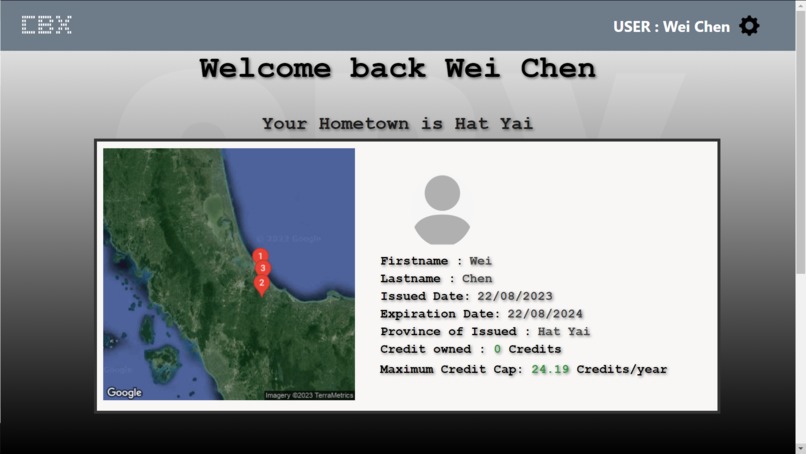
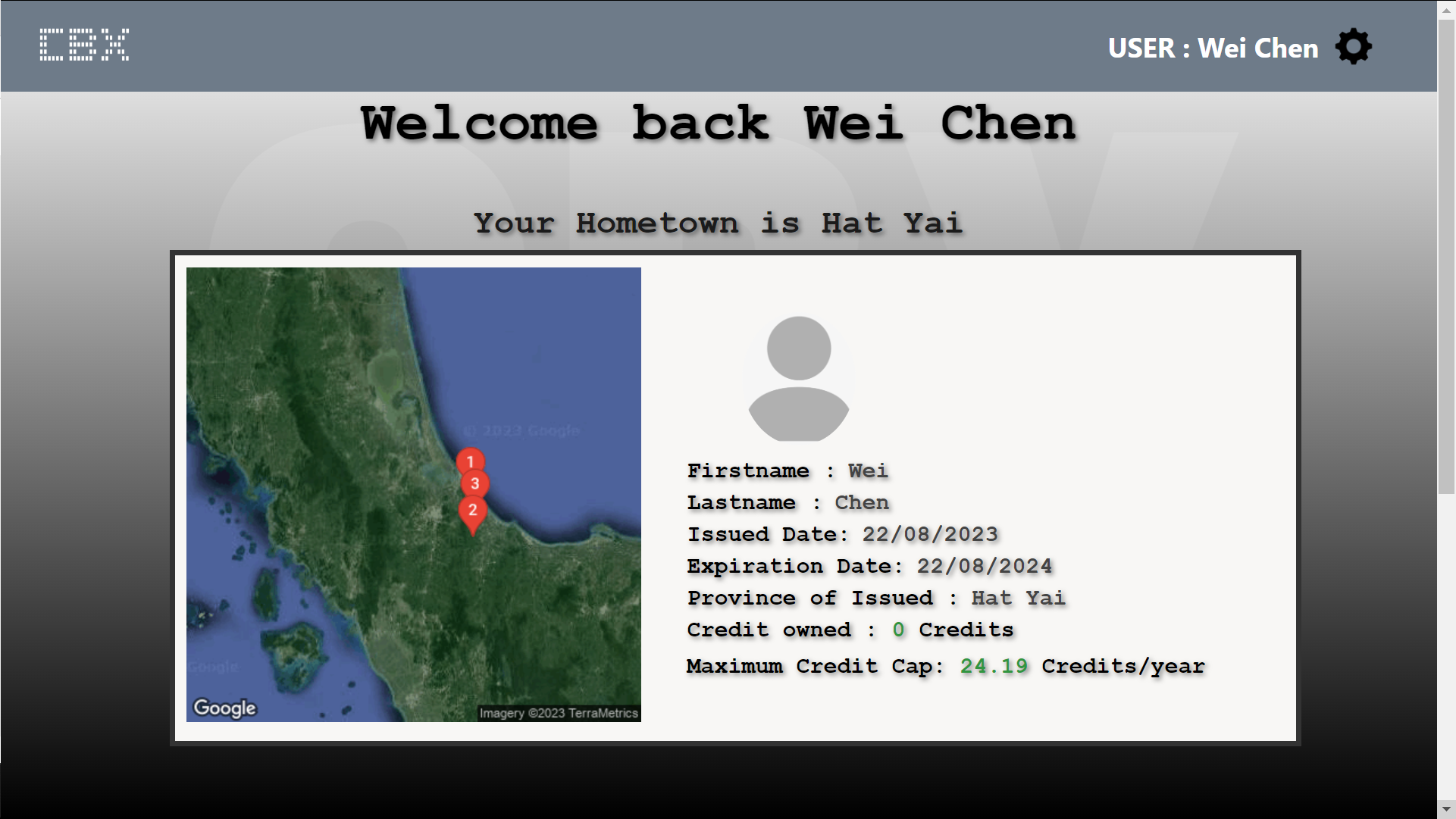
Main User UI
-
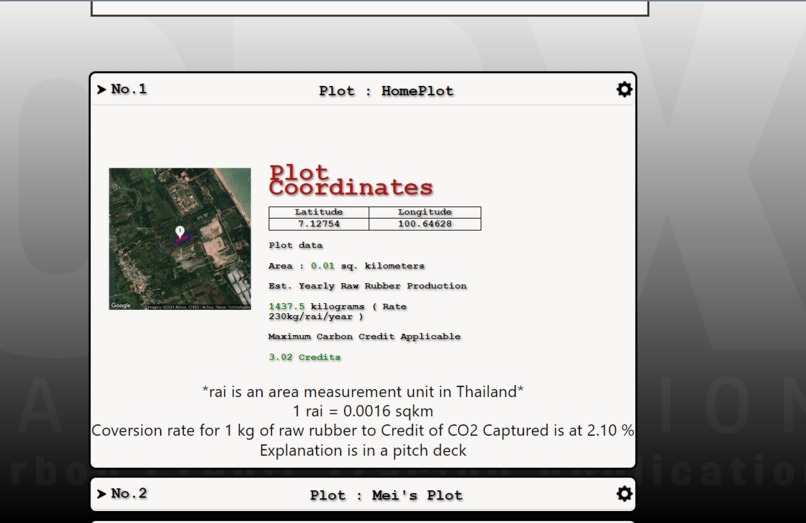
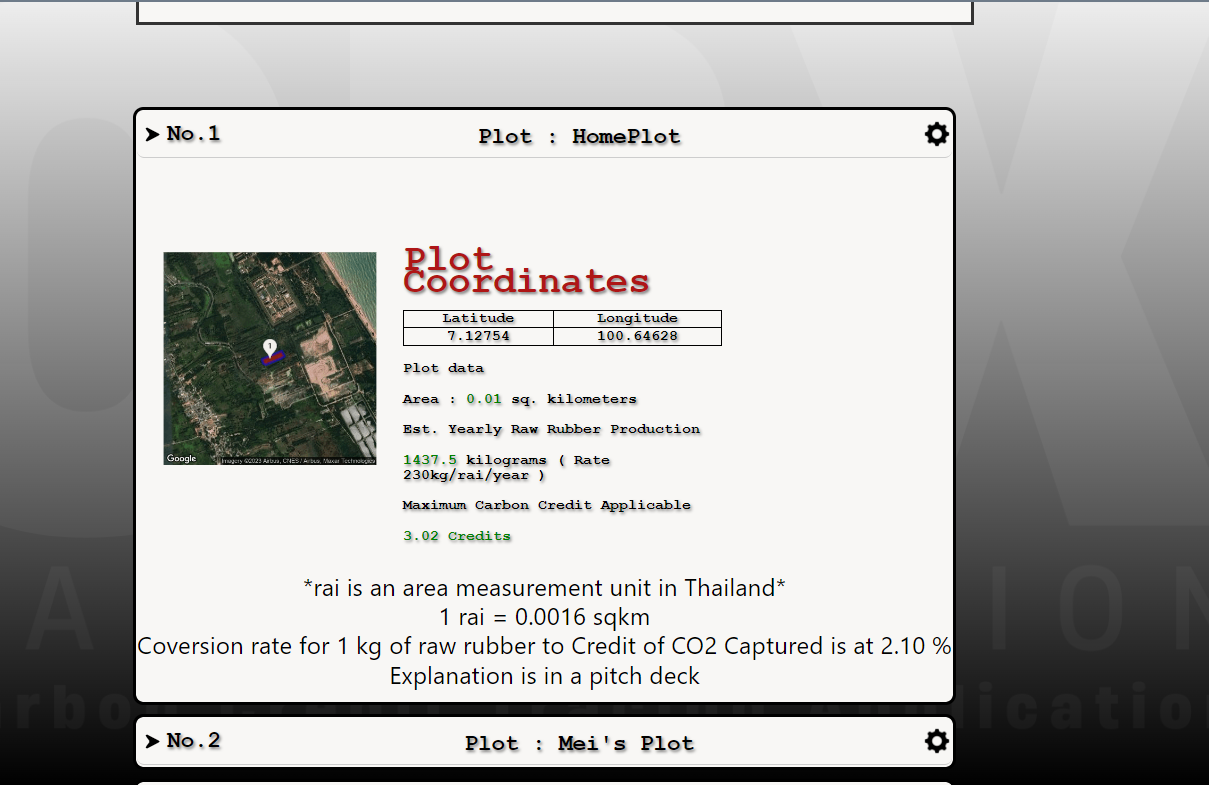
Plot Display
-
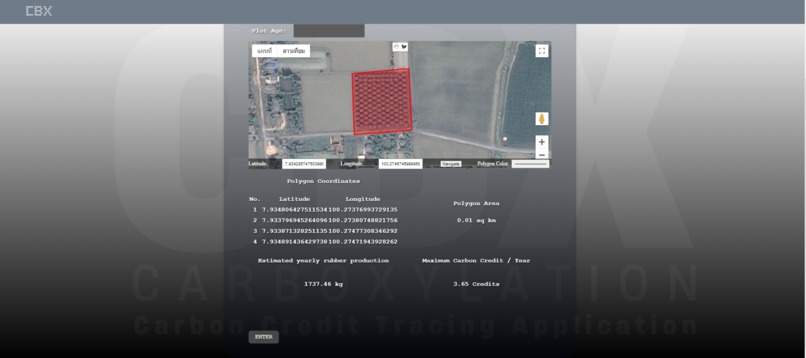
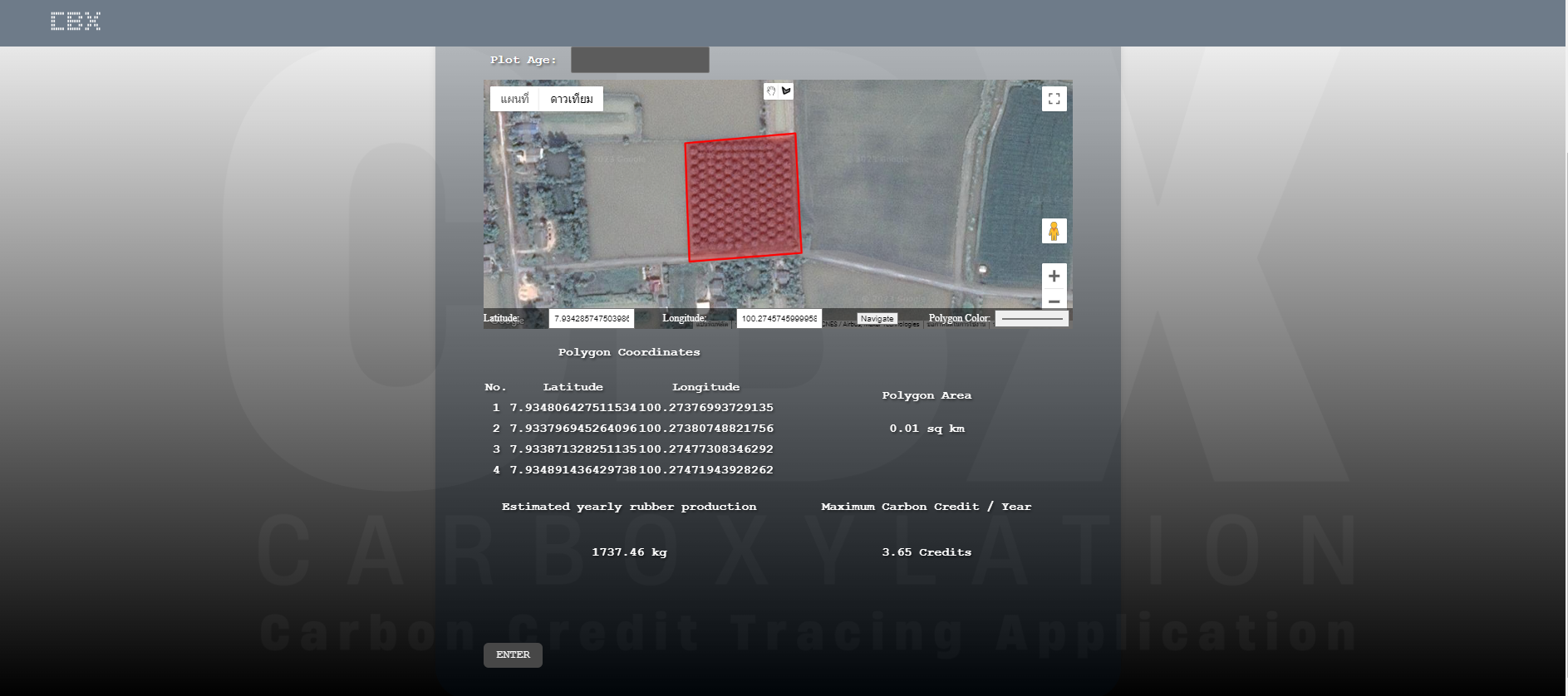
Add Plot
-
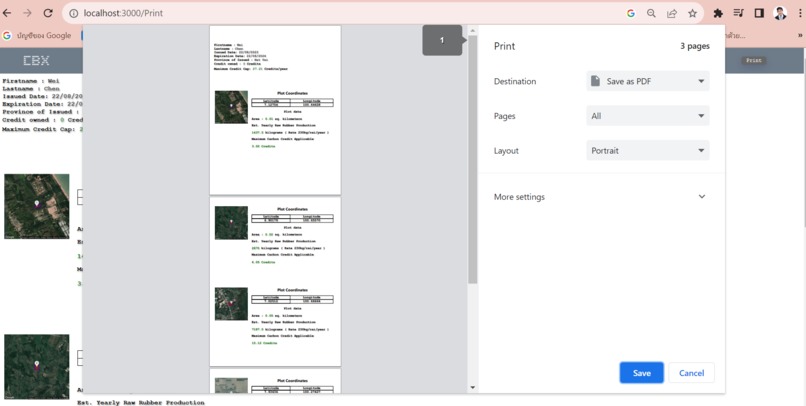
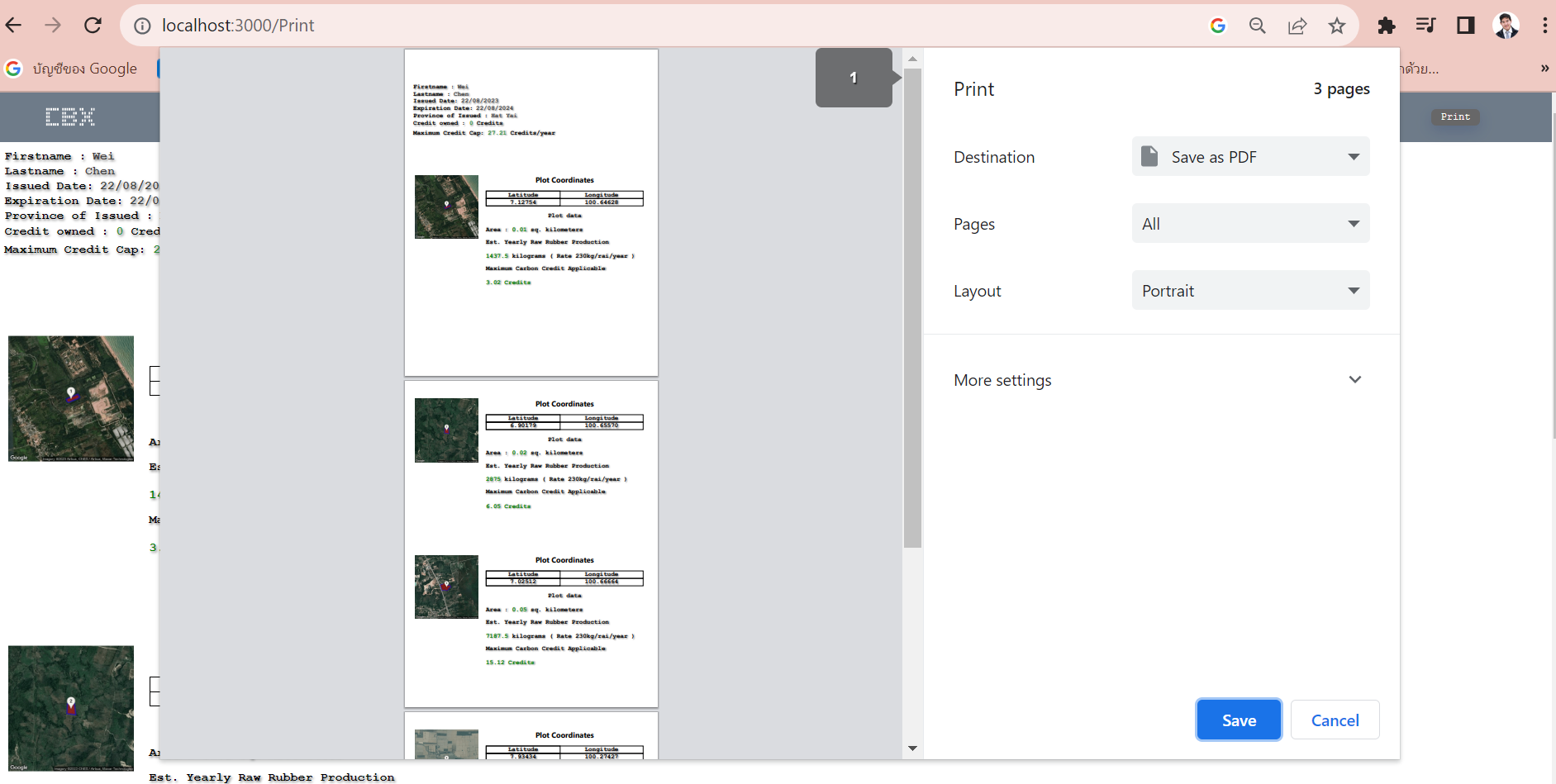
Print To Document
Inspiration
Our team consists of different individuals: I'm Ton, the writer of this story. I am studying alongside my friend Fame, a student at Bangkok University's School of Computer and Robotics Engineering. I work on both space tech and my 4th-year studies, while Fame is responsible for UX/UI and Front-End tasks in this project.
Recently, I reconnected with my high school friend, Voonzen. She is a 2nd-year student at Chulalongkorn University, enrolled in the Biotech International Program. Together, we have devised a way to create a modest web app for the locals to utilize, providing subsidies for their rubber plantations. These plantations offer economic benefits to humans while also serving as habitats for wildlife.
What it does
We utilize satellite imagery ( Demo with Google Maps API, Thailand also has a satellite company named GISTDA, with which we are engaged ) to calculate the carbon credit production of a rubber plantation. This, in turn, motivates planters to sustain their plantations without abandoning them or exploiting the land for personal gain.
How we built it
We are utilizing the multi-platform framework ReactJS for our MVP, which is web-based only. However, it has the potential for rapid scalability by creating APIs for iOS and Android platforms. For our backend, we are employing non-SQL data storage using Google Firebase, handling both authentication and user data storage. While Google Maps API is not the actual source of our satellite images, we have identified the underlying logic of leveraging both domestic and international space technology to address multifaceted challenges such as deforestation and exploitation.
Challenges we ran into
The digitalization of Thailand and potentially other third-world countries, where these four issues persist. Even if we possess a perfectly designed application, it becomes ineffective in the absence of internet connectivity or when governments still demand paperwork instead of adopting APIs to facilitate civilian usage.
Accomplishments that we're proud of
We are grateful that what is outlined in our book can be put into action, creating a win-win solution for both us and nature. Additionally, we have engaged with like-minded individuals, both within GISTDA and including Mr. Nikorn.
What we learned
What we can assert is that the challenges posed by the four given issues [ Waste, Deforestation, Endangered species, and Climate change ] cannot be resolved solely through brute force. Since these problems are a result of human actions, a direct approach would risk damaging the relationship between authorities and the private sector. Instead, we've adopted an indirect approach, wherein we educate stakeholders about the potential drawbacks of exploitation, which might ultimately yield lower profits than preservation. In this manner, we introduce the concept of generating carbon credits as an alternative solution.
What's next for Carboxylation
Get ourselves together with the locals, authority, and space tech. Space is borderless anyway, whether the problem is in Thailand or the Amazon forest, we got this.


Log in or sign up for Devpost to join the conversation.