Inspiration
We were inspired by the potential to harness AI and technology to create a more sustainable world. Recognizing the critical need to raise awareness about carbon emissions and their impact, we wanted to build a tool that would make understanding CO₂ emissions more accessible and actionable for everyone. We aimed to create an application that combines data visualization with the power of language models, turning complex emissions data into meaningful insights that empower individuals, organizations, and communities to take informed steps toward reducing their carbon footprint.
What it does
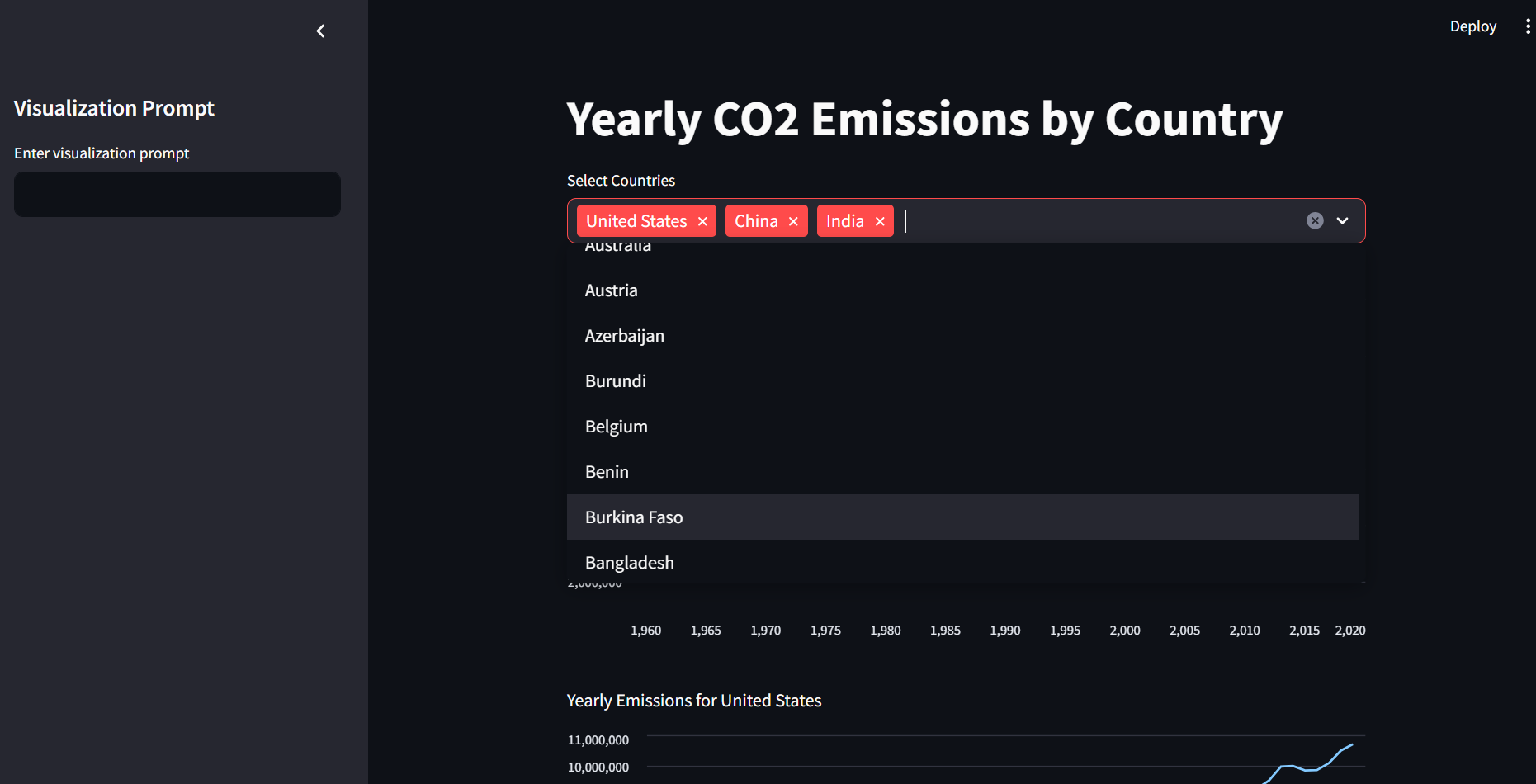
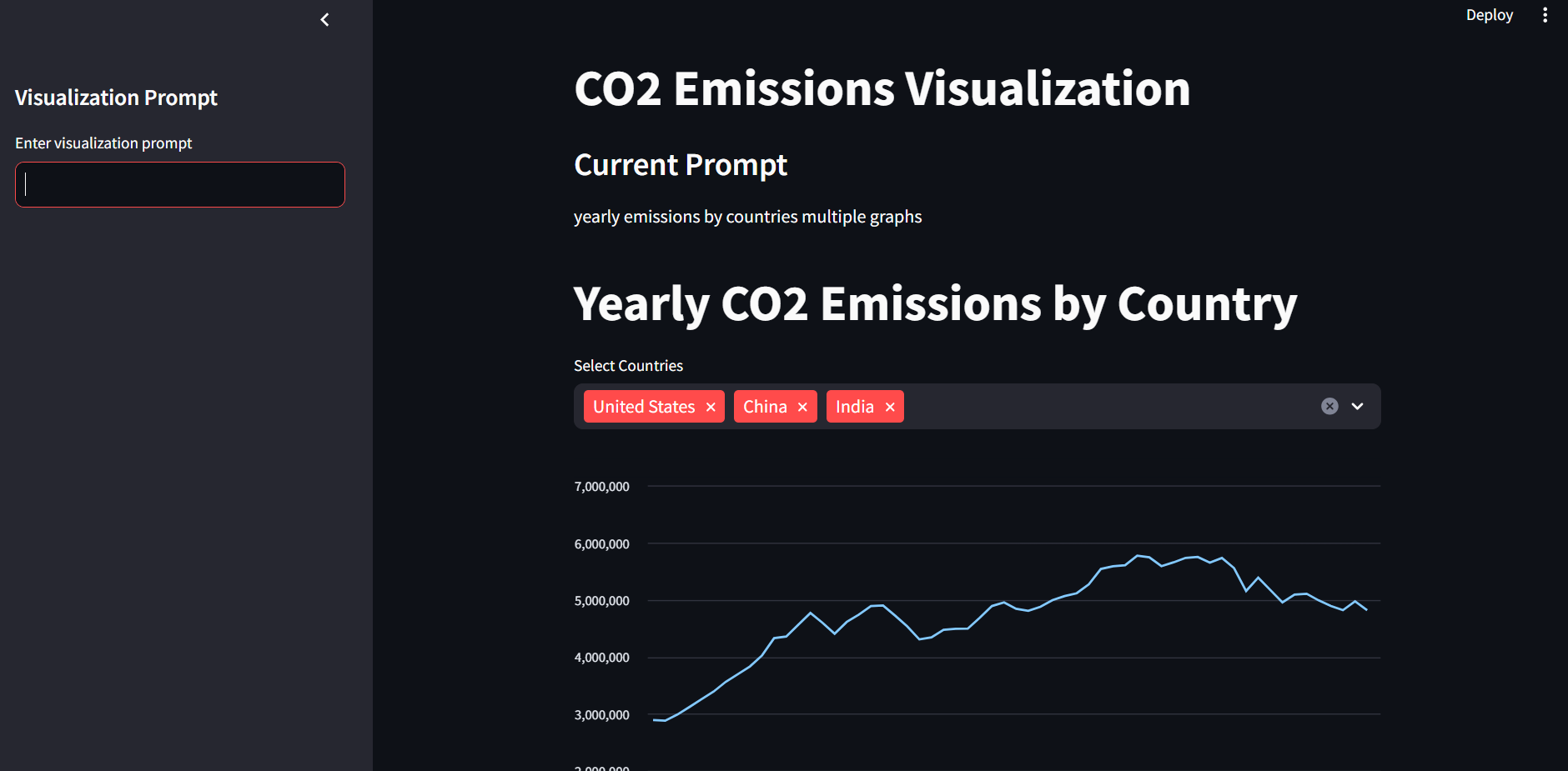
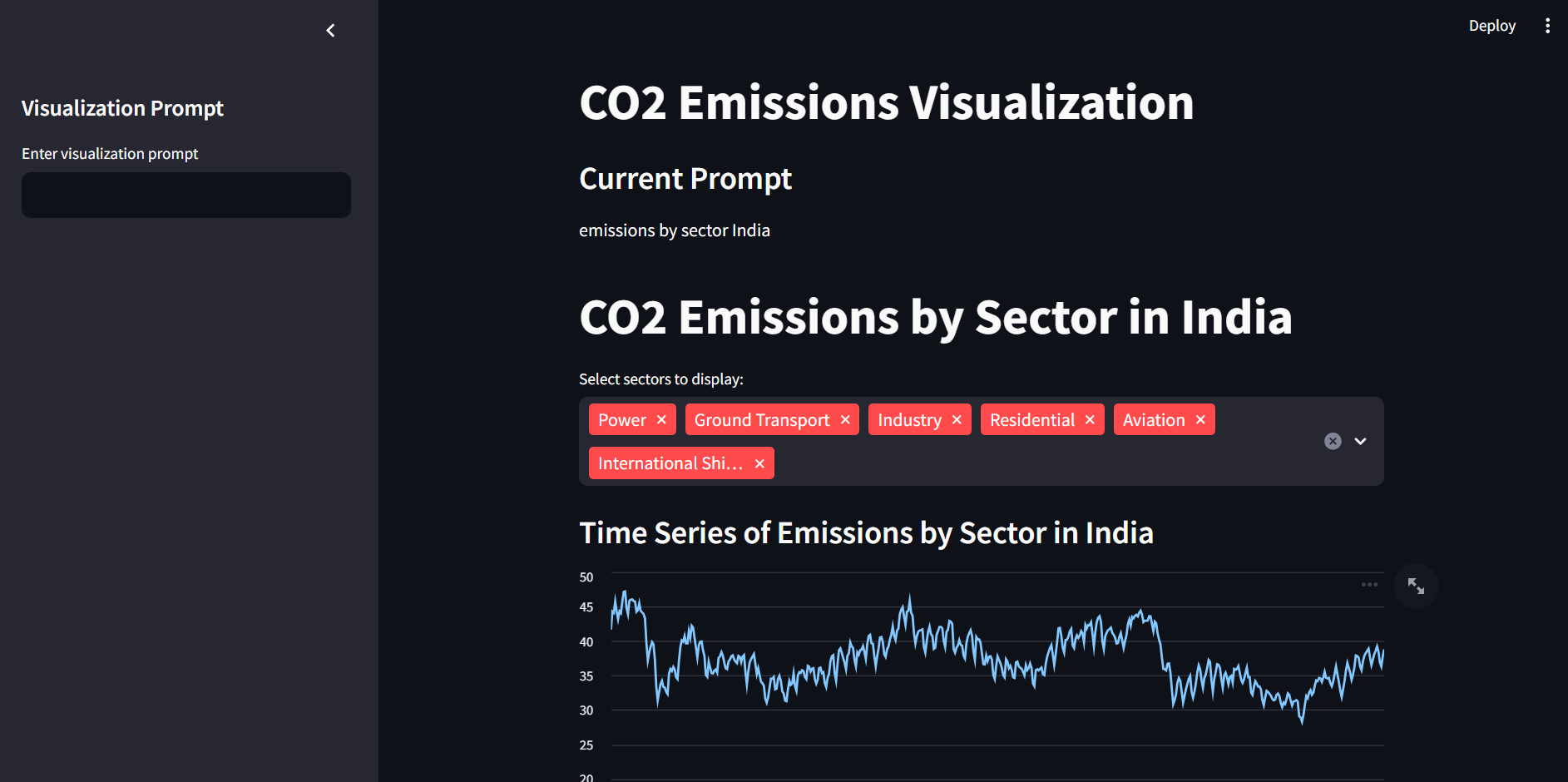
CarbonSense is an LLM-powered data visualization platform. Just type in a prompt, and detailed graphs and visuals will be generated! The prompt can be as simple or as complex as you want: our graphing enginer, powered by an LLM, will analyze the data and product clear and engaging visuals.
How we built it
Data Collection and Preparation: We gathered CO₂ emissions data from reliable sources, focusing on sectors such as transportation, industry, and energy. Each dataset was cleaned, standardized, and organized for smooth integration into the application.
Interactive Visualizations: Using Python and Streamlit, we developed a suite of data visualizations that allow users to interact with emissions data dynamically. Each visualization aims to make complex trends intuitive, with the ability to zoom into specific sectors, countries, or time periods.
LLM-Powered Insights: Integrating OpenAI's language model API, we added a prompt-based feature to the app. This allows users to ask questions or seek explanations about CO₂ data, with responses generated by the model to clarify trends, suggest insights, and even recommend potential actions to reduce emissions.
User-Friendly Interface: Finally, we designed the interface to prioritize ease of use, ensuring that users from all backgrounds could navigate the app effortlessly, explore visualizations, and access AI-powered insights.
Challenges we ran into
Building CarbonSense wasn't without its challenges:
- Data Complexity: Emissions data is vast, multi-dimensional, and often incomplete. We had to be meticulous in choosing data sources and spent significant time cleaning and organizing it to ensure accuracy and relevance in our app.
- Model Accuracy and Relevance: Language models can be remarkably insightful but sometimes lack context on highly specialized topics. Tuning the prompts and adjusting the LLM responses was essential to ensure the AI provided meaningful, reliable information on CO₂ emissions.
- Performance Optimization: The integration of large datasets with real-time LLM API calls posed performance challenges. We optimized loading times and model queries to keep the app responsive, even with substantial data loads and user queries.
Accomplishments that we're proud of
Integrating the LLM with the plotting part of our application. We paid a bit of money to get access to OpenAI's ChatGPT API calls, and tested our solution extensively. When everything came together and we managed to display beautiful graphs from a text prompt, we felt very proud.
What we learned
Through this project, we deepened our understanding of both carbon emissions data and the transformative role AI can play in data communication. Specifically, we learned:
- Data Analysis and Visualization: Working with emissions data highlighted the importance of clarity and context in data presentation. We explored various ways to present information, realizing how impactful data visuals can be in helping users understand complex environmental issues.
- LLM Integration for Insights: We saw firsthand how language models could add value beyond traditional data by contextualizing data trends via the use of graphs.
- The Power of Awareness: As we built and tested the app, we were continually reminded of how much information is required to make well-informed decisions about emissions reduction. This strengthened our drive to make the information engaging and easy to explore.
What's next for CarbonSense: Intelligent CO₂ Insights
With CarbonSense, we hope to contribute to a more informed public dialogue on CO₂ emissions. By combining the clarity of data visualization with the accessibility of AI-driven insights, we aim to inspire positive action toward emissions reduction and climate awareness. We look forward to expanding this project, adding more data sources, enhancing model capabilities, and introducing personalized insights for users committed to making a difference.
Built With
- ai
- analytics
- data
- data-visualization
- llm
- machine-learning
- python
- streamlit
- visualization

Log in or sign up for Devpost to join the conversation.