-
-
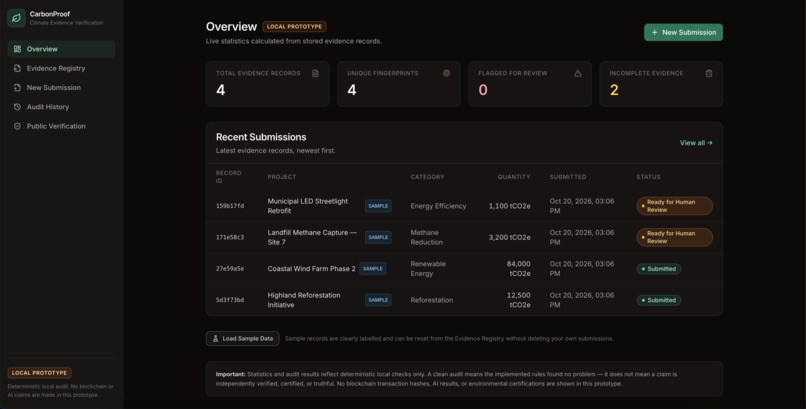
Main dashboard
-
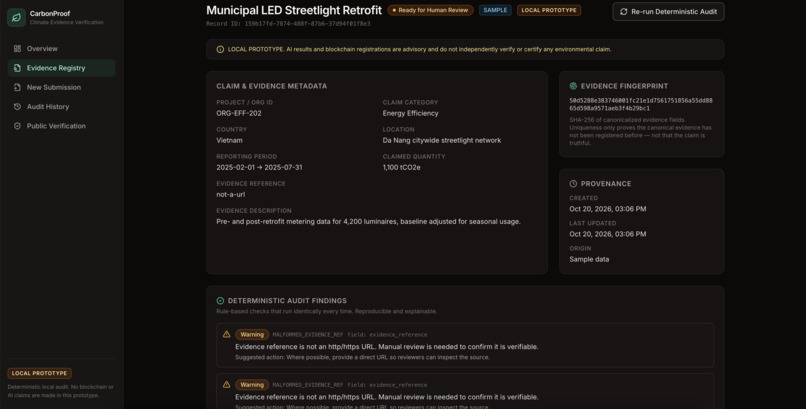
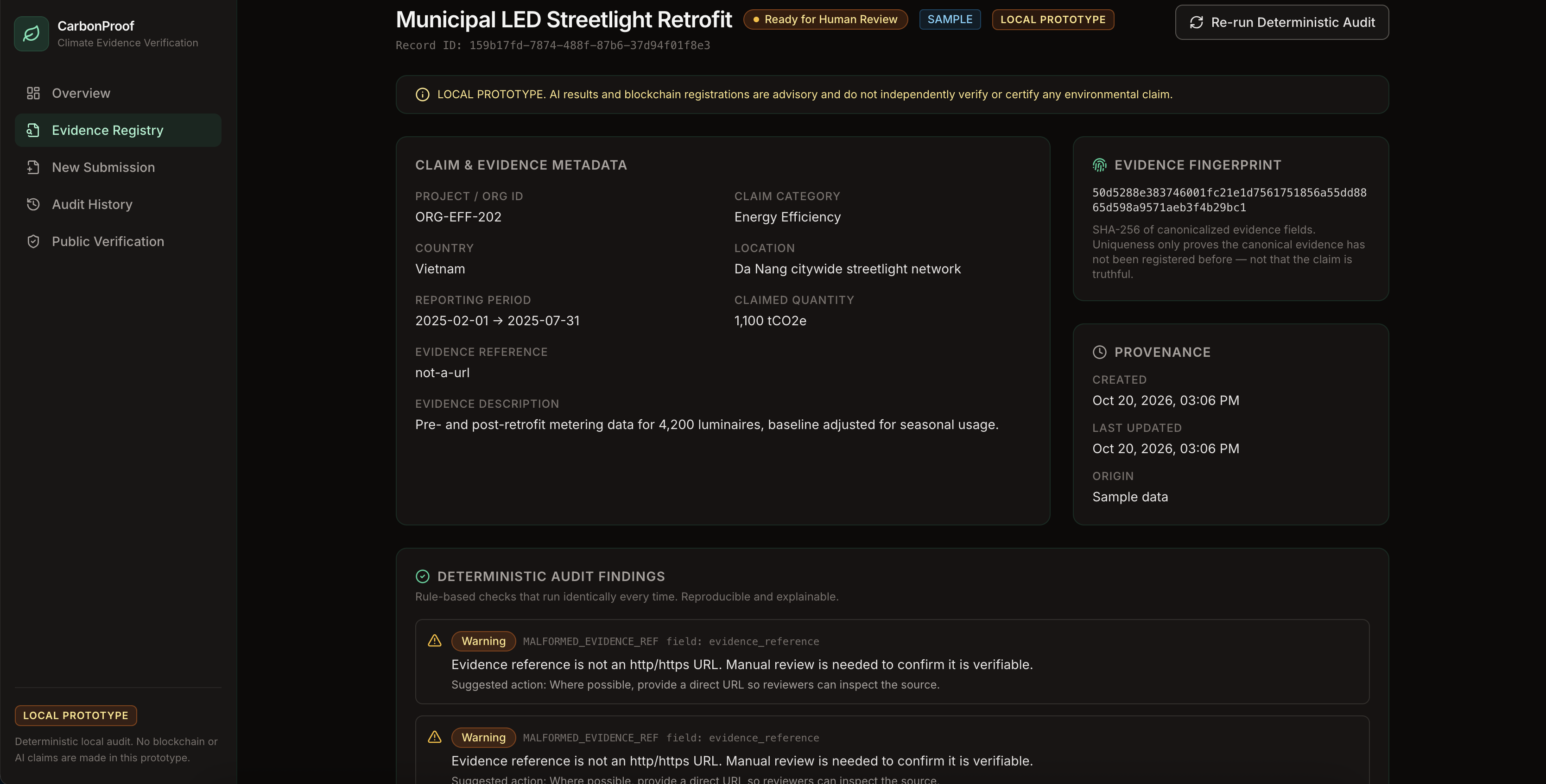
Evidence and audit results
-
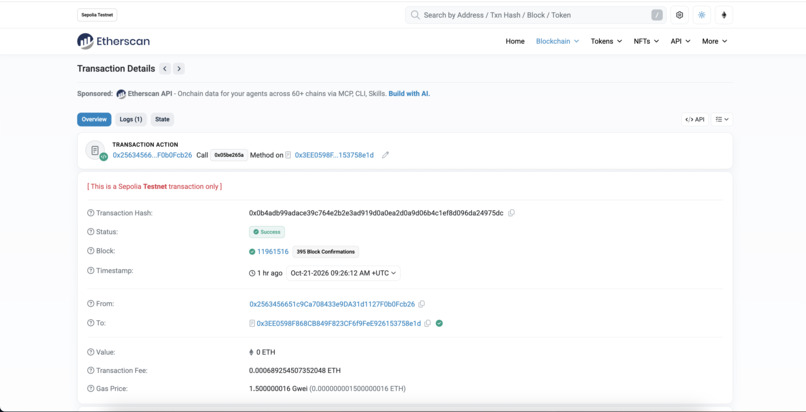
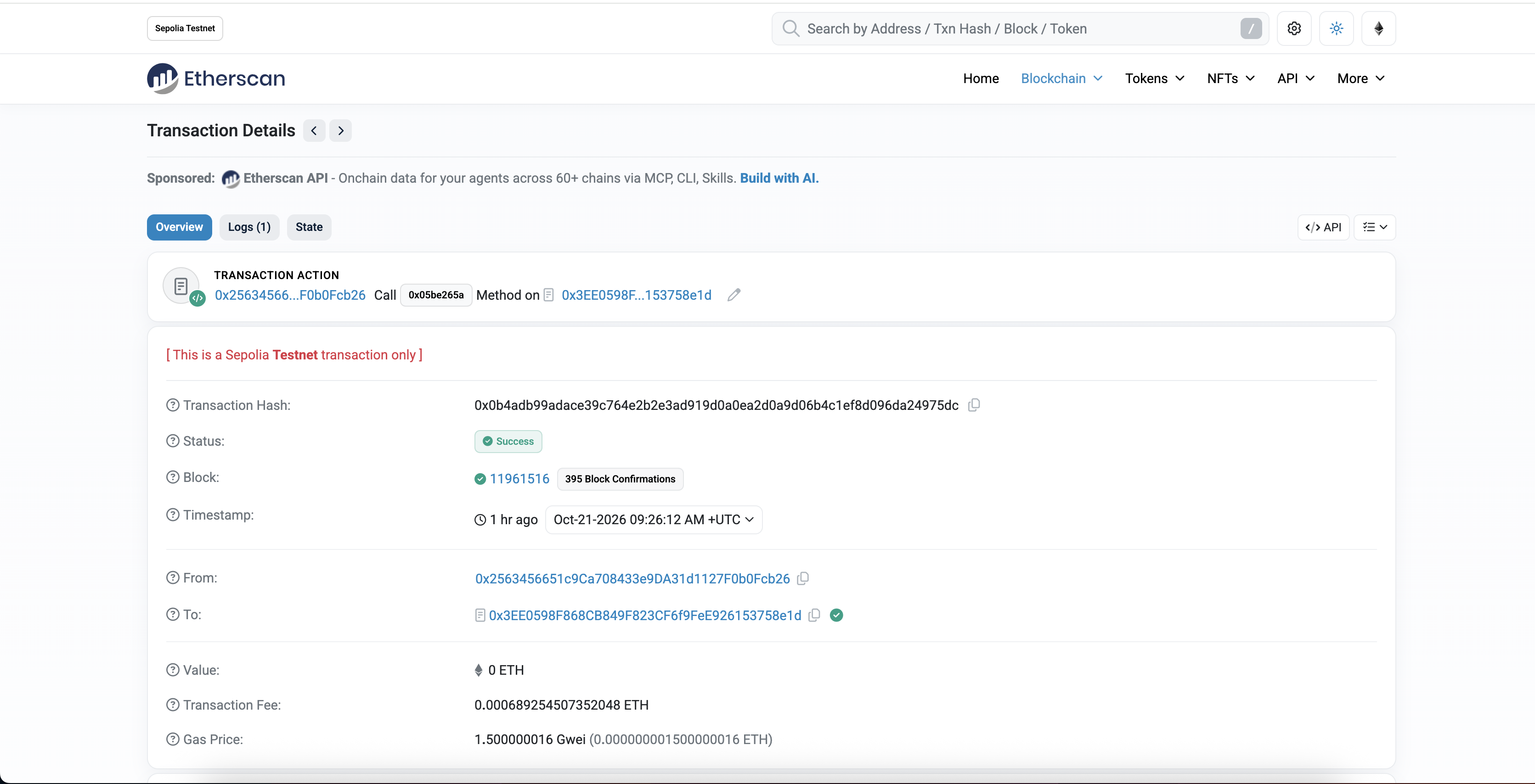
Blockchain proof
-
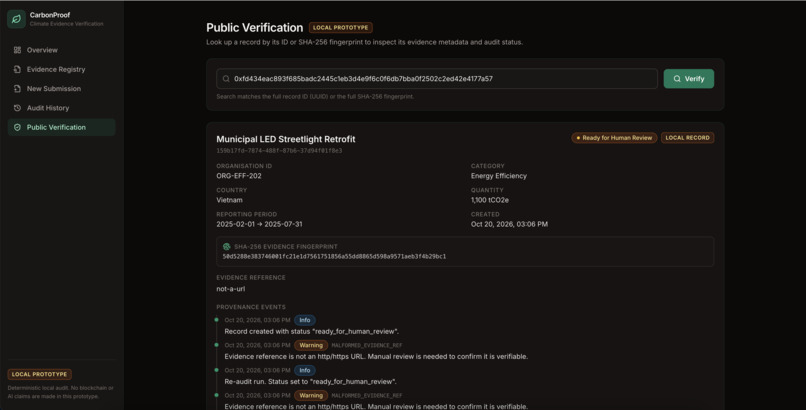
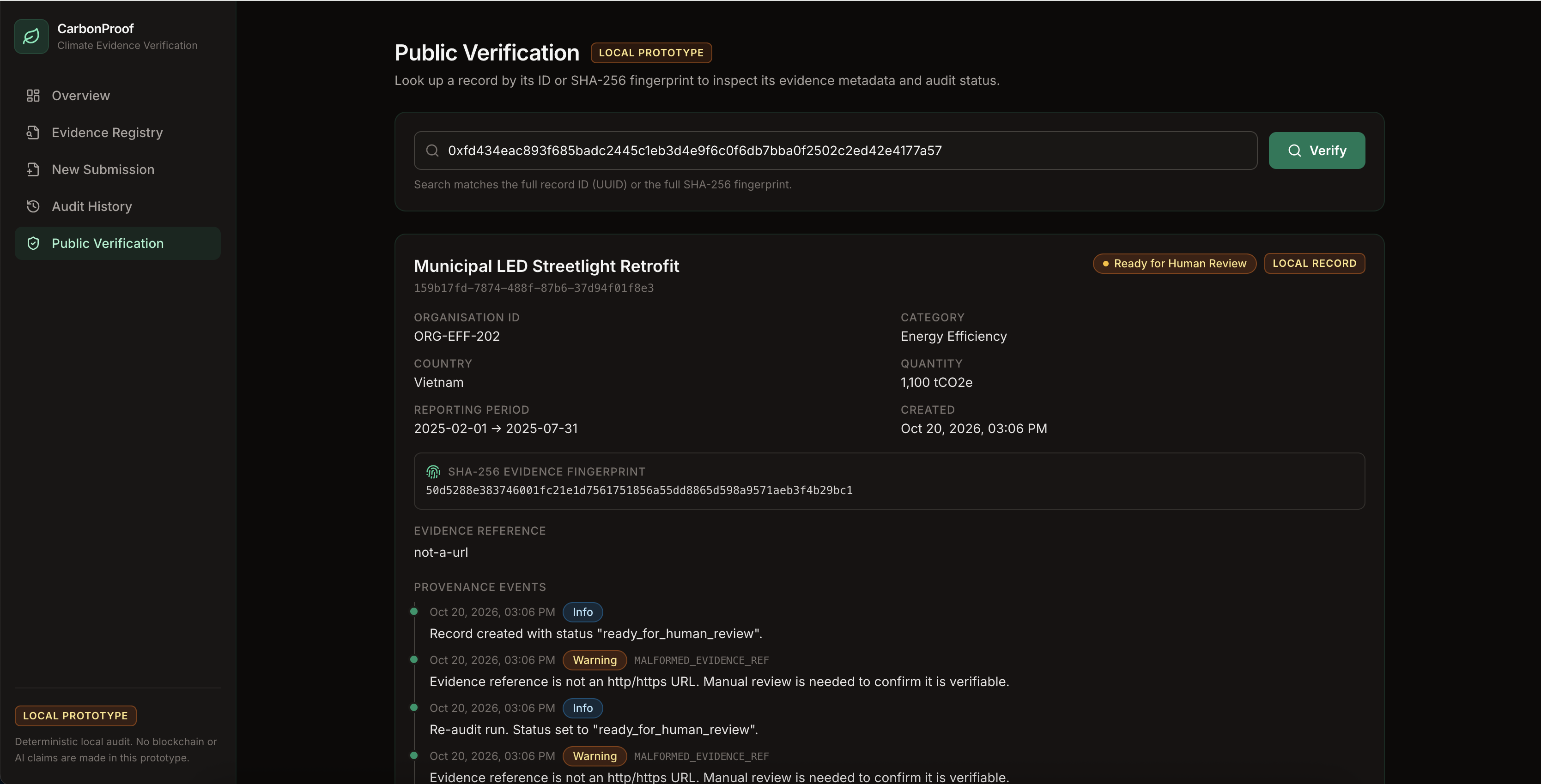
Public verification
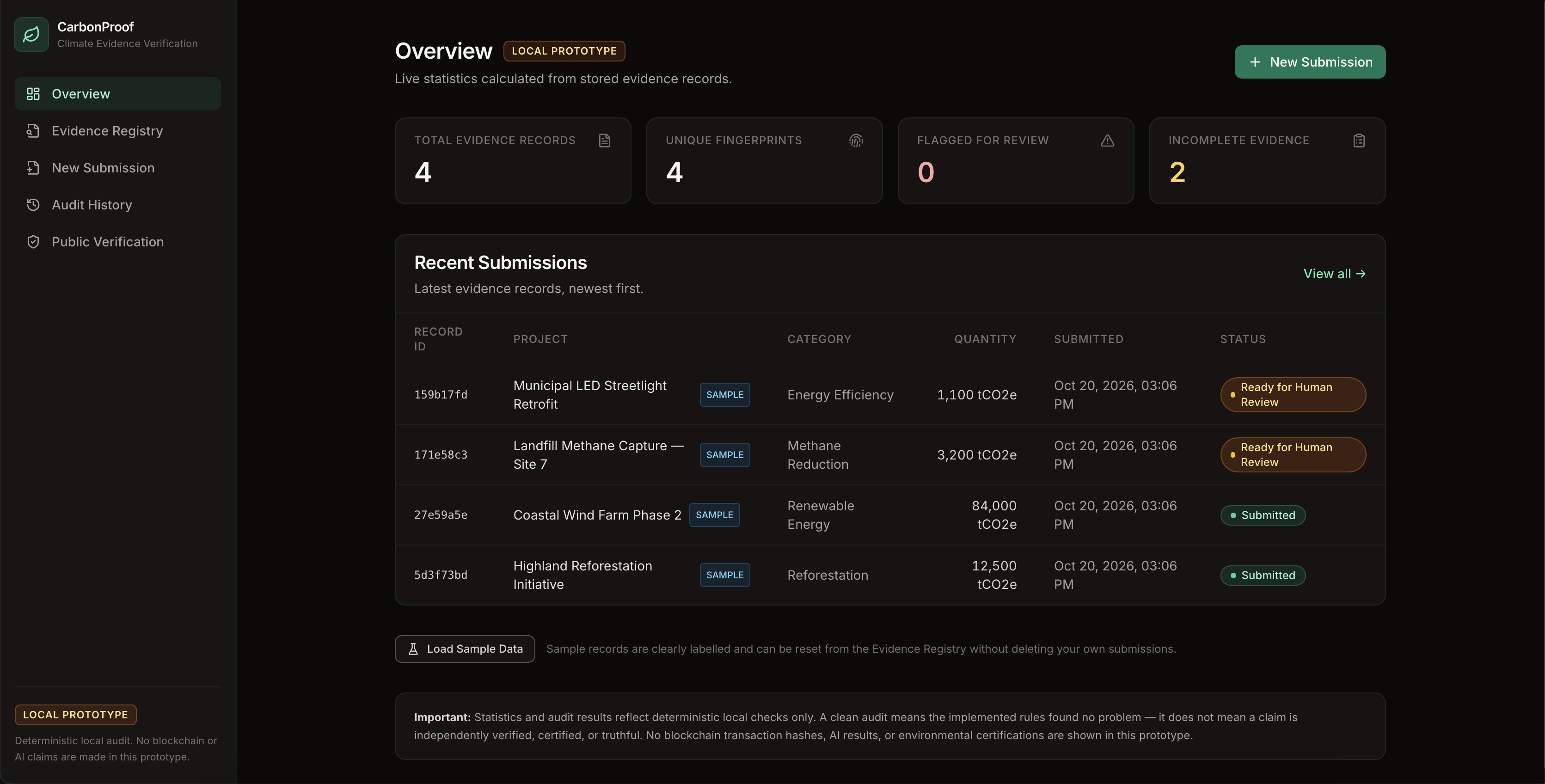
CarbonProof: Verifiable Climate Evidence
The problem
Climate projects often present environmental impact claims alongside supporting documents, calculations, and project records. But reviewing a claim can be difficult when evidence, audit results, and verification records are scattered across different places.
CarbonProof explores a practical way to connect these pieces. The goal is to make climate evidence easier to inspect, its integrity easier to check, and its registration easier to verify — without confusing a recorded claim with proven environmental impact.
What I built
CarbonProof is a web-based prototype for recording and auditing climate-related evidence, with blockchain-backed registration and a public verification workflow.
The project brings together five core capabilities:
- Evidence fingerprinting: Generates SHA-256 fingerprints so evidence records can be identified and their integrity checked.
- Transparent audit results: Runs deterministic validation checks and records findings, including malformed evidence references, rather than silently treating incomplete submissions as valid.
- Blockchain registration: Registers an evidence record identifier hash on Ethereum Sepolia, creating a publicly inspectable transaction and event.
- Public verification: Lets users search for a record using its record UUID, evidence fingerprint, or on-chain record hash.
- Audit history: Connects records with their stored audit events and available AI-audit results, making the review process easier to follow.
How it works
- A climate-related evidence record is submitted to the application.
- CarbonProof generates or retrieves its evidence fingerprint and runs validation checks.
- The audit results and associated events are stored for inspection.
- The record identifier hash can be registered through the deployed smart contract on Ethereum Sepolia.
- Anyone can use the public verification page to look up the record and inspect the available information.
Technology and implementation
I built the application using Bolt as my development environment, with a React and TypeScript frontend, a database-backed evidence and audit workflow, and Solidity smart-contract integration for blockchain registration. The project also includes a structured AI-audit integration path that reports when a provider is unavailable rather than fabricating an AI result.
The public code repository includes the implementation, tests, setup documentation, and project limitations.
A real implementation milestone
CarbonProof successfully registered a record identifier hash on Ethereum Sepolia. The transaction is publicly inspectable, and the registered hash can be used in the application's public verification workflow.
- Live demo: https://carbonproof-climate-c8ne.bolt.host
- GitHub repository: https://github.com/GradeForge/CarbonProof
- Deployed contract: https://sepolia.etherscan.io/address/0x3EE0598F868CB849F823CF6f9FeE926153758e1d
- Successful registration transaction: https://sepolia.etherscan.io/tx/0x0b4adb99adace39c764e2b2e3ad919d0a0ea2d0a9d06b4c1ef8d096da24975dc
Challenges and what I learned
One of the biggest challenges was connecting an application-level record to an on-chain transaction while keeping the public lookup flow useful. I also encountered wallet smart-account transaction behavior that interfered with registration. I investigated the failure, corrected the wallet configuration, added a preflight safety check, and verified a successful transaction on Sepolia.
Another challenge was making verification searches handle different identifier formats correctly. I added separate lookup paths for UUIDs, 64-character SHA-256 fingerprints, and 0x-prefixed on-chain hashes, with tests for successful and unsuccessful cases.
These challenges reinforced the importance of testing the complete workflow, not just individual screens, and of clearly distinguishing successful technical operations from claims that have not been independently validated.
Limitations and responsible use
This is a hackathon prototype, not a certified carbon-accounting system. The included sample record, “Municipal LED Streetlight Retrofit,” is illustrative. Its stated emissions reduction has not been independently verified, and its evidence reference is malformed. Its audit warnings are therefore important, not proof of environmental impact.
The AI-audit provider is currently unavailable without provider credentials, so the application does not claim that a live AI audit has occurred. Ethereum Sepolia is a test network, and successful registration proves that a hash was recorded on-chain — not that the underlying climate claim is true.
CarbonProof is a foundation for making climate evidence more traceable and reviewable. The next steps would include validated evidence sources, independent carbon-accounting review, stronger production access controls, and testing with real project data.
Project status
The prototype has passed its automated test suite, type checking, linting, and production build checks. Its public demo, source repository, deployed Sepolia contract, and successful registration transaction are available above.
Built With
- artificial-intelligence
- blockchain
- climate
- ethereum
- react
- sha-256
- solidity
- supabase
- sustainability
- typescript
- vite
- web3

Log in or sign up for Devpost to join the conversation.