CarbonProof AI: Transparent, Auditable Carbon Verification
The problem
Carbon markets depend on trust. Organizations need confidence that carbon projects are supported by credible evidence, that verification decisions are explainable, and that issued or retired credits can be traced. Yet project documents, monitoring reports, calculations, reviews, and credit records can be spread across disconnected systems. This makes it difficult to follow the evidence behind a decision or independently inspect a project's verification history.
CarbonProof AI was built to make that process more transparent and auditable.
What we built
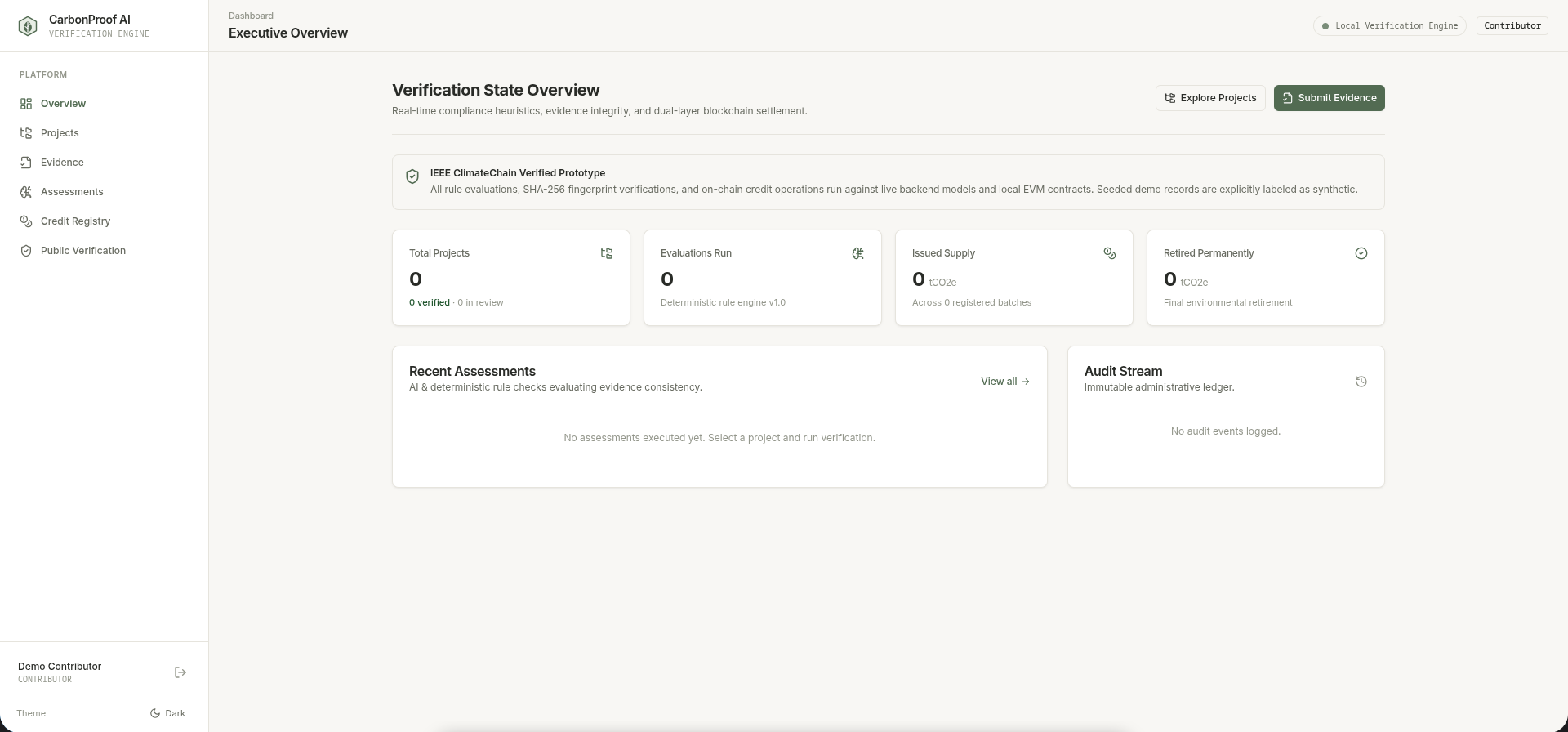
CarbonProof AI is an environmental verification platform that brings project documentation, evidence integrity, deterministic risk assessment, reviewer governance, and carbon-credit lifecycle records into one workflow.
Users can create and manage carbon projects, upload supporting evidence, verify the integrity of stored files using SHA-256 fingerprints, and run explainable rule-based assessments. Reviewers can inspect findings, record decisions with justifications, and maintain an audit trail. Where configured, credit issuance and retirement can also be tracked through an EVM-compatible registry, with a public portal for checking verification information.
The goal is not to replace independent certification or claim that a document is truthful simply because its hash is valid. Instead, CarbonProof AI helps make the evidence, checks, decisions, and records behind a verification process easier to inspect.
How it works
- Register a project: Store its identifying details and relevant project parameters.
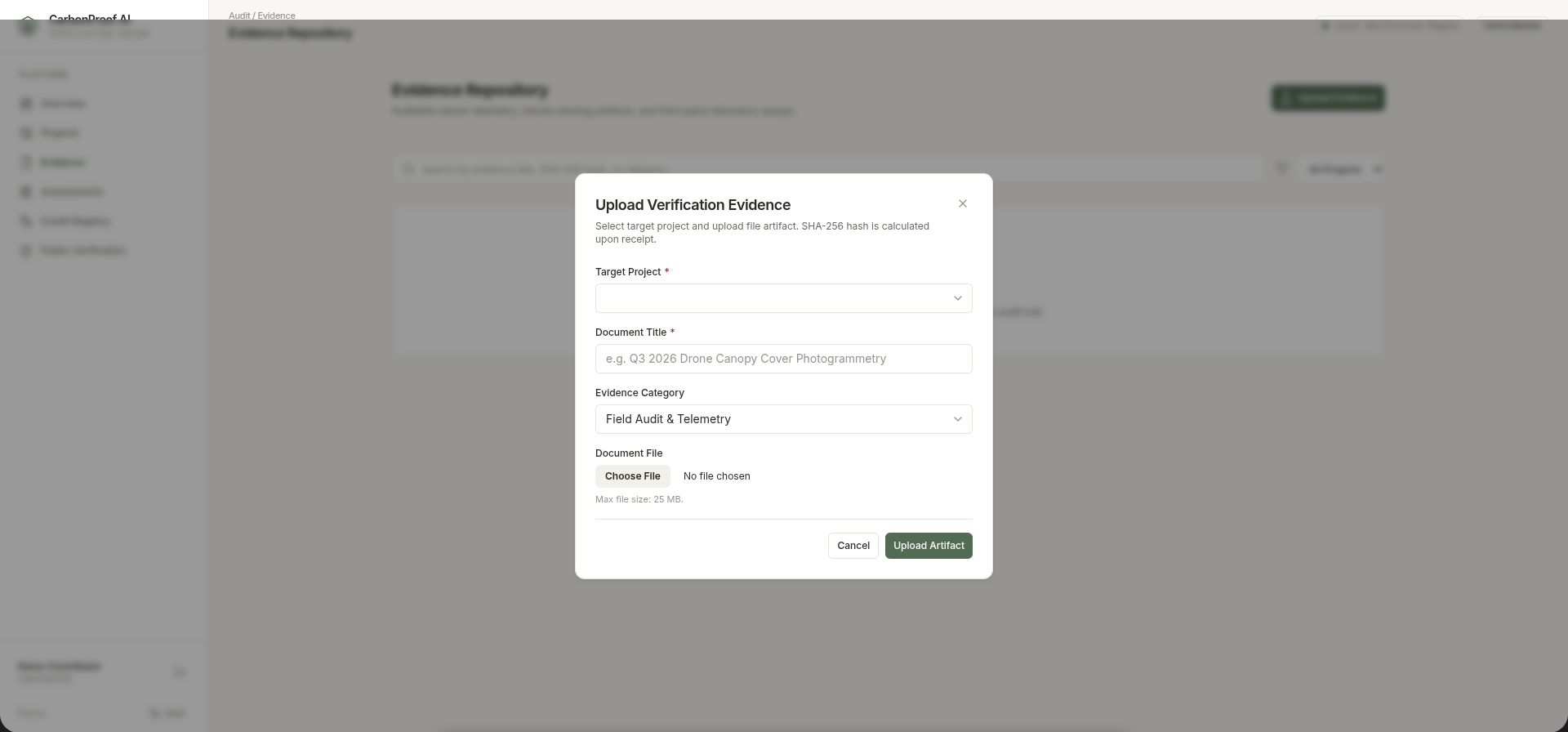
- Submit evidence: Upload project documents and supporting data through the application.
- Check integrity: Generate and verify cryptographic fingerprints so changes to stored evidence can be detected.
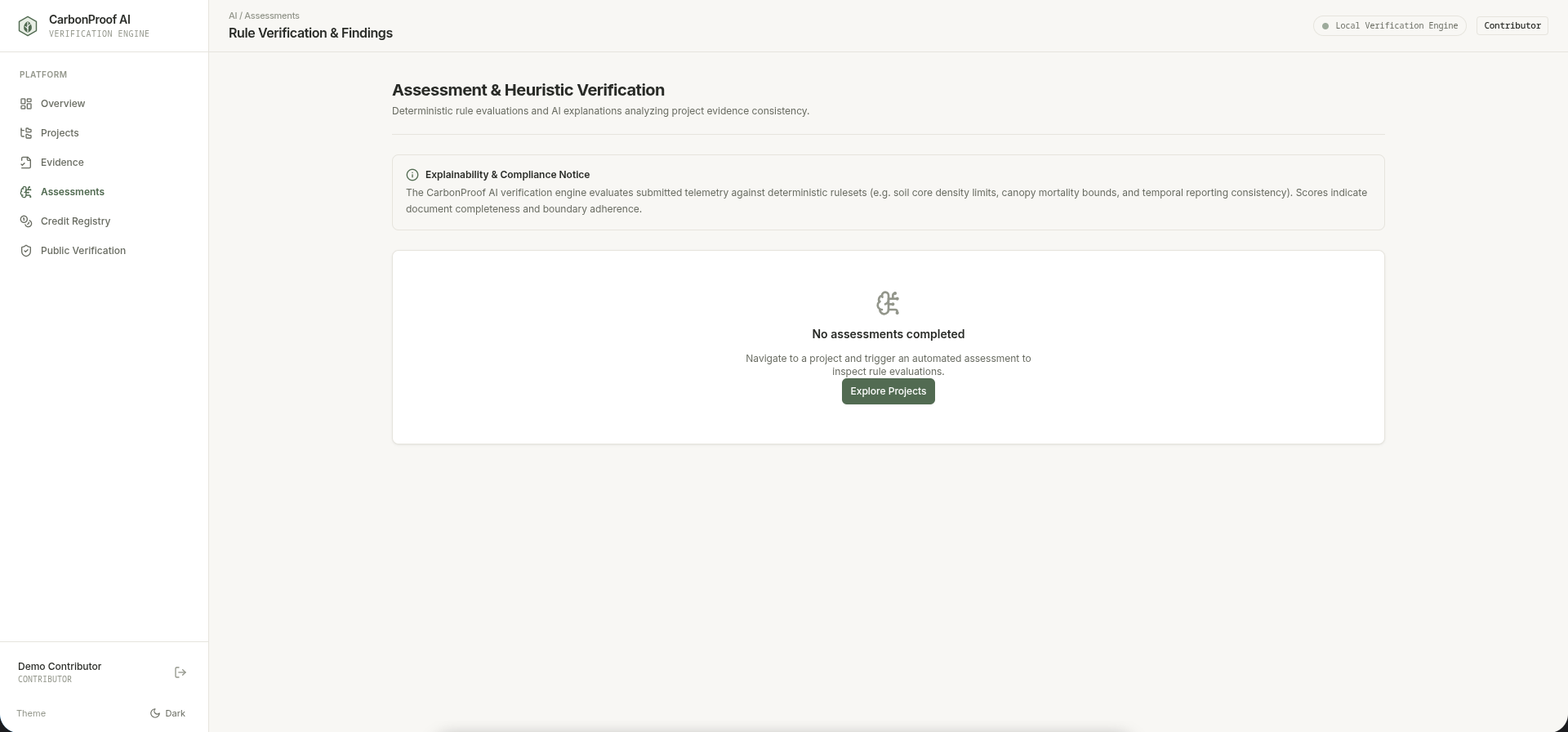
- Assess the project: Run deterministic verification rules and view scores, findings, and explanations.
- Review and decide: Let authorized reviewers inspect results, provide justifications, and record decisions under separation-of-duties controls.
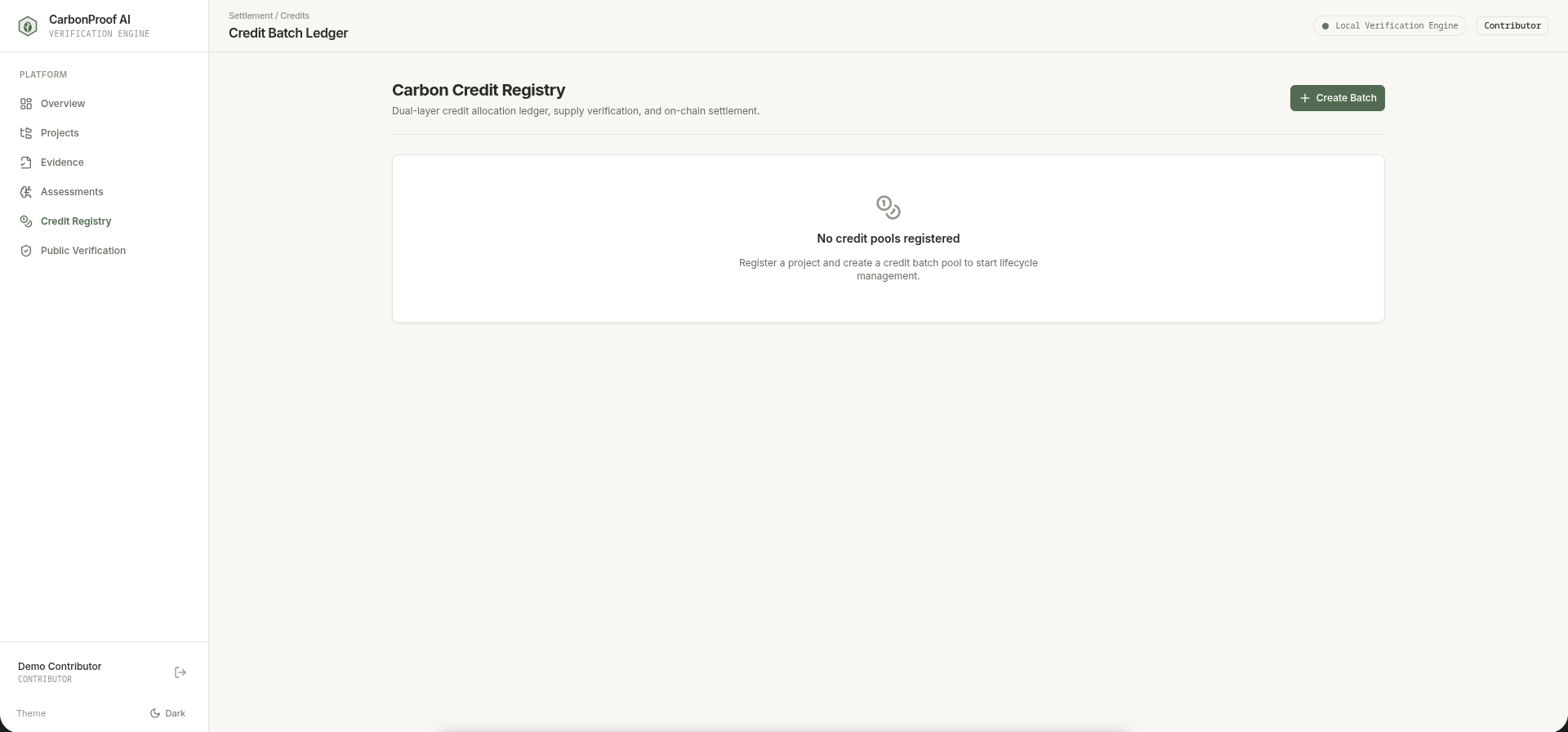
- Track credits: Record eligible issuance and retirement operations, with auditable lifecycle events and optional blockchain settlement.
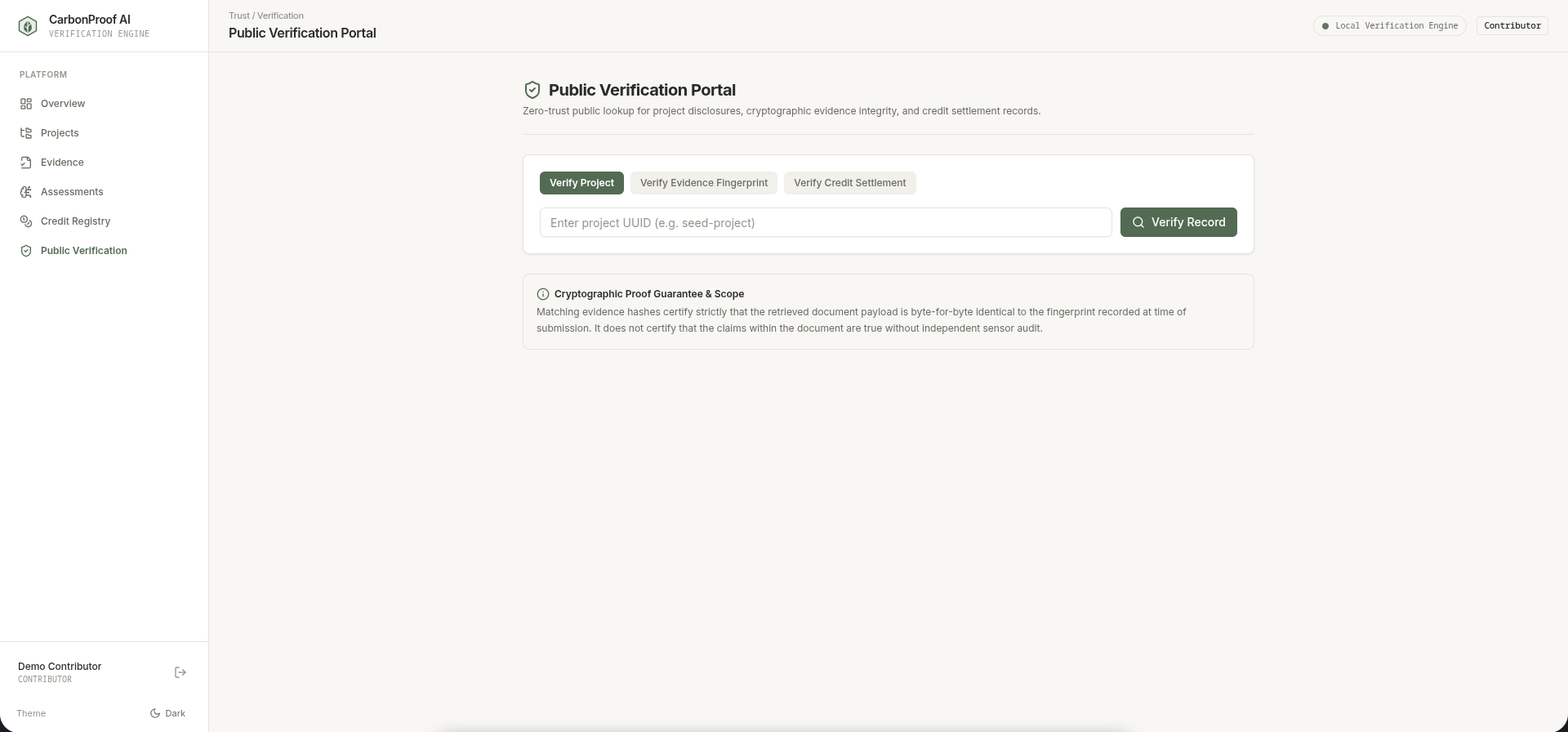
- Verify publicly: Provide a public-facing way to inspect permitted project verification information without exposing restricted evidence.
How we built it
We developed CarbonProof AI as a full-stack application with a TypeScript backend and React frontend. The backend uses Express for API services and Prisma for data access, with PostgreSQL as the intended persistent production database. The platform includes authentication, role-based authorization, project and evidence management, assessment workflows, reviewer decisions, and audit records.
The verification engine uses versioned, deterministic rules to produce reproducible and explainable findings. SHA-256 fingerprints support evidence-integrity checks. For credit lifecycle functionality, we built an EVM-compatible Solidity registry and a backend integration that can submit transactions and track their status when blockchain configuration is enabled.
We also built an automated browser demonstration to show the product through actual application interactions, including document upload, integrity verification, assessment, review, credit operations, and public verification.
What we learned
Building the project highlighted that environmental verification is not just about calculating a score. It also requires clear evidence provenance, reproducible rules, permissions that protect review independence, reliable persistence, and an audit trail that explains how a decision was reached.
We learned to distinguish evidence integrity from evidence validity: a cryptographic hash can help show that a file has not changed, but it cannot prove that the contents are accurate. We also learned that blockchain can support traceability, but it does not replace sound verification, governance, or secure handling of data.
Challenges
One of the main challenges was connecting the entire workflow—from project documents to assessment findings, review decisions, and credit lifecycle records—without losing traceability between steps. We also had to design authorization and separation-of-duties checks, make verification results explainable, and handle blockchain transaction states without treating a submitted transaction as automatically settled.
Another challenge was preparing the application for deployment. Local development storage and in-memory data are not suitable for a persistent hosted system, so production use requires a correctly configured database, durable evidence storage, and secure environment variables.
What's next
Future work includes stronger document-processing and validation capabilities, integration with additional methodologies and external verification sources, more robust production storage and key-management options, and further testing with realistic project datasets.
CarbonProof AI aims to make carbon verification easier to follow, easier to audit, and more transparent for the people who depend on its results.
Built With
- audit-trail
- blockchain
- carbon-credits
- carbon-markets
- climate-tech
- cryptography
- environmental-verification
- evm
- express.js
- foundry
- node.js
- postgresql
- prisma
- react
- risk-assessment
- role-based-access-control
- sha-256
- smart-contracts
- solidity
- sustainability
- typescript
- vite

Log in or sign up for Devpost to join the conversation.