-
-
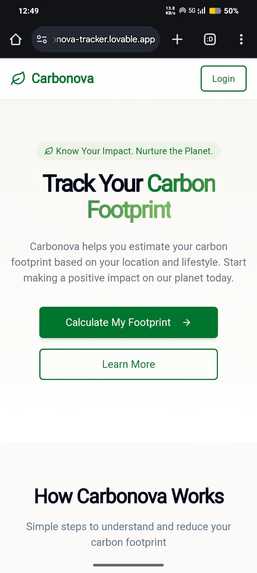
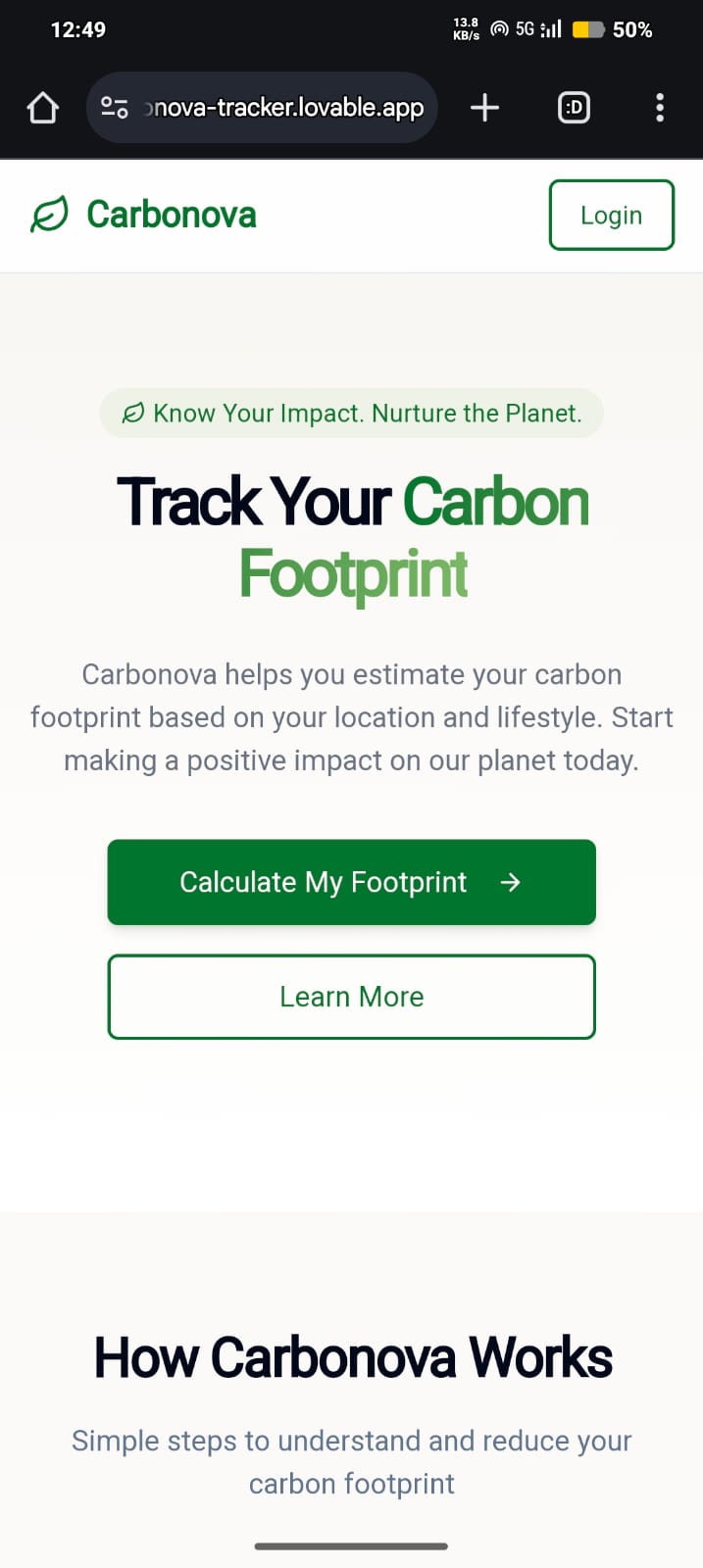
home page
-
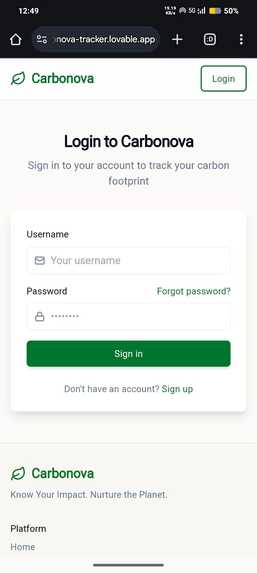
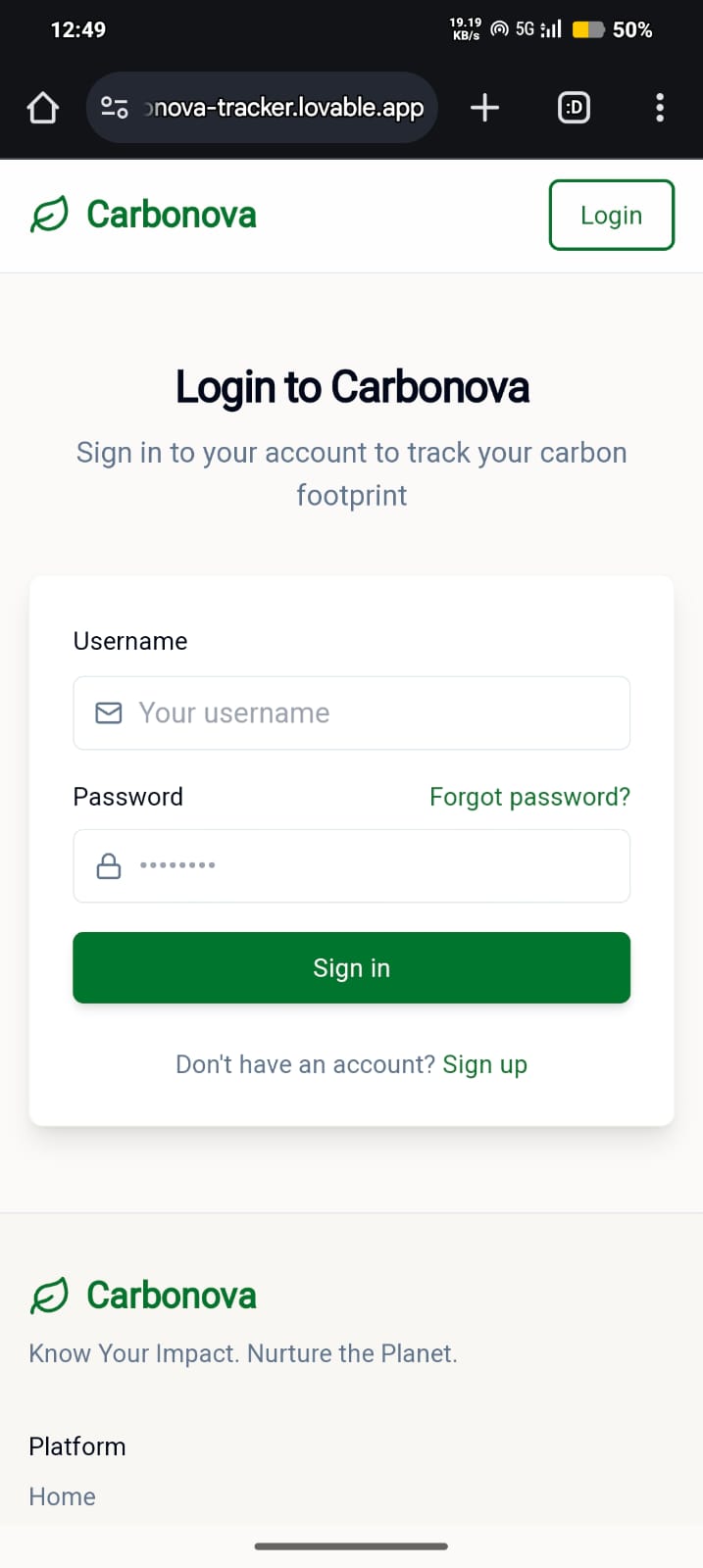
login page
-
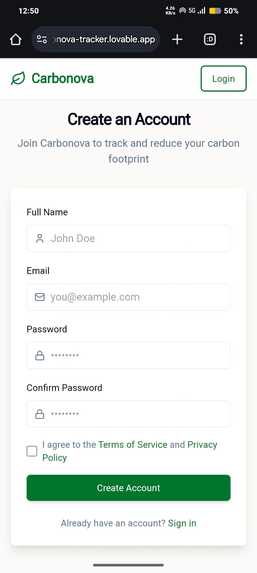
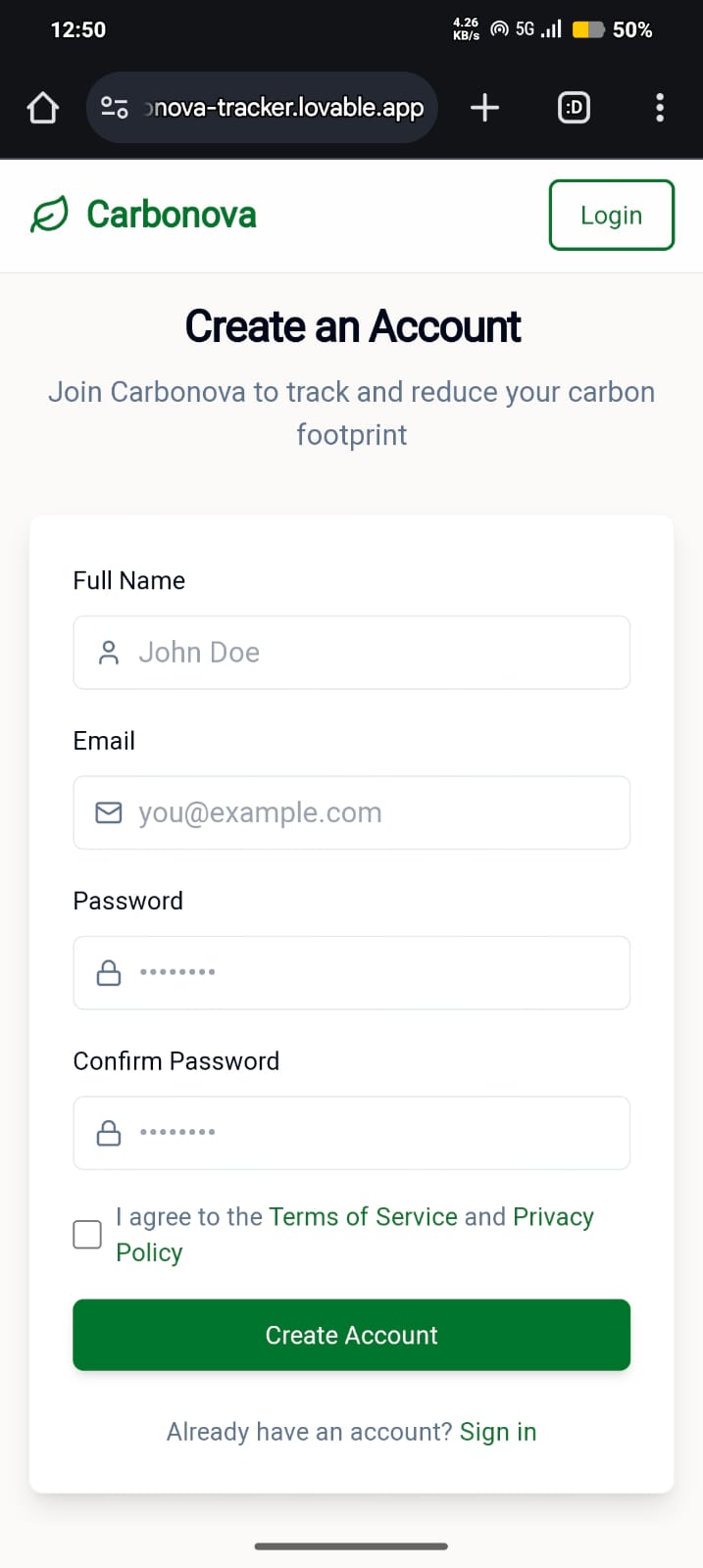
sign up page
-
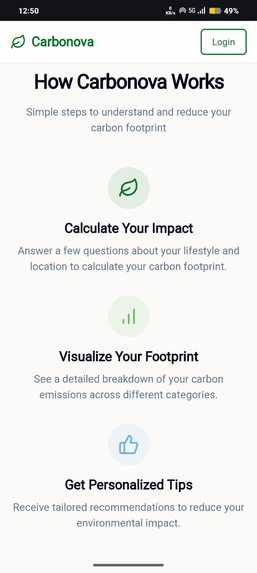
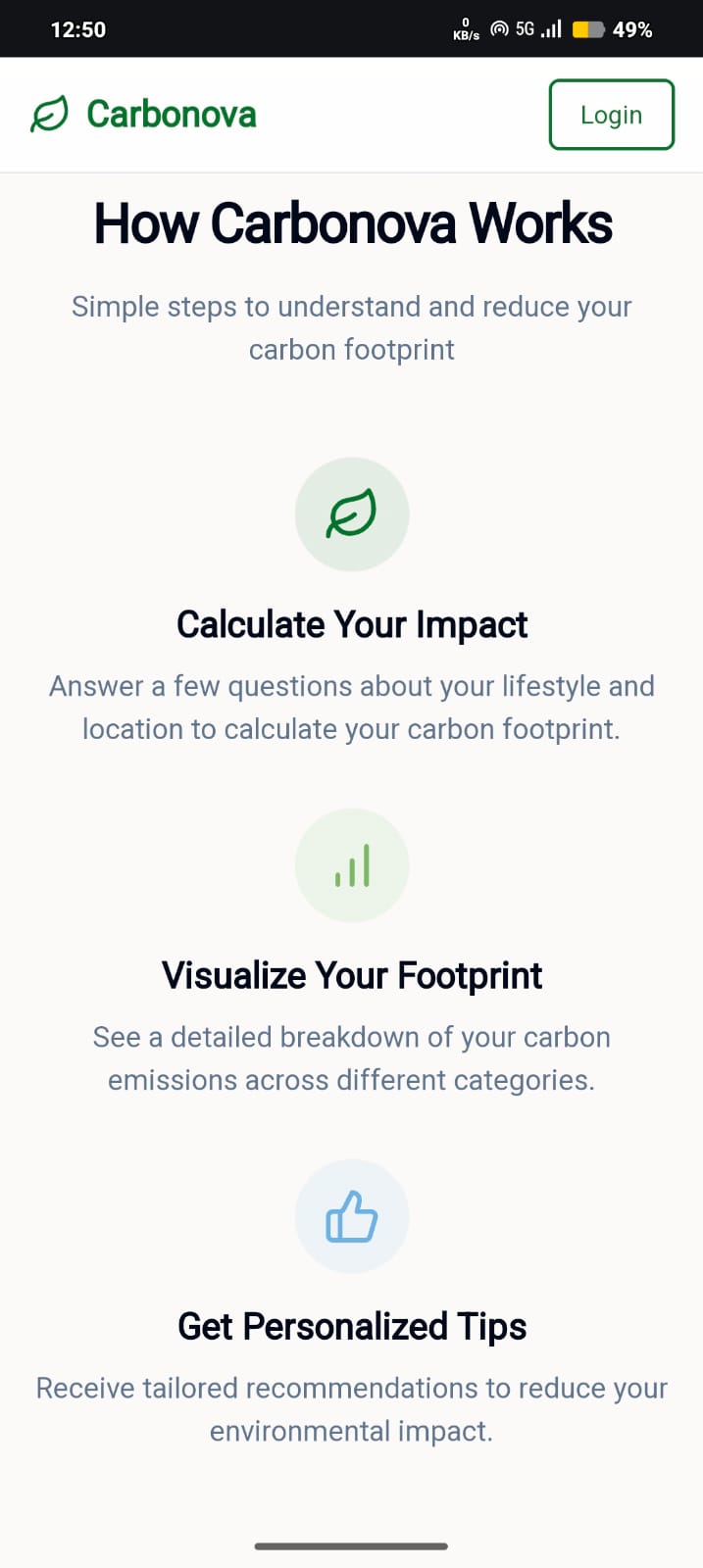
how it works
-
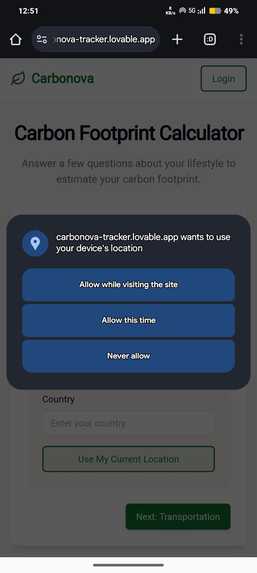
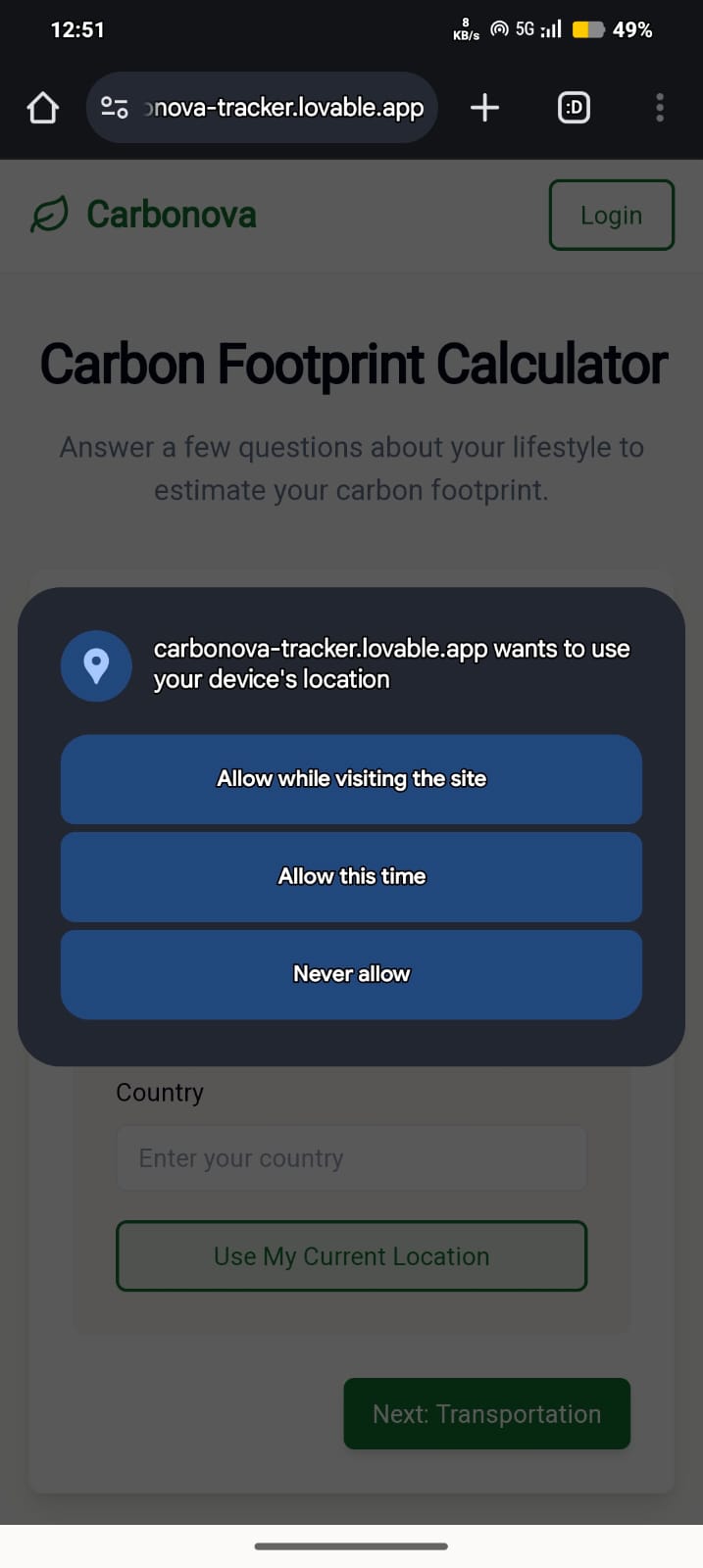
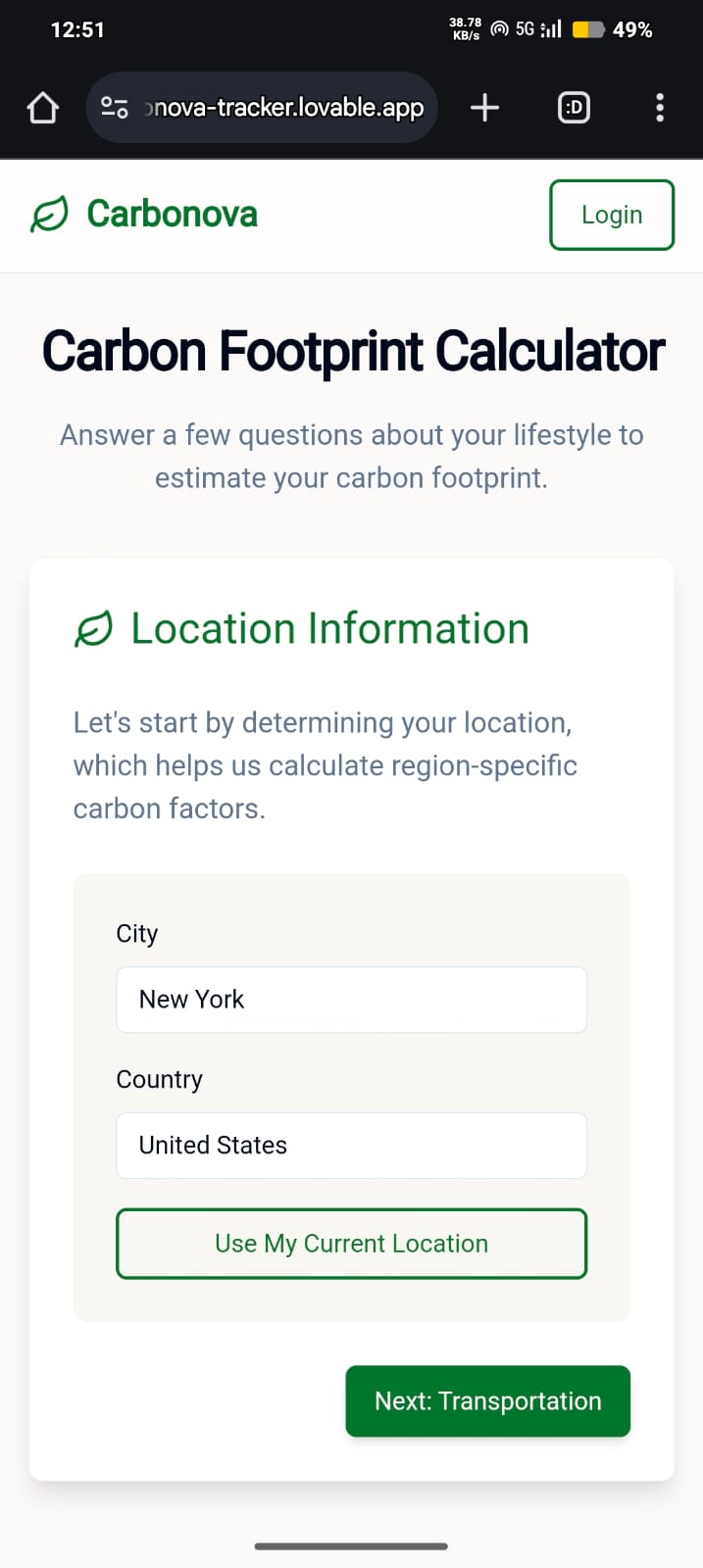
location functions
-
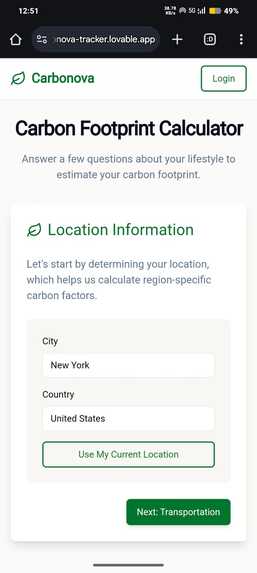
transportation details
-
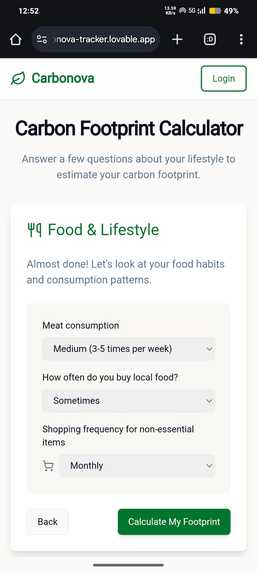
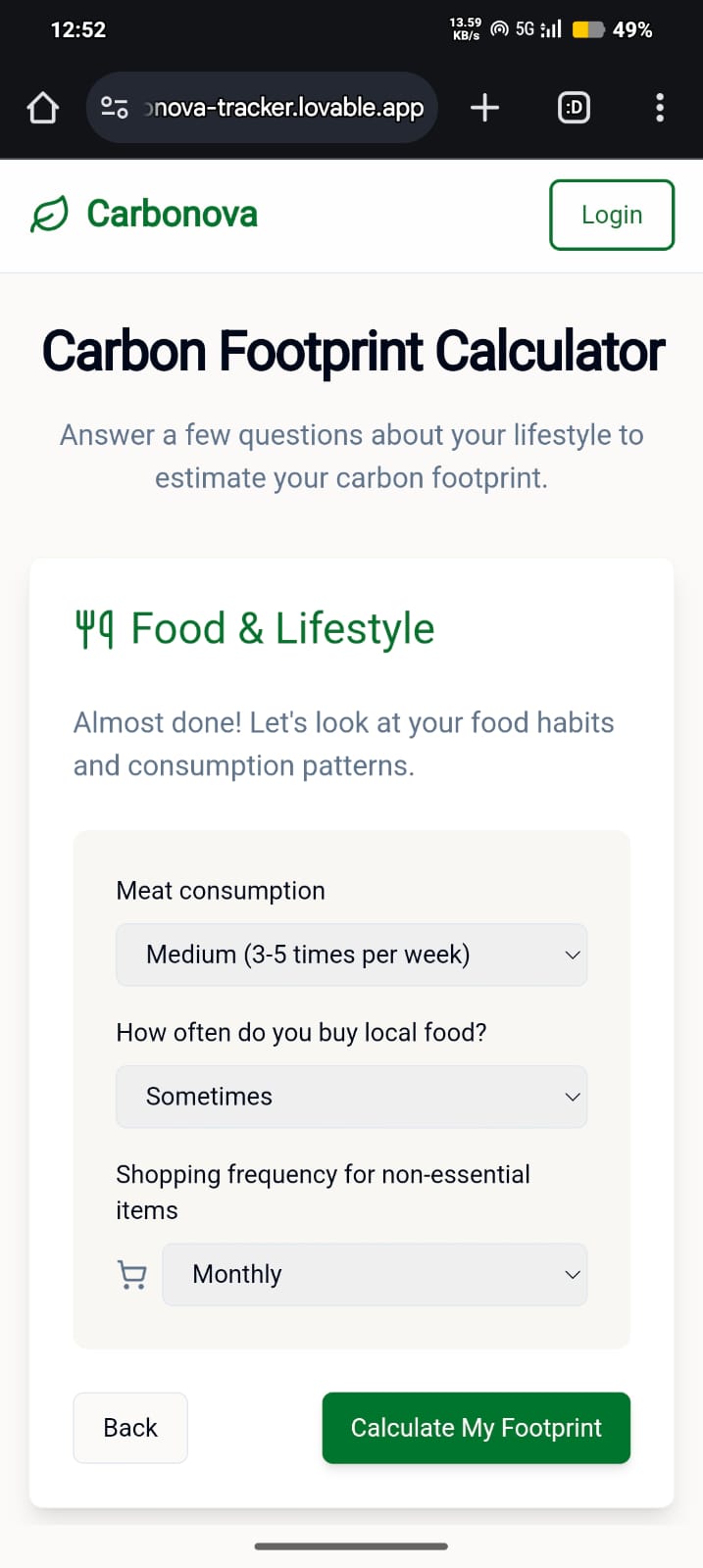
lifestyle details fetching
-
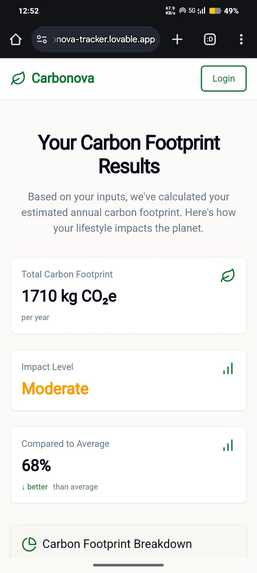
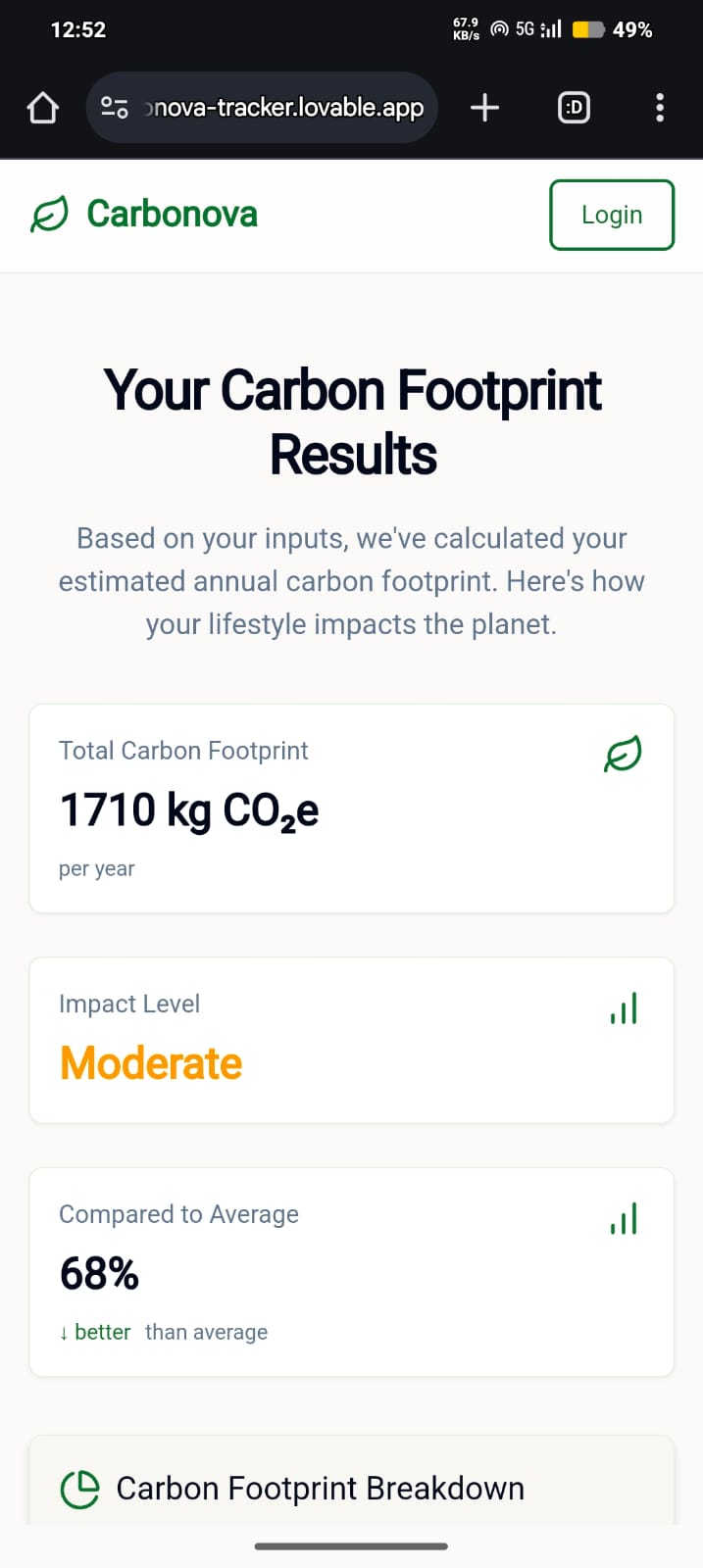
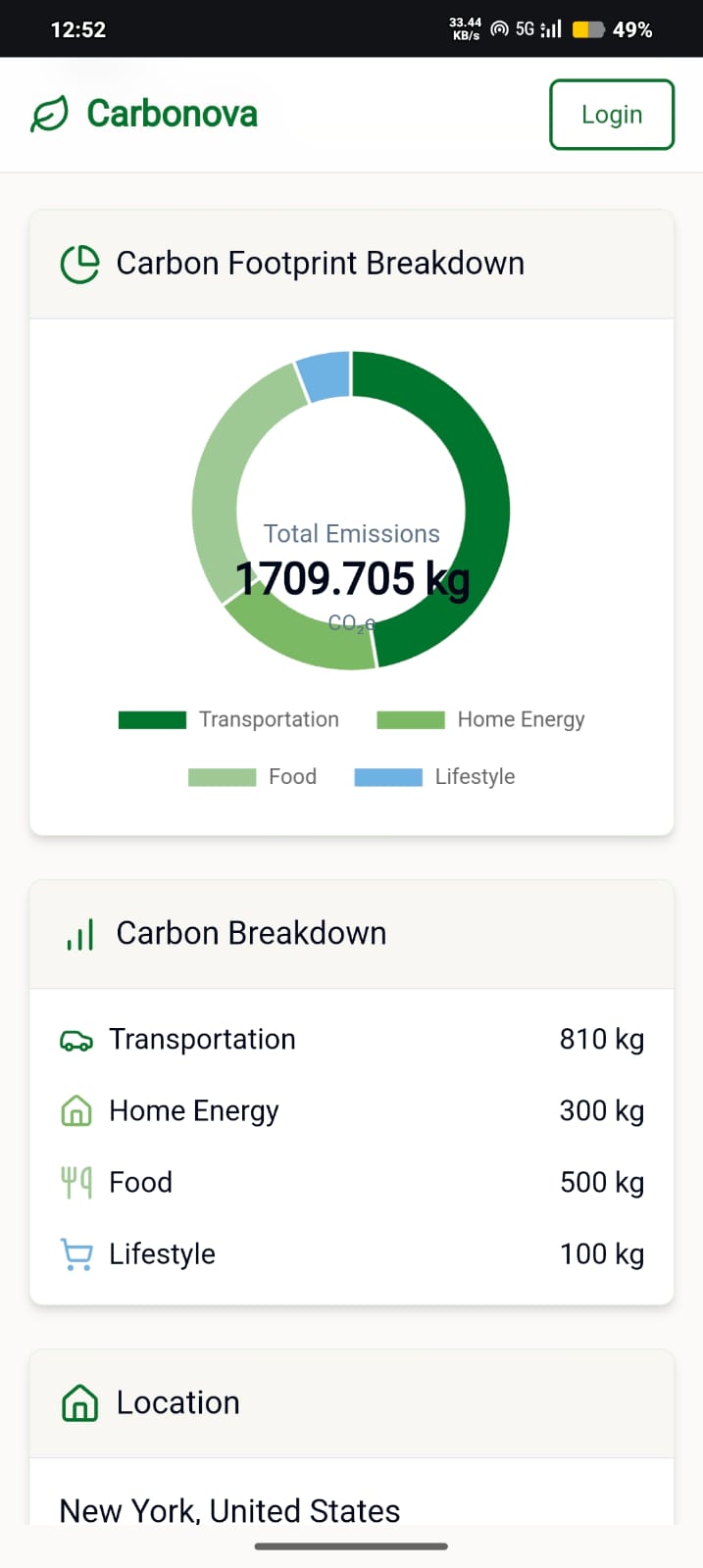
results
-
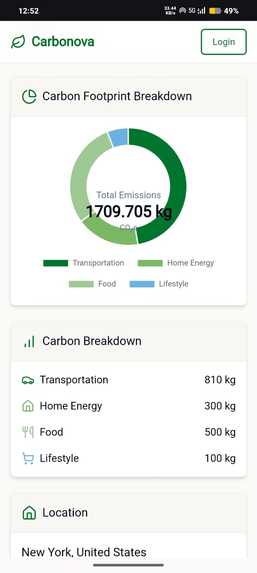
Chart analysis
-
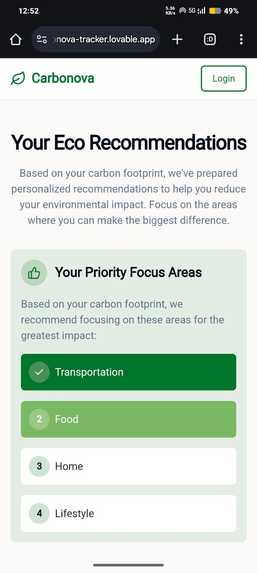
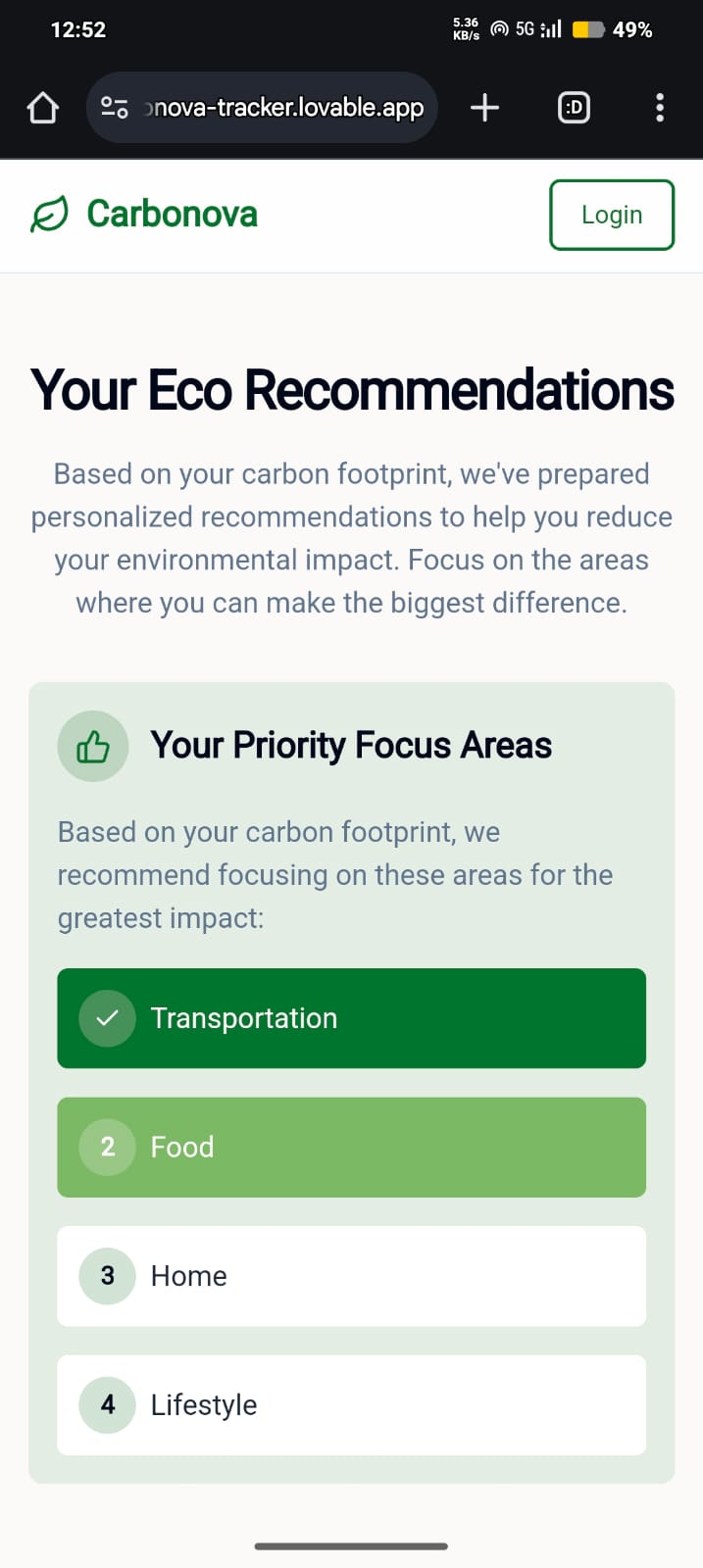
recommendations for reducing
-
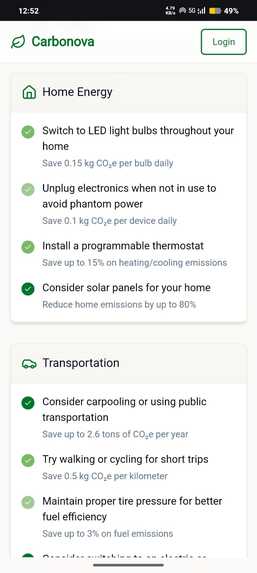
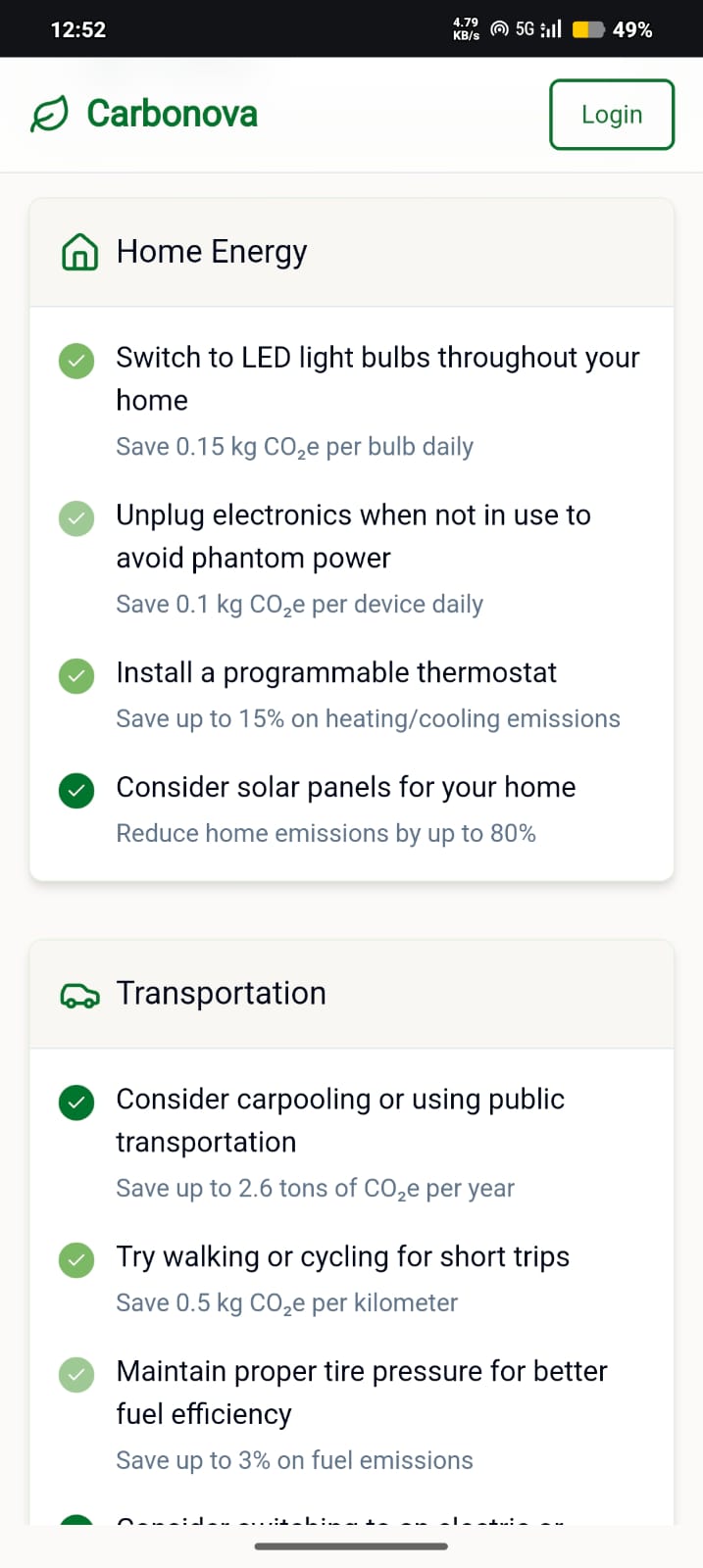
Home energy
-
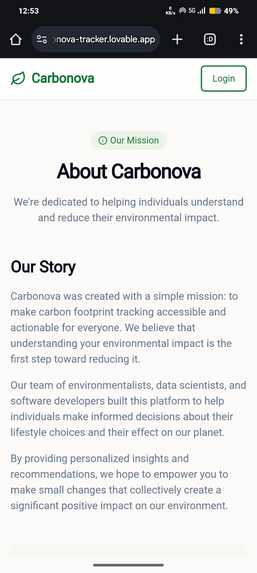
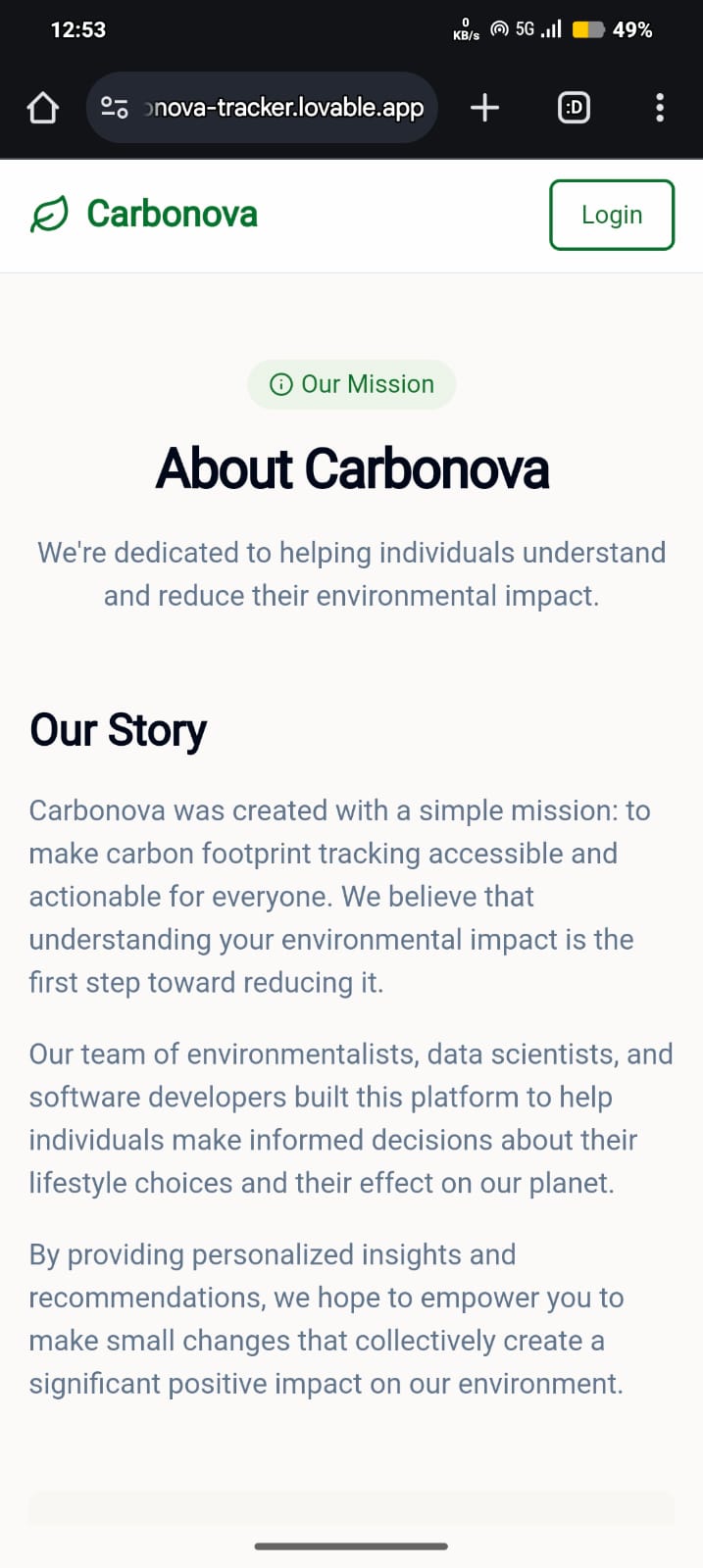
our story
Inspiration
The inspiration for Carbonova stemmed from the growing awareness around climate change and the urgency of reducing carbon footprints. We realized that while people want to make greener choices, they often lack the knowledge of how their daily habits contribute to their carbon emissions. Our goal was to create a simple, accessible tool that empowers individuals to take action by understanding and reducing their environmental impact.
What it Does
Carbonova is an AI-powered carbon footprint estimator that allows users to track their daily activities and understand their environmental impact. By entering basic information about their lifestyle (transportation, energy usage, food choices, etc.), users receive a personalized carbon footprint estimate. Carbonova doesn’t just provide numbers(i.e)it offers practical, actionable suggestions for reducing emissions, such as switching to public transport, eating less meat, or using energy-efficient appliances. The platform also tracks progress over time, motivating users to make continuous improvements.
How We Built It
The project was built using a combination of the following technologies:
Frontend: Streamlit for an intuitive and easy-to-use web interface. Streamlit’s ability to quickly prototype and display interactive elements made it the perfect choice for this project.
Backend: Flask was used to handle requests, calculate carbon footprints, and serve AI-based recommendations.
AI/ML: Scikit-learn and rule-based algorithms powered the estimation engine. We trained the model using real-world emission data for various lifestyle factors, enabling Carbonova to offer precise and personalized recommendations.
Data Storage: Firebase was used to store user data and track progress over time.
Design & UX: We focused on creating a user-friendly, minimalistic design that ensures accessibility for all users, regardless of their tech background.
Challenges We Ran Into
One of the major challenges we encountered was ensuring that the carbon footprint estimates were accurate and reflected a wide range of global data. Emission factors vary by region and lifestyle, so making the tool universally applicable without overwhelming the user was a complex balancing act.
Another challenge was fine-tuning the AI engine to offer personalized suggestions that felt both relevant and practical. It took several iterations to make sure the suggestions were actionable and easy for users to implement.
Lastly, streamlining the user experience was difficult because we had to make the process as simple and engaging as possible while still maintaining enough detail to make the tool valuable.
Accomplishments We're Proud Of
AI Integration: We successfully integrated AI to provide personalized suggestions, which makes Carbonova stand out from other carbon calculators that only give raw numbers.
User Engagement: Carbonova’s interface is clean, intuitive, and engaging. We focused on creating a user experience that even those with no technical background could understand and enjoy.
Impact Potential: The tool has the potential to be used in various settings: schools for educational purposes, by NGOs for awareness campaigns, and by individuals aiming to make sustainable lifestyle changes.
Scalability: Carbonova can easily be expanded with more features such as gamification, region-specific data, and integrations with IoT devices for real-time data collection.
What We Learned
Throughout this project, we learned the importance of user-centric design. We had to keep the tool simple, yet powerful, making it accessible to everyone, from high school students to professionals. The process of integrating AI with practical sustainability advice taught us a lot about combining technology with real-world problems.
We also realized the value of iterating quickly and testing continuously. We tested Carbonova with real users and refined it based on their feedback, which allowed us to make meaningful improvements throughout the development process.
What’s Next for Carbonova
Carbonova is just the beginning! In the future, we plan to:
Expand the AI Engine: Add more categories of lifestyle data, like clothing consumption, and improve the algorithm with additional environmental data sources.
Localization: Localize the app for different regions to provide tailored recommendations based on local environmental conditions.
Mobile App: Develop a mobile version of Carbonova to make it easier for users to track their carbon footprint on the go.
Partnerships: Collaborate with schools, corporates, and government initiatives to integrate Carbonova into sustainability programs and awareness campaigns.
Community Building: Launch a social platform where users can share their progress, tips, and inspire each other to adopt greener habits.
Built With
- css3
- firebase
- flask
- flask-ai/ml:-scikit-learn
- github
- google-maps
- html/css-frameworks:-streamlit
- html5
- pandas
- python
- scikit-learn
- streamlit


Log in or sign up for Devpost to join the conversation.