-
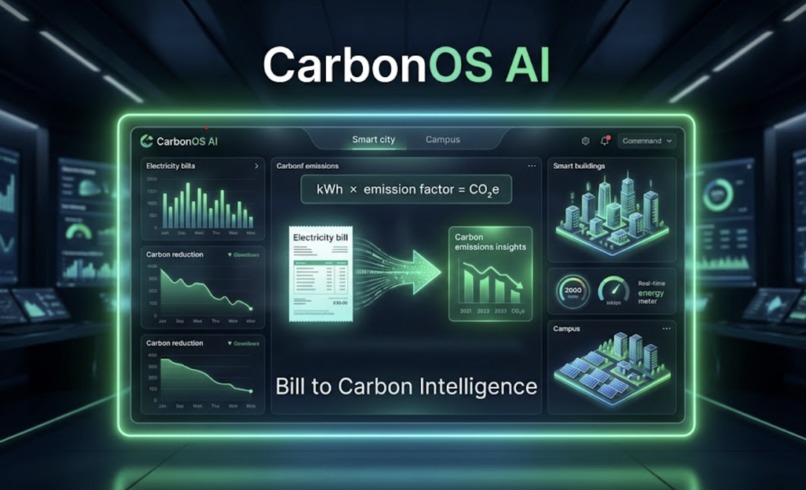
Turning electricity bills into clear carbon insights and actionable sustainability decisions.
Inspiration
The motivation for creating CarbonOS AI was the fact that many campuses and facilities are dealing with an actual challenge: Electricity bills are frequently just bill-paying documents without the ability to tap into the valuable sustainability information that they contain. Usually, teams will try manually mapping out the kWh, demand, tariff and bill values into spreadsheets and then work out the emissions during the energy-audit discussions. That was a good indication that we had little data and usable carbon insight.
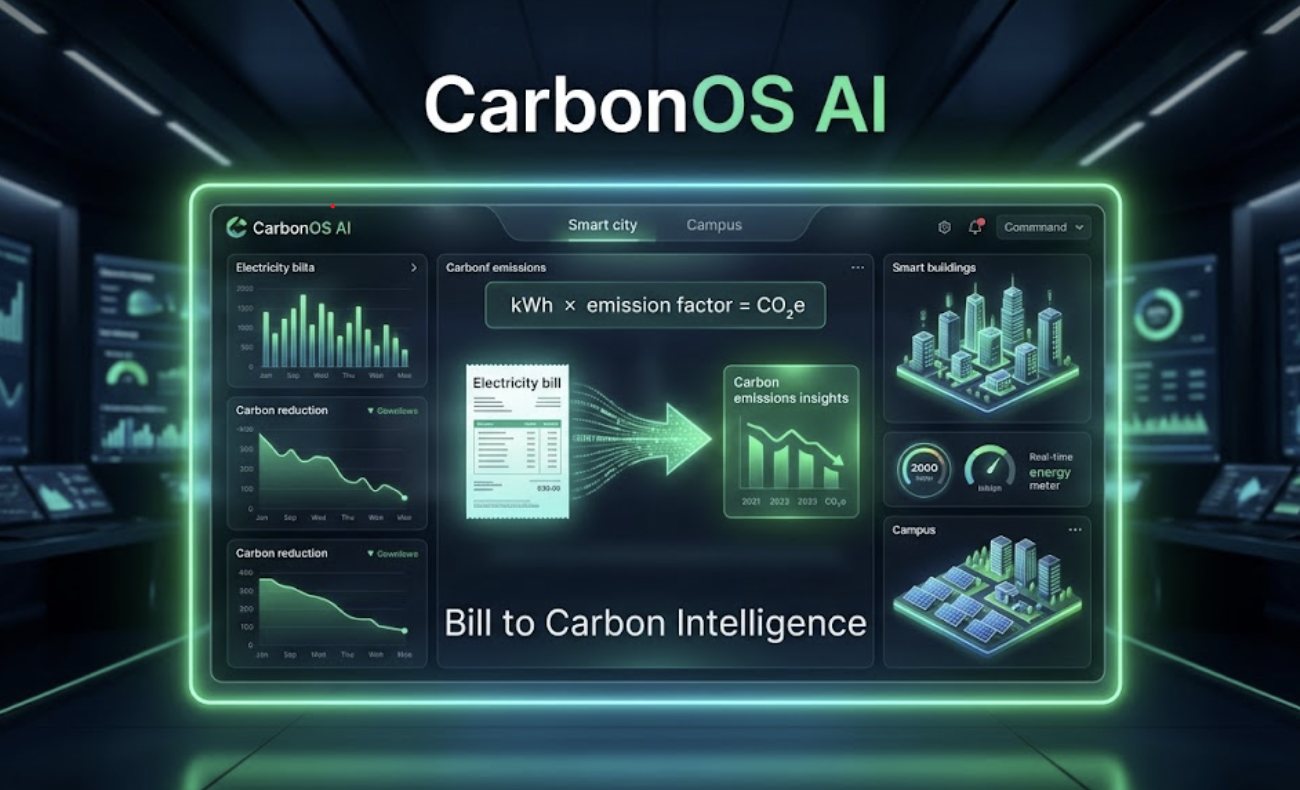
What it does With the help of the CarbonOS AI, you can process your electricity bill data and get simple, easy-to-understand carbon and energy information. Users are able to upload or paste the text of the bills, search for the extracted information in their bill system, select an emission factor, calculate the Scope 2 emissions, print out energy-intensity metrics, export CSV data and print a sustainability report, and generate a recommendation using rules. The basic formula is: kgCO2e = kWh × emission factor
How we built it CarbonOS AI is a React, TypeScript and Vite application that's been built. Beyond the CSV export, it supports bill parsing via regular expressions, local emission factor data, clear carbon calculation, and persistence of data in the browser's localStorage which supports printing a report!
The workflow is: 1) Bill input 2) Field extraction 3) Manual confirmation 4) Emission factor selection 5) Carbon calculation 6) Recommendation generation 7) Dashboard view 8) CSV/report export
Challenges we ran into The major challenge was the format of Electricity Bill. Units, amount, demand, tariff, and billing period are referred to by various names in various bills. Another tricky thing is to not give false confidence, if the extraction doesn't succeed then the system asks for the manual correction rather than coming up with something random.
A second challenge was maintaining the smoothness and technical accuracy. We also had other scenario views that were not based on the bills calculated.
Accomplishments that we're proud of We are proud to have a complete workflow, from the bill input to the report output, that is judge-verified, in CarbonOS AI. The carbon calculation is now visible, inputting true text into the parser works, and the reasons for recommendations get clearer, and the CSV/report exports work.
We are not the only ones who take pride in that project which doesn't overstate compliance, automation, or actual building control in terms of sustainability intelligence.
What we learned We got to know that clarity is as necessary to climate-tech products as intelligence. Any sustainability tool worth its salt should display a formula, data source, assumptions and limitations for each result.
Even the most basic of workflows based on a Bill can create a great deal of value if it is dependable, straightforward and easy to use for the facility teams.
What's next for CarbonOS AI Next, we will be implementing scanned-bill OCR, verified official emission factor imports, backend storage, user accounts, audit trails, smart-meter integrations and better recommendation validation.
A future version will be able to incorporate institutional reporting, multilingual versions of the bills, and historical trend analysis and workflows of real savings following interventions.


Log in or sign up for Devpost to join the conversation.