Inspiration
A carbon claim is only as useful as the evidence and accountability behind it. Reports, review decisions, and credit records can exist in separate places, making it difficult to follow how a claim becomes an approved credit. I built CarbonLedger AI to make that journey easier to inspect—from uploaded evidence to human review, issuance, and retirement.
What it does
CarbonLedger connects five stages
- Claims: Submit project information, monitoring periods, area, and claimed carbon benefits.
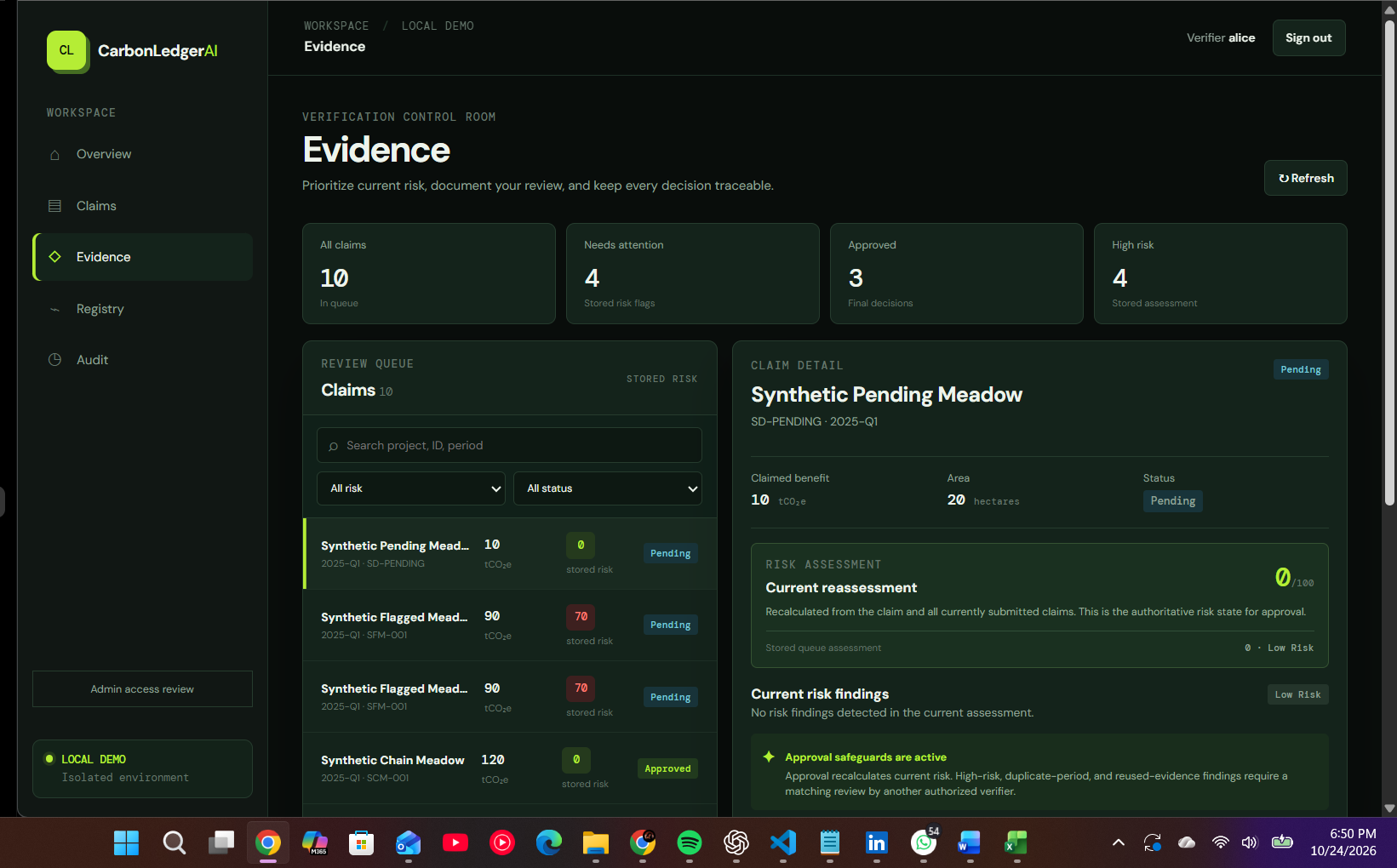
- Evidence: Upload supported PDF, CSV, and text reports. Files receive SHA-256 hashes, while deterministic checks flag missing information, inconsistent calculations, and reused evidence.
- Review:Inspect explainable findings and record approval or rejection with reasons, identities, and timestamps. Safeguards prevent risky claims from bypassing required review.
- Registry: Track issuance and retirement, with duplicate-issuance and balance protections.
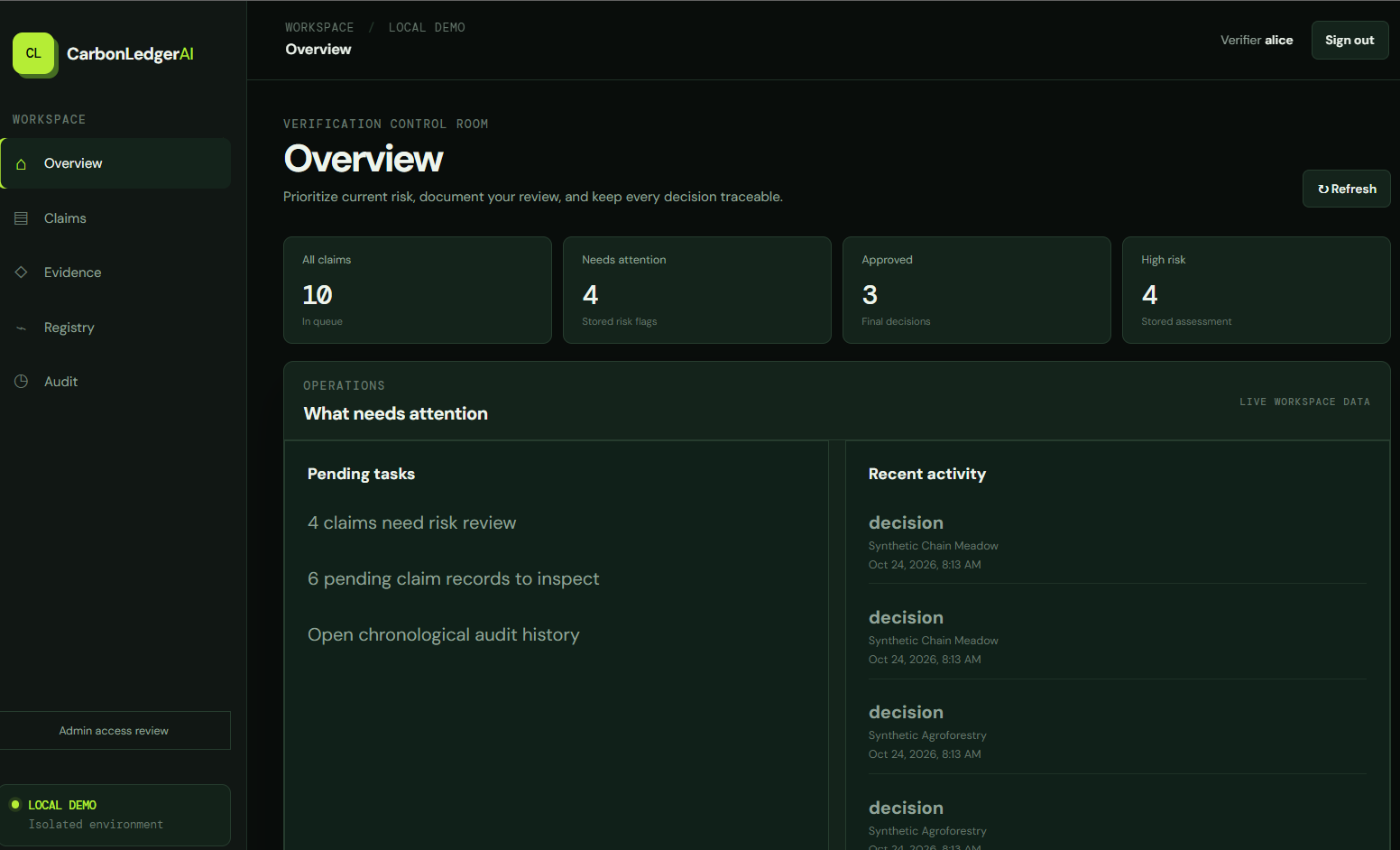
- Audit:Follow linked evidence, decisions, and registry activity. An interactive sandbox lets visitors explore the workflow immediately using isolated synthetic data and simulated reviewer roles. Sandbox issuance and retirement are explicitly labelled simulations. A separate Solidity registry has been tested on a local Anvil blockchain, including authorized issuance, evidence commitments, duplicate prevention, retirement, and transaction reconciliation.
How I built it
The frontend uses React, TypeScript, and Vite. The backend uses Python, FastAPI, SQLAlchemy, and SQLite for local persistence. Evidence processing uses SHA-256 hashing and pypdf. Solidity contracts are developed and tested with Foundry and Anvil.
Challenges I ran into
The hardest challenges were maintaining consistent authentication across restarts, separating public sandbox access from operational permissions, invalidating stale reviews after evidence changes, and recovering safely when blockchain transactions and database records diverged. These challenges shaped both the safeguards and the distinction between simulated and on-chain results.
Accomplishments that I’m proud of
I connected evidence checks, accountable human decisions, and registry lifecycle controls into one inspectable workflow. I also built a judge-accessible sandbox that does not require administrator approval, while preserving operational role restrictions.
What I learned
Integrity depends on the boundaries between systems as much as individual features. A file hash does not prove evidence is true, an approval must remain tied to the evidence reviewed, and a successful transaction needs reconciliation before the application can report it as confirmed.
What’s next
Next steps include reliable hosted persistence and file storage, broader evidence-format support, stronger identity provisioning, and a hosted development-chain integration. Despite its name, the current evidence analysis is deterministic rather than an AI model. CarbonLedger checks consistency and records accountability; it does not independently establish scientific carbon validity or replace accredited verification.
Built With
- anvil
- fastapi
- foundry
- pypdf
- python
- react
- solidity
- sqlalchemy
- sqlite
- typescript
- vite

Log in or sign up for Devpost to join the conversation.