Inspiration
Living in Germany, I grew frustrated with how hard it was to make truly sustainable purchasing decisions—labels were confusing, and data was scattered. Watching friends struggle to verify ethical supply chains for their kids’ products sparked the idea: create a tool that puts transparency at shoppers’ fingertips, aligned with EU PEF regulations we rely on.
What it does
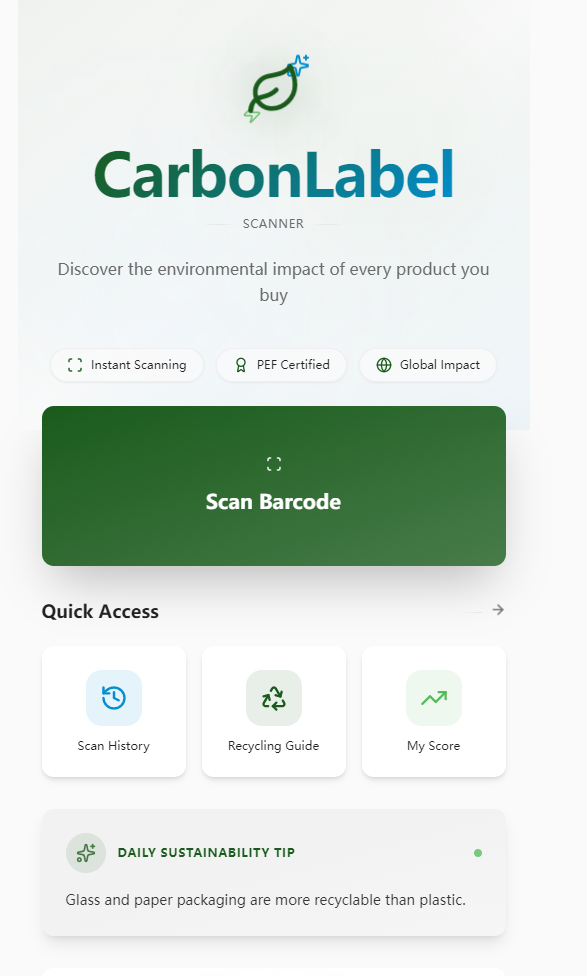
CarbonLabel Scanner lets users scan EAN-13 barcodes to access a product’s full sustainability story: carbon footprint breakdowns, labor practice certifications, and country-specific recycling steps. Premium users get personalized carbon tracking and sustainability goals—all built for everyday European shoppers.
How we built it
We started with React for the mobile-first PWA, integrating WebRTC for camera-based scanning. MongoDB stores product data, updated weekly, while Google Maps API links users to local recycling centers. Stripe handles premium subscriptions, and i18next ensures support for 5 European languages. We prioritized offline functionality to work in grocery stores with spotty internet.
Challenges we ran into
Getting accurate, EU-aligned carbon footprint data was tough—we had to partner with PEF-certified databases and validate each entry. Offline sync logic also tested us: ensuring cached scans (up to 50) synced reliably once internet returned took weeks of debugging. Country-specific recycling rules added complexity, as each market has unique guidelines.
Accomplishments that we're proud of
The sustainability score algorithm (weighted 50% carbon, 30% supply chain, 20% recyclability) is accurate and easy to understand, with color-coding that resonates with users. We also hit our goal of sub-2-second barcode recognition and 3-second load times on low-end mobile devices—critical for in-store use.
What we learned
Localization isn’t just translation: recycling instructions and labor risk assessments needed cultural and regulatory nuance for each EU market. We also learned that offline functionality is non-negotiable for shoppers—our initial focus on online-only features missed a key user need.
What's next for this project
We’ll expand to more EU countries, add real-time price comparisons for sustainable alternatives, and integrate with more retailers to fill product database gaps. For premium users, we’re building AI-driven personalized sustainability goals tied to their shopping habits. We also plan to enhance the labor risk assessment with more granular supply chain data.

Log in or sign up for Devpost to join the conversation.