Project Story: Carbon Footprint Calculator
What Inspired Us
The growing environmental crisis and the urgency to combat climate change inspired us to create a tool that empowers individuals to take actionable steps towards sustainability. We wanted to simplify the process of understanding carbon emissions and show people how their daily choices impact the planet. The idea was to turn awareness into action and encourage eco-friendly habits through personalized insights.
What We Learned
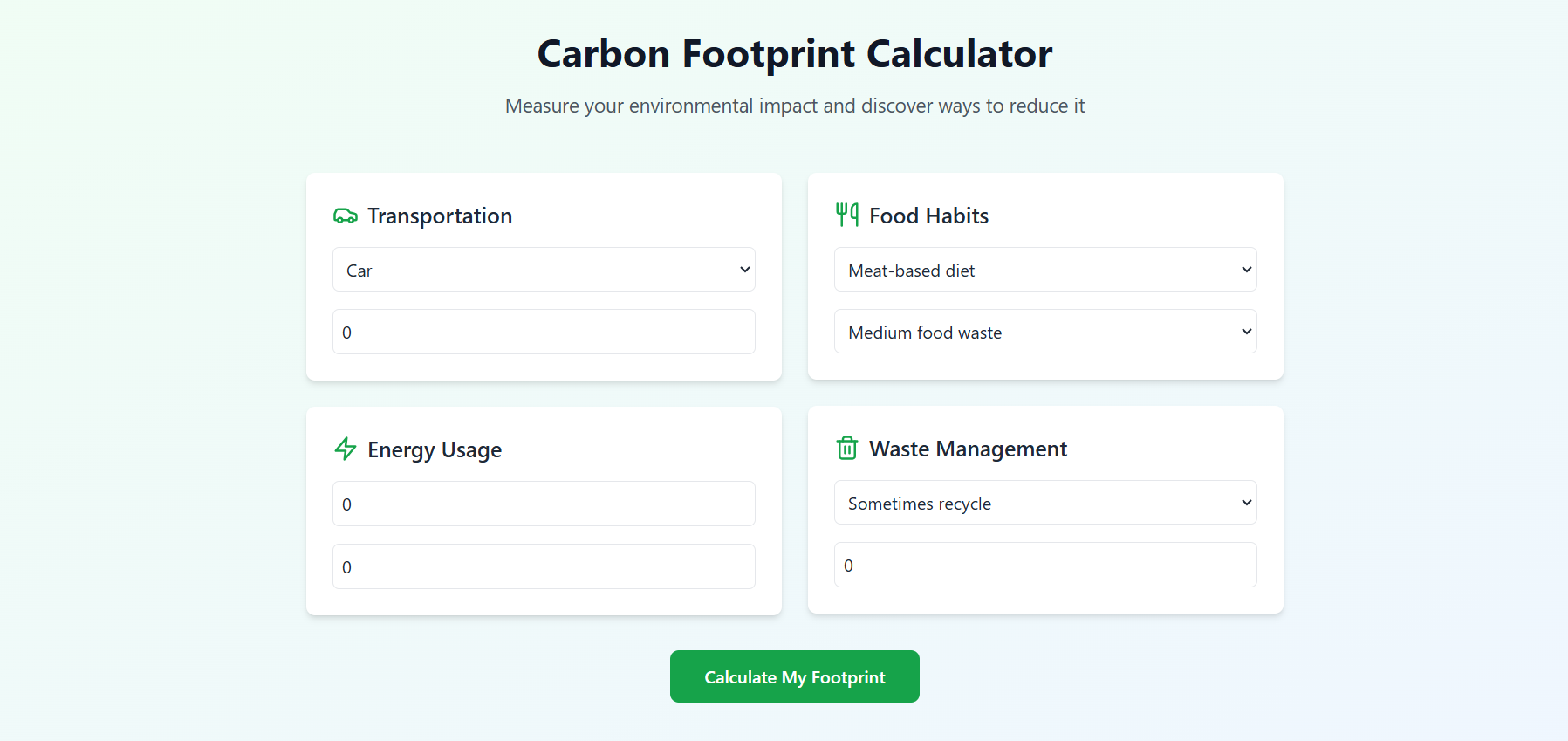
Throughout the project, we gained a deeper understanding of carbon emissions and their contributing factors. We explored the science behind calculating emissions from transportation, energy use, diet, and waste generation. Additionally, we improved our skills in designing user-friendly interfaces and integrating data visualization to make complex information accessible to everyone.
We also learned how small lifestyle changes can collectively make a significant difference in reducing carbon footprints.
How We Built It
- Frontend: We used React with TypeScript to build an intuitive and dynamic interface. Tailwind CSS helped us create a clean, responsive design.
- Backend: The logic for carbon footprint calculations was implemented in Node.js with Express.js, based on established formulas for emissions.
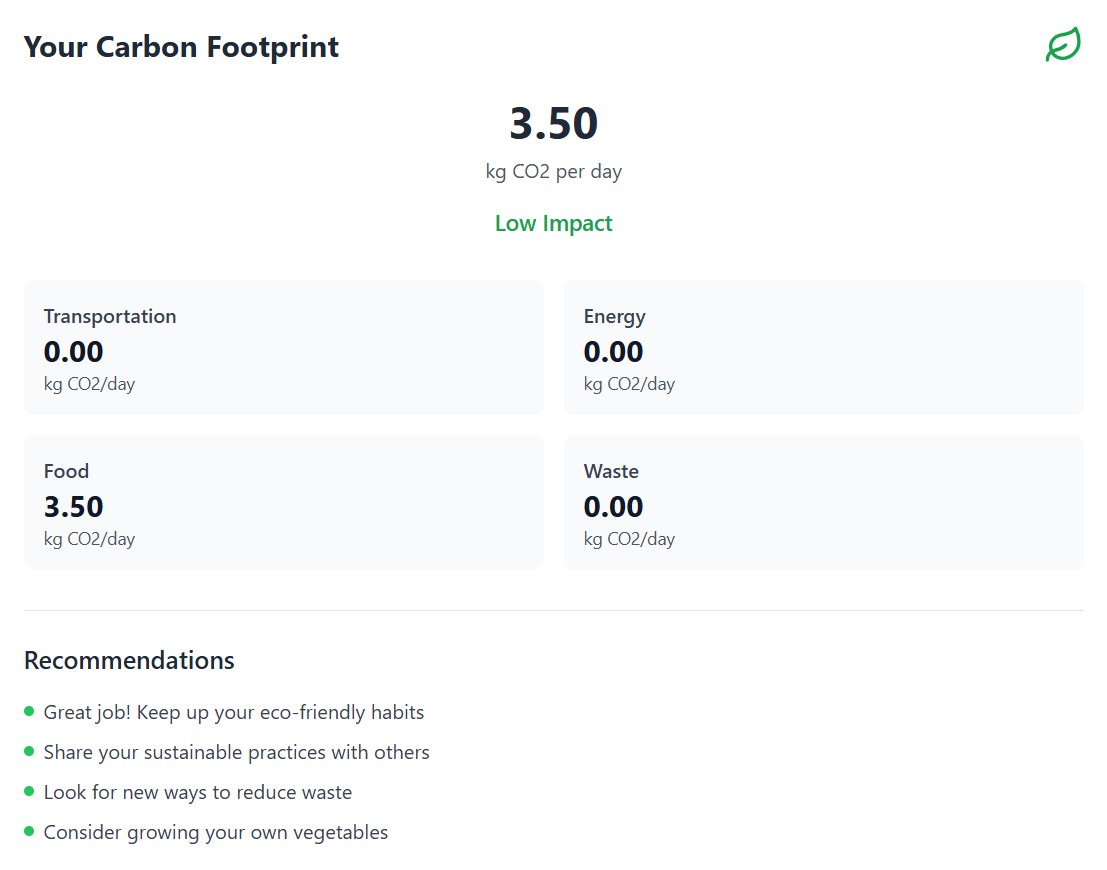
- Data Visualization: We integrated libraries like Chart.js to display emissions data as pie charts and bar graphs.
- Storage: For simplicity, we used localStorage to save user inputs and results, ensuring a seamless experience without a complex database.
- Deployment: The app was deployed using AWS Amplify, leveraging its seamless hosting, CI/CD pipeline, and support for scalable web applications.
Challenges We Faced
- Data Accuracy: Ensuring that the formulas used for emission calculations were accurate and globally applicable was challenging. We had to validate data from reliable sources.
- User Experience: Designing a minimal yet engaging UI that simplifies complex information without overwhelming the user required careful iteration.
- Personalization: Offering meaningful, personalized recommendations based on varied user inputs was tricky, as lifestyles differ greatly.
- AWS Integration: Setting up Amplify's configuration for smooth deployment and integrating features like hosting and storage initially had a learning curve.
- Time Management: Balancing development tasks with thorough research and testing within our timeline was a constant challenge.
Despite these obstacles, we stayed focused on our vision, learned from our setbacks, and delivered a project we're truly proud of.
Final Thoughts
Building the Carbon Footprint Calculator was a fulfilling experience. It not only honed our technical and problem-solving skills but also deepened our understanding of environmental sustainability. We hope this tool inspires others to take small yet impactful steps towards a greener future.


Log in or sign up for Devpost to join the conversation.