-
-
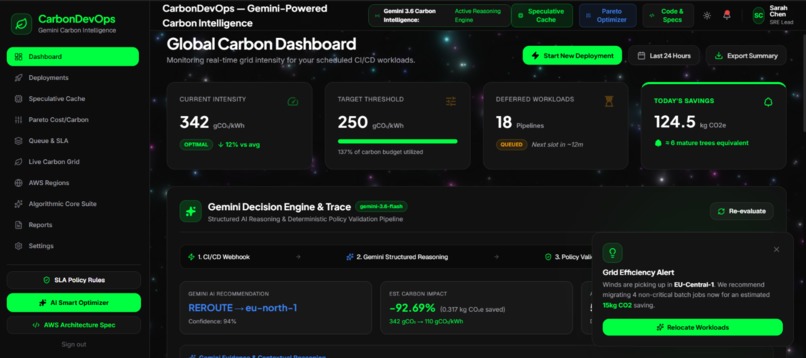
Global Carbon Dashboard Gemini-powered global carbon monitoring and deployment decisions.
-
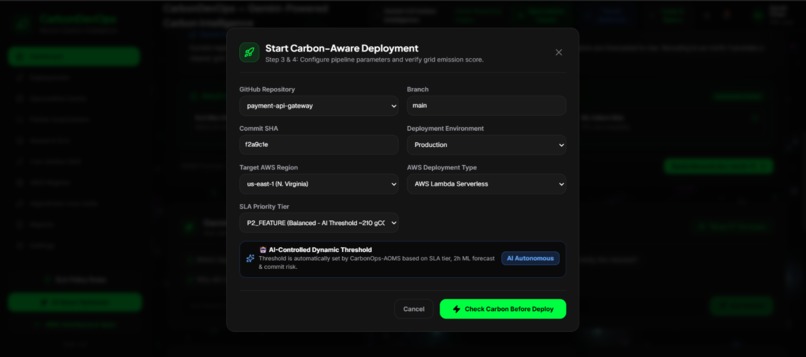
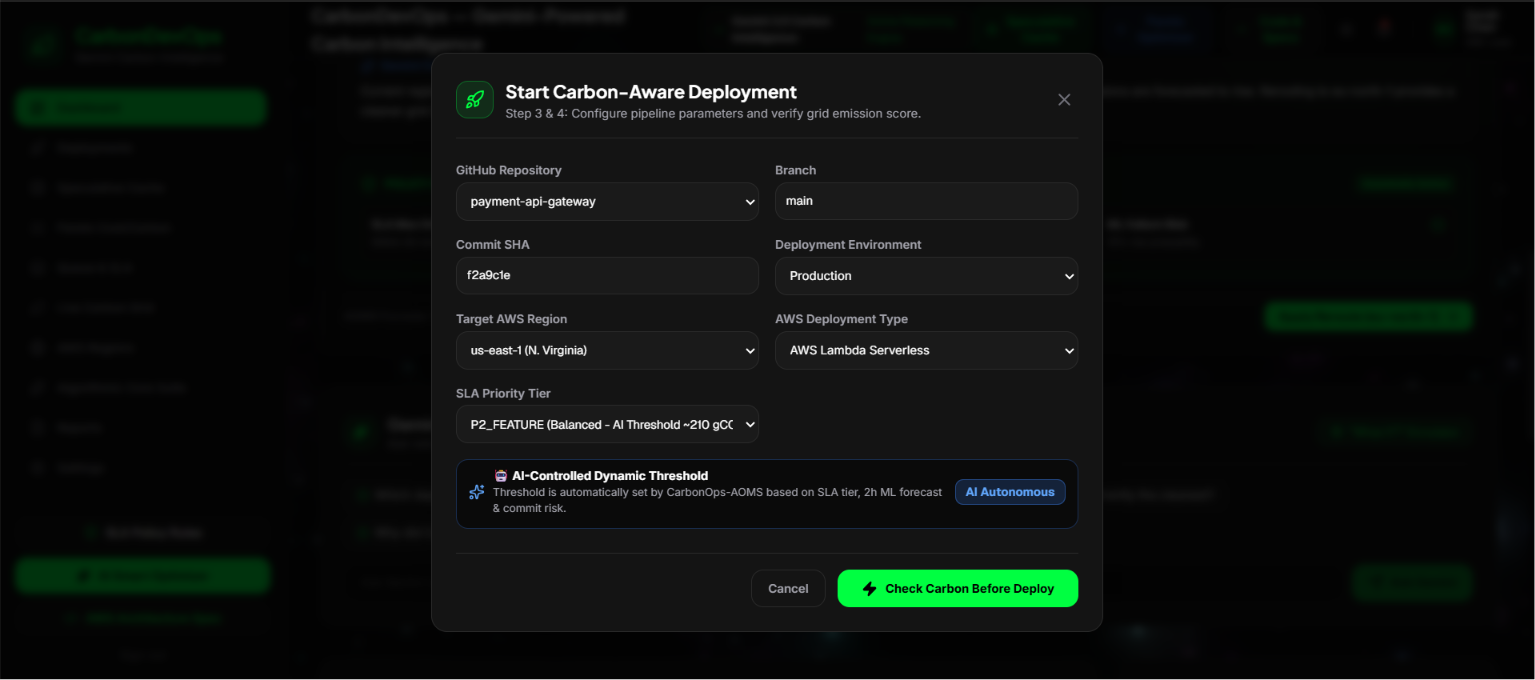
Carbon-Aware Deployment Configure repositories, regions, deployment types, and SLA priority.
-
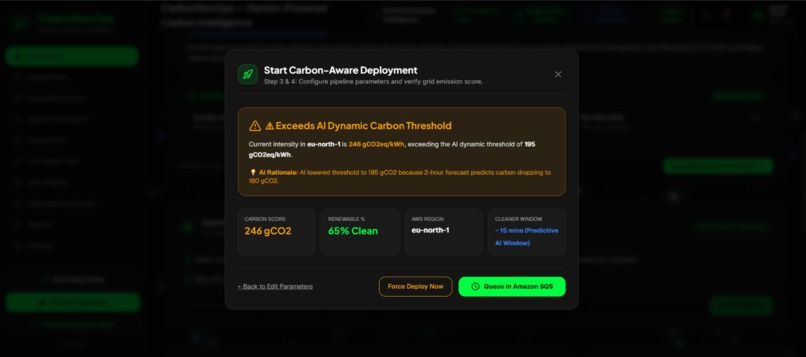
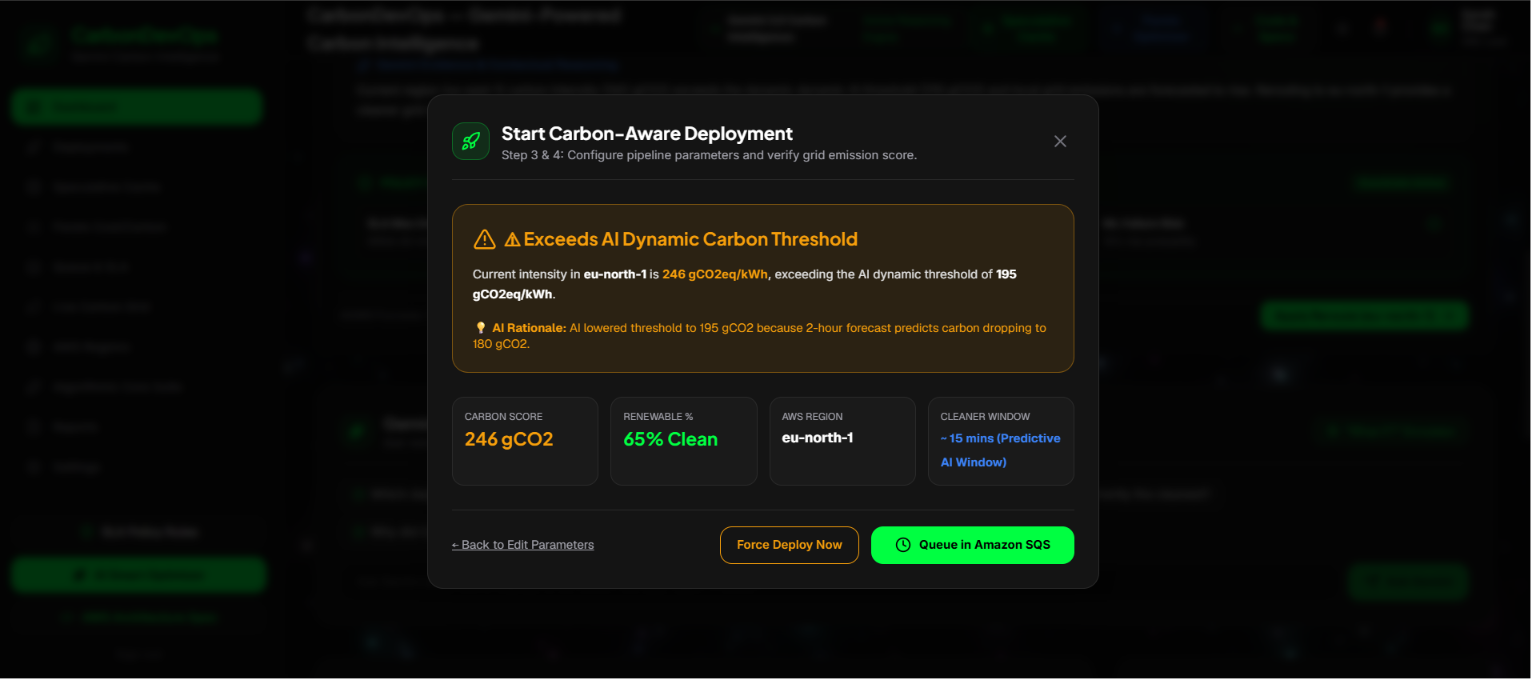
Gemini Carbon Threshold Decision Gemini evaluates grid conditions for deployment decisions.
-
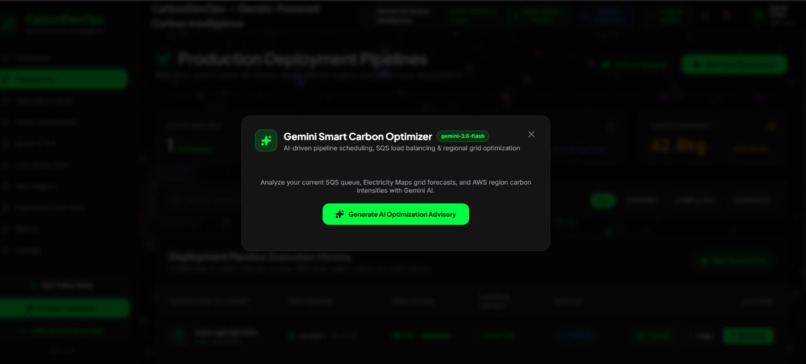
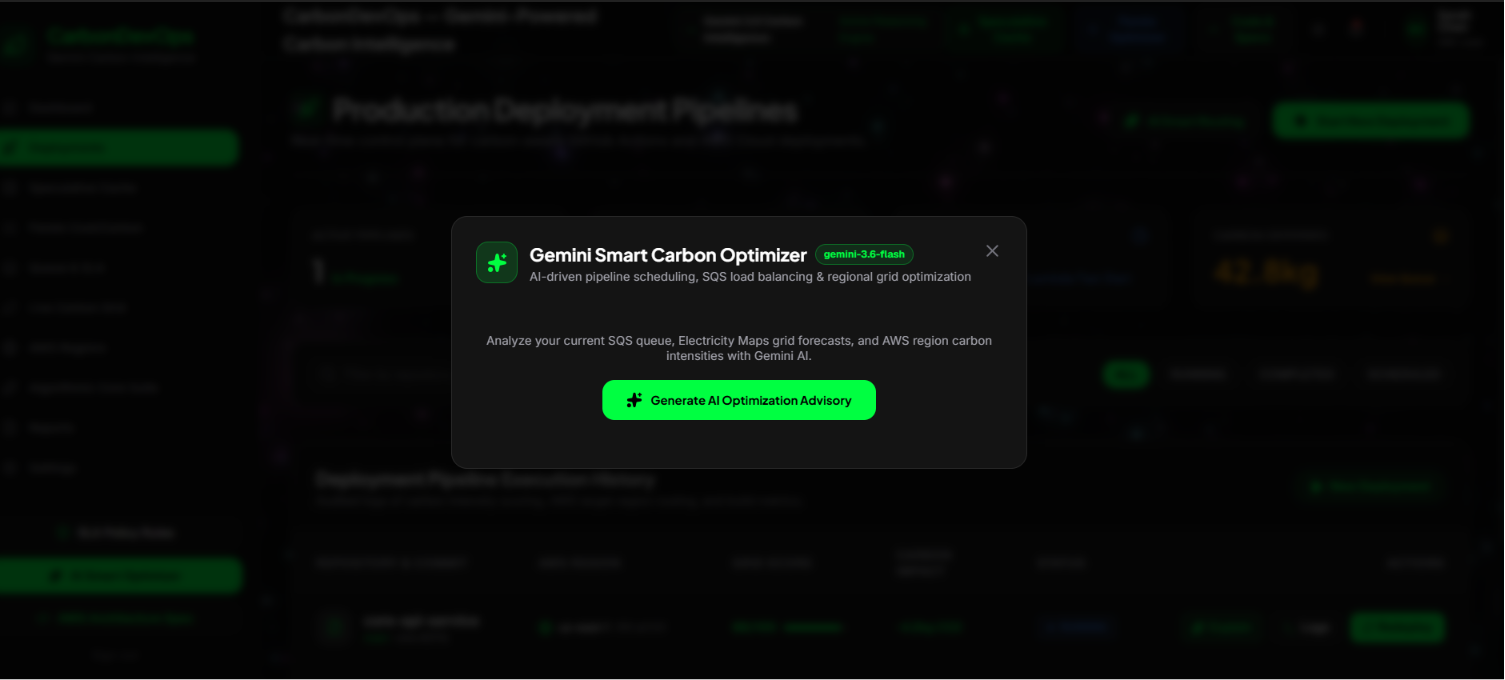
Gemini Smart Carbon Optimizer Gemini analyzes carbon data for smarter deployment strategies.
-
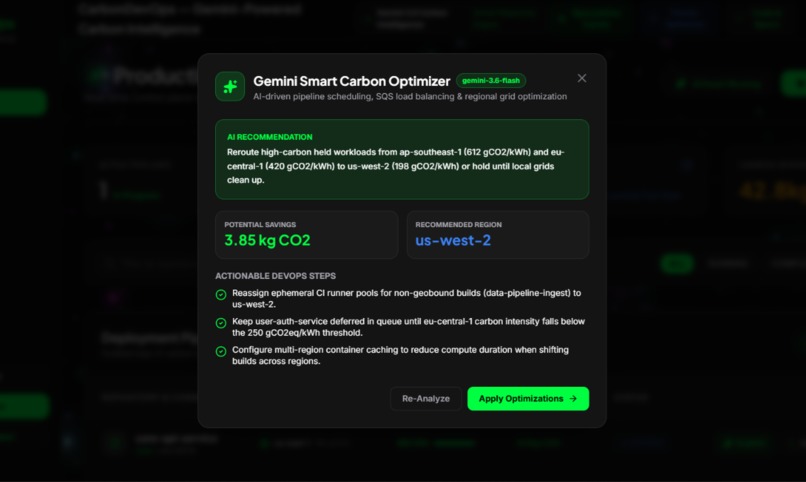
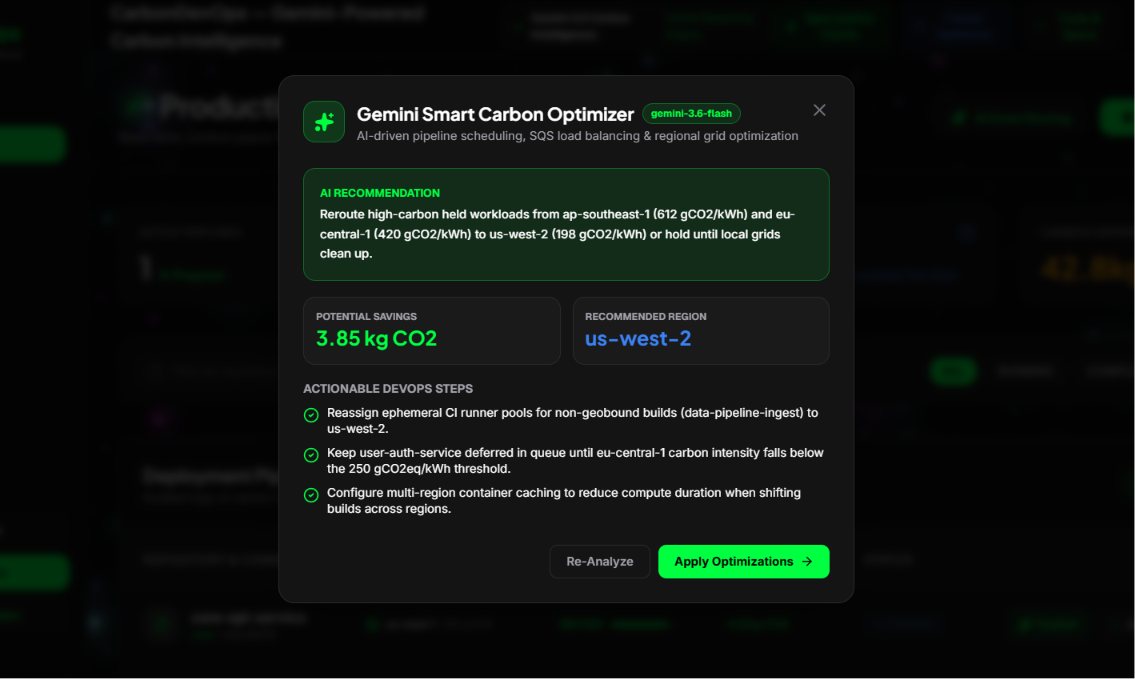
Gemini Optimization Recommendation Gemini recommends optimal regions and estimated carbon savings.
-
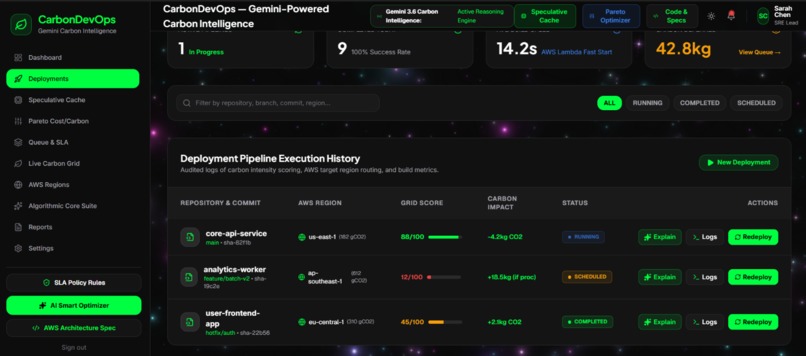
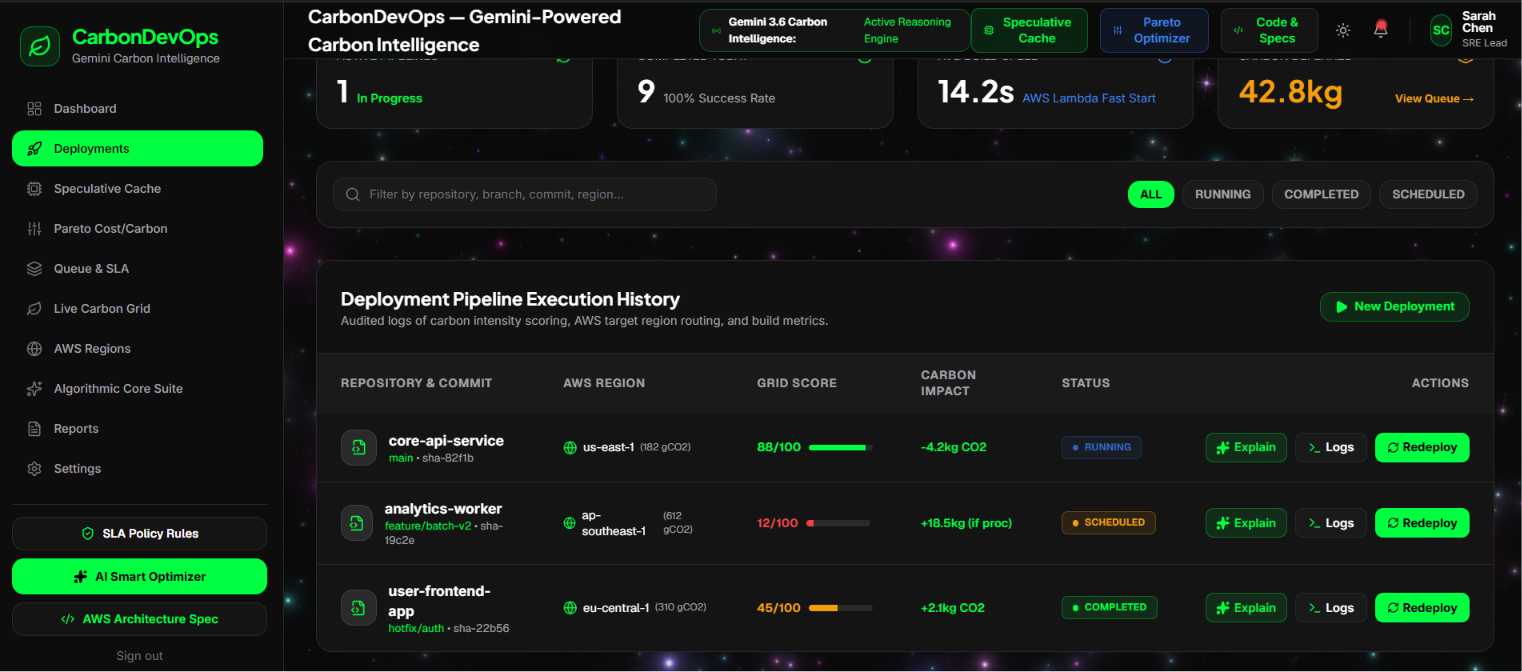
Deployment Execution History Monitor carbon-aware CI/CD executions and deployment status.
-
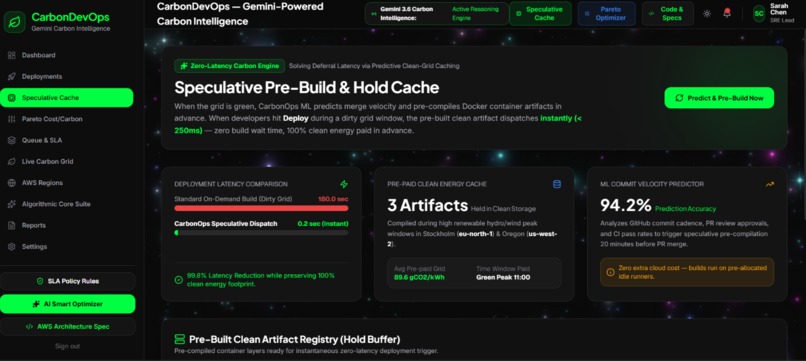
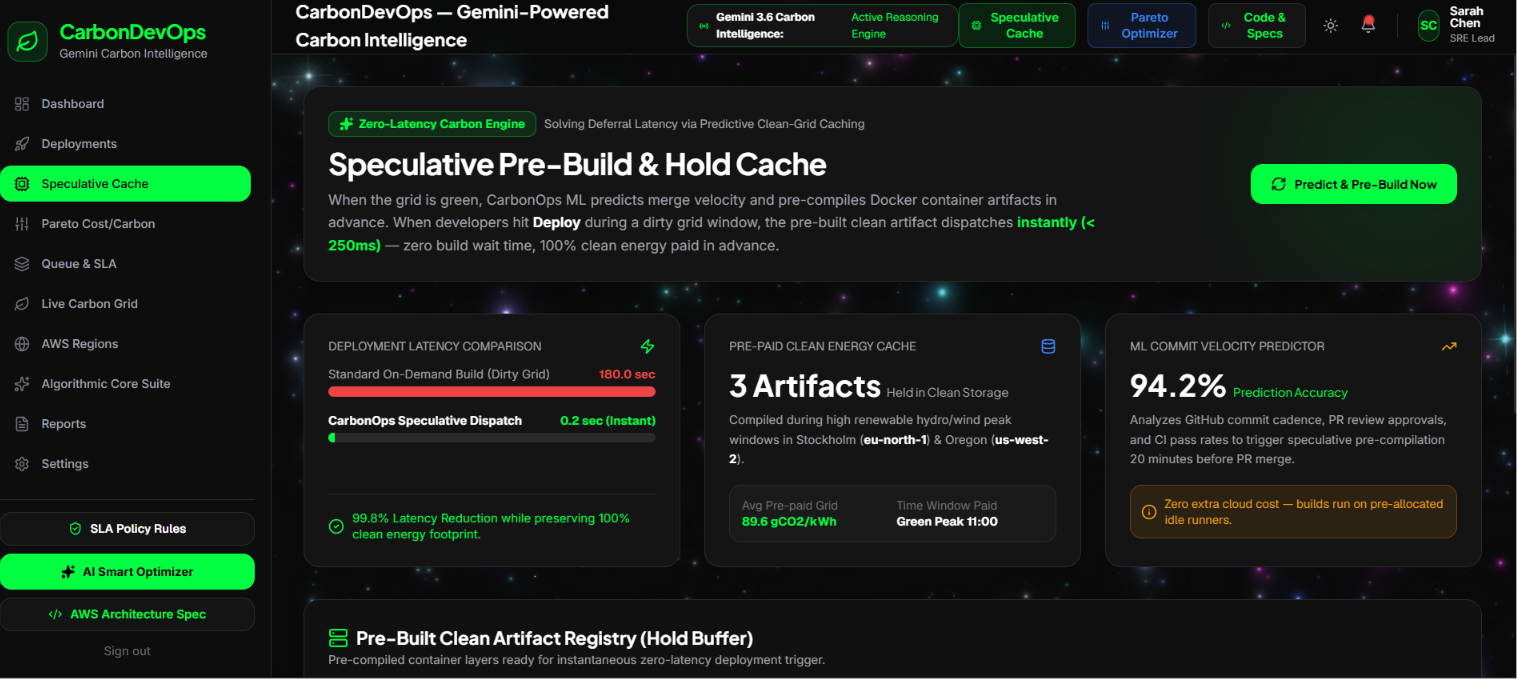
Speculative Pre-Build Cache Prepare workloads during cleaner energy windows.
-
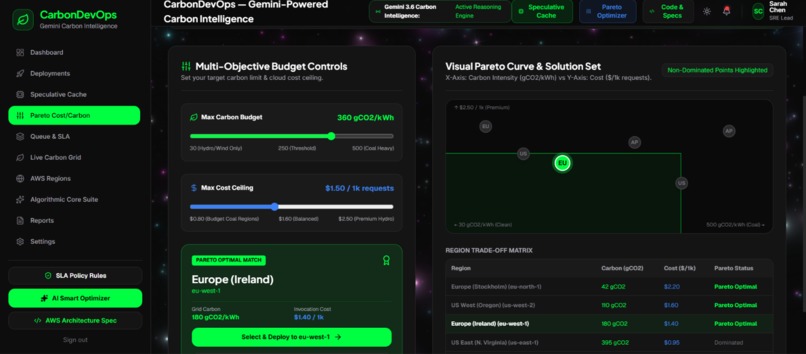
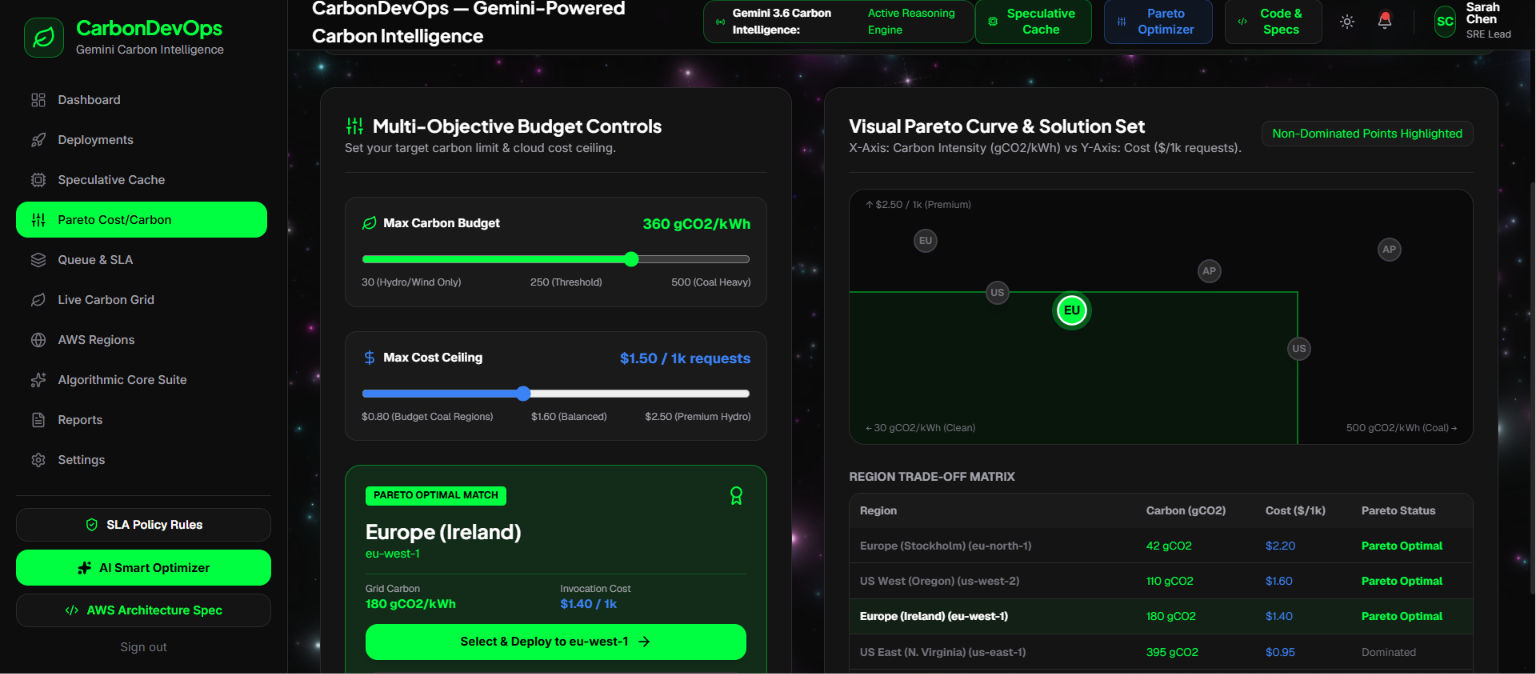
Pareto Carbon/Cost Optimizer Identify efficient AWS deployment options across key objectives.
-
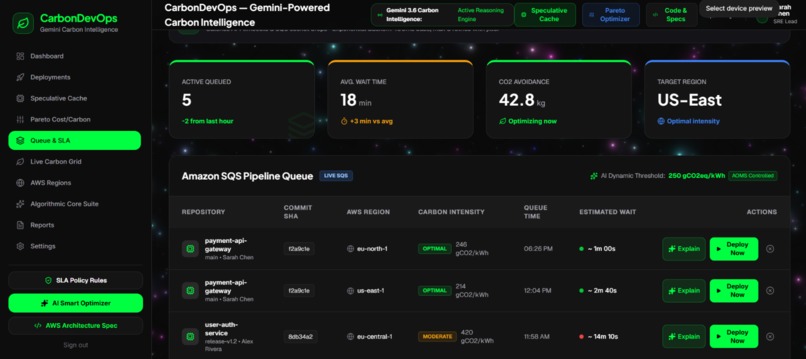
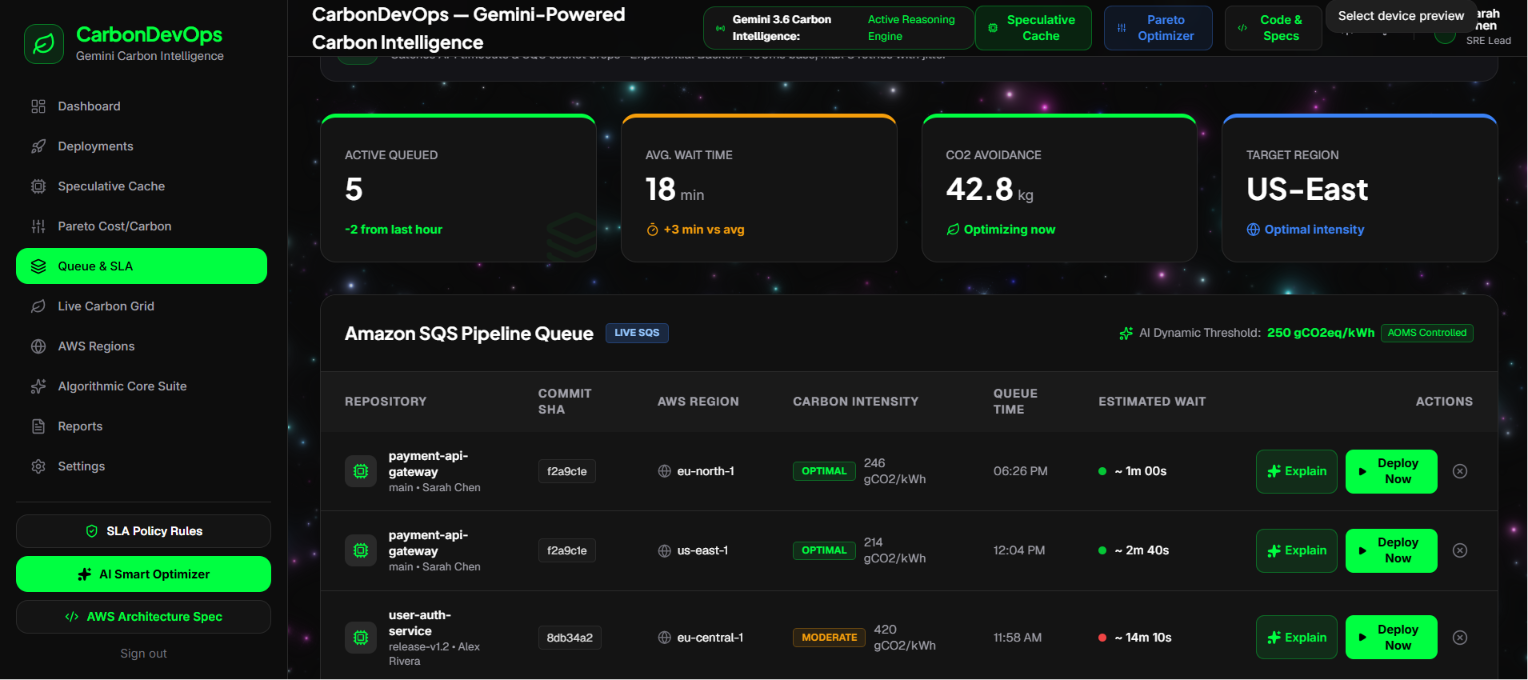
Carbon-Aware SQS Queue Evaluate workloads using carbon and SLA conditions.
-
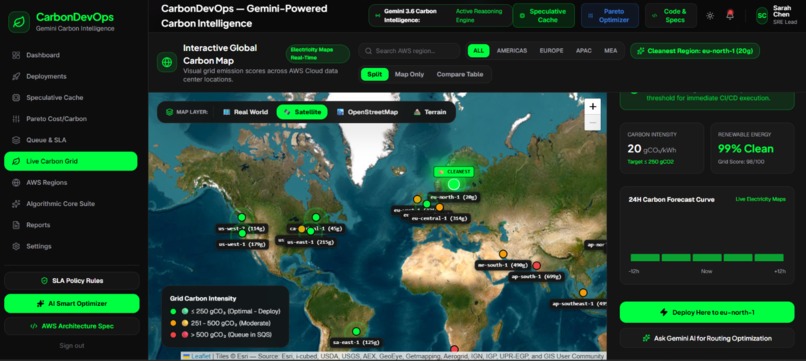
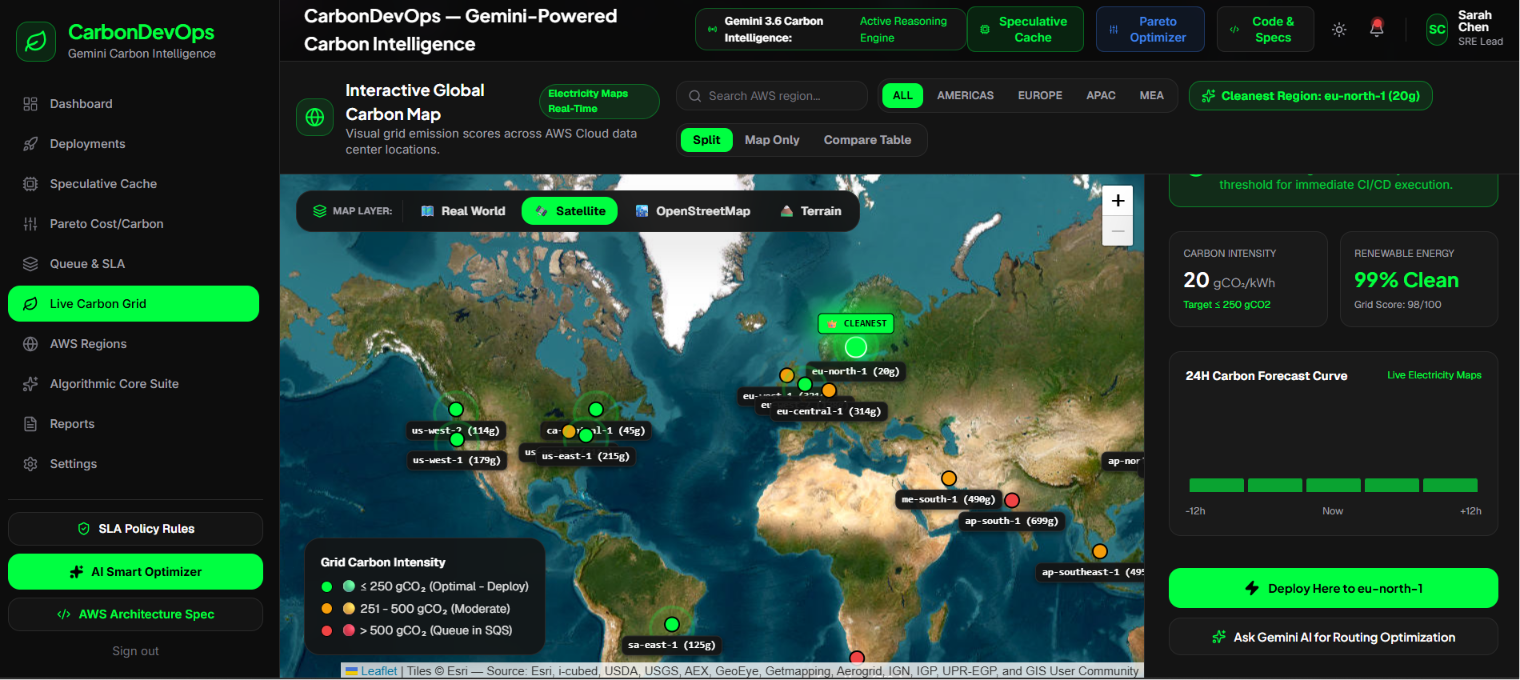
Global Carbon Map Visualize AWS regions and cleaner deployment destinations.
-
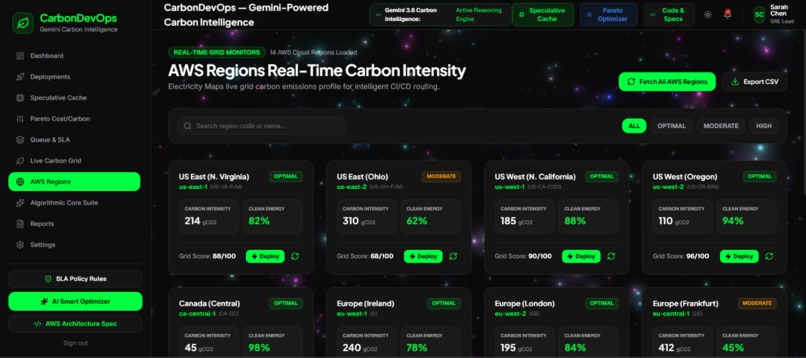
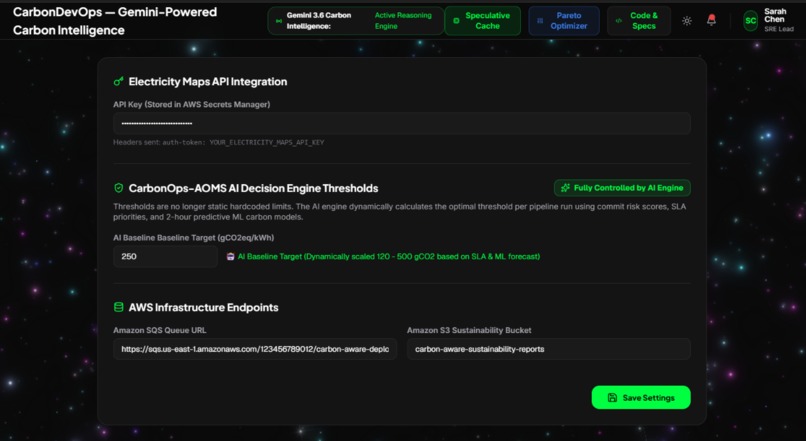
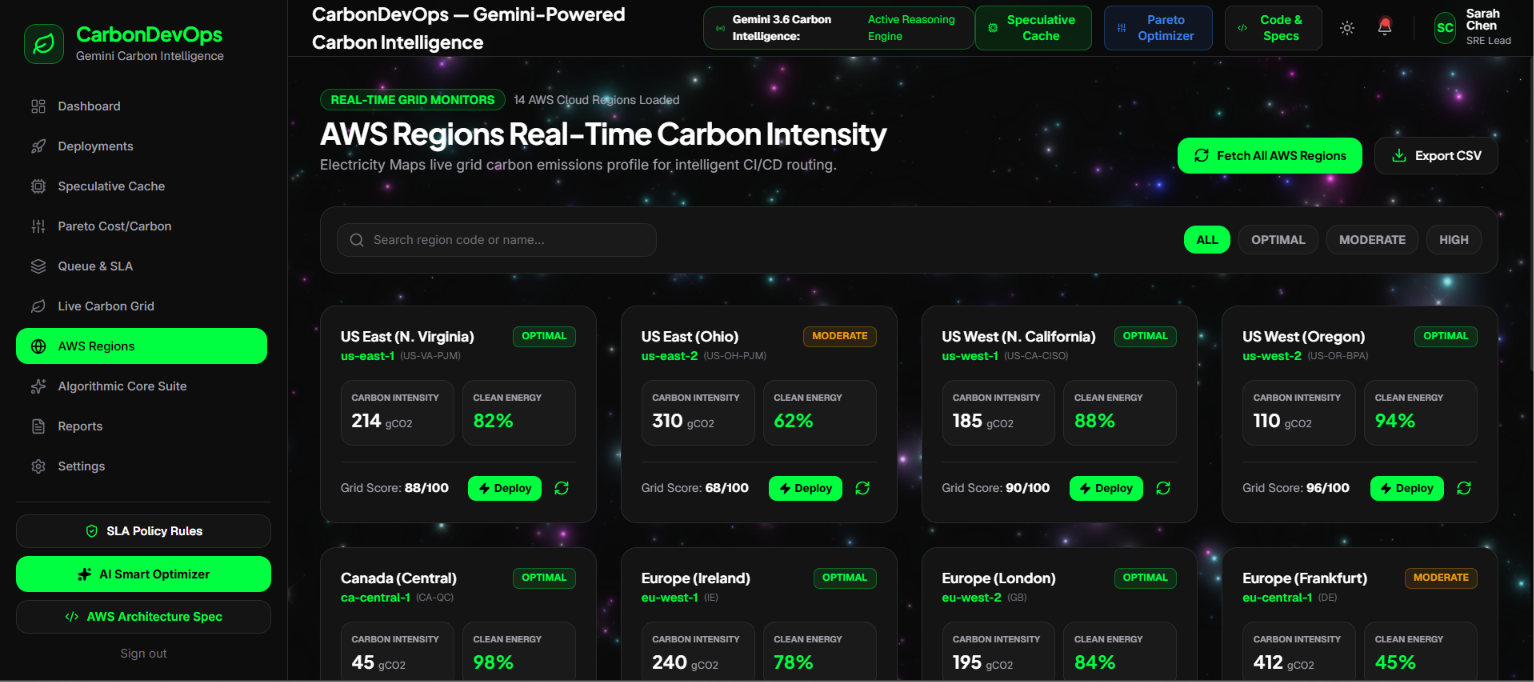
AWS Regional Carbon Intelligence Monitor live carbon intensity across AWS regions.
-
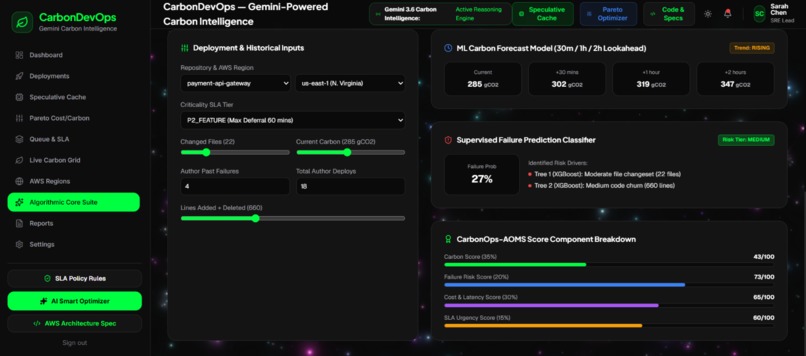
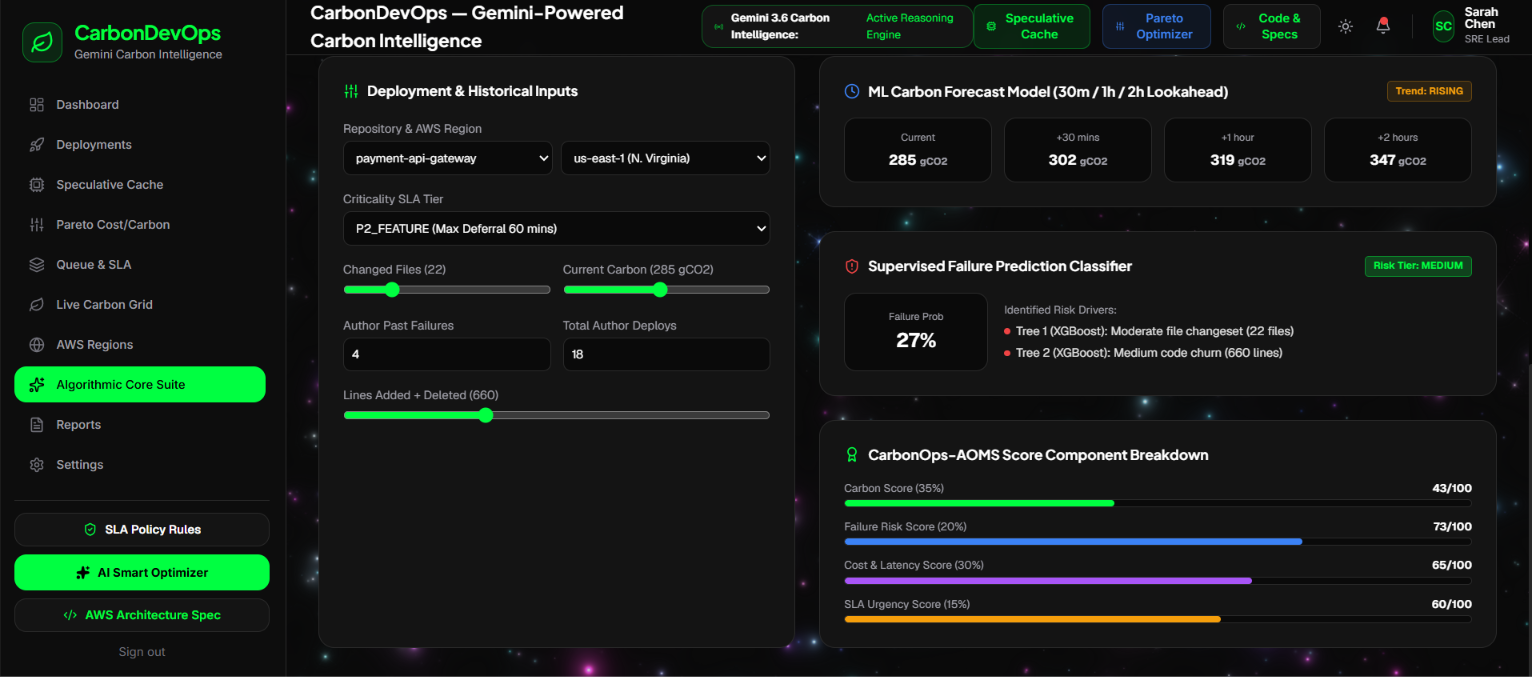
Predictive Decision Engine Combine carbon forecasts, failure risk, and SLA urgency.
-
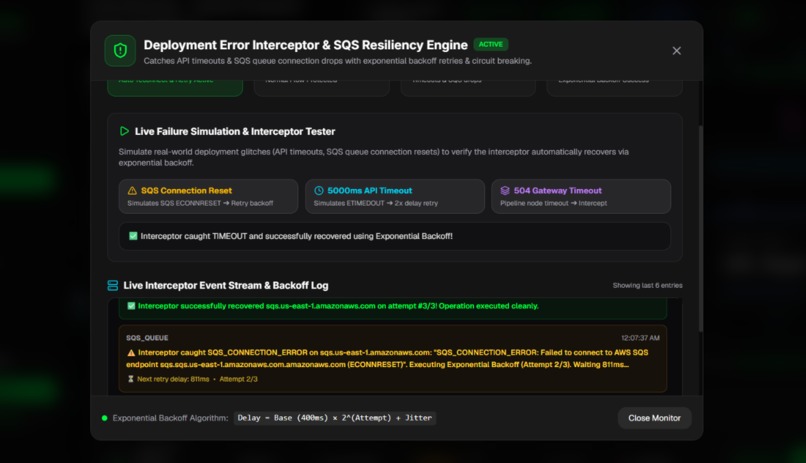
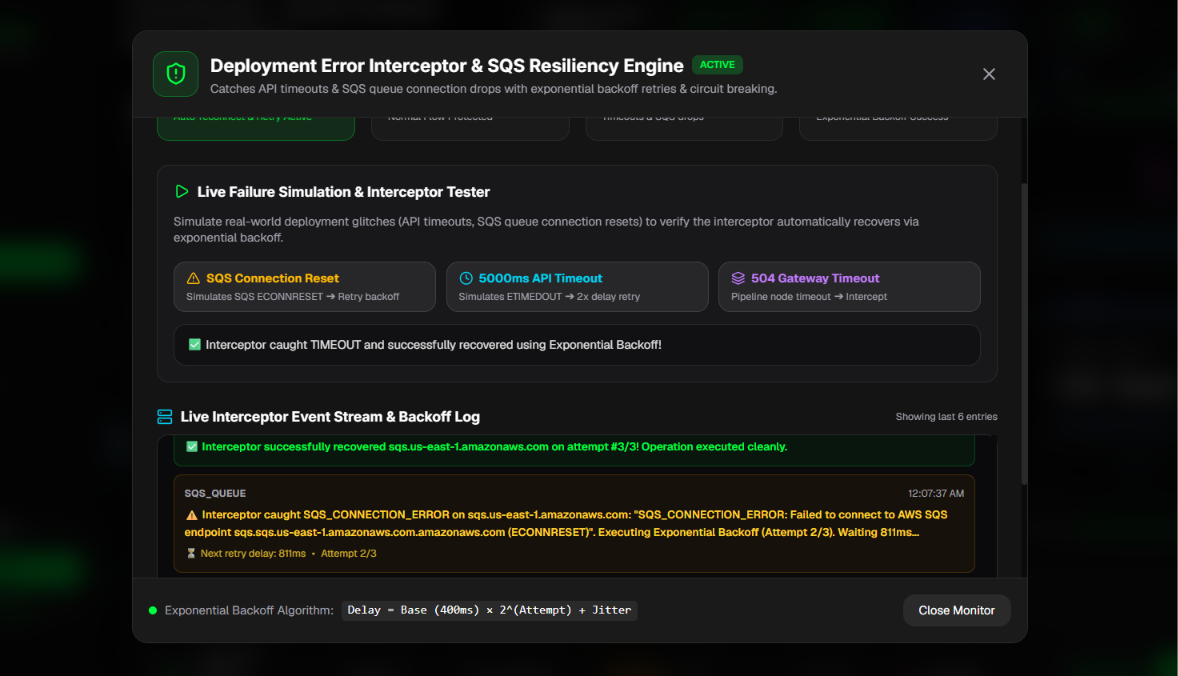
Deployment Error Interceptor Demonstrate retry, backoff, circuit-breaker, and SQS recovery.
-
Operational Analytics & Carbon Impact Reports tracking CO₂ savings, regional grid efficiency, workload deferrals, and CI/CD history.
-
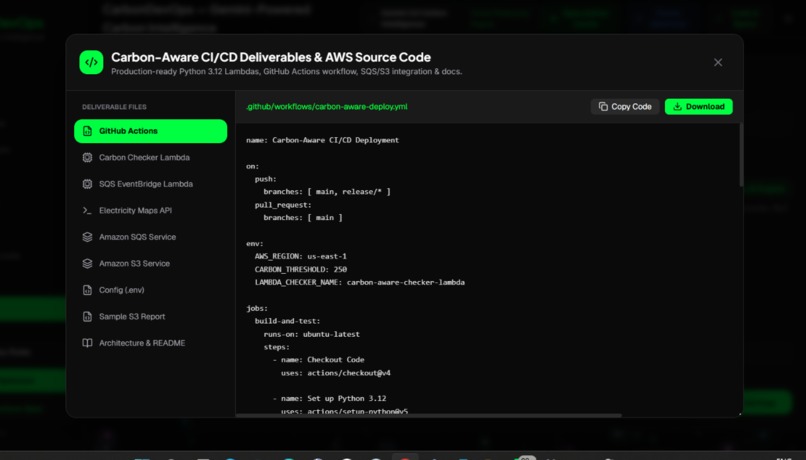
This is the Architecture Terraform code use to connect your cloud Platform
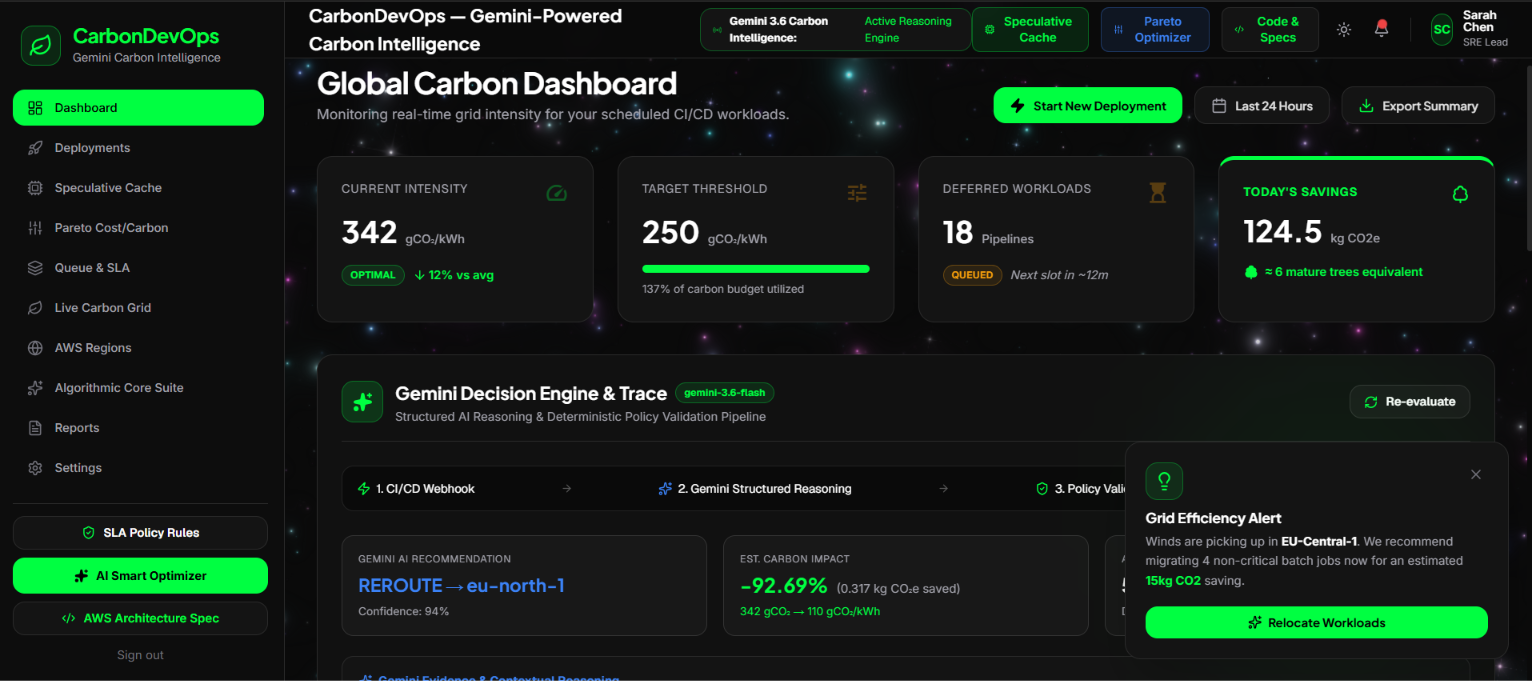
Inspiration
Cloud infrastructure is becoming more powerful, but every CI/CD pipeline also consumes electricity. A deployment that runs in a carbon-intensive region can produce significantly more emissions than the same workload executed when or where the electricity grid is cleaner.
We wanted to ask a different question:
What if CI/CD systems could make deployment decisions based not only on speed and cost, but also on carbon intensity?
That idea led us to CarbonDevOps — a Gemini-powered carbon-aware CI/CD orchestration platform.
Instead of treating carbon data as a static dashboard metric, CarbonDevOps turns it into an active deployment decision signal. It evaluates live grid conditions, AWS regions, workload urgency, historical deployment behavior, carbon forecasts, cost, and failure risk to determine whether a workload should deploy now, move to a cleaner region, or wait for a better window.
The biggest part of our inspiration was exploring how Google Gemini can act as the reasoning layer between raw infrastructure telemetry and actionable DevOps decisions.
What it does
CarbonDevOps sits between CI/CD pipelines and cloud infrastructure and intelligently orchestrates workloads based on carbon-aware policies.
Gemini-Powered Decision Intelligence
Google Gemini analyzes deployment context and environmental telemetry to generate actionable recommendations.
For example, instead of simply reporting:
ap-southeast-1 = 612 gCO2/kWh
CarbonDevOps can reason over the available information and recommend moving the workload to a cleaner AWS region or deferring it until the grid improves.
Gemini also provides the reasoning behind optimization recommendations, making the system explainable rather than a black-box scheduler.
Real-Time Carbon-Aware AWS Routing
CarbonDevOps monitors carbon intensity across AWS regions using electricity-grid data and identifies cleaner deployment destinations.
Workloads can be evaluated against:
- Grid carbon intensity
- Renewable energy percentage
- AWS region
- Deployment urgency
- Cost
- Network considerations
Intelligent Workload Deferral
Not every deployment needs to execute immediately.
CarbonDevOps uses SLA tiers:
P1_HOTFIX— Deploy immediatelyP2_FEATURE— Allow controlled deferralP3_BATCH— Wait for a cleaner energy window
This allows sustainability decisions without blindly sacrificing operational requirements.
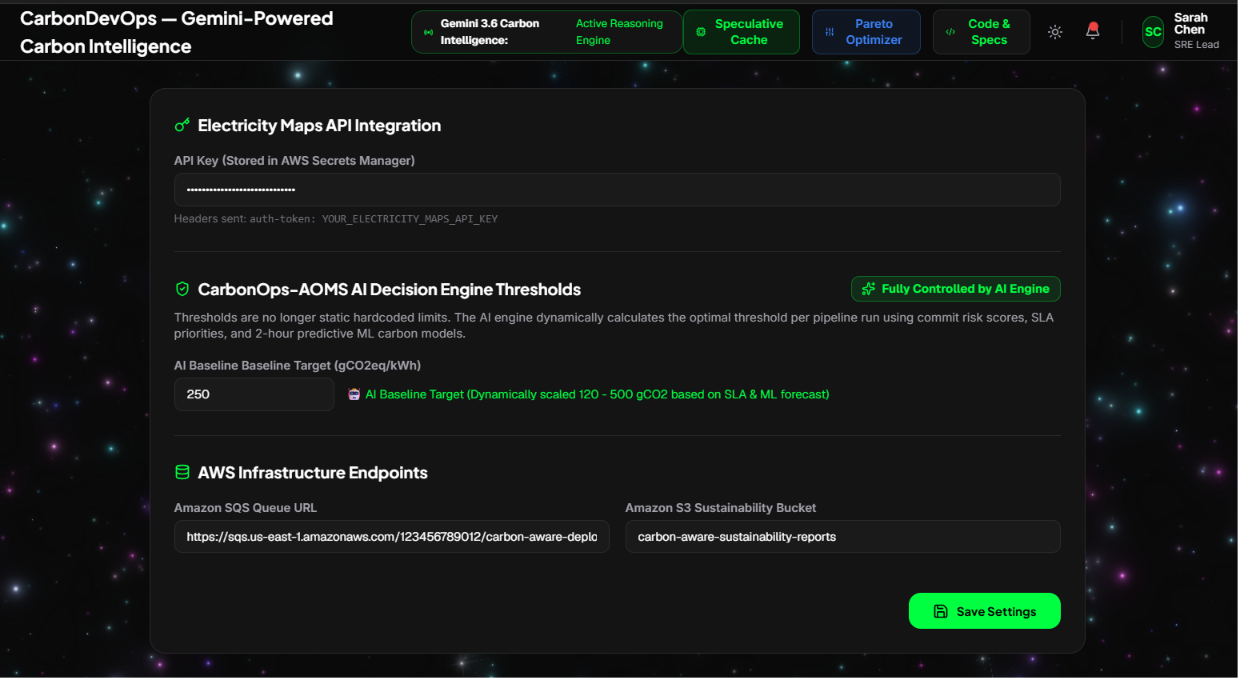
Gemini-Assisted Dynamic Thresholds
Instead of using one fixed carbon threshold for every deployment, CarbonDevOps evaluates deployment context and forecasts to determine an appropriate threshold.
A workload can therefore be evaluated differently depending on:
- Current grid intensity
- Predicted grid conditions
- SLA priority
- Deployment risk
- Historical behavior
Multi-Objective Optimization
CarbonDevOps evaluates the trade-off between:
Carbon + Cost + Latency + Risk + SLA
The Pareto optimizer identifies deployment options that provide favorable trade-offs rather than optimizing carbon alone.
Speculative Pre-Build
CarbonDevOps can prepare deployment artifacts during cleaner energy windows so that a future deployment can execute with significantly less waiting time.
This combines carbon-aware scheduling with deployment performance optimization.
Resilient CI/CD Interception
The platform includes an interceptor and circuit-breaker layer that handles failures such as:
- SQS connection failures
- API timeouts
- Gateway timeouts
- Retryable infrastructure errors
It uses exponential backoff, jitter, retry handling, and circuit-breaker states to prevent transient infrastructure failures from disrupting orchestration.
ESG Audit Trail
Deployment decisions are recorded with carbon metrics, routing decisions, savings estimates, timestamps, and cryptographic hashes, creating an auditable history of carbon-aware infrastructure decisions.
How we built it
CarbonDevOps is a full-stack cloud orchestration platform built around Google Gemini as its AI reasoning layer.
Frontend
- React 19
- TypeScript
- Vite
- Tailwind CSS
- Leaflet / React-Leaflet
- Lucide React
- Motion
The dashboard provides:
- Global carbon visualization
- AWS region comparison
- Deployment monitoring
- SQS queue management
- Pareto optimization
- Speculative build monitoring
- ESG reporting
- Gemini recommendations
Backend
- Node.js
- Express.js
- TypeScript
- AWS SDK
The backend handles deployment orchestration, carbon data processing, queue management, AWS integration, and Gemini requests.
Google Gemini
Gemini is the intelligence layer of CarbonDevOps.
We use the Gemini API to reason over structured infrastructure context such as:
- Current grid carbon intensity
- AWS regional carbon data
- Carbon forecasts
- Deployment urgency
- SLA constraints
- Historical deployment information
- Failure risk
- Cost considerations
Gemini converts this context into structured optimization recommendations that the CarbonDevOps policy engine can use.
This allows the platform to move beyond:
"Here is some carbon data."
toward:
"Given the current infrastructure state, this is the best deployment action and here is why."
Cloud and Data Layer
The platform integrates:
- AWS SQS
- AWS Lambda
- AWS S3
- AWS CloudWatch
- Electricity Maps
- AWS regional infrastructure
- Esri / Leaflet mapping
Challenges we ran into
1. Turning carbon data into an actual DevOps decision
Displaying carbon intensity is relatively straightforward.
The difficult part was determining:
When should carbon intensity actually change a deployment decision?
We designed SLA-aware policies so that sustainability does not override critical production requirements.
2. Balancing multiple objectives
The greenest region is not always the cheapest or fastest region.
We therefore had to consider:
Carbon != Cost != Latency != Risk
This led us to build the Pareto optimization layer, allowing CarbonDevOps to evaluate multiple competing objectives.
3. Making AI recommendations actionable
We didn't want Gemini to simply generate a paragraph saying that a region is greener.
The output needed to become an actual DevOps action:
- Deploy
- Defer
- Reroute
- Force deploy
- Queue
- Pre-build
This required combining Gemini's reasoning with deterministic policy validation.
4. Handling unreliable cloud infrastructure
CI/CD orchestration itself must be resilient.
We implemented an interceptor and circuit-breaker system with exponential backoff and retry handling so that temporary SQS/API failures don't cause the entire orchestration workflow to fail.
5. Making sustainability measurable
We wanted every optimization decision to produce measurable evidence.
CarbonDevOps therefore tracks carbon intensity, deployment decisions, estimated savings, region selection, and execution history to make the environmental impact visible.
Accomplishments that we're proud of
We turned Gemini into a DevOps reasoning engine
Rather than using Gemini as a chatbot, we integrated it directly into the deployment decision workflow.
Gemini receives infrastructure context and produces explainable carbon-aware recommendations.
We built a global carbon-aware AWS control center
The platform provides a visual representation of AWS regions and their carbon conditions, allowing operators to understand where workloads can run more sustainably.
We combined sustainability with performance
Our Speculative Pre-Build and Hold Cache explores how clean-energy scheduling can coexist with low deployment latency instead of forcing teams to choose between sustainability and speed.
We built multi-objective optimization
CarbonDevOps doesn't blindly choose the lowest-carbon region.
It evaluates carbon, cost, latency, risk, and SLA requirements to find practical deployment options.
We made the orchestration resilient
The system includes an error interceptor, retry mechanism, exponential backoff, and circuit-breaker behavior for failure scenarios.
We made carbon impact visible
Instead of hiding sustainability metrics in a report, CarbonDevOps puts them directly inside the DevOps workflow.
What we learned
We learned that carbon-aware computing is not simply a data problem — it is a decision-making problem.
The same carbon intensity value can result in completely different actions depending on the workload.
A critical production hotfix may need to deploy immediately, while a nightly batch job could wait for a cleaner grid.
We also learned that AI is most useful when it is combined with deterministic engineering systems.
Our architecture therefore follows a simple principle:
Gemini reasons. Policies constrain. Infrastructure executes.
This separation makes the AI layer useful while keeping deployment decisions controlled and auditable.
We also learned how environmental telemetry can become another first-class signal inside modern DevOps systems alongside cost, latency, reliability, and security.
What's next for CarbonDevOps
Our next goal is to move CarbonDevOps from an intelligent orchestration platform toward a fully autonomous carbon-aware CI/CD control plane.
Planned improvements
1. More cloud providers
Expand beyond AWS to support:
- Google Cloud
- Microsoft Azure
- Multi-cloud workload routing
2. More accurate carbon estimation
Move from grid-level intensity toward workload-level energy and carbon estimation using actual compute utilization.
3. GitHub Actions and GitLab CI integration
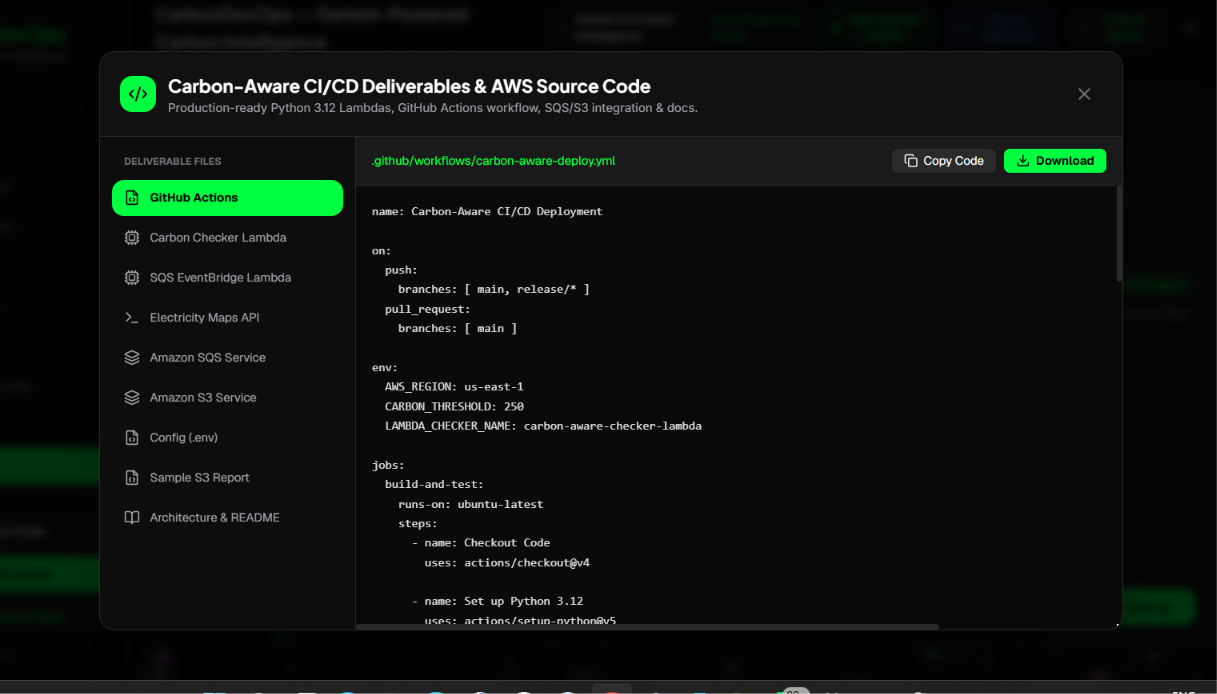
Allow CarbonDevOps to intercept real CI/CD workflows directly and make carbon-aware scheduling decisions automatically.
4. Predictive green-window scheduling
Use historical and forecast data to predict upcoming low-carbon periods and proactively schedule workloads.
5. Autonomous optimization
Allow Gemini to continuously evaluate workloads and recommend or execute optimization actions under predefined safety policies.
6. Enterprise ESG analytics
Expand the audit layer into organization-wide sustainability analytics covering:
- Carbon avoided
- Regional workload distribution
- Historical trends
- Optimization effectiveness
- ESG reporting
Our Vision
CarbonDevOps aims to make carbon a first-class deployment variable.
The future of DevOps shouldn't only ask:
"Can we deploy it?"
or
"How fast can we deploy it?"
It should also ask:
"Where and when can we deploy it with the least environmental impact — without compromising reliability?"
CarbonDevOps brings that decision into the CI/CD pipeline, with Google Gemini providing the intelligence behind the optimization.
Built With
- amazon-cloudwatch
- amazon-eventbridge
- amazon-sqs
- amazon-web-services
- api
- aws-lambda
- carbon-aware-computing
- ci/cd
- devops
- esri
- express.js
- gemini
- genai
- google-ai
- google-gemini-api
- google-maps
- leaflet.js
- multi-objective-optimization
- node.js
- react
- sustainability
- tailwind-css
- typescript
- vite

Log in or sign up for Devpost to join the conversation.