-
-
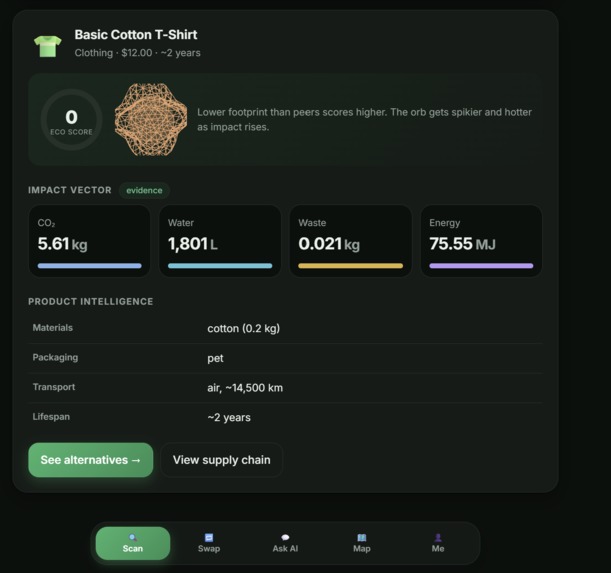
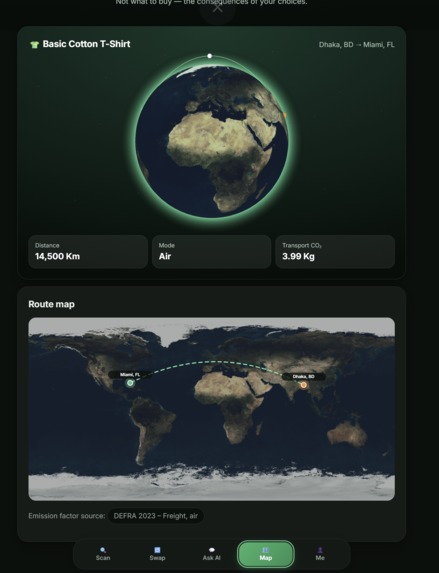
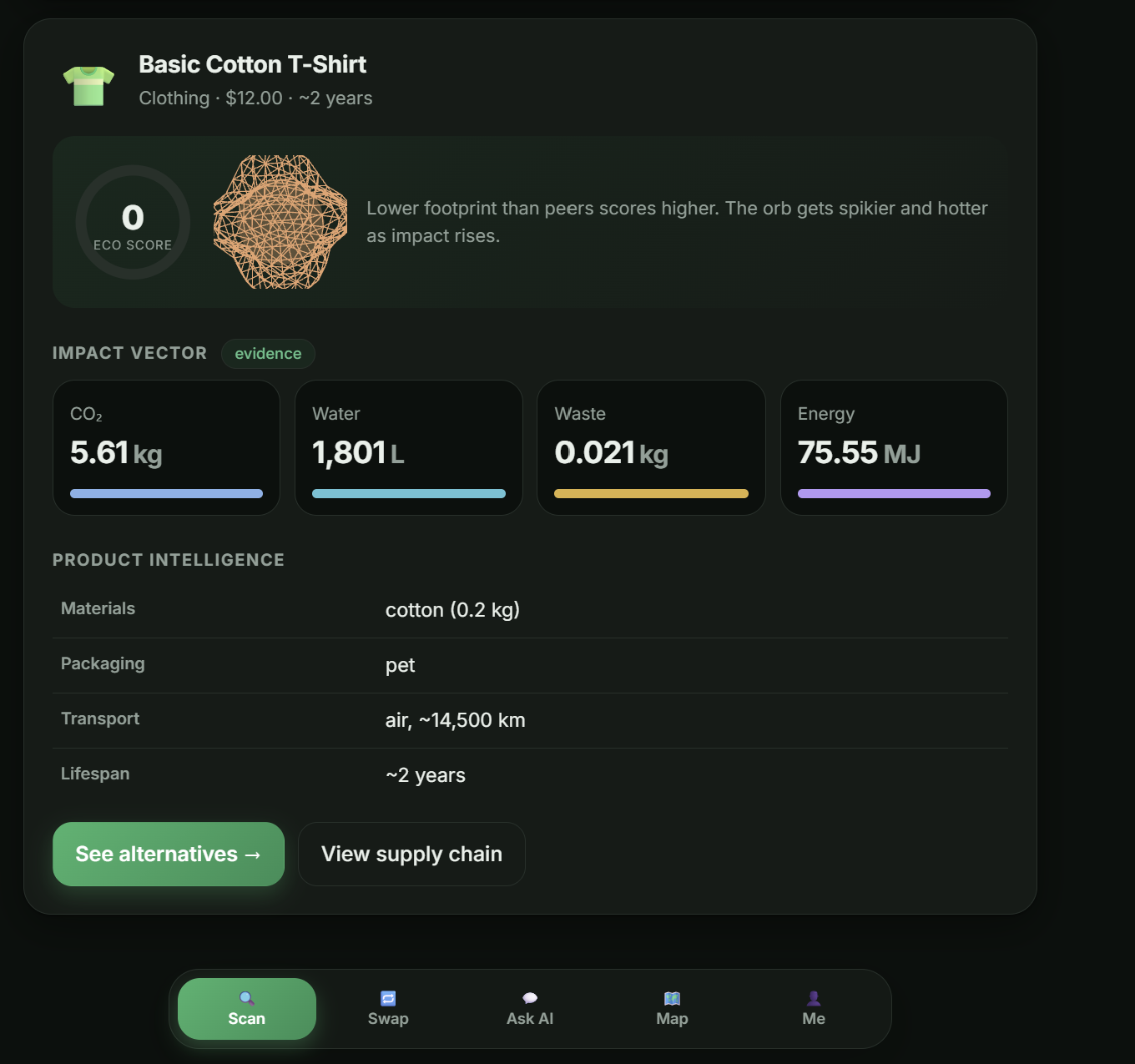
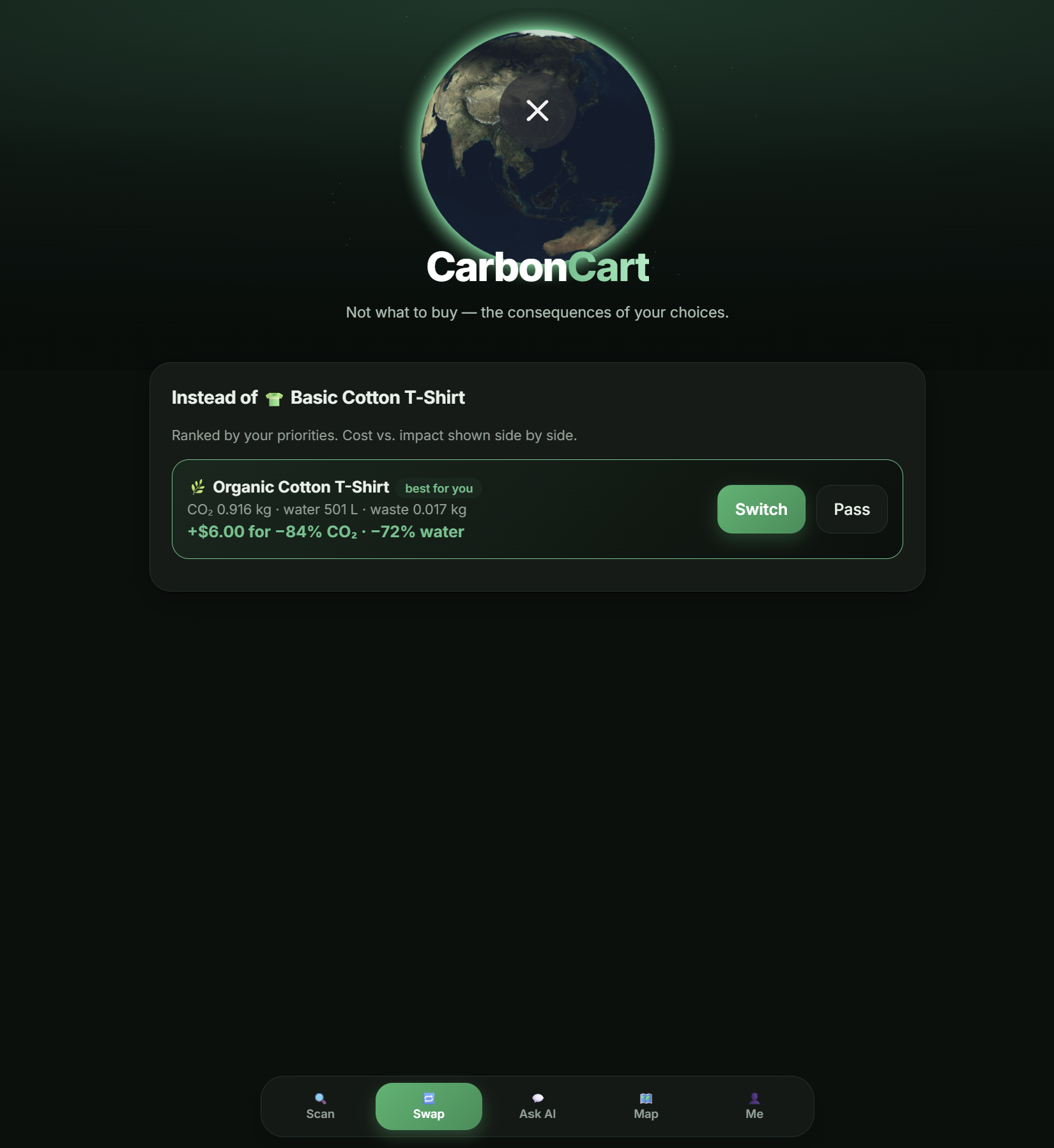
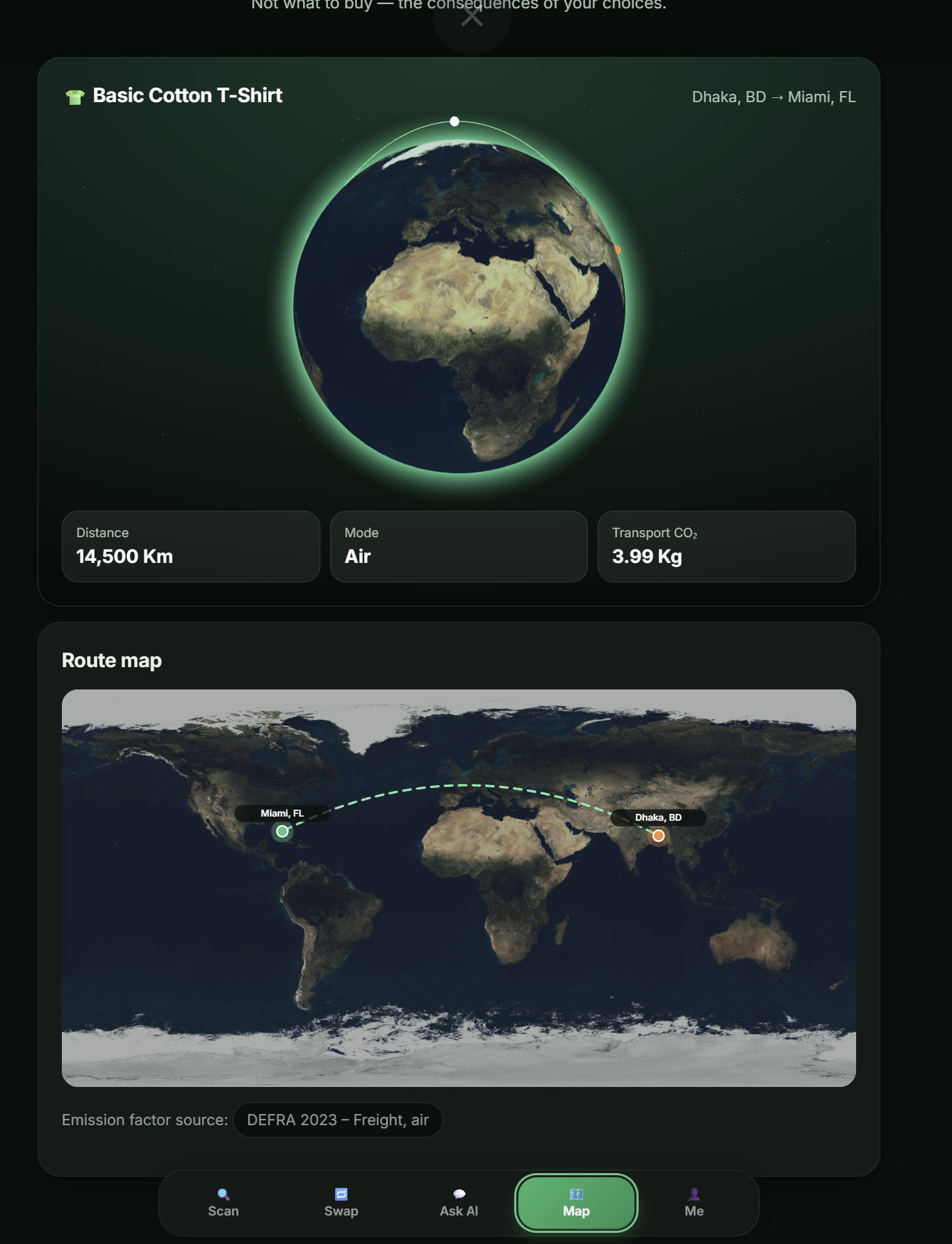
Isn't it interesting to know that a single t-shirt has this much impact?
-
-
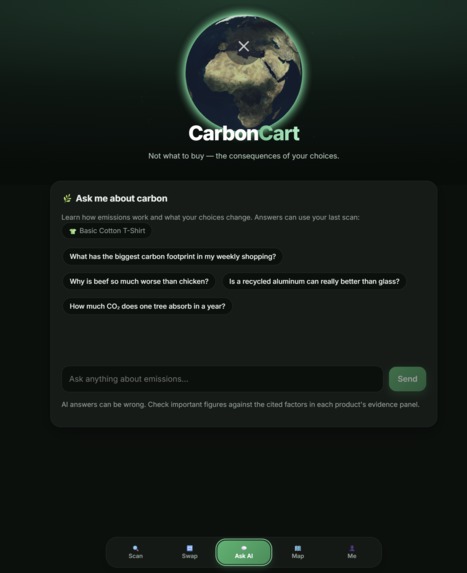
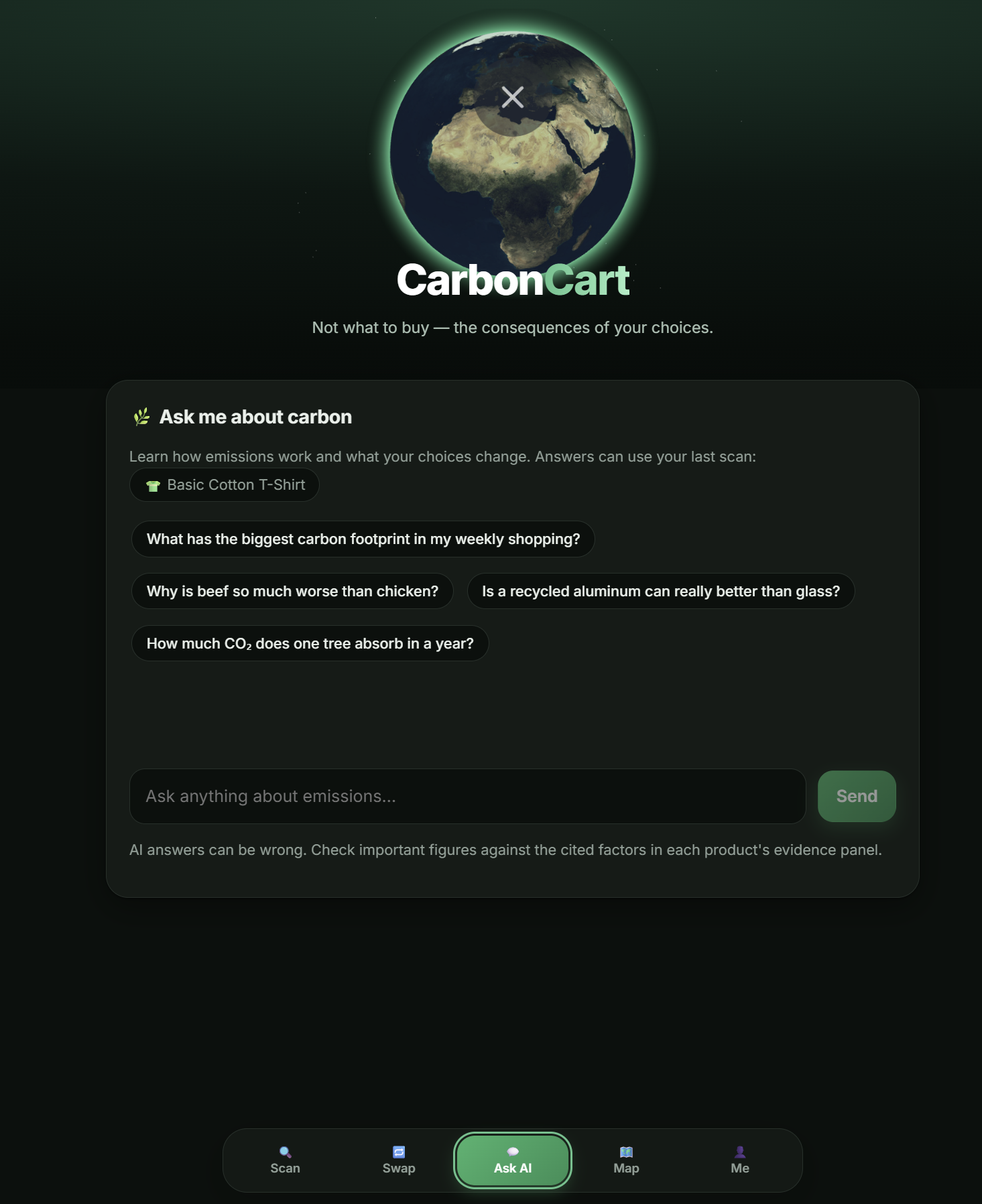
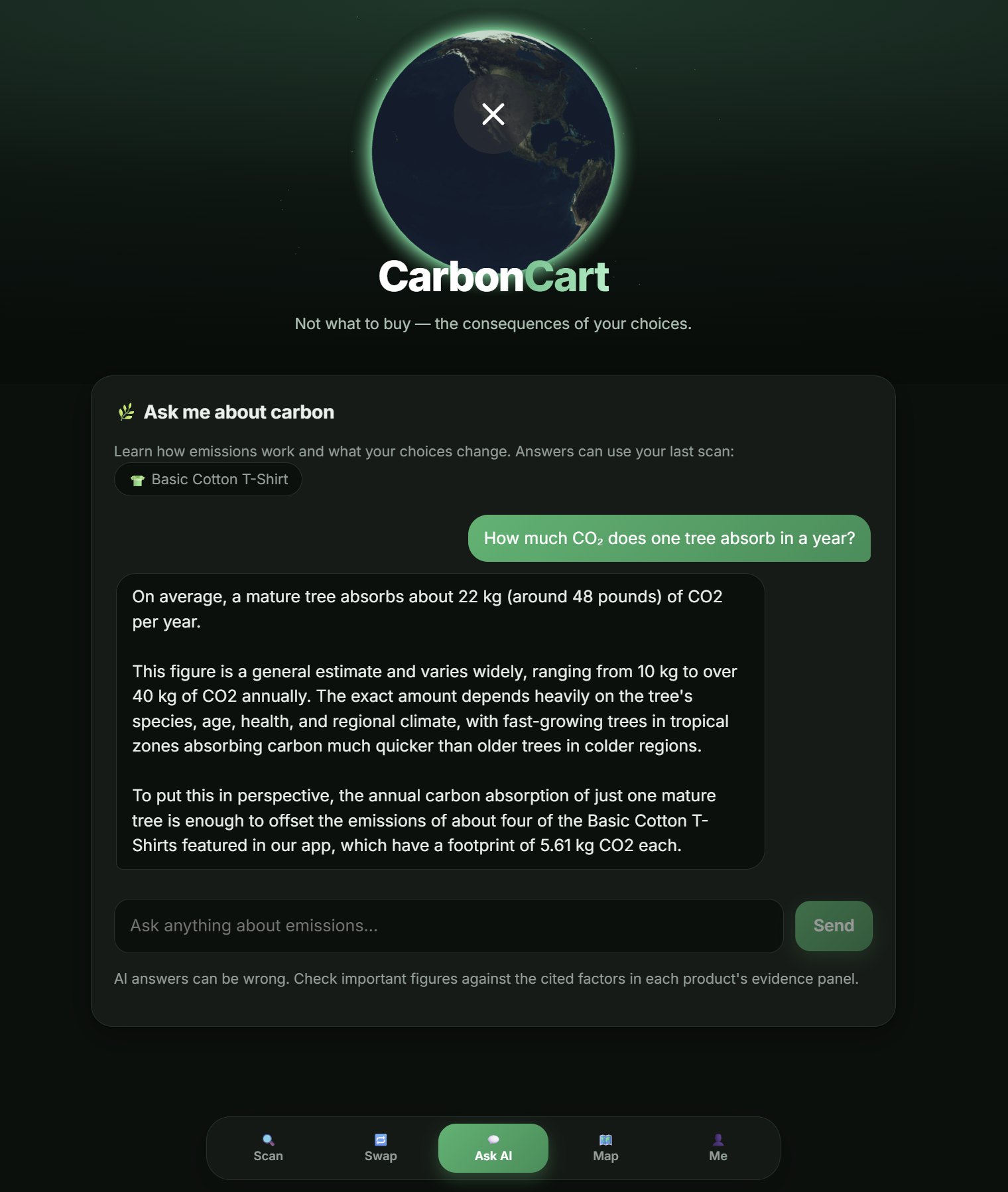
Have a question? We are ready to broaden your knowledge.
-
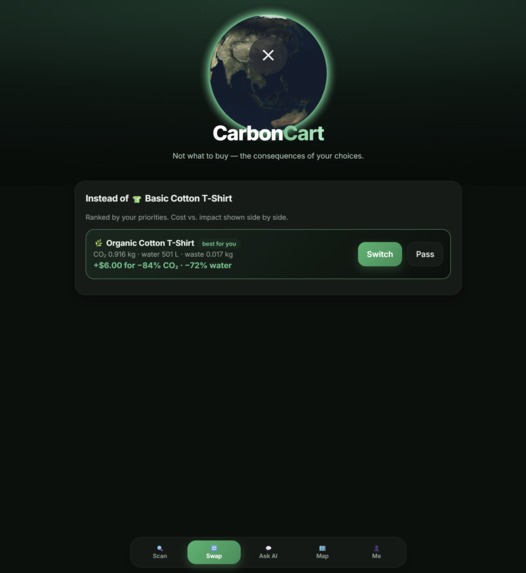
-
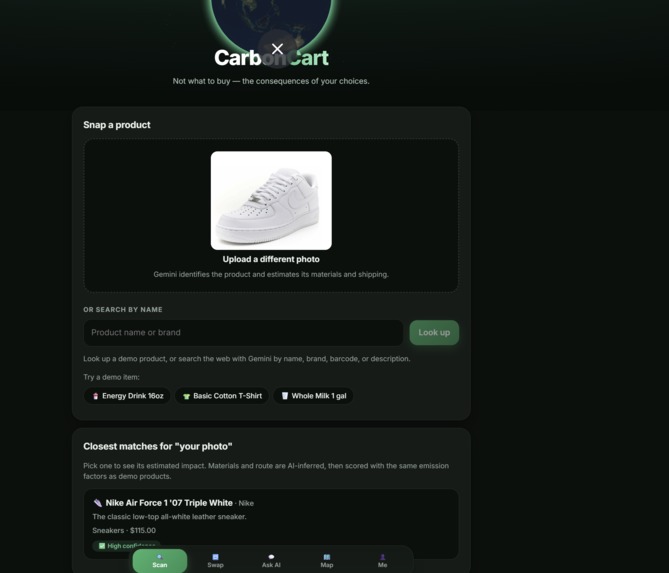
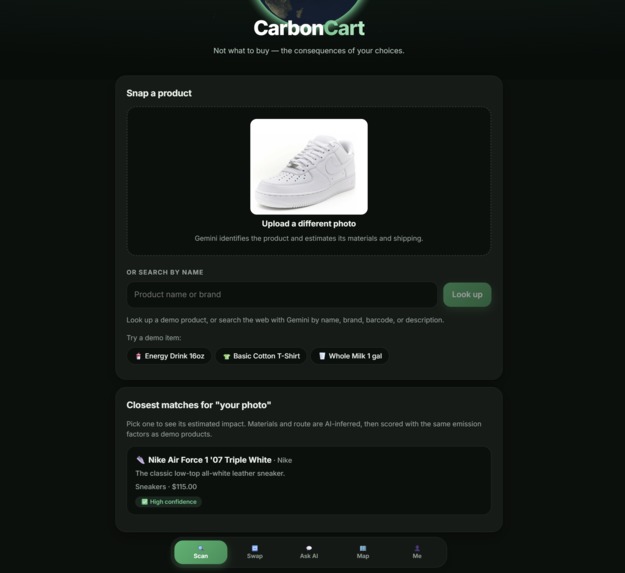
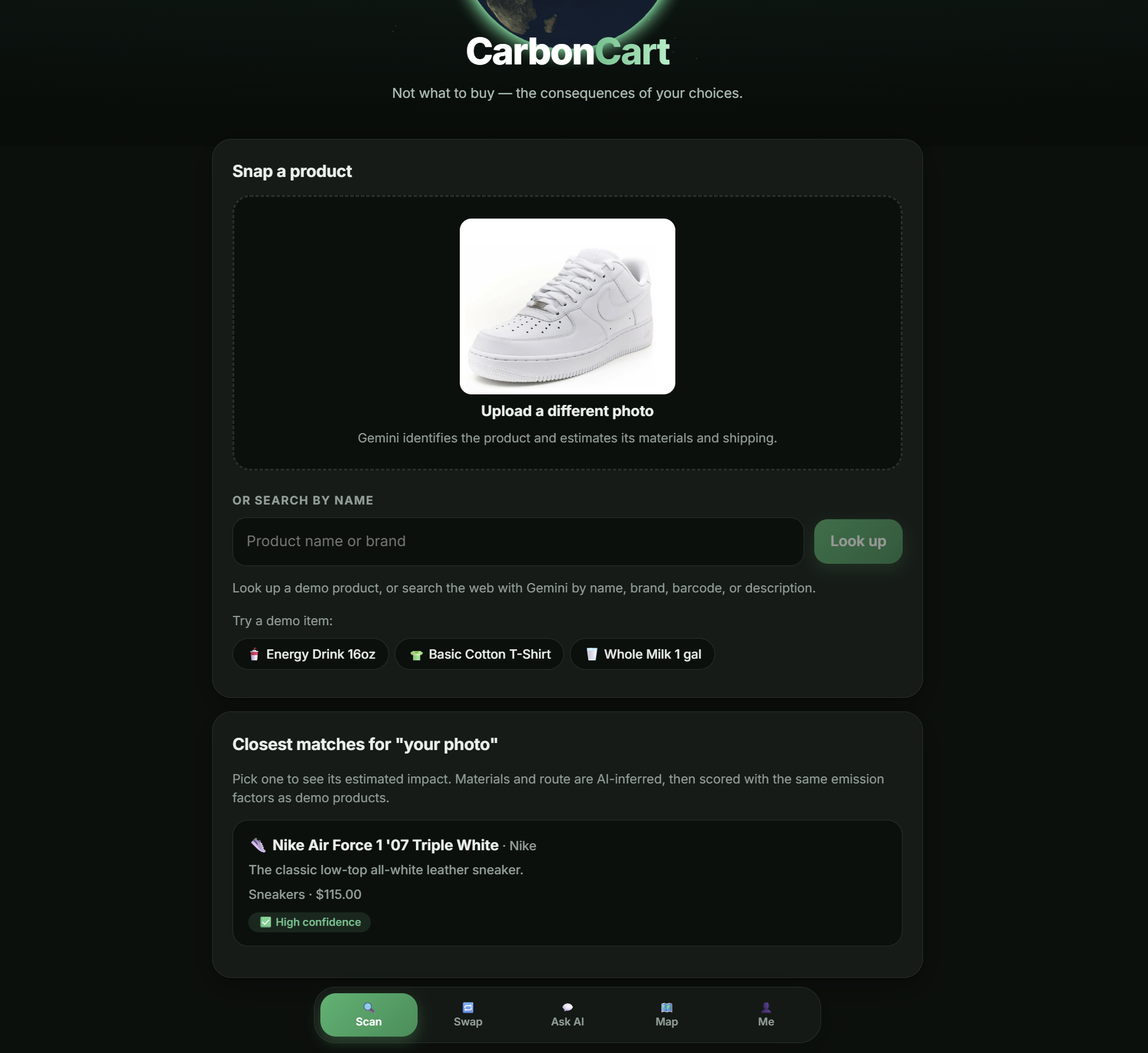
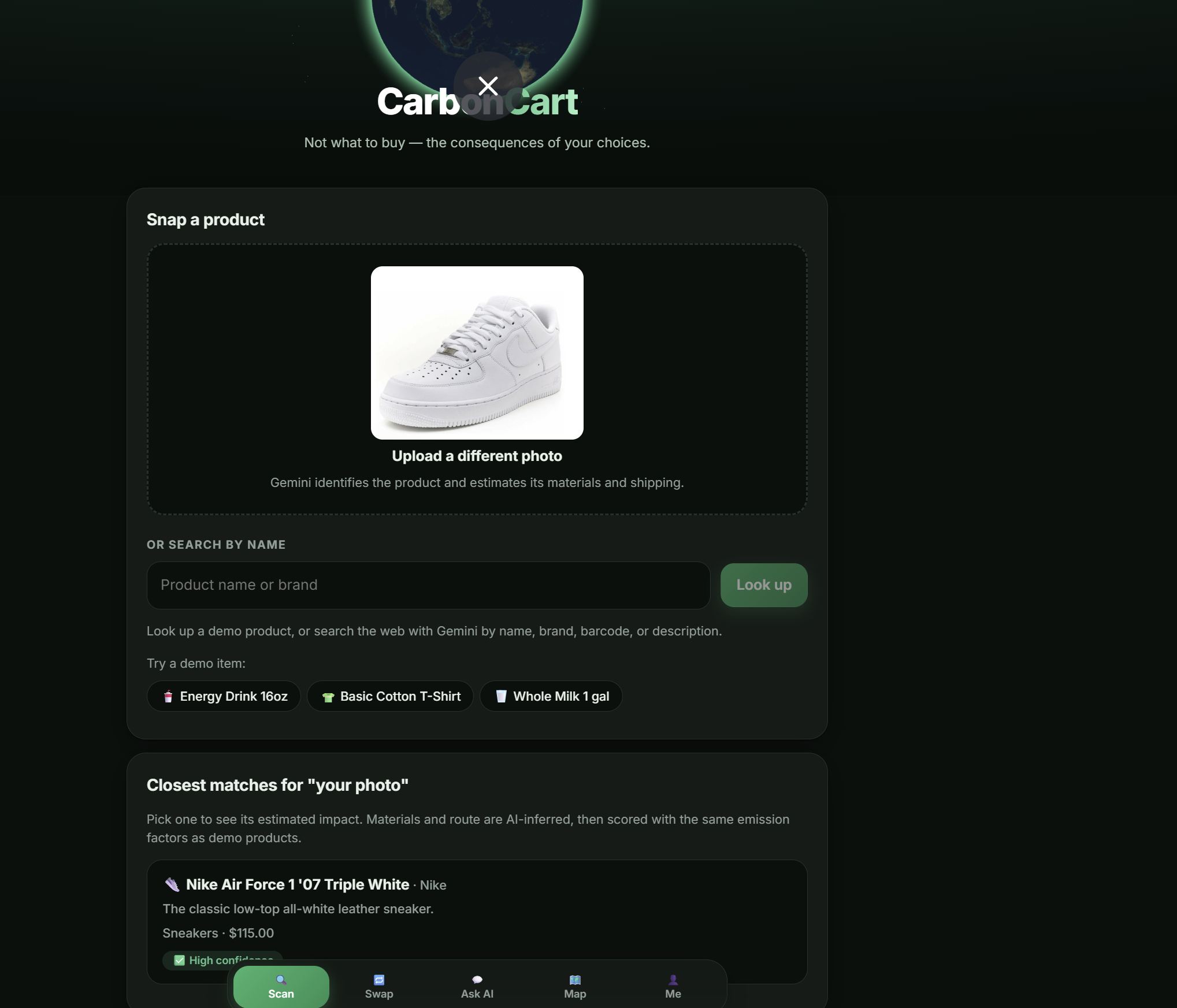
Drop a photo, let us analyze the environmental impact leveraging Gemini.
-
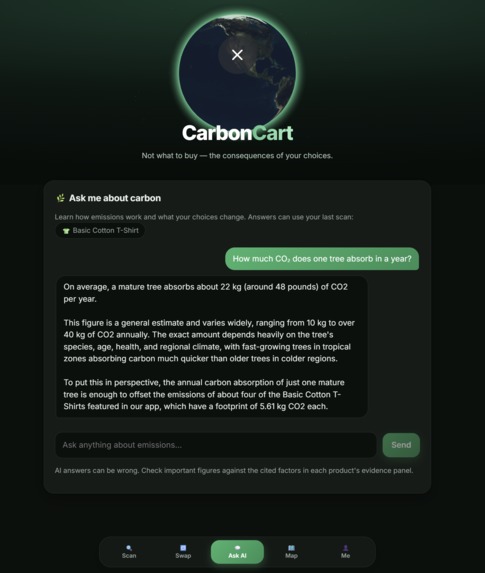
Want to learn more about carbon footprint? We got you, drop in, and ask your questions. Gemini will answer every question you have.
-
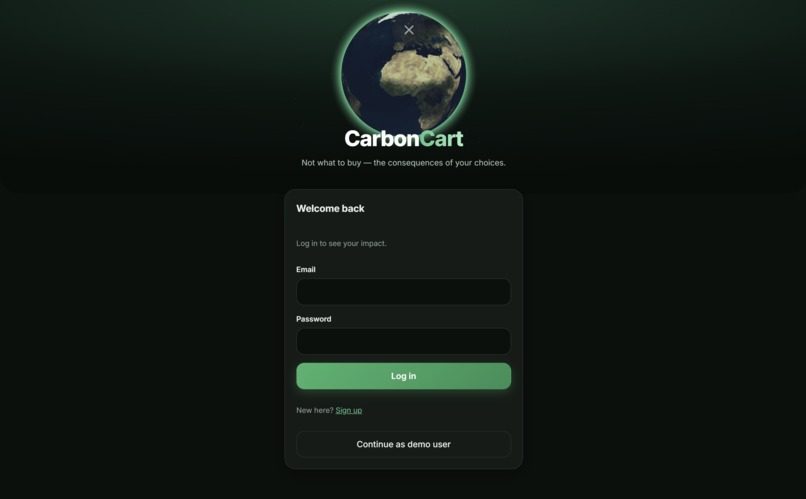
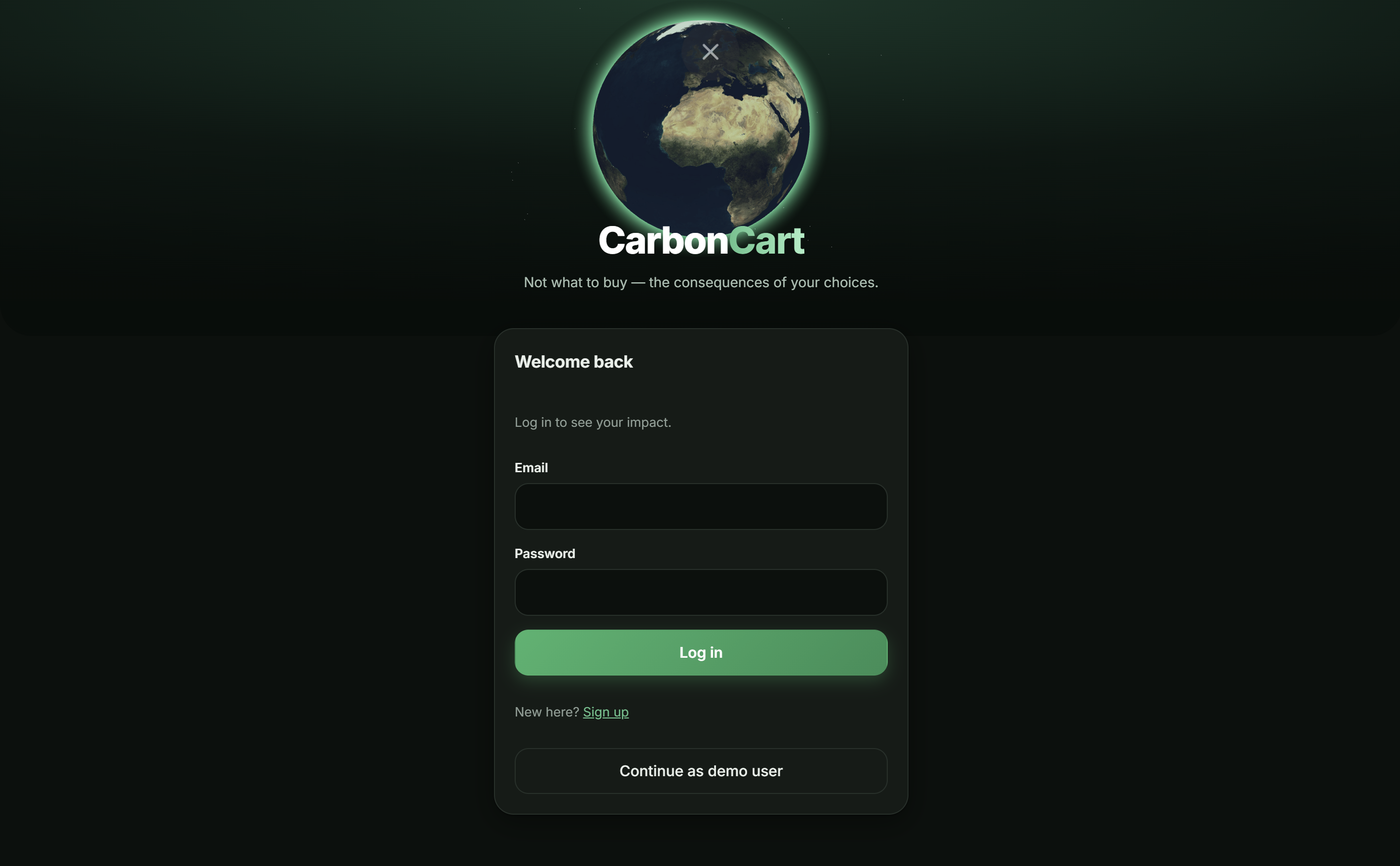
Become one of us.
-
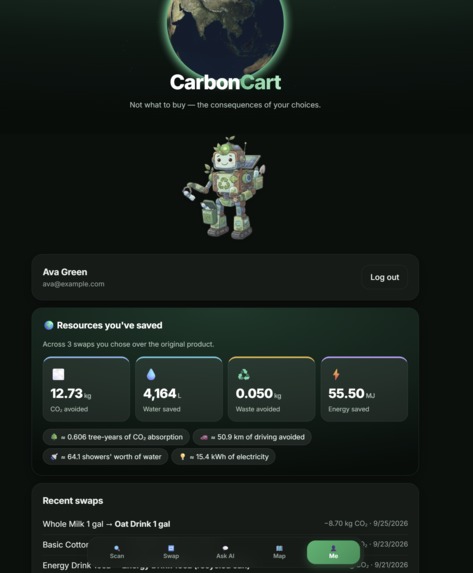
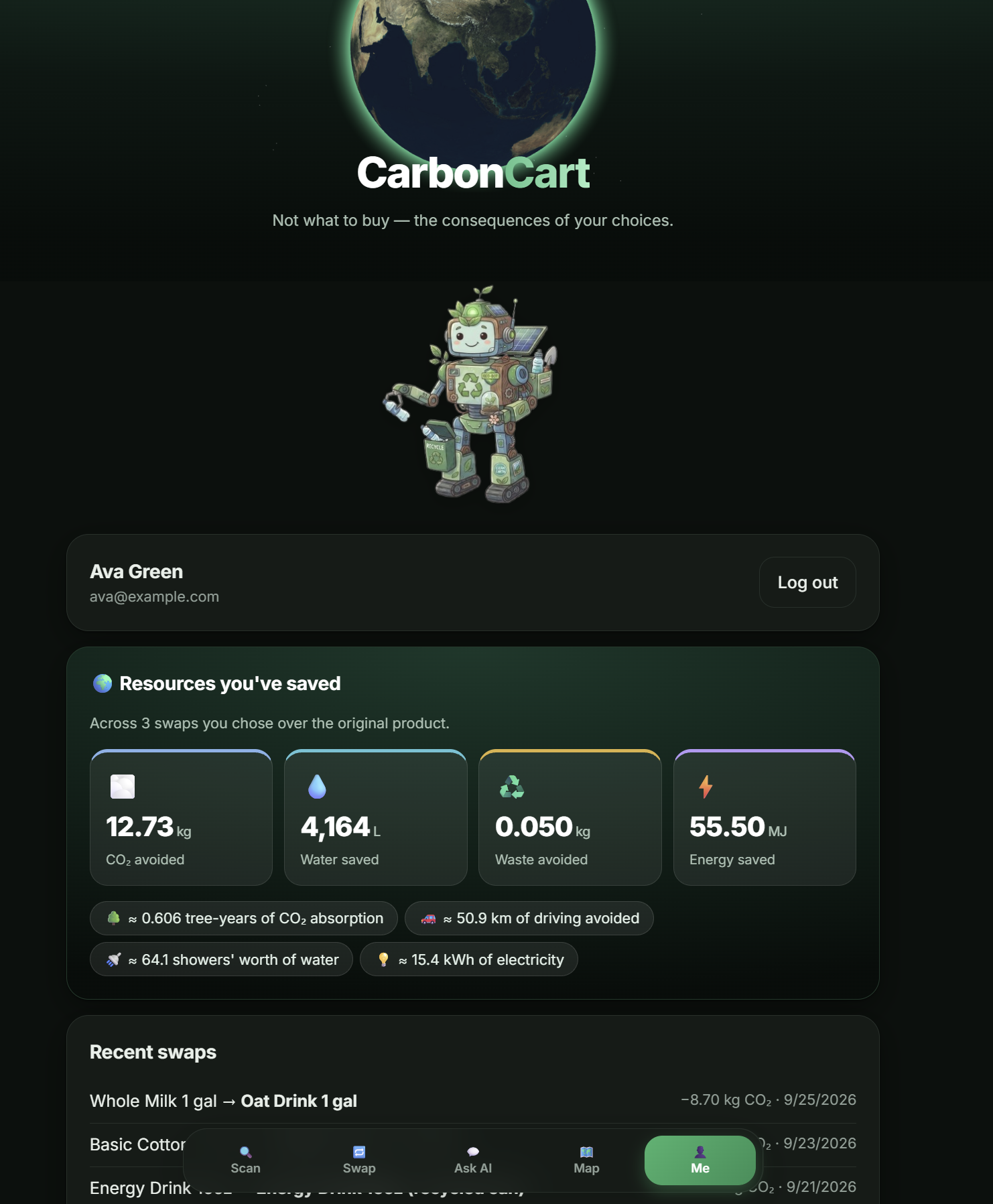
How much impact you had so far?
-
Inspiration
Everything we do on a daily basis leaves a carbon footprint, meaning we are contributing heat-trapping gases to our atmosphere that lead to global warming. Yet most people have no idea what that footprint actually means, not because they don't care, but because there's no way to see it. A "sustainable" label on a shirt or a bag of coffee is usually just marketing, backed by nothing you can check.
What it does
Our ultimate goal is to help people see why the greener choice actually matters, with real numbers. Curious how much your morning coffee or your new running shoes actually cost the planet? Take a photo or search a product by name, and CarbonCart estimates its carbon, water, waste, and energy footprint on the spot.
Want to get more information and learn about it? We got your back, we have utilized the power of Gemini to answer all your questions 24/7.
Gemini only identifies the product, what it's made of and how it likely got to you. A deterministic calculator takes that description and multiplies it against cited emission factors to produce the actual figure, and every result comes with a trail back to where it came from, whether that's a product label, a benchmark study, or an AI estimate marked clearly as lower confidence.
How we built it
We built the frontend with React, using Three.js to render the shipping route on an animated globe so the footprint feels like something real. The backend is a Python FastAPI service that handles communication to Gemini for product identification and search, with strict prompts and a master JSON schema so the model can only describe materials and shipping mode. Supabase handles storage for user data and product mappings.
Challenges we ran into
None of us had any previous experience with 3D animations, and we wanted to try it out anyway. Making the globe spin was our hardest challenge. Also, designing the overall architecture was challenging in itself, figuring out what our project should actually do, and if so, how the different pieces should work alongside each other. Deciding where we would implement AI wasn't obvious at first, and we went back and forth before landing on a concrete decision.
Accomplishments that we're proud of
2 person, 36 hours, 1 working demo. We're proud that our project CarbonCart actually holds together the promise we set out to build.
What we learned
We learned how much we didn't know going in. Neither of us were experts, and it was a humbling/valuable experience staring at a flat, broken code at 6am and having no idea why it won't work, then slowly figuring it out. That kind of "digging to our codebase" is where most of the actual learning happened. Also, we learned that making mistakes/learn from others/communication teach you more than anything.
What's next for CarbonCart
A browser extension or additional integration/plug-in that surfaces the footprint right where people already shop online. If greener choices are going to actually win, they need to show up exactly where the decision is being made.
Built With
- fastapi
- gemini
- gemini-api
- postgresql
- python
- react
- supabase
- tailwind
- three.js

Log in or sign up for Devpost to join the conversation.