🌲 Inspiration
Climate change can feel overwhelming, and generic carbon calculators often leave users with numbers but no real direction. We wanted to build something that bridges the gap between raw data and actionable human habits. Inspired by the potential of autonomous AI systems, we created Carbona—a platform that turns personal environmental tracking into an operational data stream managed by an intelligent, adaptive AI coach.
⚙️ What it does
Carbona is a comprehensive, glassmorphic "GreenOps" platform designed to help users track, understand, and reduce their environmental impact. Key components include:
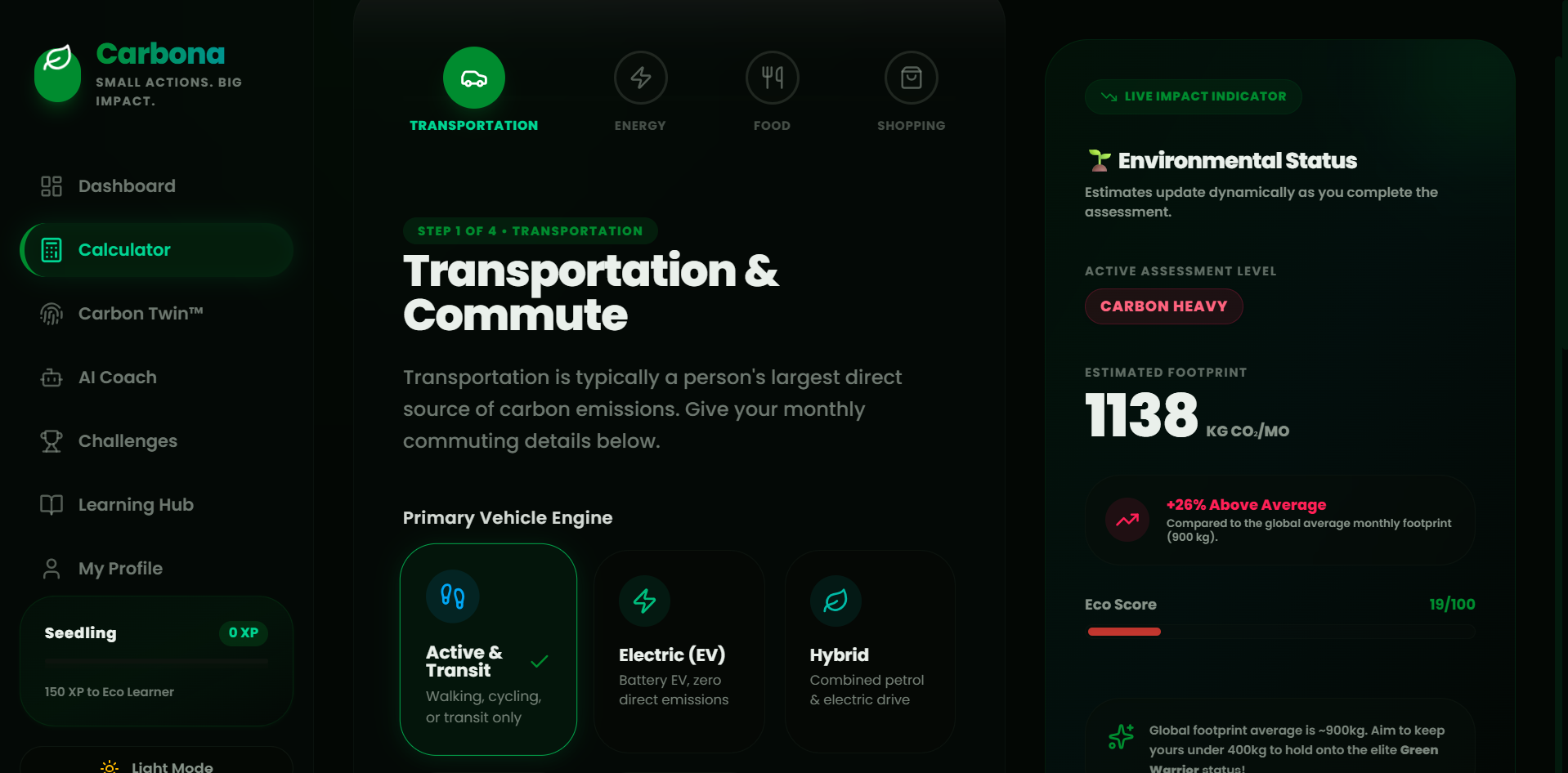
- Multi-Step Calculator: A modular intake workflow tracking real-time emissions across transport, energy, food, and shopping.
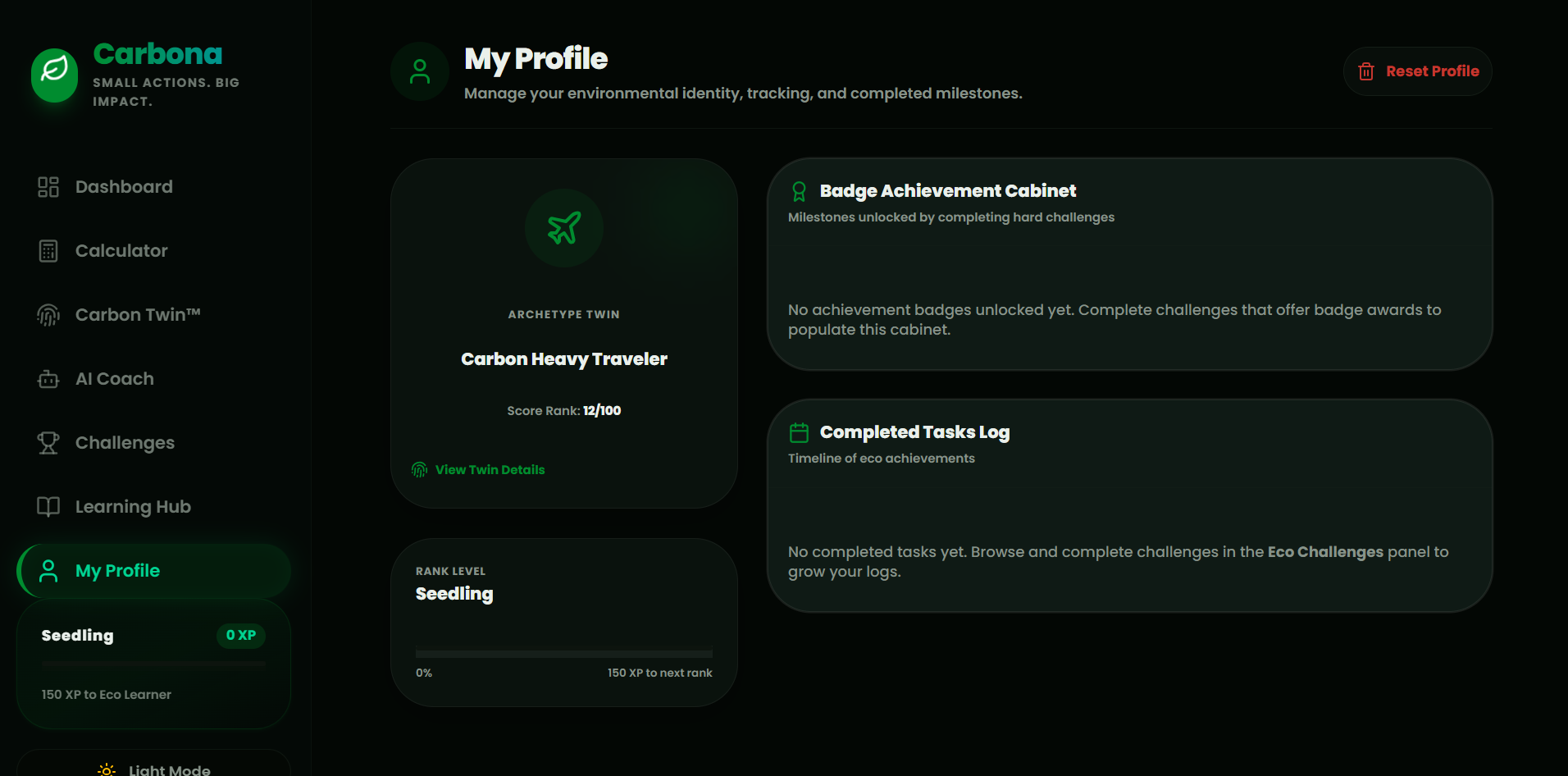
- Carbon Twin™: A personalized climate profile archetype that maps an individual's operational strengths, baselines, and localized reduction targets.
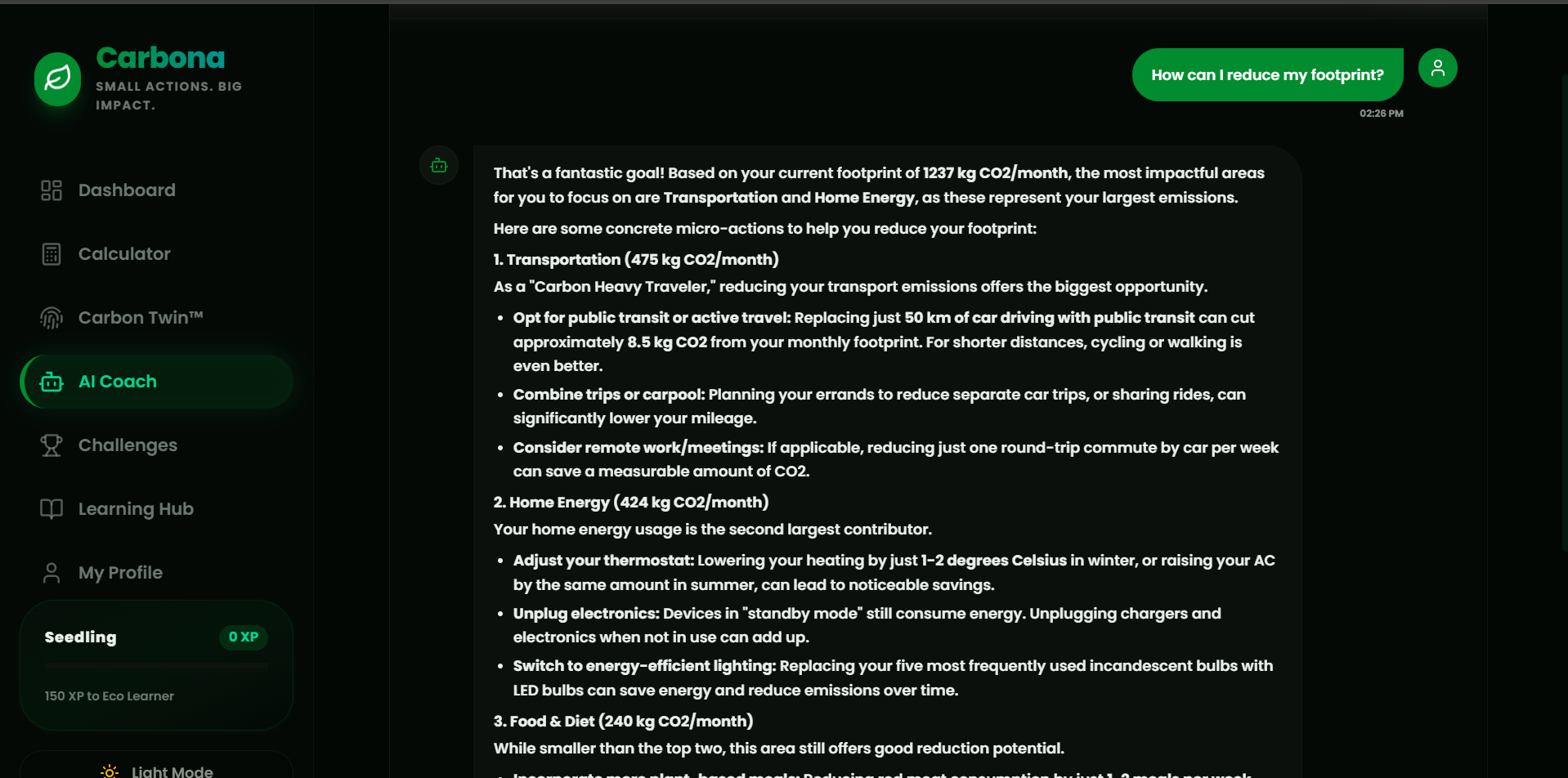
- AI Sustainability Coach ("Eco"): An autonomous AI agent powered by Gemini that analyzes the user's active footprint logs to deliver customized, conversational optimization strategies.
- Analytics Dashboard & Reports: Responsive charts and automated weekly checkups visualizing daily emission anomalies and primary contributors.
- Gamified Engagement: Interactive weekly carbon challenges with XP rewards and sustainability badges to incentivize long-term green habits.
🛠️ How we built it
- Frontend Architecture: Built as a production-grade web application using Next.js 16 (App Router) and strict TypeScript.
- Design System: Designed using Tailwind CSS v4 featuring custom OKLCH eco-color palettes and smooth visual transitions using Framer Motion.
- State Engine: Implemented Zustand with local storage persistence to seamlessly retain calculator data, XP progress, and AI conversation history across route updates.
- Data Visualization: Integrated Recharts to display responsive vector charts mapping emission category breakdowns and historical carbon reduction pathways.
- Intelligence Layer (Agentic Ops): Utilized the Gemini 2.5 Flash model via the
@google/genaiNode client wrapper. Client requests communicate with a secure Next.js Route Handler (/api/chat) which securely builds context-rich system prompts containing the user's active footprint metrics.
🧠 Challenges we faced
- Context Alignment: Ensuring the AI Coach ("Eco") stayed strictly grounded in the user's specific, real-time footprint logs without hallucinating unrealistic green targets.
- UI/UX Balance: Designing a multi-step calculator that captures deep operational metrics (energy, food, transit) without causing form fatigue, which we solved using a clean glassmorphic step-by-step wizard.
🏅 Accomplishments that we're proud of
- Successfully building a fully responsive, highly interactive glassmorphic dashboard interface from scratch.
- Creating a seamless prompting architecture that allows the Gemini agent to instantly adjust its tone and feedback based on changing weekly emission metrics.
📚 What we learned
- Deepened our understanding of agentic data workflows—specifically how to feed structured user logs into an LLM to act as an autonomous monitoring assistant.
- Learned how to design clean telemetry inputs (user forms) that mirror the operational data pipelines found in production engineering environments.
🚀 What's next for Carbona
- Splunk Integration: Building custom Splunk MCP Server endpoints to forward household energy logs and web-app telemetry directly into Splunk dashboards for deeper anomaly detection.
- IoT Smart Meter Syncing: Reading utility APIs to automatically sync live electrical household loads with the calculator.
- Micro-Offsets Marketplace: Enabling carbon offset token purchases linked directly to local forestry programs.
- Social Challenge Leagues: Allowing users to compete with friends or coworkers in seasonal eco-leaderboard brackets.
Built With
- framer-motion
- gemini-2.5-flash
- gemini-api
- netlify
- next.js-16
- node.js
- recharts
- tailwind-css-v4
- typescript
- zustand


Log in or sign up for Devpost to join the conversation.