-
-
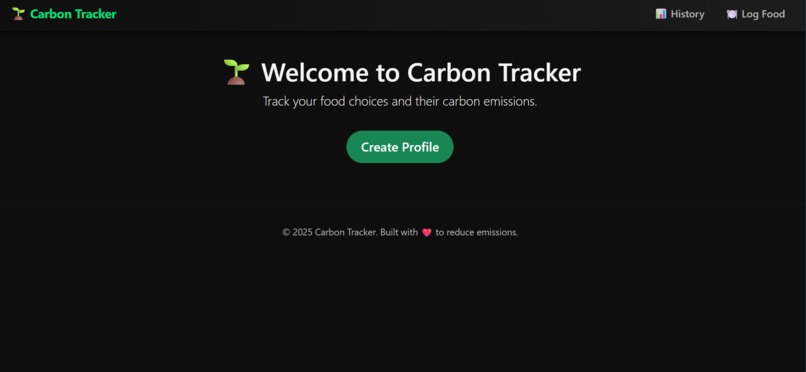
User Interface
🌱 Inspiration
Climate change is one of the most pressing challenges of our time, and a major contributor is food production and consumption. While many people want to reduce their carbon footprint, they often lack the tools to understand the environmental impact of their daily food choices. We wanted to create a simple yet powerful tool that empowers individuals to make sustainable eating decisions backed by data.
💡 What it does
Carbon Tracker lets users:
Create a personal profile to log food consumption.
Track the carbon emissions of each food item based on scientific datasets.
Visualize daily, weekly, or monthly trends in a clean dashboard.
Get insights into which food categories contribute most to their carbon footprint.
Encourage sustainable habits by showing users eco-friendly alternatives.
🛠️ How we built it
Backend: Flask (Python) with MongoDB for storing user data, profiles, and food logs.
Frontend: Jinja2 templates with Bootstrap 5 for responsive, professional UI.
Data Processing: NumPy & Pandas for handling emissions datasets.
Visualization: Matplotlib & Seaborn to display emission charts.
AI/ML Integration: Basic recommendation engine suggesting lower-emission alternatives.
Deployment: GitHub + local testing, future-ready for cloud deployment (Heroku/AWS).
⚡ Challenges we ran into
Finding reliable food emission datasets and cleaning them for consistency.
Balancing between usability (simple UX) and data accuracy (scientific metrics).
Handling user sessions and personalization securely with Flask.
Making visualizations both insightful and lightweight for quick load times.
🏆 Accomplishments that we're proud of
Built a functional end-to-end platform within a hackathon timeframe.
Integrated AI-powered suggestions for sustainable food swaps.
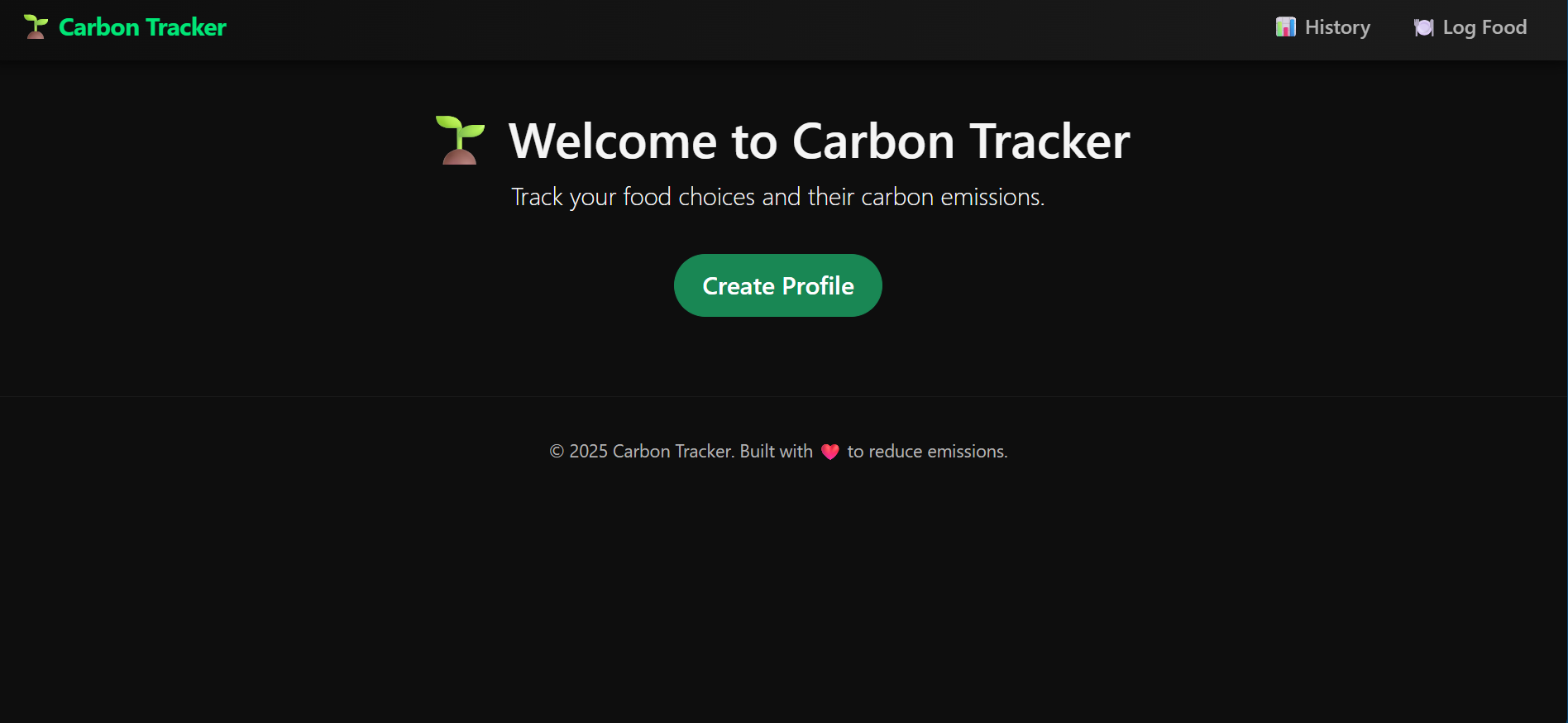
Designed a modern dark-theme UI that feels professional and intuitive.
Created a reusable food-emission dataset pipeline for future research.
📚 What we learned
How to combine AI, data science, and web development into a cohesive product.
Importance of designing with impact in mind—tech is powerful when aligned with sustainability.
How to collaborate on GitHub effectively and maintain clean documentation.
🚀 What's next for Carbon Tracker – Sustainable Food Emission Insights
Expand the recommendation system with ML models for personalized suggestions.
Integrate external nutrition APIs to give both health + sustainability insights.
Build a mobile-first app for wider accessibility.
Deploy publicly on cloud (Heroku/AWS/GCP) so users can track emissions globally.
Gamify the experience with badges and rewards for eco-friendly choices.


Log in or sign up for Devpost to join the conversation.