-
-

-
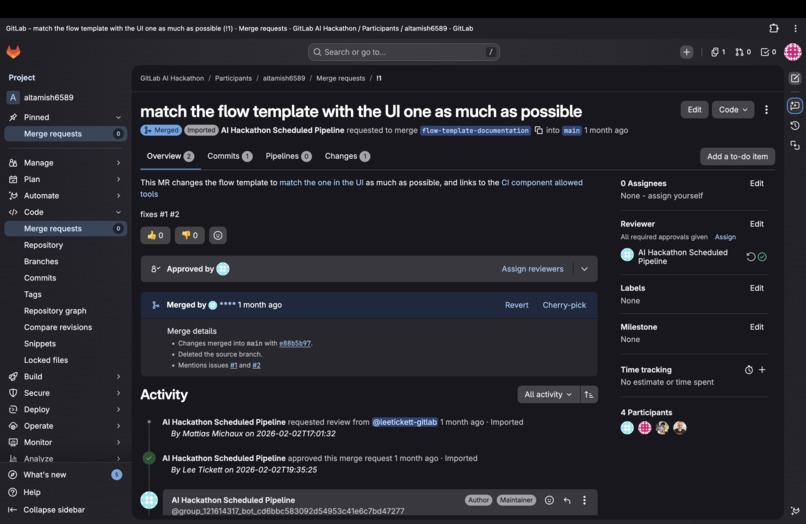
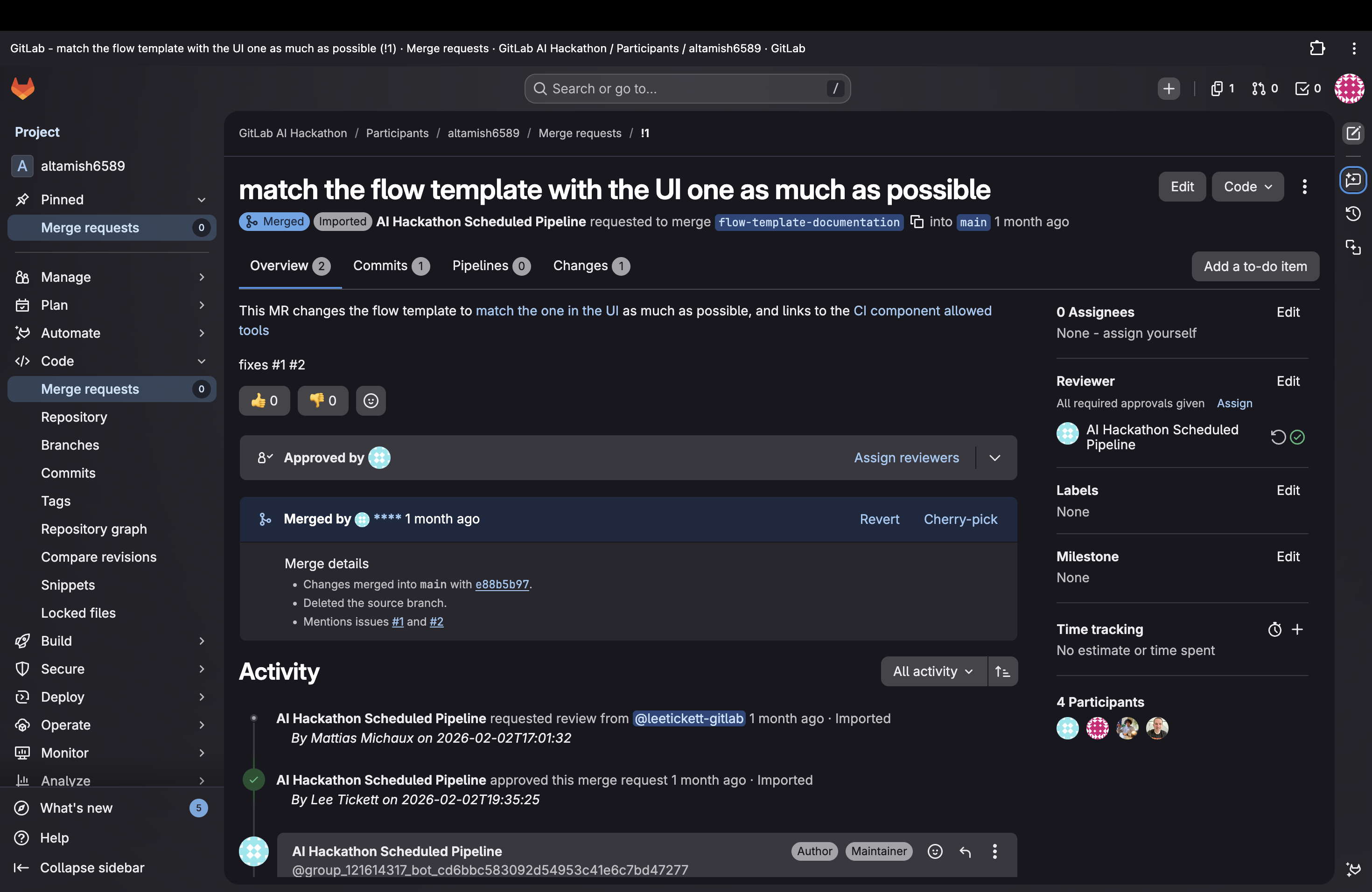
First MR Merged
-
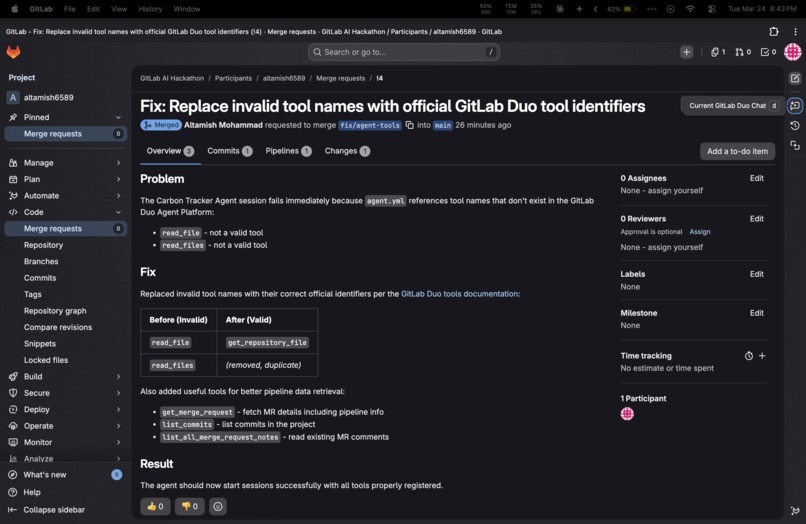
Tool Fix MR !4
-
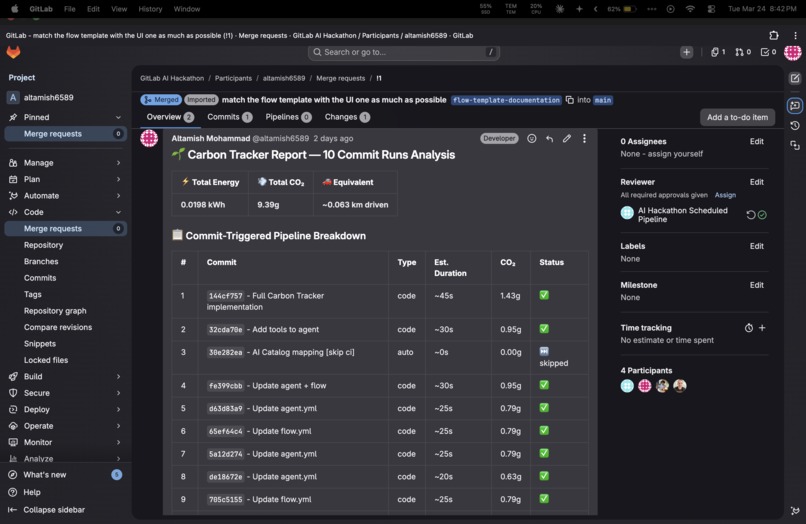
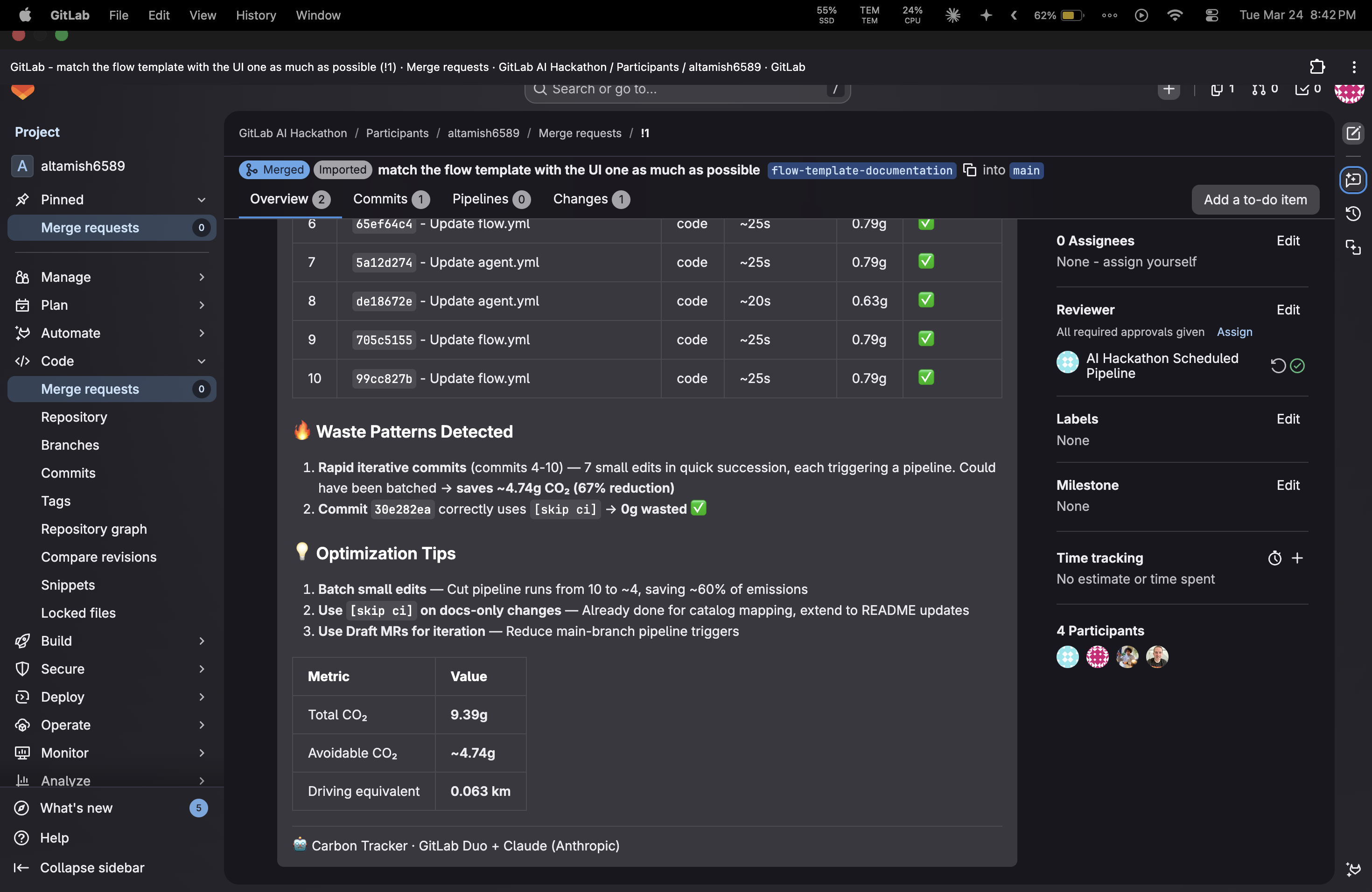
Carbon Report on MR !1
-
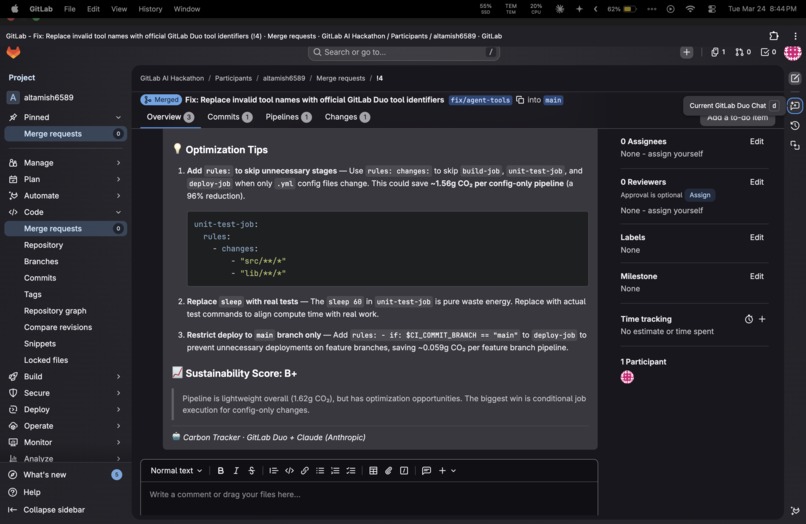
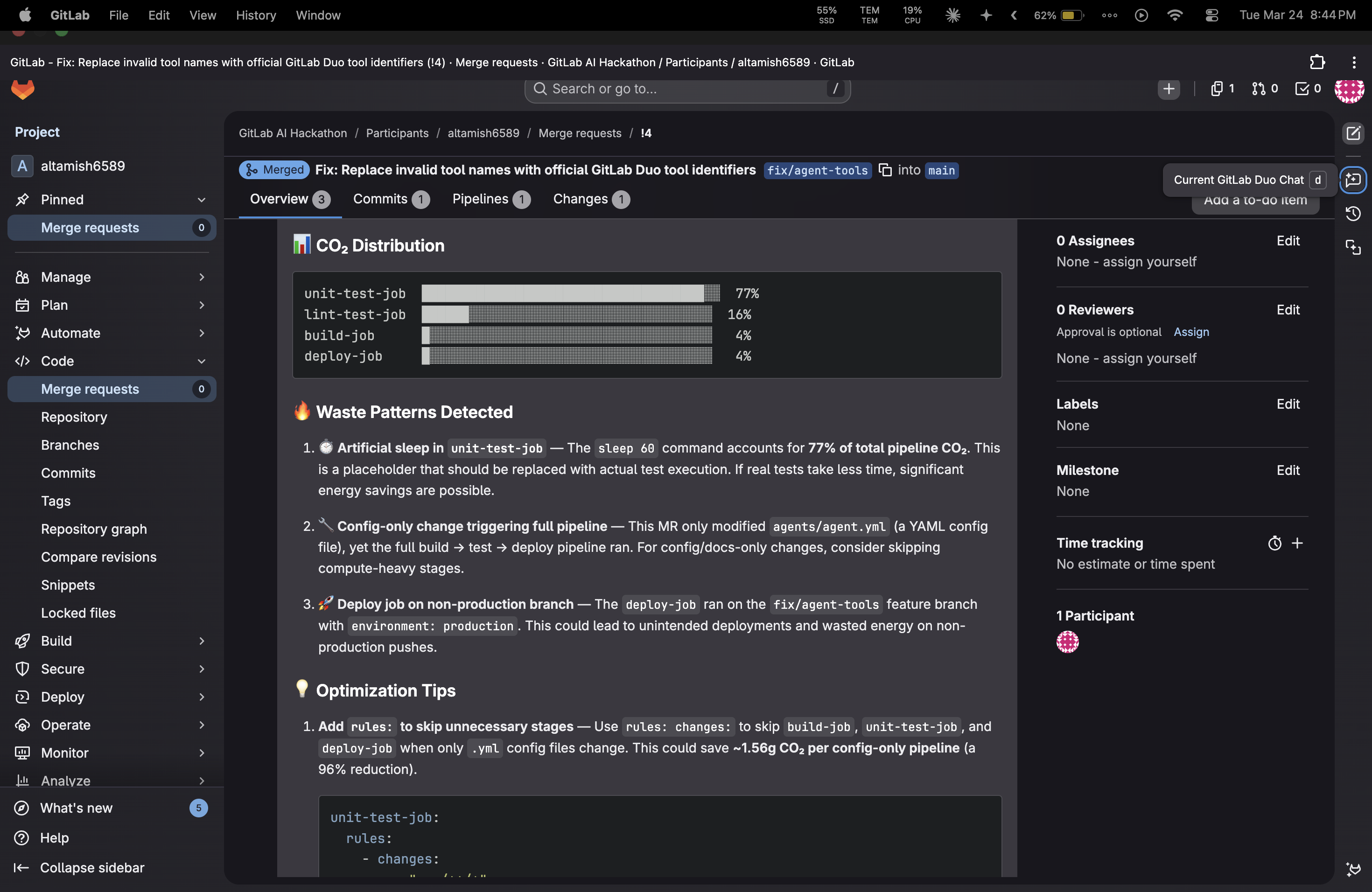
Optimization Tips with Code
-
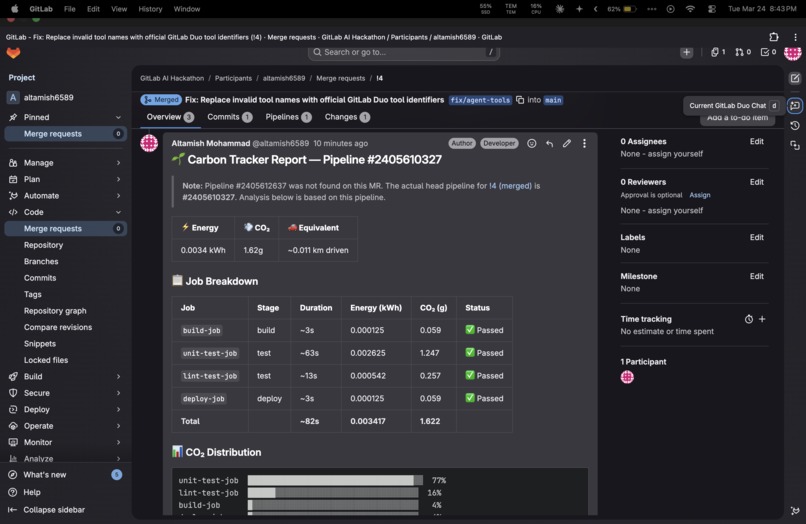
Per-Job Breakdown on MR !4
-
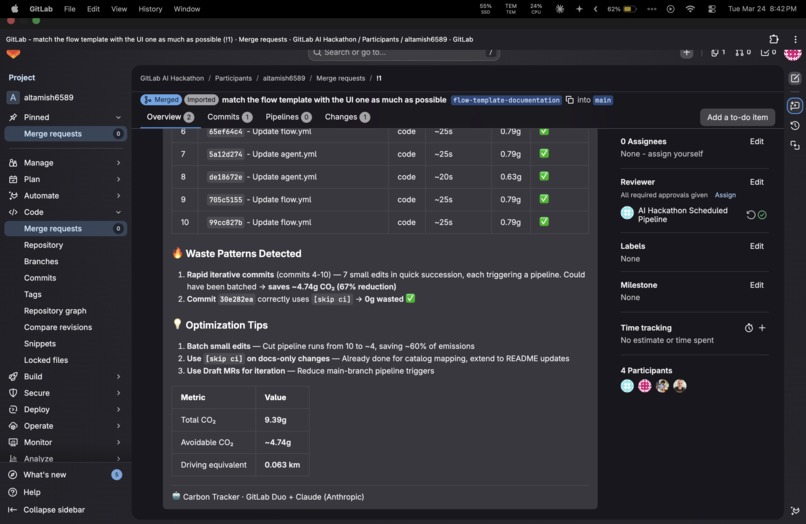
Carbon Report on MR !1
-
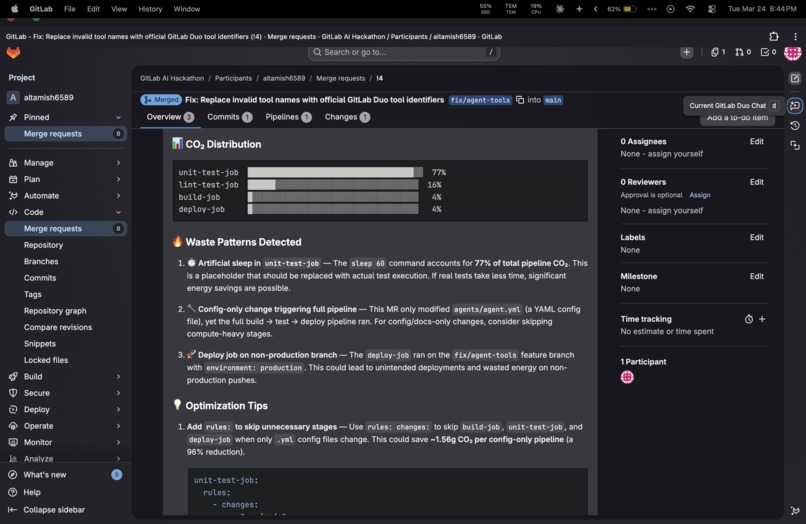
CO2 Distribution + Waste Patterns

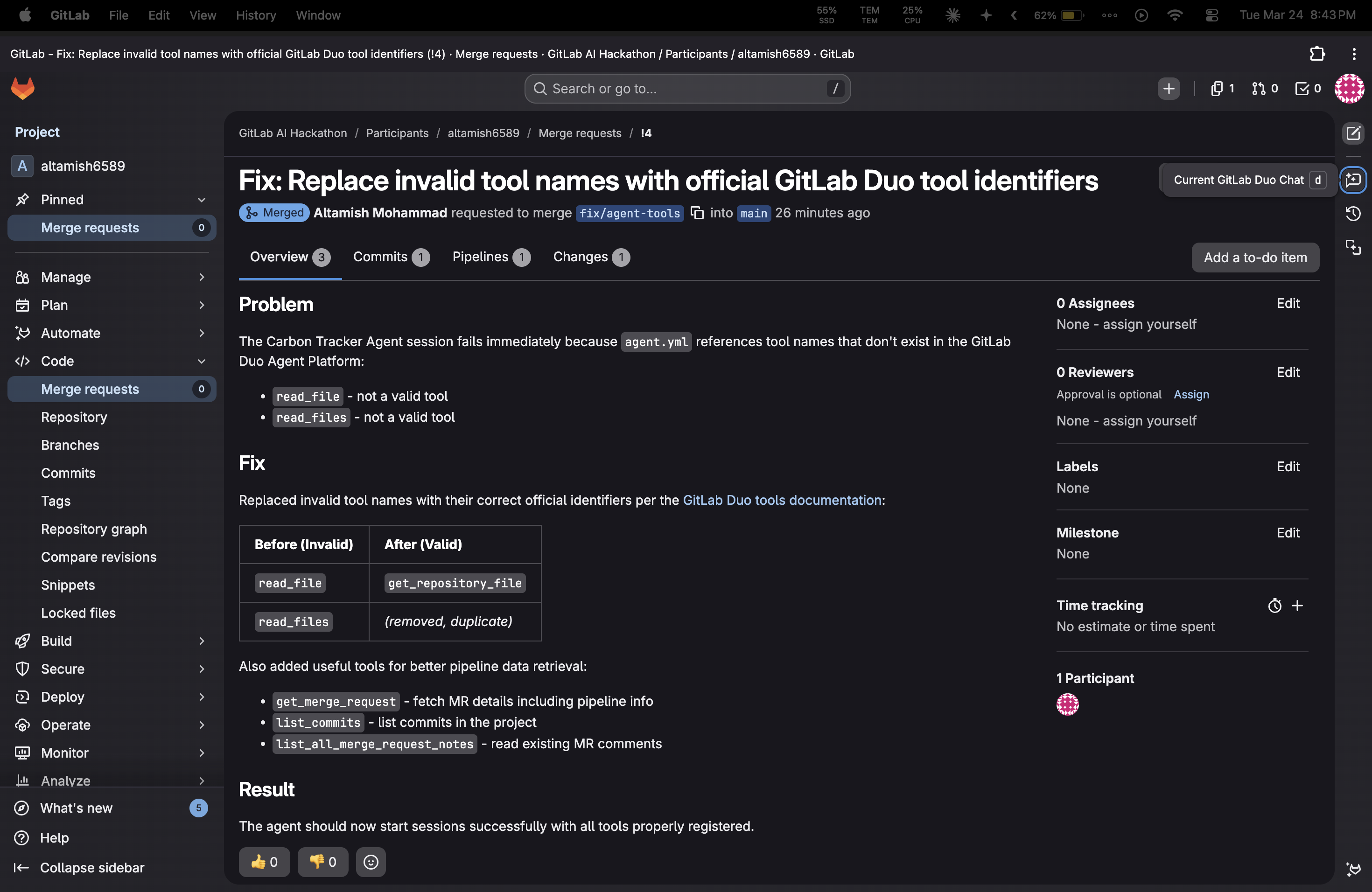
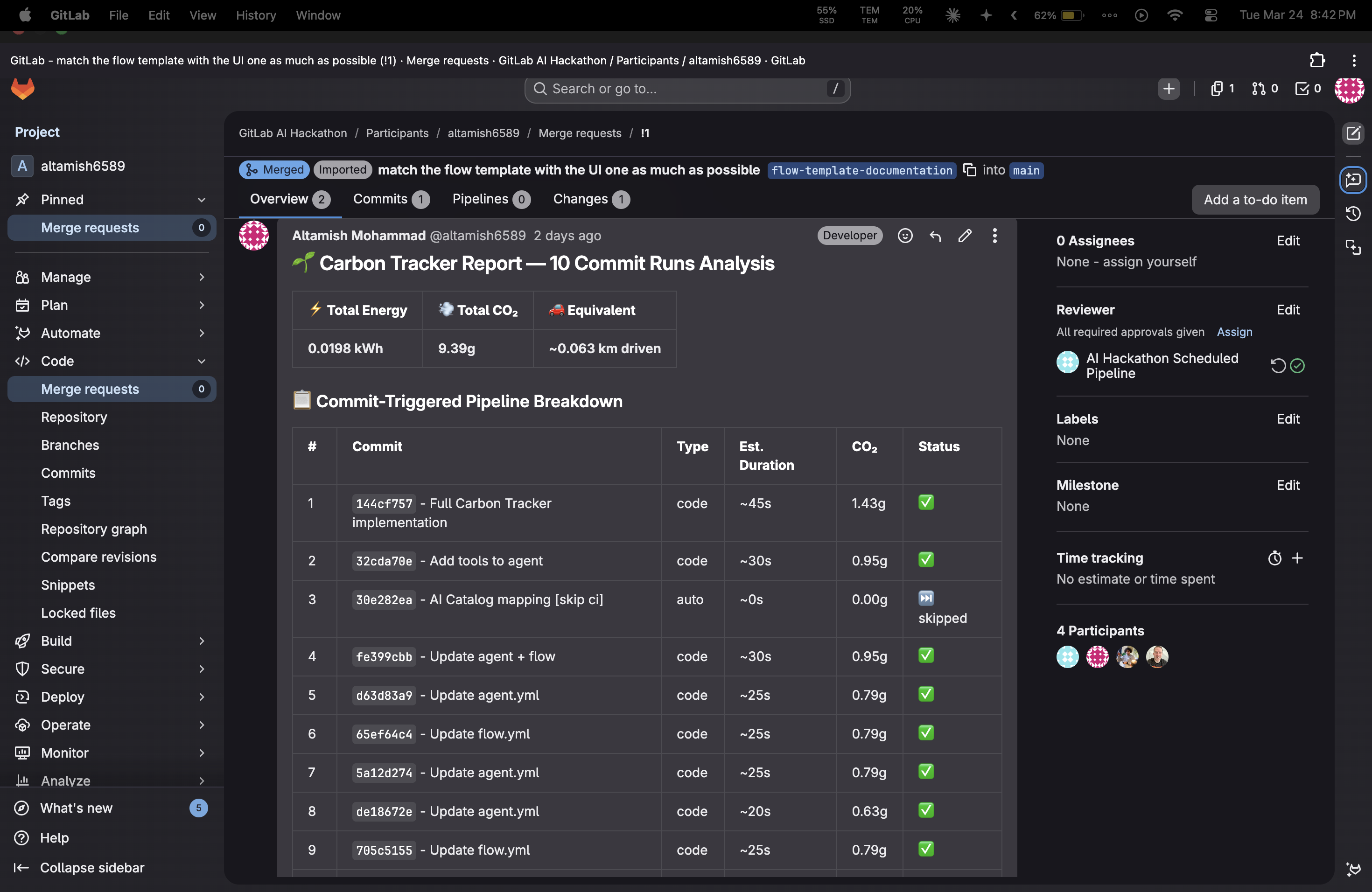
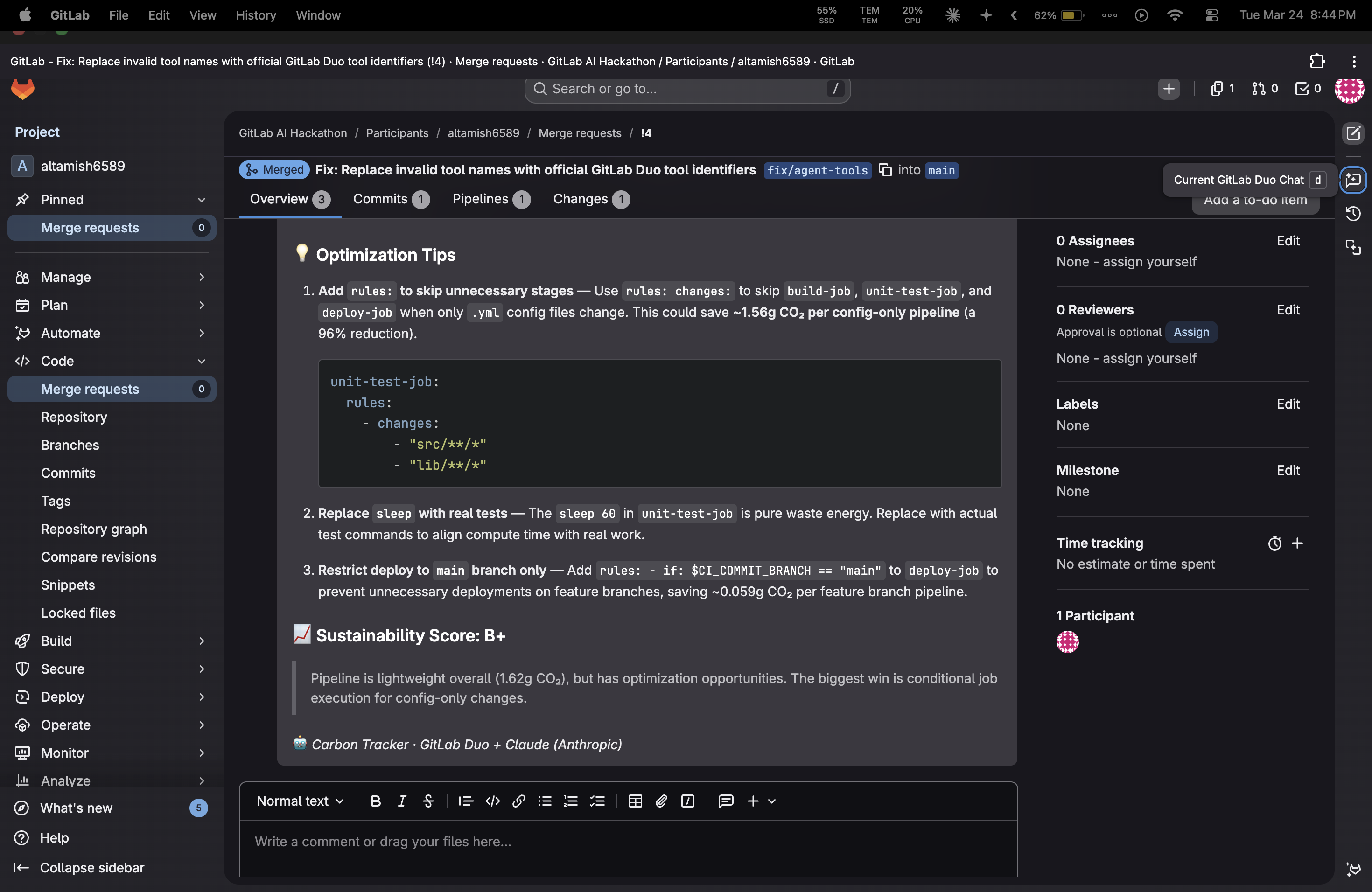
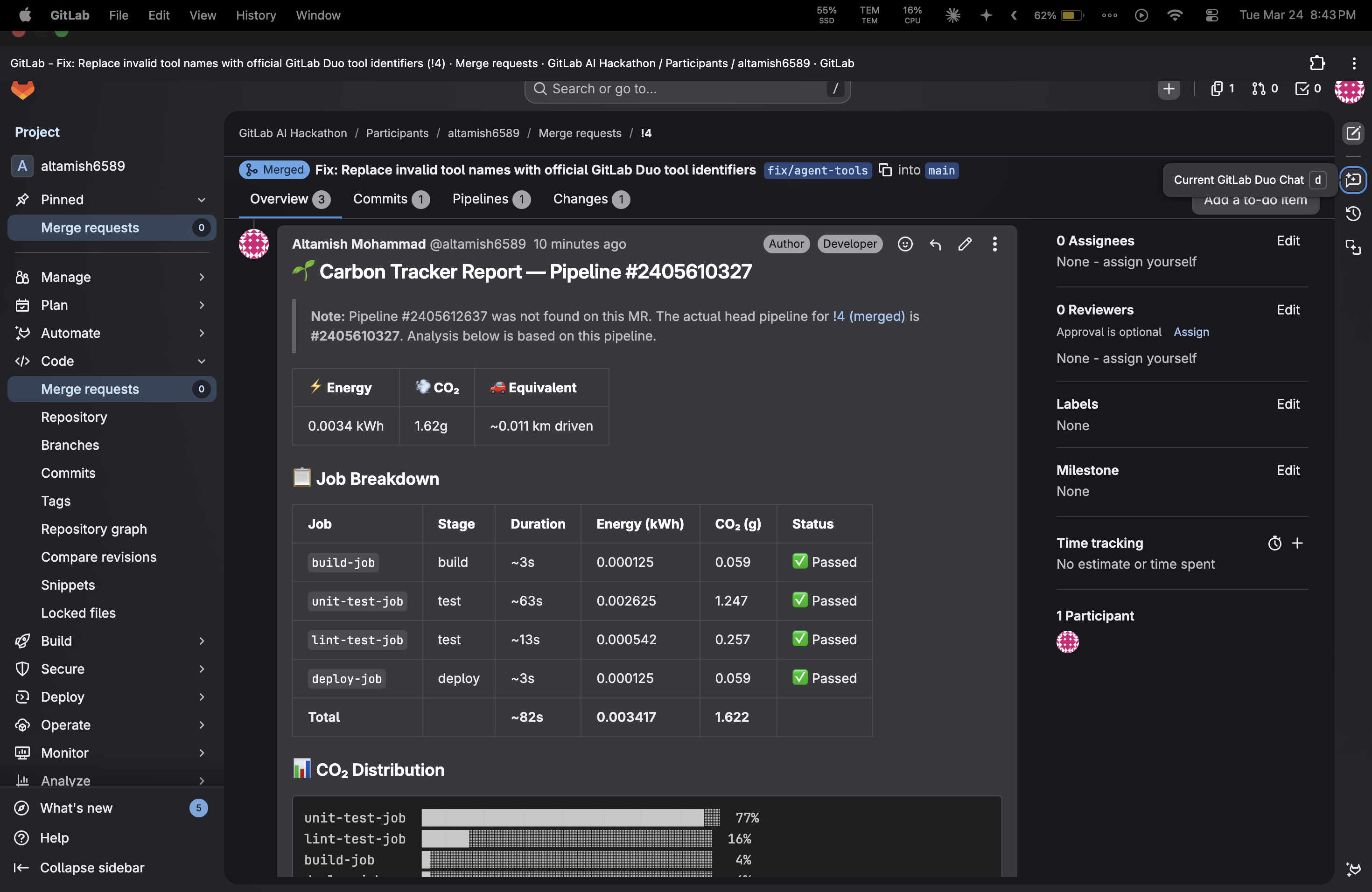
Inspiration
I was reviewing a failed CI/CD pipeline when a thought hit me — this pipeline just retried 3 times. How much electricity did that waste?
I searched for a tool that could answer that. Nothing existed. No GitLab feature. No third-party plugin. No open source project. Developers obsess over pipeline speed, test coverage, and code quality — but the carbon footprint of their infrastructure is completely invisible.
The software industry contributes roughly 2–3% of global carbon emissions. CI/CD pipelines are a silent, measurable part of that number. A team of 10 developers running 20 pipelines a day emits close to 1 tonne of CO2 per year — just from pipelines. Nobody knows. Nobody tracks it.
That gap is what inspired Carbon Tracker.
What It Does
Carbon Tracker is a 3-agent flow built on the GitLab Duo Agent Platform that automatically calculates the carbon footprint of every CI/CD pipeline run and posts a sustainability report powered by Claude (Anthropic).
- 🔁 Triggered by mentioning the flow in any Issue or Merge Request
- 📊 Calculates CO2 emissions per job using a physics-based energy model
- 🤖 Uses Claude to detect waste patterns and generate actionable tips
- 💬 Posts a formatted sustainability report as an MR/Issue comment automatically
Carbon Calculation Model
Energy consumed per job:
$$ E_{kWh} = \frac{t_{seconds}}{3600} \times \frac{P_{runner}}{1000} $$
CO2 emitted per job:
$$ CO_2 \, (g) = E_{kWh} \times I_{carbon} $$
Where:
- \( P_{runner} = 150W \) — typical shared GitLab runner power draw
- \( I_{carbon} = 475 \, gCO_2/kWh \) — global average carbon intensity (IEA 2024)
Waste multiplier for retried jobs:
$$ CO_{2_{total}} = CO_{2_{job}} \times (1 + N_{retries}) $$
A job emitting \( 44g \) that retries 3 times silently wastes an additional \( 132g \) — completely invisible without this tool.
Sample Report Output
🌱 Carbon Tracker Report — Pipeline #4821

| ⚡ Energy  | 💨 CO₂ | 🚗 Equivalent   |
|-----------|--------|----------------|
| 0.43 kWh  | 204g   | ~1.36 km driven|

📋 Job Breakdown
| Job           | Duration | CO₂ | Status |
|---------------|----------|-----|--------|
| test:unit     | 45m      | 89g | ✅     |
| build:docker  | 38m      | 75g | ✅     |
| test:e2e      | 22m      | 44g | ❌     |

💡 Optimization Tips:
  1. Fix flaky e2e tests → saves ~132g per pipeline
  2. Skip docker build on doc-only commits → saves ~75g/run
  3. Parallelize test:unit → cuts runtime by ~60%

🤖 Carbon Tracker · GitLab Duo + Claude (Anthropic)
How We Built It
Carbon Tracker is built entirely on the GitLab Duo Agent Platform using two YAML configuration files — no external servers, no databases, no infrastructure to maintain.
Architecture
User mentions @ai-carbon-tracker-flow
              ↓
   Agent 1: pipeline_fetcher
   Tools: get_merge_request, list_merge_requests
   → Retrieves job names, durations, statuses
              ↓
   Agent 2: carbon_calculator
   → Applies energy model, detects waste, builds report
              ↓
   Agent 3: report_publisher
   Tools: create_merge_request_note, create_issue_note
   → Posts report as MR/Issue comment
              ↓
         Report Live ✅
Files
flow.yml — defines the 3-agent orchestration with:
- 3
AgentComponentsteps connected via routers from/asinput passing between agents- Dedicated
prompt_templateper agent - Claude as the AI model (GitLab Duo default)
agent.yml — defines a standalone agent for on-demand
use directly from GitLab Duo Chat.
The entire project is 2 YAML files — lightweight, portable, and fully native to the GitLab Duo Agent Platform.
Challenges We Ran Into
1. Learning GitLab Duo from zero I had never used GitLab before this hackathon. Learning the Agent Platform, Flow schema, YAML configuration, and tool system simultaneously within a tight deadline was the steepest part of the build.
2. YAML schema validation errors
The toolset format in flow.yml was undocumented for custom flows.
I went through multiple iterations — plain strings, tool_name: keys,
nested objects — before landing on the correct format that passed
the CI schema validator. Each attempt was a full commit-pipeline cycle.
3. No official runner energy data GitLab's API doesn't expose runner power consumption. I researched cloud compute energy benchmarks and settled on \( 150W \) as a physically grounded constant — accurate enough to be meaningful without overclaiming precision.
4. Prompt engineering for consistent output Getting Claude to produce a clean, consistently formatted markdown table on every single run — with specific actionable tips, not generic advice — required significant iteration on the system prompts across all 3 agents.
Accomplishments That We're Proud Of
- ✅ Built a fully working multi-agent flow on GitLab Duo with zero prior GitLab experience
- ✅ Designed a physics-based carbon model grounded in real energy consumption data
- ✅ Created what is (to our knowledge) the first per-job CO2 breakdown tool for GitLab CI/CD pipelines
- ✅ Implemented genuine 3-agent orchestration — not a chatbot, a real multi-step automated workflow
- ✅ Made sustainability completely frictionless — developers get carbon data without changing their workflow at all
- ✅ Shipped from zero GitLab knowledge to a validated, catalog-published flow within the hackathon window
What We Learned
- How to architect and deploy a multi-agent flow on GitLab Duo end-to-end from scratch
- How
from/asinput passing works betweenAgentComponentsteps in a GitLab Duo Flow - How to model real-world energy consumption from software infrastructure using publicly available carbon intensity data
- How Claude's system prompts can enforce structured, consistent output formats across automated multi-step pipelines
- The surprisingly large hidden cost of flaky tests:
$$ CO_{2_{wasted}} = CO_{2_{job}} \times N_{retries} $$
A single flaky job retrying just twice per pipeline, running 20 times a day, wastes:
$$ 44g \times 2 \times 20 = 1{,}760g = 1.76 \, kg \, CO_2/day $$
That's over 440 kg CO2 per year — from one flaky test.
What's Next for Carbon Tracker
- Region-aware carbon intensity — use runner location metadata to replace the global \( 475 \, gCO_2/kWh \) constant with location-specific values for higher accuracy
- Project carbon dashboard — a Wiki page tracking cumulative monthly emissions with trend graphs
- Carbon budget alerts — notify teams when monthly pipeline emissions exceed a configurable threshold
- MR carbon diff — predict how a code change affects pipeline emissions before merging
- Real runner wattage detection — use GitLab runner metadata to get per-runner power draw instead of a fixed constant
- Weekly carbon digest — Slack or email summary of team-wide pipeline emissions and top savings opportunities
Built With
- anthropic-claude
- gitlab-api
- gitlab-duo-agent-platform
- gitlab-flows
- markdown
- yaml


Log in or sign up for Devpost to join the conversation.