-
-
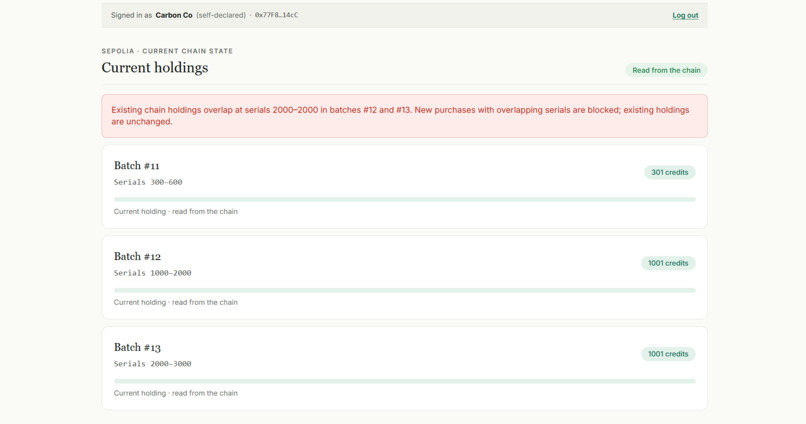
dashboard
-
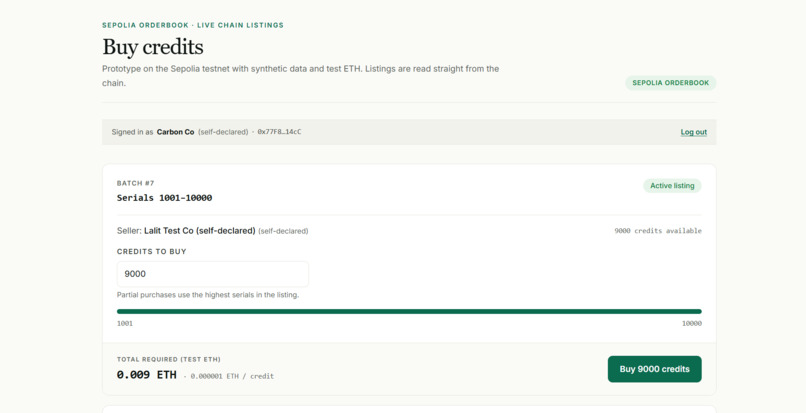
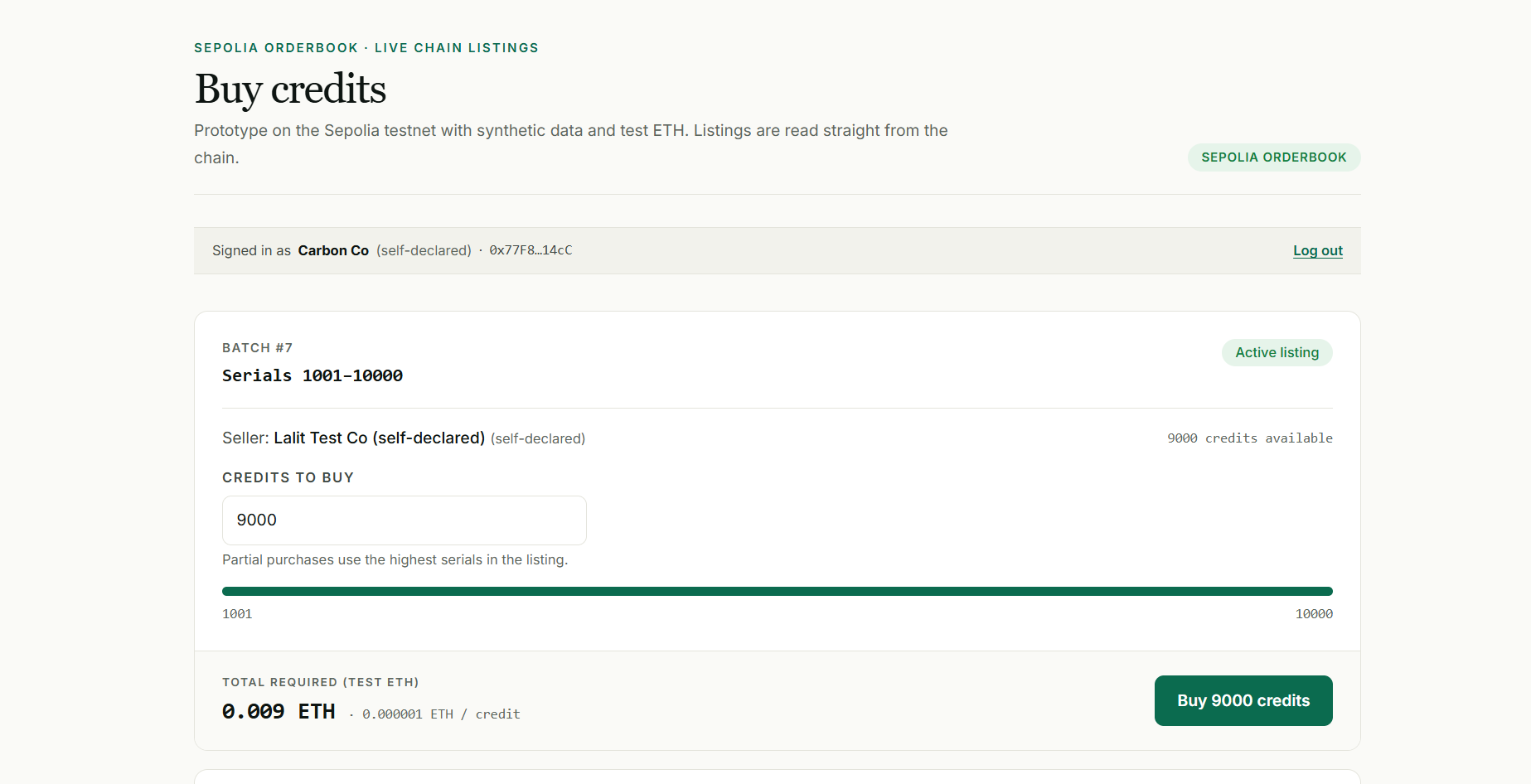
buy credit listings
-
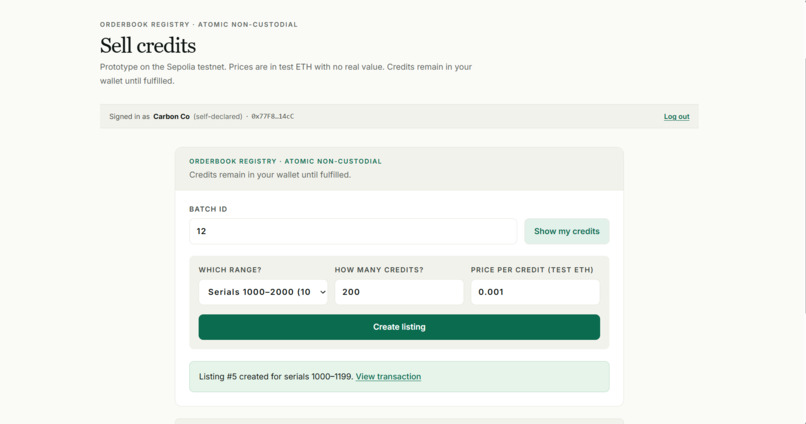
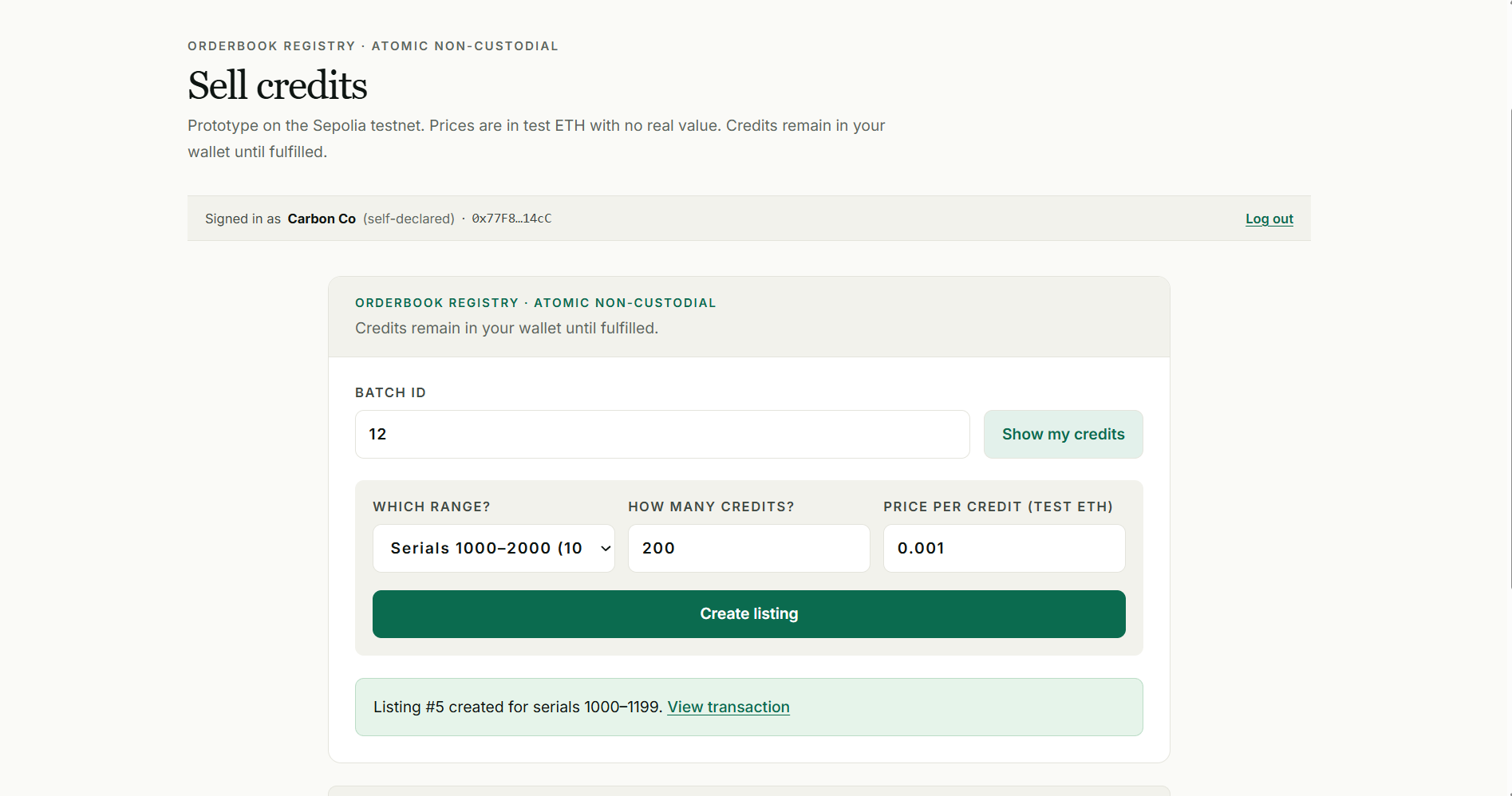
sell credits
-
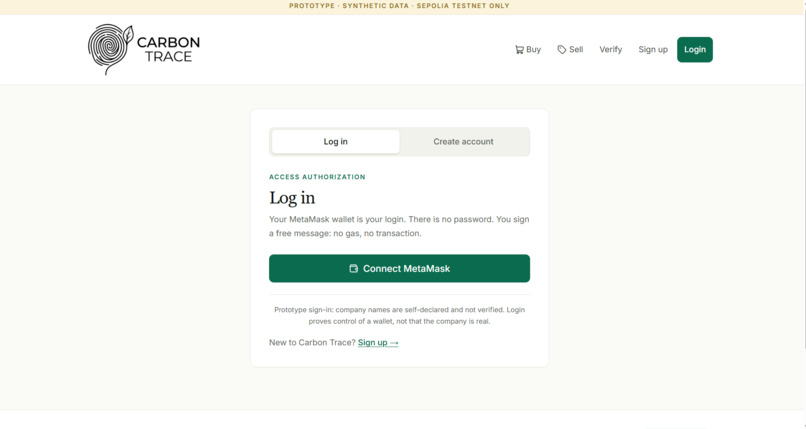
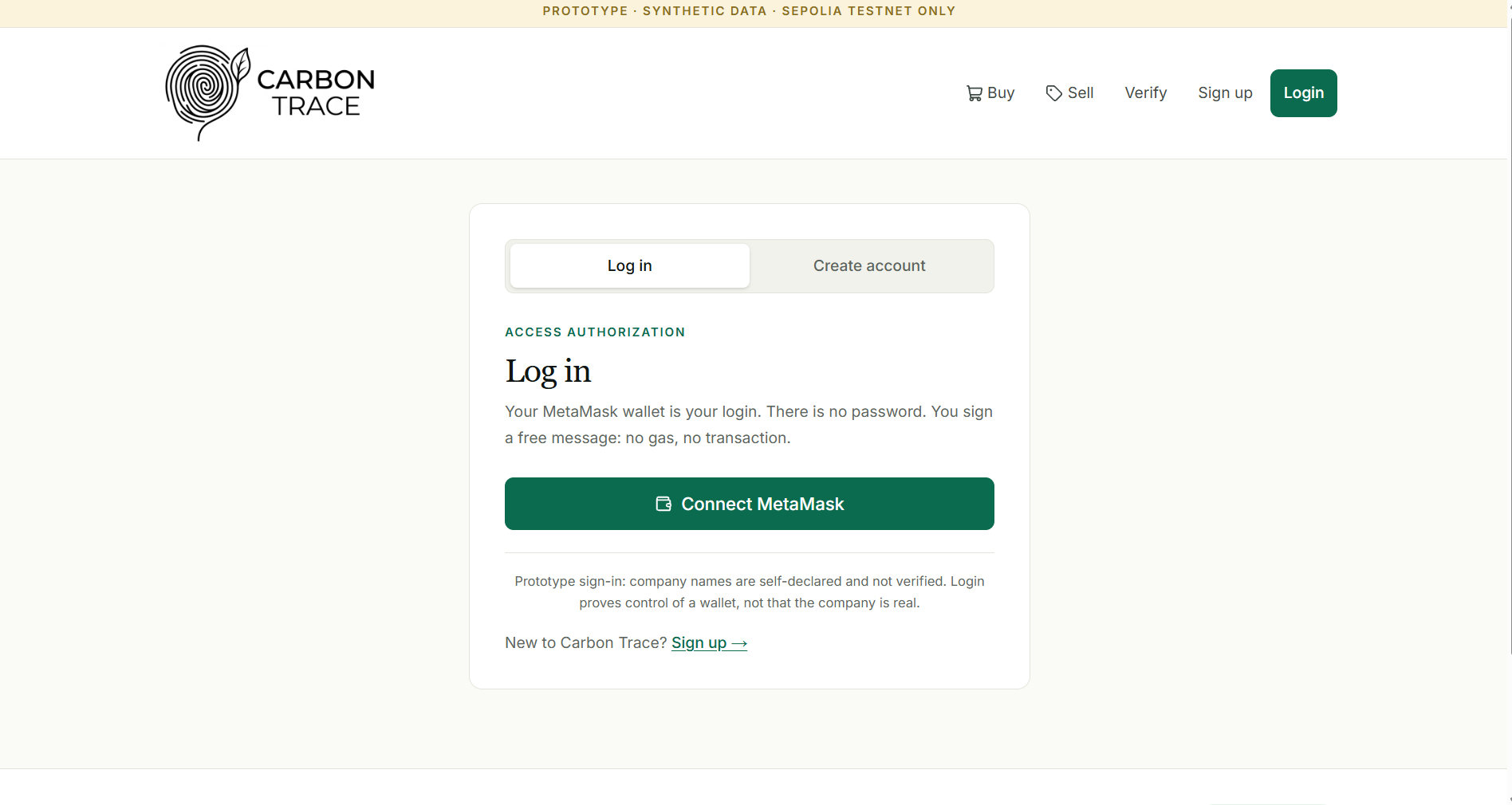
log in
-
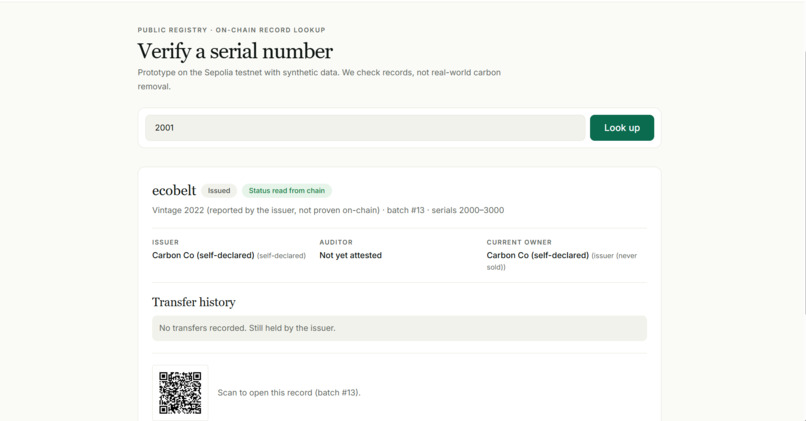
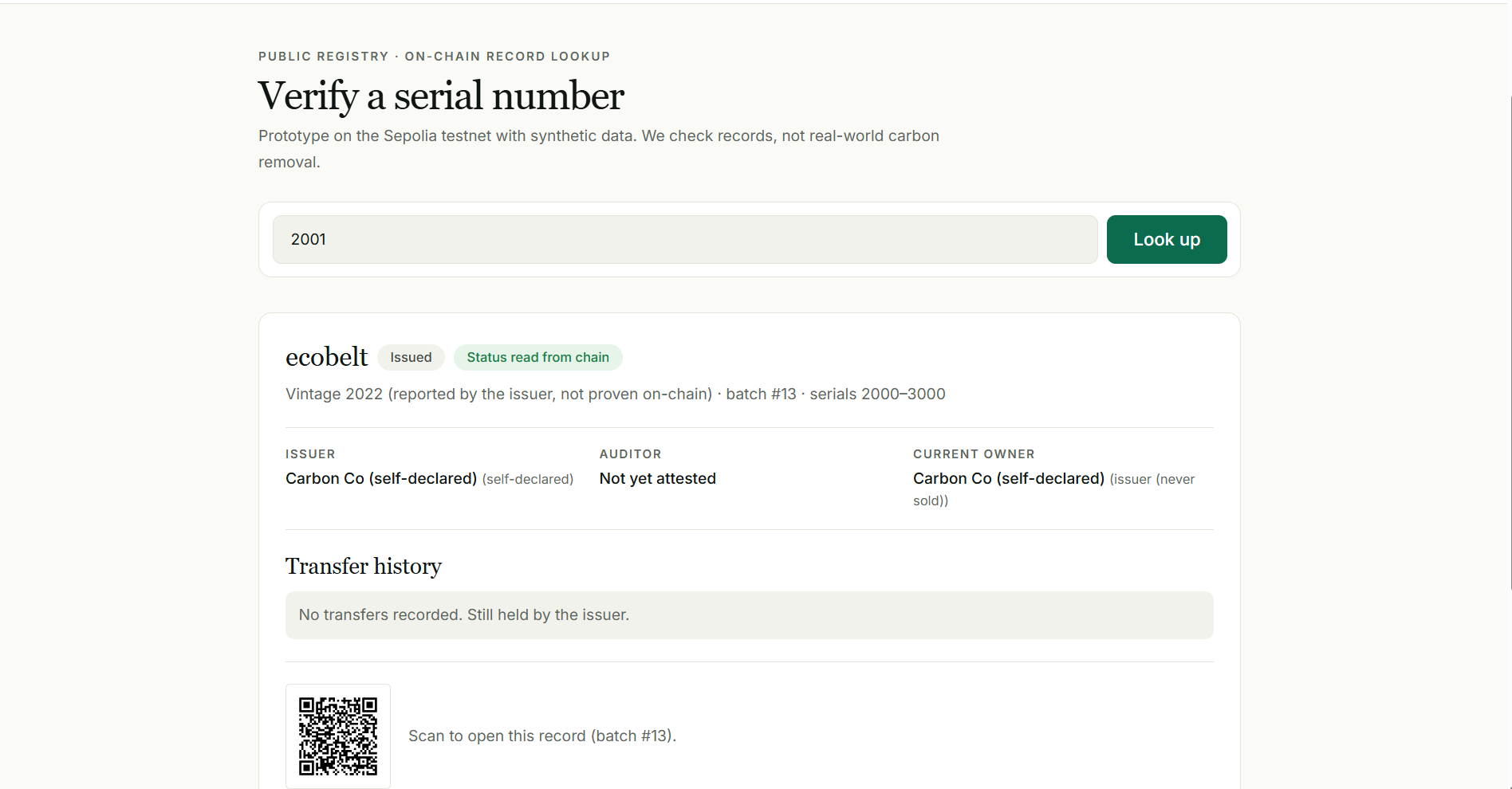
verify credits
-
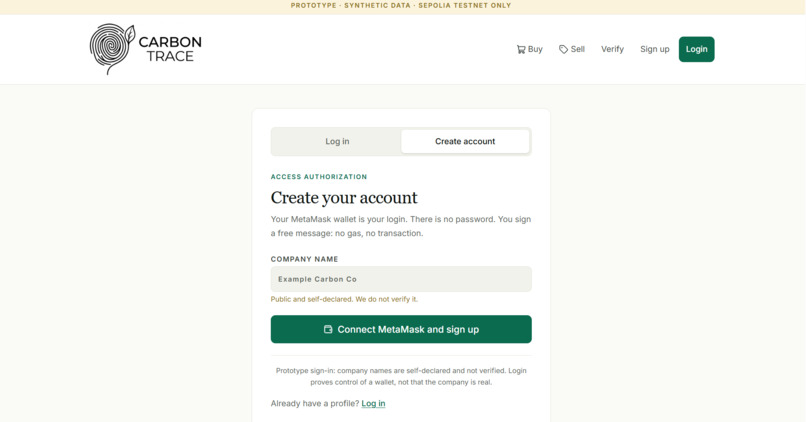
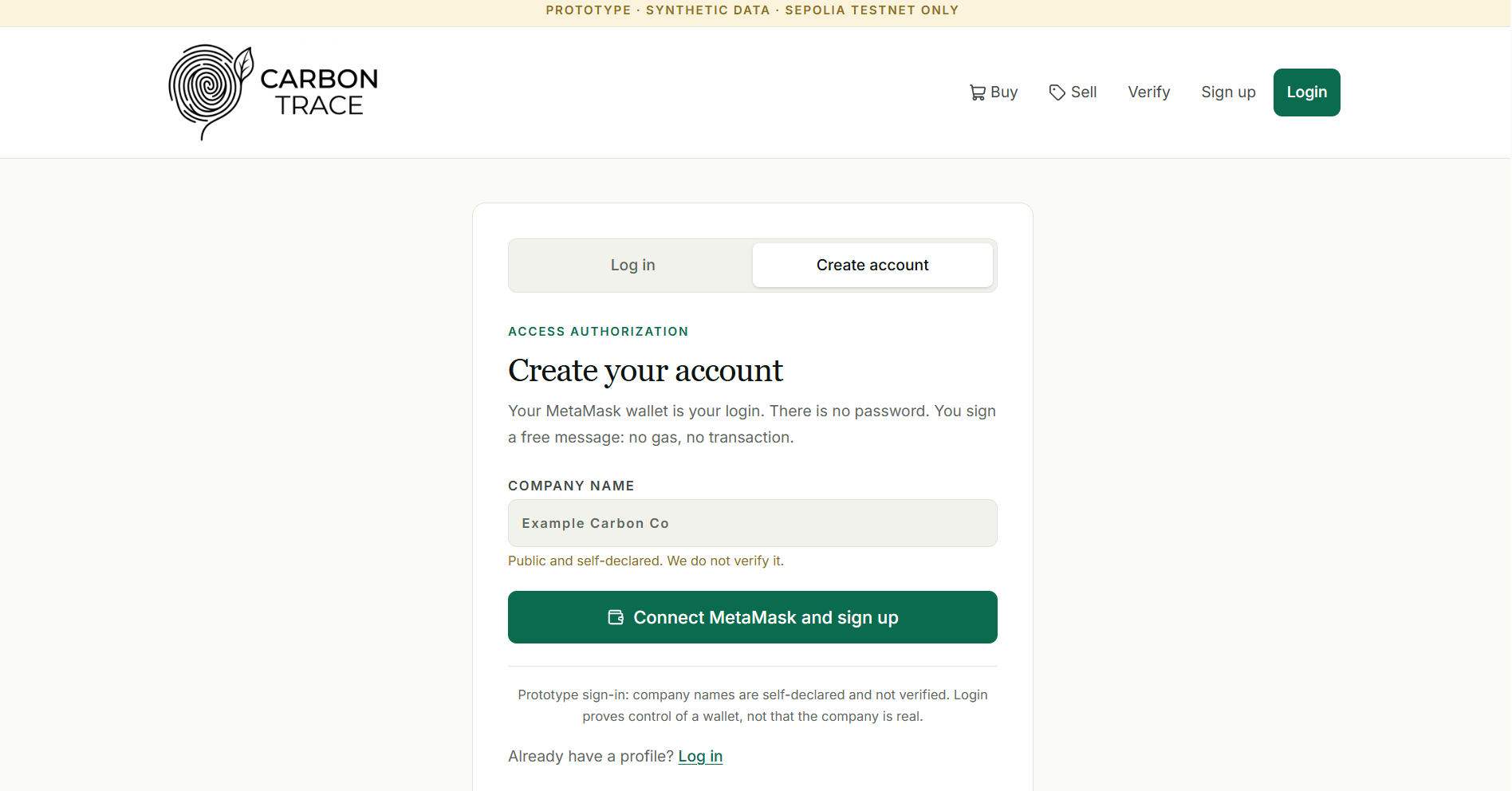
register
-
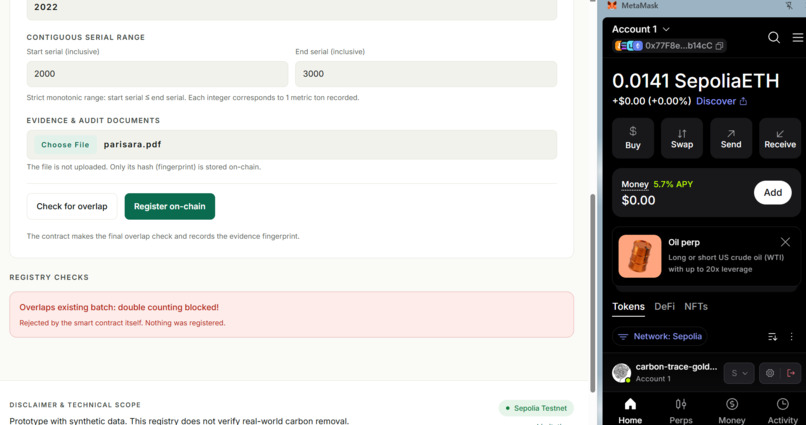
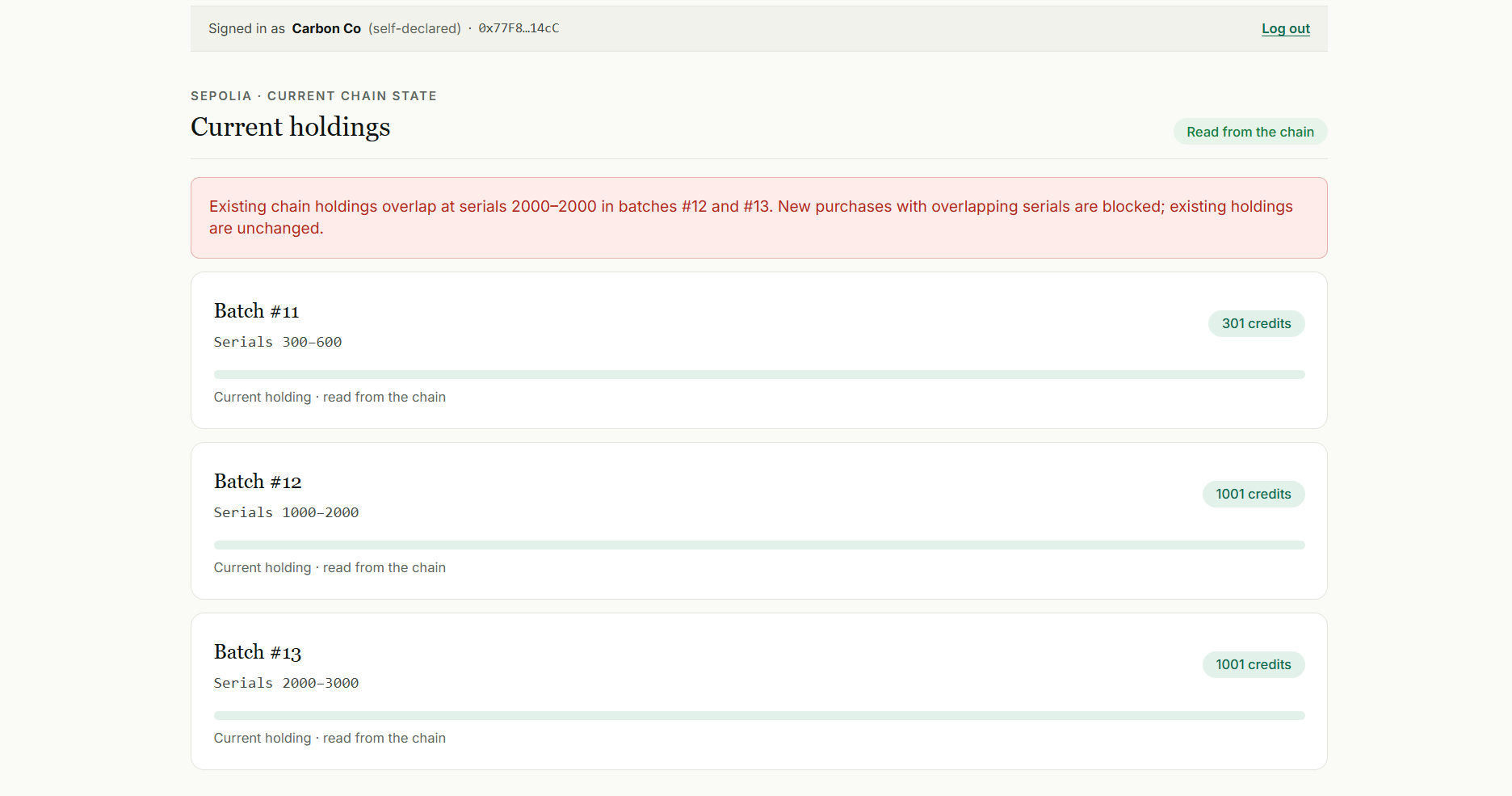
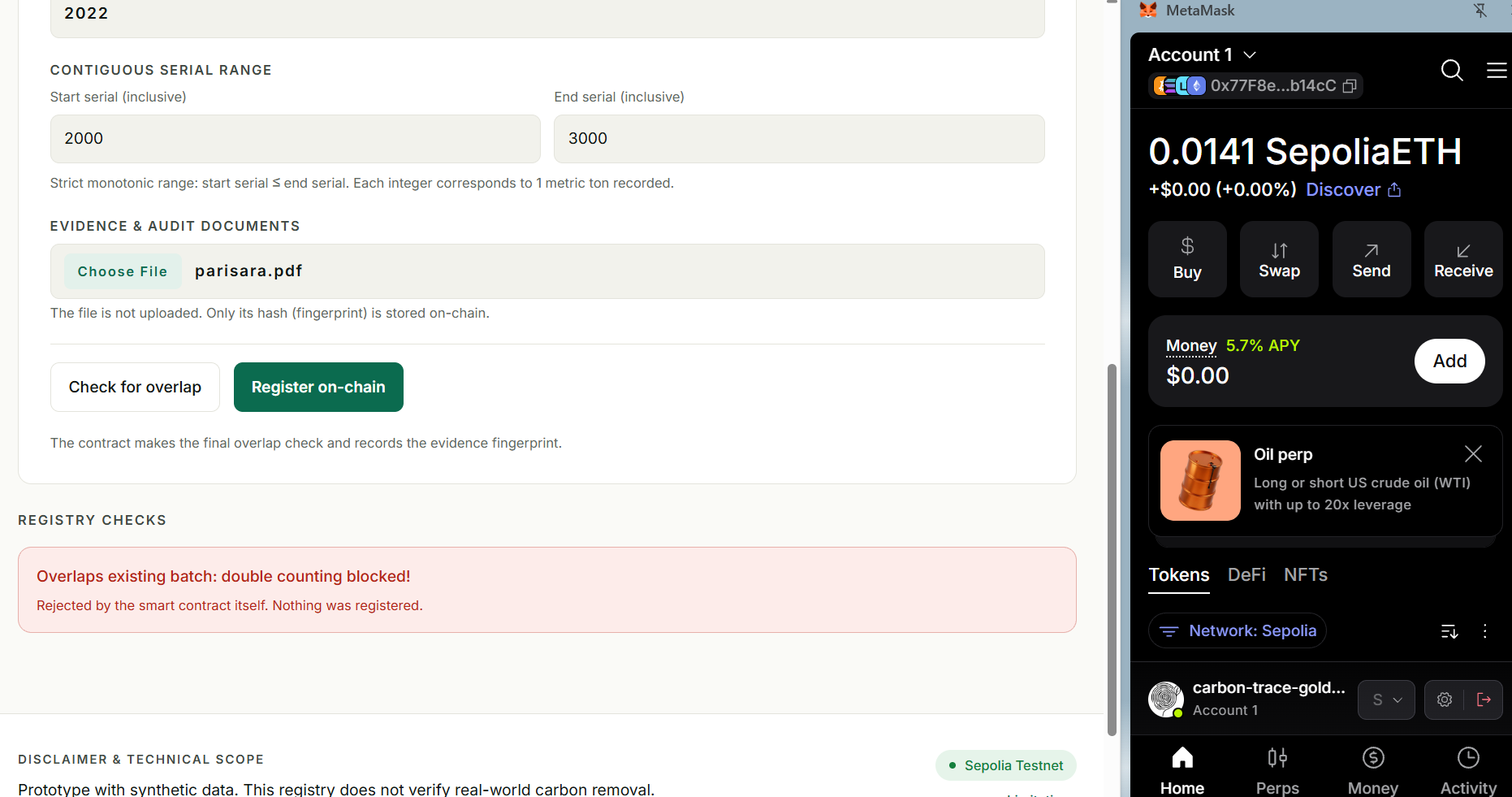
double counting blocked
-
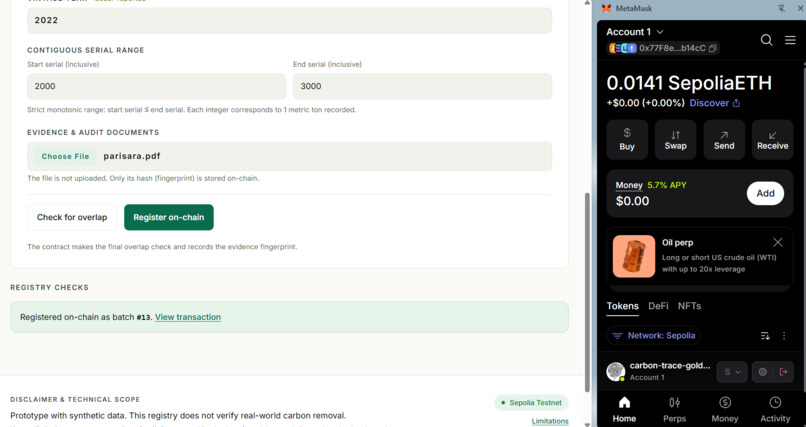
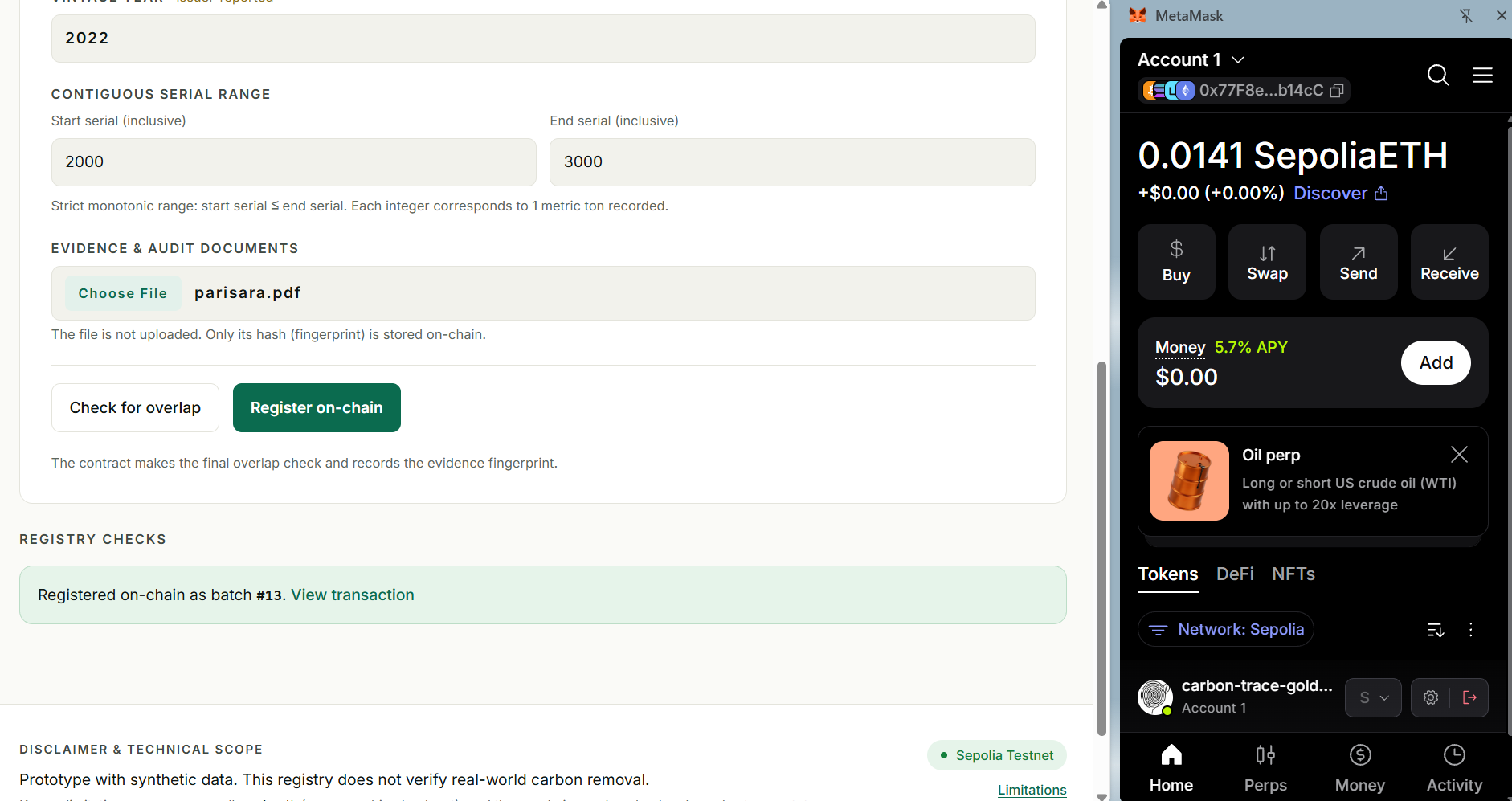
registration of credits success
-
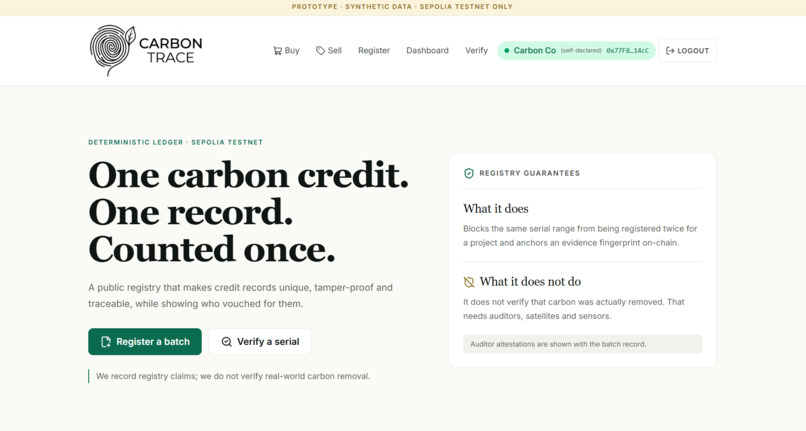
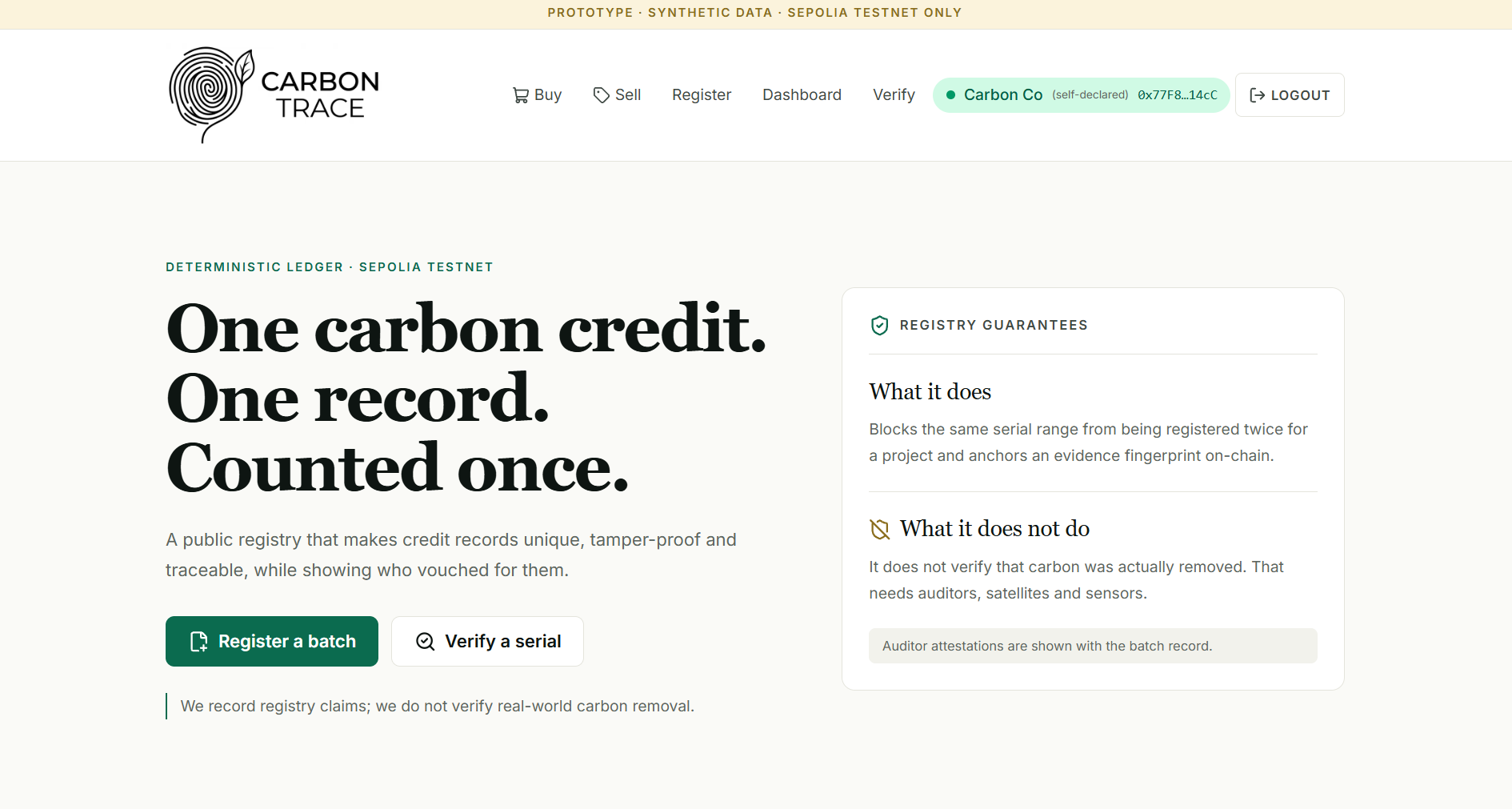
landing page
-
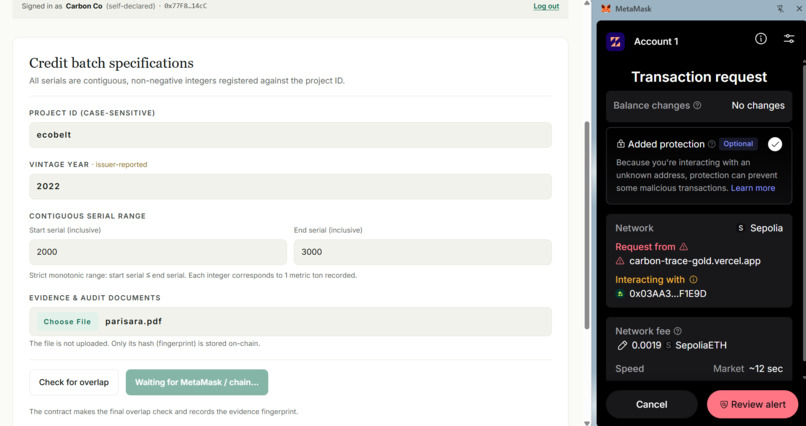
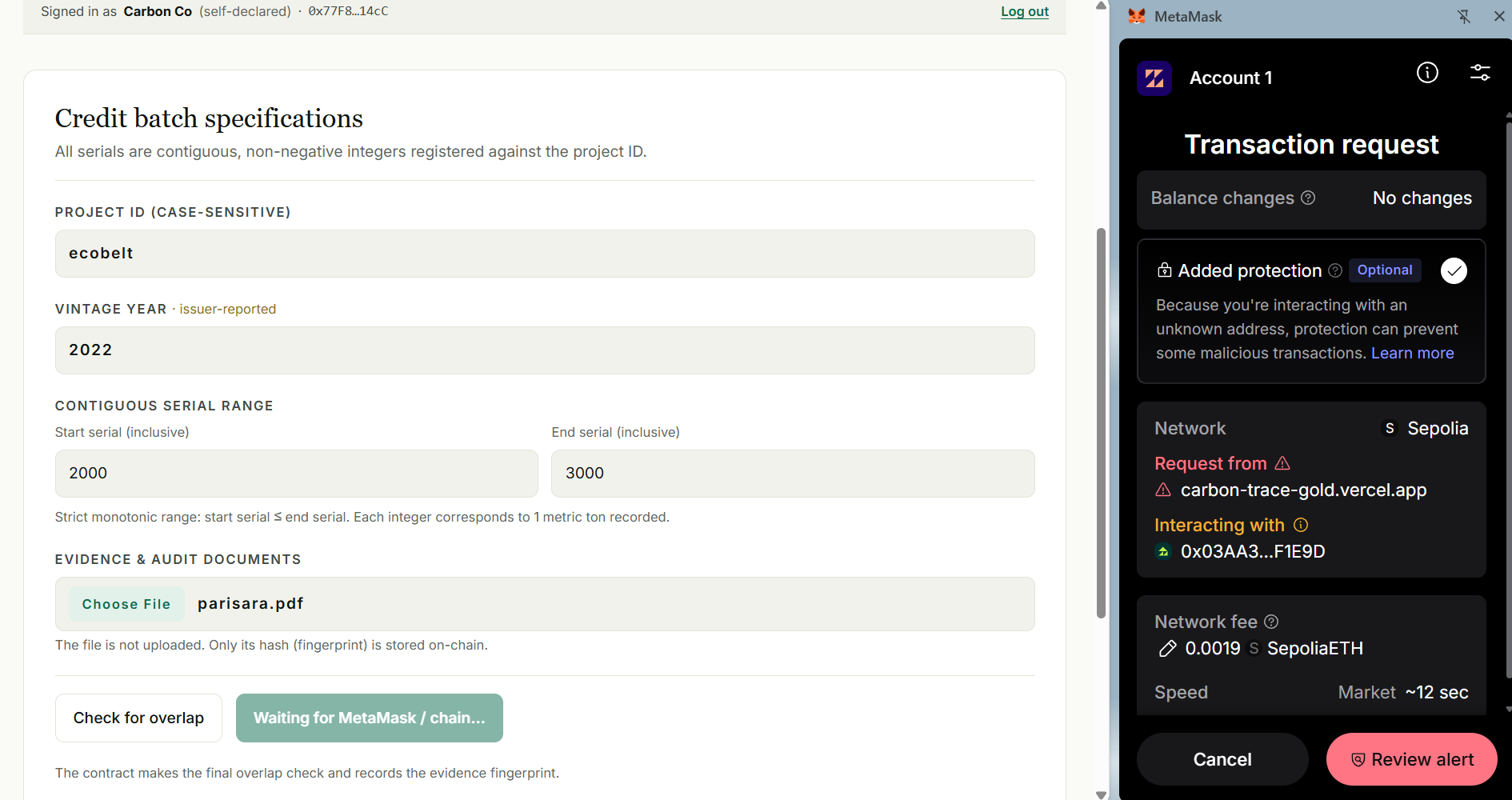
register carbon credits on metamask
Inspiration
I was inspired by the fact that often we discuss climate problems but not about the solutions or the shortcomings in already implemented action plans, one such is carbon credits. They are supposed to represent real environmental impact, but the system behind them is often hard to trust and even harder to verify. I wanted to come up with something that would bring transparency to carbon credit tracking by making records visible, traceable and publicly verifiable.
What it does
Carbon Trace is a prototype registry for recording, transferring, and looking up carbon-credit serial ranges on the Ethereum Sepolia testnet. It combines an on-chain registry with a web app for company profiles, listings, and public serial lookups, giving users a simple way to understand where a credit came from and whether it is valid.
How we built it
We have built Carbon Trace as a combination of the on-chain registry and a web app. The former contains the logic for the carbon-credit serial-number-range recording and management. The latter is developed to visualize the information about companies, listings, and serial numbers for a better user experience. We have deployed Ethereum-compatible contracts and created a web interface to ensure the easy use of the blockchain technology and its features.
Challenges we ran into
Sustainability technology can only flourish if people have faith in the technology's ability to track and manage data safely and in an easily usable way. Creating such a technology requires careful work on the product experience, but also a lot of attention to the data. The hardest part of the process was certainly working with my friends and studying everything at the same time. In addition to getting used to working on our projects separately, we also had to come up with a good concept, while simultaneously understanding how the blockchain worked, and specifically what is involved in the use of MetaMask wallet.
Accomplishments that we're proud of
We are proud that we managed to create a functional prototype that successfully integrates a specific feature of the blockchain technology and solves a relevant issue. In particular, implementing the details of the registry and the web application was our main accomplishment. It was achieved despite the complexity of the topic and a small amount of experience some of us had in the sphere. Moreover, we managed to address an important concern that many people had about carbon offsetting and make the process more transparent.
What we learned
We have learned a lot about the unique features of the blockchain, product development, and teamwork. In particular, we have got familiar with the details of the wallets, transactions, and on-chain data. Besides, we have gained much experience in effective communication and collaboration to build a functional product. And finally, we have learned that developing a product is not enough, and one should also be able to present it to the audience clearly and concisely to get it accepted and used actively.
Built With
- blockchain
- carboncredits
- climatetech
- dapp
- decentralizedapplications
- ethereum
- javascript
- nextjs
- react
- sepolia
- smartcontracts
- solidity
- sustainability
- typescript
- web3

Log in or sign up for Devpost to join the conversation.