Inspiration
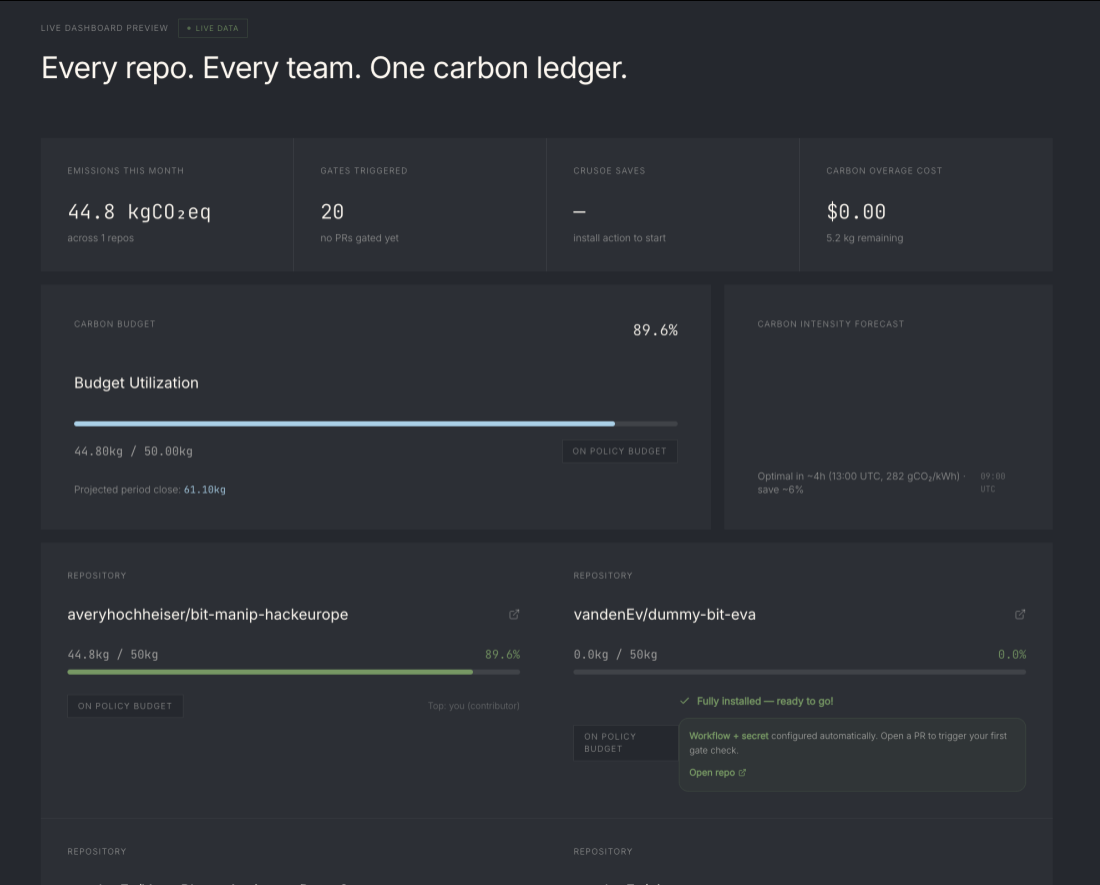
We keep seeing sustainability talked about at the infrastructure level, but almost never at the developer workflow level. We wanted to make carbon impact something engineers actually feel and respond to while writing and reviewing code, not a metric buried in a dashboard no one checks. We think developers should feel responsible for their own code, especially when it's machine learning, which uses high carbon emissions.
What it does
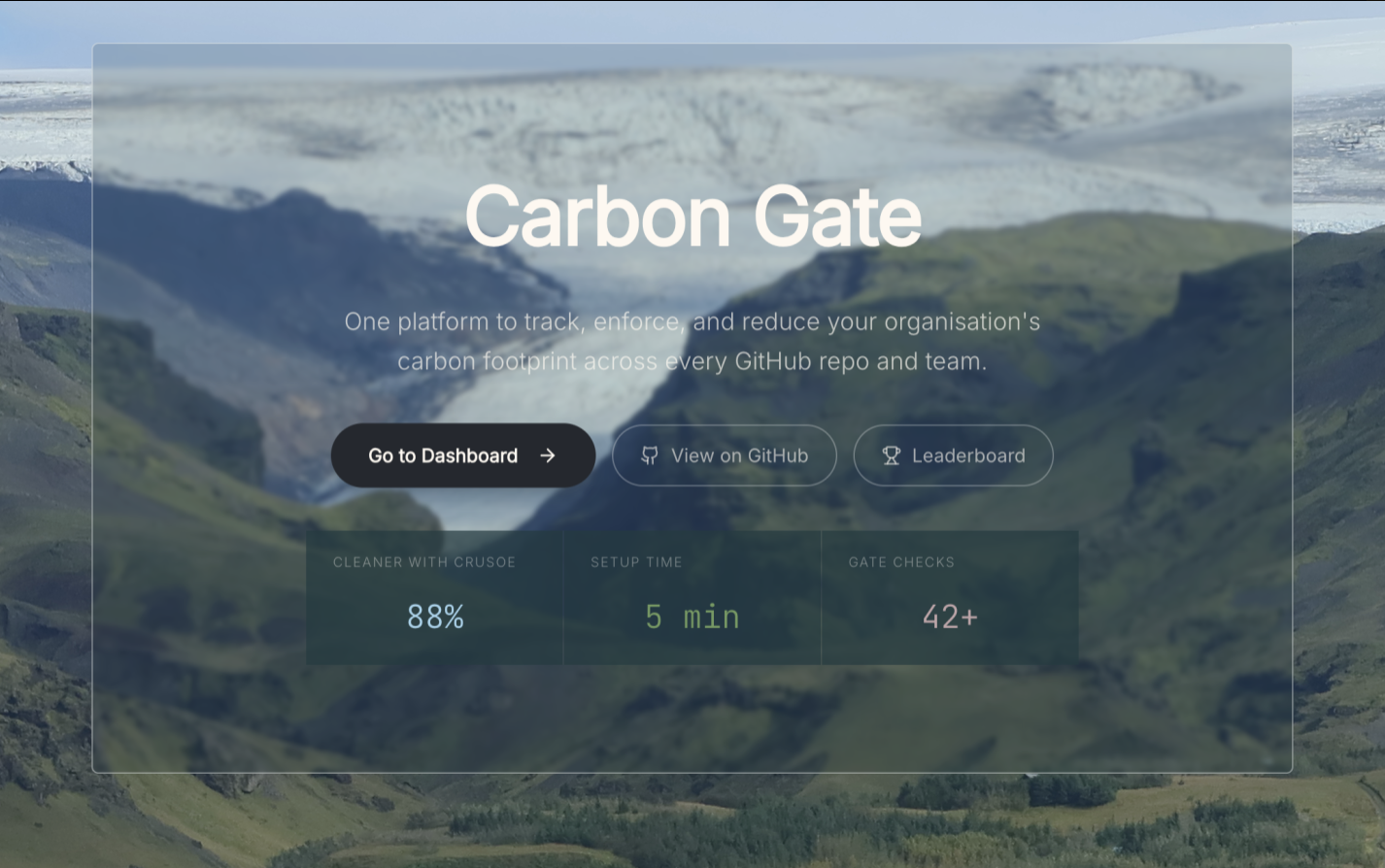
Carbon Gate blocks high emission ML code at PR time using real grid carbon intensity for the region the job runs in. If a change is carbon heavy, developers get concrete suggestions to reduce impact or wait for cleaner energy windows before merging. The suggestions come through Crusoe AI, an carbon aware AI infrastructure company.
How we built it
We built Carbon Gate as a GitHub Action that analyzes ML workloads, estimates energy use, and combines that with live carbon intensity data from Electricity Maps. The action runs on every PR, posts feedback directly in the review flow, and enforces thresholds so sustainability becomes part of job. If the carbon emissions are above the threshold level, there is a direct option to alter the code to meet the level using Crusoe AI suggestions.
Challenges we ran into
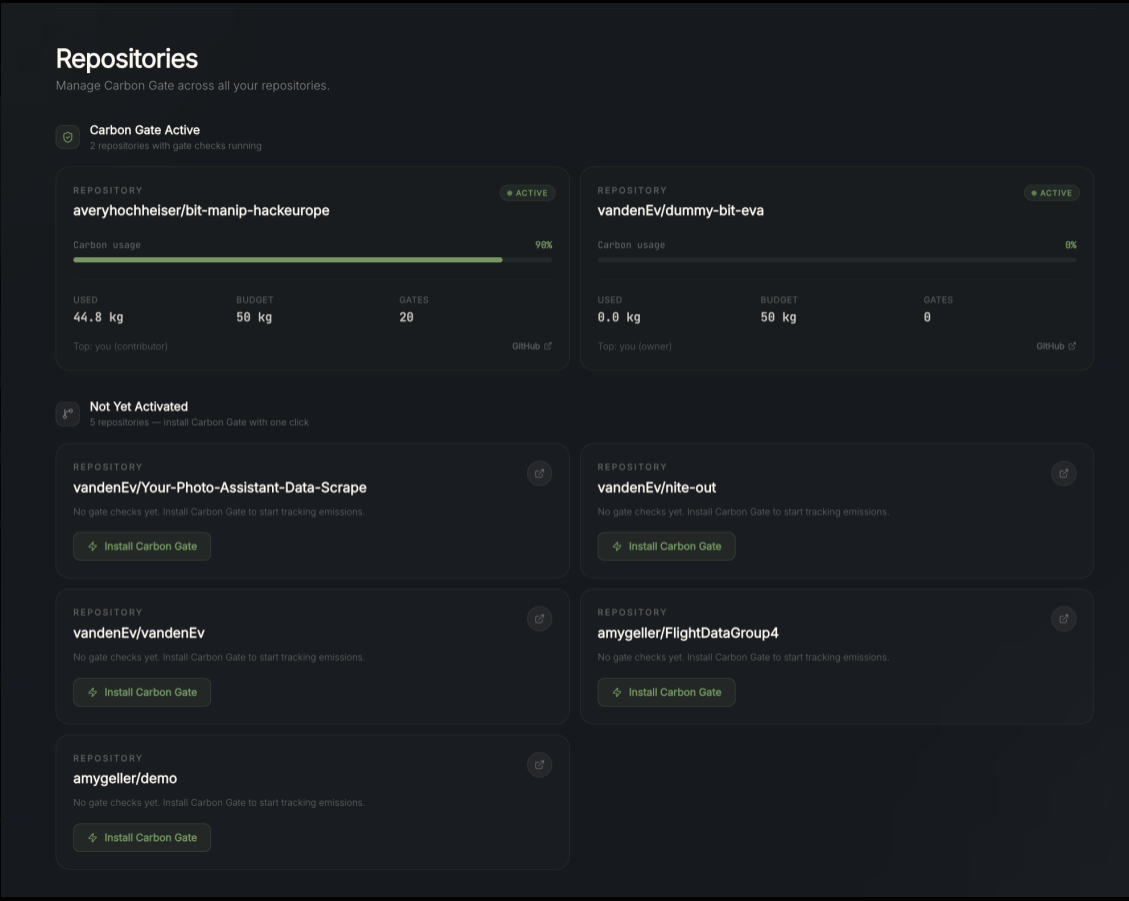
We definitely ran into a few challenges along the way. The biggest of the challenges was getting the Crusoe AI suggestions to actually implement themselves when a PR was made. For a while, we were only getting it so that the suggestions would show as plain text in the action response, but eventually, we were able to get it so that Crusoe AI automatically makes changes when a button is clicked, and there is no need for the dev to go through copying and pasting code. Another major challenge we found was adding a way to automatically install the action into a repository from our web interface. It took a couple hours from 2-4 in the morning, but we we're eventually able to get it so that a user who has a git repo without Carbon Gate can add the action to their project with a click of a button in the UI without needing to change any code.
Accomplishments that we're proud of
We shipped something that actually plugs into real developer workflows instead of living as a side dashboard. Seeing Carbon Gate fail a PR, explain why, and then pass after a small optimization or timing change felt like something people could really use. Seeing the way Crusoe AI was able to analyze everything to become more sustainable felt like the technology we will all be using soon.
What we learned
If sustainability tools add friction, people will avoid them. But if they’re embedded in places developers already care about, like PR checks, small, but annoying, blocks and reminders can change behavior surprisingly fast. We also learned that real-time energy context makes the problem feel much more real. Statistics are the best way to get people so see the need to real change.
What's next for Carbon Gate
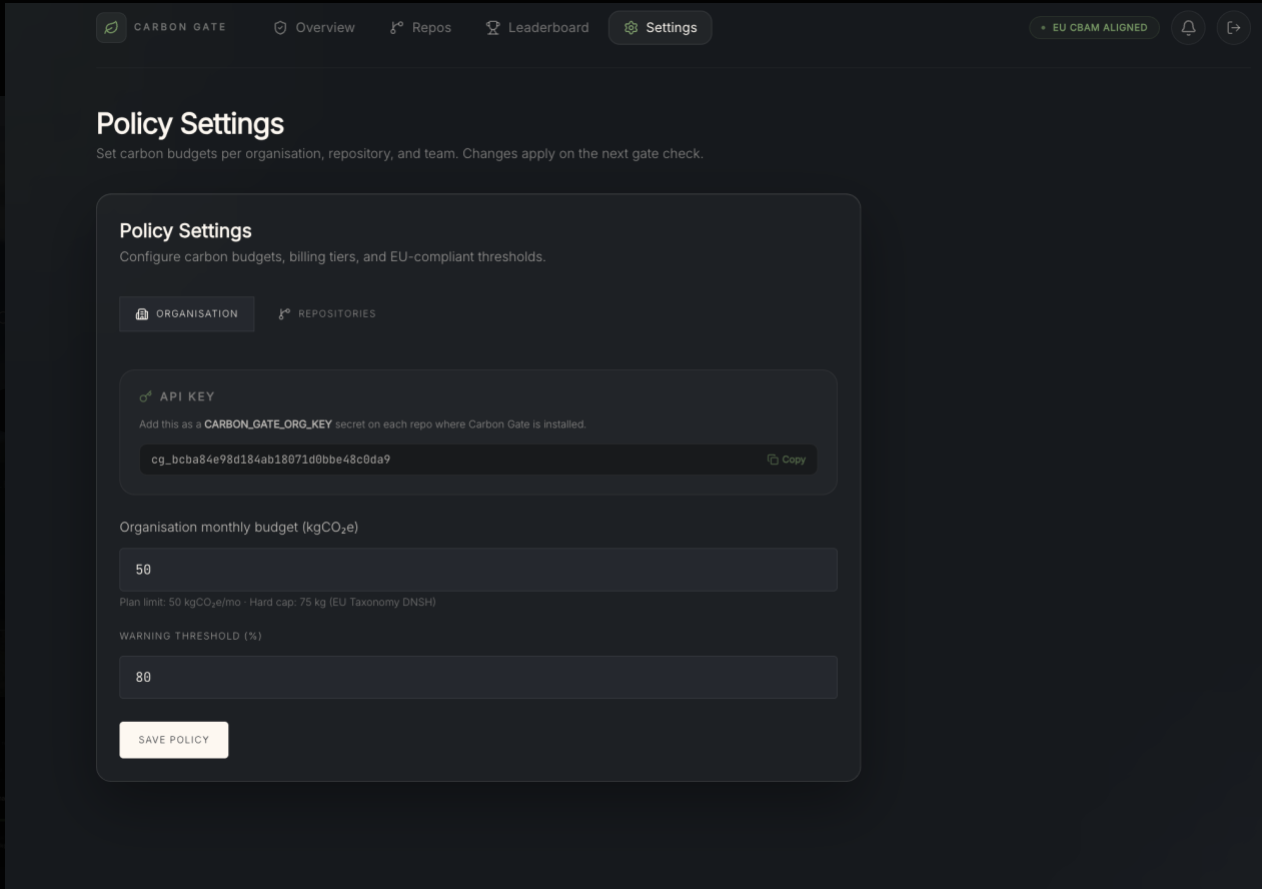
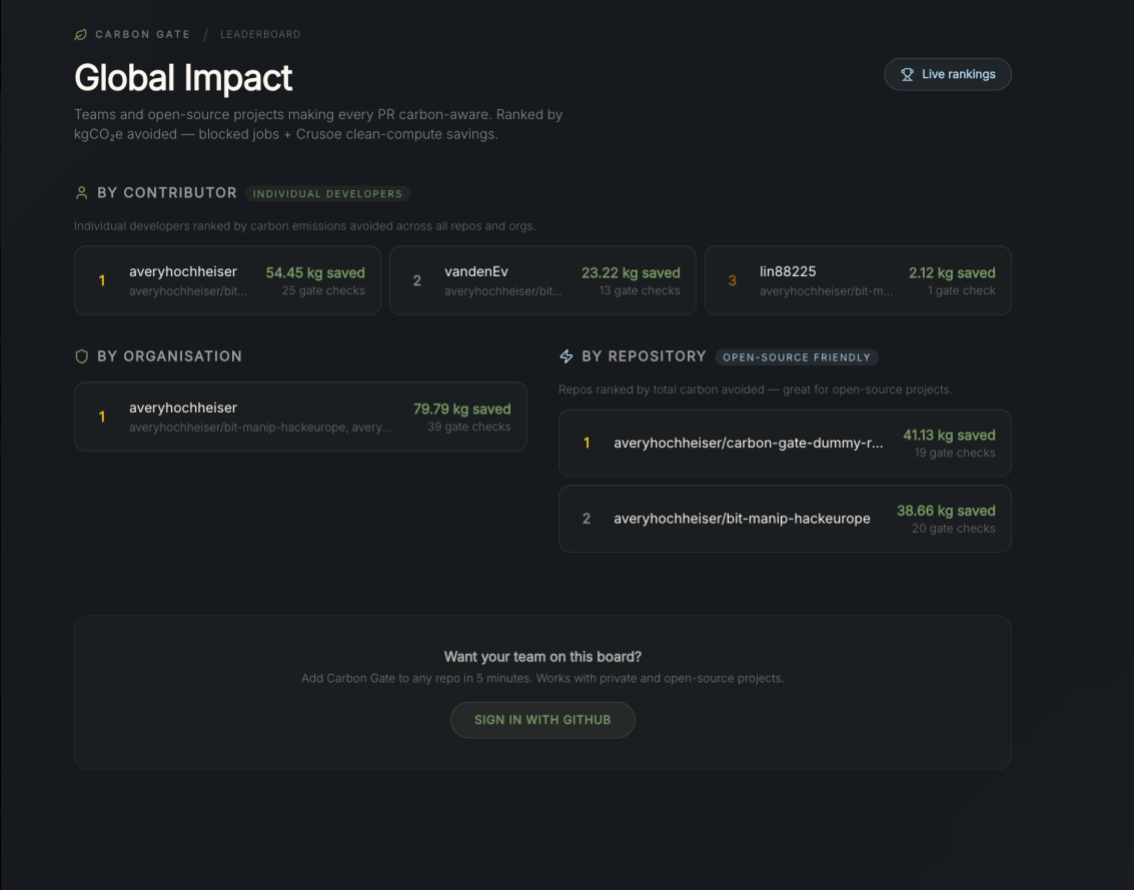
There were actually quite a few features that Carbon Gate is currently set up to implement when ready, just due to the timely nature of a hackathon, a few of these weren't able to be implemented yet. The most notable of the features we would like to add would be Stripe payment integration. We want to give developers the option to pay to override the sustainability changes if their code requires. That way there is an incentive for developers to be carbon conscious. Similarly, we could add a feature where specific teams/devs within a company are given a monthly allowance/cap limit, and would then have to pay if they surpassed that, but not to the level where it wouldn't comply with EU regulations. We want sustainability in code to be a way dev's skills are measured, similar to statistics about contributions or even runtime performance.


Log in or sign up for Devpost to join the conversation.