-
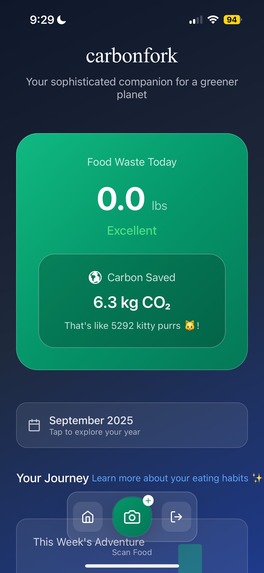
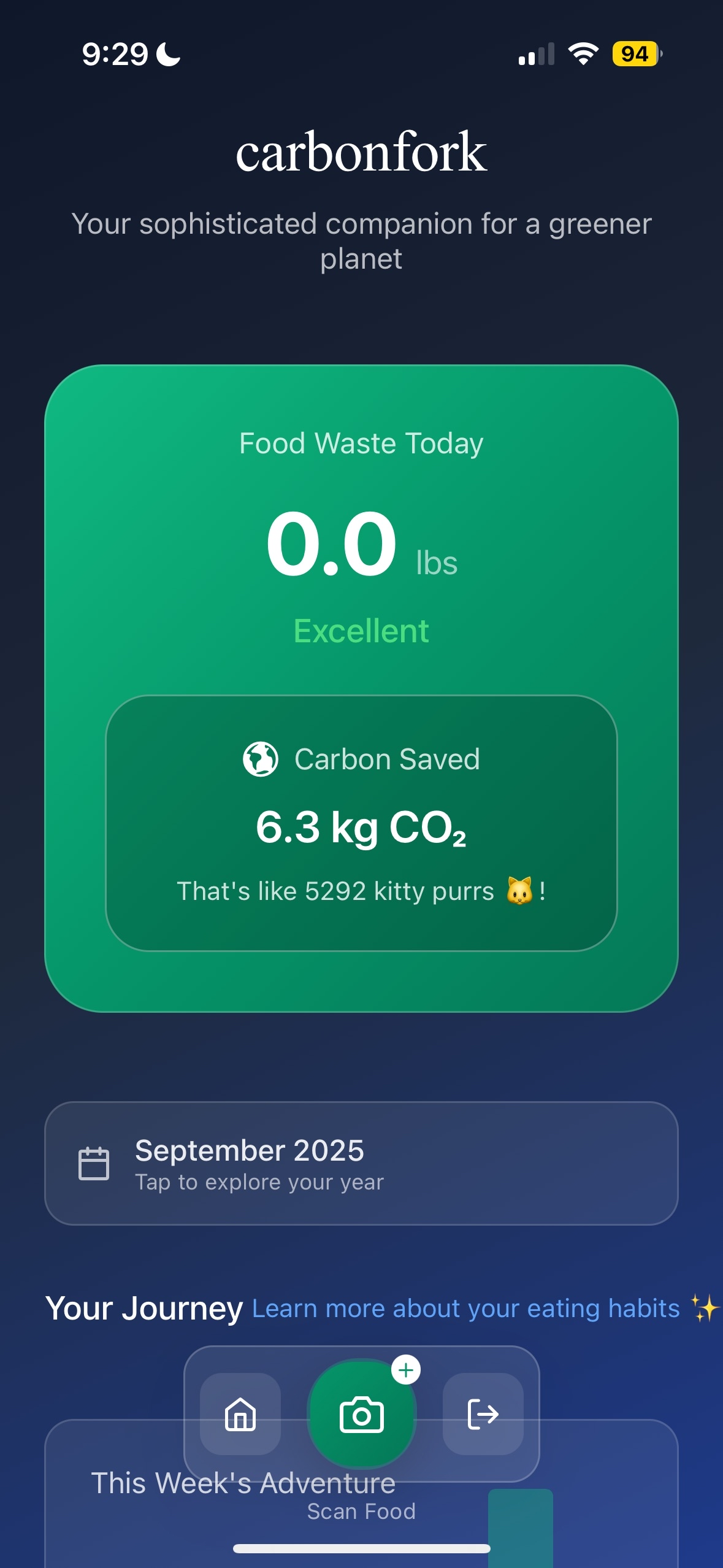
Home page
-
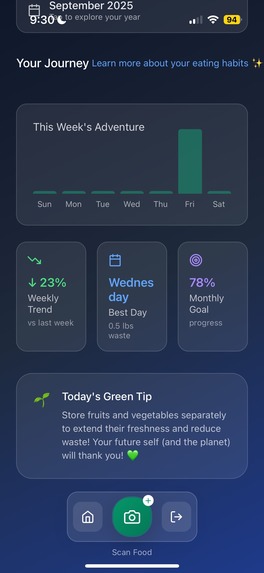
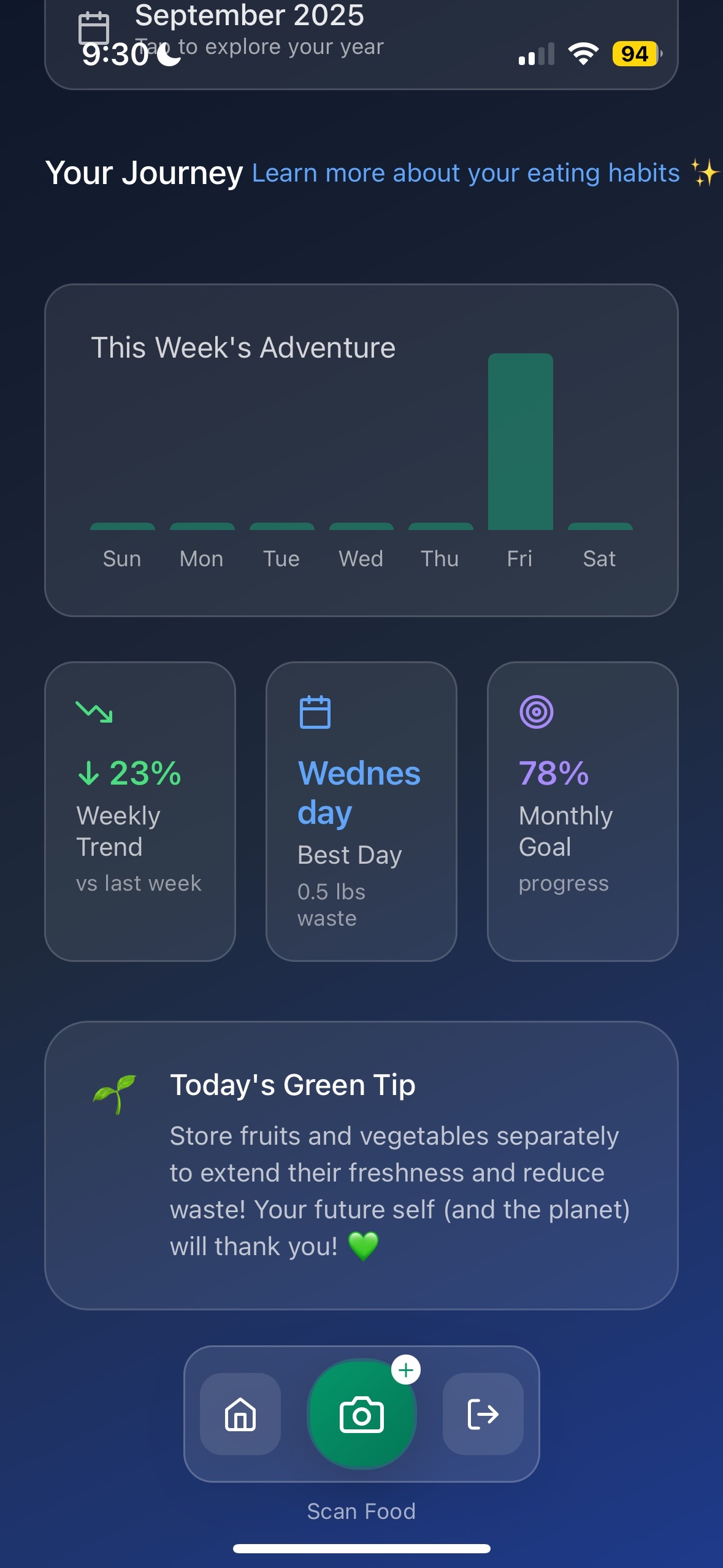
Analytics
-
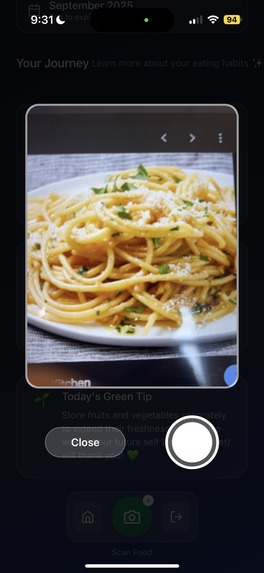
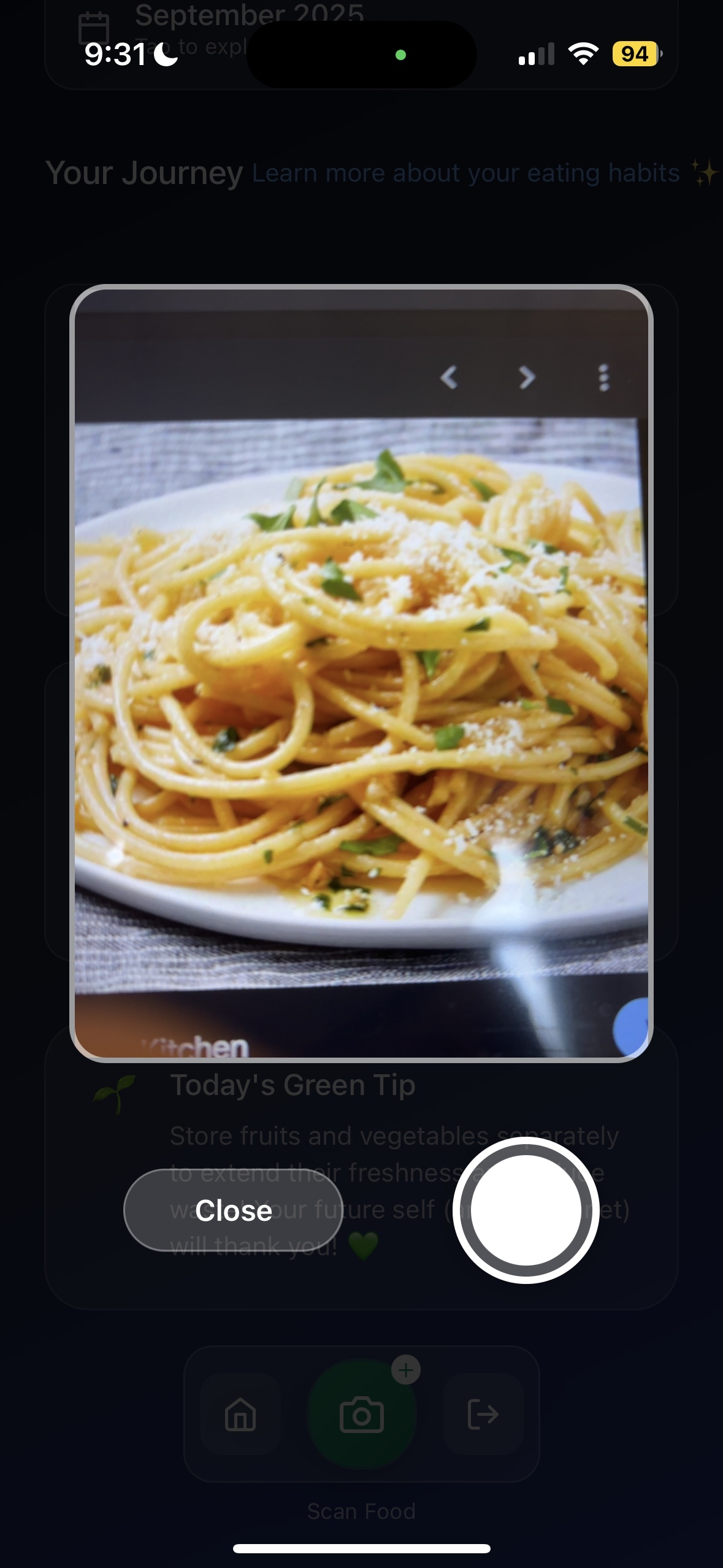
Submit Photo
Inspiration
Our team was inspired by our love for food and a desire to reduce our personal impacts the environment. When researching a project idea on how to reduce personal emissions, we realized that a large portion of our impact on the environment comes from food consumption. Thus, we decided to create an app to address the issue and help slow the ongoing issue.
What it does
Carbonfork is a mobile application that tracks the carbon footprint of users' meals using LLM-powered image processing. Each day, a user can take photos of their meals to the Carbonfork application, which will then automatically calculate the carbon footprint of their food based on a processed list of ingredients and respective carbon footprints. Then, data uploaded to our database where it can be retrieved by the app again to display analytics on carbon footprint of each user
How we built it
Image Processing to detect food carbon footprint: Google Vertex AI Backend to call API: Flask Database to store user information and manage authentication: Supabase Front-end for mobile app: React Native Simple image and numerical data processing: Pandas, Pillow
Challenges we ran into
React Native was hard to use as it was our first-time implementing it in a project. We initially anticipated this would not be too difficult because two of us had experience with React before, but this ended up being much more challenging because we were not able to use inline tailwind css. We had trouble connecting the front-end user submitted photo to the backend because sending an image that was compatible with the google gemini API through a flask application was difficult.
Accomplishments that we're proud of
We successfully made a model to calculate carbon footprint of a meal based on an image of it using Google Vertex AI.
What we learned
How to use react native to create a multi-platform app How to use google vertex ai for image processing
What's next for Carbon fork
More precise carbon footprint calculations using monocular depth estimation techniques and more accurate food density measurements. Improve data analytics by including more recommendations to food waste (such as alternative food options or reduced portion sizes) and creating additional plots and visualizations of meals.
Built With
- expo.io
- figma
- flask
- google-cloud
- pandas
- python
- supabase
- typescript
- vertex


Log in or sign up for Devpost to join the conversation.