-
-
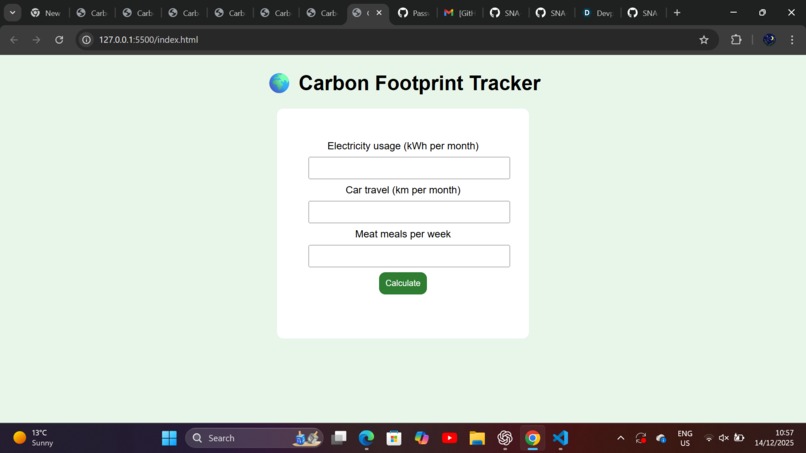
Track your carbon footprint and make sustainable choices every day!
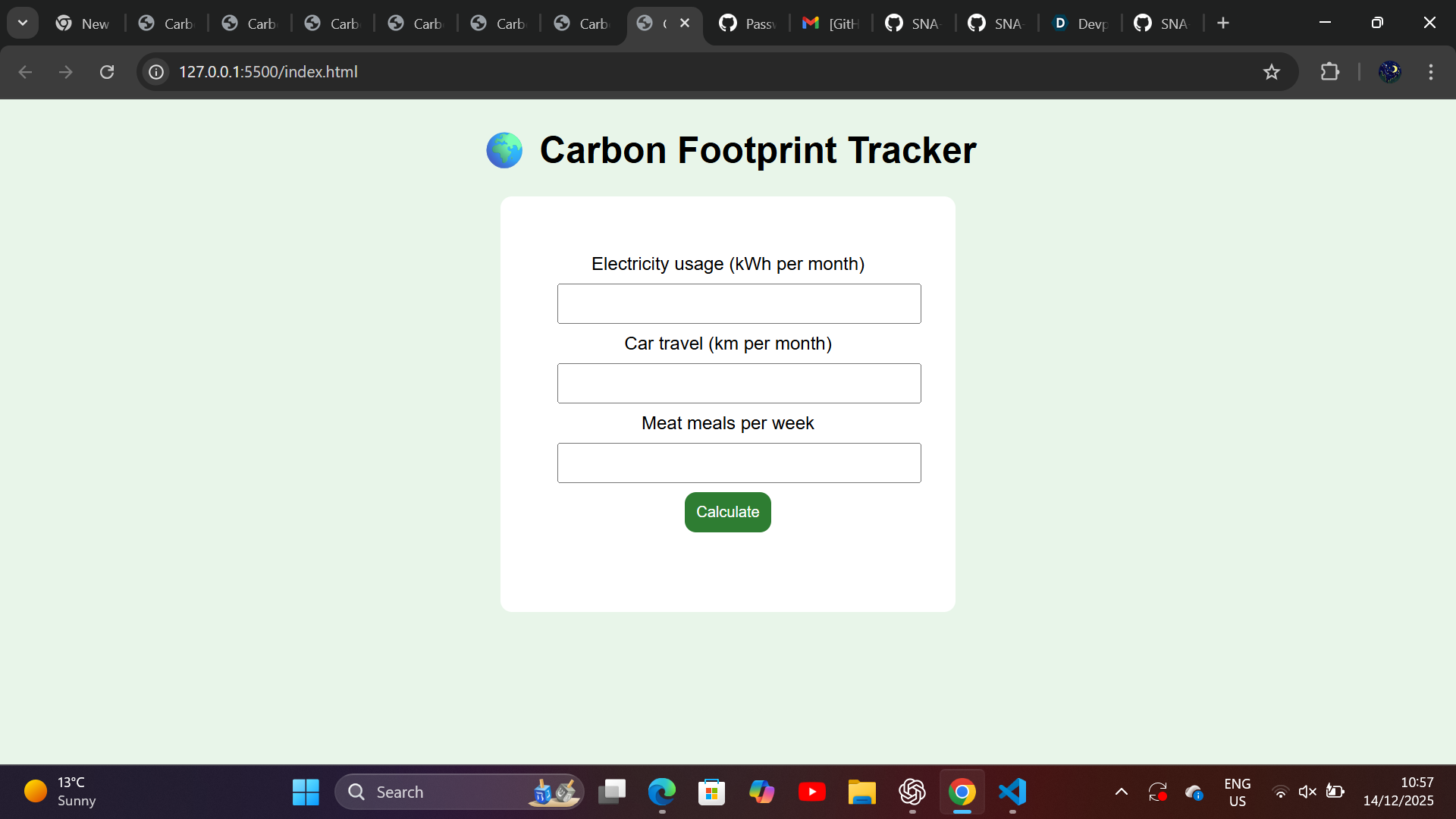
Inspiration
Climate change often feels like a very large and distant problem, so many people don’t realize how their everyday actions affect the environment. I was inspired to create a simple and accessible web-based tool that helps users understand how electricity use, travel, and water consumption contribute to carbon emissions. The goal was to raise awareness and encourage small, sustainable habits that can collectively make a big difference.
What it does
Carbon Footprint Tracker is a web-based application that estimates a user’s daily carbon footprint. Users enter information such as electricity usage, travel distance, and water consumption through an interactive interface. The application calculates the total estimated CO₂ emissions, categorizes the result as Low, Medium, or High, and provides practical tips to help users reduce their environmental impact.
How we built it
The project was built using HTML, CSS, and JavaScript.
It uses:
HTML to structure the user interface and input forms
CSS to create a clean, simple, and user-friendly design
JavaScript to handle user input, perform carbon footprint calculations, and display results dynamically
Predefined emission factors are used to estimate carbon output, and conditional logic is applied to categorize the footprint and show sustainability tips.
Challenges we ran into
One challenge was keeping the calculations simple but meaningful so the project remains beginner-friendly while still being educational. Another challenge was designing a clear and intuitive interface that allows users to easily understand both their results and the suggested improvements.
Accomplishments that we're proud of
Building a complete and functional web application from scratch
Converting environmental data into an easy-to-understand digital experience
Creating an impactful sustainability-focused project as a beginner
Successfully using core web technologies to solve a real-world problem
What we learned
This project helped me better understand how daily habits contribute to carbon emissions. I also strengthened my skills in HTML, CSS, and JavaScript, including form handling, calculations, conditional logic, and dynamic content updates. Most importantly, I learned how web technology can be used to promote positive social and environmental change.
What’s next for Carbon Footprint Tracker
In the future, this project could be expanded by adding:
Weekly or monthly footprint tracking
Data visualization using charts and graphs
User data storage (local storage or database)
Personalized recommendations based on user behavior
Mobile-friendly or app-based version
These improvements would make the tracker more interactive, informative, and impactful.


Log in or sign up for Devpost to join the conversation.