-
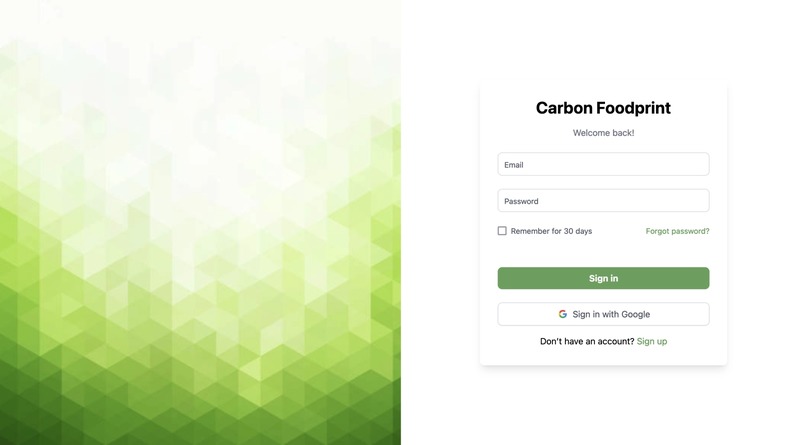
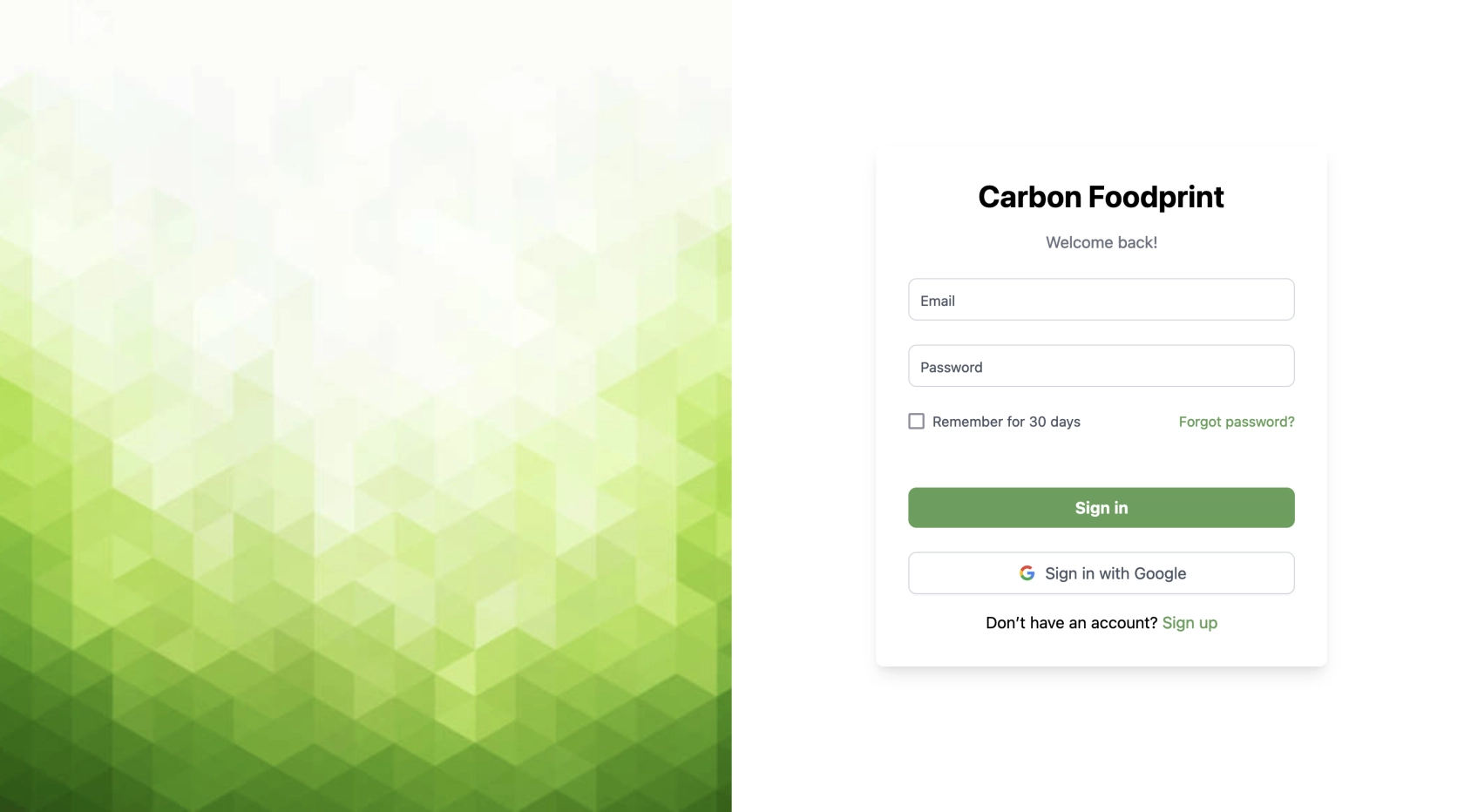
Login Page
-
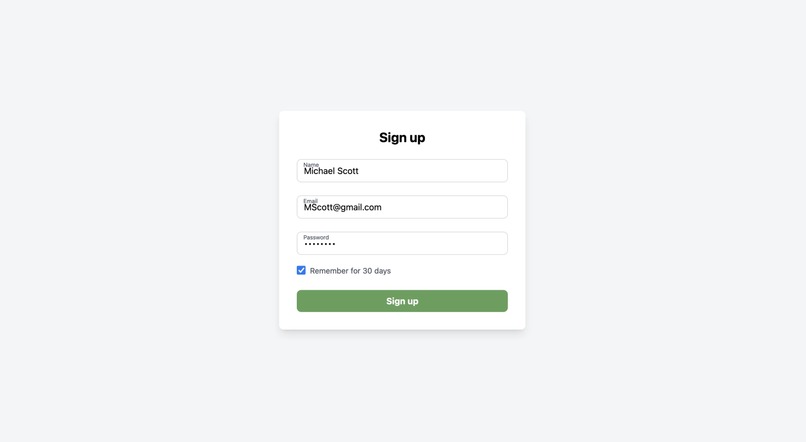
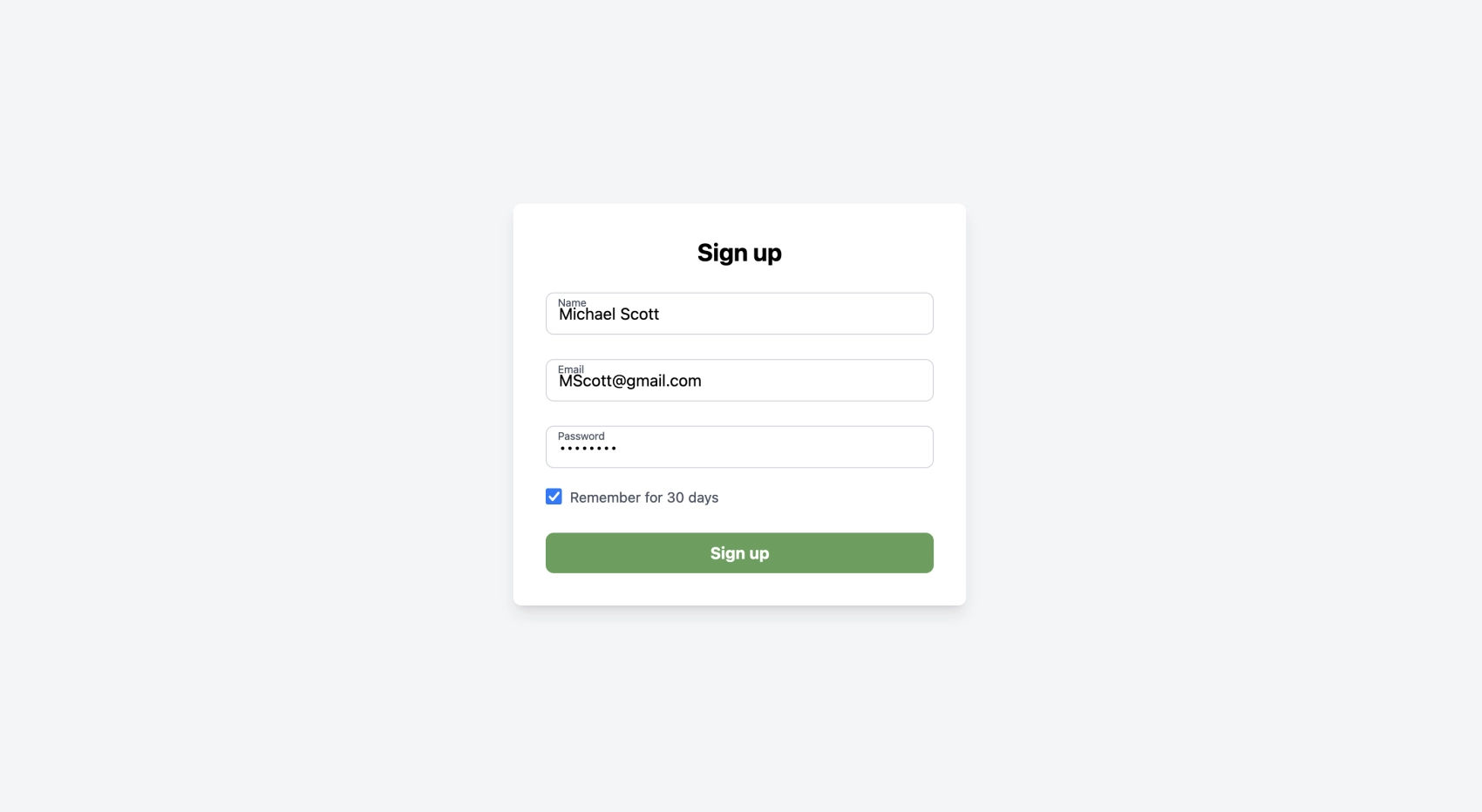
Sign up page
-
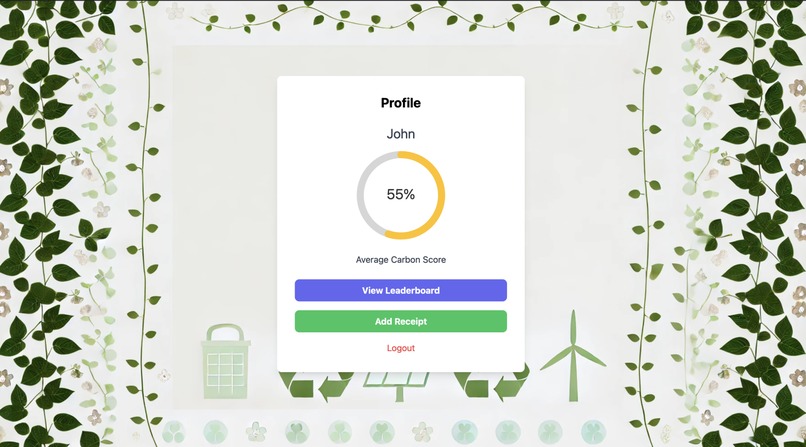
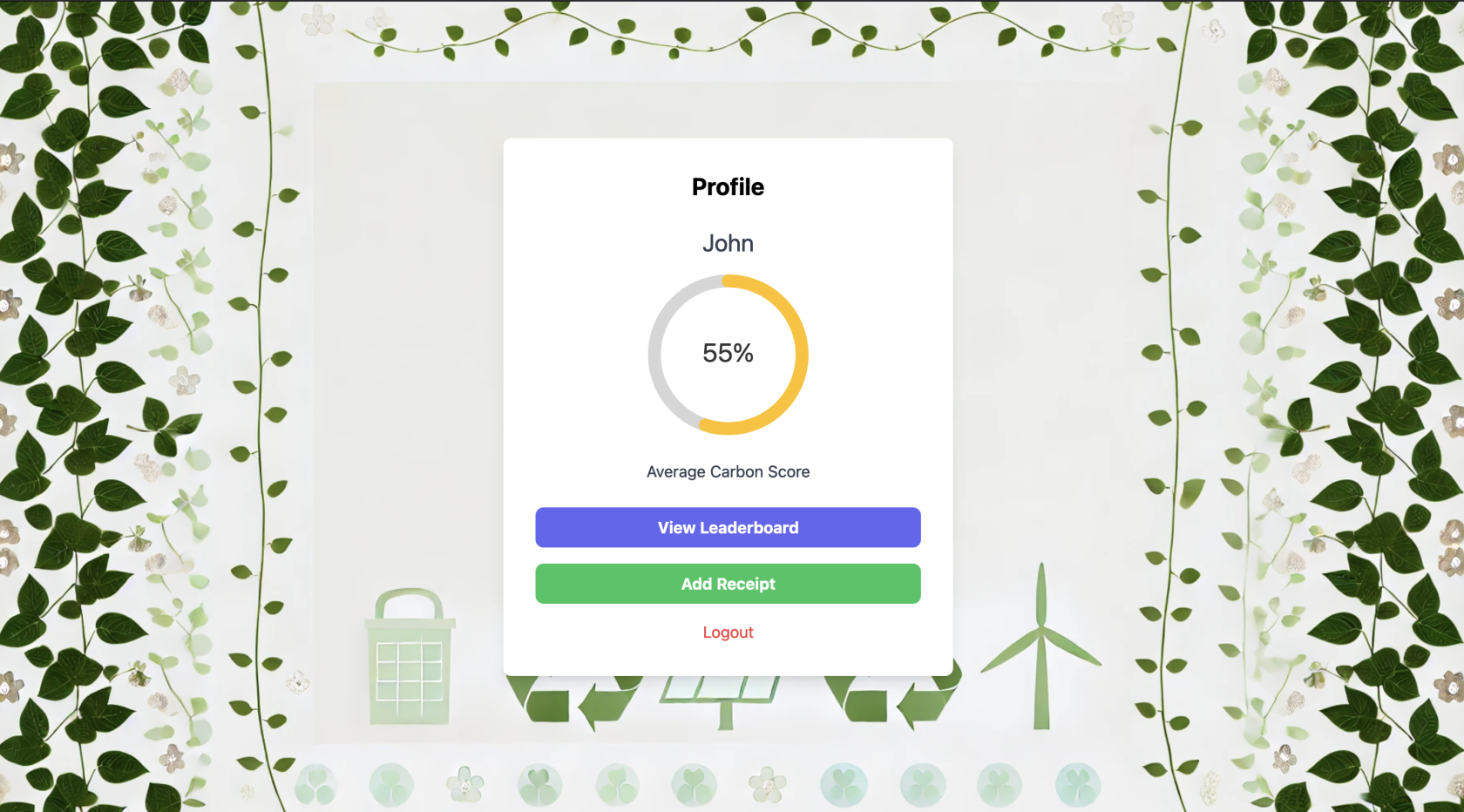
Profile page with average score
-
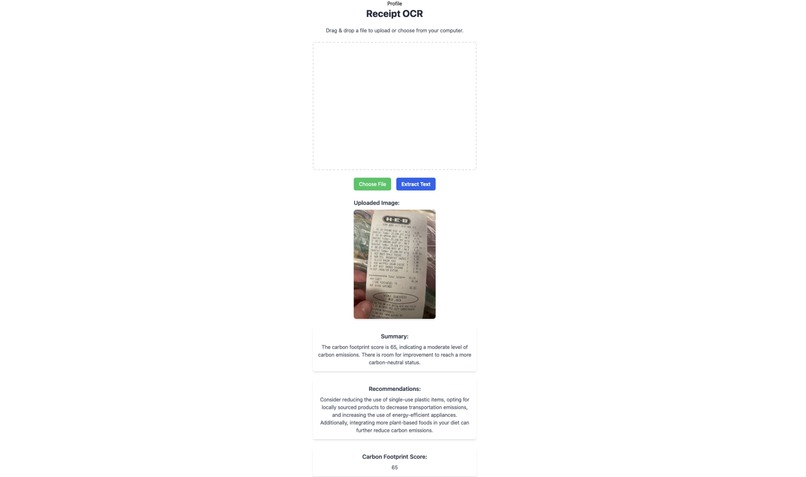
Receipt Scanner
-
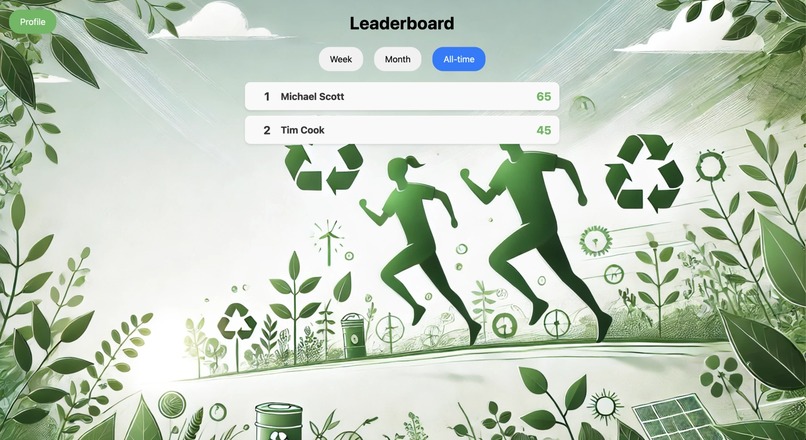
Leaderboard Page
Inspiration
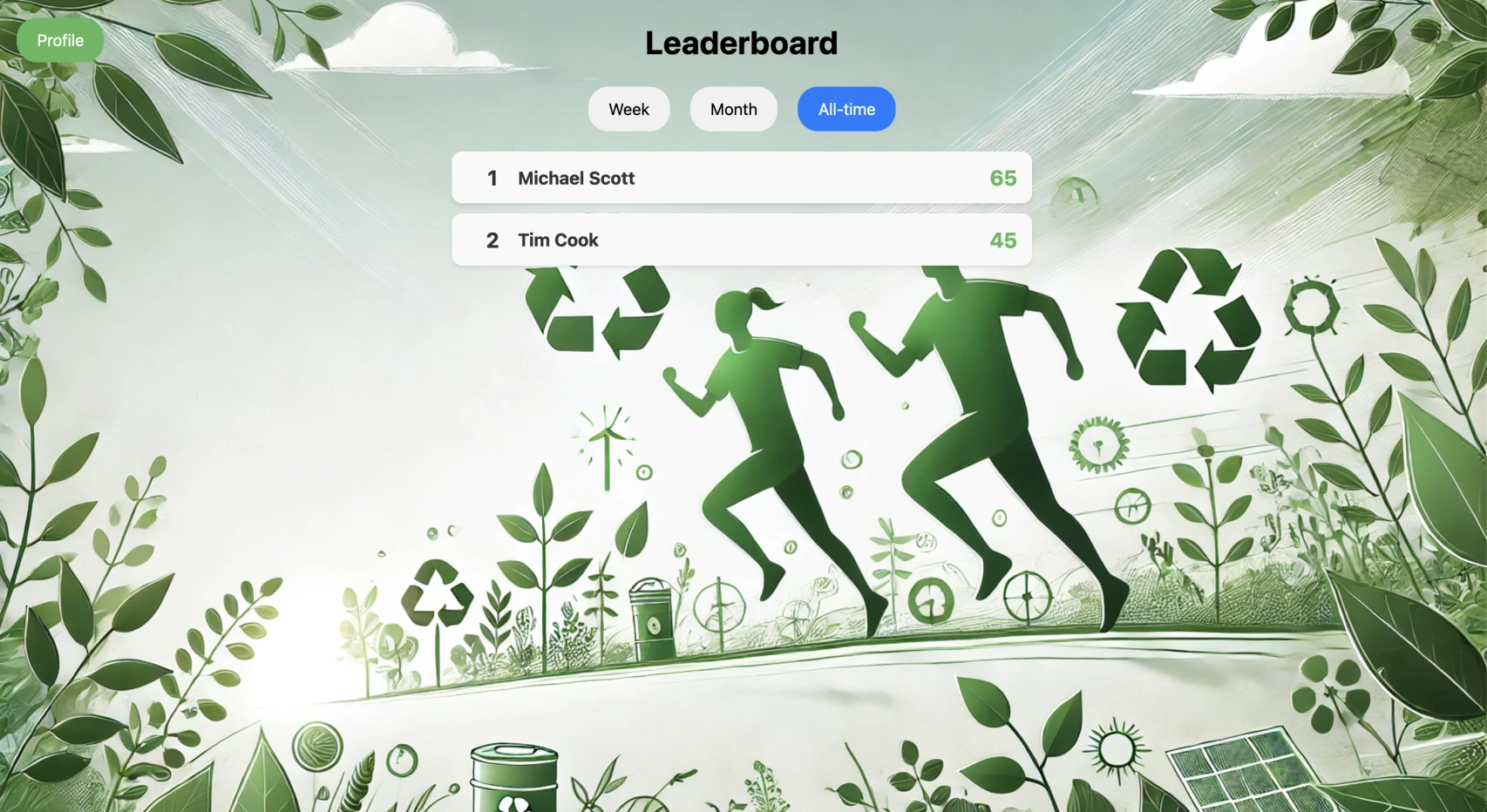
Our inspiration came from the growing need for individuals to make more sustainable choices in their daily lives. We recognized that many people were not aware of the environmental impacts of their purchases, so we wanted to build a tool that puts this information at their fingertips. Turning receipts into a way to track and reduce carbon footprints came from the desire to help people connect their shopping habits to carbon impact and the environment. One thing we wanted to add from the start was a game aspect, so we added a leaderboard for people to compete with others.
What it does
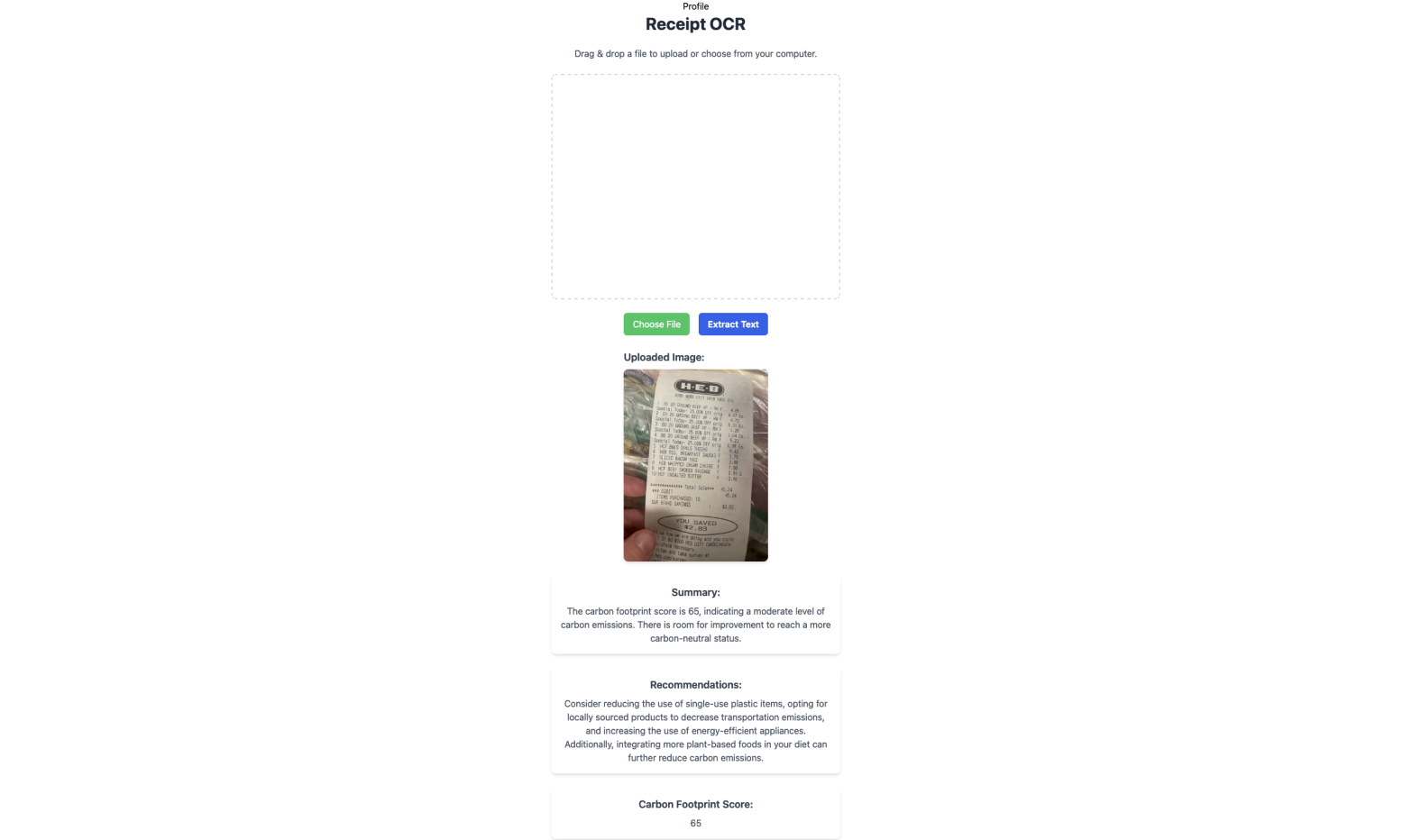
Carbon Foodprint is a web app that calculates the carbon footprint of your shopping receipts, turning your purchases into a way to make more sustainable decisions. A user would upload their receipt to our web app. Our algorithm will take that receipt and give it a score out of 100, 100 being carbon neutral and 0 being not the best. It will also explain why the algorithm gave the user that score, and we put that score on the leaderboard for others to get motivated and try to beat it. Lastly, the user will get recommendations on how to get a higher score (being more carbon-neutral).
How we built it
We used Mongo for our username/password login system. For front end, we designed it with react and CSS. For backend, we used javascript and Express.
Challenges we ran into
One challenge we ran into was our algorithm. It did not work with our prompt engineering so we had to develop it differently and figure that out. We also had a challenge with the leaderboard.
Accomplishments that we're proud of
We're proud of our whole algorithm, from receiving the receipt information to outputting a custom carbon score, adding a leaderboard, and suggesting some tips to the user to decrease their carbon emissions.
What we learned
We learned how to use databases, retrieve and store information in them, prompt engineer, and perform many functions with several APIs.
What's next for Carbon Foodprint
Some next steps for Carbon Foodprint include making this a mobile app, which could make it easier for users from the start. We could also add partnerships with retailers, where we collaborate with mass grocery stores to get direct access to the sustainability data. Lastly, we could implement a rewards program where users get badges or other incentives for achieving a specific carbon level.

Log in or sign up for Devpost to join the conversation.