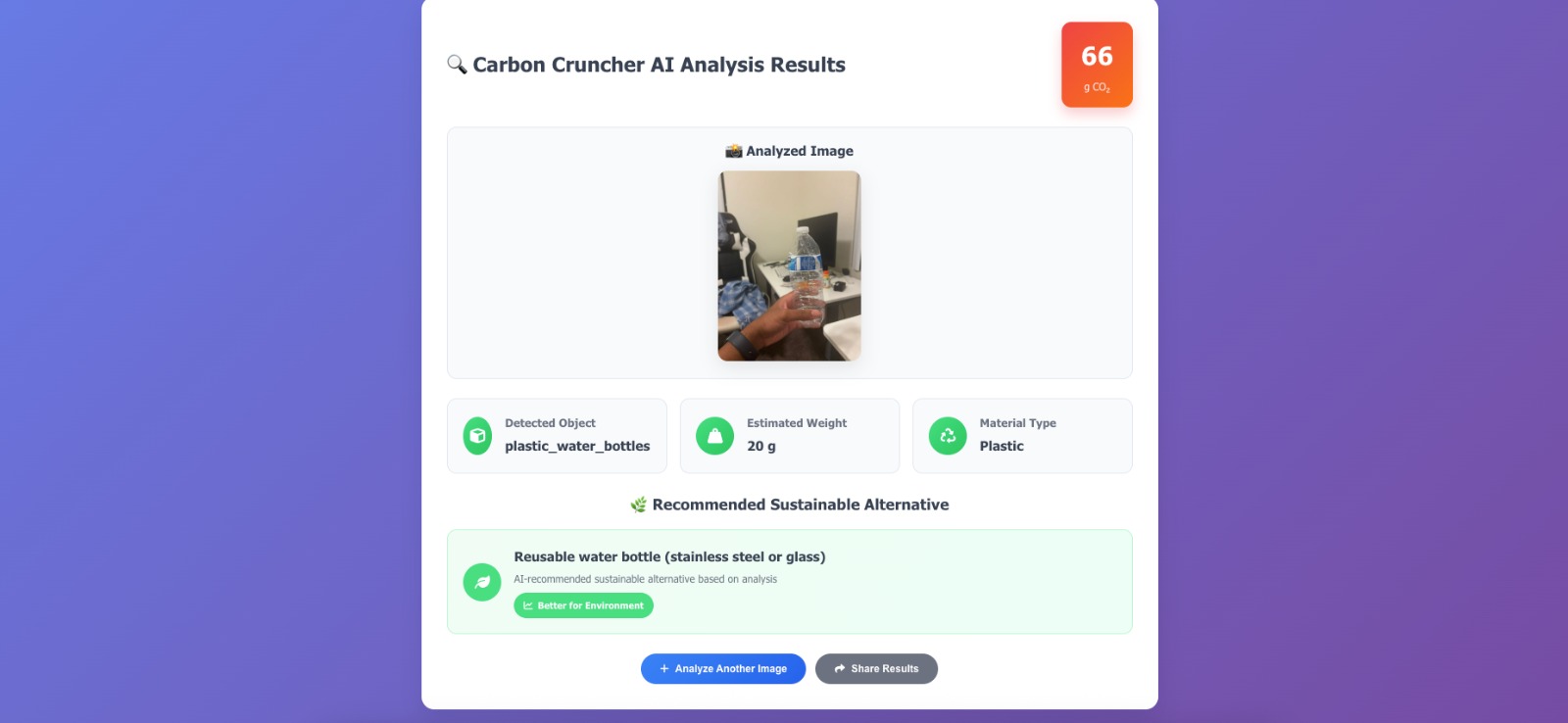
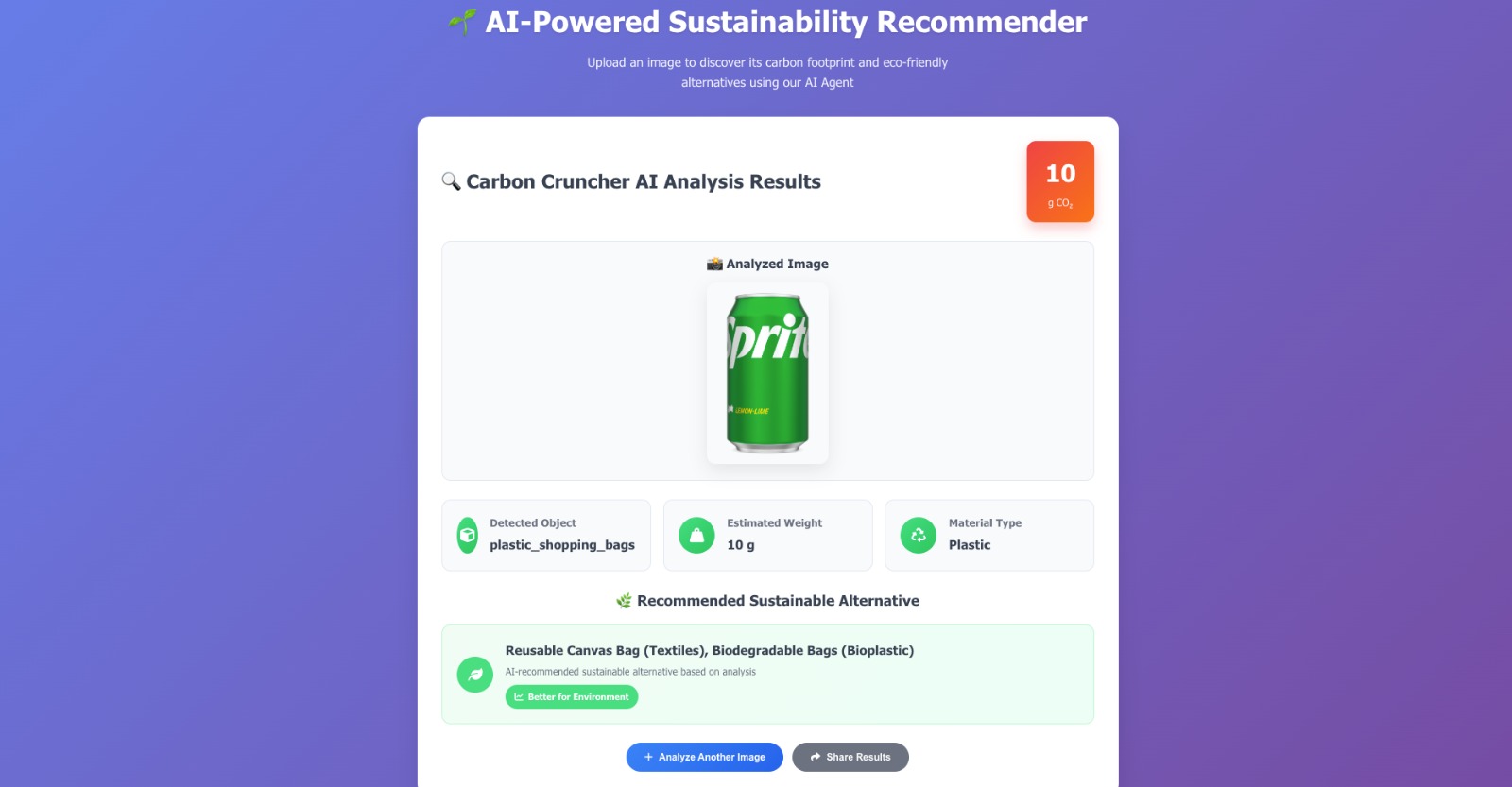
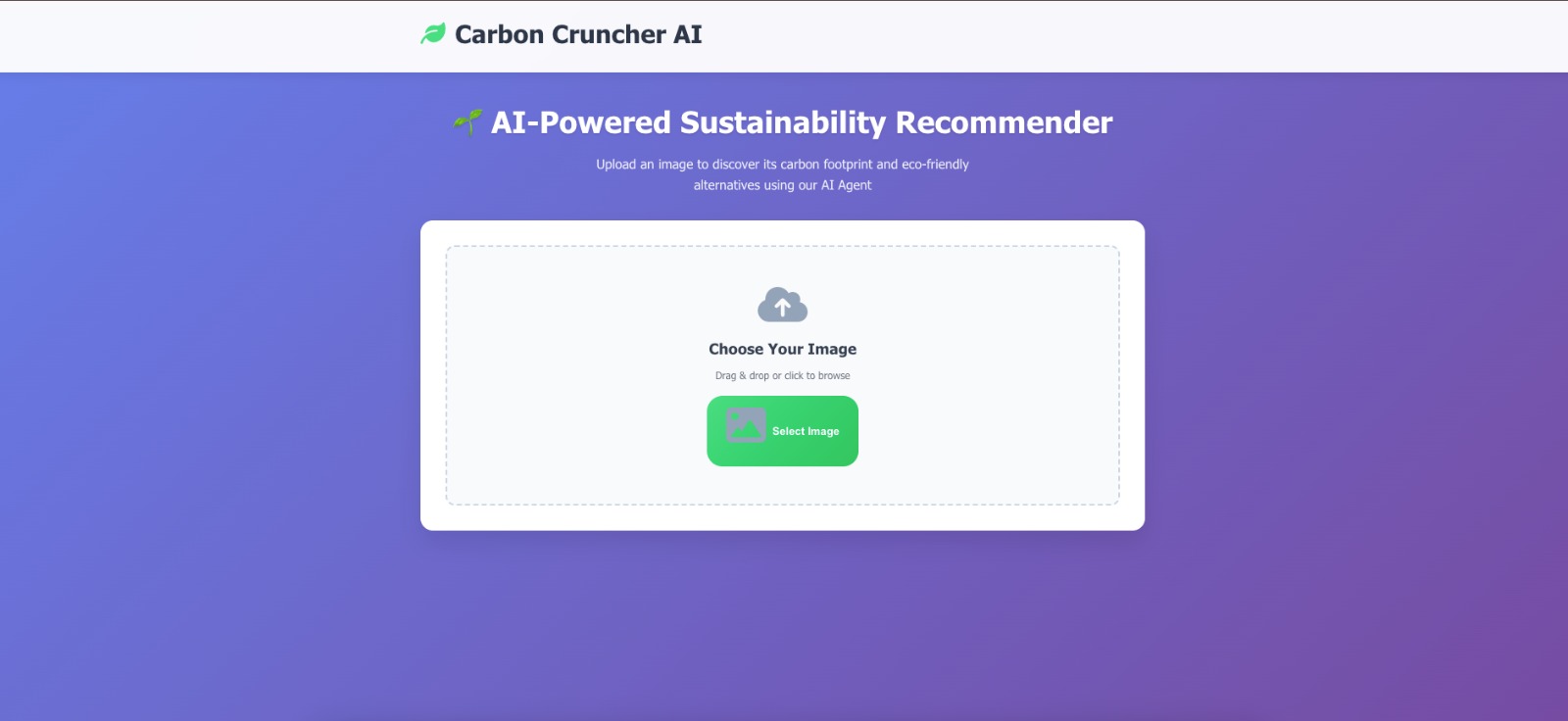
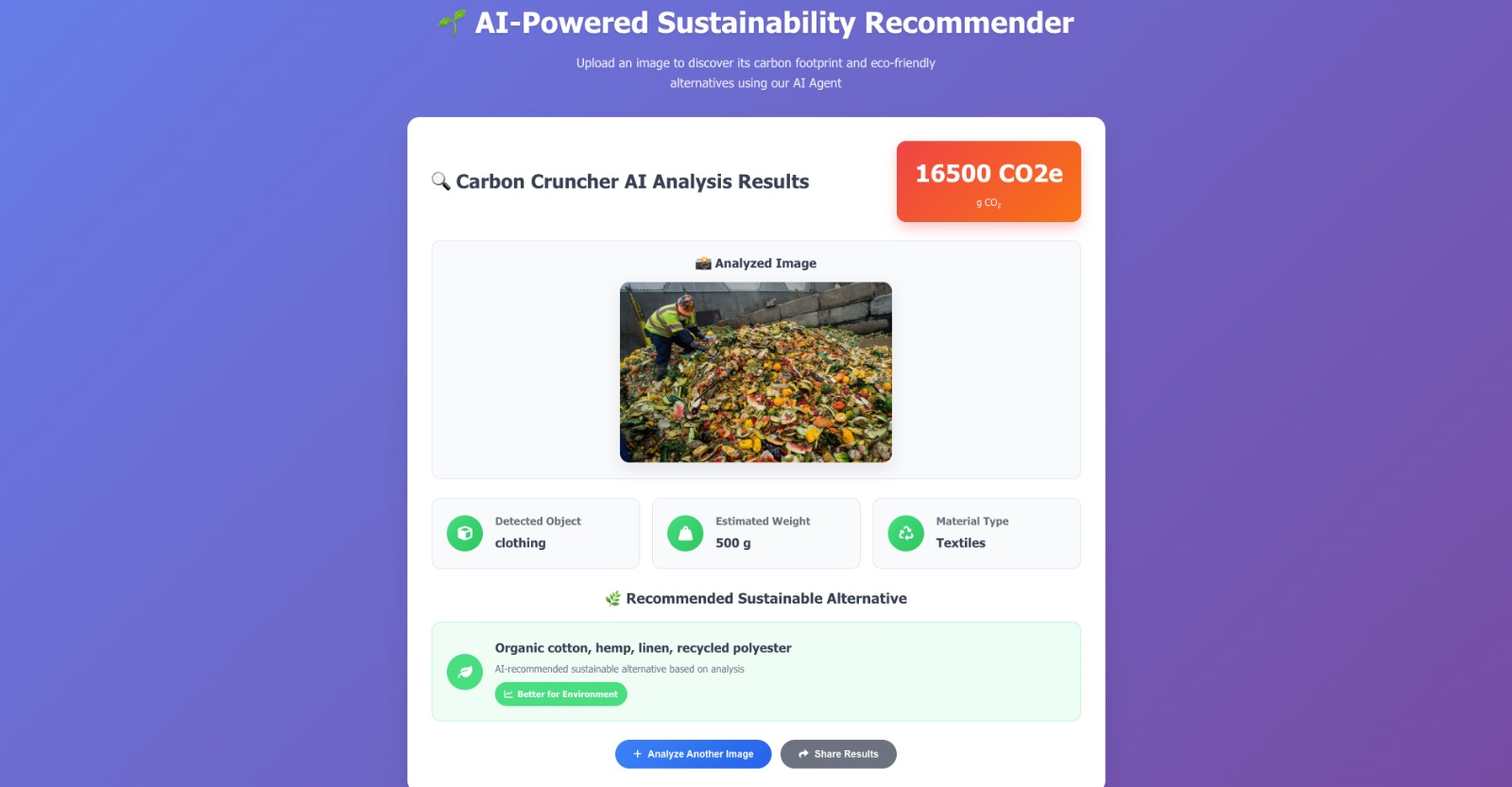
People often throw things away without knowing what they’re made of or how much carbon impact they carry. That makes it hard to make sustainable choices quickly. The idea is to give instant, visual guidance: snap a photo and immediately see the footprint and better alternatives.
What it does You upload a photo, the system recognizes the object and material, estimates its weight and CO₂ emissions, and suggests greener alternatives. The results are returned in clean JSON (with fields like object name, material, weight, footprint, and alternative), ready to power a responsive, shareable UI.
How we built it The frontend is plain HTML/CSS/JS, which connects to a Flask API. The API uses TensorFlow to classify objects, then passes the results to Gemini 2.5 Flash, which outputs tightly structured JSON aligned to the classifier’s prediction.
Challenges
Getting the AI model to return valid, strict JSON every time.
Making sure outputs match the classifier labels.
Dealing with CORS and temporary file handling.
Providing clear error messages while working fast in a hackathon setting.
Accomplishments We built a full pipeline from photo upload to actionable insights, with consistent outputs that are easy to display in the UI. The system is reliable, runs locally, and combines deterministic classification with constrained generation.
What we learned Anchoring AI prompts to structured data reduces randomness, while small UX details—like handling errors smoothly, validating inputs, and showing loading states—make the tool feel faster and more trustworthy.
What’s next
Enterprise use cases: Analyze whole scenes (like a warehouse, restaurant, or retail store) from a single photo. Break it into per-item footprints, suggest greener swaps, and export results as CSV/JSON for procurement teams.
Live audits: Real-time camera scans with instant overlays and guided tips. This would use multi-object vision (YOLO/DETR + segmentation), run fast with edge acceleration (TFLite/ONNX/TensorRT), serve results through a GPU-backed API (Flask/FastAPI with Triton/TorchServe), stream with WebRTC, and store materials/SKU data in Postgres.
Built With
- cnn
- flask
- gemini-api
- google-cloud
- javascript
- machine-learning
- python
- react
- restapi


Log in or sign up for Devpost to join the conversation.