-
-
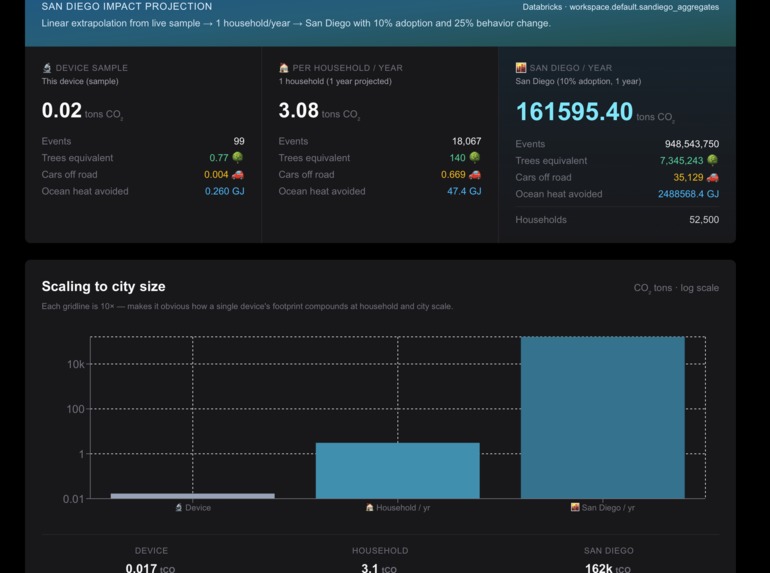
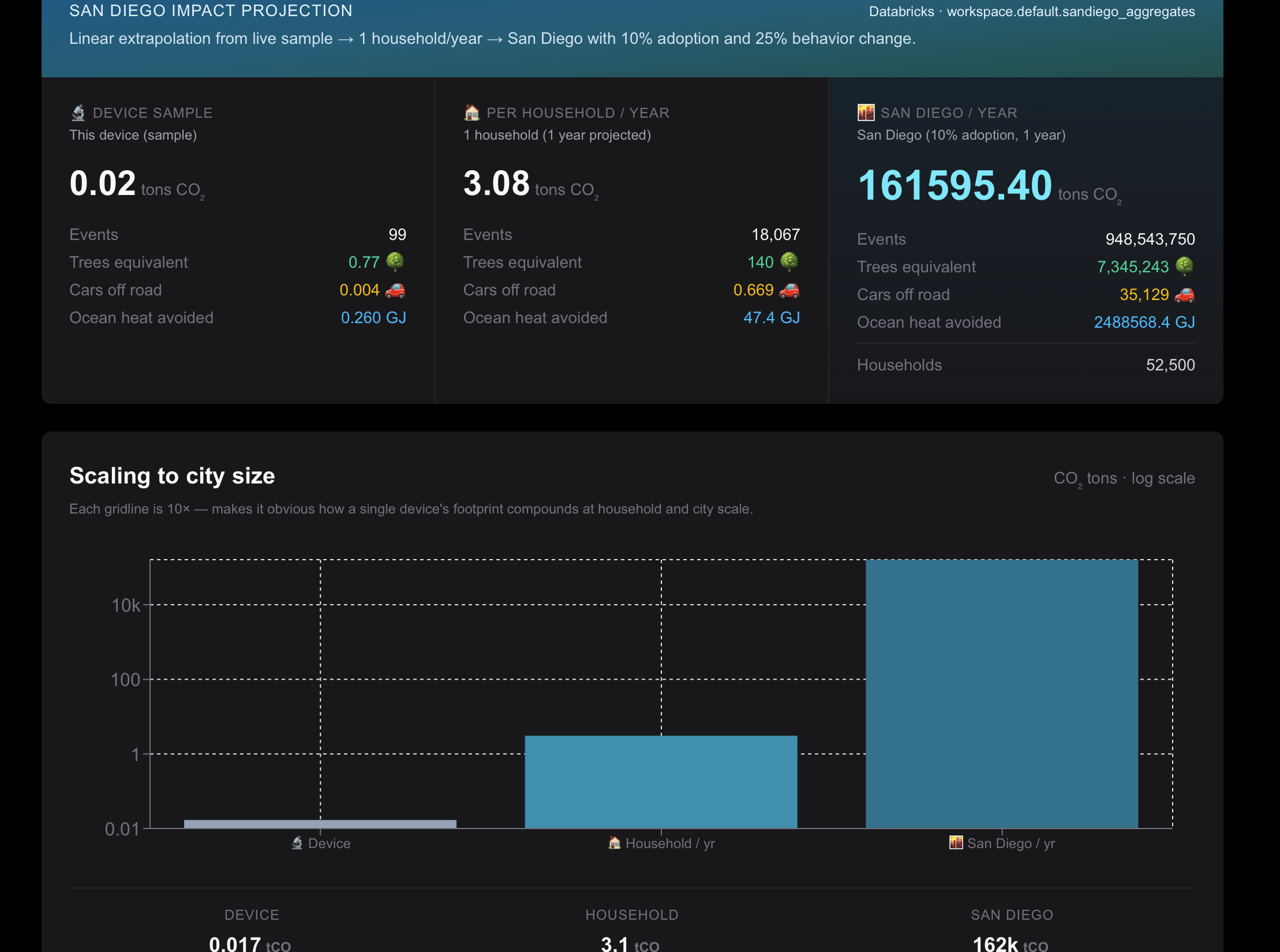
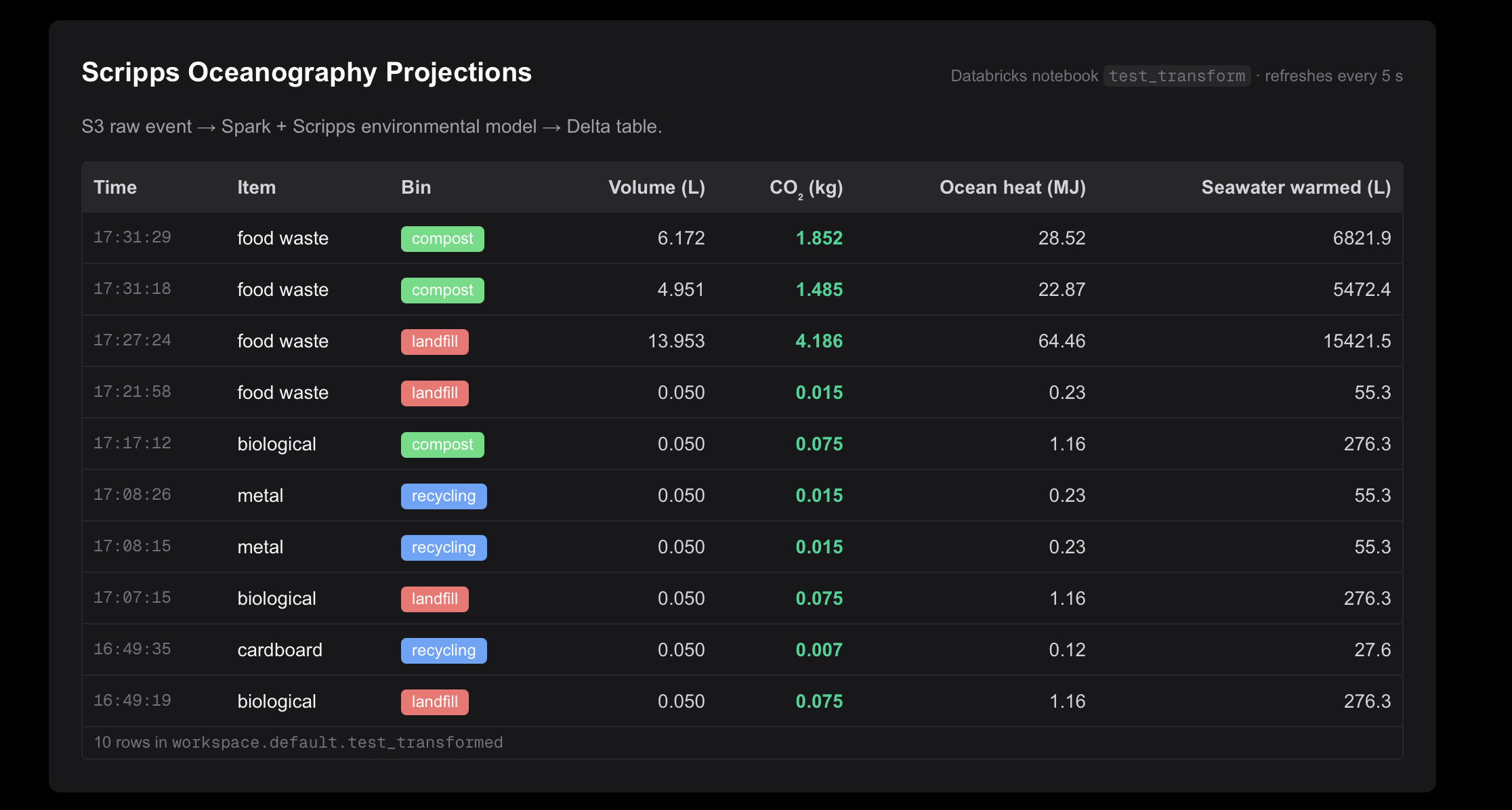
Scientific Dashboard
-
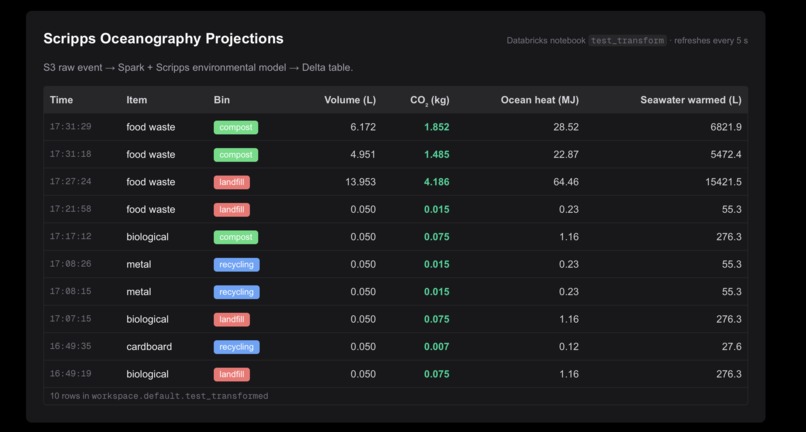
Scientific Dashboard
-
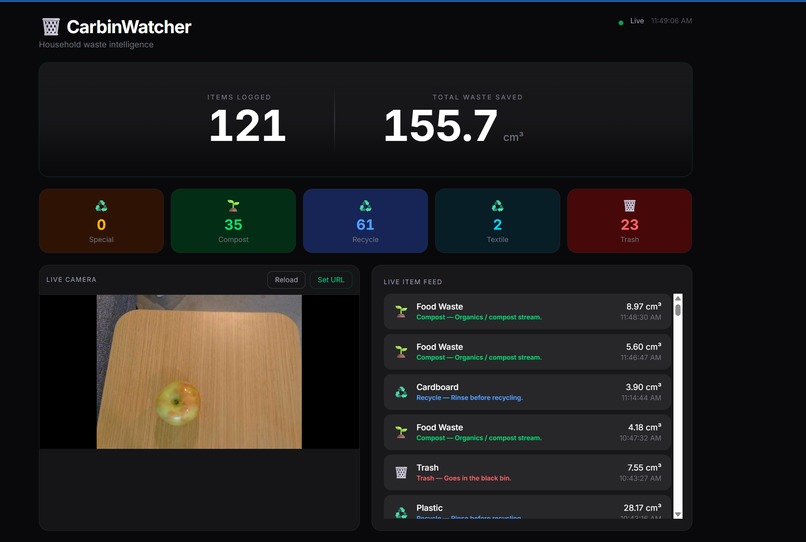
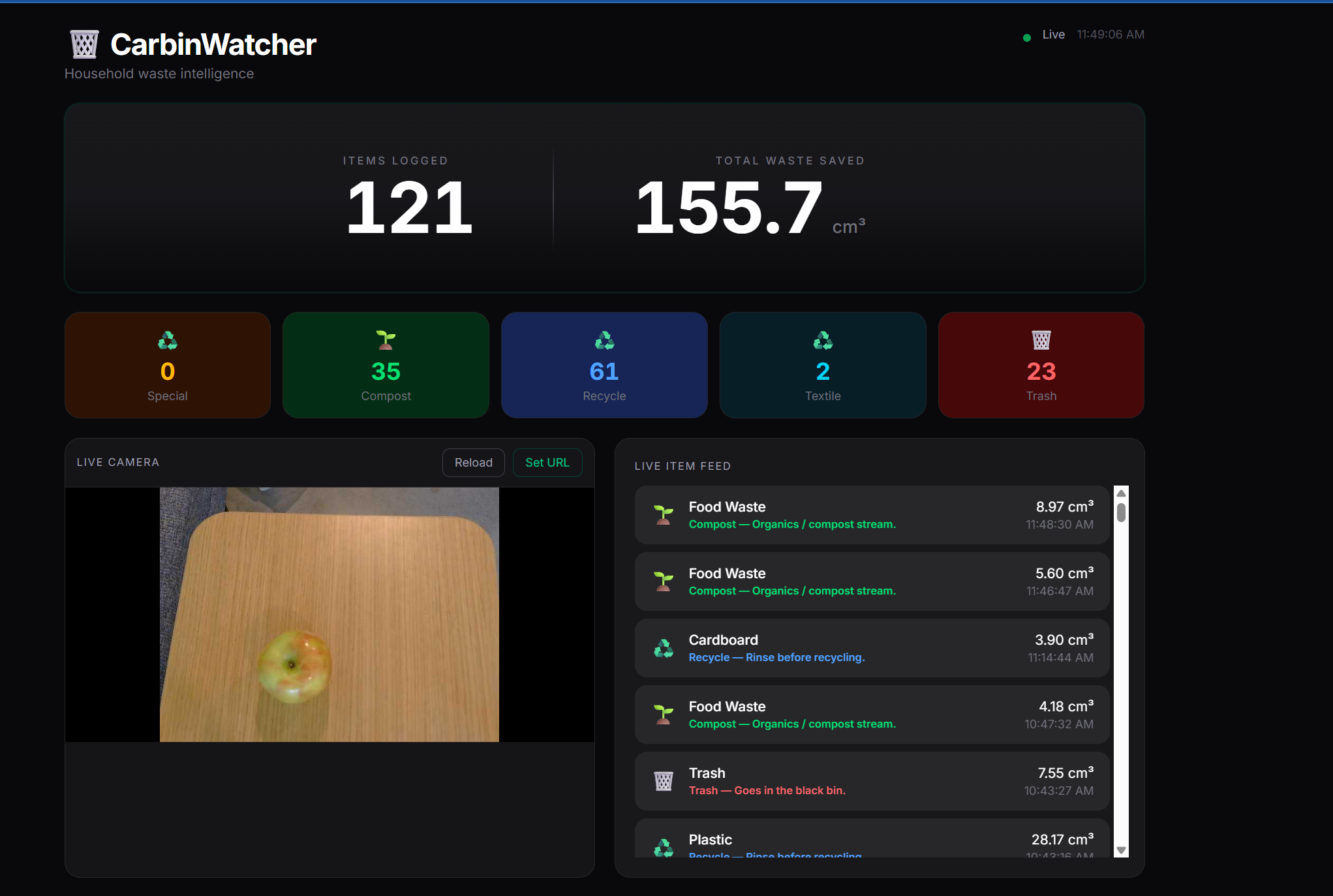
User live dashboard
Inspiration
Roughly 25–30 million metric tons CO₂e per year is attributable directly to household misclassification.
At the core of CarbinWatcher, we are solving a simple problem: waste ends up in the wrong bins because people are forced to guess. Our hardware helps solve that first step by identifying the object and telling the user where it should go.
What It Does
CarbinWatcher turns an ordinary waste station into an intelligent opportunity to empower consumers.
Using a webcam connected to an Arduino Q, our system captures an item in real time and analyzes it using a YOLOv8 Model on the edge to preserve user privacy. The prediction is used to query gemini on which bin the item should be placed in based on local regulations.
It identifies the object, determines the most appropriate disposal category, and tells the user whether it belongs in:
- Trash
- Recycling
- Compost
Every disposal also becomes usable data that can power sustainability insights over time.
How We Built It
Smart Edge Hardware Layer
We used an Arduino Q connected to a Logitech webcam to create an intelligent disposal station that can observe waste items in real time before they are thrown away.
Real-Time Waste Classification with NVIDIA Brev.dev
To power instant sorting decisions, we used NVIDIA Brev.dev to rapidly train and iterate on our computer vision workflow. This allowed us to build a model capable of recognizing waste objects and determining whether they belong in trash, recycling, or compost.
AI Reasoning Layer with Gemini API
We integrated the Gemini API to add contextual reasoning, helping interpret difficult or ambiguous waste items and improve classification decisions based on the users location and what the regulations for waste are.
MiDaS AI Layer
We use monocular depth estimation to estimate the volume of trash going into the bin
Cloud: AWS and DataBricks
We ingested Arduino data directly into AWS IoT core and then fan out streamed that data to DynamoDB for live data display and to S3 which connected to DataBricks to create an ETL pipeline that trains ml models to output CO2 emissions.
Predictive Sustainability Modeling with Impulse AI
Beyond real-time sorting, we wanted to understand the larger impact of smarter waste behavior. We used the Impulse AI Platform to take small-scale household waste data and build machine learning models that forecast how improved disposal habits could scale across campuses, neighborhoods, and cities.
Frontend Dashboard
We built our user interface in Next.js to display live classifications, waste analytics, and projected environmental impact. We have 2
Challenges We Ran Into
One of our biggest challenges was building reliable image classification on an edge device with limited compute resources. Unlike large cloud systems, the Arduino Q required us to carefully balance model size, speed, and efficiency while still maintaining useful real-time accuracy.
Training the model to correctly categorize waste into trash, recycling, or compost was also difficult. Many items look visually similar but belong in completely different waste streams. Packaging materials, lighting conditions, object angles, damaged containers, and mixed-material products all made classification harder.
We had to continuously retrain, optimize, and simplify our computer vision pipeline so it could run effectively on constrained hardware while still delivering fast and practical sorting recommendations.
We didn’t just build a classifier. We built a full real-world pipeline where physical waste becomes digital intelligence.
CarbinWatcher combines:
- Embedded hardware
- Computer vision
- AI reasoning
- Frontend engineering
- Sustainability design
And most importantly, it solves a real everyday friction point.
What We Learned
Some environmental problems are not caused by bad intentions they’re caused by confusion.
If people are forced to guess, many will guess wrong.
We learned that AI can be most powerful when used in small everyday moments that create large collective impact.
What’s Next
We’d love to expand CarbinWatcher into:
- Multi-bin campus deployments
- Contamination analytics dashboards
- Waste trend reporting for facilities teams
- Carbon diversion estimates
- Apartment / office integrations
- Smarter city waste infrastructure
Built With
- Arduino Q
- Logitech Webcam
- Databricks
- Google Gemini API
- Brev.dev
- Vercel, Next.js
- AI / Computer Vision
- Impulse Labs
- AWS services: s3, dynamodb, Iot core, firehose
- Python
- C++
Built With
- amazon-web-services
- arduino
- brev.dev
- databricks
- dynamodb
- gemini
- impulselabs
- next.js
- s3
- vercel


Log in or sign up for Devpost to join the conversation.