-
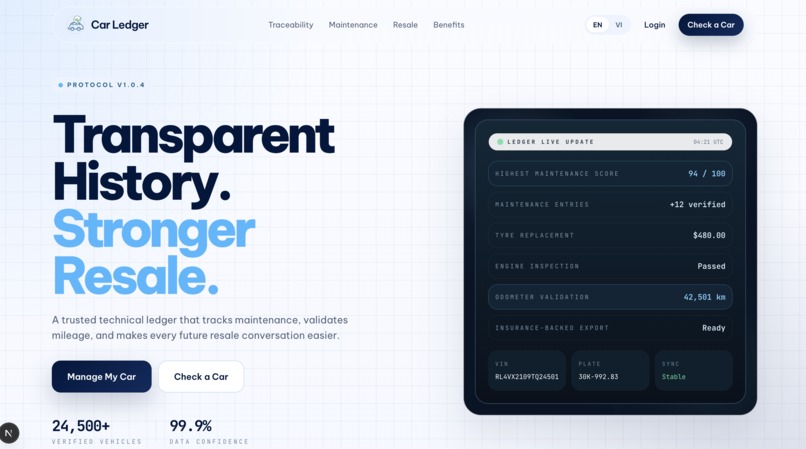
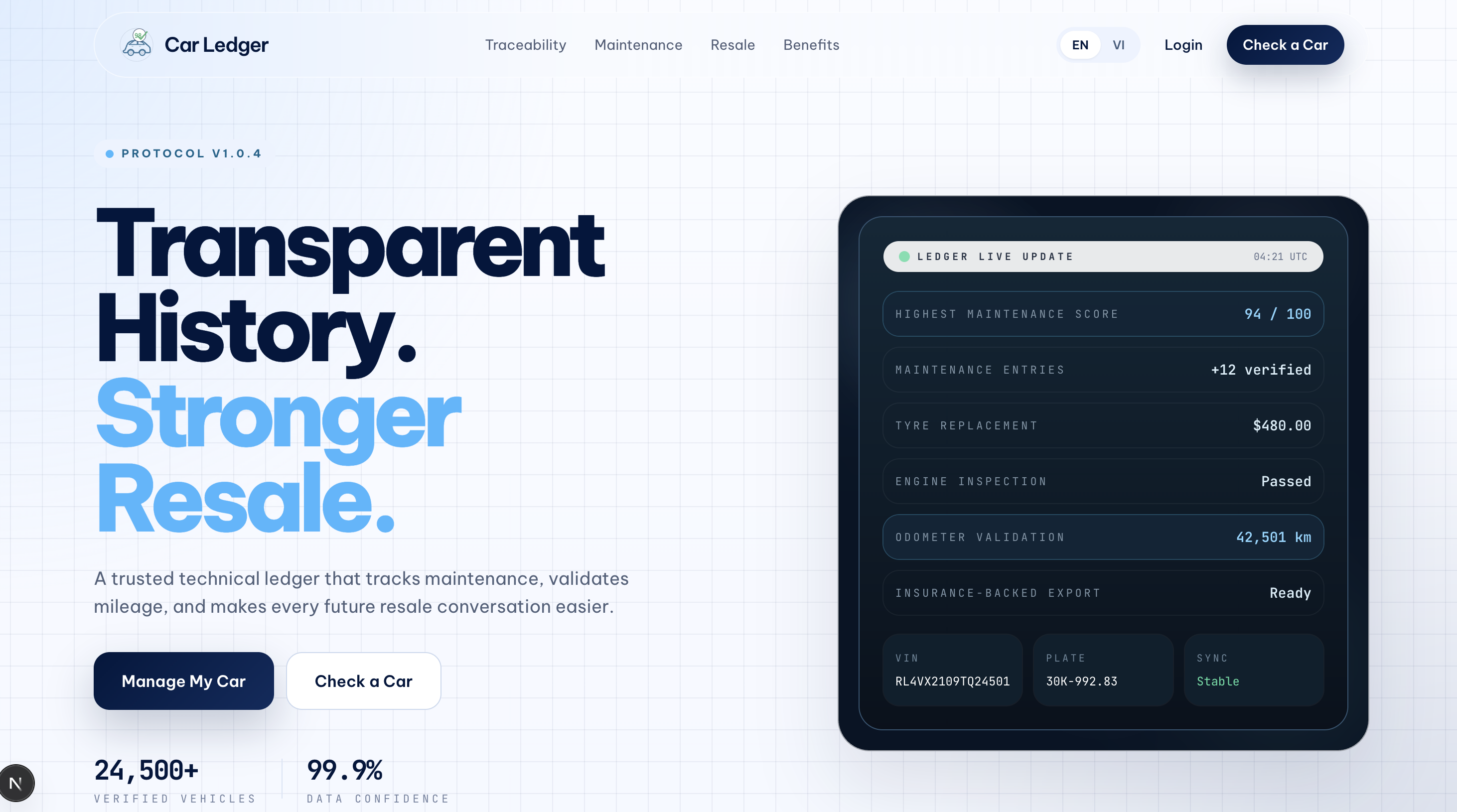
Landing page
-
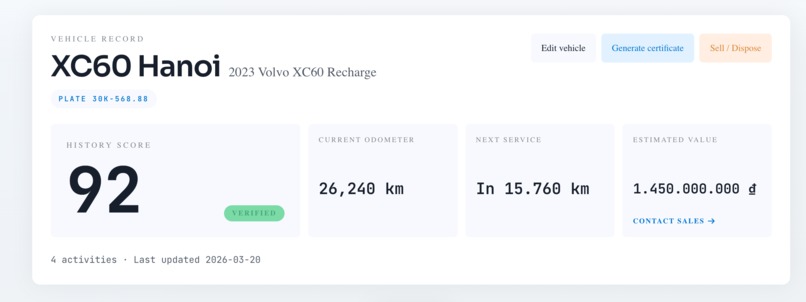
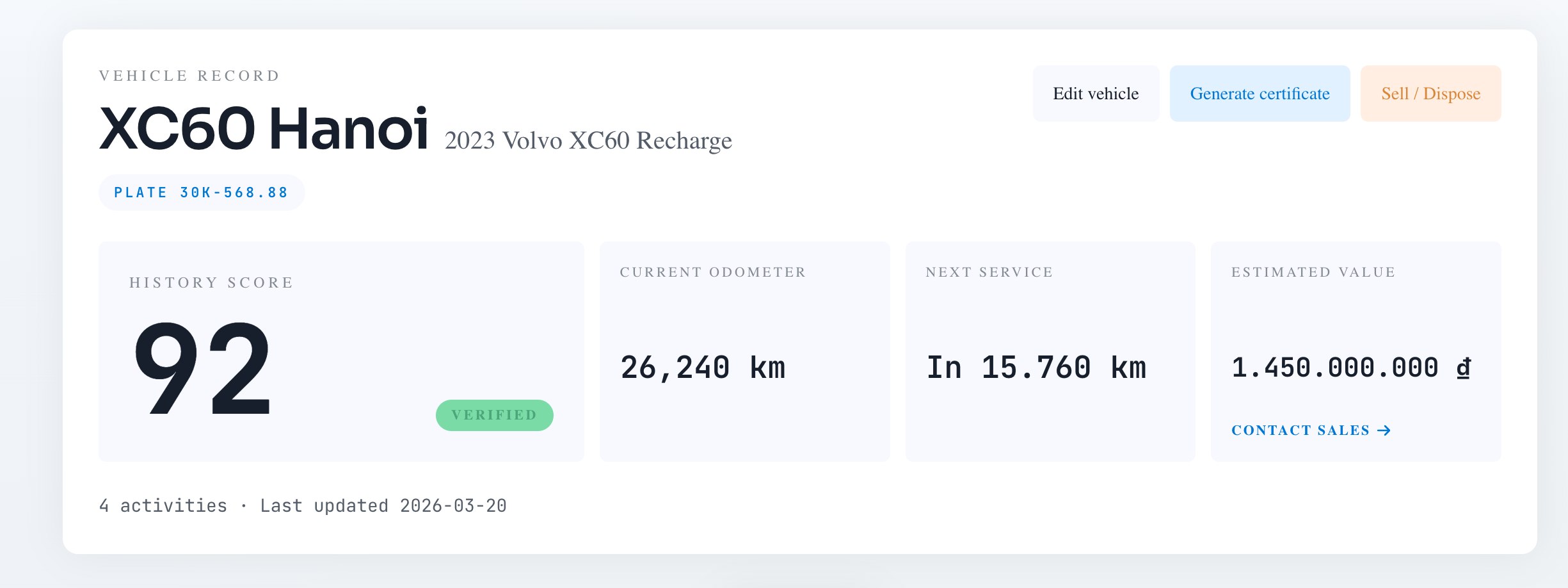
Scoring
-
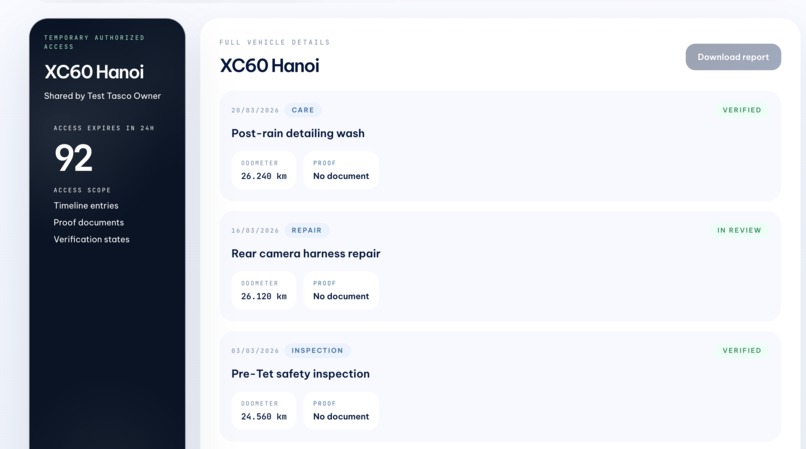
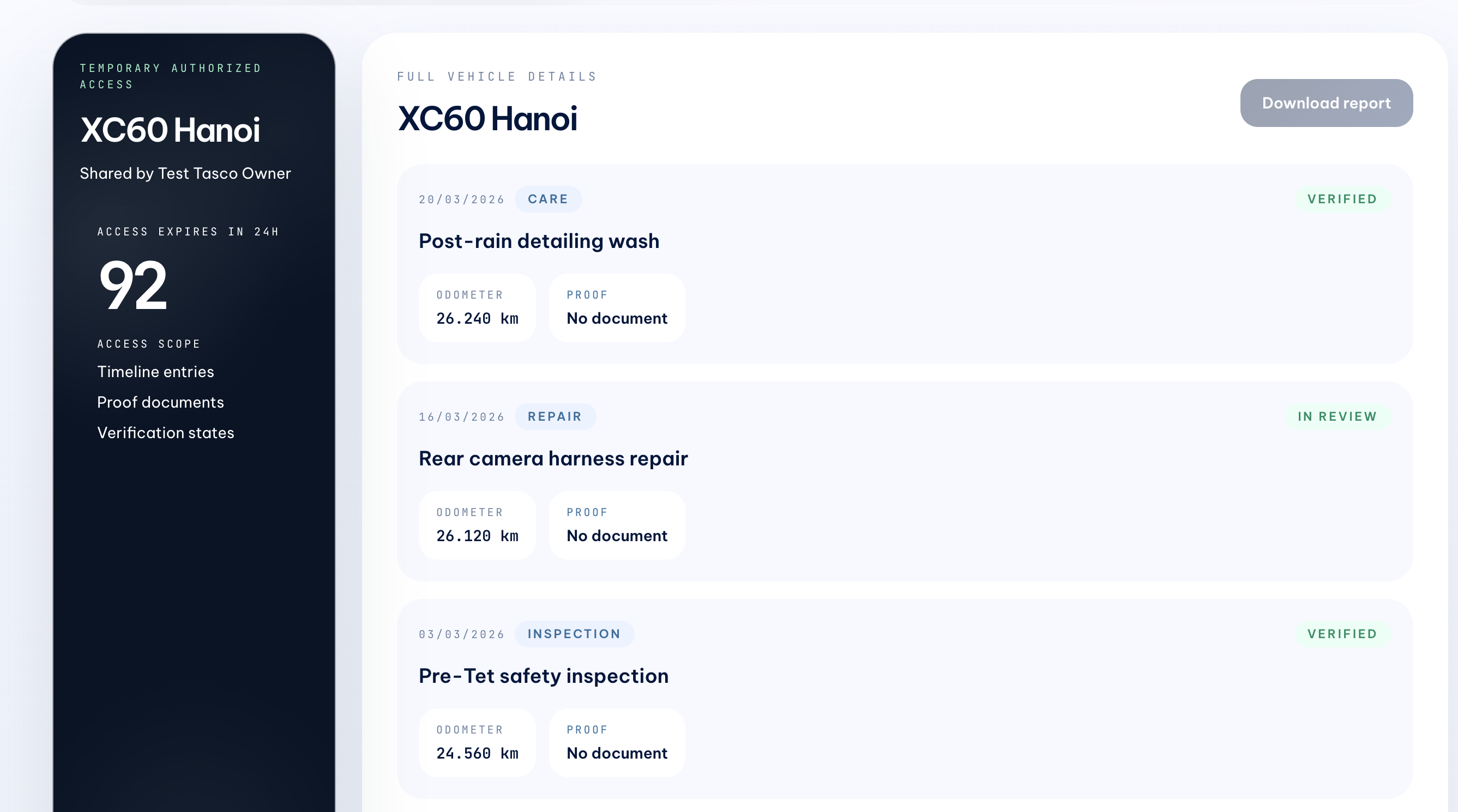
Certificate
-
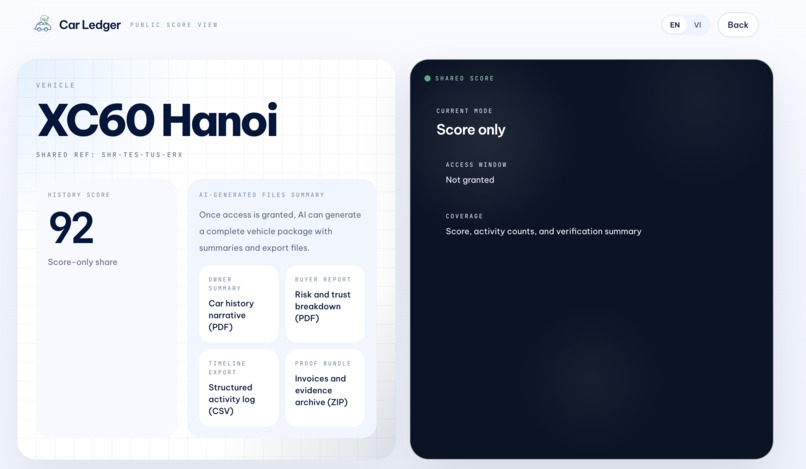
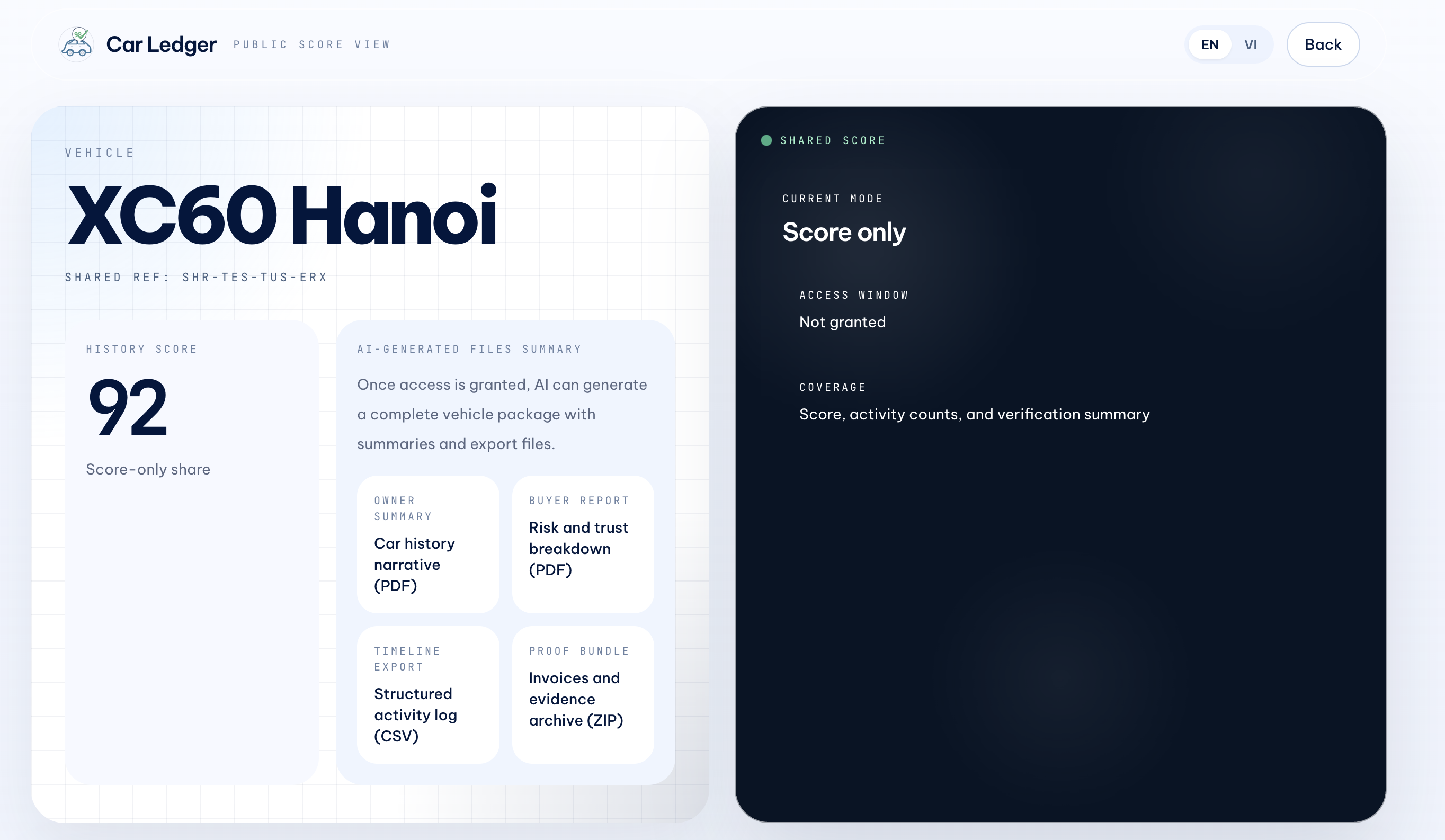
Scoring public
Inspiration
The idea started with a simple sentence from my wife: "We will never buy a second-hand car. I don't trust the previous driver." That is the real problem in Vietnam's used-car market. For more than 5 million car owners, a vehicle is often their second most valuable asset, yet its resale value is still shaped by missing records, weak transparency, and "trust me" sales tactics. Buyers are afraid of flooded cars, hidden crashes, and odometer fraud. Sellers with a genuinely well-maintained car have almost no credible way to prove it. We realized Tasco is sitting on a powerful but fragmented data advantage that could turn uncertainty into trust.
What it does
Car Ledger is a digital mobility passport for every car, designed to make vehicle history visible, verifiable, and instantly understandable.
Car Event: It aggregates fragmented signals such as toll gate timestamps, official inspections from Cục Đăng Kiểm, traffic fines from Cục CSGT, authorized garage records, fuel payments, insurance claims, and more into one clean, chronological timeline.
The Trust Score: It transforms that messy history into a simple 0-100 score, helping buyers assess a vehicle at a glance and helping honest sellers prove the true quality of their car.
How we built it
We optimized for speed, scalability, and credibility from day one.
Architecture: We built Car Ledger on a modular PostgreSQL backend with Write-Once-Read-Many logic. Every important event is append-only, traceable, and protected by audit hashing so that tampering becomes visible instead of invisible.
Integration Layer: We created a Python-based data ingestion factory built from connectors, allowing us to normalize fragmented vehicle data sources into one trusted ledger.
Front-end: We built a lightweight Next.js experience for the proof of concept, making complex vehicle history feel simple, fast, and consumer-friendly, with a path to direct integration into Tasco's mobile ecosystem.
Challenges we ran into
Data Fragmentation: Many government and automotive data sources in Vietnam are not API-first. We had to build resilient scraping, ingestion, and error-handling flows to work around unstable systems and inconsistent formats.
Odometer Fraud: Detecting suspicious patterns required more than storing records. We had to model "logical gaps" in vehicle behavior, such as a car appearing in Da Lat while its official state implies it should be in Hanoi.
AI model and Scoring of a car: Designing a score people can trust was harder than generating a number. We had to define the right signals, the right weights, and the right trade-off between explainability and predictive accuracy.
Accomplishments that we're proud of
Simplicity: We turned millions of rows of messy operational data into a product that can be understood in seconds by an everyday car buyer.
Universalism: We shaped Car Ledger as a trust layer, not just a dashboard, with the ambition to become the standard "blue checkmark" for vehicles in Vietnam.
What we learned
We learned that in Vietnam, trust is not a feature. It is the product. Users do not want more data. They want confidence. We also learned that for a G2B use case like this, a centralized and well-audited data platform can deliver more speed, accountability, and real-world practicality than a blockchain-based approach.
What's next for Car Ledger
Phase 1: Onboard the Tasco Auto and Savico garage networks across 80+ locations to enrich the ledger with high-value maintenance and service data.
Phase 2: Add more data sources to strengthen both the timeline and the scoring model.
Phase 3: Integrate directly with major used-car marketplaces like Carpla and Chợ Tốt Xe so the Car Ledger Trust Score can appear on every listing.
Phase 4: add Thrid party trusted repair shops
Built With
- fastapi
- postgresql
- python
- supabase

Log in or sign up for Devpost to join the conversation.