-
-

-
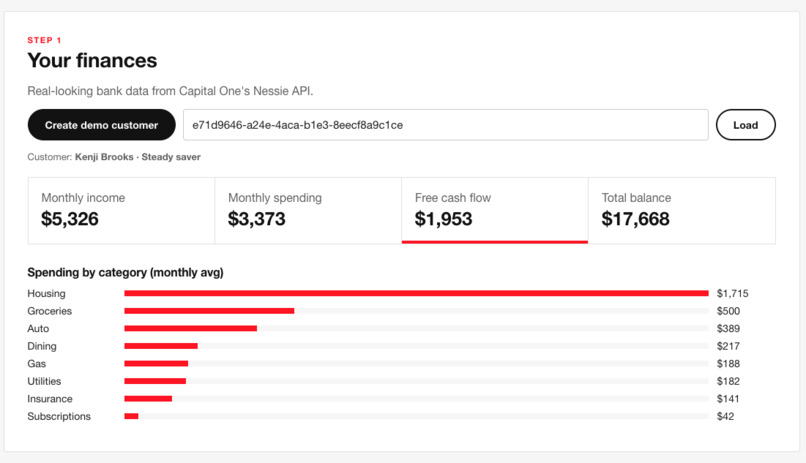
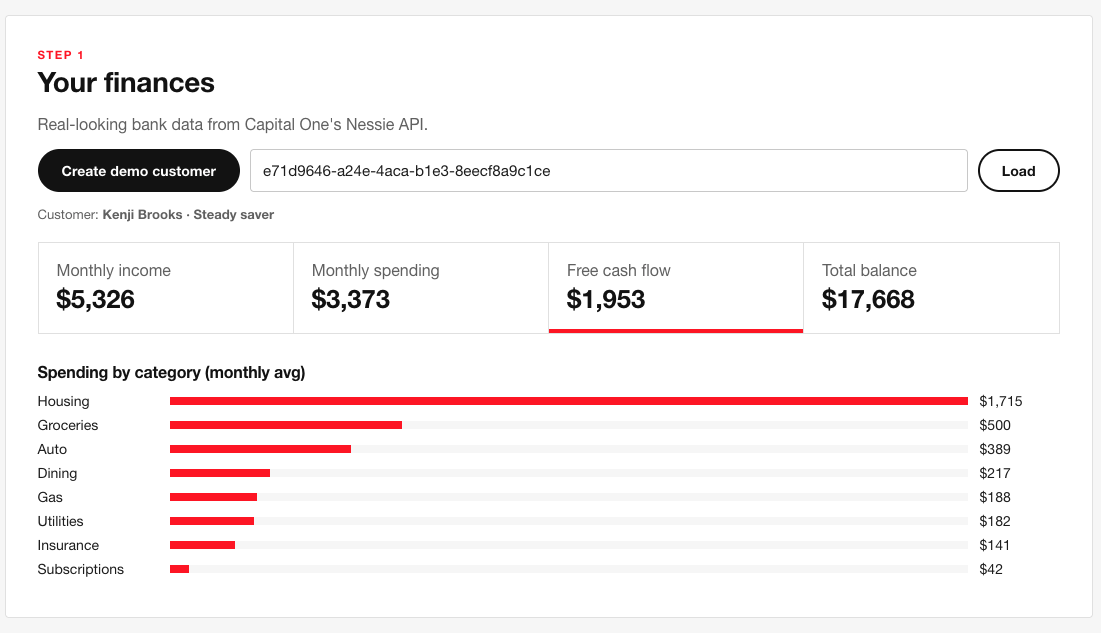
View your financial overview, including available cash, monthly spending, savings, and a breakdown of expenses.
-
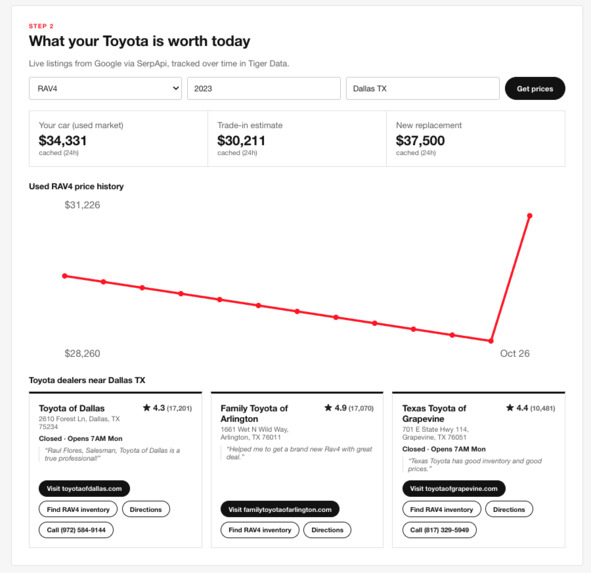
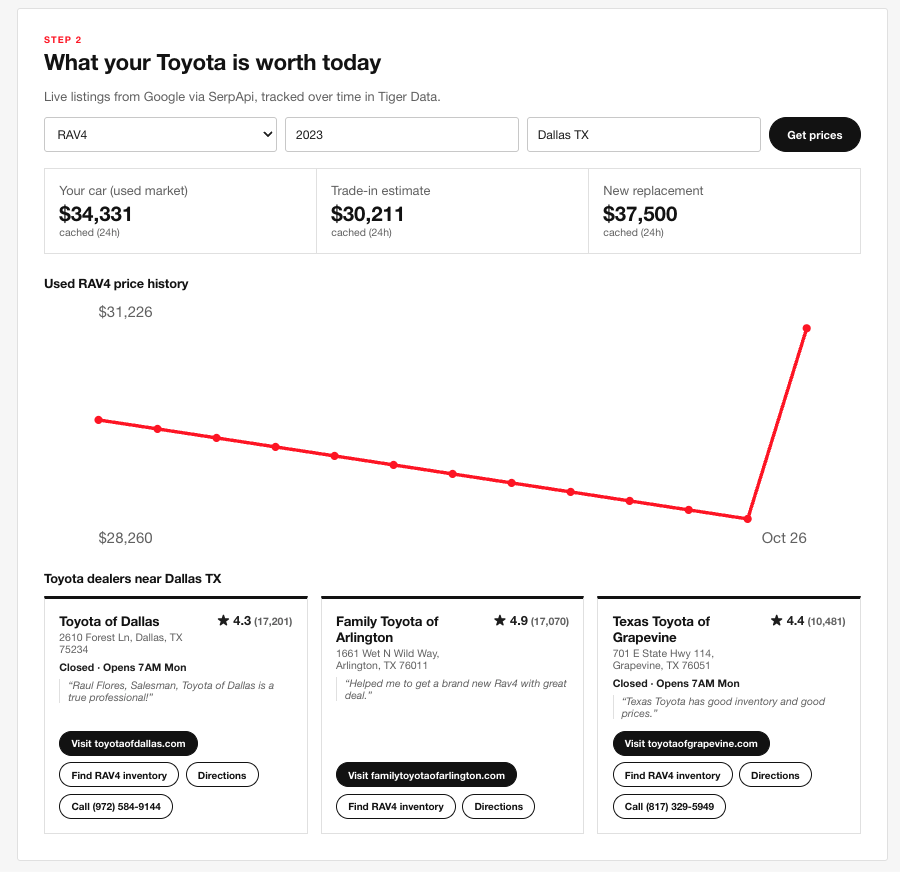
View the prices of the current vehicle you own, and provides information of if it is viable and dealers availiable
-
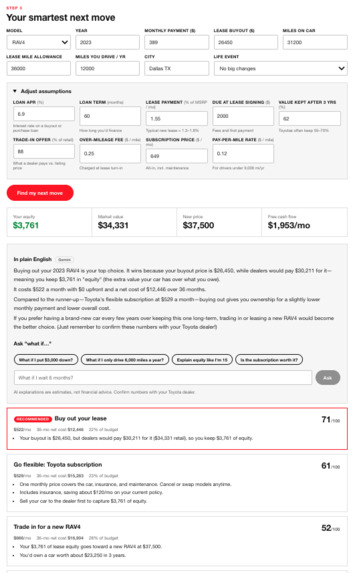
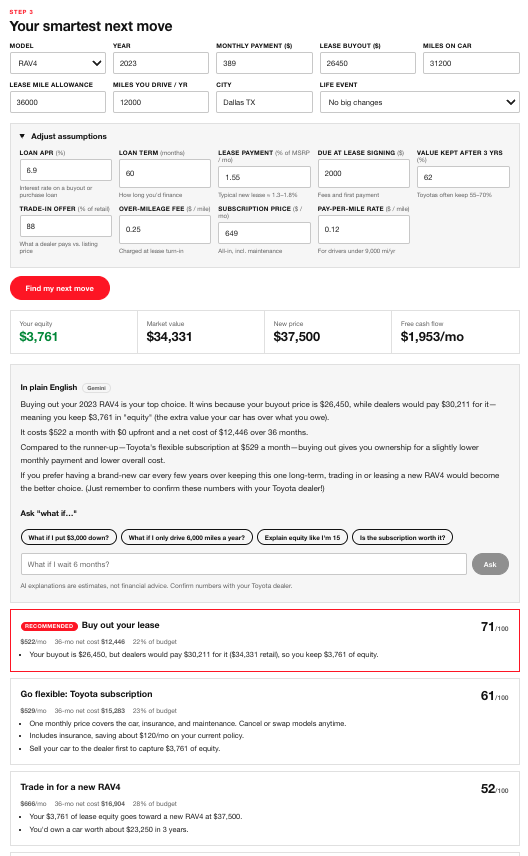
Get personalized vehicle recommendations based on your budget, financial situation, and long-term costs.

Inspiration
Making decisions about cars can be stressful, especially when you're trying to figure out whether to keep, sell, or trade in your current vehicle. Most online calculators only focus on monthly payments and don't really show how these decisions affect your finances long term. We wanted to build something that would help people compare their options and understand the financial consequences before making a decision.
What it does
Smart Next Move helps users make smarter financial decisions about their vehicles. It compares options like keeping, buying out, trading in, or leasing a car by looking at costs, available cash, and estimated depreciation. Instead of just showing monthly payments, it helps users see how each choice could affect their finances over time.
How we built it
We built our project as a full-stack web application using the Capital One Nessie API for simulated banking data, SerpApi for vehicle pricing information, and Tiger Data for storing financial data. We also integrated Google Gemini to help explain financial comparisons in a way that's easier to understand. We used Docker and Vultr for deployment, along with Claude and OpenAI to help brainstorm, develop, and debug our application.
Challenges we ran into
One of our biggest challenges was connecting multiple APIs and getting the data to work together. We also had to figure out how to compare different financial scenarios while keeping the results simple enough for users to understand. With only 24 hours to work on everything, managing our time and deciding which features to prioritize was another challenge.
Accomplishments that we're proud of
We're proud that we turned our idea into a working application within 24 hours. We were able to combine vehicle pricing, financial data, and AI into one platform instead of building just another car payment calculator. Seeing everything come together and being able to compare different financial decisions was especially rewarding.
What we learned
We learned a lot about integrating APIs, handling financial data, and building a full-stack application under time pressure. We also realized how important it is to consider more than just monthly payments when making financial decisions. Another big takeaway was learning how to simplify complicated financial information without leaving out important details.
What's next for Car Finance App
We want to improve our financial projections by including more accurate depreciation estimates, insurance, maintenance, and other ownership costs. We also hope to add more personalized recommendations and longer-term financial comparisons so users can make decisions based on their own goals and budgets.


Log in or sign up for Devpost to join the conversation.