-
-
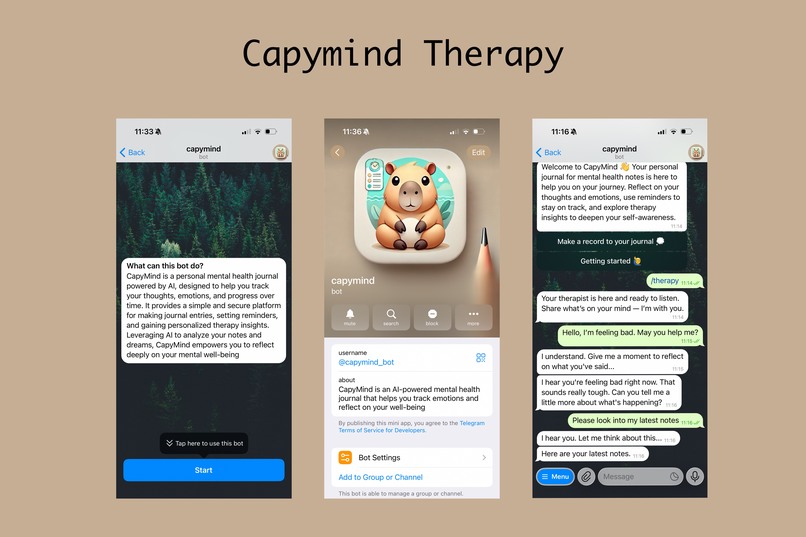
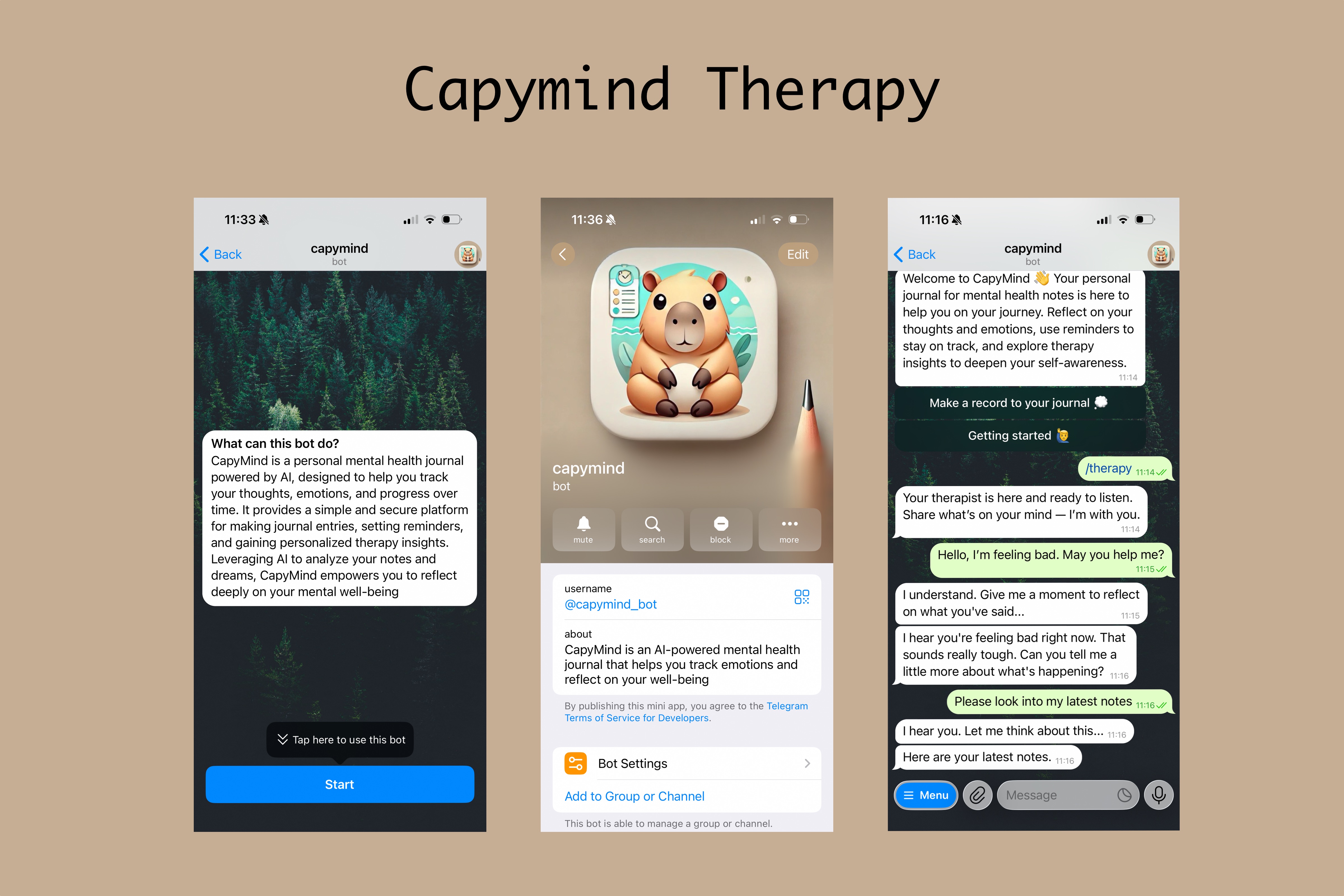
Promo
Inspiration
Life in Ukraine has been extremely challenging in recent years, and my family and I have faced some truly difficult times. About a year ago, I began searching for ways to manage my anxiety, reduce stress, and improve my sleep. That journey led to the creation of CapyMind—a personal mental health journal powered by AI. CapyMind is designed to help you track your thoughts, emotions, and progress over time. It offers a simple and secure platform for making journal entries and setting reminders. Discovering this hackathon, I realized it was the perfect opportunity to introduce real-time therapy sessions into the platform using AI agents.
What it does
CapyMind Therapy is a compassionate AI therapy assistant powered by Google ADK, designed to deliver immediate mental health support using evidence-based therapeutic methods. It offers a safe, non-judgmental space for users to explore their thoughts and feelings, while providing practical coping strategies and crisis support.
In short, CapyMind Therapy is a new service for the existing platform.
How I built it
CapyMind was developed using Go, with a Telegram chatbot serving as the frontend. The entire application is deployed to Google Cloud Run.
- Google Maps is used to determine the user’s location.
- Google Tasks provides personalized notifications to users.
- Google Drive stores user files securely.
- Firestore serves as the application's database.
- OpenAI powers the platform’s personal analysis features.
CapyMind Therapy’s Python project is structured around a multi-agent system, with each agent performing a specific role:
- Root Agent - the main therapy assistant utilizes Gemini 2.5 Flash to guide and support users.
- Crisis Line Agent - specialized in crisis intervention and finding relevant support resources.
- Data Fetcher Agent - manages user profiles and session data to ensure personalized, contextual interactions.
Several tools and integrations enhance the agents’ capabilities:
- Firestore Integration. Provides secure storage and retrieval of user data.
- Google Search. Enables real-time discovery of crisis lines and mental health resources.
- Data Formatting. Presents information in a clear, human-readable format.
- Session Management. Maintains persistent conversation history for seamless user experience.
This architecture ensures that CapyMind Therapy delivers responsive, adaptive, and supportive mental health assistance.
Challenges I ran into
Building AI agents was a completely new experience for me, and integrating a project based on Cloud Functions with the AI agent presented significant challenges. Overcoming these obstacles required learning new technologies and finding creative solutions to ensure seamless communication between the components.
Accomplishments that I’m proud of
This project has been personally meaningful and helpful to others as well. Without any marketing—just mentioning it to my therapist and relying on word of mouth — I was able to reach 74 users. I'm curious to see whether people find value in the Therapy feature as it continues to develop.
What I learned
I’ve been a software engineer for over a decade, beginning my career as a data analyst before moving into game development. After working in games, I transitioned to the mobile world, with a recent focus on iOS and watchOS apps. Learning Go and Python to build cloud applications has been especially rewarding, allowing me to expand my skills and explore new areas of technology.
What's next for Capymind Therapy
If there is genuine interest in my project, I plan to continue growing CapyMind Therapy and may even explore monetization opportunities.
Built With
- ci
- firestore
- go
- google-cloud
- google-drive
- google-maps
- googletasks
- openai
- python


Log in or sign up for Devpost to join the conversation.