Inspiration
As college students entering some of the most financially vulnerable times of our lives, we often lose track of what we’re buying, or worse, how those purchases can hurt us later. Most young adults face the same problem: not understanding their day-to-day finances and having no way to visualize their habits outside of old, depressing, and dehumanizing analytics that, let’s be honest, no one wants to read.
What It Does
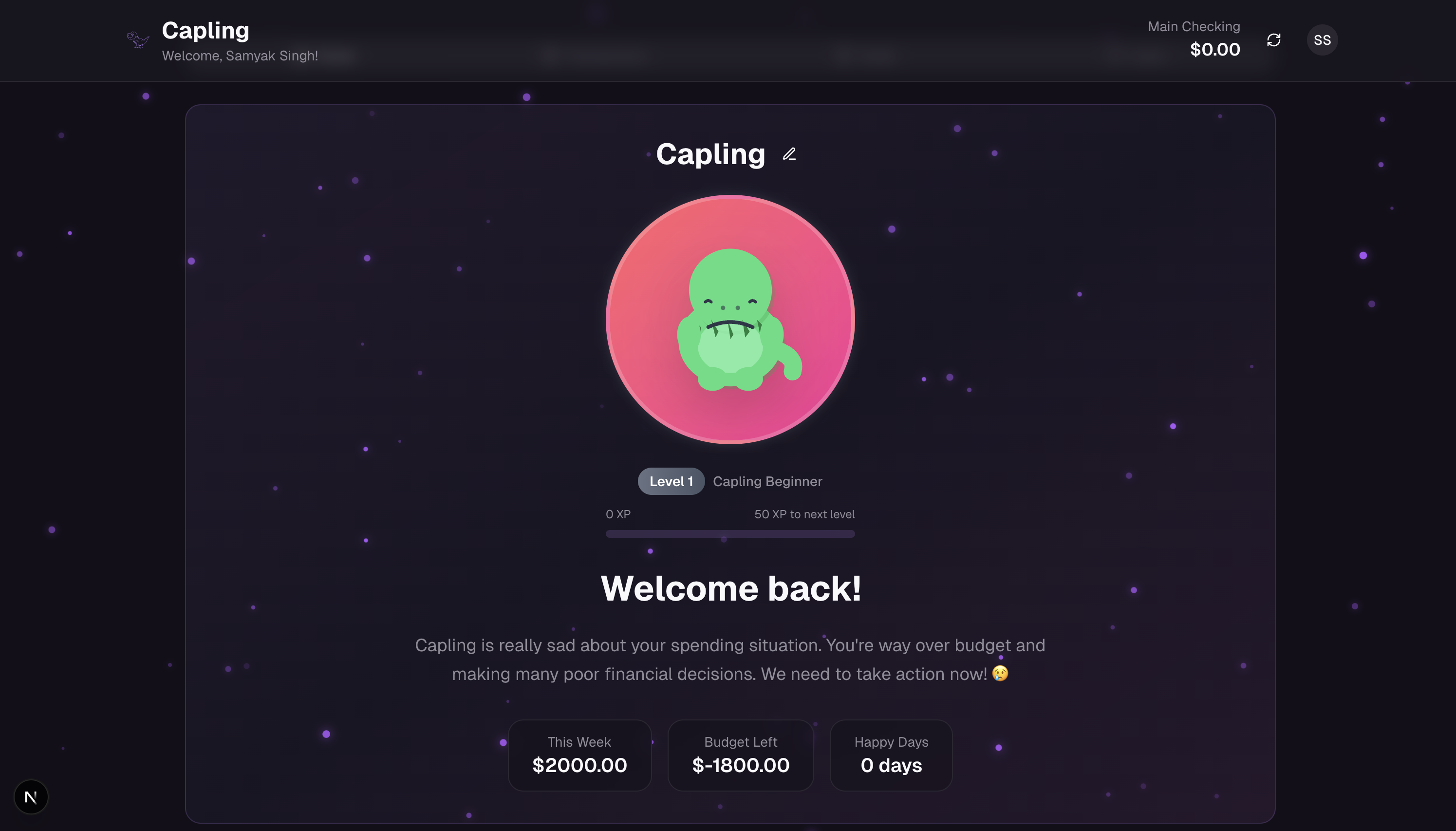
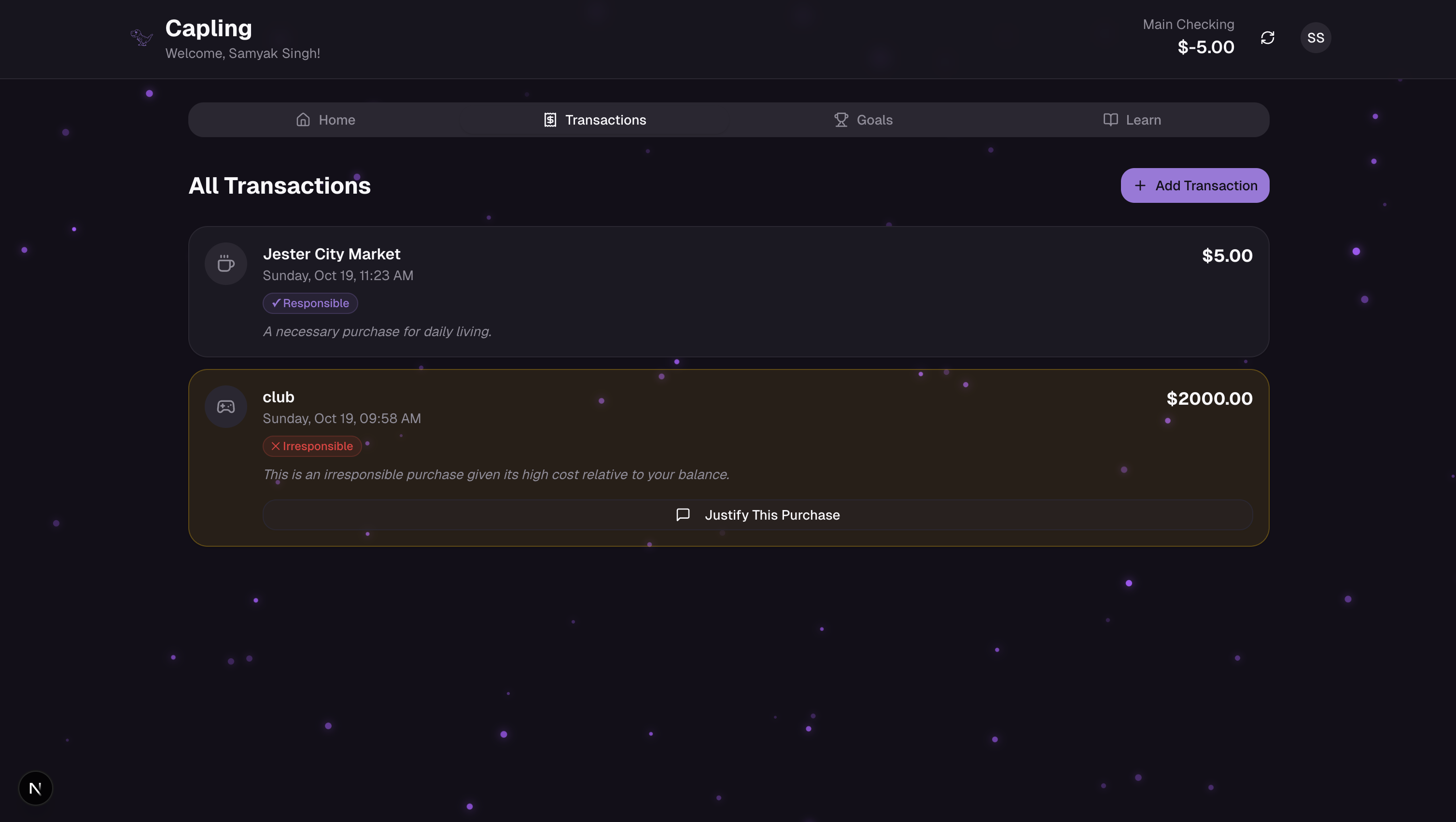
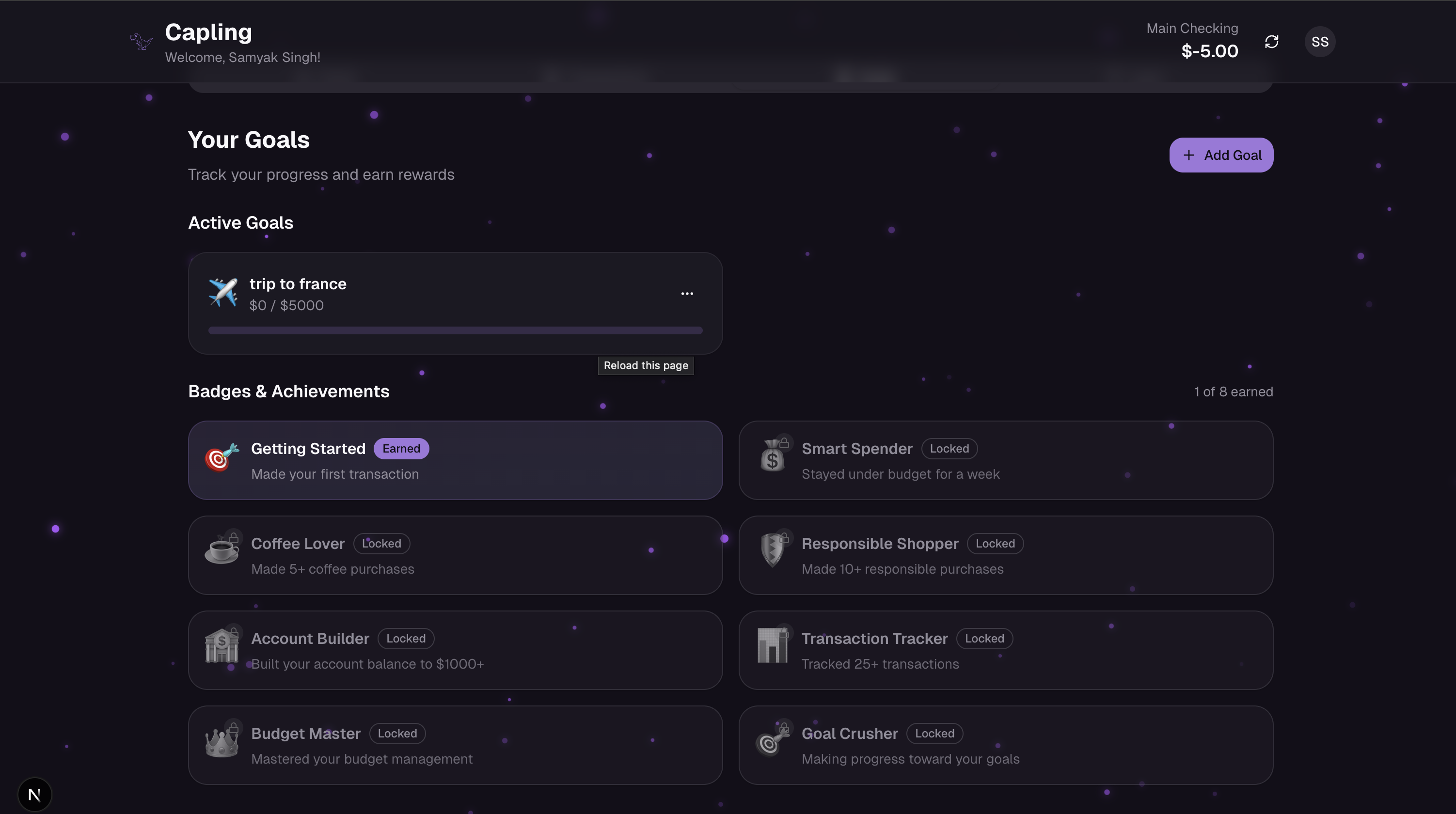
Capling serves as a medium to visualize day-to-day finances, provide AI-generated insights, and make the gruesome topic of personal finance much more personal with a fun, interactive friend. To help users progress financially, Capling also provides daily educational material on financial topics that users may have never learned about otherwise.
How We Built It
Building Capling started with thorough research into the problems surrounding personal finance. While we knew that understanding how purchases can harm you financially is difficult, we also discovered that young adults often lack basic financial education. This inspired us to incorporate a dedicated educational section into our app. After that, we researched what our tech stack should be. We ultimately decided to use Next.js, TypeScript, and Tailwind CSS for our frontend. For our backend, we chose Supabase (a PostgreSQL database) and OpenAI GPT-3.5 Turbo for ease of data interpretation and insight generation. Once we finalized our tools, we all honed our skills and spent the rest of the night working hard to bring Capling to life.
Challenges We Ran Into
Saying this project was easy would be a huge lie. It was actually really hard. None of our team members had prior experience with app development. Originally, we intended for Capling to be a mobile app, but for now, it will remain web-based. Another major issue we ran into was with the Capital One Nessie API. We ultimately couldn’t integrate it for various reasons, so we created a temporary workaround through our own demo API that simulates what a real bank might provide. Additionally, we attempted to implement a notification feature that would prompt the user to open the app whenever a purchase was made, a goal was completed, or a new daily lesson was available to boost the character’s score.
Accomplishments That We’re Proud Of
Our biggest accomplishment is successfully gamifying personal finance, making it far more enjoyable and engaging. With Capling, users develop an emotional attachment to their character, motivating them to avoid poor purchases that would hurt their character temporarily, and encouraging them to take on more daily educational material to strengthen their character’s “aura” over time. We truly believe Capling transforms the boring topic of personal finance into a fun, interactive experience that helps users build healthy financial habits.
What We Learned
While working on Capling, our team learned what it truly means to be software engineers. We gained not only technical skills related to our tech stack but also learned how to collaborate effectively, communicate ideas, and navigate disagreements. On the technical side, we learned the fundamentals of app development — both web-based and mobile. We also learned how to efficiently utilize a live database, which was made easier thanks to the great resources provided by Supabase. Finally, we learned how to manage code collaboration in a fast-paced, high-stress environment, where frequent commits to GitHub could easily lead to major merge conflicts if not handled carefully.
What’s Next for Capling
Capling has a lot of potential for the future. Our primary goal is to integrate real banking data, allowing for true real-time transaction insights. We also plan to bring Capling to mobile platforms, enabling instant notifications whenever insights or important financial information become available. Finally, we’d like to implement additional UI improvements, including dark and light mode options, to accommodate the preferences and accessibility needs of all users.
Built With
- nextjs
- openai
- postgresql
- supabase
- tailwindcss
- typescript


Log in or sign up for Devpost to join the conversation.