Inspiration, Learnings, Development, and Challenges of the Capital One Credit Card Recommendation System
Inspiration
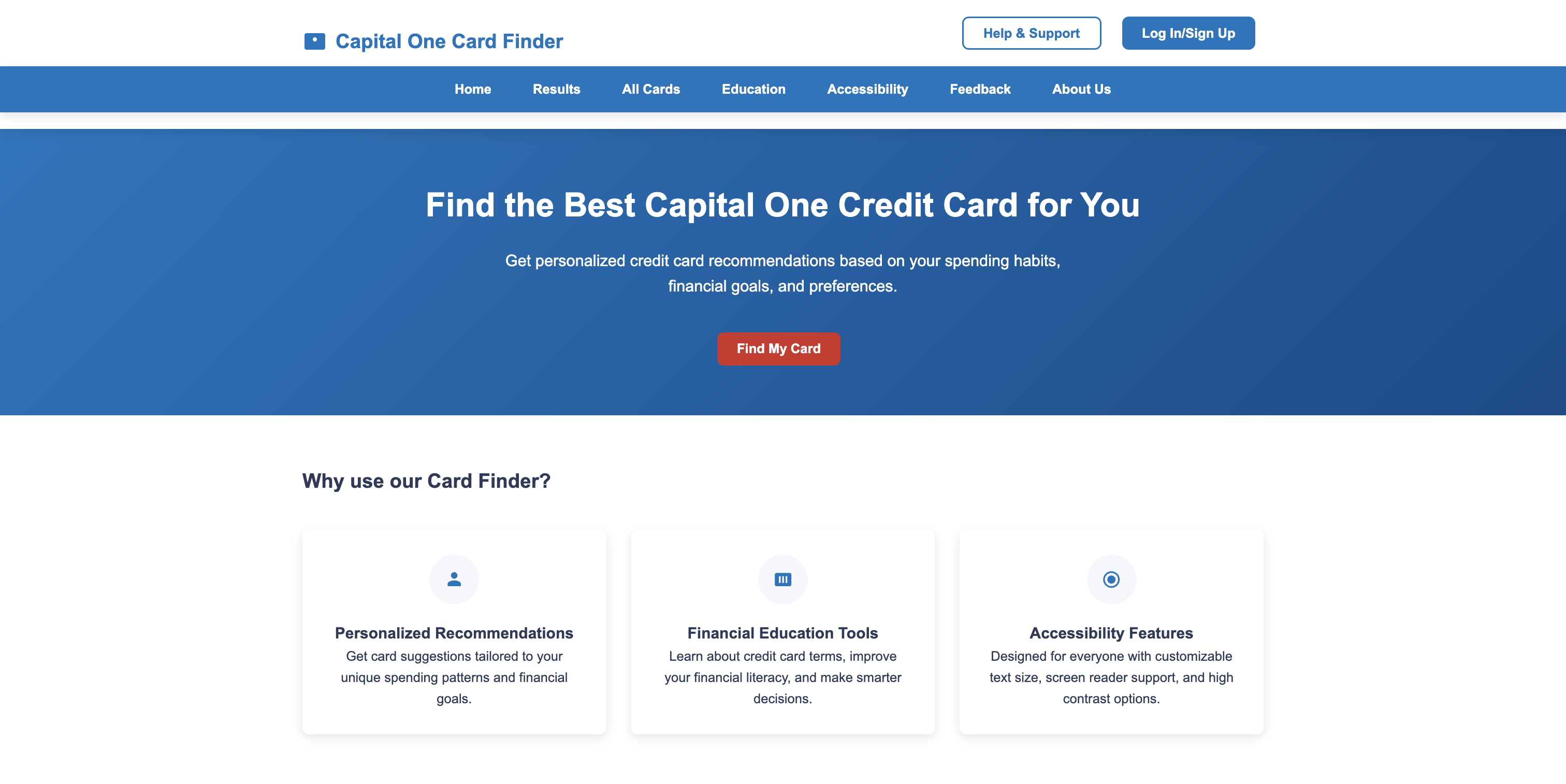
The primary inspiration behind this project was the need to create an inclusive and user-friendly credit card recommendation system that prioritizes financial education, accessibility, and transparent information presentation. Many users struggle to understand complex financial terms, compare credit card options effectively, and access financial resources due to accessibility barriers. By integrating educational content, enhancing accessibility, and ensuring transparency, this system aims to empower users with the knowledge and tools needed to make informed financial decisions.
Learnings
Through this project, several key insights were gained:
- The Importance of Financial Education: Educating users about credit scores, interest rates, and responsible credit usage is essential for promoting financial well-being.
- Transparency Enhances Trust: Simplifying financial information, providing comparison tools, and keeping content up to date help users make better choices.
- User Feedback is Crucial: Regular usability testing and feedback collection are necessary for iterative improvements.
Development Process
The project followed a structured approach:
1. Project Planning and Team Formation
- Defined clear objectives focusing on education, accessibility, and transparency.
- Assembled a diverse team, including financial educators, UX/UI designers, developers, and compliance specialists.
2. Integration of Educational Content
- Identified essential financial topics.
- Developed engaging materials such as articles, videos, and interactive modules.
- Incorporated calculators and simulators for real-time financial visualization.
- Partnered with organizations like the FoolProof Foundation to enhance financial literacy efforts.
3. Enhancement of Accessibility
- Designed user-friendly layouts and color schemes for inclusive experiences.
4. Ensuring Transparent Information Presentation
- Simplified complex financial terms for better comprehension.
- Used visual cues to highlight key details like interest rates and fees.
- Developed comparison tools to allow side-by-side evaluation of credit cards.
- Regularly updated content to reflect the latest terms and policies.
5. User Testing and Feedback
- Conducted usability testing with diverse users to refine the system.
- Collected feedback to identify pain points and areas for improvement.
- Iterated based on insights to enhance overall user experience.
Challenges Faced
Despite careful planning, several challenges arose:
- Balancing Educational Content with Simplicity: Ensuring that financial topics were comprehensive yet easy to understand required significant effort.
- Data Accuracy and Updates: Keeping financial information current and ensuring users received the most relevant recommendations required continuous monitoring.
- User Adoption: Encouraging users to engage with educational content instead of simply selecting a card based on perks was an ongoing challenge.
Conclusion
By integrating financial education, enhancing accessibility, and prioritizing transparency, this credit card recommendation system fosters trust and empowers users to make responsible financial choices. The iterative development process, guided by user feedback and compliance with accessibility standards, ensures a continuously improving platform that serves diverse financial needs.


Log in or sign up for Devpost to join the conversation.