-
-

A 6,000-unit shortfall, a qualified Kanto fallback, and a cheaper Delta offer rejected on IATF 16949.
-

CapacityLine — know which approved supplier can keep operations moving now.
-

The recovery story: line-stop risk, structured commitments, hard rejection, and human RFQ handoff.
-
CapacityLine turns urgent supplier commitments into a buyer-policy-qualified recovery decision.
-
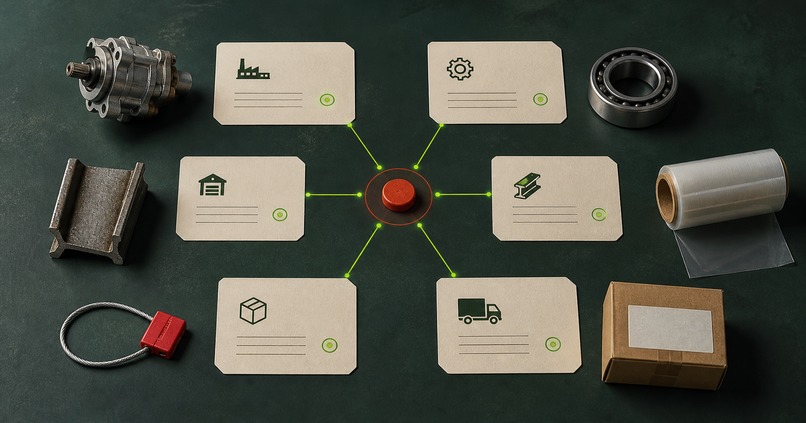
CALL-E gathers time-bound commitments from approved suppliers; CapacityLine evaluates the evidence.




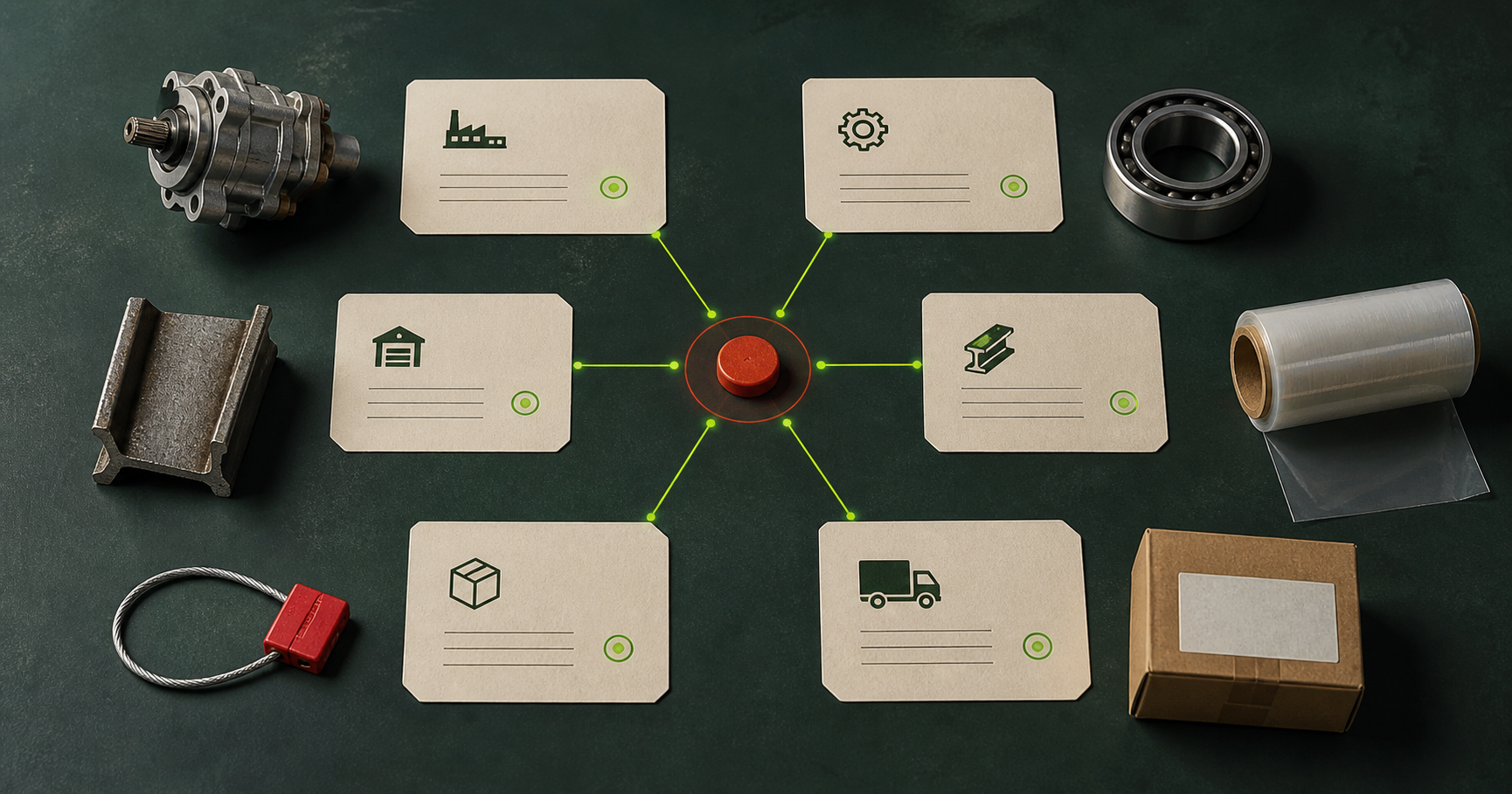
Calls collect commitments. CapacityLine's product value begins after the calls: every commitment must survive buyer-authored checks before a human advances an RFQ.
The decision in 30 seconds
A fictional automotive plant faces a 6,000-unit shortfall and a line stop in 47 hours. CapacityLine identifies Kanto Flow Systems as the qualified fallback: it commits the full quantity of the exact approved part by the required date, within the price ceiling, with the required origin, certifications, respondent authority, and transcript evidence. The cheaper Delta Fluidics offer is deliberately rejected because the mandatory IATF 16949 certification cannot be established. A human can advance only the qualified RFQ handoff; CapacityLine never places an order, promises payment, or forms a contract.
Approved is not available. Available is not qualified. CapacityLine shows both the recovery path and exactly where that path breaks.
Inspiration
When a critical supplier goes offline, monitoring can raise an alert and sourcing software can show a list. Neither establishes who can supply the right part, in the right quantity, by the required date, under the buyer's quality and origin rules. Procurement teams still close that last mile through serial calls, notes, and spreadsheets while the line-stop clock keeps running.
CapacityLine starts where those systems stop: after approved suppliers answer, when their commitments must become a defensible recovery decision.
What it does
A buyer opens an imminent supply disruption with a shortfall, deadline, price ceiling, approved parts, required certifications, permitted origins, and a list of approved backup suppliers.
CapacityLine then runs one governed recovery loop:
- CALL-E reaches the approved suppliers in parallel and asks for a time-bound commitment.
- Each conversation returns comparable structured facts: quantity, ship date, unit price, MOQ, exact or substitute part, origin, certifications, quote validity, respondent authority, constraints, and supporting evidence.
- Deterministic buyer-policy checks keep unknown, contradictory, or incomplete answers from becoming recommendations.
- An unsafe offer is rejected even when it is faster or cheaper.
- The first qualified fallback is surfaced with the transcript evidence needed to defend the decision.
- A human may approve an RFQ handoff. CapacityLine never places an order, promises payment, or forms a contract.
The reference demo makes that loop visible in under two minutes. Five approved backup-supplier outcomes resolve side by side. Kanto passes all twelve buyer-authored checks; Delta fails the mandatory certification check. The buyer can inspect every check and supporting word before approving only the RFQ handoff.
The public demo is deliberately zero-call. It replays fictional supplier outcomes without credentials, phone numbers, charges, or provider requests, so every judge can test the complete decision path safely.
Why CALL-E is essential
The missing operational data exists inside phone conversations. CALL-E is therefore the execution layer, not a decorative voice interface. It conducts goal-driven outreach, handles natural supplier answers, and returns the structured results and transcript evidence that the buyer-policy engine evaluates.
CapacityLine uses the official @call-e/calle TypeScript SDK. The live path sends CALL-E credentials only to the official CALL-E HTTPS origin, requires unique allow-listed recipients, binds approval and idempotency to the exact payload, preserves ambiguous outcomes for reconciliation, and requires explicit human authorization before task creation.
Evidence we can stand behind
- The live CALL-E integration was exercised in an 89-second Japanese call on 20 August 2026. This establishes only the provider-to-phone integration path; it is not presented as customer validation or a benchmark of production voice quality.
- The public qualification benchmark runs 32 named failure and uncertainty cases with zero false-qualified outcomes. Four of four valid positive controls also qualify, so a block-everything implementation cannot appear successful.
- The Recovery Stress Lab re-evaluates the recorded commitments under five defined single shocks. The reference case retains a qualified path through all five and exposes its first uncovered case at two simultaneous adverse conditions. These are deterministic reference results, not forecasts or customer outcomes.
- CapacityLine's CALL-E companion implementation was reviewed and merged into the official CALLE-AI awesome-phone-call-agents repository.
The scenario, suppliers, transcripts, impact figures, and benchmark times shown in the public demo are fictional or modeled and are labeled accordingly. We make no avoided-savings claim.
How we built it
- Next.js 16, React 19, and TypeScript for the operator application.
- The official CALL-E server SDK for authorized batch outreach, status, structured results, transcripts, and evidence.
- A strict per-recipient commitment schema plus a twelve-check deterministic procurement policy.
- Stable recipient-to-result binding so reordered provider output cannot be assigned to the wrong supplier.
- A versioned Decision Contract shared by the recommendation, evidence view, stress tests, and export.
- A safe fictional replay that creates zero phone calls, plus a separately gated private live path.
- Vitest coverage, a production build, route checks, and public machine-readable benchmark reports.
Challenges we ran into
The hardest problem was not placing a call. It was deciding what a phone answer is allowed to mean. “We should have stock” cannot become a qualified fallback. A completed provider task is also not automatically a trustworthy commercial commitment.
We separated the responsibilities deliberately: CALL-E gathers and grounds the facts; deterministic rules apply buyer policy; a person retains commercial authority. We also made ambiguous creation and incomplete results fail closed so uncertainty cannot trigger an unsafe retry or a false recommendation.
Accomplishments that we're proud of
- The first 30 seconds show the crisis, the qualified fallback, the cheaper rejected offer, and the human authority boundary.
- Every recommendation can be traced from a buyer requirement to a structured field and supporting transcript words.
- The product refuses an attractive offer for a hard certification failure instead of ranking on speed or price alone.
- Judges can run the entire decision flow without a phone call, credential, card, or charge.
- The same decision contract can be challenged with reproducible negative cases and recovery shocks.
- Its CALL-E companion passed external review and was merged into the official CALLE-AI repository.
What we learned
Voice becomes operationally useful when conversation is converted into evidence that a real decision policy can inspect. A transcript alone creates more review work; a score alone hides uncertainty. The practical combination is conversation, structured commitments, deterministic guardrails, and human authority.
We also learned that “unreachable” must remain different from “unavailable,” and “completed call” must remain different from “qualified offer.” Preserving those distinctions is what lets a procurement team act quickly without pretending uncertainty disappeared.
What's next
The next commercial step is a consent-first shadow evaluation against historical or live procurement exceptions. It will measure Time to First Qualified Fallback and manual buyer touches against the current process before any outcome or ROI claim is made. Production onboarding, durable tenant infrastructure, and system-of-record integrations remain post-hackathon scale work, not claims about the public demo.
Testing instructions
- Open the Evaluation room and choose Run product proof.
- In the demo, keep Safe demo selected and run the six-second decision replay. No phone call is created.
- Inspect the recommended Kanto fallback and its twelve passed buyer-policy checks.
- Open Delta Fluidics and confirm the cheaper offer is blocked for the missing IATF 16949 requirement.
- Approve the RFQ handoff and confirm that no order, contract, or payment is created.
- Open the Recovery Stress Lab to see five covered single shocks and the first compound gap.
- Open Qualification reliability to inspect all 32 adversarial cases and four valid controls.
Judges should use Safe demo unless live testing has been explicitly coordinated with consenting recipients.
Built With
- call-e
- next.js
- react
- typescript
- vitest

Log in or sign up for Devpost to join the conversation.