-
-
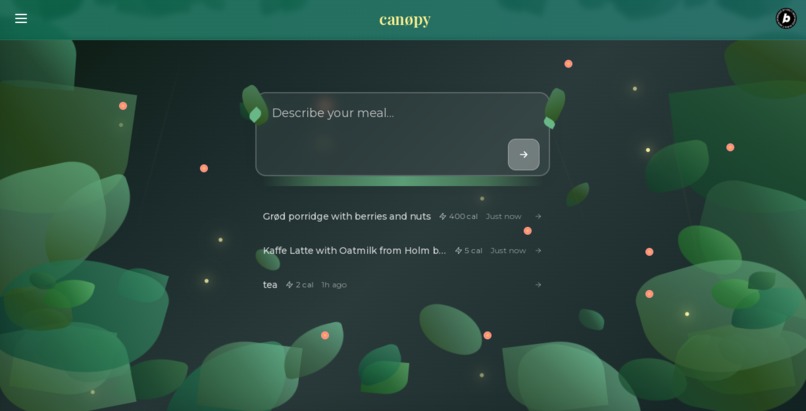
Canøpy - Mindful Nutrition Tracking
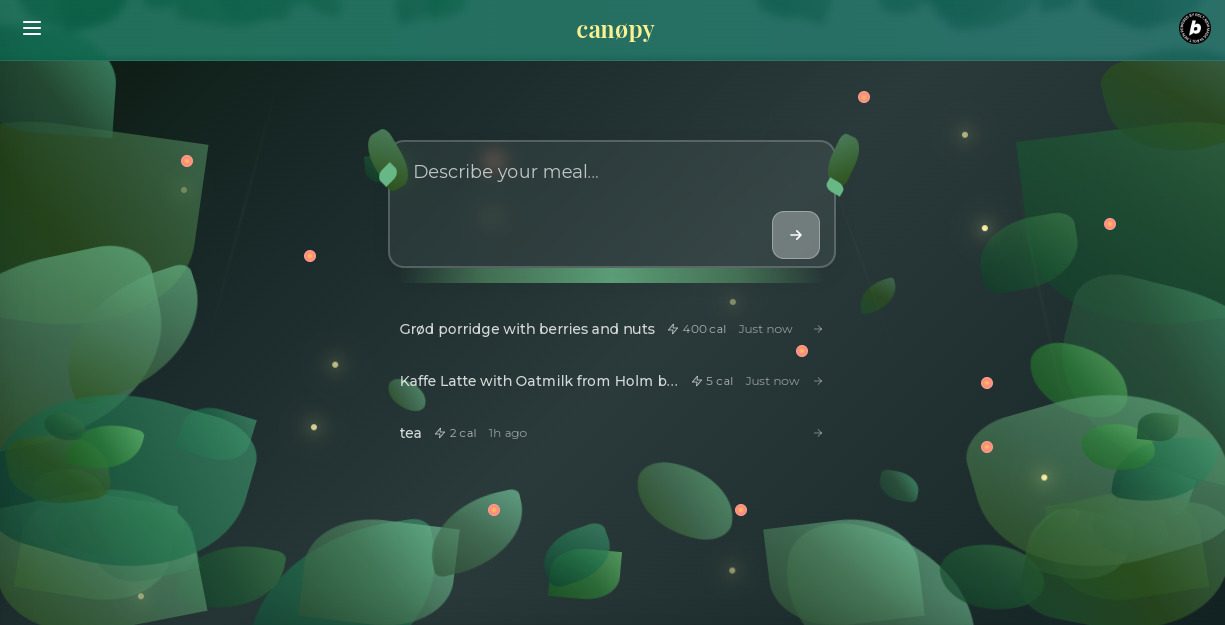
Canøpy: Your Mindful Guide Through the Restaurant Jungle
What Inspired This Project
The inspiration came from a simple observation: everyone I knew wanted to be aware of restaurant calories but hated traditional tracking apps. When I dug deeper, I discovered why - 71% of users develop disordered eating patterns from obsessive calorie tracking.
I found three distinct user types completely abandoned by existing apps:
- ED Recovery users: "Since my eating disorder I try to avoid everything that has to do with food tracking... But I think it has potential!"
- Insight Seekers: "Some insights would be nice... it is sometimes very surprising what things make or break your diet"
- Diet Philosophy followers: Want restaurant guidance without calorie obsession
This was a problem we didn't know we needed to solve - millions of users need nutrition awareness without the psychological harm.
What I Learned
Technical Reality vs. Expectations: I started wanting perfect AI accuracy but learned that transparency and "good enough" estimates build more trust than black-box precision. Users care more about understanding the process than getting exact numbers.
Psychology Matters More Than Accuracy: The mental health impact of nutrition apps is severely underestimated. Traditional apps optimize for calorie precision at the expense of user psychology - exactly backwards for sustainable behavior change.
Restaurant Data is Surprisingly Hard: Copenhagen restaurants that are obvious to locals are often invisible to AI systems. Even with sophisticated prompting, Perplexity sometimes misses obvious menu items that Google finds instantly.
AI Production Gap: The most eye-opening discovery was the massive gap between AI performance in demos versus production. WhatsApp Perplexity gives brilliant restaurant analysis, but the same model through APIs becomes inconsistent and unreliable.
How I Built It
Tech Stack
- Frontend: React/Tailwind on Bolt.new
- Database: Supabase with comprehensive food entry tracking (slug: hannazzzzz)
- Infrastructure: Deployed on Netlify (slug: wwkcglagnvfvurjzrlsp), version management on Github
- AI: 3-phase system using Perplexity + Google Custom Search
- Design: Pure CSS jungle aesthetic with glassmorphism effects, made in Bolt and Claude
- Project Management: Claude Sonnet 4 as AI assistant for daily planning and decision-making
- Slides: Gamma for AI-generated presentation design
Development Journey
- Research Phase: Academic papers on eating disorder apps, user psychology validation
- AI Integration: Struggled with API reliability, learned prompt engineering through iteration
- 3-Phase Architecture: Restaurant discovery → Dish analysis → User modifications
- Jungle UI: Nature-inspired design reducing app anxiety vs sterile medical interfaces
- User Validation: Tested with all three archetypes, refined based on real feedback
Design Philosophy
"Pushing through jungle foliage to find clarity" - nutrition apps shouldn't feel medical. The Danish ø in Canøpy connects to Copenhagen's restaurant scene while the jungle aesthetic creates calm, organic discovery.
Challenges I Faced
LLM API Reliability
The biggest technical challenge was AI inconsistency. Despite comprehensive prompts targeting restaurant menus and reviews, the system sometimes missed obvious Copenhagen restaurants. I learned that using AI for what's essentially a search problem creates reliability issues.
The Demo vs Production Gap
Most eye-opening was discovering that the same AI model performs brilliantly in direct interaction (WhatsApp) but becomes unreliable through production APIs. This exposes a fundamental challenge in AI development that our industry needs to solve.
Psychology vs. Precision Trade-off
Balancing accurate calorie estimates with psychological safety for ED recovery users required careful design decisions. How precise is too precise? When does helpful become harmful?
User Archetype Complexity
Each user type needs slightly different approaches - ED recovery users want minimal numbers, insight seekers want patterns, diet philosophy users want rule compliance. Building for three distinct psychologies simultaneously.
Technical Debt vs. Shipping
With hackathon time constraints, I had to choose between perfecting the AI accuracy and shipping something real that users could test. I chose shipping - sometimes working imperfectly beats perfect theories.
What Makes This Different
This isn't another calorie tracking app - it's anti-tracking tracking. While MyFitnessPal optimizes for precision and drives away psychology-conscious users, Canøpy serves the abandoned millions with mindful awareness that doesn't distract from enjoying great restaurants.
Built with systematic user validation, evidence-based decisions, and honest assessment of limitations.
The jungle aesthetic creates an emotional connection that differentiates from the sterile, medical feeling of traditional nutrition apps. Combined with conversational input and delayed visibility options, it's designed for psychology-conscious users who need awareness without obsession.
Sometimes shipping something real beats perfecting something imaginary.
Live Demo: https://splendorous-manatee-3eb978.netlify.app/
Debug Mode: Add ?debug=true to see the full 3-phase analysis
GitHub: Hannazzzzz/Restaurant-nutrition-estimator
Blog: hannazoon.wordpress.com
Built with 🌿 in Copenhagen during the World's Largest Hackathon 2025.

Log in or sign up for Devpost to join the conversation.