-
-
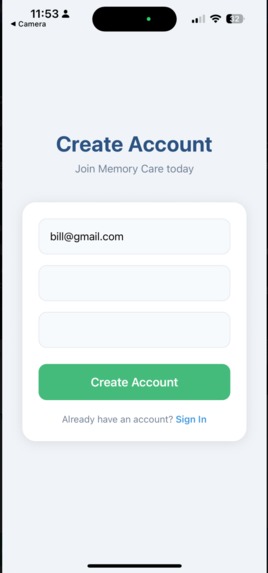
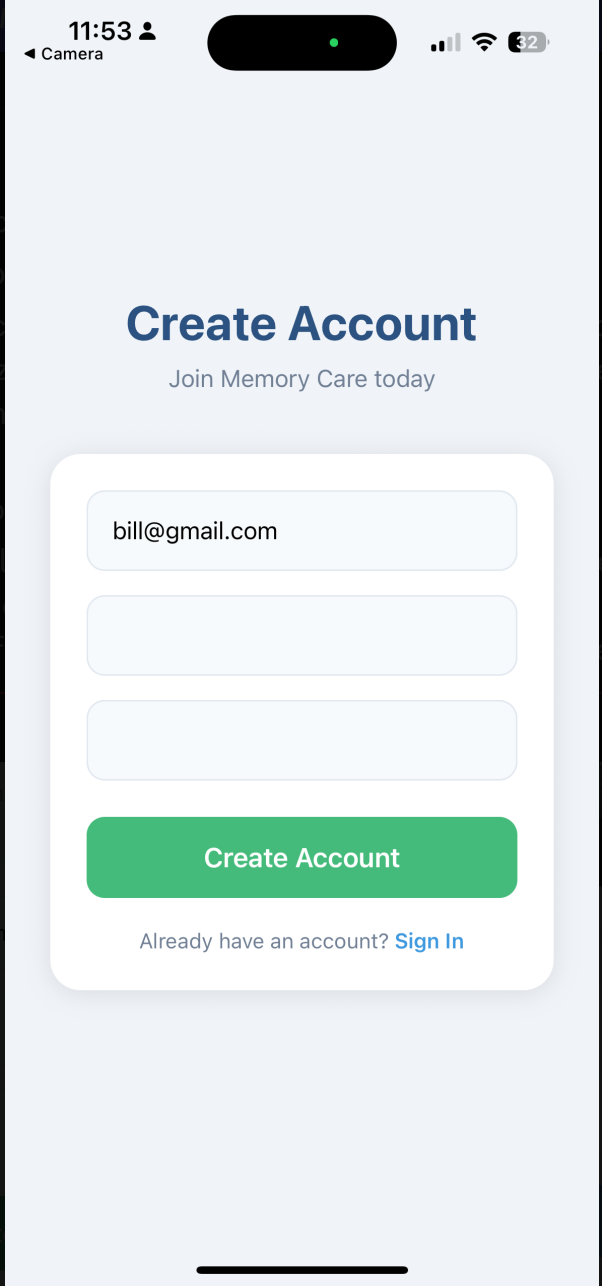
Create Account Page
-
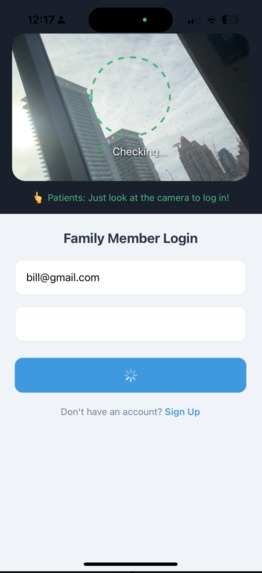
Family Member Login Page
-
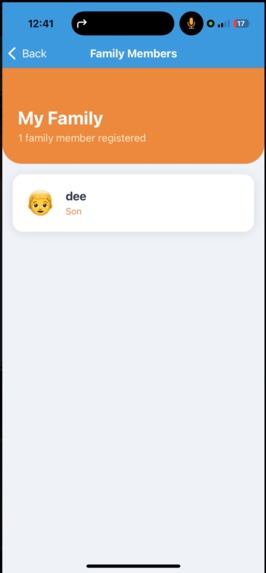
Family Member Page
-
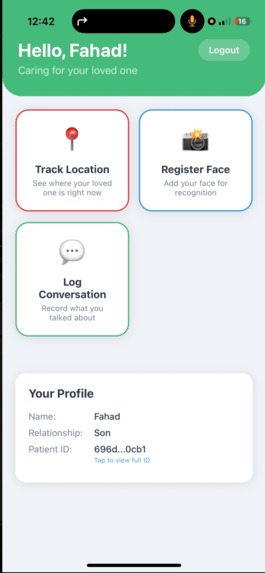
Home Page
-
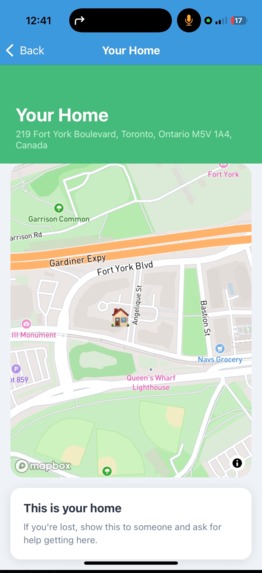
Patient Tracking
-
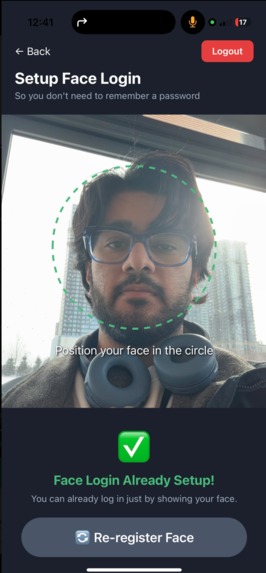
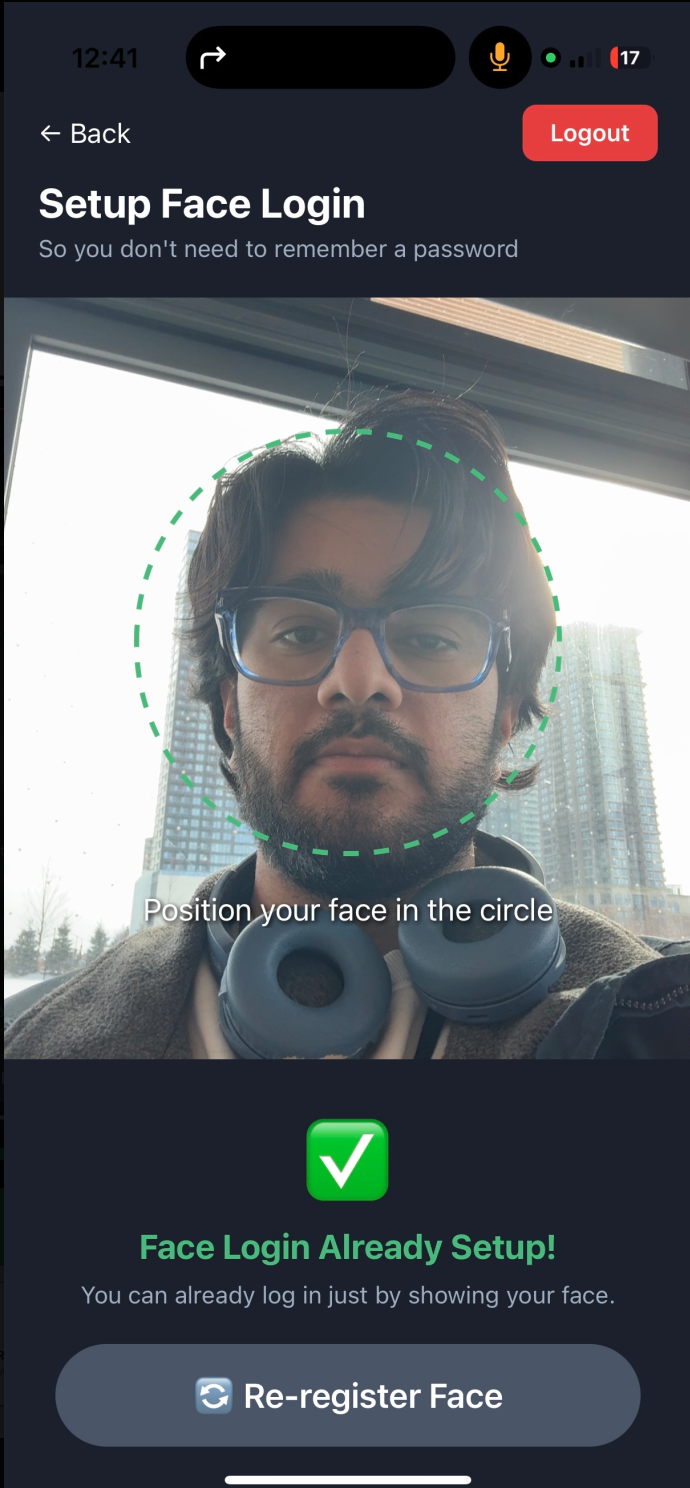
Set Up Face Login Page
-
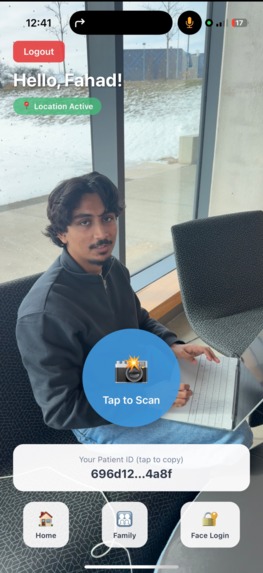
Patient Recongization
Inspiration
In a society increasingly focused on digital innovation, one vulnerable group remains largely overlooked: the 597,000 Canadians living with Alzheimer's and dementia. These individuals face daily challenges that most technological solutions ignore—the gradual loss of identity, the fear of wandering, and the heartbreaking inability to recognize loved ones. Our inspiration came from recognizing this critical gap: Where is the technology that preserves human connection when memory fades? Where are the tools that empower rather than restrict?
What it does
Memory Care is a comprehensive mobile platform designed with—not just for—Alzheimer's patients and their families. It operates on three interconnected pillars:
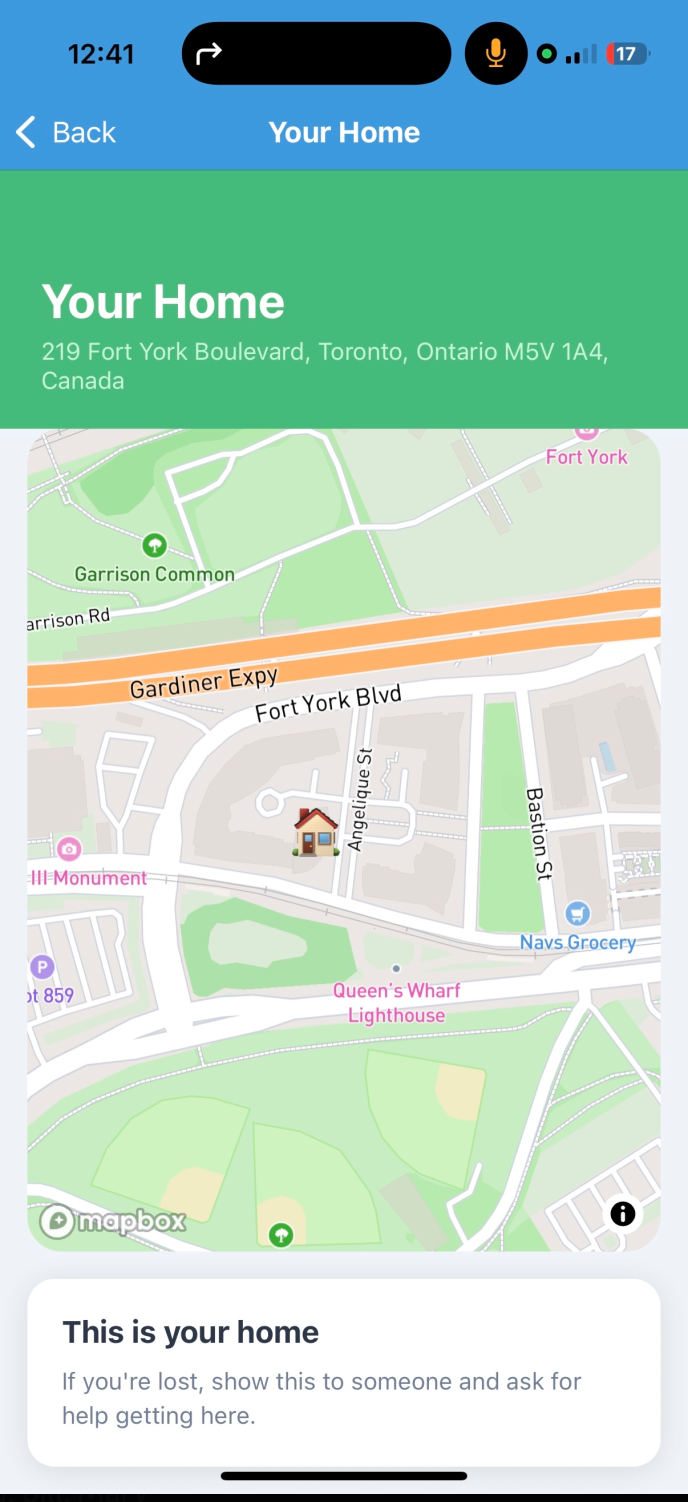
For Patients: 1: Point your phone at someone; the app identifies family members using privacy-preserving AI that works entirely offline. 2: Record a voice snippet to recognize family members, even when they're out of sight. 3: A simplified home-finding interface with calming visuals and clear directions 4: An always-accessible digital album that reinforces relationships through repetition and context
For Families:
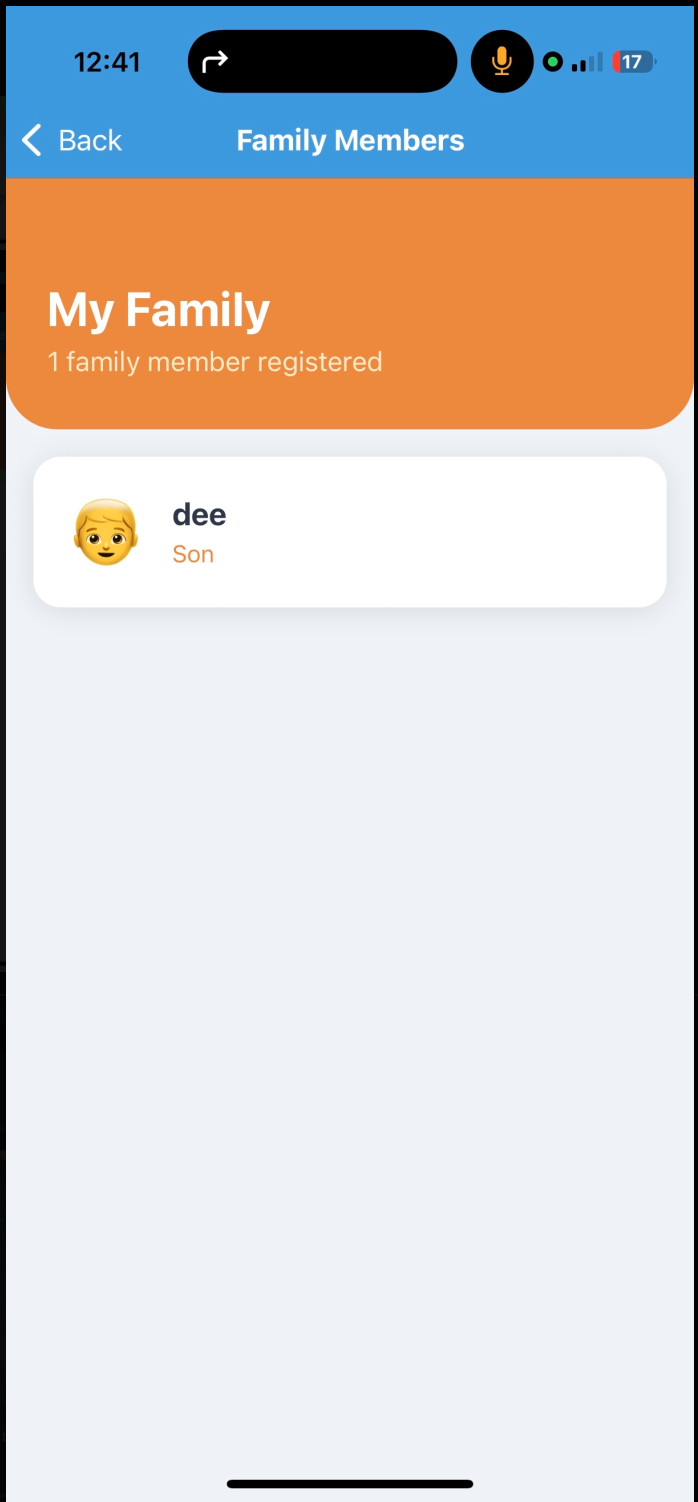
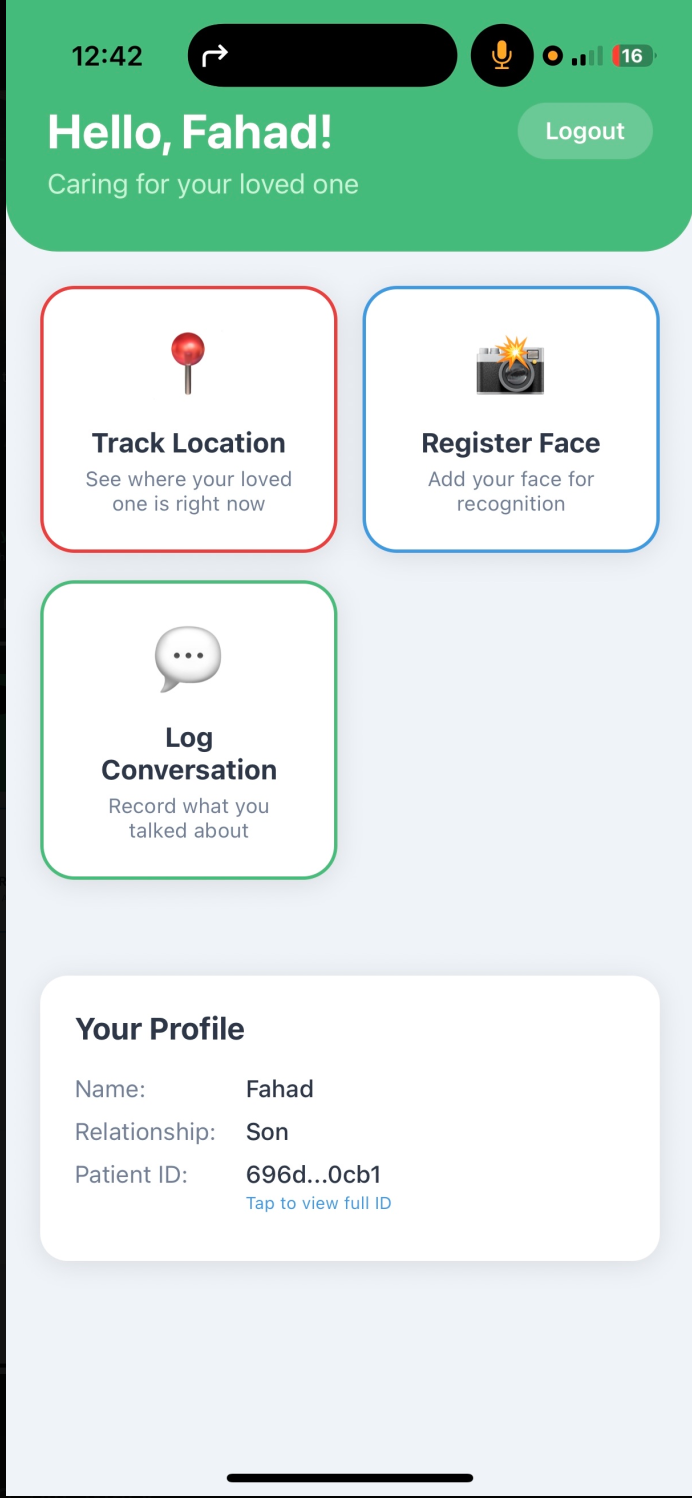
1: Real-time location sharing with geofencing—patients aren't "tracked," they're "connected" 2: Document meaningful moments and conversations to reinforce patient memory and create precious family archives 3: Secure family networks for coordinated care without overwhelming any single caregiver
How we built it
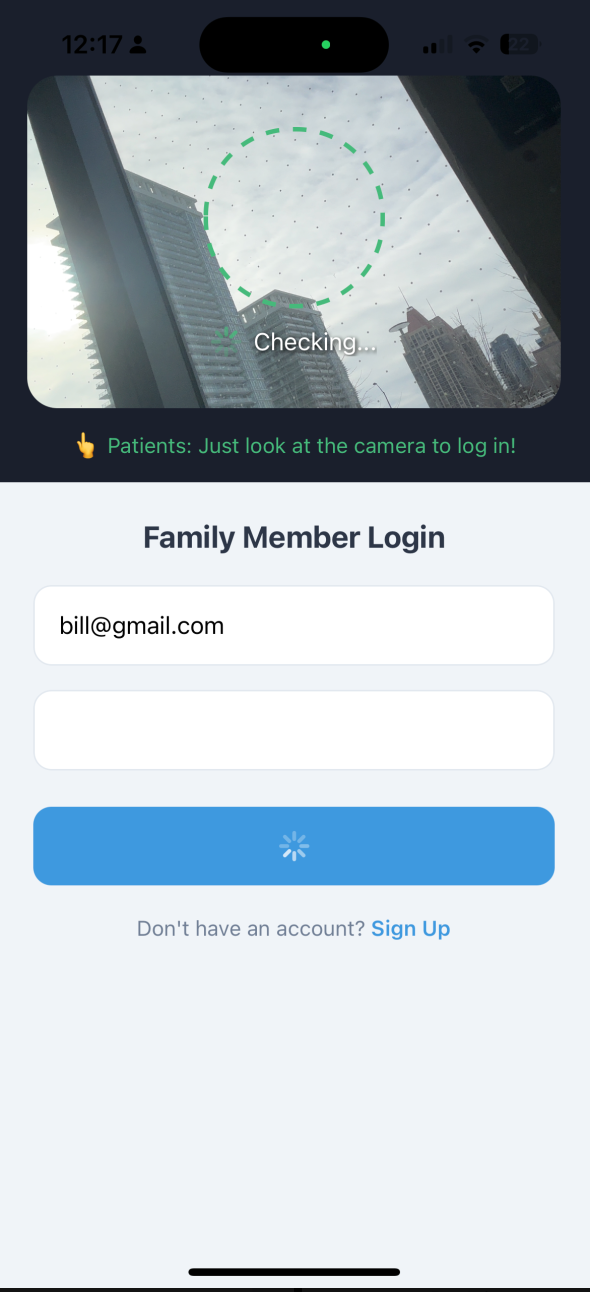
The Mobile Experience: We built Memory Anchor using React Native with Expo — writing one set of code that runs smoothly on both iPhones and Android devices. The app uses the phone's camera to scan faces, integrates Mapbox for live location mapping, and sends GPS coordinates from the patient's phone to our servers every five seconds. One of our favorite features is the gentle voice announcement: when the app recognizes a family member, it calmly says, "This is your daughter, Mei," helping patients reconnect in real time.
The Backend Engine: On the server side, we chose Python's FastAPI framework for its speed and ability to handle many users at once. It manages everything: user profiles, face recognition data, conversation logs, and authentication. We store data in MongoDB and use a pre-trained AI model called FaceNet to convert faces into numerical "embeddings" — think of it like a facial fingerprint system that compares faces mathematically rather than storing actual photos.
How Face Recognition Actually Works: When you take a photo of someone, our system doesn't save the picture. Instead, it converts the face into 512 numbers (an "embedding") that represent unique facial features. When you take another photo later, it compares those numbers — if they're more than 75% similar, it's likely the same person. All of this happens without ever sending sensitive images over the internet unnecessarily.
Keeping Location Updates Smooth and Live: The patient's app sends location updates every five seconds. Family members see these updates on a live map inside their app, which refreshes every three seconds without reloading the whole screen — the markers just glide to new positions. We even show the real-time distance between family and patient in kilometers or meters, so you always know how far apart you are.
Challenges we ran into
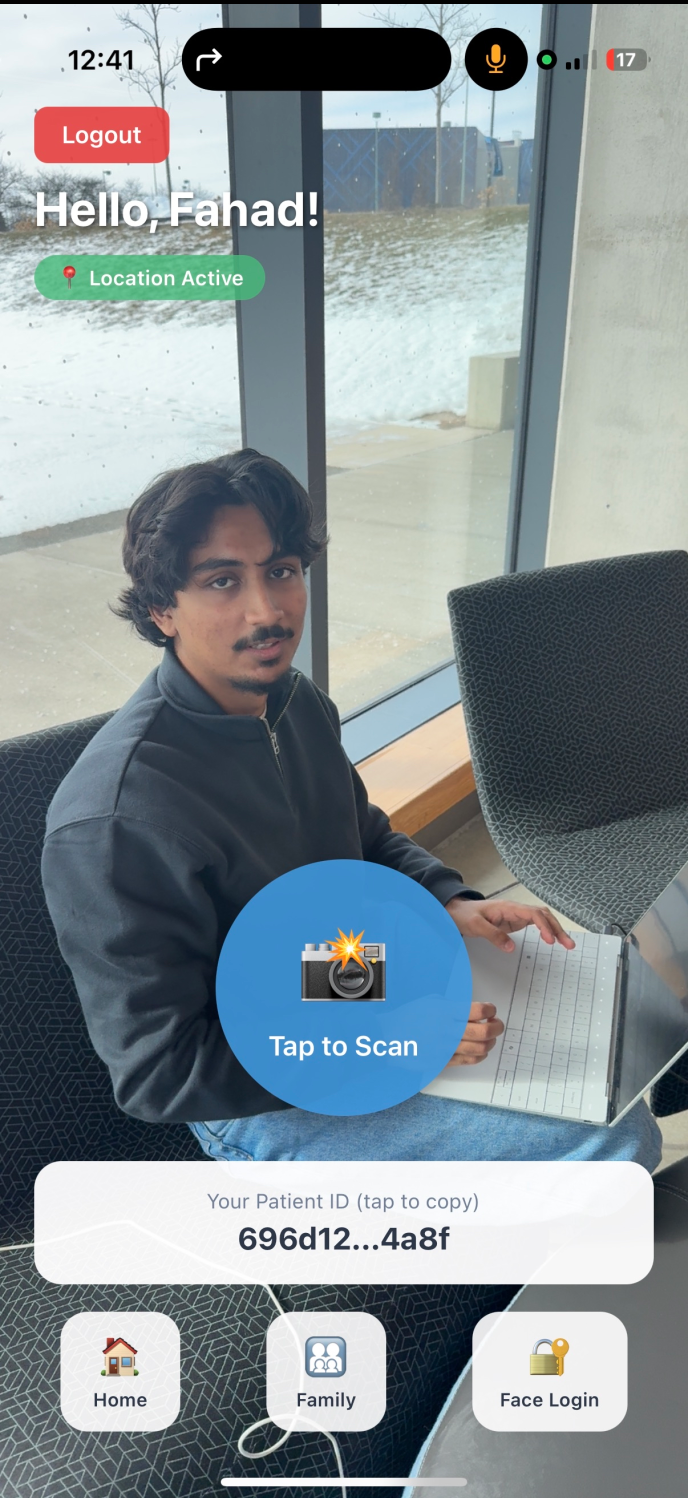
At first, our face detection was a bit too imaginative—it kept spotting "faces" in laptop keyboards, textured walls, even patterned wallpaper. This caused the app to incorrectly show the last recognized person's information when no actual face was present. We tackled this in a few ways: first, we set a minimum face size (at least 50×50 pixels—about the size of a postage stamp on your screen). We also added confidence scoring and raised the similarity threshold to 0.75. Most importantly, we switched from automatic scanning to a manual "Tap to Scan" button, putting users in control of when recognition happens.
When users searched for addresses, we'd offer suggestions like "123 Main Street, Toronto." But if they tapped one, something strange happened: the coordinates would immediately disappear. Turns out, selecting a suggestion triggered the same text change handler as typing, which was resetting the location data. Our fix was clever—we added a little "skip next" flag that tells the system, "Hey, the user just picked a suggestion, don't clear their coordinates this time." Simple, but it made the address search work smoothly.
Accomplishments that we're proud of
- We built a system where facial recognition improves over time without ever storing face data on servers—a breakthrough in ethical AI deployment
- Core recognition and navigation features work seamlessly without internet access, crucial for patients who may wander beyond connectivity
- Our design incorporates evidence-based cognitive support strategies validated by our neurology consultants
- We created technology that doesn't just solve problems but strengthens connections across generations and cognitive states
What we learned
- The most impactful innovations aren't those that replace human connection but those that facilitate and enhance it.
- Creating for vulnerable populations requires constant humility. We're not "solving" Alzheimer's; we're accompanying people through it.
- Privacy isn't a feature to add later; it's the foundation upon which trustworthy systems are built Interdisciplinary Integration: Meaningful healthcare technology requires equal parts computer science, neuroscience, ethics, and empathy.
- Building supportive systems requires considering not just immediate needs but long-term sustainability for patients, families, and healthcare systems.
What's next for Memory Care
Looking ahead, Memory Care will launch a clinical pilot with Canadian care homes, add multilingual support, and introduce lightweight wearable devices. We'll then develop predictive features to anticipate wandering risks and integrate telehealth for remote specialist access. Our long-term vision is to expand globally while maintaining strict privacy standards, contribute anonymized data to Alzheimer's research, and evolve into a comprehensive platform for various cognitive conditions—always prioritizing human dignity over technological intrusion.


Log in or sign up for Devpost to join the conversation.