-
-
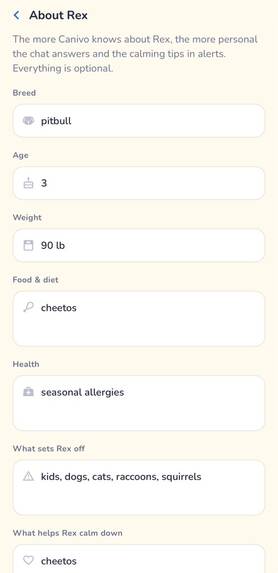
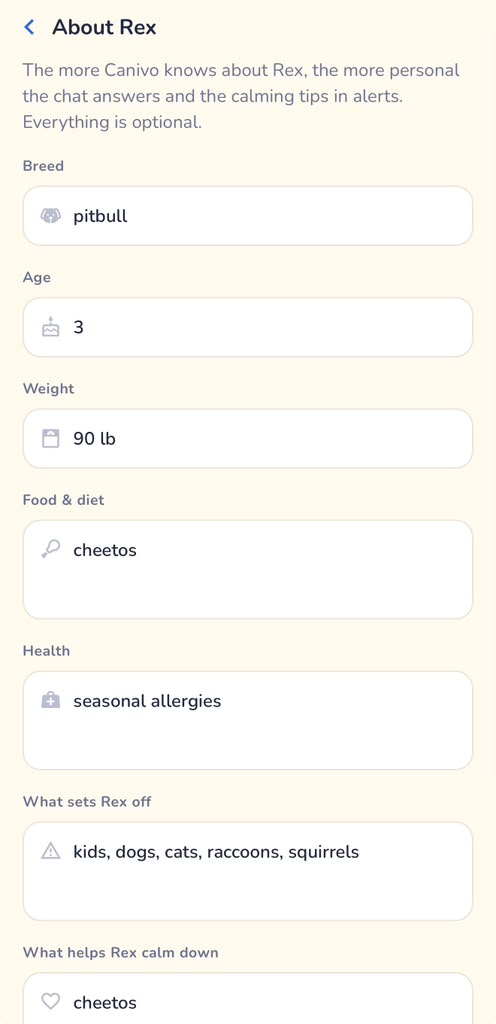
An integrated “Tell Us About Rex” section that personalizes the user experience and tailors the app’s outputs to each dog.
-
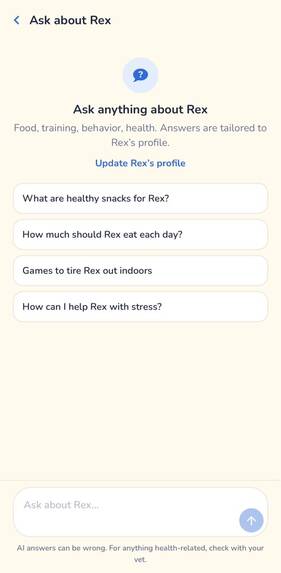
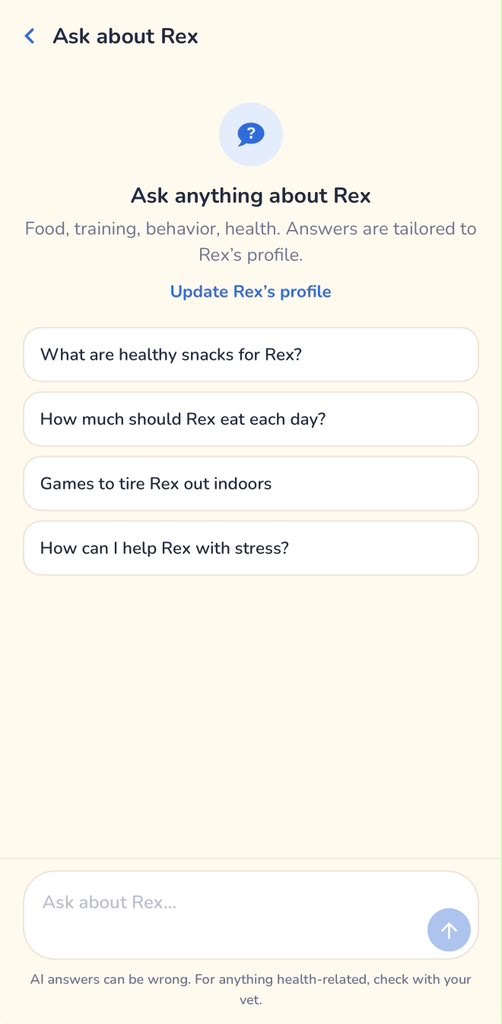
Demonstration of the AI chatbot integrated into the app, allowing users to select a question from suggested prompts.
-
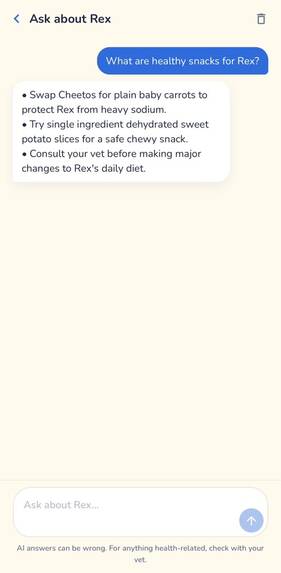
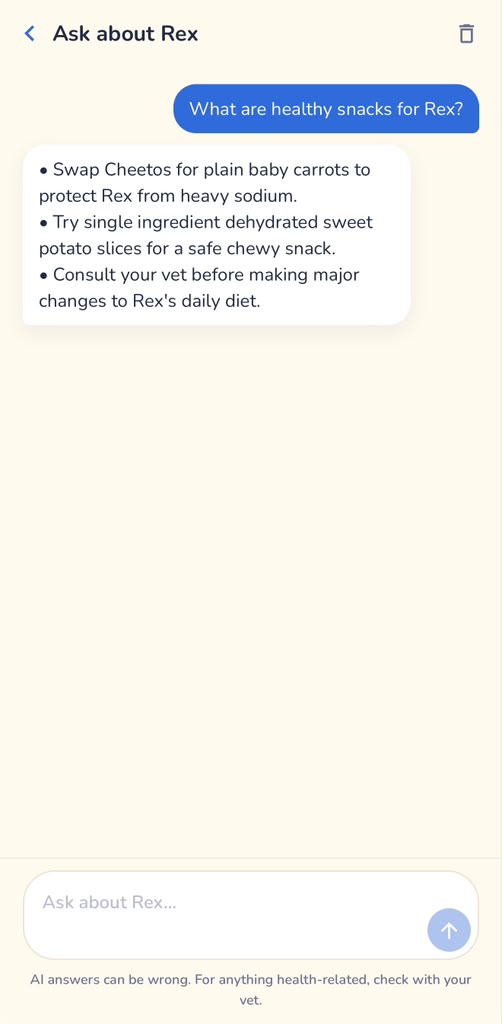
Examples of responses the chatbot would provide.
-
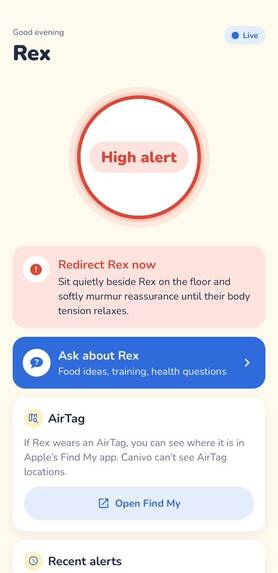
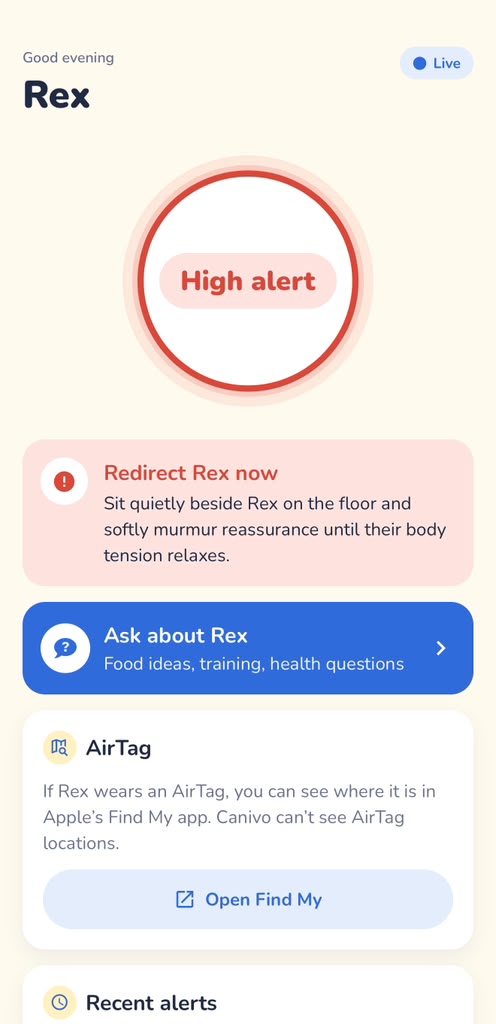
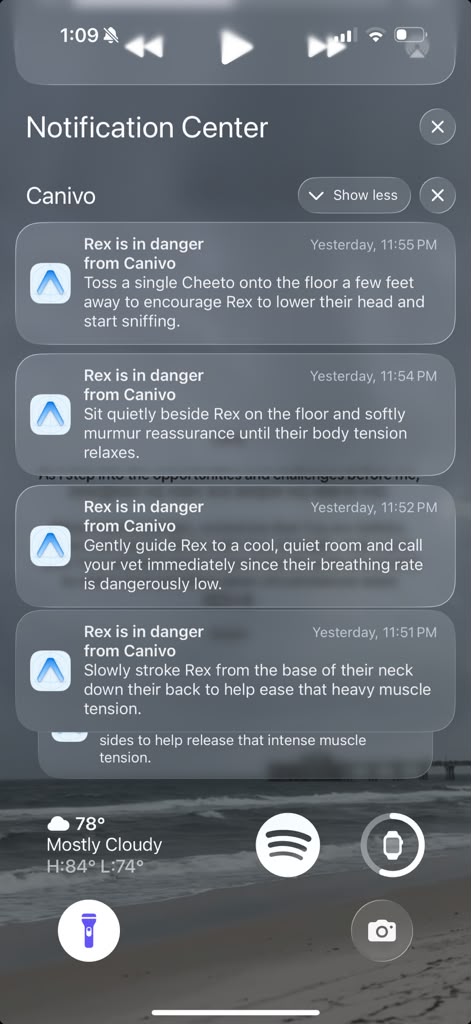
Demonstration of a dangerous situation, where heart rate (BPM) and blood pressure are elevated.
-
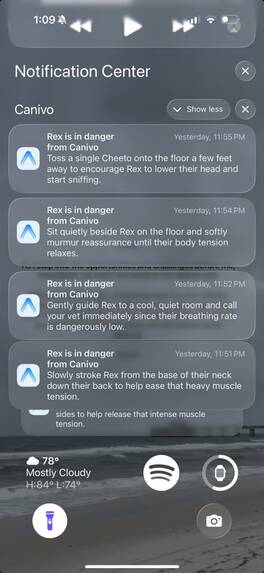
Real-time danger alerts displayed on the main screen and Apple Watch.
-
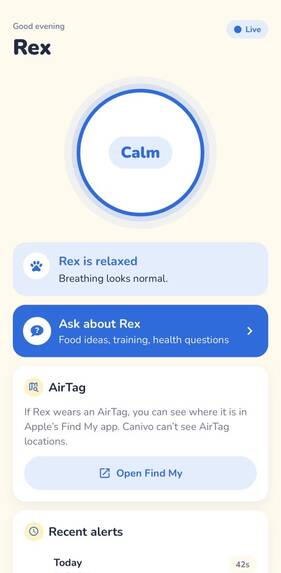
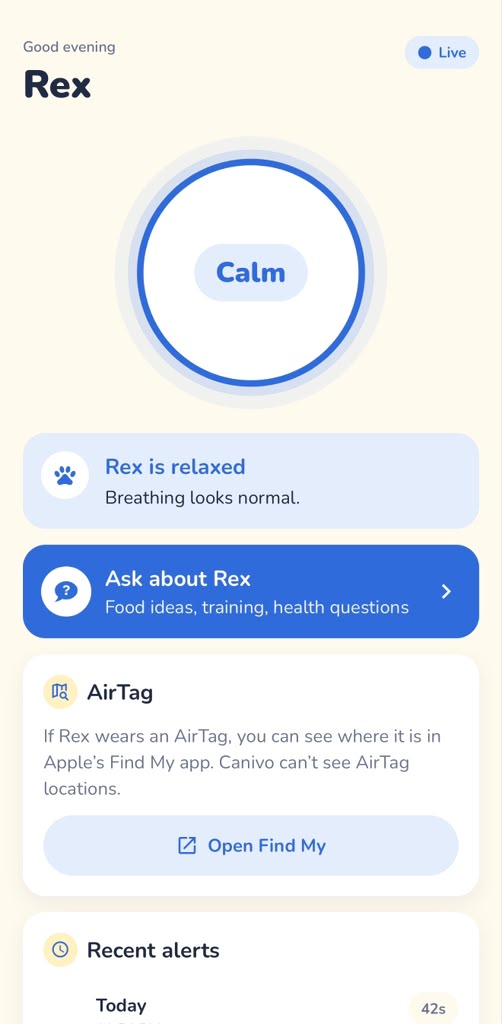
Simulation of a normal state, where Rex (the dog) is calm and his blood pressure is within the expected range.
-
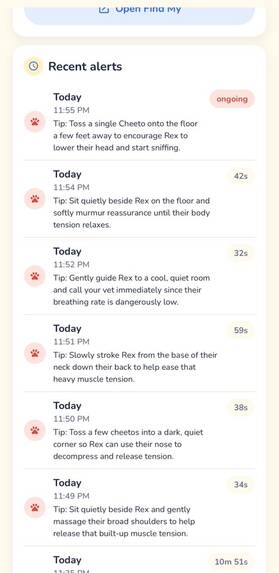
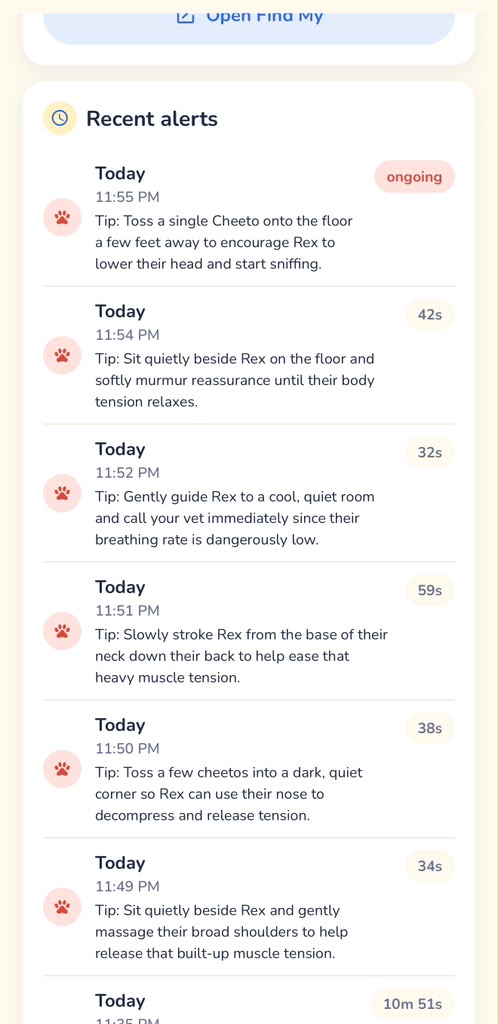
History of alerts and notifications from the past few minutes.
-
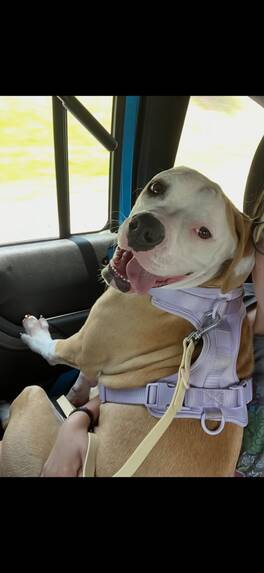
A team member's dog (Canela) testing our product.

Inspiration
Many dog-related accidents end with someone getting hurt, but they also affect the dog and its owner.
When a dog bites or reacts aggressively, it is often acting out of fear, stress, or discomfort rather than malice. As dog owners, we don't want anyone to get hurt. At the same time, we don't want our dogs to be blamed for a situation that may have been preventable if the warning signs had been recognized earlier.
We realized that dogs often show signs of stress long before an incident occurs, but these signals can be difficult for owners to recognize in real time. That inspired us to create a solution focused on prevention rather than reaction.
This article represents what we're talking about and was one of the inspirations for CANIVO: https://www.thetrainingofdogs.com/post/muscle-tension-reactivity-dogs
What it does
CANIVO catches a dog’s stress before it becomes an incident.
Dogs show stress in their bodies long before they bark, bolt, or bite. CANIVO’s wearable sensor tracks your dog’s breathing and muscle tension in real time, learns what “calm” looks like for your dog, and alerts you the moment they start to escalate
Using physiological data such as heart rate (BPM), breathing patterns, and muscle tension, CANIVO continuously monitors the dog's condition and displays it to the owner in a simple dashboard. The app tracks stress indicators, including arousal levels, and alerts owners when abnormal behavior is detected.
Key features include:
- Real-time monitoring of BPM, breathing rate, and muscle tension
- Stress and arousal alerts when the dog shows signs of distress
- A graph showing the dog's condition over the last 5 minutes
- Alert history for tracking previous high-stress events
- Integration with Apple's Find My for quick location tracking
- A personalized dog profile where owners can provide information about their pet
- An AI-powered chatbot that helps owners understand their dog's behavior and offers suggestions for calming or managing stressful situations
CANIVO helps owners recognize stress early and respond before fear turns into an incident. Our goal is simple: protect both people and dogs by preventing incidents before they happen.
How we built it
We split the project across four roles: hardware, backend, frontend, and design plus storytelling.
Hardware: We used a MyoWare 2.0 muscle sensor to read the dog’s muscle signal. That same signal also reveals breathing, so one sensor gives us two stress indicators. We wired it to an Arduino Uno and wrote the C++ sketch that reads the sensor and streams the data over USB. Making sure the signal was clean and steady enough for the software to turn into real stress readings.
Backend: A bridge reads the Arduino’s USB data and sends it to the server. The stress detector extracts breathing rate and muscle tension from the signal. It spends the first two minutes learning what “calm” looks like for that specific dog. After that, it scores how far the dog’s breathing and tension have moved from their own normal, and raises an alert when the score stays high. We added a button for Find My, so the server also alerts the owner if the dog leaves home or safe spaces. We added notifications: Expo Push for the phone app, and Web Push for the browser, iPhone Home Screen app, and Apple Watch. The AI coach lives on the server too. When an alert fires, it writes a calming tip matched to the dog’s stress level, and it powers the chat. Data is stored in SQLite on a laptop and Supabase (Postgres) when deployed. The server runs on Render.
Fronted: We built an app that owners actually see, in TypeScript with React Native (Expo), so one codebase runs as a phone app and a web app. A live dashboard shows the dog’s state, breathing, muscle tension, and arousal level. The Ask Canivo chat lets owners get advice in the moment, including a “Get help now” button when the dog goes on alert. The web app is hosted on Vercel.
Devpost: shaped how Canivo looks and how we tell its story. We designed the visual identity: the warm colors, the friendly feel, and the layout owners see. We wrote the Devpost submission, assembled the demo and presentation, and pulled all the pieces together to finish the project.
Tools that tied it together: we used GitHub for the code. Pushing to it automatically updates both Render and Vercel, so the whole team could ship changes quickly during the hackathon.
Challenges we ran into
One of the biggest challenges of this project was stepping far outside our comfort zones.
CANIVO combines hardware, mobile development, and AI, and for two members of our team, this was their very first hackathon. Even among the three of us, nobody had strong experience in all of these areas. Each person brought different strengths, but every one of us had to learn something completely new throughout the project. On the technical side, we faced several challenges. Working with hardware introduced issues with wiring and soldering, and because we had limited experience and tools available, troubleshooting physical connections became a significant obstacle. We also spent considerable time ensuring that notifications could be delivered in real time, which was a critical part of our solution and essential to achieving our goal of preventive intervention.
Accomplishments that we're proud of
We are most proud of what we accomplished as a team: despite coming from different backgrounds and having different levels of experience, we collaborated closely, learned from one another, and turned an ambitious idea into a working product that exceeded our own expectations in a very short amount of time. We're proud of bringing together hardware, mobile development, and AI to create a solution that helps prevent incidents before they happen. Most importantly, we're proud of stepping outside our comfort zones, overcoming all of these challenges, and delivering something we're truly proud of.
What we learned
Beyond learning to work as a team and communicate our needs, each of the three of us took on a part of the project we had never done before, so a big part of our learning came from teaching each other.
-Hardware: we learned how to solder wires to the Arduino and how to use surface EMG electrodes, the adhesive pads that stick to the skin and let the MyoWare sensor read muscle signals. -Frontend and backend: one of our teammates had no experience building apps or servers. Instead of leaving her behind, we walked her through each part and guided her step by step, so the final result would be the best it could be. -AI: we learned how to add AI to the app and make sure its advice matched the notifications, so the tip an owner receives in an alert is the same guidance they find in the chat.
What's next for CANIVO
1. Going wireless. Today, the Arduino sends data through a USB cable to a computer. Next, we’ll move to a Wi-Fi-enabled board, such as an Arduino Nano ESP32, that sends readings straight to our server. No computer needed, no cable on the dog. The device becomes safer and more comfortable to wear, and it can work anywhere there’s a connection.
2. Built to survive real life. Dogs run, roll, swim, and shake off rain. We’ll design a waterproof, durable enclosure so the sensor stays protected and the dog stays safe.
3. Funding to scale. Every alert and every chat runs on an AI model. Funding would let us pay for the AI API at scale, so more owners can get real-time, personalized coaching without limits.
Built With
- arduino
- c++
- claude
- copilot
- expo-go
- expo-push
- gemini
- github
- go
- myoware
- react-native
- render
- sqlite
- supabase
- typescript
- vercel
- web-push

Log in or sign up for Devpost to join the conversation.